AFP Asia Business

Magazine publishes US attack plan mistakenly shared in chat group

The Atlantic magazine on Wednesday published what it said was the entire text of a chat group mistakenly shared with a journalist by top US national security officials laying out plans of an imminent attack on Yemen.The stunning details, including the times of strikes and types of planes being used, were all laid out in screenshots of the chat, which the officials had conducted on a commercial Signal messaging app, rather than a secure government platform.The magazine, which initially only published the broad outlines of the chat, said it was now publishing the details after the Trump administration repeatedly denied that any classified information had been included.The scandal has rocked President Donald Trump’s administration, which for now is reacting defiantly — attacking The Atlantic and denying any wrongdoing.White House Press Secretary Karoline Leavitt quickly responded to say The Atlantic was conceding “these were NOT ‘war plans.’ The entire story was another hoax.”National Security Council spokesman Brian Hughes had said Monday the chain cited by The Atlantic appeared to be “authentic.”Atlantic journalist Jeffrey Goldberg said Defense Secretary Pete Hegseth sent information in the Signal chat — also including Vice President JD Vance and Central Intelligence Agency Director John Ratcliffe — right ahead of strikes against the Huthi rebels on March 15. For reasons unknown, Goldberg’s phone number had been added to the group.Goldberg also revealed disparaging comments by the top US officials about European allies during their chat.The Atlantic initially did not publish the precise details of the chat, saying it wanted to avoid revealing classified material and information that could endanger American troops.But on Tuesday, Ratcliff and other officials involved in the chat played down the scandal, testifying before Congress that nothing critical had been shared or laws broken — and that nothing discussed was classified.The Atlantic said on Wednesday that it asked the government whether in that case there would be any problem in publishing the rest of the material.Leavitt responded, The Atlantic said, telling the magazine again that “there was no classified information transmitted in the group chat.”And a CIA spokesperson asked only that one of the agency’s officials referenced in the chain not be identified by name.- ‘More F-18s LAUNCH’ -The Atlantic said its publication Wednesday included everything in the Signal chain other than that one CIA name.It includes Hegseth laying out the weather conditions, times of attacks and types of aircraft being used. The texting was done barely half an hour before the first US warplanes took off and two hours before the first target, described as “Target Terrorist,” was expected to be bombed.The details are shockingly precise for the kind of operation that the public usually only learns about later — and in vaguer terms.”1410: More F-18s LAUNCH (2nd strike package),” Hegseth writes at one stage.”1415: Strike Drones on Target (THIS IS WHEN THE FIRST BOMBS WILL DEFINITELY DROP, pending earlier ‘Trigger Based’ targets).”A short time later, Trump’s National Security Advisor Mike Waltz, sent real-time intelligence on the aftermath of an attack, writing “Building collapsed. Had multiple positive ID” and “amazing job.”The Huthi rebels, who have controlled much of Yemen for more than a decade, are part of the “axis of resistance” of pro-Iran groups staunchly opposed to Israel and the US. The Trump administration has stepped up attacks on the group in response to constant Huthi attempts to sink and disrupt shipping through the strategic Red Sea.
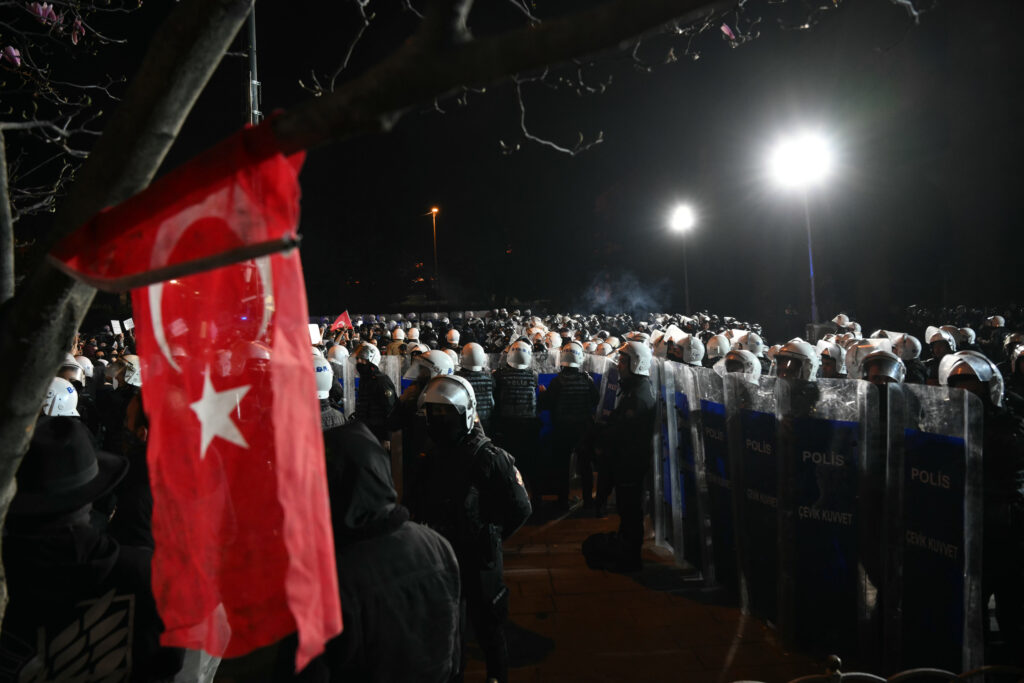

Turkey protesters defiant despite mass arrests

Protesters were defiant Wednesday despite a growing crackdown and nearly 1,500 arrests as they marked a week since the start of Turkey’s biggest street demonstrations against the rule of President Recep Tayyip Erdogan since 2013. The protests erupted on March 19 after the arrest of Istanbul opposition mayor Ekrem Imamoglu as part of a graft and “terror” probe, which his supporters denounced as a “coup”.Vast crowds have hit the street daily, defying protest bans in Istanbul and other big cities and the arrests with 1,418 people held up to Tuesday according to official figures.Those detained include AFP journalist Yasin Akgul, who the Paris-based agency says was doing his job covering the protests. Erdogan, who has repeatedly denounced the protests as “street terror”, stepped up his attacks on the opposition with a bitter tirade against the main opposition Republican People’s (CHP) party of Imamoglu and its leader Ozgur Ozel.In a possible shift in tactics, Ozel said the CHP was not calling for another nightly protest Wednesday outside the Istanbul mayor office, instead urging people to attend a mega rally on Saturday. But it was far from certain that angry students, who have taken an increasingly prominent role in the protests and are far from all CHP supporters, would stay off the streets.Most nights, the protests have turned into running battles with riot police, whose crackdown has alarmed rights groups. But there were no such clashes on Tuesday, AFP correspondents said. – ‘No room left in Istanbul prisons’ -The arrest of Akgul, who was remanded in custody on Tuesday along with six other journalists who were also arrested in dawn raids on Monday, was denounced by rights groups and Agence France – Presse, which said the 35-year-old’s jailing was “unacceptable” and demanded his immediate release.”We are deeply concerned by reports of repression against protesters and journalists in Turkey,” said a French foreign ministry source, asking not to be named, adding that Akgul “was covering the protests professionally”.Addressing the vast crowds gathered for a seventh straight night at Istanbul City Hall, Ozel said the crackdown would only strengthen the protest movement.”There is one thing that Mr Tayyip should know: our numbers won’t decrease with the detentions and arrests, we will grow and grow and grow!” he vowed. The extent of the crackdown, he said, meant there was “no room left in Istanbul’s prisons”.Imamoglu also posted a defiant message targeting Erdogan on his social media channels, vowing to “send him away at the ballot box”, accusing the Turkish leader of “staying behind closed doors in Ankara not to govern Turkey but to protect his seat”.”We will be one… we will succeed,” he added.Erdogan himself took aim at Ozel in a speech to his party, dismissing the CHP leader as “a politically bankrupt figure whose ambitions and fears have taken his mind captive”.The CHP, he claimed, had created “too much material even for Brazilian soap operas” with corruption cases in Istanbul municipalities.- ‘We are not terrorists’ -Although the crackdown has not reduced the numbers, most students who joined a huge street rally on Tuesday had their faces covered, an AFP correspondent said. “We want the government to resign, we want our democratic rights, we are fighting for a freer Turkey right now,” a 20-year-old student who gave his name as Mali told AFP. “We are not terrorists, we are students and the reason we are here is to exercise our democratic rights and to defend democracy,” he said.Like most protesters, his face was covered and he refused to give his surname for fear of reprisals.Another masked student who gave her name as Lydia, 25, urged more people to hit the streets. “All Turkish people should take to the streets, they are hunting us like vermin (while) you are sitting at home. Come out, look after us! We are your students, we are your future,” she said, her anger evident. Unlike previous days, the CHP’s Ozel said there would be no rally at City Hall on Wednesday, but called protesters to rally instead on Saturday in the Istanbul district of Maltepe to demand early elections.

Israel threatens to seize parts of Gaza over fate of hostages

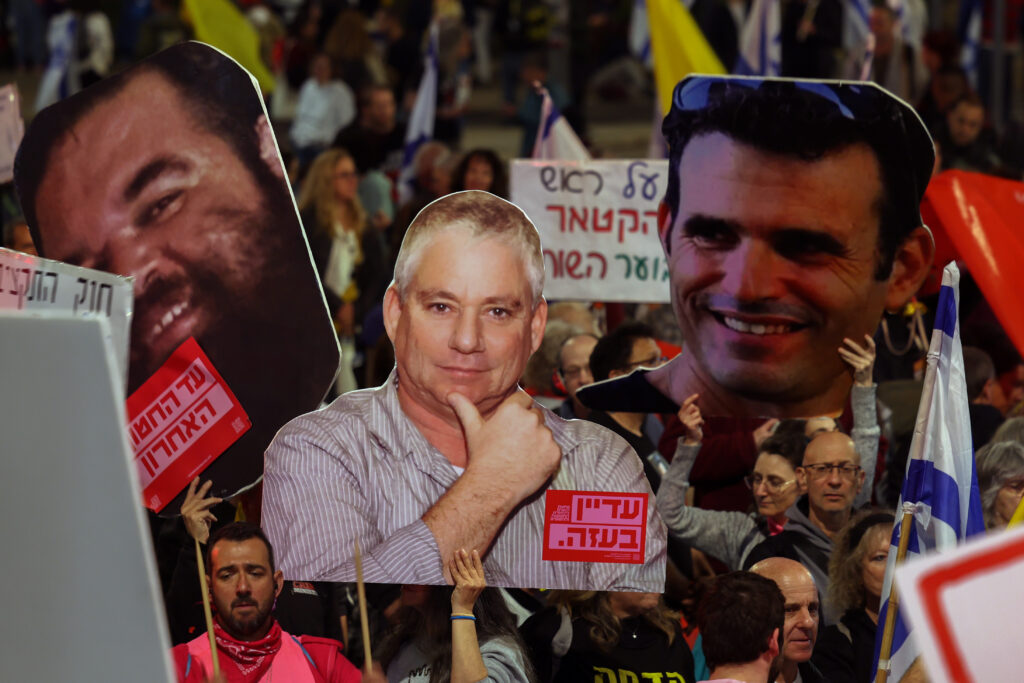
Prime Minister Benjamin Netanyahu threatened Wednesday to seize parts of Gaza if Hamas does not release hostages, while the militant group warned they would return “in coffins” if Israel does not stop bombing the Palestinian territory.Just over a week since the military resumed operations following a January truce, Israel said two projectiles were fired from the Gaza Strip, with one intercepted and the other landing near the border, and with no immediate reports of any casualties or damage.The rocket fire came a day after hundreds of Palestinians staged a rare protest against Hamas, chanting slogans against the Islamist movement and calling for an end to the war.Shattering weeks of relative calm in the war brought by the fragile ceasefire, Israel last week resumed intense bombardment and ground operations across Gaza, while militants returned to launching rocket attacks.According to the health ministry in Hamas-run Gaza, 830 people have been killed in the territory since Israel resumed its strikes on March 18. No deaths have been reported on the Israeli side.Israeli officials say the resumption of operations was meant to pressure Hamas into releasing the remaining hostages, after a stalemate in talks with mediators on extending the truce — which saw 33 Israeli captives freed in exchange for Palestinian prisoners.Israel wanted an extension of the truce’s initial phase, while Hamas demanded talks on a second stage that was meant to lead to a permanent ceasefire.Netanyahu told parliament that “the more Hamas persists in its refusal to release our hostages, the stronger the pressure we will exert”.”This includes the seizure of territories, along with other measures I will not elaborate here,” he added, days after his Defence Minister Israel Katz had warned: “The more Hamas refuses to free the hostages, the more territory it will lose, which will be annexed by Israel”.- ‘Random bombardment’ -Of the 251 hostages seized during Hamas’s October 7, 2023 attack on Israel which triggered the war, 58 are still held in Gaza, including 34 the Israeli military says are dead.”Every time the occupation attempts to retrieve its captives by force, it ends up bringing them back in coffins,” Hamas said in a statement.The group said it was “doing everything possible to keep the (Israeli) occupation’s captives alive, but the random Zionist bombardment is endangering their lives”.Gal Gilboa-Dalal, an Israeli survivor of the 2023 attack whose brother was taken hostage, has told AFP he can “constantly imagine our reunion”.”This moment felt closer than ever and unfortunately, it’s drifting away from me again,” he said of his brother Guy Gilboa-Dalal, taken from a music festival near the Gaza border and last seen in a video shared by Hamas last month.”We are fighting here against a terrorist organisation that only understands force,” said Gal.”On the other hand, I am terrified that these bombings and this operation… will endanger the hostages there. There’s no way to know what the terrorists might do to them or if a missile might accidentally hit them,” he added.- ‘People are tired’ -The Hamas attack that sparked the war resulted in the deaths of 1,218 people, mostly civilians, according to an AFP tally based on official figures.Israel’s retaliatory military offensive has killed at least 50,183 people in Gaza, mostly civilians, according to the health ministry.In northern Gaza on Tuesday, Palestinians gathered for the biggest anti-Hamas rally since the start of the war, chanting “Hamas out” and “Hamas terrorists”.Majdi, a protester who did not wish to give his full name, said the “people are tired”. “If Hamas leaving power in Gaza is the solution, why doesn’t Hamas give up power to protect the people?”Hamas seized power in Gaza in 2007 after winning a Palestinian election the year before. No vote has been held since.Levels of discontent towards Hamas in Gaza are difficult to gauge, in part because of its intolerance for public expressions of dissent.Fatah, the Palestinian movement of president Mahmud Abbas, has called on Hamas to “step aside from governing” Gaza to safeguard the “existence” of Palestinians in the war-battered territory.

Huthis say US warplanes carry out 19 strikes in Yemen

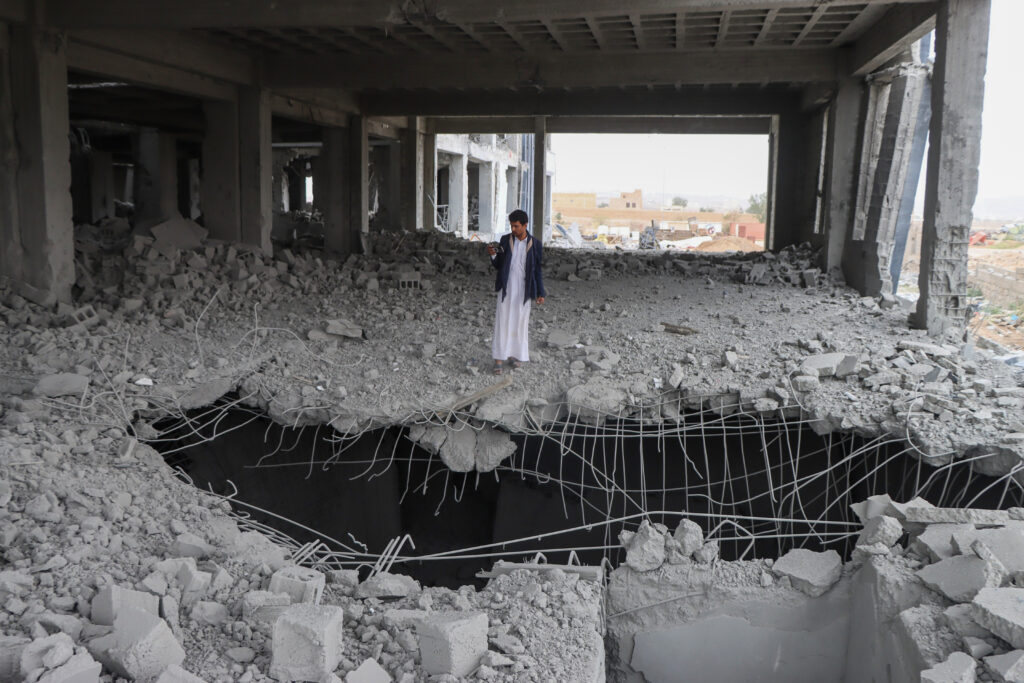
Huthi media said 19 strikes hit rebel-held parts of Yemen, mostly Saada, blaming the United States, with the group later announcing they targeted a US warship and Israel.Al-Masirah TV reported that “the US aggression launched 17 raids on the Saada governorate during the night”, and earlier said two raids hit Amran.The Iran-backed rebels’ news agency, Saba, said “the American aggression targeted the Oncology Hospital building in Saada”.The hospital, which Huthi media said was under construction, was also hit last week.The rebel health ministry said two civilians were wounded in the latest hospital attack, which they described as “a full-fledged war crime”.Early Wednesday, a Huthi military spokesperson said the group targeted “enemy warships in the Red Sea, led by the US aircraft carrier Truman” blamed for the Yemen strikes.The rebels also claimed a drone attack on Tel Aviv, but did not specify when it occurred. Israel did not report such an attack.Washington announced a military offensive against the Huthis on March 15, promising to use overwhelming force until the group stopped firing on vessels in the key shipping routes of the Red Sea and Gulf of Aden.That day saw a wave of US air strikes that officials said killed senior Huthi leaders, and which the rebels’ health ministry said killed 53 people.Since then, Huthi-held parts of Yemen have witnessed near-daily attacks that the group has blamed on the United States, with the rebels announcing the targeting of US military ships and Israel.The Huthis began targeting shipping vessels after the start of the Gaza war, claiming solidarity with Palestinians, but paused their campaign when a ceasefire took effect in Gaza in January.Earlier this month, they threatened to renew attacks in the vital maritime trade route over Israel’s aid blockade on the Palestinian territory, triggering the first US strikes on Yemen since President Donald Trump took office in January.Last week, Trump threatened to annihilate the Huthis and warned Tehran against continuing to aid the group.

Sudan’s war leaves dead without graves

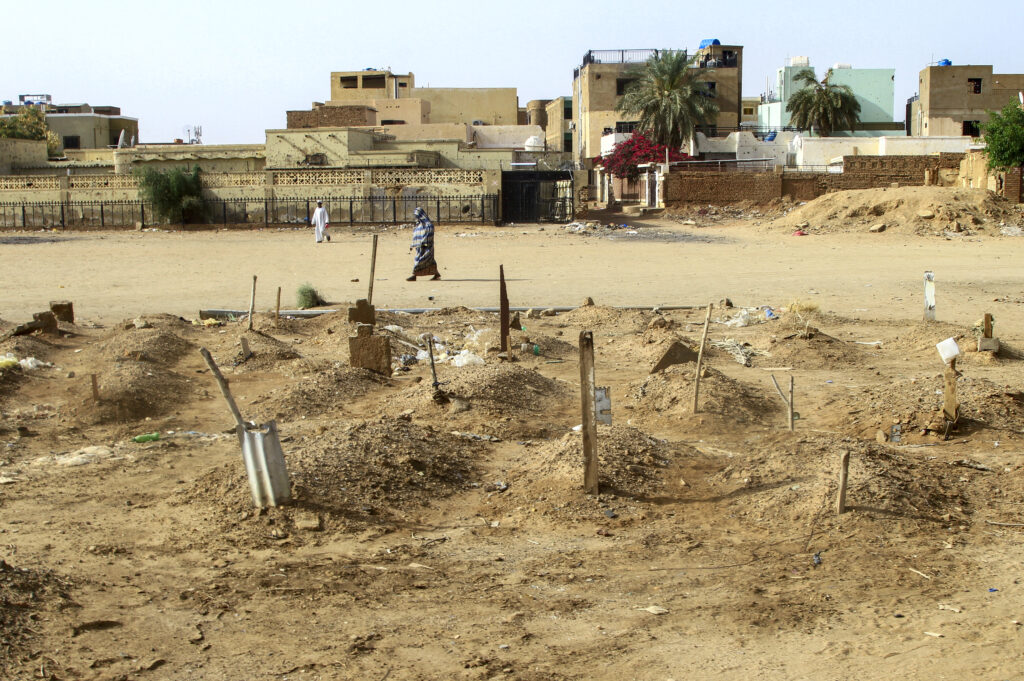
Outside his bullet-riddled home in Sudan’s war-ravaged capital, Jamil Morjan stood with his hands raised in prayer for his mother’s soul over a mound of earth. There was no headstone — just a rough wooden plank marking the spot where his mother lay buried.”We couldn’t take her to a cemetery,” he told AFP, his bloodshot eyes laden with exhaustion.When his mother died in March 2024, the Sudanese capital was a war zone, torn apart by nearly a year of fighting between the regular army and the paramilitary Rapid Support Forces.Roads were choked with rubble, snipers lurked on rooftops and fighters roamed the streets, robbing or assaulting civilians as they passed.Morjan had no choice. “We were forced to bury her outside our front door,” he told AFP.He is not alone. Across greater Khartoum, the war, which erupted in April 2023 between the army and the RSF, has made it nearly impossible for families to bury their dead.With no safe passage to official cemeteries, families have been forced to dig graves wherever they can — in backyards, streets and abandoned lots.In the worst-hit neighbourhoods, streets that once bustled with markets and morning tea vendors are now lined with hastily dug graves.The conflict has killed tens of thousands, uprooted over 12 million and created the world’s largest displacement and hunger crises.In Khartoum alone, more than 61,000 people died of all causes during the first 14 months of war, according to the London School of Hygiene and Tropical Medicine — a 50 percent increase in the pre-war death rate.Of those deaths, 26,000 were attributed directly to violence, the report found last year.- From playgrounds to graveyards –  In one neighbourhood in Khartoum’s twin city of Omdurman, an old football field has been turned into an improvised graveyard.Graves are marked with wooden planks, scrap metal or in some cases, a simple black chalkboard with a name scrawled in white.Overturned and destroyed cars, rusting in the sun, stand nearby.”These streets were once ordinary,” said Al-Samani Mohammed Al-Samani, a volunteer gravedigger.”Now, you can find bodies buried in front of homes,” he told AFP.And even these makeshift graves are not safe from harm.”We were hit by shelling here in this cemetery,” Al-Samani said. “Decomposing bodies filled this street,” he said.He said his attempts to reach official cemeteries have been met with violence by the RSF.”We’ve tried many times to reach them, but the RSF beat us and blocked our way,” Al-Samani said.”We returned home carrying coffins,” he added.Both the army and the RSF have been accused of war crimes, including indiscriminately targeting civilians and deliberately shelling residential areas and medical facilities.But the RSF has, in particular, been accused of ethnic cleansing, systematic sexual violence and widespread looting.Nearly two years into the conflict, the army is now close to retaking all of Khartoum from paramilitaries, after recapturing the presidential palace and key state institutions this week.But the RSF seems far from defeated, launching fresh attacks on residential neighbourhoods and claiming territory in remote parts of the country.