AFP Asia Business

Israel, European far-right politicians begin anti-Semitism meet in Jerusalem

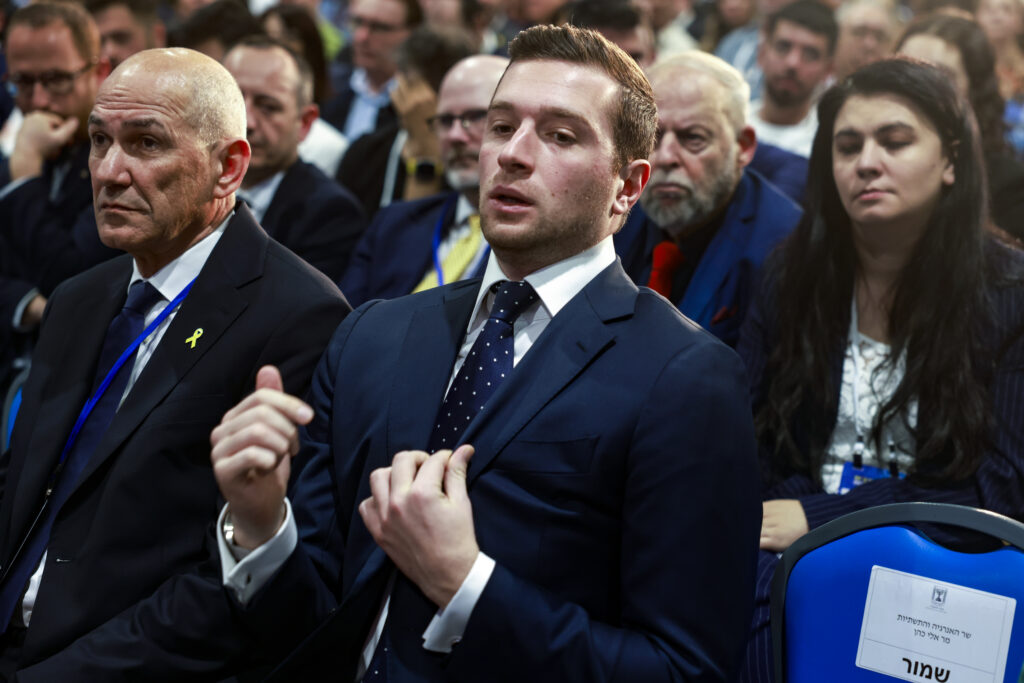
Israel on Thursday kicked off a conference on fighting anti-Semitism, with the attendance of politicians from Europe’s far right driving division within the international Jewish community.Among those invited to the symposium are a member of Hungary’s Fidesz party and France’s National Rally (RN), whose cofounder was known for his anti-Semitic comments.Israel’s Foreign Minister Gideon Saar addressed the conference, decrying a “new anti-Semitism” stoked by “a disturbing alliance between the radical progressives on the far-left and Islamist fundamentalism”.”In the name of so-called ‘human rights’, the progressive movement fell captive to those seeking the destruction of the Jewish people,” he said.Prime Minister Benjamin Netanyahu is later due to speak, as well as the current RN president Jordan Bardella, capping an unprecedented trip to Israel by a leader of his party.Analysts say the invitation of parties that have themselves been accused of anti-Semitism demonstrates the willingness of Israel’s right to cultivate new relationships with unlikely supporters, amid pressure from traditional allies over the Gaza war.Bardella on Wednesday visited sites where Hamas militants carried out their October 7, 2023 attack on southern Israel.He first travelled to a memorial marking the site of the Nova music festival, where Hamas fighters killed more than 370 people, including French nationals.”I came here first and foremost because I believe it’s vital for us to never forget what happened on October 7, 2023, here in Israel, what Islamism and the Hamas terrorist movement were capable of,” he said.Since Hamas’s attack on Israel, the RN has sought to present itself as a bulwark against anti-Semitism.The party was cofounded as the National Front by Jean-Marie Le Pen, who died earlier this year, and who was charged and convicted in a French court for downplaying the Holocaust.His daughter, Marine Le Pen, has moved emphatically to distance the movement from her father’s legacy, renaming the party and seeking to make it more broadly electable.When asked about his party’s past during Wednesday’s visit, Bardella responded: “I don’t do politics in the rearview mirror.”- ‘Black and white’ -Thursday’s conference will focus on fighting what rights groups have described as a rising tide of anti-Semitism around the world, a priority for Netanyahu’s government, the most right-wing in Israel’s history.The guest list for the symposium, organised by right-wing Diaspora Affairs Minister Amichai Chikli, also includes Bardella’s fellow MEP Marion Marechal, who leads another far-right movement and is the niece of Marine Le Pen.Earlier in the week, Bosnian Serb leader Milorad Dodik, a Kremlin ally, said he was travelling to Israel where he would attend the conference, but it was unclear whether he was in attendance.”The Serbs and the Jews are peoples that others have sought to annihilate,” the president of Bosnia’s Serb-dominated statelet of Republika Srpska said on X. “That is why we stand together.”Bosnia on Thursday issued an international arrest warrant for Dodik, who is accused of flouting the constitution.”The current Israeli government sees the world in black and white,” said Denis Charbit, a political scientist at the Open University of Israel.Some in Israel feel the country is currently isolated, and needs “new friends”, even if it deems them distasteful, he added.Israeli media reported on guests who cancelled their appearances in protest of the far-right politicians’ presence, including Anti-Defamation League CEO Jonathan Greenblatt and the French philosopher Bernard-Henri Levy.Britain’s Chief Rabbi Ephraim Mirvis and the UK government’s independent adviser on anti-Semitism, John Mann, have also withdrawn.On Wednesday, Bardella visited Netiv Haasara, on Gaza’s northern border, where he met with a Franco-Israeli survivor of October 7 who lost her husband and son in the attacks.During their conversation, Bardella described Israel’s offensive in Gaza a war of “civilisation against barbarism”. “We have always stated with the utmost consistency… that its retaliation and response were legitimate, but that it had to be carried out in accordance with international law,” he said.Bardella rejected the idea of “unconditional support” for Israel, but said he was in favour of close ties with “all nations fighting against Islamic terrorism”.


Six dead in sinking of Egypt tourist submarine

Six people died on Thursday, two of them minors, when a tourist submarine carrying dozens of Russian visitors sank off Egypt’s Red Sea coast near a major resort town.Egyptian state media put the toll at six, while Russian state news agencies quoted General Consul Viktor Voropaev as saying that five people were confirmed dead, two of them minors.Russia’s consulate in the tourist hub of Hurghada earlier said the vessel was carrying “45 tourists, including minors” on an underwater excursion to observe coral reefs when it “crashed 1 kilometre from the shore” at about 10:00 am local time (0800 GMT).”According to initial data, most of those on board were rescued and taken to their hotels and hospitals in Hurghada,” the consulate said, adding that diplomats had been dispatched to the pier.The website of state-owned Akhbar Al-Youm newspaper gave the toll of six dead and said 29 people were rescued, nine of them wounded.Russian state news agency Ria Novosti, quoting an Egyptian emergency services source, reported the death of “five foreigners and one Egyptian”.Local authorities did not immediately respond to requests for comment.The website of Sindbad Submarines, the vessel’s owner according to the Russian consulate, said the vessel could carry 44 passengers to up to 25 metres (27 yards) depth.The Egyptian newspaper reported investigations were underway to determine what caused the accident.- Deadly accidents -Hurghada, a resort about 460 kilometres (280 miles) southeast of the Egyptian capital Cairo, is a major destination for visitors to Egypt, with its airport receiving more than nine million passengers last year, according to state media.Thursday’s forecast in the city was clear, with above average winds reported but optimum visibility underwater. While dozens of tourist boats sail through the coastal area daily for snorkeling and diving activities, Sindbad Submarines says it deploys the region’s “only real” recreational submarine.The vessel has been operational in the area for multiple years, according to a source familiar with the company.The Red Sea coral reefs and islands off Egypt’s eastern coast are major draws, contributing to the country’s vital tourism sector which employs two million people and generates more than 10 percent of GDP.The area has been the site of several deadly accidents in recent years.In November, a dive boat capsized off the coast of Marsa Alam, south of Hurghada, leaving four dead and seven missing.Thirty people were rescued from another sinking boat, while last June two dozen French tourists were safely evacuated before their boat sank in a similar accident.In 2023, three British tourists died after a fire broke out on their yacht, engulfing their vessel in flames.

Yemen Huthis say launched missiles at Israel, US warship

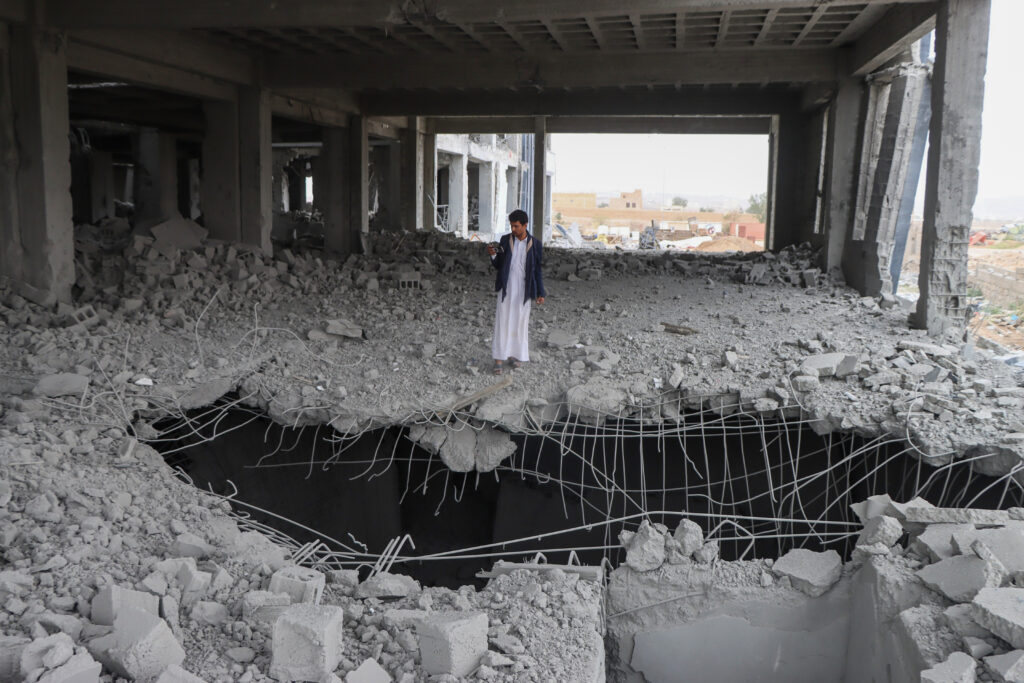
The Iran-backed Huthis said Thursday they targeted an Israeli airport and army site as well as a US warship, soon after Israel reported intercepting missiles launched from Yemen.The Huthis “targeted Ben Gurion airport… with a ballistic missile… and a military target” south of Tel Aviv, their military spokesman Yahya Saree said.Earlier Thursday, the Israeli military said it intercepted two missiles launched from Yemen “prior to crossing into Israeli territory” after it activated air raid sirens across multiple areas, including Jerusalem.Saree said the rebels also “targeted hostile warships in the Red Sea, including the American aircraft carrier (USS Harry S) Truman,” which he said was “in retaliation to the ongoing US aggression against our country”.The United States launched what its Central Command called a “large scale operation” involving air strikes against the Huthis on March 15.Washington vowed to use overwhelming force until they stopped firing on vessels in the key shipping routes of the Red Sea and Gulf of Aden after the rebels threatened to resume attacks over the Gaza war.The Huthis have since reported near-daily US air strikes on areas under their control.- Rebels say 2 killed -Earlier Thursday, the rebels said two people had been killed in overnight air strikes near the rebel-controlled capital Sanaa that they blamed on the United States.The Huthis’ Al-Masirah TV channel reported nearly 20 strikes on Sanaa governorate, both north and south of the capital.”The American aggression killed two and injured two,” the Huthi-run health ministry’s spokesman Anis al-Asbahi said on social media platform X.Al-Masirah also reported strikes early Thursday in Saada, the Iran-backed rebels’ northern stronghold which Huthi media had said was hit 17 times the day before.While the United States does not always report these raids, a United States defence official told AFP on Sunday that American forces were “conducting strikes across multiple locations of Iran-backed Huthi locations every day and night in Yemen”.The latest strikes claimed by the Huthis come with Washington embroiled in scandal linked to the March 15 strikes. The Atlantic Magazine published the transcript of messages accidentally shared with its editor in a chat group of senior US officials on Signal, a commercially available messaging app.The magazine on Thursday published details of the March 15 attack plans, which it initially withheld, after the White House insisted no classified details were involved.In response to the US strikes, the Huthis have claimed responsibility for multiple attacks on the Truman carrier group off Yemen’s coast, as well as projectiles fired at Israel.The Huthis began targeting shipping vessels in the Red Sea and Gulf of Aden after the start of the Gaza war, claiming solidarity with the Palestinian people, but paused their campaign when a ceasefire in Gaza took effect in January.Earlier this month, they threatened to renew the attacks in the vital maritime trade route over Israel’s aid blockade on the Palestinian territory, triggering the first US strikes on Yemen since President Donald Trump took office in January.

Sudan’s booming wartime gold trade flows through the UAE

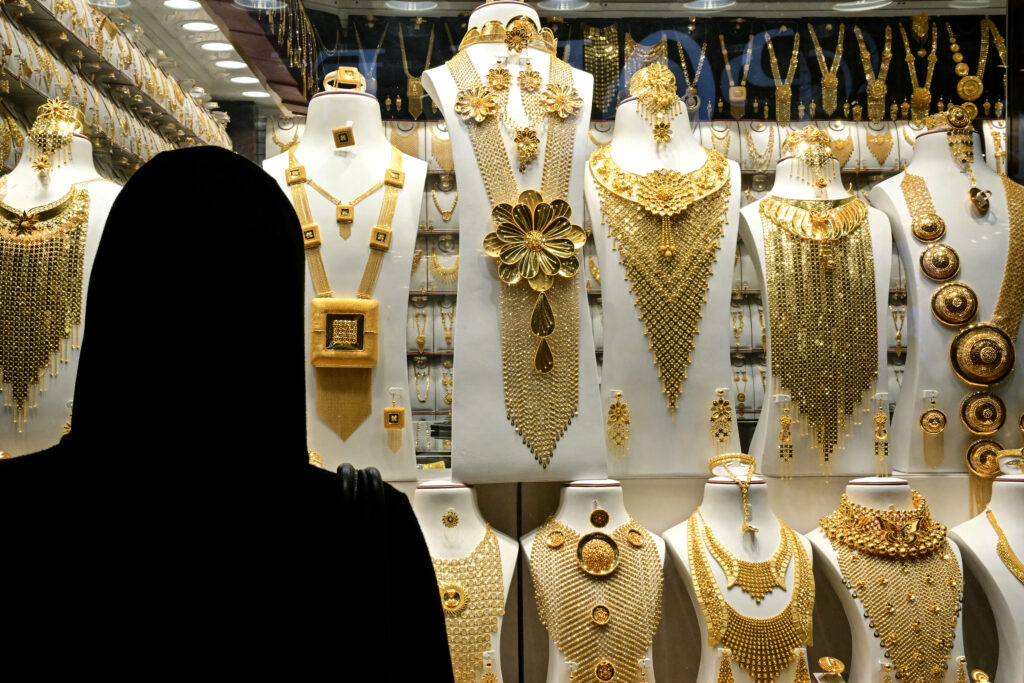
Sudan’s gold industry has become the lifeblood of its war, with nearly all of the trade channelled through the United Arab Emirates, enriching both the army and paramilitaries, according to official and NGO sources.The two-year conflict has decimated Sudan’s economy, yet last month the army-backed government announced record gold production in 2024.Demand for the country’s vast gold reserves was “a key factor in prolonging the war,” Sudanese economist Abdelazim al-Amawy told AFP.”To solve the war in Sudan, we have to follow the gold, and we arrive at the UAE,” said Marc Ummel, a researcher with development organisation Swissaid who tracks African gold smuggling to the Gulf country.In a statement emailed to AFP in response to this story, an official said that “the UAE firmly rejects any groundless allegations regarding the smuggling and profiting of gold from Sudan during this humanitarian catastrophe”.The official also said: “The UAE takes the regulation of its gold sector very seriously and will continue to maintain its position as a leading ethical gold hub, actively preventing illicit flows from entering the market.”But according to Sudanese officials, mining industry sources and Swissaid’s research, nearly all of Sudan’s gold flows to the UAE, via official trade routes, smuggling and direct Emirati ownership of the government’s currently most lucrative mine.In February, the state-owned Sudan Mineral Resources Company said gold production reached 64 tonnes in 2024, up from 41.8 tonnes in 2022.Legal exports brought $1.57 billion into the state’s depleted coffers, central bank figures show.But “nearly half of the state’s production is smuggled across borders,” SMRC director Mohammed Taher told AFP from Port Sudan.Nearly 2,000 kilometres (1,240 miles) away, on Sudan’s borders with South Sudan and the Central African Republic, lie the mines controlled by the paramilitary Rapid Support Forces.Much of the gold produced by both sides is smuggled to Chad, South Sudan and Egypt, before reaching the UAE, according to mining industry sources and experts.- Emirati assets -This month, Sudan filed a case with the International Court of Justice, accusing the UAE of complicity in genocide committed by the RSF in Darfur.Abu Dhabi, which has repeatedly denied accusations of funnelling weapons to the RSF, has called the case a “publicity stunt” and said it would seek to have it thrown out.But the UAE has also played a major role in the government’s wartime gold rush, indirectly helping to fund its war effort.According to Taher, 90 percent of the state’s legal exports of gold go to the UAE, though the government is eyeing alternatives, including Qatar and Turkey.In the heart of army territory, halfway between Port Sudan and Khartoum, Sudan’s Kush mine is the centrepiece of the government’s gold industry.Evacuated when the war began, it is now back to producing hundreds of kilograms per month, according to an engineer at the Russian-built facility, owned by Dubai-based Emiral Resources.On its website, Emiral lists Kush as one of its holdings, alongside subsidiary Alliance for Mining, which it says is “the largest industrial gold producer in Sudan”.According to a gold industry source, who spoke on condition of anonymity for his safety, in 2020 the mine “was bought by an Emirati investor who agreed to keep Russian management on”.- Underground -According to data from Dubai’s commodities exchange, the UAE became the world’s second-largest gold exporter in 2023, overtaking Britain.It is also the leading destination for smuggled African gold, according to Swissaid.Abu Dhabi says it has adopted a “responsible gold sourcing policy”, including a regulatory legal framework revised in January 2023, to develop a “well-regulated gold sector”.According to Ummel, “when you look at the figures, that’s not the case.””If this ‘Due Diligence Regulations for Responsible Sourcing of Gold’ was really implemented, all refineries in the UAE would have to do due diligence, the most basic element of which is to make sure your gold was declared in the country where it comes from,” he said.In 2023, data obtained by Swissaid showed UAE gold imports from Chad — on Sudan’s western border — were more than double the country’s estimated maximum capacity, suggesting the majority of it was undeclared and smuggled across borders.Ummel says there is no indication the UAE’s conflict-gold market has shrunk in recent years.In the vast Darfur region, RSF commander Mohamed Hamdan Daglo has controlled gold mines for years.According to Sudan expert Alex de Waal, these enabled him to establish a “private transnational mercenary enterprise”, mainly through his family’s Al-Junaid Multi Activities Co — sanctioned by both the United States and the European Union.A UN panel of experts last year concluded that Daglo’s gold wealth, through a network of up to 50 companies, helped him buy weapons and bankroll his war effort.Three former Al-Junaid engineers estimated the company’s wartime earnings at a minimum of $1 billion per year, based on approximate production and gold prices.Darfur’s southern border area alone produces at least 150 kilograms of gold per month, one former engineer told AFP.It is sent first to an airport in the South Sudanese town of Raga, “and then transported by plane to Uganda and Kenya, and then to the UAE”, the engineer, who had taken the trip himself, said on condition of anonymity.According to Ummel, “the UAE is not really implementing their regulation, they don’t carry out all the necessary controls and at the end they are continuing to fund the war.”

Israel parliament passes law enabling political control over judicial appointments

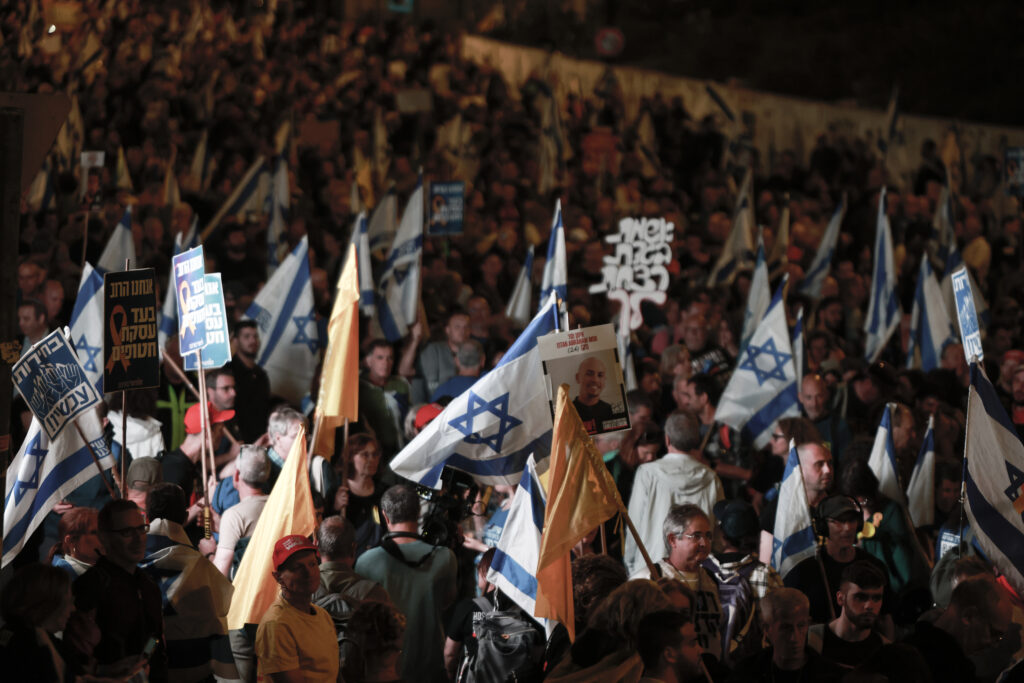
Israel’s parliament on Thursday passed a law expanding elected officials’ power to appoint judges, defying a years-long movement against Prime Minister Benjamin Netanyahu’s contentious judicial reforms that saw massive street protests.The approval comes as Netanyahu’s government, one of the most right-wing in Israel’s history, is locked in a standoff with the supreme court after beginning proceedings to dismiss Attorney General Gali Baharav-Miara and announcing the sacking of Ronen Bar, head of the internal security agency.Critics said the new law was a “nail in the coffin of Israeli democracy,” while the opposition swiftly filed a petition with the supreme court challenging the vote, viewing these judicial changes as signs of Netanyahu’s authoritarian shift toward an illiberal democracy.The legislation was approved by a vote of 67 in favour and one against, with the opposition boycotting the early-morning vote.Israel’s parliament, the Knesset, has 120 lawmakers.The overall judicial reform package had sparked one of the largest protest movements in Israel’s history in 2023 before being overtaken by the war in Gaza.The war began following the deadly October 7, 2023 attack on Israel by the Palestinian Islamist group Hamas, which rules the Gaza Strip.According to Justice Minister Yariv Levin, who sponsored the bill, the measure was intended to “restore balance” between the legislative and judicial branches.In his closing remarks ahead of the vote, Levin slammed the supreme court, saying it had “effectively nullified the Knesset”.”It has taken for itself the authority to cancel laws and even Basic Laws. This is something unheard of in any democracy in the world,” said Levin, the key architect of the judicial changes.”But our supreme court didn’t stop at trampling the Knesset; it placed itself above the government. It can annul any government action, compel the government to perform any action, cancel any government appointment.”- ‘Hypocrisy’ -“It is hypocrisy and one-sided to say that the Knesset is forbidden to act while the court is allowed to act in the middle of a war,” Levin said.”The days of appeasement and silencing are over, never to return.”Currently, judges — including supreme court justices — are selected by a nine-member committee comprising judges, lawmakers, and bar association representatives, under the justice minister’s supervision.Under the new law, which would take effect at the start of the next legislative term, the committee would still have nine members: three supreme court judges, the justice minister and another minister, one coalition lawmaker, one opposition lawmaker, and two public representatives -— one appointed by the majority and the other by the opposition.Yair Lapid, leader of the centre-right Yesh Atid party, announced on social media platform X that he had filed an appeal with the supreme court against the law on behalf of several opposition parties, just minutes after the parliamentary vote.The law aims to “ensure that judges become subject to the will of politicians,” Lapid said in his post.”Instead of focussing all efforts on their (Israeli hostages in Gaza) return and healing the divisions within the people, this government is returning to the exact legislation that divided the public before October 7.”- Protests and criticisms -“The amendment passed by the Knesset is another nail in the coffin of Israeli democracy,” said Eliad Shraga, head of Israeli NGO the Movement for Quality Government in Israel and one of the petitioners against the law.”This is a calculated attempt to take control of the judicial system and turn it into a tool in the hands of politicians,” he said in a statement.The government’s judicial reforms package, first unveiled in early 2023, had triggered massive weekly street protests that effectively divided Israeli society.Netanyahu’s detractors warn the multi-pronged package could pave the way for authoritarian rule and be used by Netanyahu to quash possible convictions against him in his ongoing corruption trial, an accusation the premier denies.Rallies have once again erupted in key cities, and on Wednesday thousands protested against the bill before it was approved in parliament.Netanyahu had slammed the opposition in parliament on Wednesday.”You recycle the same worn-out and ridiculous slogans about ‘the end of democracy’. Well, once and for all: Democracy is not in danger, it is the power of the bureaucrats that is in danger,” he said.”Perhaps you could stop putting spanners in the works of the government in the middle of a war. Perhaps you could stop fuelling the sedition, hatred and anarchy in the streets.”

Algerian court sentences writer Sansal to five years in jail

An Algerian court on Thursday sentenced French-Algerian writer Boualem Sansal, whose case has been at the heart of a diplomatic storm, to five years behind bars, an AFP journalist inside the courtroom said.The author is known for his criticism of Algerian authorities as well as of Islamists.He was arrested in November and stood trial for undermining Algeria’s territorial integrity, after saying in an interview with a far-right French media outlet that France unfairly ceded Moroccan territory to Algeria during the colonial era.The statement, which echoed a long-standing Moroccan claim, was viewed by Algeria as an affront to its national sovereignty.The author’s arrest in Algiers deepened a diplomatic rift with France, which analysts have said is the worst the two countries have seen in years.A court in Dar El Beida, near Algiers, sentenced “the defendant in his presence to a five-year prison term” with a fine of 500,000 Algerian dinars ($3,730).Last week, prosecutors at an Algiers court requested a 10-year prison sentence for the novelist whose work has remained available in Algeria despite his criticism of the government.Though Sansal was relatively unknown in France before his arrest, the trial has sparked a wave of support from French intellectuals and officials.French President Emmanuel Macron has dismissed the accusations against Sansal as “not serious”, but had expressed confidence in Algerian President Abdelmadjid Tebboune’s “clarity of vision” on the matter.Macron has repeatedly called for the writer’s release, citing his fragile state of health due to cancer.Sansal’s French lawyer, Francois Zimeray, condemned the decision in a post on X as “a sentence that betrays the very meaning of the word justice.”His age and his health make every day he spends in jail even more inhuman. I appeal to the Algerian presidence: justice has failed, let humanity at least prevail.”According to his French publisher, Sansal is 80 years old.- ‘Resolution’ -Algerian news site TSA has written that the trial was “not just about the fate of one man but also the immediate future of relations” between Algeria and its former colonial ruler.Ties between the two countries have been strained over migration issues and since Macron recognised Moroccan sovereignty over the disputed territory of Western Sahara in July last year.Western Sahara is mostly controlled by Morocco but claimed by the Algeria-backed pro-independence Polisario Front, which seeks a UN-backed self-determination referendum that has never materialised since a 1991 ceasefire.At his trial last week, Sansal said he had not foreseen the potential repercussions of his comments on Algeria’s borders with Morocco.He also denied any intent to harm Algeria, saying he merely “expressed an opinion” in the name of “freedom of expression”, according to Algerian newspaper Echorouk.Algeria has blamed the French right and far right for fuelling the dispute, arguing that French diplomacy is now led by hardliners favouring its regional rival, Morocco.In an apparent attempt to ease tensions, Tebboune said in an interview on Saturday that the case was “in good hands” and described Macron as his “sole point of reference” for repairing strained ties.Prior to Thursday’s sentencing, analyst Hasni Abidi said the author might be granted a presidential pardon during upcoming Muslim or national holidays.

Israel parliament passes judicial reform law, opposition challenges

Israel’s parliament Thursday passed a law expanding elected officials’ power to appoint judges, defying a years-long movement against Prime Minister Benjamin Netanyahu’s contentious judicial reforms that saw massive street protests.The approval comes as Netanyahu’s government, one of the most right-wing in Israel’s history, is locked in a standoff with the supreme court after beginning proceedings to dismiss Attorney General Gali Baharav-Miara and Ronen Bar, head of the internal security agency.The opposition, which swiftly filed a petition with the supreme court challenging the vote, views these judicial reforms as signs of Netanyahu’s authoritarian shift toward an illiberal democracy.The legislation was approved by a vote of 67 in favour and one against, with the opposition boycotting the early-morning vote.Israel’s parliament, the Knesset, has 120 lawmakers.The overall judicial reform package had sparked one of the largest protest movements in Israel’s history in 2023 before being overtaken by the war in Gaza.The war began following the deadly October 7, 2023 attack on Israel by the Palestinian Islamist group Hamas, which rules the Gaza Strip.Yair Lapid, leader of the centre-right Yesh Atid party, announced on social media platform X that he had filed an appeal with the supreme court against the law on behalf of several opposition parties, just minutes after the parliamentary vote.According to Justice Minister Yariv Levin, who sponsored the bill, the measure was intended to “restore balance” between the legislative and judicial branches.In his closing remarks ahead of the vote, Levin slammed the supreme court for what he described had “effectively nullified the Knesset”.”It has taken for itself the authority to cancel laws and even Basic Laws. This is something unheard of in any democracy in the world,” said Levin, the key architect of the judicial reforms.”But our supreme court didn’t stop at trampling the Knesset; it placed itself above the government. It can annul any government action, compel the government to perform any action, cancel any government appointment.”- ‘Hypocrisy’ -Levin said with the new bill the country was “opening a new page”.”It is hypocrisy and one-sided to say that the Knesset is forbidden to act while the court is allowed to act in the middle of a war,” Levin said.”The days of appeasement and silencing are over, never to return. I am proud to stand here and demand justice, and I am even prouder to deliver justice.”Currently, judges — including supreme court justices — are selected by a nine-member committee comprising judges, lawmakers, and bar association representatives, under the justice minister’s supervision.Under the new law, which would take effect at the start of the next legislative term, the committee would still have nine members: three supreme court judges, the justice minister and another minister, one coalition lawmaker, one opposition lawmaker, and two public representatives -— one appointed by the majority and the other by the opposition.The government’s judicial reforms package, first unveiled in early 2023, had triggered massive street protests that effectively divided Israeli society.Netanyahu’s detractors warn the multi-pronged package could pave the way for authoritarian rule and be used by Netanyahu to quash possible convictions against him in his ongoing corruption trial, an accusation the premier denies.Protesters had rallied weekly against the government reforms since they were unveiled.Rallies have once again erupted in key cities, and on Wednesday thousands protested against the bill before it was approved in parliament.Netanyahu had slammed the opposition on Wednesday during a speech in parliament.”You recycle the same worn-out and ridiculous slogans about ‘the end of democracy’. Well, once and for all: Democracy is not in danger, it is the power of the bureaucrats that is in danger.”Perhaps you could stop putting spanners in the works of the government in the middle of a war. Perhaps you could stop fuelling the sedition, hatred and anarchy in the streets.”