AFP Asia Business

Thousands rally in Morocco at pro-Palestinian protest

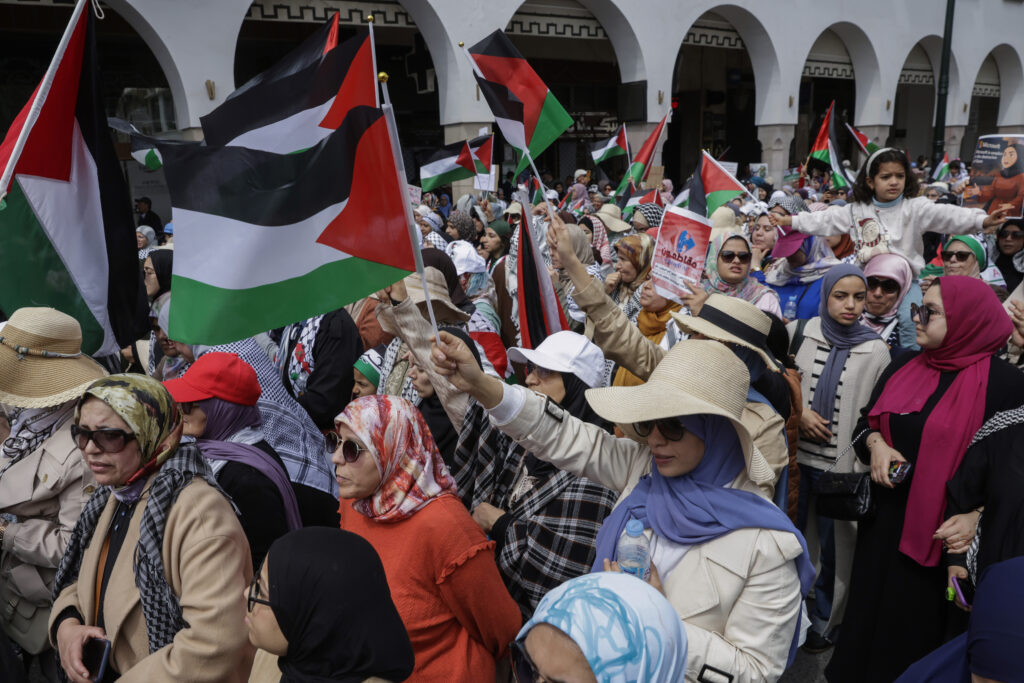
Tens of thousands of people demonstrated in Morocco’s capital on Sunday against the conflict in the Gaza Strip where Israel has resumed its anti-Hamas offensive after a two-month ceasefire.The largest pro-Palestinian protest in the capital Rabat for several months was called by the Islamist-dominated coalition the Justice and Development party.Protesters were accompanied by chanting and the beating of drums as they marched down the city’s Mohammed V Avenue near parliament.They waved flags including one bearing the image of slain Hamas chief Yahya Sinwar.Children carried white shrouds stained in red to symbolise the thousands of young victims killed in the Palestinian territory during a year and a half of war.Israel’s military resumed its offensive in Gaza on March 18, and since then, more than 1,330 people have been killed in the territory, according to the Hamas-run territory’s health ministry.The war began after Palestinian militants attacked communities in southern Israel on October 7, 2023, killing 1,218 people, mostly civilians, according to an AFP tally based on official Israeli figures.The overall death toll since the war erupted now stands at 50,695, according to the Gaza health ministry.On Sunday, demonstrators chanted slogans including “The people want the liberation of Palestine!”, called Israeli Prime Minister Benjamin Netanyahu a criminal, and demanded an end to the siege of Gaza and for aid to be allowed in.There were also calls for Morocco’s relations with Israel, re-established in 2020 under the US-brokered Abraham Accords, to be scrapped, with protesters calling such ties “treason”.Rabat has officially called for an immediate and lasting cessation of the war in Gaza, without mention to the country’s ties with Israel.

Iran rejects Trump call for direct nuclear talks

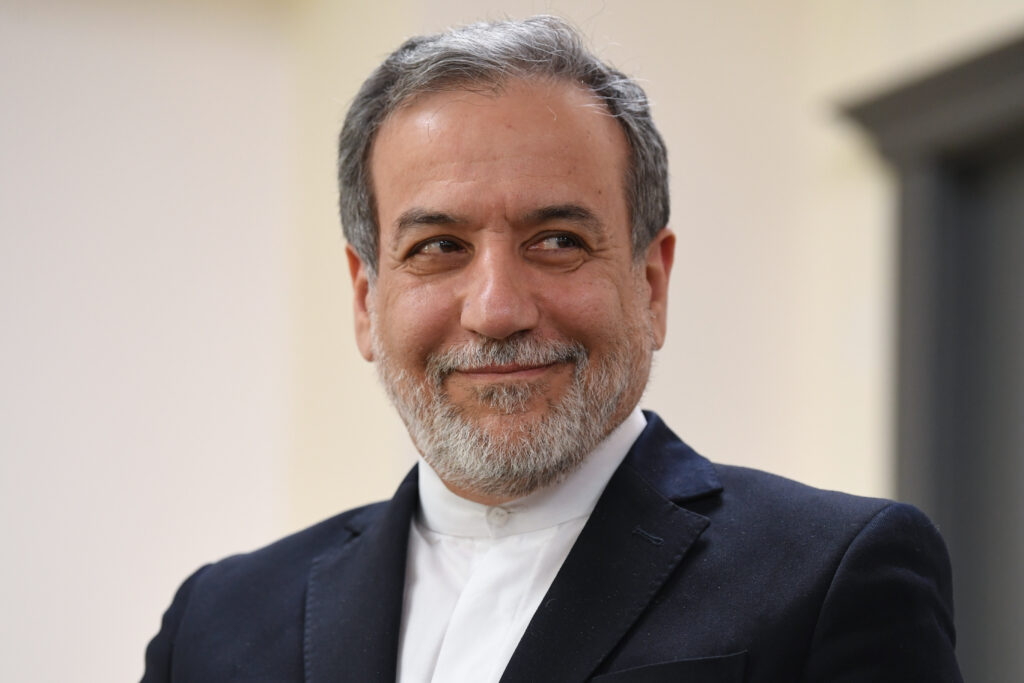
Iran’s top diplomat has dismissed direct negotiations with the United States as pointless, his office said Sunday, after US President Donald Trump said he preferred face-to-face talks over its nuclear programme.Trump sent a letter to Iran’s supreme leader Ayatollah Ali Khamenei last month calling for negotiations but warning of military action if diplomacy failed.On Thursday, the US president said he favoured “direct talks”, arguing they were “faster” and offered a better understanding than going through intermediaries.But Iranian Foreign Minister Abbas Araghchi said direct talks made no sense with a country “that constantly threatens to resort to force in violation of the UN Charter and that expresses contradictory positions from its various officials”.”We remain committed to diplomacy and are ready to try the path of indirect negotiations,” he was quoted as saying in a statement issued by his ministry.”Iran keeps itself prepared for all possible or probable events, and just as it is serious in diplomacy and negotiations, it will also be decisive and serious in defending its national interests and sovereignty.”On Saturday, Iranian President Masoud Pezeshkian said his country was willing to engage in dialogue with the United States on an “equal footing”.He also questioned Washington’s sincerity in calling for negotiations, saying “if you want negotiations, then what is the point of threatening?”Iran and the United States have had no diplomatic relations since shortly after the 1979 Islamic Revolution with some regional countries like Oman playing a mediating role between the two sides.- Letter diplomacy -Trump’s letter was delivered to Iran via the United Arab Emirates, and Tehran responded at the end of March via the Sultanate of Oman.On Sunday, the chief of staff of the Iranian armed forces, General Mohammad Bagheri, said Iran’s response stressed that “we seek peace in the region”.”We are not the ones who start wars, but we will respond to any threat with all our might,” he said of the content of Iran’s response.Western countries, led by the United States, have for decades accused Tehran of seeking to acquire nuclear weapons.Iran rejects the allegation and maintains that its nuclear activities exist solely for civilian purposes.In 2015, Iran reached a landmark deal with the permanent members of the UN Security Council, namely the United States, France, China, Russia, and the United Kingdom, as well as Germany, to limit its nuclear activities.The 2015 agreement — known as the Joint Comprehensive Plan of Action — gave Iran sanctions relief in exchange for curbs on its nuclear programme to guarantee that Tehran could not develop a nuclear weapon.In 2018, during Trump’s first term in office, the United States withdrew from the agreement and reinstated biting sanctions on Iran.A year later, Iran began rolling back on its commitments under the agreement and accelerated its nuclear programme.On Monday, Ali Larijani, a close adviser to Khamenei, warned that while Iran was not seeking nuclear weapons, it would “have no choice but to do so” in the event of an attack against it.

Migrants driven from Tunisian olive groves left in limbo

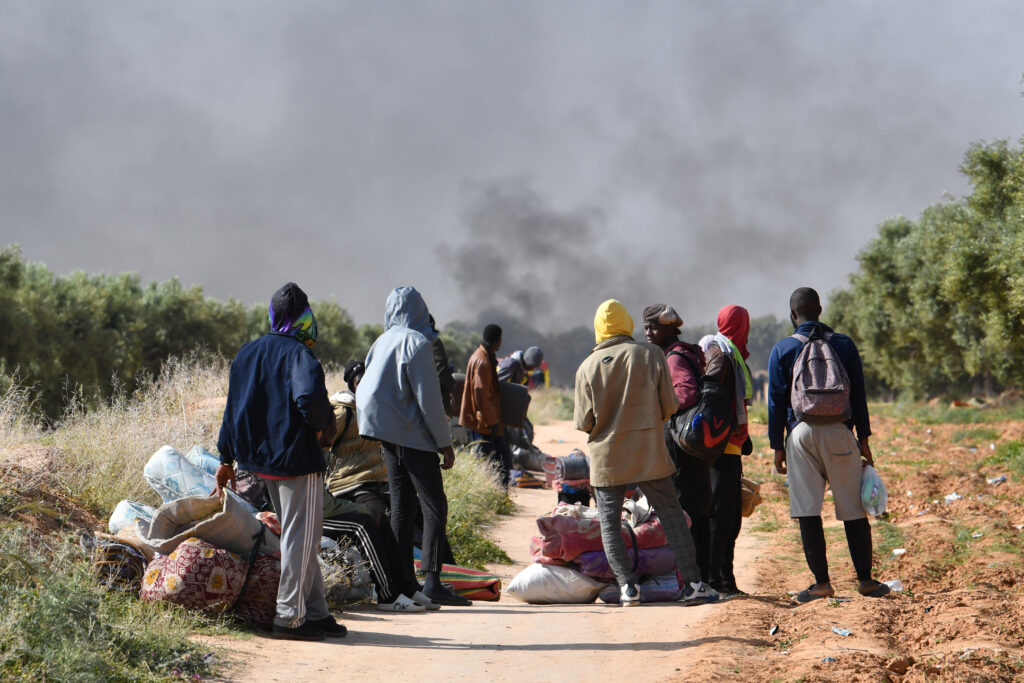
Batons in hand, Tunisian police marched in single file down a dirt path flanked by olive trees. Ahead of them, migrants fled as their tents burned.Some migrants stood by helplessly, watching the smoke swirl into the sky just a few hundred metres (yards) away after the authorities torched what had been their temporary homes.”I don’t know what to do,” said Bakayo Abdelkadeur, a 26-year-old from Mali, clutching two worn blankets.For nearly two years, olive groves around El Amra, a town south of Tunis, served as informal camps for thousands of migrants from sub-Saharan Africa.This week, authorities launched a sweeping operation to clear out the makeshift shelters located a few kilometres (miles) from Tunisia’s Mediterranean coast.It’s a growing flashpoint, fuelled by an anti-migrant campaign and rising tensions with local residents, who complain about the camps and demand that the land be cleared.Tempers flared in 2023 after President Kais Saied said that “hordes of sub-Saharan migrants” threatened to change the country’s demographics.Many migrants arrived after crossing the deserts of Algeria and Mali, hoping to reach Italy. But tighter controls on the sea route have left them stranded.Last year, Tunisia signed a 255-million-euro (almost $280-million) deal with the European Union, nearly half of which is earmarked for tackling irregular migration.- ‘Confused’ -Benjamin Enna picked up a spoon and a sachet of powdered juice — remnants of the so-called “Kilometre 25″ camp.The 29-year-old Nigerian said he survived a Mediterranean shipwreck and had hoped to join his brother in Italy.Now he’s torn between going home, working in Tunisia and trying to reach Europe again.”My head’s all mixed up,” he said.While some expressed a desire to go home and others insisted on pushing for Europe, nearly all migrants AFP spoke to around El Amra agreed on one thing: they want to leave Tunisia.”We’ve suffered a lot,” said Camara Hassan, 25, a former student of international relations from Guinea who spent two months in a Tunisian prison.Despite the many obstacles, he remains determined to reach Europe.”One way or another we’ll make it,” he said.Others are frustrated by delays in voluntary return flights facilitated by the UN’s International Organization for Migration.”I want to go back to Ivory Coast, but the IOM (flights) are full,” he said, before darting away when a National Guard vehicle approached.A visibly exhausted 29-year-old Cameroonian, who asked not to be named, described her anguish.”It’s horrible,” she said. “They treat us like we’re not human.”- New camps? -National Guard spokesman Houcem Eddine Jebabli defended the police operation as “humane”, saying that officers did not use tear gas.Asked what would happen to the migrants now their shelters were gone, he said many would benefit from the “voluntary returns”, while others have “dispersed into the wild”.As of Wednesday, the IOM said it had arranged 1,740 voluntary returns, following nearly 7,000 last year — triple the 2023 figure.But rights groups are sceptical.Dozens of police vans and tractors were deployed in the operation, which Romdhane Ben Amor of the Tunisian Forum for Economic and Social Rights (FTDES) said aimed to scatter migrants to ease local anger.”It won’t work,” he warned. “They’ll regroup and build new camps because they have nowhere else to go.”On Saturday, a short drive from El Amra, groups of migrants were already walking along the roadside, heading towards other olive groves.

Iran top diplomat rejects direct negotiations with US

Iranian Foreign Minister Abbas Araghchi on Sunday rejected direct negotiations with the United States as “meaningless”, after US President Donald Trump said he would prefer direct talks with the Islamic republic.Trump had called last month on Tehran to hold negotiations on its nuclear programme with Washington, but threatened to bomb Iran if diplomacy fails.On Thursday, the US president said he would prefer to hold “direct talks” with Iran.”I think it goes faster and you understand the other side a lot better than if you go through intermediaries,” he argued.But on Sunday, Araghchi said “direct negotiations would be meaningless with a party that constantly threatens to resort to force in violation of the UN Charter and that expresses contradictory positions from its various officials”.”We remain committed to diplomacy and are ready to try the path of indirect negotiations,” he added, according to a foreign ministry statement.”Iran keeps itself prepared for all possible or probable events, and just as it is serious in diplomacy and negotiations, it will also be decisive and serious in defending its national interests and sovereignty,” Araghchi said.On Saturday, Iranian President Masoud Pezeshkian said his country was willing to engage in dialogue with the US “on equal footing”.He also questioned Washington’s sincerity in calling for negotiations, saying “if you want negotiations, then what is the point of threatening?”- Nuclear programme -Western countries, led by the United States, have for decades accused Tehran of seeking to acquire nuclear weapons.Iran rejects the allegation and maintains that its nuclear activities exist solely for civilian purposes.On Saturday Hossein Salami, the head of the Islamic Revolutionary Guard Corps, said the country was “ready” for war.”We are not worried about war at all. We will not be the initiators of war, but we are ready for any war,” the official IRNA news agency reported him as saying.In 2015, Iran reached a landmark deal with the permanent members of the UN Security Council, namely the United States, France, China, Russia, and the United Kingdom, as well as Germany, to regulate its nuclear activities.The 2015 agreement formally known as the Joint Comprehensive Plan of Action (JCPOA)gave Iran sanctions relief in exchange for curbs on its nuclear programme to guarantee that Tehran could not develop a nuclear weapon.In 2018, during Trump’s first term in office, the United States withdrew from the agreement and reinstated biting sanctions on Iran.A year later, Iran began rolling back on its commitments under the agreement and accelerated its nuclear programme.On Monday, Ali Larijani, a close adviser to supreme leader Ayatollah Ali Khamenei, warned that while Iran was not seeking nuclear weapons, it would “have no choice but to do so” in the event of an attack against it.

Netanyahu visiting Trump on Monday to discuss tariffs and Iran

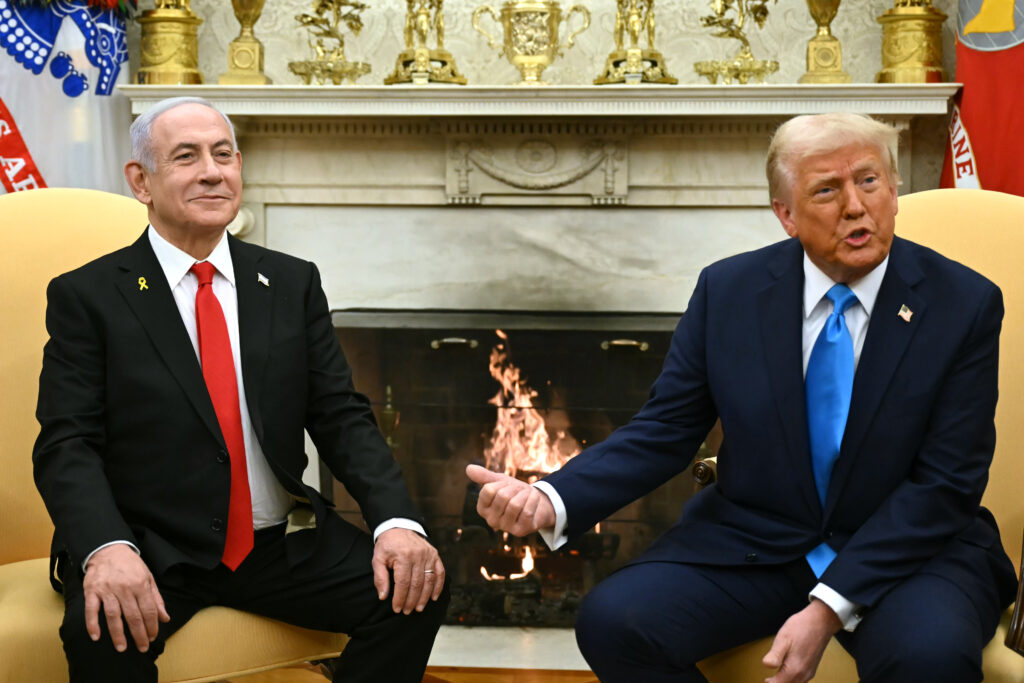
Israeli Prime Minister Benjamin Netanyahu is set to travel to Washington to meet with US President Donald Trump, discussing issues including tariffs and the “Iranian threat,” his office said Saturday.The meeting will take place on Monday, a White House official said on condition of anonymity.The two countries are dealing with a set of extremely thorny issues, including Trump’s shock imposition of 17 percent tariffs on Israeli imports, an elusive search for a ceasefire in Gaza, and mounting concern over Iran’s nuclear program.Netanyahu will meet Trump to “discuss tariffs, efforts to bring back Israeli hostages (from Gaza), Israel-Turkey relations, the Iranian threat, and the fight against the International Criminal Court,” which has accused the Israeli leader of war crimes, his Jerusalem office said in a statement Saturday.Tariff talks would make Netanyahu the first foreign leader to travel to Washington in an attempt to negotiate a better deal with Trump.Israel had attempted to duck the tariffs imposed on nearly every country by moving preemptively Tuesday — a day before Trump’s big global tariff announcement — to drop all remaining duties on the one percent of American goods still affected by them.But Trump moved ahead with the tariffs, saying the United States had a significant trade deficit with its Mideast ally and top beneficiary of military aid.Trump had said Thursday that he expected a visit soon from Netanyahu — “maybe even next week” — though the Axios website said Israeli officials and even some in the Trump administration were caught by surprise.Also on the agenda will be stalled efforts to reach a new agreement on a Gaza ceasefire deal and the return by the Hamas militants of the remaining hostages. Israel renewed military operations there last month, ending a short-lived truce.Trump meanwhile has pressed Iran, so far amid few signs of progress, for a new deal on its nuclear program. There has been widespread speculation that Israel, possibly with US help, might launch a military strike on Iranian facilities if no agreement is reached.Netanyahu’s US visit, originally expected to take place later this month, appears to have been moved up following the tariff announcement Wednesday, Axios reported. Trump and Netanyahu had spoken by phone on Thursday about Hungary’s decision to withdraw from the International Criminal Court (ICC), and the possibility of the Washington visit apparently arose at that time.burs-bbk-tgb/acb