AFP Asia Business

First US-Iran nuclear talks in years start in Oman

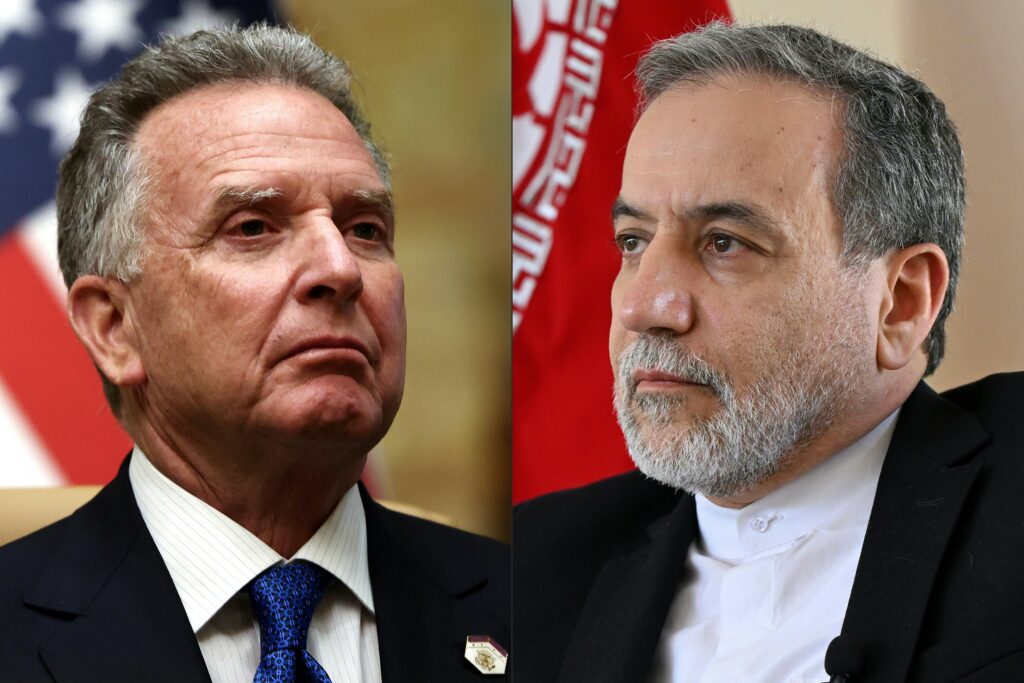
The United States and Iran opened high-stakes talks on Tehran’s nuclear programme on Saturday with President Donald Trump threatening military action if they fail to produce a deal.The two sides entered “indirect” talks — via an intermediary — in the Omani capital Muscat, Iran’s foreign ministry said. The Americans had called for the meetings to be face-to-face.Disagreement over the format indicated the task facing the long-term adversaries, who are seeking a new nuclear deal after Trump pulled out of an earlier agreement during his first term in 2018.Foreign Minister Abbas Araghchi is leading the Iranian delegation while Trump’s special envoy Steve Witkoff heads the US team.”Our intention is to reach a fair and honourable agreement from an equal position,” Araghchi said in a video posted by Iranian state TV.Iran, weakened by Israel’s pummelling of its allies Hezbollah in Lebanon and Hamas in Gaza, is seeking relief from wide-ranging sanctions hobbling its economy.Tehran has agreed to the meetings despite baulking at Trump’s “maximum pressure” campaign of ramping up sanctions and repeated military threats.Meanwhile the US, hand-in-glove with Iran’s arch-enemy Israel, wants to stop Tehran from ever getting close to developing a nuclear bomb.- Witkoff open to ‘compromise’ -Witkoff told The Wall Street Journal earlier that “our position today” starts with demanding that Iran completely dismantle its nuclear programme — a view held by hardliners around Trump that few expect Iran would ever accept.”That doesn’t mean, by the way, that at the margin we’re not going to find other ways to find compromise between the two countries,” Witkoff told the newspaper.”Where our red line will be, there can’t be weaponisation of your nuclear capability,” he added.The talks were revealed in a surprise announcement by Trump as he met the press alongside Israeli Prime Minister Benjamin Netanyahu at the White House on Monday.Hours before they begin, Trump told reporters aboard Air Force One: “I want Iran to be a wonderful, great, happy country. But they can’t have a nuclear weapon.”Iranian supreme leader Ayatollah Ali Khamenei’s adviser Ali Shamkhani said Tehran was “seeking a real and fair agreement”, adding that “important and implementable proposals are ready”.Saturday’s contact between the two sides, which have not had diplomatic relations for decades, follows repeated threats of military action by both the United States and Israel.”If it requires military, we’re going to have military,” Trump said on Wednesday when asked what would happen if the talks fail to produce a deal.Responding to Trump’s threat, Tehran said it could expel United Nations nuclear inspectors, a move that Washington warned would be an “escalation”.- ‘Survival of the regime’ -The 2015 deal that Trump exited aimed to make it practically impossible for Iran to build an atomic bomb, while at the same time allowing it to pursue a civil nuclear programme.Britain, China, France, Russia and Germany were the other parties to the agreement, of which Araghchi was a key architect.Iran, which insists its nuclear programme is only for civilian purposes, stepped up its activities after Trump abandoned the 2015 agreement.The latest International Atomic Energy Agency report noted with “serious concern” that Iran had an estimated 274.8 kilograms of uranium enriched to 60 percent, nearing the weapons grade of 90 percent.Karim Bitar, a Middle East Studies lecturer at Sciences Po university in Paris, said negotiations “will not focus exclusively on… the nuclear programme”.”The deal would have to include Iran stopping its support to its regional allies,” a long-standing demand by US allies in the Gulf, he said.For Iran, it could be a matter of the government’s very survival.”The one and only priority is the survival of the regime, and ideally, to get some oxygen, some sanctions relief, to get their economy going again, because the regime has become quite unpopular,” Bitar said.
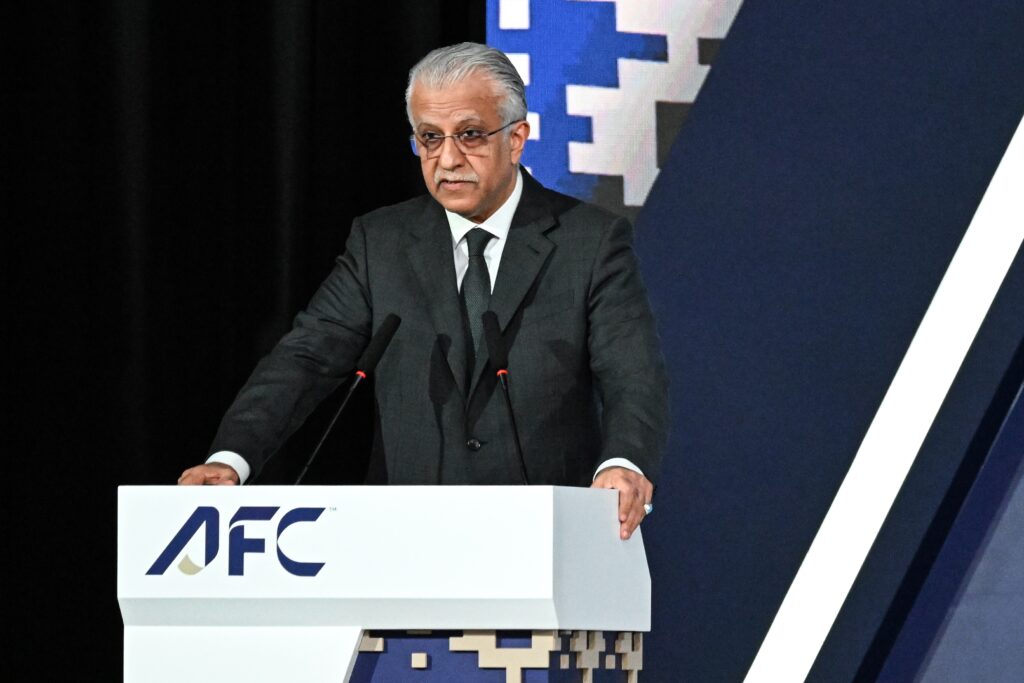
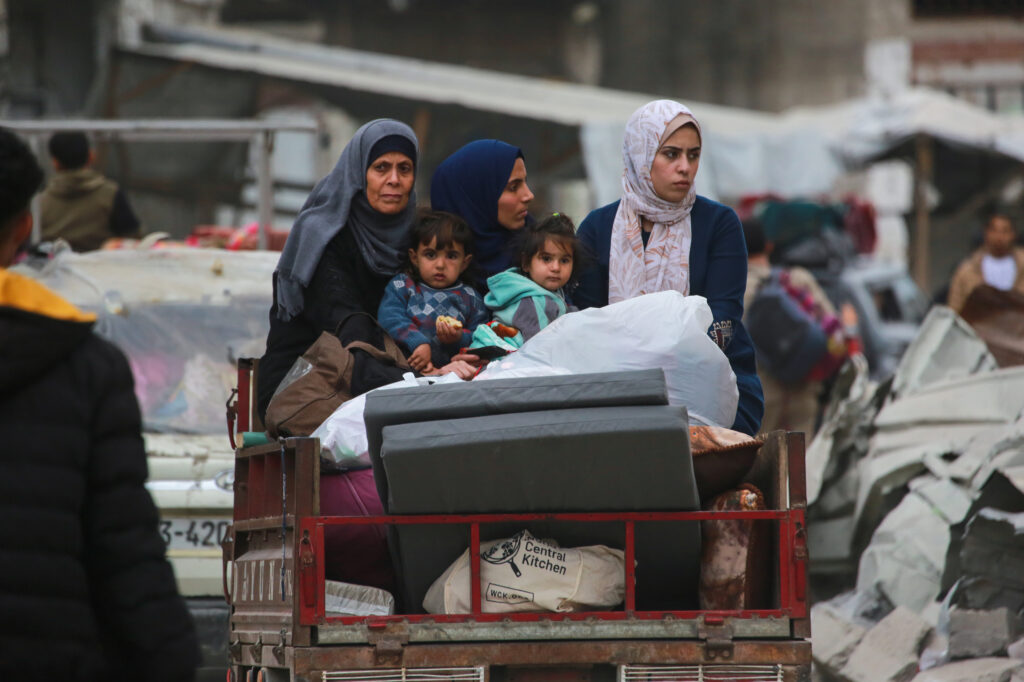
Asian football chief fears ‘chaos’ if 2030 World Cup expands to 64 teams

Asian Football Confederation (AFC) president Sheikh Salman bin Ibrahim Al Khalifa, on Saturday opposed a South American request to expand the 2030 World Cup to 64 teams, saying such increases in numbers would lead to “chaos”.The centenary edition, hosted by Spain, Portugal and Morocco with three matches also being staged in Uruguay, Argentina and Paraguay, is already set to welcome 48 teams – a far cry from the 13 in the inaugural event in Uruguay in 1930. “Personally, I don’t agree,” the Bahraini leader told AFP, adding the 2030 edition had settled on 48 teams “so the matter is settled”. His counterpart from South American football’s governing body CONMEBOL, Alejandro Dominguez, on Thursday called on FIFA to expand the event in a one-off gesture.He also asked for South America to host the first round of one of the groups, instead of just three matches. The global event is due to expand from 32 to 48 teams at the 2026 World Cup, hosted by the United States, Canada and Mexico.”If the issue remains open to change, then the door will not only be open to expanding the tournament to 64 teams, but someone might come along and demand raising the number to 132 teams,” said Salman on the sidelines of the 35th AFC Congress in Kuala Lumpur. “Where would we end up then? It would become chaos.”However, the Asian leader refused to close the door on a change after the 2034 World Cup in Saudi Arabia, which will host 48 teams. “If we want to discuss subsequent tournaments… that’s a different matter,” he said. UEFA boss Aleksander Ceferin, dismissed it as a “bad idea” but FIFA secretary general Mattias Grafstrom said the world body would “analyse” the South American proposal. “There are many things that need to be studied, and we will take our time, consult everyone,” he said. 

Hamas expects ‘real progress’ in Cairo talks to end Gaza war

Hamas expects “real progress” towards a ceasefire deal to end the war in Gaza, an official said, as senior leaders from the Palestinian movement hold talks with Egyptian mediators in Cairo on Saturday.The meeting between Hamas and Egyptian mediators come amid ongoing violence in Gaza, as the Israeli military intercepted three projectiles fired from the territory and launched air strikes and artillery shelling on several areas.The scheduled talks in Cairo also come days after US President Donald Trump suggested an agreement to secure the release of hostages held in Gaza was close to being finalised.A Hamas official told AFP that the Palestinian group anticipated the meeting with Egyptian mediators would yield significant progress.”We hope the meeting will achieve real progress towards reaching an agreement to end the war, halt the aggression and ensure the full withdrawal of occupation forces from Gaza,” the official familiar with the ceasefire negotiations said on condition of anonymity, as he was not authorised to speak publicly on the matter.The delegation will be led by the group’s chief negotiator Khalil al-Hayya, he said.According to the official, Hamas has not yet received any new ceasefire proposals, despite Israeli media reports suggesting that Israel and Egypt had exchanged draft documents outlining a potential ceasefire and hostage release agreement.”However, contacts and discussions with mediators are ongoing,” he added, accusing Israel of “continuing its aggression” in Gaza.The Times of Israel reported that Egypt’s proposal would involve the release of eight living hostages and eight bodies, in exchange for a truce lasting between 40 and 70 days and a substantial release of Palestinian prisoners.- Projectiles fired -President Trump said during a cabinet meeting this week that “we’re getting close to getting them (hostages in Gaza) back”.Trump’s Middle East envoy Steve Witkoff was also quoted in an Israeli media report as saying “a very serious deal is taking shape, it’s a matter of days”.Israel resumed its Gaza strikes on March 18, ending a two-month ceasefire with Hamas. Since then, more than 1,500 people have been killed, according to the health ministry in the Hamas-run territory to which Israel cut off aid more than a month ago.Dozens of these strikes have killed “only women and children,” according to a report by UN human rights office.The report also warned that expanding Israeli evacuation orders were resulting in the “forcible transfer” of people into ever-shrinking areas, raising “real concern as to the future viability of Palestinians as a group in Gaza”.On Saturday, Israel continued with its offensive.Gaza’s civil defence agency reported an Israeli air strike on a house in Gaza City on Saturday morning.AFP footage of the aftermath of the strike showed the bodies of four men, wrapped in white shrouds, at a local hospital, while several individuals gathered to offer prayers before the funeral.The Israeli military, meanwhile, said its air force intercepted three projectiles that were identified as crossing into Israeli territory from southern Gaza on Saturday.The ceasefire that ended on March 17 had led to the release of 33 hostages from Gaza —  eight of them deceased — and the release of around 1,800 Palestinian prisoners held in Israeli jails.The war in Gaza broke out after Hamas’s October 7, 2023, attack on Israel. It resulted in the deaths of 1,218 people, mostly civilians, according to an AFP tally based on Israeli official figures.Militants also took 251 hostages, 58 of whom are still held in Gaza, including 34 the Israeli military says are dead.Gaza’s health ministry said on Friday that at least 1,563 Palestinians had been killed since March 18 when the ceasefire collapsed, taking the overall death toll since the war began to 50,933.

Iran delegation in Oman for high-stakes nuclear talks with US

Iran’s top diplomat arrived in Oman on Saturday and began laying the groundwork for high-stakes nuclear talks with the United States that are unfolding under the threat of military action.Foreign Minister Abbas Araghchi flew in ahead of the foes’ highest-level discussions since an international agreement on Iran’s nuclear programme crumbled after US President Donald Trump pulled out during his first term in office.”Our intention is to reach a fair and honourable agreement from an equal position,” Araghchi said in a video posted by Iranian state TV.Iran, weakened by Israel’s pummelling of its allies Hezbollah in Lebanon and Hamas in Gaza, is seeking relief from wide-ranging sanctions hobbling its economy.Tehran has agreed to the meetings despite baulking at Trump’s “maximum pressure” campaign of ramping up sanctions and repeated military threats.Meanwhile the US, hand-in-glove with Iran’s arch-enemy Israel, wants to stop Tehran from ever getting close to developing a nuclear bomb.The two sides are already at odds over the format of the talks, with the US calling them “direct” while the Iranians insist on using an intermediary.After arriving in Muscat, Araghchi set out Iran’s position on the “indirect” talks with Oman’s Foreign Minister Badr bin Hamad Al Busaidi, an Iranian statement said.”Araghchi provided the Omani foreign minister with Iran’s basis and positions on the talks for transmission to the other side,” Iran’s foreign ministry said.Trump’s special envoy Steve Witkoff is expected to lead the US team in Oman, which has long played a mediating role between Iran and Western countries.- Witkoff open to ‘compromise’ -Witkoff told The Wall Street Journal that “our position today” starts with demanding that Iran completely dismantle its nuclear programme — a view held by hardliners around Trump that few expect Iran would ever accept.”That doesn’t mean, by the way, that at the margin we’re not going to find other ways to find compromise between the two countries,” Witkoff told the newspaper.”Where our red line will be, there can’t be weaponisation of your nuclear capability,” he added.The talks were revealed in a surprise announcement by Trump as he met the press alongside Israeli Prime Minister Benjamin Netanyahu at the White House on Monday.Hours before they begin, Trump told reporters aboard Air Force One: “I want Iran to be a wonderful, great, happy country. But they can’t have a nuclear weapon.”Iranian supreme leader Ayatollah Ali Khamenei’s adviser Ali Shamkhani said Tehran was “seeking a real and fair agreement”, adding that “important and implementable proposals are ready”.Saturday’s contact between the two sides, which have not had diplomatic relations for decades, follows repeated threats of military action by both the United States and Israel.”If it requires military, we’re going to have military,” Trump said on Wednesday when asked what would happen if the talks fail to produce a deal.Responding to Trump’s threat, Tehran said it could expel United Nations nuclear inspectors, a move that Washington warned would be an “escalation”.- ‘Survival of the regime’ -The 2015 deal that Trump exited three years later aimed to make it practically impossible for Iran to build an atomic bomb, while at the same time allowing it to pursue a civil nuclear programme.Britain, China, France, Russia and Germany were the other parties to the agreement, of which Araghchi was a key architect.Iran, which insists its nuclear programme is only for civilian purposes, stepped up its activities after Trump abandoned the 2015 agreement.The latest International Atomic Energy Agency report noted with “serious concern” that Iran had an estimated 274.8 kilograms of uranium enriched to 60 percent, nearing the weapons grade of 90 percent.Karim Bitar, a Middle East Studies lecturer at Sciences Po university in Paris, said negotiations “will not focus exclusively on… the nuclear programme”.”The deal would have to include Iran stopping its support to its regional allies,” a long-standing demand by US allies in the Gulf, he said.For Iran, it could be a matter of the government’s very survival.”The one and only priority is the survival of the regime, and ideally, to get some oxygen, some sanctions relief, to get their economy going again, because the regime has become quite unpopular,” Bitar said.
Iraqi markets a haven for pedlars escaping Iran’s economic woes

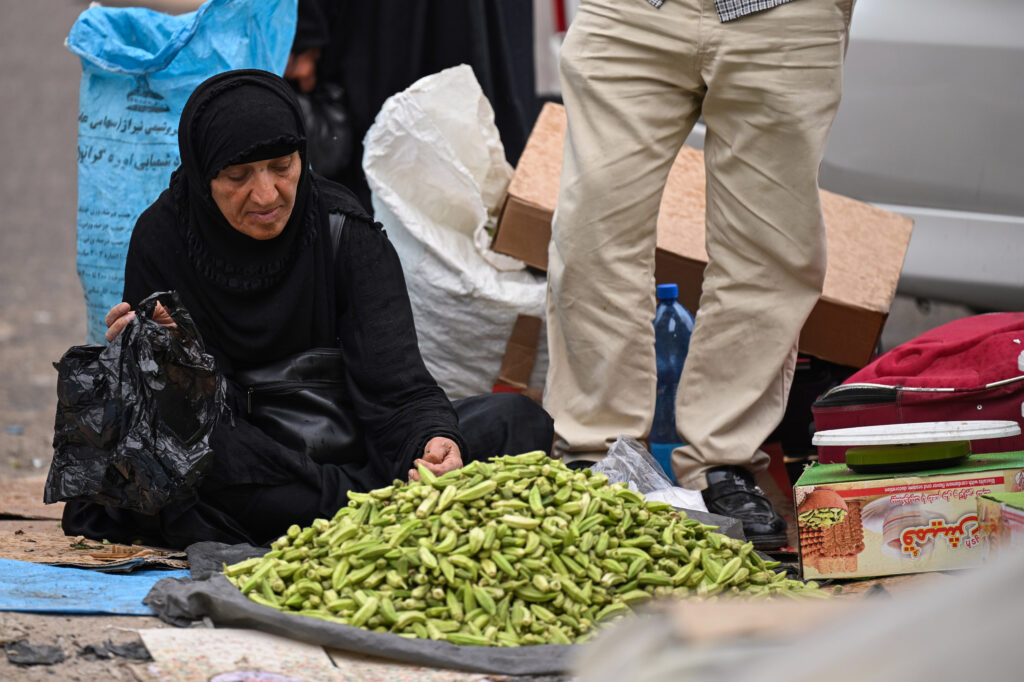
Every Friday, Alawi crosses the border from Iran into Iraq to sell his produce in the markets of Basra, which serve as a haven for Iranians grappling with economic sanctions.He is just one of many Iranian pedlars who endure the arduous journey into southern Iraq through the Chalamja border crossing.They bring essential goods such as chicken, eggs, cooking oil and household items to sell at low prices, hoping for a profit that would be unimaginable back home due to sharp currency depreciation and soaring inflation.”The situation is difficult due to the embargo,” Alawi said, referring to Western sanctions against Iran.Asking to withhold his surname for fear of repercussions back home, the 36-year-old said he had not given up easily on his country, and had tried to sell his produce in a market there.”There were no customers, and the products would spoil, so we had to throw them away and end up losing” money, he told AFP.Instead, for the past seven years, he has been travelling to Iraq where he sells okra in summer and dates in winter, earning between $30 and $50 a day –- much more than he could make at home.”When we exchange Iraqi money” for Iranian rials, “it’s a lot,” the father of two said.”We can spend it in five days or even a week,” he added.- ‘A lifeline’ -After a brief period of relief from sanctions in exchange for curbs on Iran’s nuclear programme, US President Donald Trump reimposed the biting measures during his first term in 2018.Ever since, the value of the Iranian rial has plunged, fuelling high inflation and unemployment.Prices soared last month by more than 32 percent compared to March the previous year, according to official figures.Trump announced this week that his administration would restart negotiations with Iran over its nuclear programme, with talks to take place in Oman on Saturday.Iranian Foreign Minister Abbas Araghchi has said his country’s chief aim is for US sanctions to be lifted.In the meantime, Basra’s markets continue to bustle with Iranian vendors.At the Friday market, bags of rice were stacked on plastic crates next to bottles of detergent. While some vendors chatted with customers, others dozed off beside their shopping bags, rubbing off the weariness of a long journey.Hayder al-Shakeri of the London-based Chatham House think-tank’s Middle East and North Africa programme said informal cross-border trade “has expanded significantly over the past decade as sanctions on Iran have increasingly impacted everyday life.”Basra’s proximity to Iran’s Khuzestan province, where many residents speak Arabic and share cultural values with Iraq, makes it a primary target for mostly working-class Iranian vendors, Shakeri said.Among them are women and elderly men whose livelihoods have been severely impacted by inflation, he said, calling the cross-border trade “a vital lifeline”.”Earning in more stable currencies like the Iraqi dinar or even US dollars provides a financial buffer” against the devaluated rial, he added.- Better and cheaper -Iran wields considerable political influence in Iraq and is a major trade partner for the country, the second-largest importer of non-oil Iranian goods. Trade between the two countries amounts to tens of billions of dollars.Milad, 17, and his mother have been selling household essentials in Basra for the past two years. Fearing a worsening situation back home, they recently rented a small shop.In Iran, “finding work is hard, and the currency is weak,” said curly-haired Milad, who declined to give his last name, adding that his cousin has been looking for a job since he graduated.Iraqi maths professor Abu Ahmad, 55, strolls to the market every Friday, looking for fresh Iranian goods.”Their geymar is better than ours,” he said, referring to the cream Iraqis have with honey for breakfast.It is also cheaper.”They sell it for 12,000 dinars ($8)” compared to an Iraqi price of 16,000, he added.Shakeri from Chatham House warned that local vendors “resent the competition”, and Iraqi security forces sometimes remove Iranians, though they know they will eventually return.Umm Mansur, a 47-year-old Iranian mother of five, has had a bitter experience since she joined other pedlars six months ago.At the border, “they insult and mistreat us,” she said.Other pedlars have described similar experiences, saying they were held up for hours at the crossing.Umm Mansur said she is willing to overlook the mistreatment to earn four times what she would at home.”In Iran, there is no way to make a living,” she said.

Chinese manufacturers in fighting spirits despite scrapped US orders

On a sweltering spring day, workers at a Christmas tree factory in eastern China rhythmically assembled piles of branches, wiping away sweat as they daubed white-paint snow onto plastic pine needles.Like countless other companies in the manufacturing powerhouse of Zhejiang province, its products are geared largely towards export — a sector freshly menaced by Donald …

Chinese manufacturers in fighting spirits despite scrapped US orders Read More »

Turkey accuses Israel of seeking to ‘dynamite’ Syria ‘revolution’

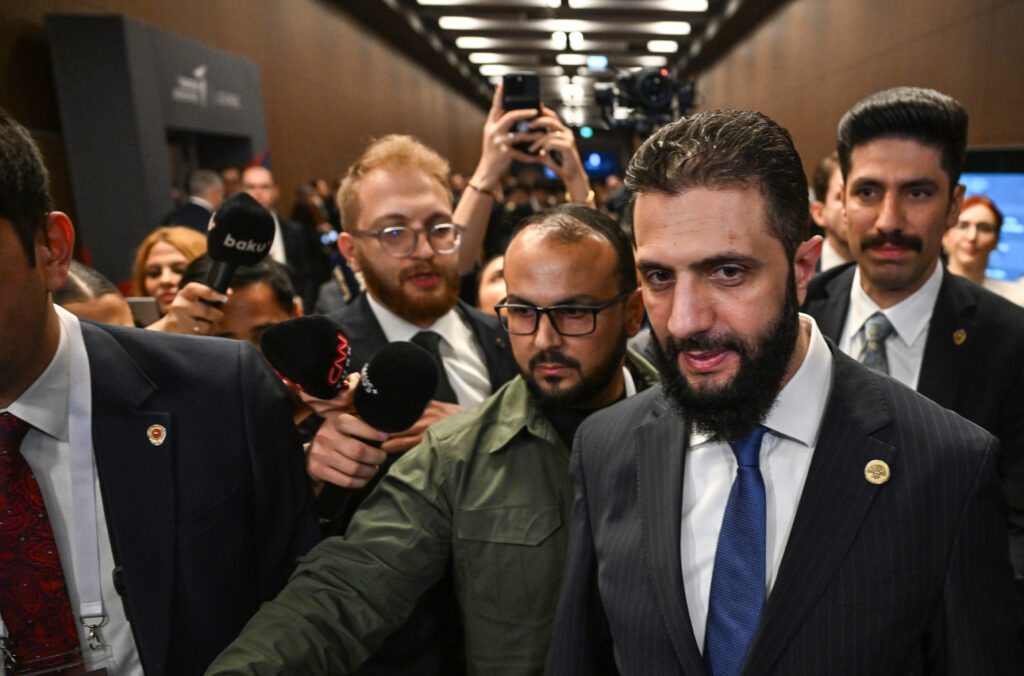
Turkish President Recep Tayyip Erdogan accused Israel on Friday of sowing divisions in Syria in a bid to “dynamite” the “revolution” that toppled dictator Bashar al-Assad.Turkey is a key backer of Syria’s new leader Ahmed al-Sharaa, whose Islamist group Hayat Tahrir al-Sham (HTS) led the rebel coalition that ousted Assad in December.”Israel is trying to dynamite the December 8 revolution by stirring up ethnic and religious affiliations and turning minorities in Syria against the government,” Erdogan told a forum in the southern Mediterranean resort of Antalya.Sharaa, who arrived in Antalya earlier in the day, met with Erdogan on the sidelines of the diplomacy forum, with the Turkish presidency posting a photo of the two shaking hands on X.A Syrian foreign ministry statement said the talks emphasised “Turkey’s support for the Syrian people for reconstruction and lifting the economic sanctions on Syria”.The talks also addressed “strengthening joint cooperation between the two countries in different sectors”, the statement said.It was Sharaa’s second trip to Turkey as leader, after Erdogan welcomed him to Ankara in February.Besides Erdogan, Sharaa also met with Qatar’s foreign minister.”During these meetings, we discussed ways to strengthen bilateral relations, expand areas of cooperation, and coordinate on issues of common interest, serving the interests of our peoples and enhancing security and stability in the region and the world,” Sharaa said on Telegram.He said the forum was a valuable chance to emphasise “the need to respect the unity and sovereignty” of Syria, with diplomacy “the most effective means of resolving conflicts and promoting peace”.- ‘Manage tensions’-Erdogan’s latest comments came as officials from Turkey and Israel began talks this week aimed at easing tensions over Syria, as the two regional powers jostle for influence in the politically fragile country.Israel has launched air strikes and ground incursions to keep Syrian forces away from its border, sparking criticism from Ankara.According to a Syrian source close to the matter, Turkey wants to set up “military positions” in Syria, including one “inside the T-4 base”, a military airbase in the Homs province targeted by Israeli strikes last week.Turkey’s first technical meeting with Israel took place in Azerbaijan on Wednesday, according to a Turkish defence ministry source.In an interview the same day, Turkish Foreign Minister Hakan Fidan said the meeting did not mean the two sides were moving towards normalising ties strained over Israel’s war with Hamas in Gaza.Aron Lund, of the Century International think-tank, underscored the point, saying that Israel and Turkey “are not going to come to an agreement about what should be done in Syria”.”And they’re both going to be active in Syria militarily one way or the other,” he told AFP.But the talks “will at least find ways for them to co-exist and manage their tensions somehow, without that spiralling into something really destabilising”, Lund said.- ‘Vortex of instability’ -Ankara’s influence on Syria’s new authorities has worried Israel, which considers Sharaa’s forces to be jihadists.Israel has launched hundreds of strikes on military sites in Syria since Assad’s downfall.”Israel is turning into a problematic country that directly threatens the stability of the region, especially with its attacks on Lebanon and Syria,” Erdogan told the forum. He said the Syrian “revolution” offered an opportunity to bring stability to the region.”We will not allow Syria to be dragged into a new vortex of instability,” Erdogan said, adding that Israeli strikes were denting efforts to combat the Islamic State group.Turkey has suspended all trade with Israel, with Erdogan accusing Prime Minister Benjamin Netanyahu of “genocide” in Gaza since Hamas’s October 7, 2023 attack on Israel that began the war.On Friday, he accused Israel of “barbarism” after a pre-dawn air strike that officials in Gaza said killed 10 members of a single family.

Iran says seeks ‘real and fair’ deal in nuclear talks with US

Iran said Friday it seeks a “real and fair” agreement on its nuclear programme, as the United States signalled a willingness to compromise ahead of high-stakes weekend talks — while insisting that Tehran cannot have a nuclear weapon.The longtime adversaries are set to meet on Saturday in Oman, weeks after a letter to Supreme Leader Ayatollah Ali Khamenei by US President Donald Trump, who sought diplomacy but warned of possible military action if Iran refuses.”Far from putting up a show and merely talking in front of the cameras, Tehran is seeking a real and fair agreement, important and implementable proposals are ready,” Khamenei adviser Ali Shamkhani posted on X.He confirmed that Foreign Minister Abbas Araghchi was heading to Oman “with full authority for indirect negotiations with America”, adding that if Washington showed goodwill, the path forward would be “smooth”.Ahead of the talks, Trump reiterated his opposition to Iran gaining a nuclear weapon.”I want Iran to be a wonderful, great, happy country. But they can’t have a nuclear weapon,” Trump told reporters aboard Air Force One, hours before his envoy Steve Witkoff was due to meet Araghchi.Witkoff, Trump’s friend who serves as his globe-trotting envoy, sounded a note of flexibility ahead of the talks.Witkoff told The Wall Street Journal that “our position today” starts with demanding that Iran completely dismantle its nuclear programme — a view of hardliners around Trump that few expect Iran would ever accept.”That doesn’t mean, by the way, that at the margin we’re not going to find other ways to find compromise between the two countries,” Witkoff told the newspaper.”Where our red line will be, there can’t be weaponisation of your nuclear capability,” Witkoff added.Former US president Barack Obama negotiated a deal in 2015 that sought to prevent Iran from obtaining a nuclear weapon without insisting on full dismantlement of its contested programme.Trump denounced the agreement as too weak and ripped it up after taking office the first time, instead imposing sweeping sanctions on Iran’s oil sector.Tehran adhered to the deal for a year before rolling back its own commitments.- ‘Hostile rhetoric’ -Ahead of the talks, Trump reiterated that military action was “absolutely” possible if they failed.Iran responded by saying Tehran could expel United Nations nuclear inspectors, prompting in turn a US warning that this would be an “escalation”.Iran has consistently denied seeking to acquire nuclear weapons.On Friday, foreign ministry spokesman Esmaeil Baqaei said Iran was “giving diplomacy a genuine chance in good faith and full vigilance”.”America should appreciate this decision, which was made despite their hostile rhetoric,” he said.On Thursday, Washington imposed additional sanctions on Iran, targeting its oil network and nuclear programme.Iran’s nuclear agency chief Mohammad Eslami downplayed their impact.”They applied maximum pressure with various sanctions, but they were unable to prevent the country from progressing,” he said.”They still think that they can stop this nation and country with threats and intimidation, psychological operations, or stupid actions.”Ahead of the Oman talks, Witkoff — who has also been seeking to end the Ukraine war — visited Russia, which has close cooperation with Iran.The European Union, which backed the Obama-era accord, said Friday that there was “no alternative to diplomacy” on the Iranian nuclear issue.- Changed regional climate -Trump announced the talks Monday during a visit to Washington by Israeli Prime Minister Benjamin Netanyahu, who has warned that military action will be “inevitable” if diplomacy drags on.Iran and Israel have attacked each other directly for the first time since the October 2023 attack on Israel by Hamas, which enjoys support by Tehran.Hamas in Gaza has suffered heavy losses, as has Iranian-backed Hezbollah in Lebanon. Iran’s main ally among Arab leaders, Syria’s Bashar al-Assad, was toppled in December.While the West wants to include Iran’s ballistic missile programme and regional influence in negotiations, Tehran maintains it will talk only about its nuclear programme.”If the American side does not raise irrelevant issues and demands and puts aside threats and intimidation, there is a good possibility of reaching an agreement,” deputy foreign minister Majid Takht-Ravanchi said.Hardline Iranian media are sceptical about the talks.The Kayhan newspaper warned that entering negotiations with the United States in a bid to lift sanctions was a “failed strategy”.burs/srm-sct/tgb/rjm/tym