
AFP Asia Business
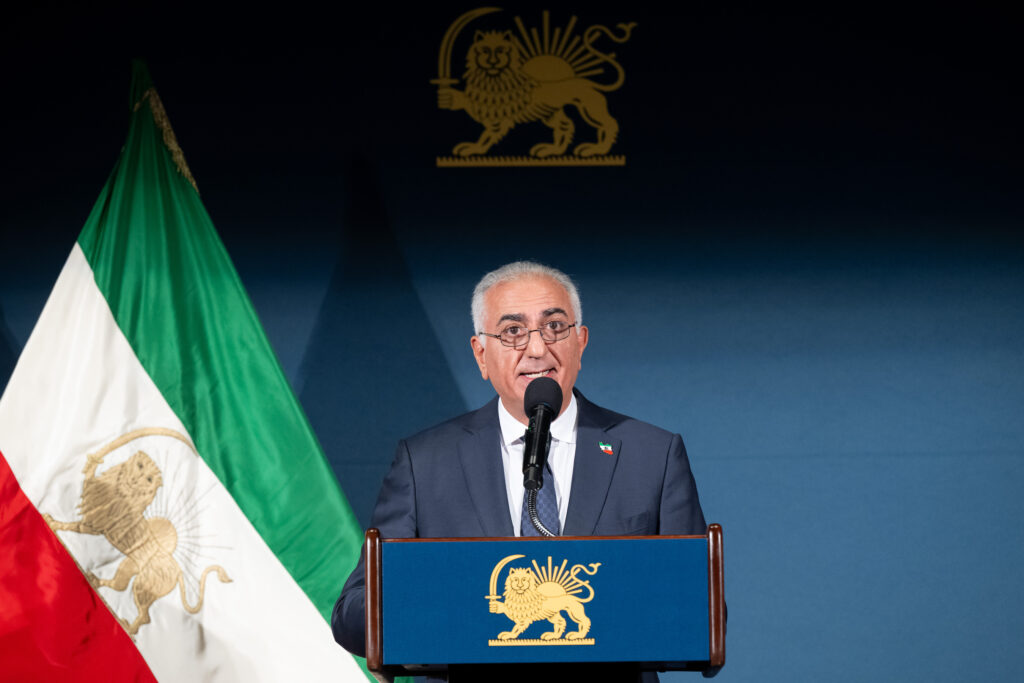
Shah’s son confident Iran rulers to fall as Trump holds off
The son of Iran’s late shah said Friday he was confident that mass protests would topple the Islamic republic and urged international action, as US President Donald Trump holds off on intervening in the unrest.Reza Pahlavi, who lives in exile in the Washington area, has presented himself as leader of the opposition as the cleric-run state ruthlessly represses mass protests.”The Islamic republic will fall — not if, but when,” Pahlavi told a news conference in Washington.Since the demonstrations erupted in late December with a rallying cry of solving Iran’s severe economic woes, Pahlavi has pleaded for US intervention.Trump had repeatedly warned Iran that if it kills protesters, the United States would intervene militarily. He also encouraged Iranians to take over state institutions, saying “help is on the way.”But two weeks after he first suggested help, he has not acted. Security forces in the meantime have killed at least 3,428 protesters, according to Norway-based group Iran Human Rights, with other estimates putting the toll at more than 5,000 or possibly as high as 20,000.Trump instead has highlighted what he said was an end to the killing of protesters, as the size of demonstrations diminished in recent days.Trump wrote Friday on his Truth Social platform that Iran had called off executions of hundreds of protesters and said to the clerical state, “Thank you!”Pahlavi also took to social media Friday, with posts on X and Instagram calling for Iranians across the country to “raise your voices in anger and protest with our national slogans” at 8:00 pm on Saturday and Sunday.Pahlavi, seeking to touch a nerve with Trump, called on him not to be like Democratic predecessor Barack Obama who negotiated with Tehran.”I believe that President Trump is a man of his word and ultimately he will stand with the Iranian people as he has said,” Pahlavi said when asked if Trump had given false hope.”Iranian people are taking decisive actions on the ground. It is now time for the international community to join them fully.”Gulf Arab monarchies, despite frequent friction with Iran, have urged Trump to show caution.- ‘Surgical’ strikes -Pahlavi called for targeting the command structure of the elite Revolutionary Guards, as it is key to “instituting terror at home or terrorism abroad.””I’m calling for a surgical strike,” said Pahlavi, who controversially backed Israel’s military campaign on Iran in June.He also urged all countries to expel diplomats from Iran and to help restore internet access, which has been severely hampered.Many protesters have chanted the name of Pahlavi, whose pro-Western father fled in 1979 in the Islamic revolution.While Iran’s last Shah presented a glamorous image of the oil-rich nation to the world — replete with caviar, glittering crown jewels and a jet-setter lifestyle — domestically, repression and the brutality of his secret police force as well as a lack of economic mobility opened the door to political challenge.Asked about repression under his father, Pahlavi told reporters, “I let historians write history. I’m here to make history.”Pahlavi, 65, said he wants to be a figurehead to lead a transition to a secular democracy, with a popular referendum to choose the next system of government.He also has plenty of detractors who suspect a desire by his supporters to restore the monarchy and say changes should come from the opposition within Iran.”I reaffirm my lifelong pledge to lead the movement that will take back our country from the anti-Iranian hostile force that occupies it and kills its children,” Pahlavi said.”I will return to Iran.”Pahlavi promised that a new Iran would have better relations with the leadership’s sworn enemies — the United States and Israel — and integrate into the global economy.He said Iran would quickly normalize relations with Israel in a “Cyrus Accord,” a reference to Cyrus the Great, the celebrated Persian emperor who freed Jews from Babylonian captivity.”Iran today should have been the next South Korea of the Middle East,” he said. “Today we have become North Korea.”
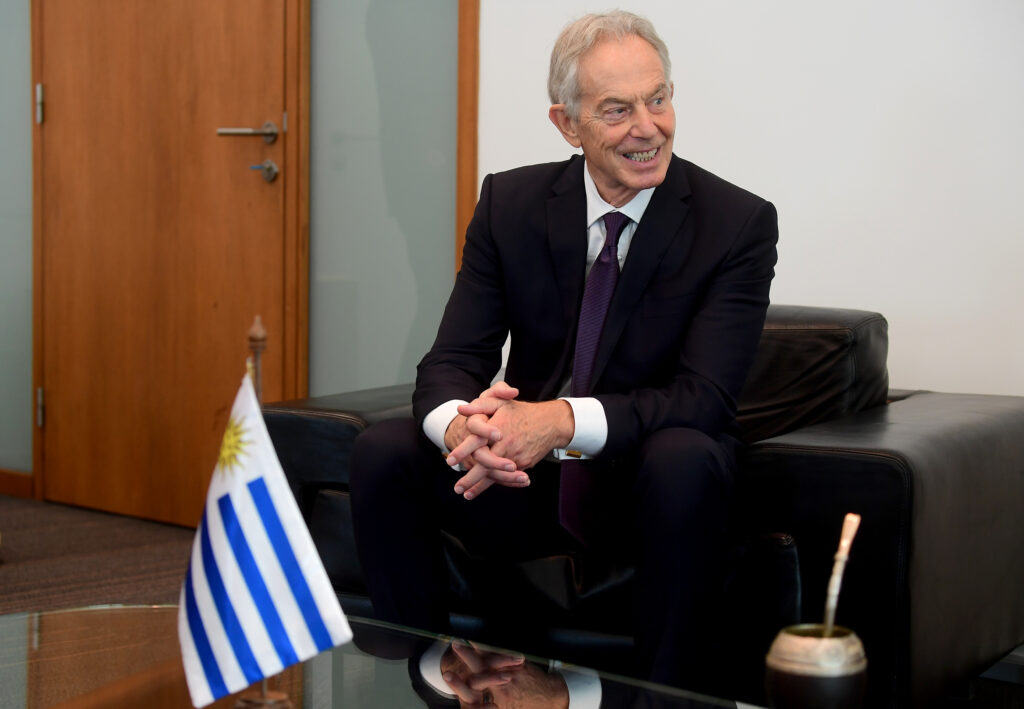
Trump taps Tony Blair, US military head for Gaza
US President Donald Trump on Friday gave a key role in post-war Gaza to former British prime minister Tony Blair and appointed a US officer to lead a nascent security force.Trump named members of a board to help supervise Gaza that was dominated by Americans, as he promotes a controversial vision of economic development in a territory that lies in rubble after two-plus years of relentless Israeli bombardment.The step came after a Palestinian committee of technocrats meant to govern Gaza held its first meeting in Cairo which was attended by Jared Kushner, Trump’s son-in-law who plays a key role on the Middle East.Trump has already declared himself the chair of a “Board of Peace” and on Friday announced its full membership that will include Blair as well as senior Americans — Kushner, Secretary of State Marco Rubio and Steve Witkoff, Trump’s business partner turned globe-trotting negotiator.Blair is a controversial figure in the Middle East because of his role in the 2003 invasion of Iraq. Trump himself said last year that he wanted to make sure Blair was an “acceptable choice to everybody.”Blair spent years focused on the Israeli-Palestinian issue as representative of the “Middle East Quartet” — the United Nations, European Union, United States and Russia — after leaving Downing Street in 2007.The White House said the Board of Peace will take on issues such as “governance capacity-building, regional relations, reconstruction, investment attraction, large-scale funding and capital mobilization.”Trump, a real-estate developer, has previously mused about turning devastated Gaza into a Riviera-style area of resorts, although he has backed away from calls to forcibly displace the population.The other members of the board are World Bank President Ajay Banga, an Indian-born American businessman; billionaire US financier Marc Rowan; and Robert Gabriel, a loyal Trump aide who serves on the National Security Council.- Israel strikes -Israel’s military said Friday it had again hit the Gaza Strip in response to a “blatant violation” of the ceasefire declared in October.The strikes come despite Washington announcing that the Gaza plan had gone on to a second phrase — from implementing the ceasefire to disarming Hamas, whose October, 2023 attack on Israel prompted the massive Israeli offensive.Trump on Friday named US Major General Jasper Jeffers to head the International Stabilization Force, which will be tasked with providing security in Gaza and training a new police force to succeed Hamas.Jeffers, from special operations in US Central Command, in late 2024 was put in charge of monitoring a ceasefire between Lebanon and Israel, which has continued periodic strikes aimed at Hezbollah militants.The United States has been searching the world for countries to contribute to the force, with Indonesia an early volunteer.But diplomats expect challenges in seeing countries send troops so long as Hamas does not agree to disarm fully.- Committee begins work -Gaza native and former Palestinian Authority deputy minister Ali Shaath was earlier tapped to head the governing committee.The committee’s meeting in Cairo also included Bulgarian diplomat Nickolay Mladenov, who was given a role of high representative liaising between the new governing body and Trump’s Board of Peace. Committee members are scheduled to meet again Saturday, one of them told AFP on condition of anonymity.”We hope to go to Gaza next week or the week after; our work is there, and we need to be there,” he said.Trump also named a second “executive board” that appears designed to have a more advisory role.Blair, Witkoff and Mladenov will serve on it as well as Turkish Foreign Minister Hakan Fidan.Israel has refused a Turkish role in the security force, owing to President Recep Tayyip Erdogan’s fiery denunciations of Israel’s actions in Gaza. The board will also include senior figures from mediators Egypt and Qatar, and the United Arab Emirates, which normalized ties with Israel in 2020.Trump also named to the board Sigrid Kaag, the UN humanitarian coordinator for Gaza, despite his administration’s efforts to sideline the world body.
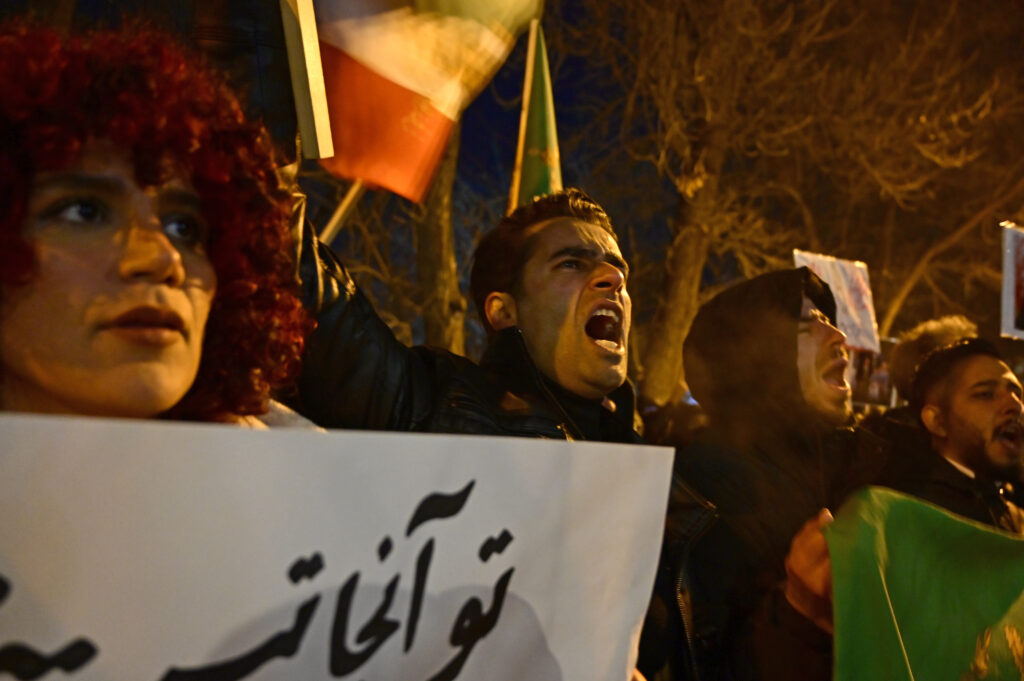
Iran protest movement subsides in face of ‘brutal’ crackdown
Protests in Iran have subsided after a crackdown that has killed thousands under an internet blackout, monitors said Friday, a week after the start of the largest demonstrations in years challenging the country’s theocratic system.Reza Pahlavi, the US-based son of Iran’s late shah, however, said he was confident the Islamic republic would fall and called for intervention, though the threat of new military action by the United States against Iran has appeared to have receded for the time being.In posts to social media on Friday, Pahlavi announced a fresh coordinated demonstration, calling for Iranians to “raise your voices in anger and protest with our national slogans” on the weekend.Protests sparked by economic grievances started with a shutdown in the Tehran bazaar on December 28 but turned into a mass movement demanding the removal of the clerical system that has ruled Iran since the 1979 revolution.People started pouring into the streets in big cities from January 8 but authorities immediately enforced a shutdown of the internet that has lasted over a week and activists say is aimed at masking the scale of the crackdown.The “brutal” repression has “likely suppressed the protest movement for now”, said the US-based Institute for the Study of War, which has monitored the protest activity.But it added: “The regime’s widespread mobilisation of security forces is unsustainable, however, which makes it possible that protests could resume.”Pahlavi also told a news conference in Washington on Friday that “The Islamic republic will fall — not if, but when.” “I will return to Iran,” he said.Norway-based rights group Iran Human Rights (IHR) says 3,428 protesters have been verified to have been killed by security forces, but warns the actual toll could be several times higher.Other estimates place the death toll at more than 5,000 — and possibly as high as 20,000 — with the internet blackout severely hampering independent verification, IHR said.The opposition Iran International channel based outside the country has said at least 12,000 people were killed during the protests, citing senior government and security sources. IHR director Mahmood Amiry-Moghaddam cited “horrifying eyewitness accounts” received by IHR of “protesters being shot dead while trying to flee, the use of military-grade weapons and the street execution of wounded protesters”.- ‘Give Iran a chance’ -Monitor Netblocks said that the “total internet blackout” in Iran had now lasted over 180 hours, longer than a similar measure that was imposed during 2019 protests.Amnesty International said this was being backed up by the use of heavily armed patrols and checkpoints to crush “the nationwide popular uprising in Iran” with security forces visible in the streets.Trump, who backed and joined Israel’s 12-day war against Iran in June, had not ruled out new military action against Tehran and made clear he was keeping a close eye on if any protesters were executed.But a senior Saudi official told AFP on Thursday that Saudi Arabia, Qatar and Oman led “a long, frantic, diplomatic last-minute effort to convince President Trump to give Iran a chance to show good intention”.While Washington appeared to have stepped back, the White House said Thursday that “all options remain on the table for the president”.Attention had focused on the fate of Erfan Soltani, a 26-year-old protestor who rights activists and Washington said was set to be executed as early as Wednesday.The Iranian judiciary confirmed Soltani was under arrest but said he had not been sentenced to death and his charges meant he did not risk capital punishment. Rights groups have estimated up to 20,000 people have been arrested. Security officials cited by the Tasnim news agency on Friday said around 3,000 people were arrested.- ‘All Iranians united’ -The US Treasury on Thursday announced new sanctions targeting Iranian officials including Ali Larijani, secretary of Iran’s Supreme Council for National Security.Russian President Vladimir Putin meanwhile held telephone talks with Iranian President Masoud Pezeshkian in what the Kremlin described as “efforts to facilitate de-escalation”.Despite the internet shutdown, new videos from the height of the protests, with locations verified by AFP, showed bodies lined up in the Kahrizak morgue south of Tehran, as distraught relatives searched for loved ones.At the UN Security Council in New York, Iranian-American journalist Masih Alinejad, invited to address the body by Washington, said “all Iranians are united” against the clerical system in Iran. Iran’s representative at the meeting, Gholamhossein Darzi, accused Washington of “exploitation of peaceful protests for geopolitical purposes.”
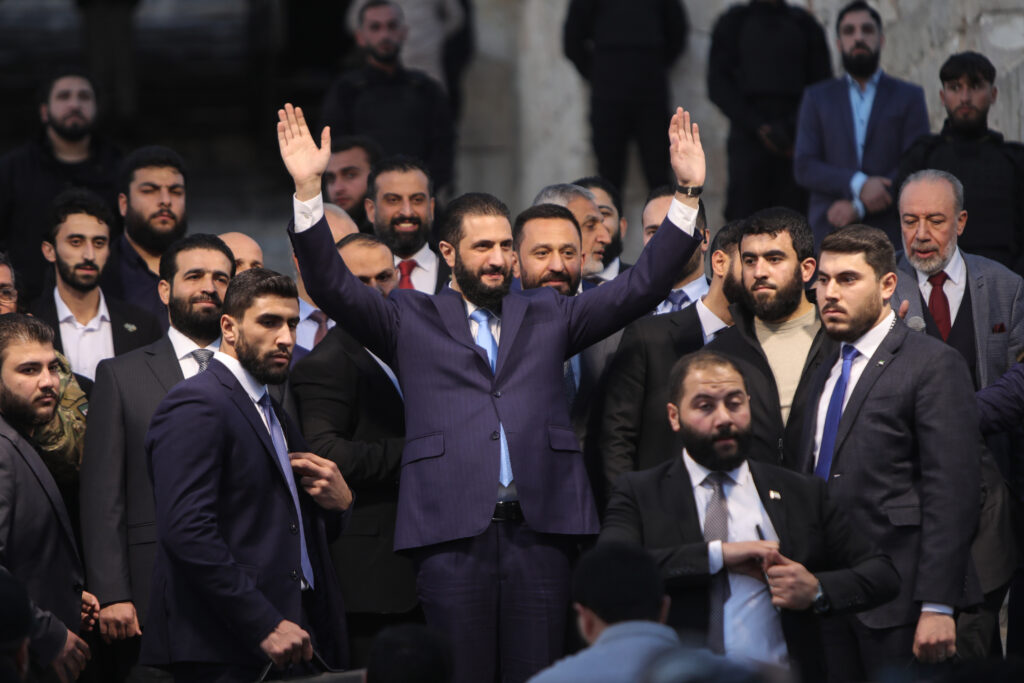
Syrian president declares Kurdish a national language
Syrian President Ahmed al-Sharaa issued a decree on Friday declaring Kurdish a “national language”, in an apparent gesture of good will towards the minority following clashes in recent days.The decree is the first formal recognition of Kurdish national rights since Syria’s independence in 1946.It stated Kurds were “an essential and integral part” of Syria, where they have suffered decades of marginalisation and oppression under former rulers.The decree makes Kurdish a “national language” that can be taught in public schools in areas where the minority community is heavily present.Sharaa also made the Kurdish new year, Nowruz, which falls on March 21, an official holiday and granted nationality to Kurds, as 20 percent of them had been stripped of it under a controversial 1962 census.In a televised address announcing the decree, Sharaa urged Kurds to “actively participate in building this nation”, vowing to “guarantee” their rights.- Impasse -The announcement came as progress to implement a March deal to integrate the Kurds’ de facto autonomous administration in the north into the state has stalled.Senior Kurdish political figure Salih Muslim told AFP he viewed the decree as “an attempt to evade the rights of the Kurdish people and to divide them”.The US-backed, Kurdish-led Syrian Democratic Forces control swathes of Syria’s oil-rich north and northeast, much of which it captured during the country’s civil war and the fight against the Islamic State group over the past decade.The country’s population of 20 million has around two million Kurds, 1.2 million of them in the northeast, according to Syria expert Fabrice Balanche. Syria’s Islamist-led government is seeking to extend its authority across the country following the ouster of longtime leader Bashar al-Assad a year ago.Kurdish forces were driven out of two Aleppo city neighbourhoods by the Syrian army last week.- Battles -The Syrian army then deployed reinforcements near Deir Hafer, some 50 kilometres (30 miles) east of Aleppo, ordering Kurdish fighters to leave the area.SDF leader Mazloum Abdi announced on X that “based on calls from friendly countries and mediators… we have decided to withdraw our forces tomorrow morning at 7:00 am (0400 GMT)” east of Aleppo “towards redeployment in areas east of the Euphrates”.The defence ministry in Damascus welcomed Abdi’s announcement, saying Syrian army troops will be deployed in the areas the SDF will withdraw from. Earlier on Friday, SDF spokesman Farhad Shami told AFP that a delegation from the US-led anti-jihadist coalition had met with them in Deir Hafer that day. That evening, the Syrian army struck what it said were Kurdish positions in Deir Hafer.The SDF said the town was “currently under heavy artillery bombardment”.- Civilians fleeing -The Syrian army had given civilians a deadline to flee the area before starting its attacks, with at least 4,000 people leaving according to Syrian authorities.The military had used the same tactic in the city of Aleppo last week, telling civilians to depart before shelling Kurdish-held districts. AFP correspondents saw some using a rickety bridge to cross a branch of the Euphrates River.”The SDF stopped us from leaving — that’s why we used an agricultural back road and then crossed the bridge,” said 60-year-old Abu Mohammad, who was accompanied by relatives.Civilians have been fleeing the area on back roads since Thursday.Syrian authorities had extended the deadline to flee until Friday, accusing the SDF of preventing civilians from leaving, a claim the group dismissed as “unfounded”.On Sunday, government troops took full control of Aleppo city after capturing two Kurdish-majority neighbourhoods.

French publisher recalls dictionary over ‘Jewish settler’ reference
French publisher Hachette on Friday said it had recalled a dictionary that described the Israeli victims of the October 7, 2023 attacks as “Jewish settlers” and promised to review all its textbooks and educational materials.The Larousse dictionary for 11- to 15-year-old students contained the same phrase as that discovered by an anti-racism body in three revision books, the company told AFP.The entry in French reads: “In October 2023, following the death of more than 1,200 Jewish settlers in a series of Hamas attacks, Israel decided to tighten its economic blockade and invade a large part of the Gaza Strip, triggering a major humanitarian crisis in the region.”The worst attack in Israeli history saw militants from the Palestinian Islamist group kill around 1,200 people in settlements close to the Gaza Strip and at a music festival.”Jewish settlers” is a term used to describe Israelis living on illegally occupied Palestinian land.The four books, which were immediately withdrawn from sale, are subject to a recall procedure and will be destroyed, Hachette said, promising a “thorough review of its textbooks, educational materials and dictionaries”.France’s leading publishing group, which came under the control of the ultra-conservative Vincent Bollore at the end of 2023, has begun an internal inquiry “to determine how such an error was made”.It promised to put in place “a new, strengthened verification process for all its future publications” in these series.President Emmanuel Macron on Wednesday said that it was “intolerable” that the revision books for the French school leavers’ exam, the baccalaureat, “falsify the facts” about the “terrorist and antisemitic attacks by Hamas”.”Revisionism has no place in the Republic,” he wrote on X.Hamas’s October 7, 2023 attack on Israel resulted in the deaths of 1,221 people, with 251 people taken hostage, according to an AFP tally based on official Israeli figures. Authorities in Gaza estimate that more than 70,000 people have been killed by Israeli forces during their bombardment of the territory since, while nearly 80 percent of buildings have been destroyed or damaged, according to UN data.Israeli forces have killed at least 447 Palestinians in Gaza since a ceasefire took effect in October, according to the Hamas-run health ministry.
‘Nothing’s changed’ in Gaza as US peace deal enters second phase
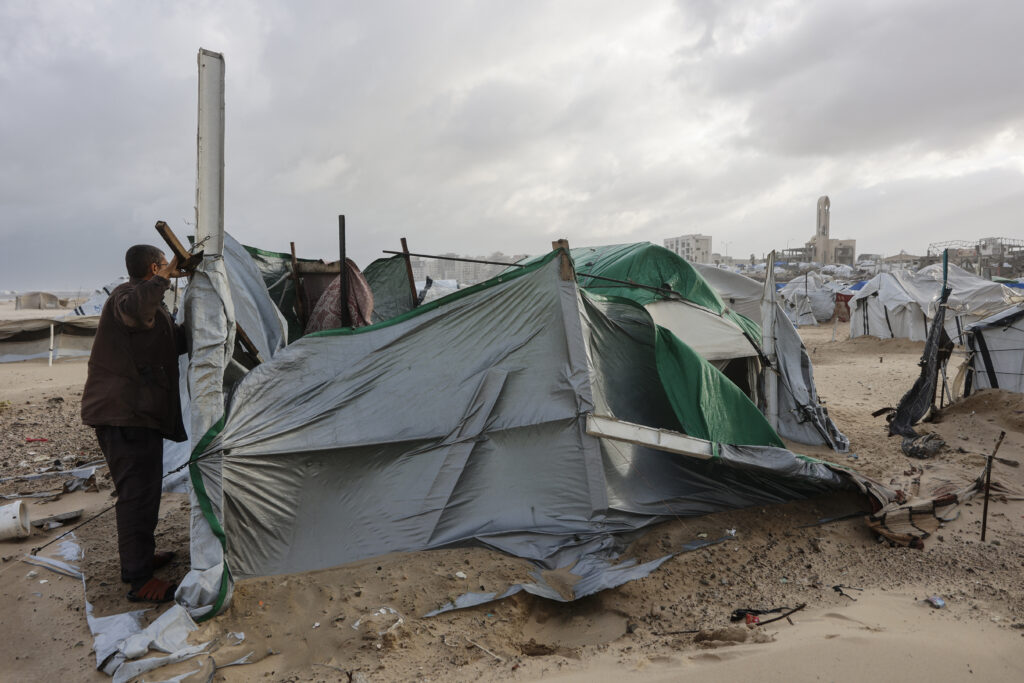
From his tent in Gaza City, Mahmoud Abdel Aal said residents were frustrated and worried because nothing had changed in the Palestinian territory since the start of the US-brokered ceasefire’s second phase.In a post-apocalyptic landscape of bombed-out buildings and makeshift camps devastated by recent winter rains, Palestinians who spoke to AFP mostly expressed bitterness.Though Israeli strikes have been less intense since the ceasefire between Hamas and Israel began in October 2025, bombs still fall every day.After US Middle East envoy Steve Witkoff announced the start of the second phase of US President Donald Trump’s peace plan for Gaza on Wednesday, more than 14 people were killed in the tiny coastal territory, according to the Gaza civil defence agency.Israel and Hamas have repeatedly accused each other of violating the ceasefire’s terms.”There is no difference between the war and the ceasefire, nor between the first and second phase of the deal: strikes continue every day,” Abdel Aal said.”Everyone is worried and frustrated because nothing’s changed.” On Friday, an AFP photographer saw members of the Houli family walk through rubble after five of their relatives were killed in an air strike on their house in central Gaza’s Deir al-Balah.- ‘All over the media’ -Hamas announced the death of Mahmud al-Houli, described as a military officer of the movement, while Israel’s military said it carried out strikes on Thursday against members of Hamas and Islamic Jihad’s armed wings in response to what it considers violations of the ceasefire.Houli family neighbour Ahmad Suleiman said the announcement of the ceasefire’s second phase was “all over the media, but the reality is different”. “There is no ceasefire, otherwise look at what the ceasefire has brought,” he told AFP, pointing to the destroyed building.Most residents interviewed by AFP said they were skeptical about recent announcements regarding the formation of the so-called “Board of Peace”, an entity chaired by Trump and supposed to oversee reconstruction, and a Palestinian technocratic committee with which it is to work.”No one is concerned for us,” said Hossam Majed, who is living in the ruins of his home in Gaza City. “The whole world meets in Cairo to talk about Gaza, but they can’t even enter it,” he told AFP. “Israel will use the pretext of handing over the last body (of a hostage), then the weapons (of Hamas), and the second phase will stretch over additional years,” he said.Hamas returned 47 of 48 hostages it was supposed to hand over under the terms of the first phase, and has yet to commit to disarming as is planned under the second phase.- ‘Hope and patience’ -Day-to-day living conditions for the vast majority of Gaza residents remain extremely precarious, with more than 80 percent of infrastructure destroyed, according to the United Nations.Several humanitarian and UN workers told AFP that while the situation has improved in some areas since the ceasefire, the humanitarian response remains insufficient due to access restrictions imposed by Israeli authorities — who deny these claims.Water and electricity networks, as well as waste management, no longer function. Hospitals operate at minimal capacity when still open, and schools exist only as sporadic or marginal initiatives. All children in the Gaza Strip need psychological support after more than two years of war, according to UNICEF.Nivine Ahmad, a 47-year-old woman living in a camp for the displaced in south Gaza’s Al-Mawasi area, said: “We miss real life.”She said the announcement of the formation of the technocratic committee led her to imagine returning to Gaza City. “I pictured living with my family in a prefabricated unit, with electricity and water instead of our bombed home,” she said.”Only then will I feel that the war is over,” she added.In the meantime, she urged the world to put itself in Gazans’ shoes.”We only have hope and patience,” she said.
French prosecutor seeks year in jail for Iranian over comments online
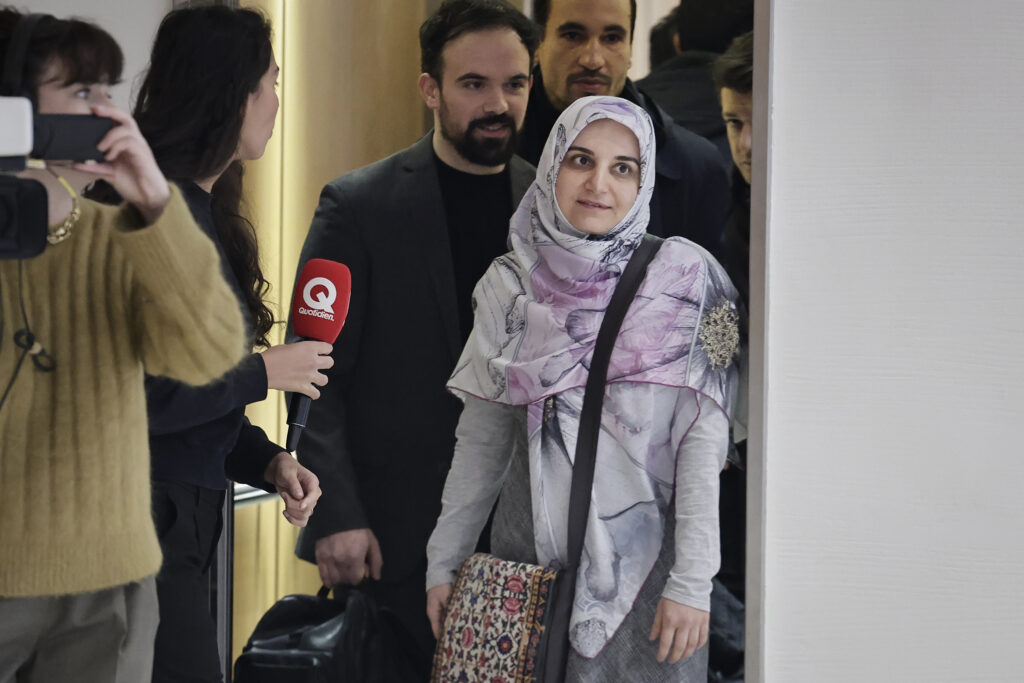
A French prosecutor Friday sought a one-year jail term for an Iranian woman accused of promoting “terrorism” online in a case linked to a possible prisoner swap with two French citizens.Judgment in the case is expected on February 26.Mahdieh Esfandiari, a 39-year-old Iranian, was arrested in France in February on charges of promoting and inciting “terrorism” on social media.The arrest was over comments she is said to have made including some on Palestinian militant group Hamas attacking Israel on October 7, 2023, according to French authorities.She is accused of having written posts for a channel called “Axis of the Resistance” in 2023 and 2024 on platforms including Telegram, X, Twitch and YouTube.She was released after some eight months in pre-trial detention in October pending her trial, which started Tuesday. It was scheduled long before the latest protests erupted in Iran.The prosecutor requested a four-year jail term, including three years suspended, for Esfandiari, but said it would not be necessary for her to be re-incarcerated.Esfandiari, who has translated into French works from a publisher linked to the Iranian authorities, told the court she had been involved with the “Axis of the Resistance” project, but had not written its posts.Of the October 7 Hamas attack in 2023, she said: “It’s not an act of terrorism, it’s an act of resistance.”- French pair held -Before this week’s trial, Iran’s authorities had already said they would be willing to exchange Esfandiari for two French citizens they are holding.Cecile Kohler and Jacques Paris were arrested in Iran in May 2022, but were freed in November after more than three years in prison on espionage charges their families vehemently denied.They were immediately taken by French diplomats to France’s mission in Tehran, but are still waiting to leave Iran.Tehran’s Foreign Minister Abbas Araghchi said in November that Iran would allow Kohler and Paris to return home in “exchange” for France freeing Esfandiari.Iran’s ambassador to France, Mohammad Amin Nejad, late Thursday said he hoped the French pair could go home.”My wish is for their return as soon as possible after arrangements have been made between the two states,” he said.France has described Kohler and Paris as “state hostages” taken by Tehran in a bid to extract concessions. They were convicted on espionage charges their families have always condemned as fabricated.Dozens of Europeans, North Americans and other Western citizens have been arrested in the last few years in similar circumstances.Iran has previously carried out exchanges of Westerners for Iranians held by the West, but insists foreigners are convicted fully in line with the law.