
AFP Asia Business
Iran leader demands crackdown on ‘seditionists’ after protests
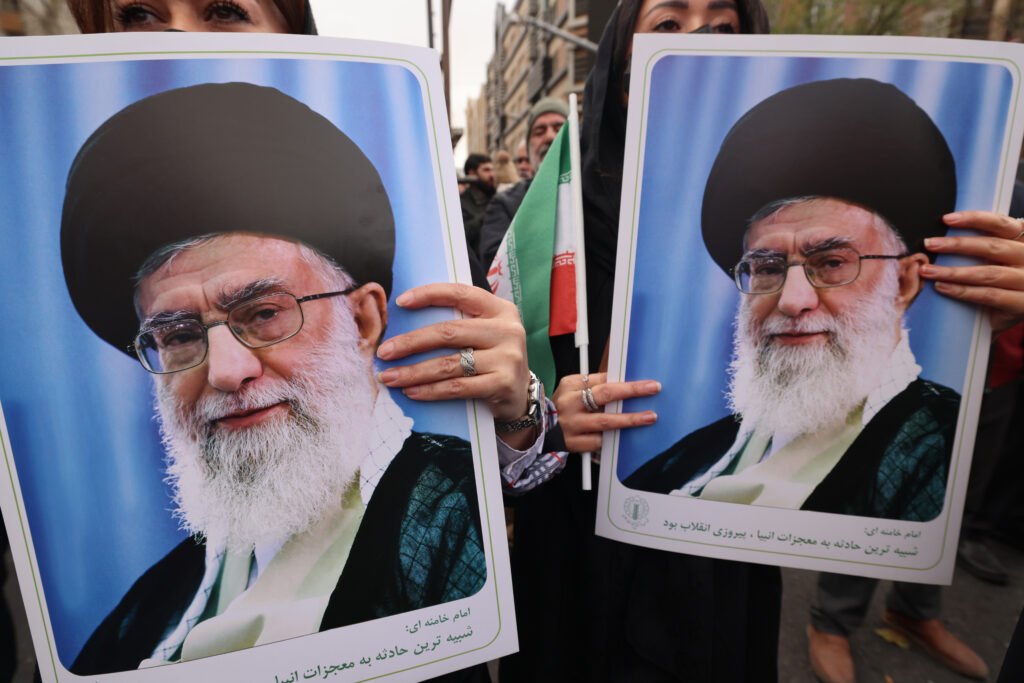
Iran’s supreme leader said Saturday that authorities “must break the back of the seditionists”, whom he accused of killing thousands during the wave of protests that were brutally repressed in the country.The demonstrations were sparked by anger over economic hardship that exploded into the biggest protests against the Islamic republic in more than three years.But demonstrations have subsided after the crackdown that rights groups say left thousands of people dead under an internet blackout that has lasted more than a week.Schools were set to resume Sunday, the ISNA news agency said, following a one-week closure, with postponed university exams set to be held in a week.Authorities have said demonstrations they condemn as “riots” had been controlled and calm returned, with state-aligned media reporting thousands of arrests.”By God’s grace, the Iranian nation must break the back of the seditionists just as it broke the back of the sedition,” supreme leader Ayatollah Ali Khamenei told supporters during a televised address.”We do not intend to lead the country to war, but we will not spare domestic criminals,” he added, saying “international criminals” were “worse”. He added that “agents… murdered a few thousand people. They murdered some with the utmost inhumanity, meaning pure savagery” — seemingly his first admission that thousands had died.Iranian authorities have blamed the latest wave of demonstrations on arch-foes the United States and Israel, saying they fuelled a “terrorist operation” that hijacked peaceful protests over the economy. Trump, who backed and joined Israel’s 12-day war against Iran in June, had repeatedly threatened new military action against Tehran if protesters were killed. – ‘American conspiracy’ -Khamenei on Saturday lashed out at Trump, accusing him of being “guilty for the casualties, damages and accusations he has levelled against the Iranian nation”.”This was an American conspiracy,” he said, adding that “America’s goal is to swallow Iran… the goal is to put Iran back under military, political and economic domination”. While Washington has appeared to have stepped back, the US president has said he has not ruled out military options and made clear he was keeping a close eye on whether any protesters were executed. Trump wrote on Friday on his Truth Social platform that Iran had called off the executions of hundreds of protesters and said to the clerical state: “Thank you!”Asked on state TV about Trump’s comment, Tehran prosecutor Ali Salehi said the US president “always talks a lot of nonsense” and that the government’s response had been “firm, dissuasive and swift” with many cases leading to indictments and sent to court. Rights groups have estimated up to 20,000 people have been arrested. Security officials cited by the Tasnim news agency on Friday said around 3,000 people were arrested. Iranian authorities said on Saturday that “a 32-member network of the Bahai espionage cult who were active in the riots and acts of vandalism were identified and 12 main agents were arrested and 13 were summoned,” according to Tasnim.Alarm has mounted over the reported death toll during the crackdown, as verifying cases remains difficult under severe internet restrictions. Eyewitnesses who left Iran after the protests told AFP of coming under fire and hearing numerous gunshots during protests. Kiarash, who gave only his first name for security reasons, was fired on during protests on January 10 and said he saw thousands of bodies at a mortuary in Tehran. “I saw the blood… Thousands of people and thousands of dead bodies” of people “asking for their rights”, he told AFP from Germany. – Pahlavi calls for protests -Norway-based rights group Iran Human Rights (IHR) says 3,428 protesters have been verified to have been killed by security forces, but warns the actual toll could be several times higher.Other estimates place the death toll at more than 5,000 — and possibly as high as 20,000, IHR said.The opposition Iran International channel based outside the country has said at least 12,000 people were killed during the protests, citing senior government and security sources. Monitor Netblocks said on Saturday “internet connectivity continues to flatline in Iran despite a minor short-lived bump in access earlier today, when new reports of atrocities emerged”. People in Iran were reportedly again able to send text messages within the country and to outside numbers but were still often unable to receive texts from those abroad. Rights groups say there have been no verifiable reports of protests in recent days and videos circulating on social media have shown a heavy security presence in some areas. But Reza Pahlavi, the US-based son of the shah ousted in the 1979 Islamic revolution, took to social media on Friday to call for Iranians to protest again on Saturday and Sunday evening.
Syria army extends control over north Syria area as Kurds report clashes
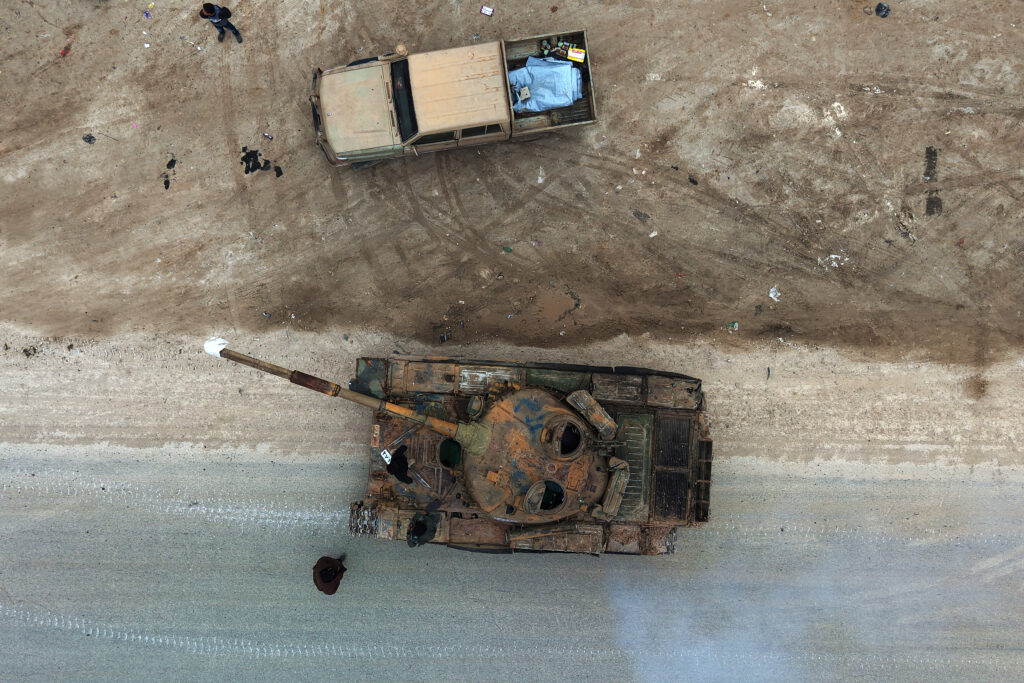
Syria’s army took control of swathes of the country’s north on Saturday, dislodging Kurdish forces from territory over which they held effective autonomy for over a decade.The government appeared to be seeking to extend its grip on parts of the country under Kurdish control a day after President Ahmed al-Sharaa issued a decree declaring Kurdish a “national language” and granting the minority official recognition.The Kurds have said the move fell short of their aspirations.The army drove Kurdish forces from two Aleppo neighbourhoods last week and took control of an area east of the city on Saturday, after implementation stalled on a March deal that was supposed to see Kurdish forces integrated into the state.Later on Saturday, the Syrian army said it had “begun entering the city of Tabqa via various axes, in parallel with encircling the PKK terrorist militias inside Tabqa military airport”, according to the official SANA news agency. Authorities had earlier announced they had seized two oil fields near the city of Tabqa in Raqa province.An AFP correspondent in Deir Hafer, some 50 kilometres (30 miles) east of Aleppo city, saw several fighters from the Kurdish-led Syrian Democratic Forces (SDF) leaving the town and residents returning under heavy army presence.Syria’s army said four soldiers had been killed, while Kurdish forces reported several fighters dead, as both sides traded blame for violating the withdrawal deal. Kurdish authorities ordered a curfew in the Raqa region after the army designated a swathe of territory southwest of the Euphrates River a “closed military zone” and warned it would target what it said were several military sites.- ‘Betrayed’ -SDF chief Mazloum Abdi on Friday had committed to redeploying his forces from outside Aleppo to east of the Euphrates. But the SDF said Saturday that Damascus “violated the recent agreements and betrayed our forces during the implementation of the withdrawal provisions”.It said Kurdish forces were clashing with troops in an area south of Tabqa, “which was outside the scope of the agreement”.The army meanwhile urged the SDF leadership to “immediately fulfil its announced commitments and fully withdraw to the east of the Euphrates River”.The SDF controls swathes of Syria’s oil-rich north and northeast, much of which it captured during the country’s civil war and the fight against the Islamic State group over the past decade.US envoy Tom Barrack met Syrian Kurdish leader Abdi in Erbil on Saturday, the presidency of Iraq’s autonomous Kurdistan region said in a statement.The United States for years has supported the Kurds but also backs Syria’s new authorities.The US Central Command on Saturday urged “Syrian government forces to cease any offensive actions in the areas between Aleppo and al-Tabqa”, in a post on X.France’s President Emmanuel Macron and the president of Iraqi Kurdistan, Nechirvan Barzani, called for deescalation and a ceasefire, the French presidency said.- Presidential decree -Sharaa’s announcement on Friday was the first formal recognition of Kurdish rights since Syria’s independence in 1946.The decree stated that Kurds are “an essential and integral part” of Syria, where they have suffered decades of marginalisation and oppression under former rulers.It made Kurdish a “national language” and granted nationality to all Kurds, 20 percent of whom had been stripped of it under a controversial 1962 census.The Kurdish administration in Syria’s northeast said the decree was “a first step” but “does not satisfy the aspirations and hopes of the Syrian people”.”Rights are not protected by temporary decrees, but… through permanent constitutions that express the will of the people and all components” of society, it said in a statement.In Qamishli, the main Kurdish city in the country’s northeast, Shebal Ali, 35, told AFP that “we want constitutional recognition of the Kurdish people’s rights”.Yara, 42, a Kurdish artist in Damascus who declined to provide her full name, said the government needed to “provide guarantees to earn the Kurds’ confidence”.Nanar Hawach, senior Syria analyst at the International Crisis Group, told AFP that the decree “offers cultural concessions while consolidating military control”.”It does not address the northeast’s calls for self-governance,” he told AFP, adding that “Sharaa is comfortable granting cultural rights, but draws the line at power-sharing”.He said Damascus appeared to be seeking “to drive a wedge between Kurdish civilians and the armed forces that have governed them for a decade”.strs-lg/jsa/amj
Israel objects to line-up of Trump panel for post-war Gaza
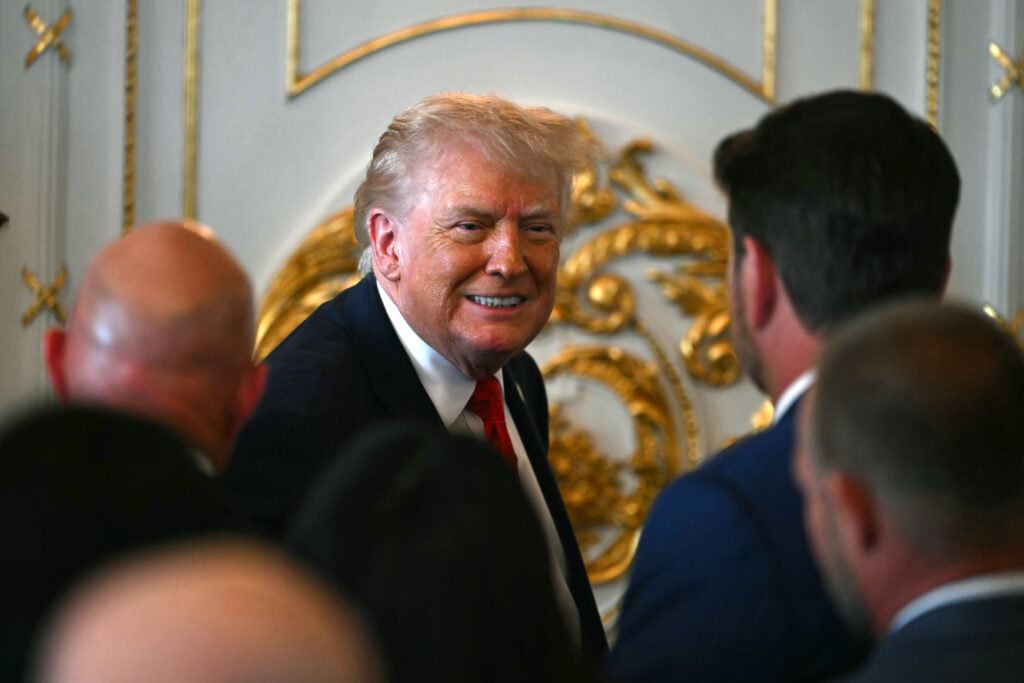
Israel said on Saturday it objected to the line-up of a Gaza panel that will operate under US President Donald Trump’s Board of Peace, which oversees post-war governance in the Palestinian territory.The panel, known as the Gaza executive board, notably includes Turkish Foreign Minister Hakan Fidan and a Qatari official and was announced by the White House on Friday.The Board of Peace began to take shape on Saturday as the leaders of Egypt, Turkey, Argentina and Canada were asked to join. Trump had already declared himself the chair of the body, as he promotes a controversial vision of economic development in the Palestinian territory, much of which was reduced to rubble during two years of relentless Israeli bombardment.The US president also named to the Board of Peace his Secretary of State Marco Rubio, former British prime minister Tony Blair, and senior negotiators Jared Kushner and Steve Witkoff — most of whom are also on the Gaza executive board. On Saturday, the office of Israeli Prime Minister Benjamin Netanyahu said: “The announcement regarding the composition of the Gaza Executive Board, which is subordinate to the Board of Peace, was not coordinated with Israel and runs contrary to its policy.””The Prime Minister has instructed the Foreign Affairs Minister to contact the US Secretary of State on this matter.”The moves came after the Palestinian committee of technocrats tasked with governing Gaza under the oversight of the Board of Peace began held its first meeting in Cairo, attended by Kushner.- Worldwide invites – In Canada, a senior aide to Prime Minister Mark Carney said he intended to accept Trump’s invitation, while in Turkey, a spokesman for President Recep Tayyip Erdogan said he had been asked to become a “founding member” of the board.Egypt’s Foreign Minister Badr Abdelatty said Cairo was “studying” a request for President Abdel Fattah al-Sisi to join.Sharing an image of the invitation letter, Argentine President Javier Milei wrote on X that it would be “an honor” to participate in the initiative.In a statement sent to AFP, Blair said: “I thank President Trump for his leadership in establishing the Board of Peace and am honored to be appointed to its Executive Board.”Blair is a controversial figure in the Middle East because of his role in the 2003 invasion of Iraq. Trump himself said last year that he wanted to make sure Blair was an “acceptable choice to everybody”.Blair spent years focused on the Israeli-Palestinian issue as representative of the “Middle East Quartet” — the United Nations, European Union, United States and Russia — after leaving Downing Street in 2007.The White House said the Board of Peace will take on issues such as “governance capacity-building, regional relations, reconstruction, investment attraction, large-scale funding and capital mobilization”.The other members of the board so far are World Bank President Ajay Banga, an Indian-born American businessman; billionaire US financier Marc Rowan; and Robert Gabriel, a loyal Trump aide who serves on the US National Security Council.On Saturday, the Palestinian militant group Islamic Jihad criticised the composition of the Board of Peace, saying it served Israel’s interests.The board “came in accordance with Israeli criteria and to serve the interests of the occupation”, the group said in a statement.- Israeli strikes -Washington has said the Gaza plan had gone on to a second phase — from implementing the ceasefire to disarming Hamas, whose October 2023 attack on Israel prompted the massive Israeli offensive.On Friday, Trump named US Major General Jasper Jeffers to head the International Stabilization Force, which will be tasked with providing security in Gaza and training a new police force to succeed Hamas.Jeffers, from special operations in US Central Command, in late 2024 was put in charge of monitoring a ceasefire between Lebanon and Israel, which has continued periodic strikes aimed at Hezbollah militants.Gaza native and former Palestinian Authority deputy minister Ali Shaath was earlier tapped to head the governing committee.Trump, a real estate developer, has previously mused about turning devastated Gaza into a Riviera-style area of resorts, although he has backed away from calls to forcibly displace the population.burs-mib/amj/jsa
Thousands march in France to back Iranian protesters
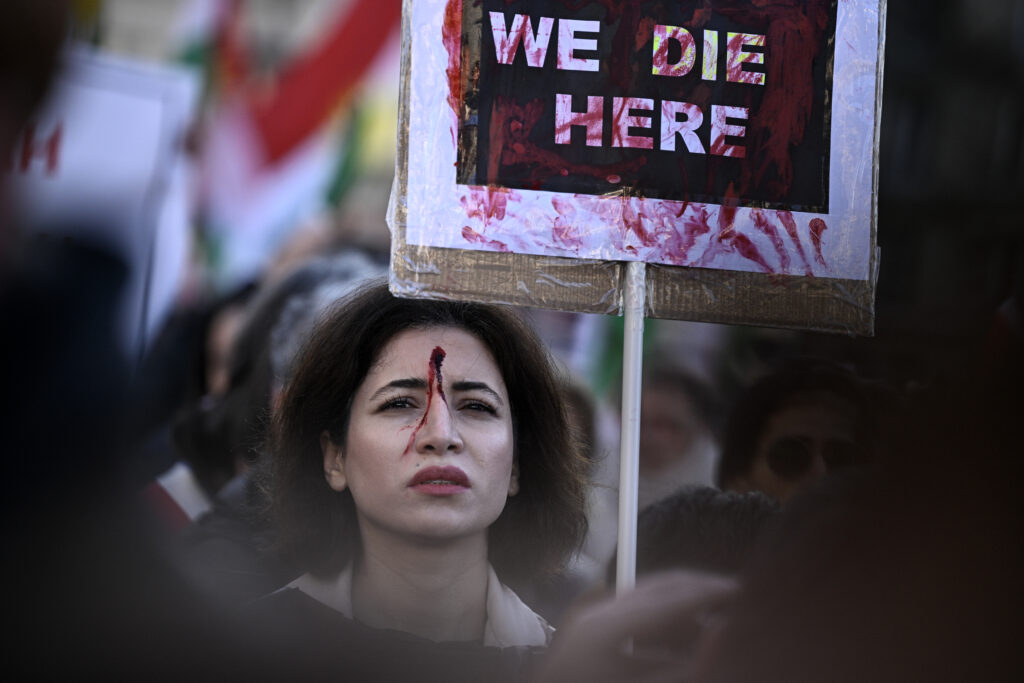
Thousands of people rallied in France on Saturday in a show of support for demonstrators in Iran risking their lives to demand an end to theocratic rule.The protests in Iran over past weeks are the largest since the “Woman, Life, Freedom” street movement in 2022-2023, sparked by the death in custody of an Iranian Kurdish woman arrested for allegedly not following a required dress code. “Woman, Life, Freedom,” chanted marchers in the French capital, some holding portraits of deceased Iranian protesters.”Death to Khamenei,” cried some, in reference to 86-year-old supreme leader Ayatollah Ali Khamenei.Galia, a 36-year-old woman who did not give her surname to protect her family, said she felt hopeful — despite “the repression, the torture, the fear, the upcoming executions” in Iran.”Each time, I tell myself, ‘this is it, people will be free.’ Maybe not now, but the time will come,” she said among the crowd, which also included French protesters.- ‘Repression can’t prevail’ -In Iran, internet connectivity rose “very” slightly on Saturday, more than a week into an internet shutdown, the Netblock monitor said.Activists said the blackout has acted as a cover for the killing of protesters.Norway-based rights group Iran Human Rights (IHR) says it has verified that Iranian security forces have killed 3,428 protesters, but warns the actual toll could be several times higher.Other estimates place the death toll at more than 5,000 — and possibly as high as 20,000, IHR said.The opposition Iran International channel based outside the country has said at least 12,000 people were killed during the protests, citing senior government and security sources. In Paris, Amir — a 23-year-old Iranian student who did not want to give his surname — said he wanted freedom.”The fall of the regime is unavoidable, we can’t live like this,” he said.”Repression can’t prevail, eventually freedom will win.”But Nasser Razi, a member of the National Council of Resistance in Iran opposition group, said patience was needed.”This regime will not fall in one or two days. It’s a process,” he said.- Connection ‘coming back’ -In the eastern city of Strasbourg, Ali Rastegar, a 43-year-old Franco-Iranian, said he was at a rally to send a “message of support” to people back home.”They’re protesting and being shot at. It’s unacceptable,” he said.In the western city of Rennes, organiser Zahra Bodin said marchers wanted “to shout as loud as our compatriots” in Iran.In Lyon, a city in the southeast, protesters included many who were loyal to Reza Pahlavi, the US-based son of Iran’s late shah.A 30-year-old Iranian, who wished to remain anonymous, was taking part.”We’re here to encourage the protesters” in Iran, he said, despite the difficulty in communicating with loved ones.He said recently connection had been “coming back”.”They can call us for a minute, but everything’s being recorded over there. When they want to tell us what’s been happening, they’re cut off.”A young man in his twenties said he had been told you could “smell blood on the roads” of the central city of Isfahan.Suddenly his phone rang.”It’s my family,” he said, and walked away to take the call.burs-mra/ah/jh
Iran’s leader demands crackdown on ‘seditionists’ after protests
Iran’s supreme leader said Saturday that authorities “must break the back of the seditionists”, blaming US President Donald Trump for “casualties” after a deadly crackdown on protests against the country’s clerical leadership.Iran was rocked by weeks of demonstrations sparked by anger over economic hardship that exploded into the biggest protests against the Islamic republic in more than three years.But demonstrations have subsided after the crackdown that rights groups say left thousands of people dead under an internet blackout that lasted more than a week.Authorities have said demonstrations they condemn as “riots” had been controlled and calm returned, with state-aligned media reporting thousands of arrests and officials vowing swift punishment for those detained.”By God’s grace, the Iranian nation must break the back of the seditionists just as it broke the back of the sedition,” supreme leader Ayatollah Ali Khamenei told supporters during an address broadcast by state television.”We do not intend to lead the country to war, but we will not spare domestic criminals,” he added, saying “international criminals” were “worse” and would also not be spared punishment. Mass protests challenging authorities that erupted in 2022 were also branded sedition, an accusation rights groups said the authorities used to violently suppress dissent.Iranian authorities have blamed the latest wave of demonstrations on arch-foes the United States and Israel, saying they fuelled a “terrorist operation” that hijacked peaceful protests over the economy. Trump, who backed and joined Israel’s 12-day war against Iran in June, had repeatedly threatened new military action against Tehran if protesters were killed. – ‘American conspiracy’ -Khamenei on Saturday lashed out at Trump, accusing him of being “guilty for the casualties, damages and accusations he has levelled against the Iranian nation”.”This was an American conspiracy,” he said, adding that “America’s goal is to swallow Iran… the goal is to put Iran back under military, political and economic domination”. While Washington has appeared to have stepped back, the US president has said he has not ruled out military options and made clear he was keeping a close eye on whether any protesters were executed. Trump wrote on Friday on his Truth Social platform that Iran had called off the executions of hundreds of protesters and said to the clerical state: “Thank you!”Asked on state TV about Trump’s comment, Tehran prosecutor Ali Salehi said the US president “always talks a lot of nonsense” and that the government’s response had been “firm, dissuasive and swift” with many cases leading to indictments and sent to court. Rights groups have estimated up to 20,000 people have been arrested. Security officials cited by the Tasnim news agency on Friday said around 3,000 people were arrested. Alarm has mounted over the reported death toll during the crackdown, as verifying cases remains difficult under severe internet restrictions. Eyewitnesses who left Iran after the protests told AFP of coming under fire and hearing numerous gunshots during protests. Kiarash, who gave only his first name for security reasons, was fired on during protests on January 10 and said he saw thousands of bodies at a mortuary in Tehran. “I saw the blood… Thousands of people and thousands of dead bodies” of people “asking for their rights”, he told AFP from Germany. – Pahlavi calls for protests -Norway-based rights group Iran Human Rights (IHR) says 3,428 protesters have been verified to have been killed by security forces, but warns the actual toll could be several times higher.Other estimates place the death toll at more than 5,000 — and possibly as high as 20,000, IHR said.The opposition Iran International channel based outside the country has said at least 12,000 people were killed during the protests, citing senior government and security sources. Monitor Netblocks said on Saturday that internet connectivity in Iran rose “very” slightly, more than 200 hours into the nationwide internet shutdown. People in Iran were reportedly again able to send text messages within the country and to outside numbers but were still often unable to receive texts from those abroad. Rights groups say there have been no verifiable reports of protests in recent days and videos circulating on social media have shown a heavy security presence in some areas. But Reza Pahlavi, the US-based son of the shah ousted in the 1979 Islamic revolution, took to social media on Friday to call for Iranians to protest again on Saturday and Sunday evening. Protesters have chanted the name of Pahlavi, who had called again on Trump to intervene in Iran. Protests have continued outside Iran in multiple countries, with more held in Germany and France on Saturday.
Trump invites more leaders to join Gaza ‘Board of Peace’
US President Donald Trump’s so-called “Board of Peace” for postwar Gaza began to take shape Saturday, with the leaders of Egypt, Turkey, Argentina and Canada asked to join.The announcements from those leaders came after the US president named his Secretary of State Marco Rubio, former British prime minister Tony Blair, and senior negotiators Jared Kushner and Steve Witkoff to the panel.Trump had already declared himself the chair of the body, as he promotes a controversial vision of economic development in the Palestinian territory, which lies in rubble after two-plus years of relentless Israeli bombardment.The moves came after a Palestinian committee of technocrats meant to govern Gaza held its first meeting in Cairo which was attended by Kushner, Trump’s son-in-law who has partnered with Witkoff for months on the issue.In Canada, a senior aide to Prime Minister Mark Carney said he intended to accept Trump’s invitation, while in Turkey, a spokesman for President Recep Tayyip Erdogan said he had been asked to become a “founding member” of the board.Egypt’s Foreign Minister Badr Abdelatty said Cairo was “studying” a request for President Abdel Fattah al-Sisi to join.Sharing an image of the invitation letter, Argentine President Javier Milei wrote on X that it would be “an honor” to participate in the initiative.In a statement sent to AFP, Blair said: “I thank President Trump for his leadership in establishing the Board of Peace and am honored to be appointed to its Executive Board.”Blair is a controversial figure in the Middle East because of his role in the 2003 invasion of Iraq. Trump himself said last year that he wanted to make sure Blair was an “acceptable choice to everybody.”Blair spent years focused on the Israeli-Palestinian issue as representative of the “Middle East Quartet” — the United Nations, European Union, United States and Russia — after leaving Downing Street in 2007.The White House said the Board of Peace will take on issues such as “governance capacity-building, regional relations, reconstruction, investment attraction, large-scale funding and capital mobilization.”The other members of the board so far are World Bank President Ajay Banga, an Indian-born American businessman; billionaire US financier Marc Rowan; and Robert Gabriel, a loyal Trump aide who serves on the US National Security Council.Trump has created a second “Gaza executive board” that appears designed to have a more advisory role. It was not immediately clear which world leaders were asked to be on each board. The White House, which said Friday that additional members would be named to both entities, did not immediately reply to a request for comment.- Israel strikes -Washington has said the Gaza plan had gone on to a second phase — from implementing the ceasefire to disarming Hamas, whose October 2023 attack on Israel prompted the massive Israeli offensive.On Friday, Trump named US Major General Jasper Jeffers to head the International Stabilization Force, which will be tasked with providing security in Gaza and training a new police force to succeed Hamas.Jeffers, from special operations in US Central Command, in late 2024 was put in charge of monitoring a ceasefire between Lebanon and Israel, which has continued periodic strikes aimed at Hezbollah militants.Gaza native and former Palestinian Authority deputy minister Ali Shaath was earlier tapped to head the governing committee.Trump, a real estate developer, has previously mused about turning devastated Gaza into a Riviera-style area of resorts, although he has backed away from calls to forcibly displace the population.
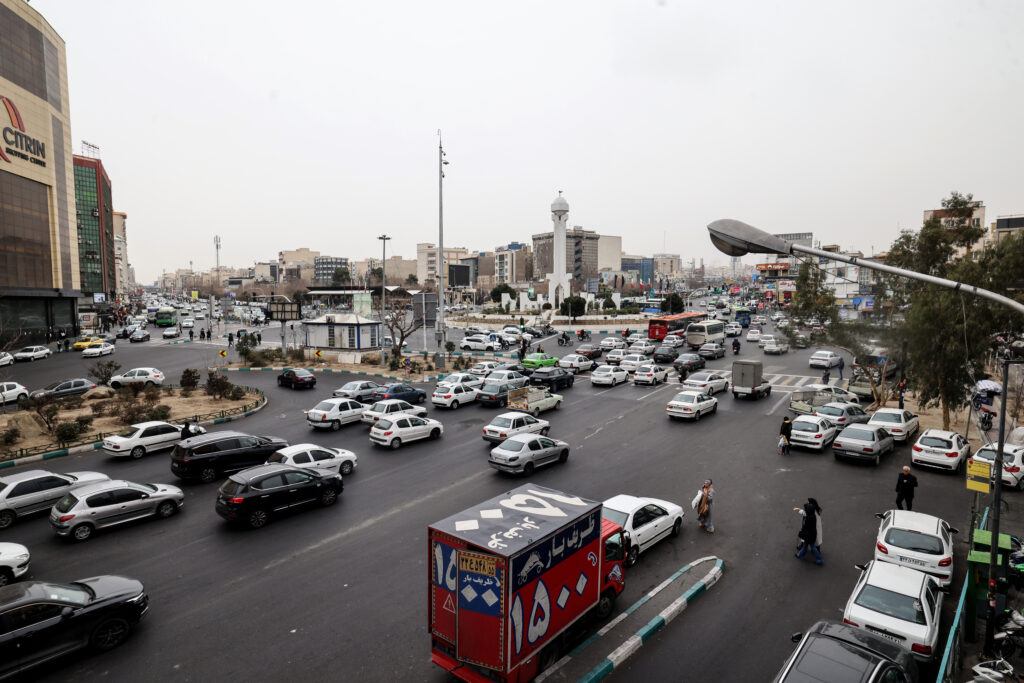
‘My nightmare’: Iranians recount crackdown under internet blackout
One move in the wrong direction and Kiarash would have been dead, he said, as a shooter opened fire on him and other protesters in the Iranian capital during a wave of demonstrations met by a deadly crackdown. Blood stained the street after a person dressed in a full chador covering shot at a large crowd that had gathered in the north of Tehran on January 10, during anti-government protests sparked by economic strain that exploded in size and intensity on January 8. “I heard this pop pop… and I saw with my eyes three people collapsed at the same time,” said 44-year-old Kiarash, who spoke to AFP by phone from Germany where he lives, after witnessing violent suppression of protests while visiting his native Iran. A man nearby shouted as he tried to help his companion, his hand covered in her blood, Kiarash said. “This is my nightmare right now,” he said. “He couldn’t understand that she had been shot.”If the shooter had been left-handed, Kiarash said, “I was dead.”He had gone out to protests despite witnessing horrific scenes earlier in the morning at the sprawling mortuary in southern Tehran.After receiving news that a friend had died after being shot, he went with relatives to the Behesht-e Zahrah cemetery. They found it flooded with people there to collect and prepare bodies for burial, which in Islam must be done as quickly as possible after death, often within 24 hours. People pushed into two warehouses stacked with black body bags, sometimes two or three on top of each other, he said. A mother on her own cried for help moving the body of her son. There were “more than 1,500, up to 2,500 (dead) people in just one warehouse”, said the former logistics company employee. The crowds chanted to honour the dead and against supreme leader Ayatollah Ali Khamenei, who leads the clerical authorities in place since the 1979 Islamic revolution. Security forces did not intervene, but stopped people from recording any images. Testimonies like Kiarash’s are part of the piecemeal picture emerging of what happened in Iran during the protests, after authorities imposed a nationwide internet blackout on January 8. – ‘People were not scattering’ -Norway-based rights group Iran Human Rights (IHR) says 3,428 protesters have been verified to have been killed by security forces, but warns the actual toll could be several times higher.Other estimates place the death toll at more than 5,000 — and possibly as high as 20,000 — with the internet blackout severely hampering independent verification, IHR said.The opposition Iran International channel based outside the country has said at least 12,000 people were killed during the protests, citing senior government and security sources.Eyewitness accounts received by IHR reported “protesters being shot dead while trying to flee, the use of military-grade weapons and the street execution of wounded protesters”. Kiarash, who had completed compulsory military service in Iran, said he recognised the sound of heavy machine gun fire at protests on January 8 in the northern city of Amol. A friend called his family to ask for blood donations for dozens of wounded — many of them hit in their feet, he said.Kaveh, using a pseudonym and speaking to AFP from Britain after leaving Iran, said he also heard gunshots in the streets of Tehran on Friday last week, but did not see shooters himself. “It wasn’t shotgun (fire), it was an assault rifle, automatic bursts of fire… every 10 minutes we heard a row of gunshots,” the 33-year-old said. But “people were not scattering”, he added. “They were just staying.” Kaveh had felt a palpable change in Tehran’s streets before protests last week — shops closed and usually packed roads emptied. Then the internet went dark. People started to gather in the streets, putting up blockades and setting fires in trash bins, Kaveh said. He sent a text to his wife: “No internet, I’m good, Love u”. But the message wasn’t delivered.Videos have filtered out despite the internet blackout showing large demonstrations in which people shouted slogans against Khamenei and for the return of the monarchy ousted by the Islamic revolution, with some showing police cars and mosques on fire. A video geolocated by AFP to Kermanshah in western Iran was punctuated by the crack of what sound like gunshots. “Since the start of the protests I saw many bodies in the streets and people being shot,” a 39-year-old artist in Tehran said in a message to a friend. “Tehran looked like a war zone.” Mohammad, a 30-year-old Iranian photojournalist in Tehran, said he was “afraid of the possibility of a war or civil war” after “these peaceful protests turned extremely violent”.- Identified ‘by his tattoos’ – Saleh Alavizadeh, an Iranian actor and director based in France, said he knew two people who had been killed during the protests. “A young theatre actor was shot in the head, and because they couldn’t recognise him from his face… they had to recognise him by his tattoos,” he told AFP. “Everyone knows at least one person who has been killed,” Alavizadeh said of the several people he’d spoken to in Iran in recent days during spurts of connectivity.Canada said on Thursday that Iranian authorities had killed a Canadian citizen, and France said a French-Iranian woman had been injured in Iran, without providing further details.Iran’s Foreign Minister Abbas Araghchi has said only “hundreds” were killed in what authorities have deemed “riots” and a “terrorist operation” that hijacked peaceful protests over the economy and was fuelled by Tehran’s arch-foes the United States and Israel.State television has been awash with images of large pro-government demonstrations called by authorities, funeral processions for security forces and reports of thousands of arrests. Billboards have appeared in Tehran with an image of a burnt public bus with the words: “This is not a protest”.Even as government-approved media shares floods of clips online, ordinary Iranians have remained mostly cut off, leaving relatives abroad wracked with worry. Fearing messages sent by Starlink or landlines could be intercepted or mark them as spies, many Iranians stick to simple messages of reassurance. Kaveh gave friends with Starlink access several numbers to call. “Just report back if they’re good or not,” he told them. “We don’t go into details.” The government has said it has control of the streets and rights groups say there have been no verifiable reports of protests in recent days. Some Iranians said they were certain it is only a matter of time before protests flare up again despite — or as a result of — the high death toll. But for Kiarash, one thing was certain as he headed to the airport in Tehran to leave his homeland: for the city and the people, “nothing will be normal again”.
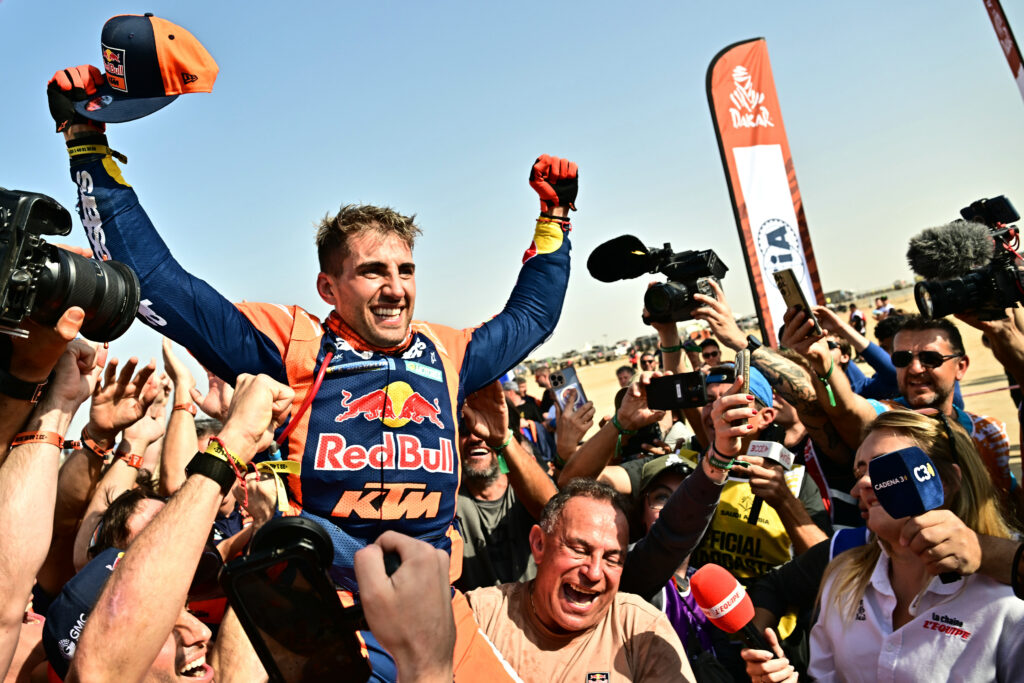
Luciano Benavides wins Dakar bike title by two seconds
Argentina’s Luciano Benavides won the Dakar Rally bike title by a mere two seconds in Saudi Arabia on Saturday.Second in the 13th and closing stage was enough for the 30-year-old KTM rider to deny Honda’s American two-time champion Ricky Brabec and secure his debut Dakar crown.”I’ve dreamed of this moment my whole life,” said the winner.Brabec, winner in 2020 and 2024, was on target for a third title but lost time when going the wrong way close to the finish of the 105km ride around Yanbu.”Even yesterday, it seemed impossible, but I still felt it could happen, and today Ricky took the wrong line and I took the right one,” Benavides said.”It was a glimmer of hope.”I saw it was him and that he had to pull a U-turn to get back on the right line because crossing between the two was impossible. I saw the opening and I went for it.”Edgar Canet won the stage, with Spain’s Tosha Schareina (Honda) finishing third and also taking the number-three spot in the overall standings.Benavides’s older brother Kevin won the marathon race in 2021 and 2023.The 2026 champion said he had given his all “from start to finish today”.”I’d told everyone before the start that this Dakar was mine,” he added.”Nine years in the Dakar and my first win. My brother and I are making history.”He won by 43 seconds and I’ve won by two. I think I have him beaten on that front! It’s a dream come true.”