
AFP Asia Business

Trump presses Syria leader on Israel ties after lifting sanctions

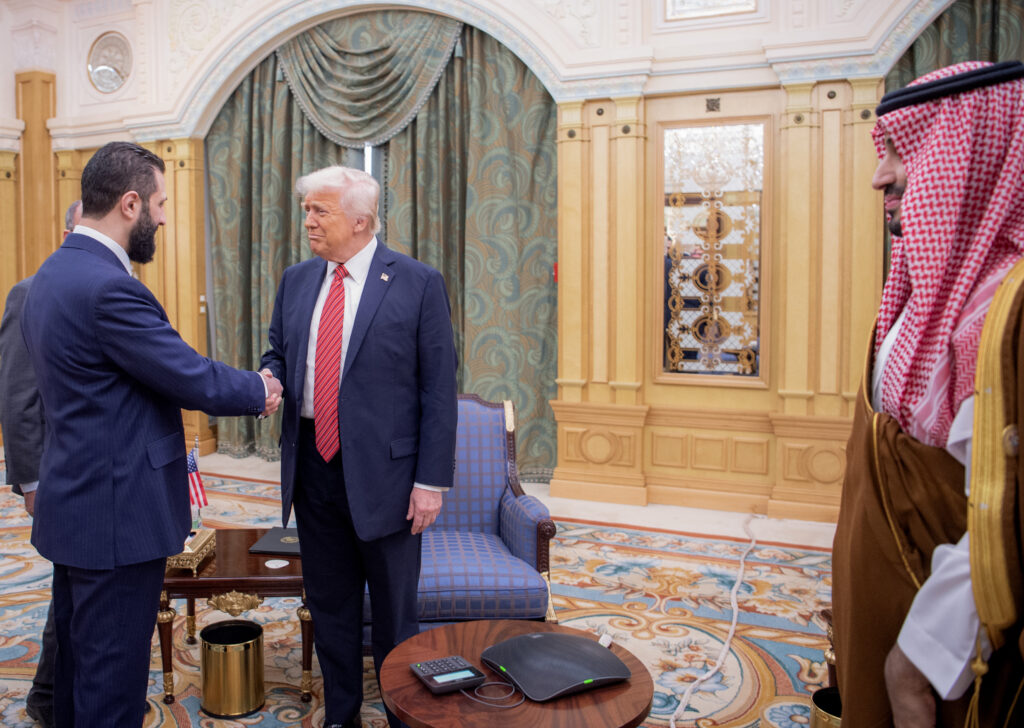
US President Donald Trump landed in Doha Wednesday after visiting Riyadh, where he urged Syria’s president to normalise with Israel after offering a major boost to the war-ravaged country by vowing to lift sanctions.Trump became the first US president in 25 years to meet a Syrian leader — Ahmed al-Sharaa, an erstwhile Islamist guerrilla and onetime jihadist who had been on a US wanted list and led the overthrow of Bashar al-Assad in December.The interim Syrian president and Trump, wearing matching suits, shook hands as they met jointly in Riyadh with Saudi Arabia’s de facto leader, Crown Prince Mohammed bin Salman and, by video link, with Turkish President Recep Tayyip Erdogan — the key supporter of the new government in Damascus.While aboard Air Force One en route to Qatar, Trump poured praise on Sharaa, saying the meeting went “great” and describing the leader as a “young, attractive guy. Tough guy. Strong past. Very strong past. Fighter.”Turkey and Saudi Arabia had both advocated reconciliation with Syria, but the move is the latest to put Trump at odds with Israel, which has expressed deep scepticism of Sharaa and ramped up its military strikes against Syria to degrade its longtime adversary’s military capabilities.When asked if Sharaa said he’d join the Abraham Accords and normalise relations with Israel, Trump said: “I told him, I hope you’re going to join once you’re straightened out and he said yes. But they have a lot of work to do.”Trump also asked Sharaa to deport Palestinian militants and tell foreign fighters to leave the country, as well as to take control of camps for captured Islamic State group fighters, currently run by Kurdish forces opposed by Turkey, the White House said.- Biggest applause -Syria’s foreign ministry hailed the meeting as “historic”, but did not mention the Abraham Accords. State media also did not mention normalisation.The ministry said the leaders discussed “avenues for Syrian-American partnership in counterterrorism efforts” and the importance of lifting sanctions and supporting reconstruction.After the longer-than-expected half-hour meeting, Trump said the Assad-era sanctions had been “really crippling”.”It’s not going to be easy anyway, so it gives them a good, strong chance, and it was my honour to do so,” Trump said, addressing Gulf Arab leaders.The former reality television host, always attuned to crowd sizes, took note of the rapturous reception when he announced the decision at a Riyadh investment forum Tuesday.”That was the thing that got the biggest applause from the room. We had a very crowded room with thousands of people,” Trump said.After the announcement, Syrians celebrated in cities across the country overnight.”These sanctions were imposed on Assad, but… now that Syria has been liberated, there will be a positive impact on industry, it’ll boost the economy and encourage people to return,” said soap factory owner Zain al-Jabali, 54, in Aleppo.Washington imposed sweeping restrictions on financial transactions with Syria during the brutal civil war and made clear it would use sanctions to punish anyone involved in reconstruction so long as Assad remained in power without accountability for atrocities.Trump gave no indication that the United States would remove Syria from its blacklist of state sponsors of terrorism — a designation dating back to 1979 over support to Palestinian militants that severely impedes investment.- Qatar plane controversy -A senior envoy of the Joe Biden administration met Sharaa in Damascus in December and called for commitments, including on the protection of minorities.In recent weeks, Syria has seen a series of bloody attacks on minority groups, including Alawites — the sect of the largely secular Assad family — and the Druze.Rabha Seif Allam of the Al-Ahram Center for Political and Strategic Studies in Cairo said easing US sanctions would help reintegrate Syria with the global economy by allowing bank transfers from investors and from millions of Syrians who fled during the civil war.”Lifting sanctions will give Syria a real opportunity to receive the funding needed to revive the economy, impose central state authority and launch reconstruction projects with clear Gulf support,” she said.Trump touched down at Hamad International Airport in Doha on Wednesday afternoon, where he was met by Qatar’s Emir Sheikh Tamim bin Hamad Al-Thani.The president later boasted that Qatar Airways had placed a “record” order worth more than $200 billion in jet sales as he signed a raft of deals. “It’s over $200 billion but 160 in terms of the jets. That’s fantastic. So that’s a record,” Trump said, adding: “It’s the largest order of jets in the history of Boeing. That’s pretty good.”Qatar has stirred controversy by offering a $400 million luxury aircraft to serve as a new Air Force One and then go to Trump’s personal use.The move raises major constitutional and ethical questions — as well as security concerns about a foreign power donating the ultra-sensitive presidential jet.
Turkey eyes legal steps after Kurdish militant group PKK disbands

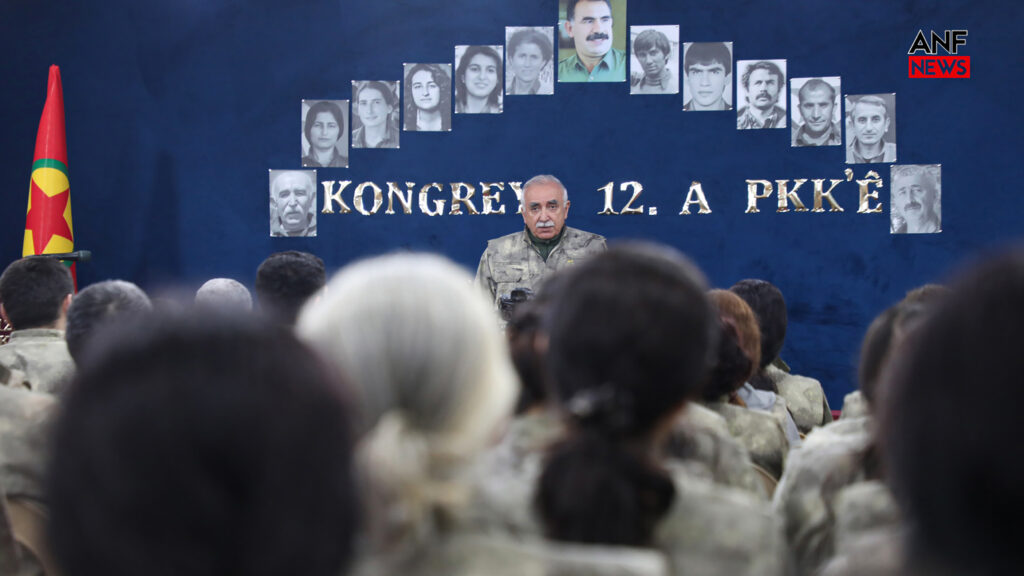
After the decision by the Kurdish militant group PKK to disband, Turkey was eyeing Wednesday a raft of legal and technical measures to ensure its full implementation and finally end a four-decade insurgency.Monday’s announcement sought to draw a line under a bloody chapter that began in 1984 when the Kurdistan Workers’ Party (PKK) took up arms, triggering a conflict that cost more than 40,000 lives.”What matters most is the implementation,” President Recep Tayyip Erdogan said Wednesday, pledging to “meticulously monitor whether the promises are kept”. The pro-Kurdish DEM party, a key player that facilitated contact between jailed PKK founder Abdullah Ocalan and the political establishment, urged Ankara on Tuesday to take “confidence-building steps” such as freeing political prisoners. So far, Turkish officials have said little but the government is working on a proposal that could ease prison sentences in general. The text, which should be submitted to parliament by June at the latest, provides for the conditional release of all those in pre-trial detention for offences committed before July 31, 2023.  There are also plans to release to house arrest those who are sick, or women with children, if they are serving sentences of less than five years. The moves could affect more than 60,000 people, Turkish media reports say. – No general amnesty -But the authorities are reportedly being careful not to frame it as an “amnesty”. “Sick prisoners should not die in prison… These measures should not be interpreted as a general amnesty, which is not on the agenda,” Justice Minister Yilmaz Tunc said.But DEM co-chair Tulay Hatimogullari said a move to free prisoners was essential.”There are nearly 10,000 political prisoners in this country… If a peace process is ever to get under way, they must be released as soon as possible,” she said Monday. For DEM, that must include prisoners like Selahattin Demirtas, the charismatic former leader of a former pro-Kurdish party who has been jailed since 2016.”With the complete elimination of terror and violence, the door to a new era will open,” Erdogan said Monday.Some prisoners, such as Demirtas or the philanthropist Osman Kavala, who is serving life on charges of “trying to overthrow the government”, could in theory be quickly freed if Turkey heeded rulings by the European Court of Human Rights, which has repeatedly demanded their release. – Proof of disarming -But before that, Ankara is awaiting concrete proof that the PKK has actually laid down its weapons, Abdulkadir Selvi, a columnist close to the government, wrote in the Hurriyet newspaper. “The democratic changes will start after the head of the MIT (intelligence services) has submitted his report to President Erdogan,” he wrote. According to Turkish media reports, the MIT will supervise the weapons handover at locations in Turkey, Syria and Iraq. It will register the weapons handed in and the identity of the fighters in coordination with the Syrian and Iraqi authorities. “Our intelligence service will follow the process meticulously to ensure the promises are kept,” Erdogan said Wednesday. Most of the PKK’s fighters have spent the past decade in the mountains of northern Iraq. Those who have committed no crime in Turkey will be allowed to return without fear of prosecution. But the PKK’s leaders will be forced into exile in third-party states such as Norway or South Africa, media reports suggest. – Deposed mayors -Duran Kalkan, a member of the PKK’s executive committee, said Tuesday that renouncing armed struggle “can only be implemented under (Ocalan’s) leadership” and when he is guaranteed “free living and working conditions”. Experts say prison conditions for Ocalan, 76, will be “eased” but he is unlikely to leave the Imrali prison island where he has been held since 1999, largely because his life would be threatened.  “Naming trustees (to replace deposed mayors) will become an exceptional measure… after the terrorist organisation is dissolved,” Erdogan said, suggesting that Kurdish mayors removed from office over alleged ties to the PKK would be reinstated. In total, 16 opposition mayors from the DEM and the main opposition CHP have been removed since local elections in March 2024. 

‘No more empty statements:’ Iran ex-detainees press Sweden over death row academic

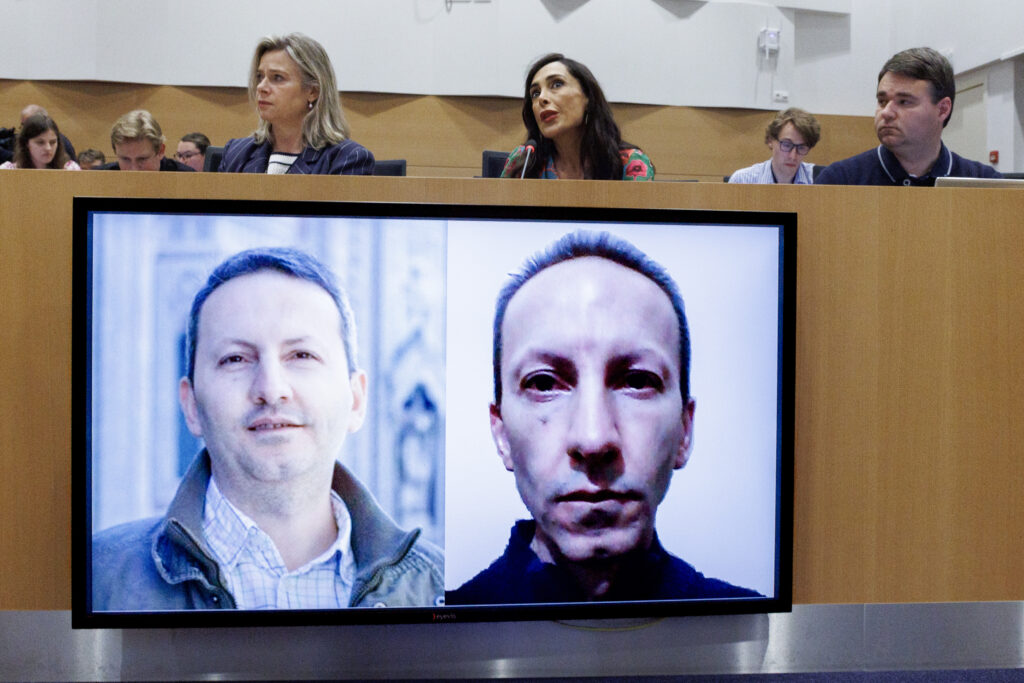
Over 20 foreign nationals who themselves endured years of captivity in Iran on Wednesday urged Sweden to step up efforts to free a Swedish-Iranian citizen sentenced to death in the country, after he had a heart attack last week.Ahmadreza Djalali, an academic who was sentenced to death in 2017 on espionage charges he denies, suffered a heart attack in Tehran’s Evin prison, his wife said Friday.Djalali, 53, is among a number of Europeans held by Iran in what some countries including France call a deliberate hostage-taking strategy to extract concessions from the West at a time of tension over Tehran’s nuclear programme.Djalali’s condition, “worsened by years of medical neglect and psychological torment, is now dire,” said the 21 former detainees including British-Iranian Nazanin Zaghari-Ratcliffe, Australian Kylie Moore-Gilbert and US-Iranian Siamak Namazi, who were freed only after years-long ordeals in prison.”While the Islamic Republic and its heinous practice of hostage diplomacy is the clear culprit here, we are deeply troubled by your government’s failure to use the means at its disposal to rescue Dr Djalali,” they said in the letter addressed to Swedish Prime Minister Ulf Kristersson via Stockholm’s embassy in Washington.”No more empty statements. Sweden must act with the same urgency and resolve it has shown in securing the freedom of other citizens,” they added in the letter seen by AFP.Djalali was granted Swedish nationality while in jail.- ‘A path home’ -The letter said Iranian Foreign Minister Abbas Araghchi had offered a possible way forward in a recent social media post that it said “implicitly linked” the case to Iran’s inability to access treatment for epidermolysis bullosa (EB), a disease that affects hundreds of Iranian children and can be fatal without proper care.”The specialised wound dressings required to treat EB, produced by a Swedish company, have long been blocked due to over-compliance with sanctions,” the letter said.In a post on X last week that lamented a “regrettable shift” in bilateral relations, Araghchi said “Sweden ceased non-sanctionable exports of medicines, including specialised and unique gear for children afflicted with EB”.In June 2024, Tehran freed two Swedes held in Iran in exchange for Hamid Noury, a former Iranian prisons official serving a life sentence in Sweden. To the disappointment of his family, Djalali was not included in the swap.In the letter, the ex-detainees told Kristersson: “A path to bring Dr Djalali home — alive, not in a coffin — appears within reach. “If Sweden fails to pursue it seriously and this Swedish citizen dies in captivity, history will record that your government had more than one chance to save him — but chose not to. That responsibility will rest squarely with you.”