
AFP Asia Business
Indonesia inaugurates $600m oil and gas projects
Fri, 16 May 2025 12:11:02 GMT
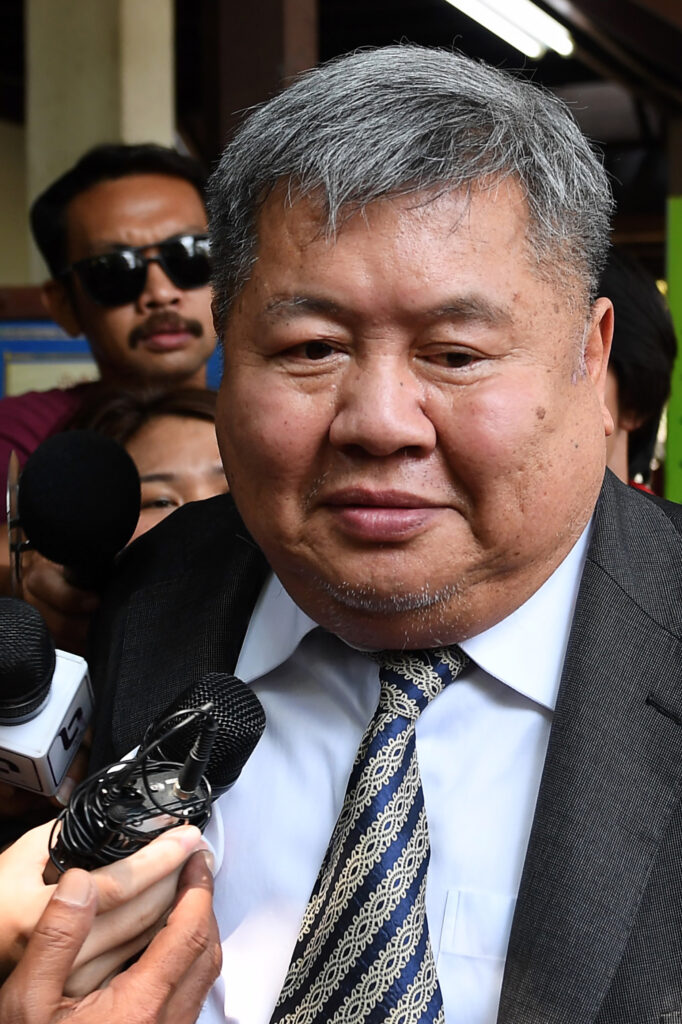
Thai tycoon surrenders over deadly skyscraper collapse
A Thai construction tycoon turned himself in on Friday to face charges of alleged negligence over the collapse of a skyscraper that killed dozens of people in a powerful earthquake, police said.The 30-storey Bangkok tower crumbled in seconds, killing 89 people, mostly construction workers, when a magnitude-7.7 tremor hit neighbouring Myanmar on March 28.The building …
Thai tycoon surrenders over deadly skyscraper collapse Read More »
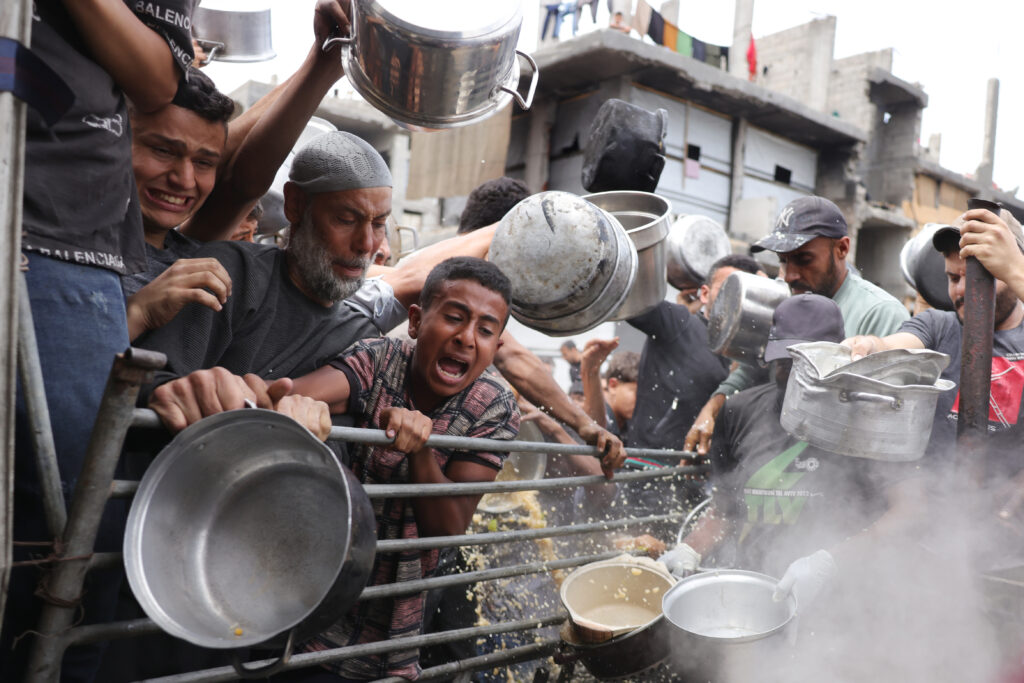
Trump says many in Gaza are ‘starving’
US President Donald Trump said Friday that “a lot of people are starving” in the besieged Gaza Strip, where rescuers reported more than 70 people killed in Israeli air strikes since midnight.Trump’s brief comments on Gaza came as he capped the first foreign tour of his second term, which saw him visit several Gulf countries but excluded key ally Israel.A two-month ceasefire between Israel and Hamas collapsed in March, shortly after Israel reimposed a total blockade on Gaza that aid agencies say has sparked critical food shortages.”We’re looking at Gaza. And we’re going to get that taken care of. A lot of people are starving,” Trump told reporters in Abu Dhabi.Israel cut off aid to Gaza on March 2, a tactic it has said is intended to force concessions from militant group Hamas, which is still holding dozens of Israeli hostages it seized in October 2023. Hamas insisted on Thursday that the restoration of humanitarian assistance to the war-ravaged territory was “the minimum requirement” for talks.It also warned that Gaza was not “for sale” hours after Trump again floated taking over the territory and turning it into “a freedom zone”.On Friday, Gaza’s civil defence agency said that 74 people had been killed in Israeli strikes since midnight, reporting dozens more trapped under the rubble as shelling continued.The strikes sparked panic in northern Gaza.”We were asleep when suddenly everything exploded around us,” north Gaza resident Umm Mohammed al-Tatari, 57, told AFP.”Everyone started running. We saw the destruction with our own eyes. There was blood everywhere, body parts and corpses. We didn’t know who was dead and who was still alive.”Another resident, 33-year-old Ahmed Nasr, said the bombing continued through the night. “We couldn’t sleep or find any peace. There is no safety. We could die at any moment,” he said.AFPTV footage from the Indonesian Hospital in Beit Lahia showed mourners crying over the bodies of their loved ones.The dead and injured lay on a blood-smeared floor, where medics treated those still alive.”They were innocent people,” said Mayar Salem, who lost her relatives.”Only their remains are left… They were my sisters and daughters.”- ‘Historic opportunity’ -Hamas sparked the war in October 2023 with an unprecedented attack on Israel that resulted in the deaths of 1,218 people on the Israeli side, mostly civilians, according to an AFP tally based on official figures.Of the 251 hostages taken during the attack, 57 remain in Gaza, including 34 the military says are dead.The health ministry in Gaza said 2,876 people have been killed since Israel resumed strikes on March 18, taking the war’s overall toll to 53,010.Israeli media reported Friday that the military had stepped up its offensive in Gaza following government approval of a plan to retake the territory earlier this month, though the army has yet to formally announce its threatened expansion of the campaign. The military said it was continuing its operations, adding that over the past day, it had “struck over 150 terror targets throughout the Gaza Strip including anti-tank missile posts, terrorist cells, military structures, and operational centres”.Israel’s main group representing the families of hostages still held in Gaza said Prime Minister Benjamin Netanyahu was missing an “historic opportunity” to get their loved ones out.”The hostages’ families woke up this morning with heavy hearts and great concern in light of reports about increased attacks in Gaza and the imminent conclusion of President Trump’s visit to the region,” the Hostages and Missing Families Forum said in a statement. “Missing this historic opportunity would be a resounding failure that will be remembered in infamy forever.”But another hostage family support group called for more military pressure.”The military pressure must be much stronger, with high intensity, and coordinated with diplomatic pressure, a complete siege, cutting off water and electricity,” the Tikva Forum group said.The United Nations estimates that 70 percent of Gaza is now either an Israeli-declared no-go zone or under evacuation order.- ‘Minimum requirement’ -For weeks, UN agencies have warned that supplies of everything from food and clean water to fuel and medicines are reaching new lows.The World Health Organization said the last hospital in Gaza providing cancer and cardiac care had stopped functioning after an Israeli attack on Tuesday left it “severely damaged and inaccessible”.Israel says its aid stoppage and military pressure are meant to force Hamas to free the remaining hostages.But senior Hamas official Basem Naim said the entry of aid into Gaza was “the minimum requirement for a conducive and constructive negotiation environment”.The Gaza Humanitarian Foundation, a US-supported NGO, has said it will begin distributing humanitarian aid in Gaza this month after talks with Israeli officials.But the United Nations on Thursday ruled out involvement with the initiative.
Global acute hunger hits new high, 2025 outlook ‘bleak’: UN-backed report
More than 295 million people faced acute hunger last year, a new high driven by conflict along with other crises — and the outlook is “bleak” for 2025 as humanitarian aid falters, a UN-backed report said Friday.It was the sixth consecutive annual increase in the number of people hit with “high levels” of acute food insecurity, according to the Global Report on Food Crises.A total of 295.3 million people endured acute hunger last year — almost a quarter of the population in 53 of the 65 countries analysed for the report.This was up from 281.6 million people in 2023, according to the report, which is drafted by a consortium of international organisations and NGOs.The number of people facing famine reached 1.9 million, more than double from the previous year, according to the report.A food security monitor warned on Monday that Gaza was at a “critical risk of famine” after more than two months of an Israeli aid blockade.”From Gaza and Sudan, to Yemen and Mali, catastrophic hunger driven by conflict and other factors is hitting record highs, pushing households to the edge of starvation,” UN Secretary-General Antonio Guterres said in the report.”The message is stark. Hunger and malnutrition are spreading faster than our ability to respond, yet globally, a third of all food produced is lost or wasted,” he said.Conflict and violence were the primary drivers in 20 countries and territories, where 140 million people faced acute hunger, the report found.Extreme weather was to blame in 18 countries and “economic shocks” in 15 nations, together affecting a total of 155 million people.The deteriorating situations in Gaza, Myanmar and Sudan outweighed improvements in Afghanistan and Kenya.- ‘Failure of humanity’ -The report warned that the outlook was “bleak” for 2025 as as major donor countries have substantially reduced humanitarian funding.”This is more than a failure of systems -– it is a failure of humanity,” Guterres said.”Hunger in the 21st century is indefensible. We cannot respond to empty stomachs with empty hands and turned backs,” he said.The “abrupt termination” of funding in 2025 has disrupted humanitarian operations in Afghanistan, the Democratic Republic of Congo, Ethiopia, Haiti, South Sudan, Sudan and Yemen, the report said.Funding to humanitarian food sectors is projected to sink by up to 45 percent, it said.US President Donald Trump’s administration has dramatically cut foreign aid spending, but other countries have also reduced their contributions.The report added that “economic shocks” are likely to be a major driver of acute food insecurity as the global economy faces “high uncertainty” due to US tariffs and a weaker US dollar.
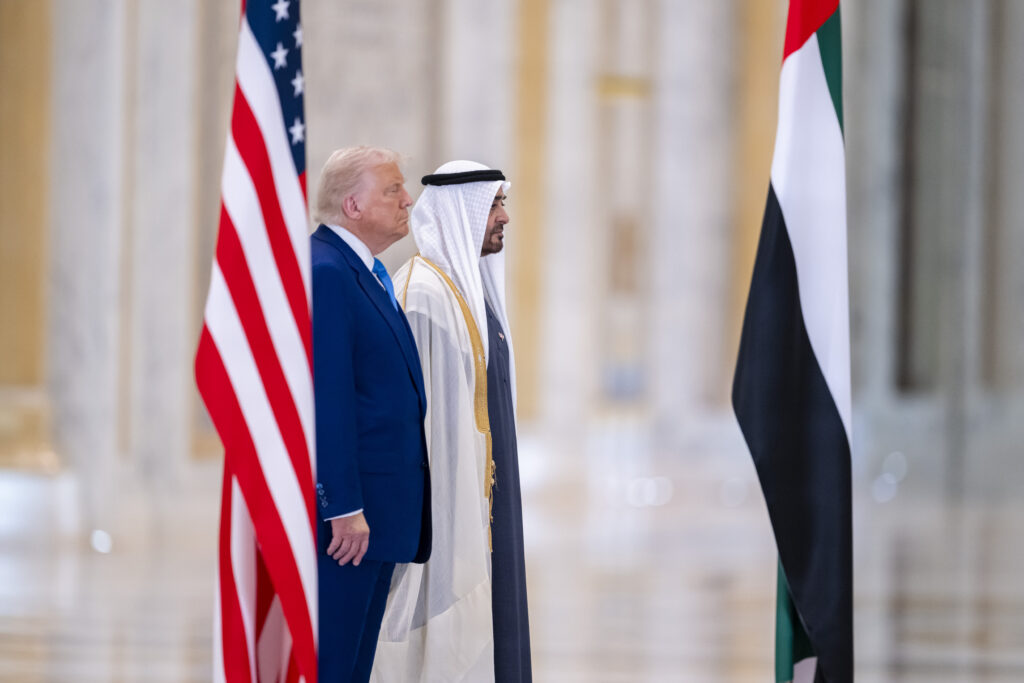
Trump caps Gulf tour in Abu Dhabi with dizzying investment pledges
US President Donald Trump on Friday concluded his Gulf tour in Abu Dhabi after overseeing the signing of another raft of multi-billion-dollar deals, while also securing a $1.4 trillion investment pledge from the UAE. The eye-watering amounts of money in investments were accompanied also by the lifting of decades-long sanctions on Syria and renewed optimism over an Iran nuclear deal during the multi-day trip across the Gulf.On his first foreign tour of his second term, Trump oversaw a $200 billion order from Qatar Airways for Boeing jets and a $600 billion investment from Saudi Arabia — including nearly $142 billion in weapons, which the White House described as the largest-ever arms deal.”I’m just thinking we have a president of the United States doing the selling,” Trump quipped, during a business roundtable alongside Abu Dhabi Crown Prince Khaled bin Mohamed bin Zayed.”I think I have to be a cheerleader for our country,” he added.Following the business roundtable, the president briefly toured the Abrahamic Family House, a complex opened in 2023 that houses a mosque, church and the country’s first official synagogue — and then departed the country on Air Force One.On Thursday, UAE President Sheikh Mohamed bin Zayed lauded the strong partnership between the two countries that grew under Trump’s leadership and vowed to invest $1.4 trillion in the US economy over 10 years.The White House said the two countries had also signed business deals worth more than $200 billion, including a $60 billion partnership with the Abu Dhabi National Oil Company and a $14.5 billion Etihad Airways order of Boeing planes.”You’re an amazing country. You’re a rich country. You can have your choice, but I know you’ll never leave my side,” Trump said after the $1.4 trillion announcement Thursday, addressing the UAE president.”That’s your biggest investment that you’ve ever made, and we really appreciate it,” he added saying he will treat the UAE “magnificently” and that Sheikh Mohamed was “a magnificent man, and it’s an honour to be with you”.- AI ambitions -The White House also said both countries inked an AI agreement that will see the UAE invest in US data centres and commit to “further align their national security regulations with the United States, including strong protections to prevent the diversion of US-origin technology”.The UAE is seeking to become a leader in technology and especially artificial intelligence to help diversify its oil-reliant economy.But these ambitions hinge on access to advanced US technologies, including AI chips under stringent export restrictions, which the UAE president’s brother and spy chief Sheikh Tahnoon bin Zayed reportedly lobbied for during a Washington visit in March.Earlier this week, Trump rescinded further controls on AI chips, which were imposed by his predecessor to make it harder for China to access advanced technology.- ‘Trillions of dollars’ -In Saudi Arabia, Qatar and the United Arab Emirates, Trump was greeted with lavish welcomes and hailed the three Arab leaders in return.He said that he and Saudi Crown Prince Mohammed bin Salman “like each other a lot” — in sharp contrast with the frosty Saudi-US relations that marked the start of his predecessor Joe Biden’s term.He said the trip had resulted in securing “trillions of dollars” but the Gulf leaders’ largesse also stirred controversy, with Qatar offering Trump a luxury aircraft ahead of his visit for presidential and then personal use, in what Trump’s Democratic opponents charged was blatant corruption.The deal-heavy tour also saw a major diplomatic shift. Trump became the first US president in 25 years to meet a Syrian leader, Ahmed al-Sharaa, after announcing the removal of sanctions on the war-torn country following appeals from Saudi Arabia’s Prince Mohammed and Turkey’s Recep Tayyip Erdogan.During his Qatar visit, Trump said a deal was close on Iran’s nuclear programme that would avert military action, sending oil prices tumbling.Before taking off from Abu Dhabi, Trump said that Iran should make a quick decision on an American proposal given to Iran concerning the nuclear deal or face potential consequences.”They know they have to move quickly or something bad is going to happen,” Trump told reporters.There was no announcement of a breakthrough on the Gaza war, which Qatar has been a key mediator, with Trump repeating claims that Washington should “take” Gaza and turn it into a “freedom zone”.But in Abu Dhabi he conceded that “a lot of people are starving” in Gaza, under Israeli aid blockade for more than two months, vowing to “get that taken care of”.In remarks on Friday, Trump added that he would like to meet his Russian counterpart “as soon as we can set it up”, after President Vladimir Putin skipped the direct Ukraine-Russia talks in Istanbul — which Trump said he had been willing to attend.
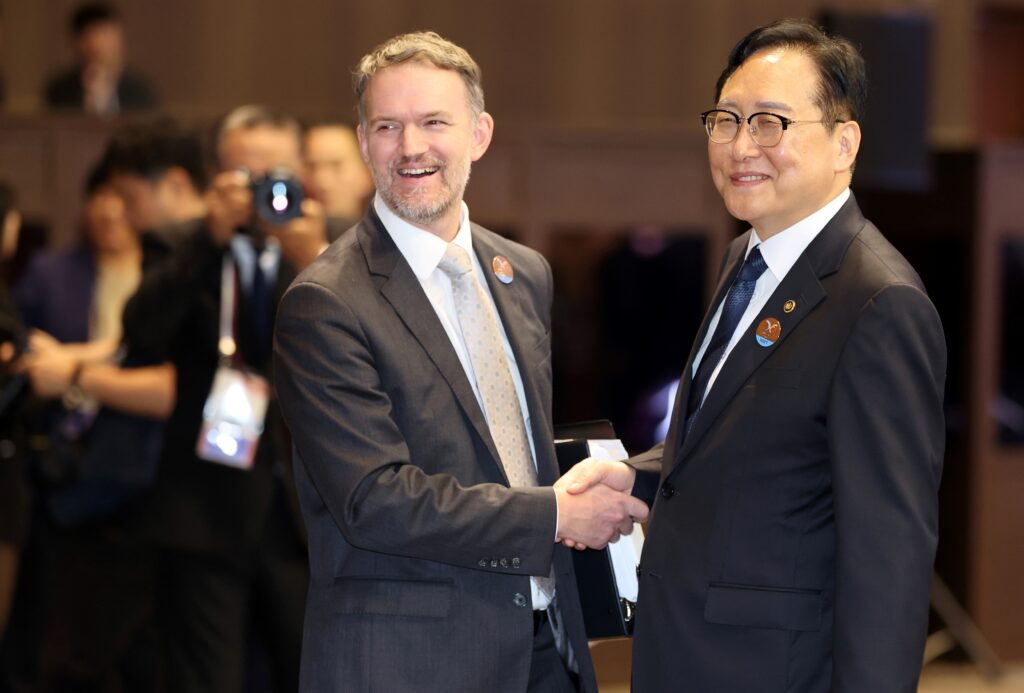
APEC says ‘concerned’ over challenges to global trade
The Asia-Pacific Economic Cooperation group said Friday that it was “concerned” over the challenges to global trade, as ministers from APEC countries met in South Korea in the shadow of growing woes from US tariffs.Trade ministers from the top economies that make up APEC are meeting on South Korea’s Jeju Island amid concerns for the …
APEC says ‘concerned’ over challenges to global trade Read More »