
AFP Asia Business
Syria says Sharaa, Trump discuss Kurdish rights as forces deploy in country’s north, east
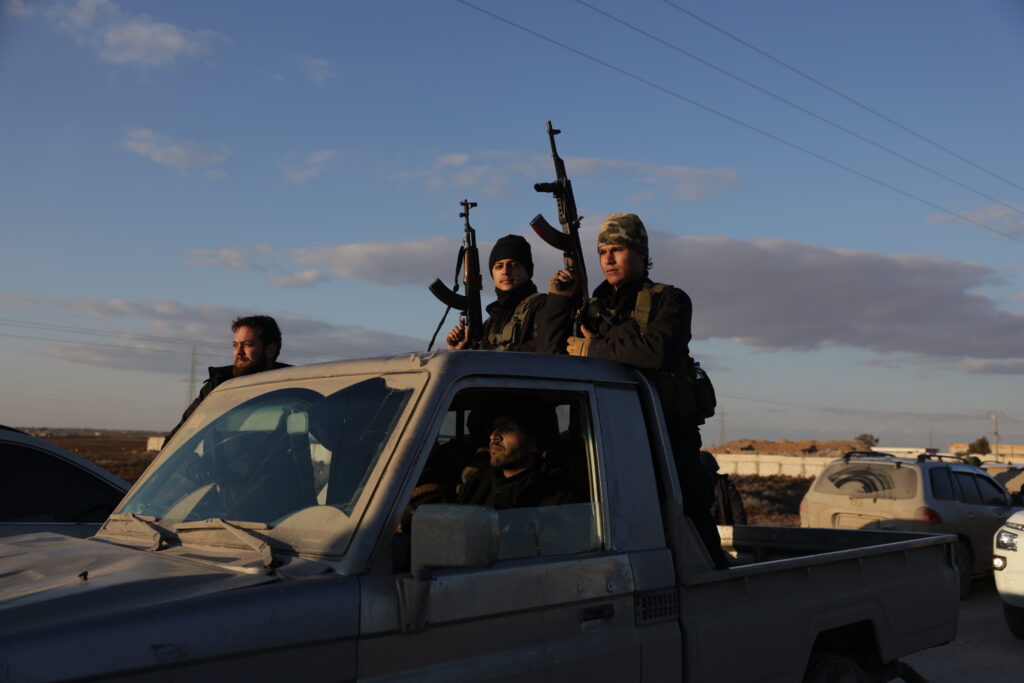
Syrian President Ahmed al-Sharaa and US President Donald Trump discussed guaranteeing Kurdish rights in a phone call on Monday, Syria’s presidency said, a day after Damascus reached a deal with Kurdish forces including a truce.Sharaa met Mazloum Abdi, head of the Kurdish-led Syrian Democratic Forces, to discuss the agreement, which includes integrating the Kurds’ administration into the state, but a Kurdish source with knowledge of the talks told AFP they were not positive.Analysts said the deal — following rapid government gains in Kurdish-controlled territory after driving Kurdish fighters out of Aleppo city earlier this month — marked a blow for the minority’s long-held ambitions of preserving the de facto autonomy they had exercised in swathes of north and northeast Syria for over a decade.In the phone call, Sharaa and Trump, “emphasised the need to guarantee the Kurdish people’s rights and protection within the framework of the Syrian state”, the Syrian presidency said.They “affirmed the importance of preserving the unity and independence of Syrian territory” and discussed “cooperation on combating” the Islamic State jihadist group, it added.Requesting anonymity, the Kurdish source with knowledge of Monday’s talks between Sharaa and Abdi said differences concerned “the mechanism for implementing the terms of the agreement”.Despite the ceasefire, brief clashes erupted on Monday evening in Raqa city, with an AFP correspondent hearing heavy bombardment.Using another name for the Islamic State group, the SDF said government forces shelled the Al-Aqtan prison “which holds ISIS members and leaders, in an attempt to storm it”.Raqa was once the jihadist group’s de facto capital in Syria.A defence ministry source later told AFP that the clashes had halted, without elaborating.- ‘Stability’ -Sunday’s agreement included the Kurdish administration’s immediate handover of Arab-majority Deir Ezzor and Raqa provinces to the government, which will also take responsibility for IS prisoners and their families held in Kurdish-run jails and camps.A defence ministry map published on Monday showed the government controlled all of Deir Ezzor and Raqa provinces, while the eastern parts of Hasakeh province were still under Kurdish control.In Deir Ezzor province, an AFP correspondent saw military vehicles heading east of the Euphrates, while cars and pedestrians waited at a bridge leading to the eastern bank.Driver Mohammed Khalil, 50, told AFP that “we hope things will be better than before. There was… no freedom” under the SDF.Teacher Safia Keddo, 49, said that “we’re not asking for a miracle, we just want stability and a normal life”.Authorities announced a curfew in Hasakeh province’s Shadadi after the army said the SDF released IS detainees from the town’s prison, while the Kurds said they lost control of the facility after an attack by Damascus.The sides had earlier traded blame for attacks that the military said killed three soldiers.The SDF had seized swathes of Deir Ezzor and Raqa provinces as they expelled IS during Syria’s civil war, supported by an international coalition led by Washington.- ‘Protecting civilian lives’ -The AFP correspondent in Raqa said residents toppled a statue of a woman erected by Kurdish forces.Raqa resident Khaled al-Afnan, 34, said “we support Kurdish civil rights… but we don’t support them having a military role”.Turkish President Recep Tayyip Erdogan, a close ally of Damascus who is hostile to the SDF, hailed Syria’s army for its “careful” offensive despite what he called “provocations”. EU foreign policy chief Kaja Kallas instead said “all military activities must cease immediately”.The SDF on Sunday withdrew from areas under its control including the Al-Omar oil field, the country’s largest, and the Tanak field.Local fighters from tribes in the Arab-majority Deir Ezzor province sided with Damascus and seized the areas before the arrival of government forces.Some Arab tribes were previously allied with the SDF, which included a significant Arab component.The SDF’s Abdi said Sunday he agreed to the deal to avoid civil war and end a conflict “imposed” on the Kurds.Mutlu Civiroglu, a Washington-based analyst and expert on the Kurds, said the government’s advance had raised “serious doubts about the durability” of the ceasefire and a March agreement between the government and the Kurds.Sharaa had on Friday issued a decree granting the Kurds official recognition, but the Kurds said it fell short of their expectations.In Qamishli, the main Kurdish city in the country’s northeast, activist Hevi Ahmed, 40, said Sunday’s deal was “a disappointment after years of hope that the Syrian constitution might contain a better future for the Kurds”.
Syria offensive leaves Turkey’s Kurds on edge
Turkey’s Kurds are hoping that Ankara’s bid to end the decades-long PKK conflict won’t be hurt by Damascus’ lightning offensive against Kurdish fighters in northern Syria that was backed by Turkey. A close ally of the new post Bashar al-Assad Syrian leadership, Ankara has been engaged in dialogue with the jailed founder of the Kurdistan Workers’ Party (PKK) Abdullah Ocalan whose fighters fought a four-decade insurgency that cost some 50,000 lives. But that process has been largely stalled amid a stand-off between the Kurdish-led SDF that controls swathes of northeastern Syria and Damascus which wants the force integrated into the central state. That standoff, which triggered weeks of clashes, came to a head over the weekend when Syrian troops made rapid advances in Kurdish-controlled areas, with President Ahmed al-Sharaa announcing a ceasefire deal to enforce his integration plans late Sunday. President Recep Tayyip Erdogan hailed the ceasefire and the integration agreement as “a very important achievement”, commending the Syrian army for its “careful” offensive which Ankara has billed as a justified “fight against terrorism.” But the violence, which began earlier this month, has unsettled Turkey’s Kurds, who account for a fifth of its 86 million population, prompting a string of protests. In Diyarbakir, the main city in the Kurdish-majority southeast, clashes broke out on Monday afternoon as police tried to break up a demonstration of at least 500 people who gathered despite heavy snowfall, an AFP correspondent said. They used tear gas and rubber bullets to break up the protest and made at least 20 arrests, he said.And during the evening, Istanbul police broke up protests outside the headquarters of the pro-Kurdish DEM, Turkey’s third largest party, arresting 10 people including a French journalist, the party said. Raphael Boukandoura, who works for various publications including Courrier International and Ouest France, was arrested while covering the demo, with Reporters Without Borders (RSF) calling for for his “immediate release”. Turkey has long been hostile to the US-backed SDF, seeing it as an extension of the PKK and a major threat along the 900-kilometre (550-mile) border it shares with Syria. – ‘Sabotage’ -For the Kurds, the offensive was a tough blow to their hopes of preserving their autonomous administration. Several days of fierce fighting earlier this month pushed SDF forces out of Aleppo, and over the weekend, government troops also took Raqa, a city SDF had held since recapturing it from Islamic State militants nearly a decade ago.Turkey’s support sparked an angry response, with Ocalan warning the violence was “an attempt to sabotage” the ongoing peace process, in a message sent via DEM. DEM leaders — which have spent over a year shuttling between Ankara and Ocalan — also accused the government of “pure hypocrisy”. “You cannot treat those you call ‘citizens’ on this side of the border as ‘enemies’ on the other,” the party said in a statement. “You cannot be constructive in Ankara and destructive in Syria.”Speaking to AFP, one of DEM’s Diyarbakir leaders Abbas Sahin said the operation was a threat to the peace process which had been “severely tested” but “must continue”. Bayram Bozyel, head of Diyarbakir-based Kurdistan Socialist Party (PSK) said Turkey’s support for actions against Kurds in Syria was “causing unease among Kurds in Turkey” “We don’t know how the PKK will react, (Ankara’s) policy has sparked a deep sense of distrust among Kurds,” he said. Despite everything, Bozyel believes Turkey “will continue the (peace) process and the PKK disarmament” because it had no other choice. “Otherwise the PKK will pose an even greater threat to Turkey.”Last year, in response to a call by Ocalan, the PKK publicly ended its armed struggle against Turkey, saying it wanted to embrace democratic means to defend Kurdish rights. But six weeks ago, a senior PKK leaders told AFP the group would take no further steps without Turkey taking steps to reciprocate.
Iran warns protesters who joined ‘riots’ to surrender
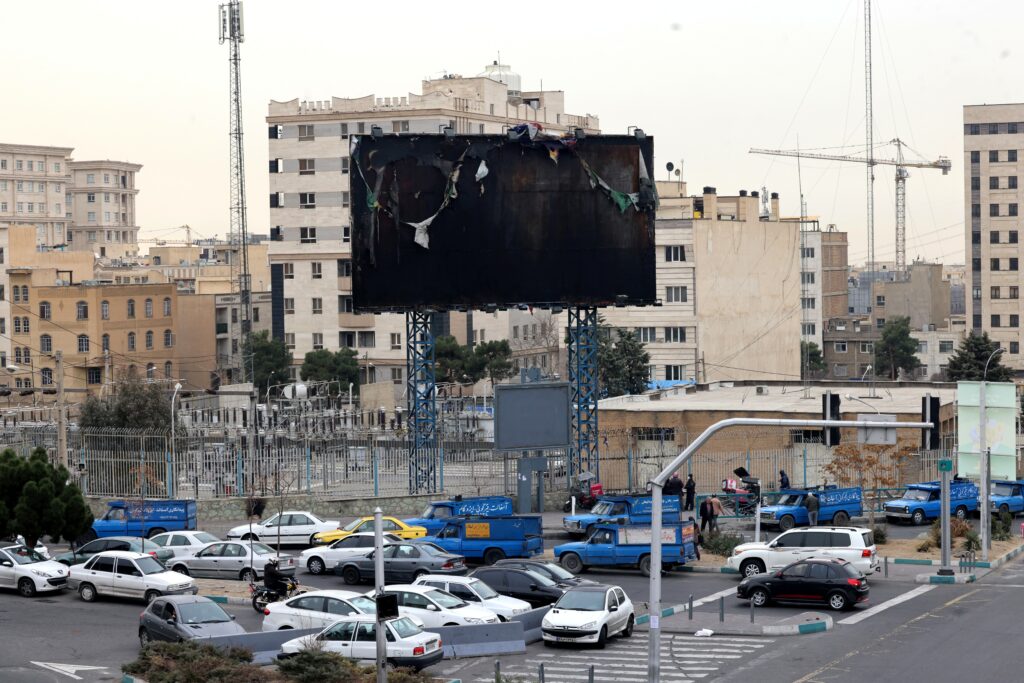
Iran’s top police officer issued an ultimatum on Monday to protesters who joined what authorities have deemed “riots”, saying they must hand themselves in within three days or face the full force of the law.But the government also pledged to tackle economic hardships that sparked the demonstrations, which were met with a crackdown that rights groups say has left thousands dead.The protests constituted the biggest challenge to the Iranian leadership in years, with the full scale of the violence yet to emerge amid an internet blackout.National police chief Ahmad-Reza Radan on Monday urged young people “deceived” into joining the “riots” to turn themselves in and receive lighter punishment.Those “who became unwittingly involved in the riots are considered to be deceived individuals, not enemy soldiers” and “will be treated with leniency”, he told state television.Officials have said the demonstrations were peaceful before descending into chaos fuelled by Iran’s arch-foes the United States and Israel in an effort to destabilise the nation. The heads of the country’s executive, legislative and judicial branches on Monday all pledged to work “around the clock” in “resolving livelihood and economic problems”, according to a joint statement published by state television. But they would also “decisively punish” the instigators of “terrorist incidents”, said the statement from President Masoud Pezeshkian, parliament speaker Mohammad Bagher Ghalibaf and judiciary chief Gholamhossein Mohseni Ejei. The scale of the crackdown has emerged piecemeal as Iran remains under an unprecedented internet shutdown that is now in its 11th day.Despite difficulty accessing information, the Iran Human Rights NGO says it has verified that 3,428 protesters were killed by security forces.The NGO’s director Mahmood Amiry-Moghaddam on Monday warned the death toll could be higher by many thousands.”Information received from eyewitnesses, families and other citizens, together with other available evidence, indicates that the number of protesters killed may exceed even the highest media estimates,” he said in a statement.”There is no doubt that the Islamic republic has committed one of the largest mass killings of protesters in our time.”- ‘New test’ -Alarm has grown over the possibility that authorities will use capital punishment against protesters.The United Nations on Monday warned the country was using executions as “a tool of state intimidation”.Iran — the world’s most prolific executioner after China, according to rights groups — reportedly executed 1,500 people last year, UN rights chief Volker Turk said in a statement.Security officials cited by Iran’s Tasnim news agency said late last week that around 3,000 people have been arrested in connection with the demonstrations, but rights groups say the number could be as high as 20,000. Supreme leader Ayatollah Ali Khamenei said on Saturday that authorities “must break the back of the seditionists”.Internet access would “gradually” return to normal this week, Hossein Afshin, Iran’s vice president for science, technology and the knowledge economy, said Monday on state television, after limited access briefly returned the day before.Pezeshkian criticised the internet restrictions, urging “better governance” of cyberspace. Images from the capital Tehran showed buildings and billboards destroyed during the rallies. In Iran’s second-largest city of Mashhad, damage to public infrastructure exceeded $15 million, Mayor Mohammadreza Qalandar Sharif told state television. Outside Iran, President Recep Tayyip Erdogan of neighbouring Turkey, in his first comments on the protests, described the unrest as a “new test” for Tehran, pledging Turkey would “stand against any initiative” that would drag the region into chaos.”We believe that, with a… policy prioritising dialogue and diplomacy, our Iranian brothers will, God willing, get through this trap-filled period,” he said in a televised speech.
Syrian army deploys in former Kurdish-held areas under ceasefire deal
Syria’s army deployed in formerly Kurdish-led areas in the country’s east and north on Monday after a ceasefire announced a day earlier, as Syria’s president and the Kurds’ leader were to hold talks.The leader of the Syrian Kurdish forces said Sunday he agreed to the deal with Damascus to avoid broader war, integrating the Kurds’ administration and his fighters into the state after months of stalled negotiations.Despite the deal, the government and the US-backed, Kurdish-led Syrian Democratic Forces (SDF) traded blame Monday for fresh attacks the military said killed three soldiers, as well as accusations over the fate of Islamic State (IS) group prisoners in Kurdish-run jails.Syrian President Ahmed al-Sharaa announced the accord with SDF chief Mazloum Abdi following two days of rapid gains in Kurdish-controlled territory, after the army pushed the Kurdish fighters out of Aleppo city earlier this month.Analysts said the deal marked a blow for the minority’s long-held ambitions of preserving the de facto autonomy they had exercised in swathes of north and northeast Syria for over a decade.In Deir Ezzor province in the country’s east, an AFP correspondent saw dozens of military vehicles heading to the east of the Euphrates River, while trucks, cars and pedestrians lined up at a small bridge leading to the eastern bank.Driver Mohammed Khalil, 50, said he was overjoyed by the army’s arrival.”We hope things will be better than before. There was… no freedom” under the SDF, he told AFP.Teacher Safia Keddo, 49, said that “we’re not asking for a miracle, we just want stability and a normal life.”- ‘Protecting civilian lives’ -The agreement included the Kurdish administration’s immediate handover of Arab-majority Deir Ezzor and Raqa provinces to the government, which will also take responsibility for IS prisoners and their families held in Kurdish-run jails and camps.The SDF had seized swathes of the provinces as they expelled the jihadists during Syria’s civil war with the support of an international coalition led by the United States.A defence ministry map released by state media on Monday showed the government controlled all of Deir Ezzor and Raqa provinces, while the eastern parts of Hasakeh province were still under Kurdish control.An AFP correspondent in Raqa said security forces deployed in the main square while a military convoy passed through the city as sporadic gunfire rang out, and residents toppled a statue of a woman erected by Kurdish forces.Raqa resident Khaled al-Afnan, 34, said “we support Kurdish civil rights… but we don’t support them having a military role.””This deal is important for protecting civilian lives,” he told AFP.The army and the SDF traded accusations of carrying out several attacks, while authorities announced a curfew in Hasakeh province’s Shadadi after the army said the SDF released IS detainees from the town’s prison.The Kurds instead accused Damascus of attacking the facility and said it had “fallen outside the control of our forces”.AFP was unable to immediately verify the claims.An interior ministry statement expressed readiness to “take over the management and security” of IS prisons in Hasakeh and for “direct coordination with the US side” to prevent the return of “terrorism”.- ‘Serious doubts’ -Turkish President Recep Tayyip Erdogan, a close ally of Damascus who is hostile to the SDF, hailed the Syrian army for its “careful” offensive despite what he called “provocations”. The SDF on Sunday withdrew from areas under its control in the eastern Deir Ezzor countryside, including the Al-Omar oil field, the country’s largest, and the Tanak field.Local fighters from tribes in the Arab-majority province sided with Damascus and seized the areas before the arrival of government forces.Some Arab tribes were previously allied with the SDF, which included a significant Arab component. An energy ministry official told state television on Monday that technical teams were heading to recently taken oil facilities to assess their condition.The SDF’s Abdi said Sunday he agreed to the deal to avoid civil war and end a conflict “imposed” on the Kurds.Mutlu Civiroglu, a Washington-based analyst and expert on the Kurds, said the government’s advance had raised “serious doubts about the durability” of the ceasefire and a March agreement between the government and the Kurds.Sharaa had on Friday issued a decree granting the Kurds official recognition, but the Kurds said it fell short of their expectations.In Qamishli, the main Kurdish city in the country’s northeast, activist Hevi Ahmed, 40, said Sunday’s deal was “a disappointment after years of hope that the Syrian constitution might contain a better future for the Kurds.”