
AFP Asia Business
Israel army says shelling Syria after projectiles launched
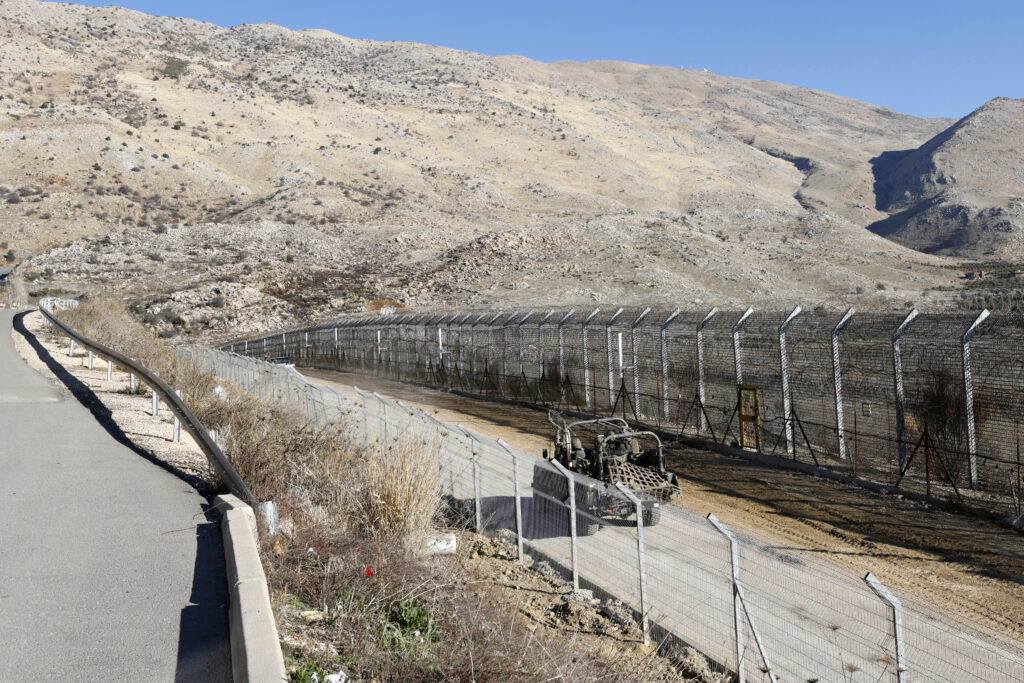
The Israeli military said it was shelling targets in Syria on Tuesday in response to a pair of projectile launches, with Defence Minister Israel Katz saying he held Syria’s leader “directly responsible”.Syria’s foreign affairs ministry denied firing the projectiles and said the country “has never been and will never be a threat to anyone in the region”.Israeli media said Tuesday’s strikes were the first fired from Syria into Israeli territory since the fall of longtime ruler Bashar al-Assad in December.There were no reports of casualties or damage on the Israeli side due to the projectiles, which the military said triggered air raid sirens in parts of the southern Golan Heights, a territory Israel conquered from Syria in 1967 and annexed in 1981.Israel Katz, the Israeli defence minister, said in a statement released by his office that “we view the president of Syria as directly responsible for any threat or fire directed at the State of Israel”.Syria’s interim president, Ahmed al-Sharaa, led the Islamist group that spearheaded the offensive that led to Assad’s toppling.The Israeli military said “two projectiles were identified crossing from Syria into Israeli territory, and fell in open areas”, adding in a subsequent statement that its “artillery struck in southern Syria” following the launches.Syria’s official news agency SANA reported shelling “targeting the Yarmuk Basin, in the west of Daraa” province.Britain-based war monitor the Syrian Observatory for Human Rights said bombardments had hit farmland in the province, without reporting casualties.”Violent explosions shook southern Syria, notably the town of Quneitra and the Daraa region, following Israeli aerial strikes” overnight Tuesday to Wednesday, the monitor said in a statement.- ‘Never a threat’ -Syria condemned the Israeli shelling as a “blatant violation of Syrian sovereignty” that “aggravates tensions in the region”.”Syria has never been and will never be a threat to anyone in the region,” the foreign ministry said in a statement published by SANA.The ministry denied responsibility for the strikes, but said “numerous parties are trying to destabilise the region to serve their own interests.””The absolute priority in southern Syria is to extend the authority of the state and put an end to the presence of weapons outside the framework of official institutions,” it added.Following Assad’s overthrow, Israel moved its forces into the UN-patrolled demilitarised zone in the Golan Heights, and has carried out hundreds of strikes against military targets in Syria.Israel says the strikes aim to stop advanced weapons from reaching Syria’s new authorities, whom it considers jihadists.Israel’s military said on Sunday that its troops were continuing “defensive operations in southern Syria” to “dismantle terrorist infrastructure and protect the residents of the Golan Heights”.Syria and Israel have technically been at war since 1948.US President Donald Trump announced last month the lifting of sanctions on Syria and voiced hope that it would normalise relations with Israel, but experts say that prospect is far from becoming a reality.

Stock markets rise as traders eye possible Trump-Xi talks
Major stock markets rose and the dollar climbed Tuesday as investors kept tabs on the China-US trade war, with speculation swirling that the countries’ leaders will soon hold talks.After a period of relative calm on tariffs, US President Donald Trump accused Beijing last week of violating an earlier deal to temporarily lower staggeringly high tit-for-tat levies …
Stock markets rise as traders eye possible Trump-Xi talks Read More »
27 killed as Israeli army opens fire near Gaza aid point
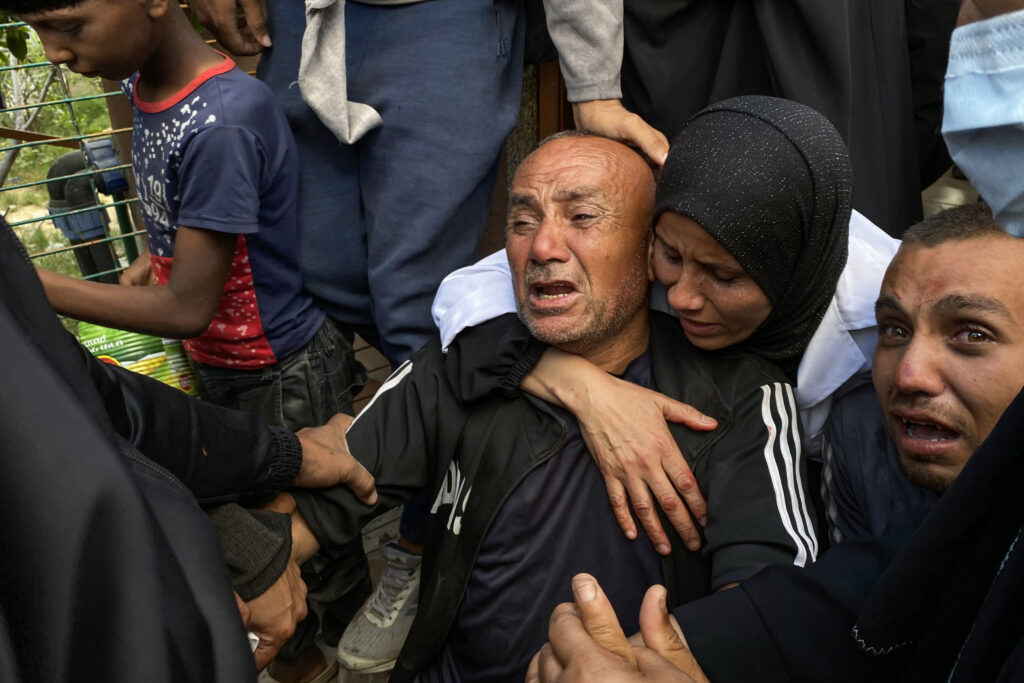
Twenty-seven people were killed in southern Gaza on Tuesday as Israeli troops opened fire near a US-backed aid centre, with the military saying the incident was under investigation.United Nations Secretary-General Antonio Guterres decried the deaths of Palestinians seeking food aid as “unacceptable”, and the world body’s rights chief condemned attacks on civilians as “a war crime” following a similar shooting near the same site on Sunday.Gaza’s civil defence agency said that “27 people were killed and more than 90 injured in the massacre targeting civilians who were waiting for American aid in the Al-Alam area of Rafah”, in the territory’s south.Civil defence spokesman Mahmud Bassal earlier told AFP the deaths occurred “when Israeli forces opened fire with tanks and drones”, while Israel said troops fired towards “suspects” who had ignored warning shots.The International Committee of the Red Cross gave the same death toll but without mentioning the Israeli forces.The organisation said Gazans face an “unprecedented scale and frequency of recent mass casualty incidents”.The latest shooting occurred about a kilometre (just over half a mile) from a centre run by the US-backed Gaza Humanitarian Foundation (GHF), which Israel has worked with to implement a new aid distribution mechanism.The United Nations and major aid groups have refused to cooperate with the group over concerns it was designed to cater to Israeli military objectives.At a hospital in southern Gaza, the family of Reem al-Akhras, who was killed in the shooting at Rafah’s Al-Alam roundabout, were beside themselves with grief.”She went to bring us some food, and this is what happened to her,” her son Zain Zidan said, his face streaked with tears.Akhras’s husband, Mohamed Zidan, said “every day unarmed people” were being killed.”This is not humanitarian aid; it’s a trap.”The Israeli military maintains that its forces do not prevent Gazans from collecting aid.Army spokesman Effie Defrin said the Israeli soldiers had fired towards suspects who “were approaching in a way that endangered” the troops, adding that the “incident is being investigated”.- ‘Unconscionable’ -Rania al-Astal, 30, said she had gone to Al-Alam with her husband to try to get food.”Every time people approached Al-Alam roundabout, they were fired upon,” she told AFP.”But people didn’t care and rushed forward all at once — that’s when the army began firing heavily.”Fellow witness Mohammed al-Shaer, 44, said at first “the Israeli army fired shots into the air, then began shooting directly at the people”.GHF said the operations at its site went ahead safely on Tuesday, but acknowledged the army’s investigation.A military statement said troops saw some people “deviating from the designated access routes” to the Al-Alam aid point, and fired warning shots.When “the suspects failed to retreat, additional shots were directed near a few individual suspects”, it added.The previous shooting on Sunday killed at least 31 people at the Al-Alam roundabout, rescuers said. A military source acknowledged “warning shots were fired towards several suspects”.Guterres urged an independent investigation into that shooting, with his spokesman on Tuesday saying it was “unacceptable civilians are risking and in several instances losing their lives just trying to get food”.UN human rights chief Volker Turk called such attacks “unconscionable”.”Attacks directed against civilians constitute a grave breach of international law and a war crime,” he said.The White House said it was “looking into the veracity” of the reports from Rafah.- Soldiers killed -Israel has come under mounting pressure to improve the humanitarian situation in Gaza, where people are facing severe shortages after Israel imposed a more than two-month blockade.The blockade was recently eased, but the aid community has urged Israel to allow in more food, faster.GHF’s first week of operations, in which it said it had distributed more than seven million meals’ worth of food, has been marred by criticism.State Department spokeswoman Tammy Bruce said GHF was “succeeding in getting the meals distributed”, adding that Washington would also look at “how we can further improve”.Israel has stepped up its offensive in what it says is a renewed push to defeat Hamas, whose October 2023 attack sparked the war.The health ministry in Hamas-run Gaza said at least 4,240 people have been killed since Israel resumed its offensive on March 18, taking the war’s overall toll to 54,510, mostly civilians.Apart from the aid centre incident, the civil defence agency reported 19 killed on Tuesday.Hamas’s 2023 attack on Israel resulted in the deaths of 1,218 people, also mostly civilians, according to an AFP tally based on official figures.The army said three of its soldiers had been killed in northern Gaza, bringing the number of Israeli troops killed in the territory since the start of the war to 424.