AFP Asia Business
Syrian government announces ceasefire in Aleppo after deadly clashes
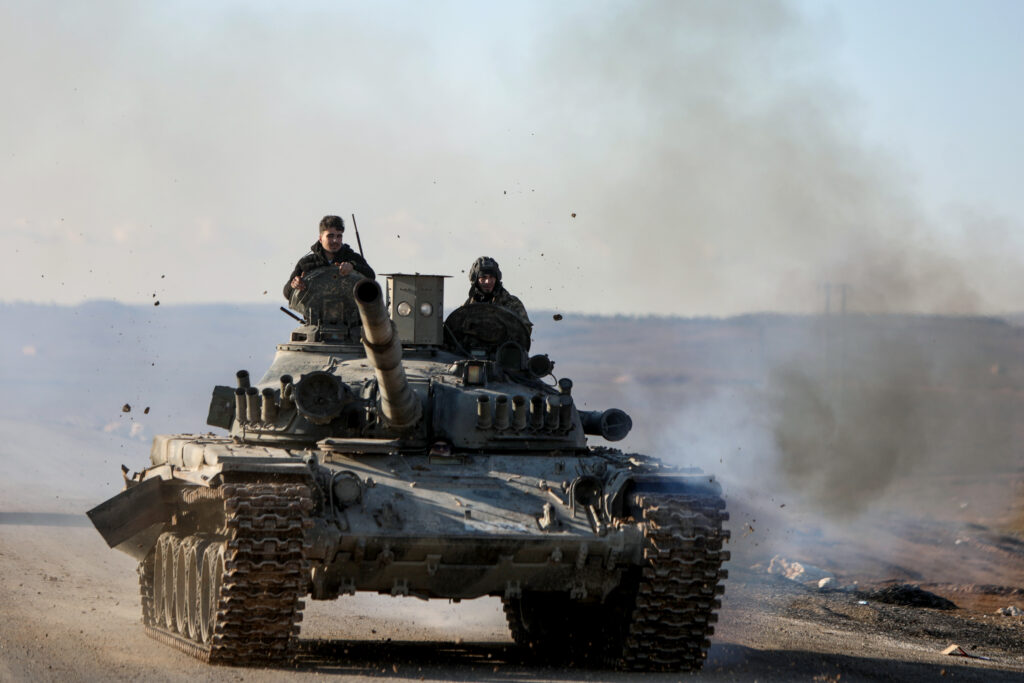
Syria’s defence ministry announced a ceasefire in Aleppo on Friday after days of deadly clashes between the army and Kurdish fighters forced thousands of civilians to flee.The violence, which has killed at least 21 people, is the worst to erupt since the Islamist authorities took power just over one year ago. The Syrian government forces have been fighting the US-backed Kurdish-led Syrian Democratic Forces (SDF) in the country’s second city since Tuesday.Both sides have traded blame over who started the fighting, which comes as they struggle to implement a deal to merge the Kurds’ administration and military into the country’s new government.The SDF controls swathes of Syria’s oil-rich north and northeast, and was key to the territorial defeat of the Islamic State group in Syria in 2019.”To prevent any slide towards a new military escalation within residential neighbourhoods, the Ministry of Defence announces … a ceasefire in the vicinity of the Sheikh Maqsud, Ashrafiyeh and Bani Zeid neighbourhoods of Aleppo, effective from 3:00 am,” the Ministry of Defence wrote in a statement. Kurdish fighters were given until 9:00 am Friday (0600 GMT) to leave those areas.The goal is for civilians who were displaced by the fighting to be able “to return and resume their normal lives in an atmosphere of security and stability,” the ministry added.The governor of Aleppo, Azzam Algharib, told the official SANA news agency that he had inspected the security arrangements in the Ashrafiyeh neighbourhood.There was no immediate comment from Kurdish forces in response to the government statements. – ‘No to war’ -An AFP correspondent reported fierce fighting across the Kurdish-majority Ashrafiyeh and Sheikh Maqsud districts into Thursday night.Syria’s military had instructed civilians in those neighbourhoods to leave through humanitarian corridors ahead of launching the operation.State television reported that around 16,000 people had fled.”We’ve gone through very difficult times… my children were terrified,” said Rana Issa, 43, whose family left Ashrafiyeh earlier Thursday.”Many people want to leave”, but are afraid of the snipers, she told AFP.Mazloum Abdi — who leads the SDF — said attacks on Kurdish areas “undermine the chances of reaching understandings”, days after he visited Damascus for talks on the March integration deal.The agreement was meant to be implemented last year, but differences, including Kurdish demands for decentralised rule, have stymied progress.Sheikh Maqsud and Ashrafiyeh have remained under the control of Kurdish units linked to the SDF, despite Kurdish fighters agreeing to withdraw from the areas in April.Turkey, which shares a 900-kilometre (550-mile) border with Syria, has launched successive offensives to push Kurdish forces from the frontier.Aron Lund, a fellow at the Century International research centre, told AFP that “Aleppo is the SDF’s most vulnerable area”.”Both sides are still trying to put pressure on each other and rally international support,” he said.He warned that if the hostilities spiral, “a full Damascus-SDF conflict across northern Syria, potentially with Turkish and Israeli involvement, could be devastating for Syria’s stability”.Israel and Turkey have been vying for influence in Syria since the December 2024 toppling of longtime ruler Bashar al-Assad. In Qamishli in the Kurdish-held northeast, hundreds of people have protested the Aleppo violence. “We call on the international community to intervene,” said protester Salaheddin Sheikhmous, 61, while others held banners reading “no to war” and “no to ethnic cleansing”.In Turkey, several hundred people joined protests in Kurdish-majority Diyarbakir.
Iranians step up protests as death toll mounts, internet cut
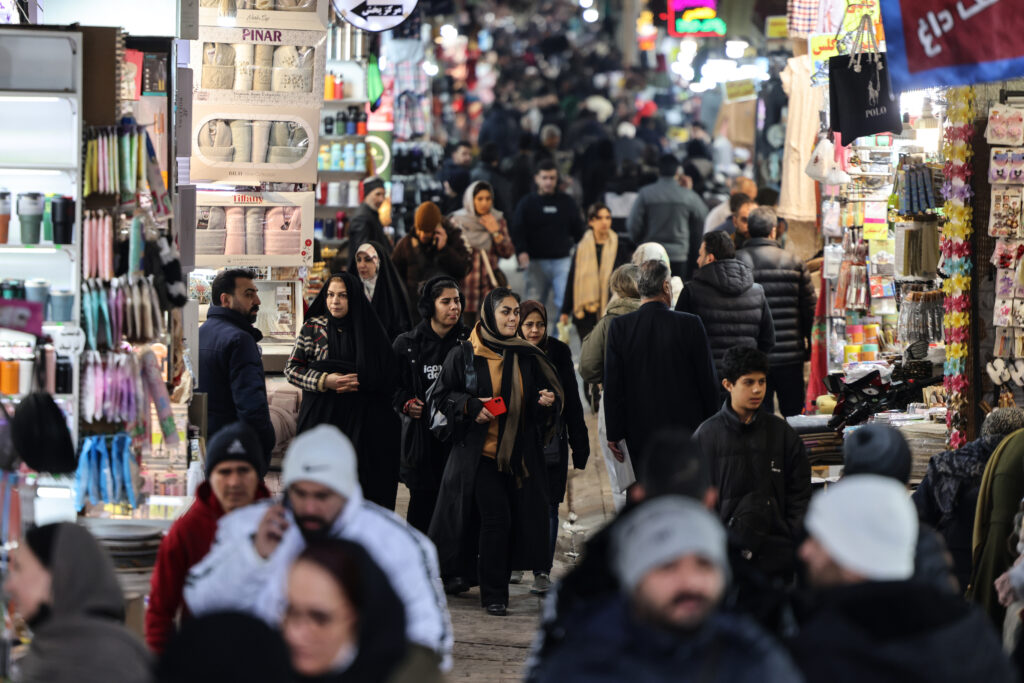
Iranian protesters on Thursday stepped up their challenge to the clerical leadership with the biggest protests yet of nearly two weeks of rallies, as authorities cut internet access and the death toll from a crackdown mounted.The movement, which originated with a shutdown on the Tehran bazaar on December 28 after the rial currency plunged to record lows, has spread nationwide and is now being marked by larger-scale demonstrations, including in the capital.The protests have troubled the authorities under Ayatollah Ali Khamenei, already battling an economic crisis after years of sanctions and recovering from the June war against Israel.US President Donald Trump meanwhile threatened on Thursday to take severe action against Iran if its authorities “start killing people”, warning Washington would “hit them very hard”.That message came after rights groups accused Iranian security forces of shooting at demonstrators, with the Norway-based NGO Iran Human Rights on Thursday saying security forces had killed at least 45 protesters, including eight minors, since the demonstrations began.The NGO said Wednesday was the bloodiest day of demonstrations, with 13 protesters confirmed to have been killed. “The evidence shows that the scope of the crackdown is becoming more violent and more extensive every day,” said IHR director Mahmood Amiry-Moghaddam, adding that hundreds more have been wounded and more than 2,000 arrested.Iranian media and official statements have reported at least 21 people, including security forces, killed since the unrest began, according to an AFP tally. On Wednesday an Iranian police officer was killed west of Tehran trying “to control unrest”, the Fars news agency said.Despite the crackdown, protests were again taking place into the night Thursday. A large crowd was seen gathering on the vast Ayatollah Kashani Boulevard in the northwest of Tehran, according to social media images verified by AFP, while other images showed a crowd demonstrating in the western city of Abadan.As protests roiled cities across the country, online watchdog Netblocks said Thursday that “live metrics show Iran is now in the midst of a nationwide internet blackout”. – ‘Utmost restraint’ -With the protests now spreading across Iran, the US-based Human Rights Activists News Agency said rallies had taken place in 348 locations in all of Iran’s 31 provinces.Reza Pahlavi, the son of the shah ousted by the 1979 Islamic revolution and a key exiled opposition figure, urged more major protests on Thursday.Iraq-based Iranian Kurdish opposition parties called for a general strike on Thursday in Kurdish-populated areas in western Iran.The Hengaw rights group said the call had been widely followed in some 30 towns and cities, posting footage of shuttered shops in the western provinces of Ilam, Kermanshah and Lorestan.It accused authorities of firing on demonstrators in Kermanshah and the nearby town of Kamyaran to the north, injuring several protesters.IHR said a woman at a protest late Wednesday in Abadan was shot directly in the eye.Iran’s President Masoud Pezeshkian on Thursday called for “utmost restraint” in handling demonstrations, saying that “any violent or coercive behaviour should be avoided”.German Foreign Minister Johann Wadephul, meanwhile, condemned the “excessive use of force” against protesters.In a video verified by AFP, protesters in Kuhchenar in the southern Fars province were seen cheering overnight as they pulled down a statue of the former foreign operations commander of the Revolutionary Guards, Qassem Soleimani, who was killed in a US strike in January 2020.- ‘Unlawful force’ -Demonstrators are repeating slogans against the clerical leadership, including “Pahlavi will return” and “Seyyed Ali will be toppled”, in reference to Khamenei.The movement has also spread to higher education, with final exams Tehran’s major Amir Kabir university postponed for a week, according to ISNA news agency.The protests are the biggest in Iran since the protest wave in 2022-2023 sparked by the custody death of Mahsa Amini, who had been arrested for allegedly violating the strict dress code for women.Rights groups have also accused authorities of resorting to tactics including raiding hospitals to detain wounded protesters.”Iran’s security forces have injured and killed both protesters and bystanders,” said Amnesty International, accusing authorities of using “unlawful force”.
Kurds in Turkey protest over Syria Aleppo offensive
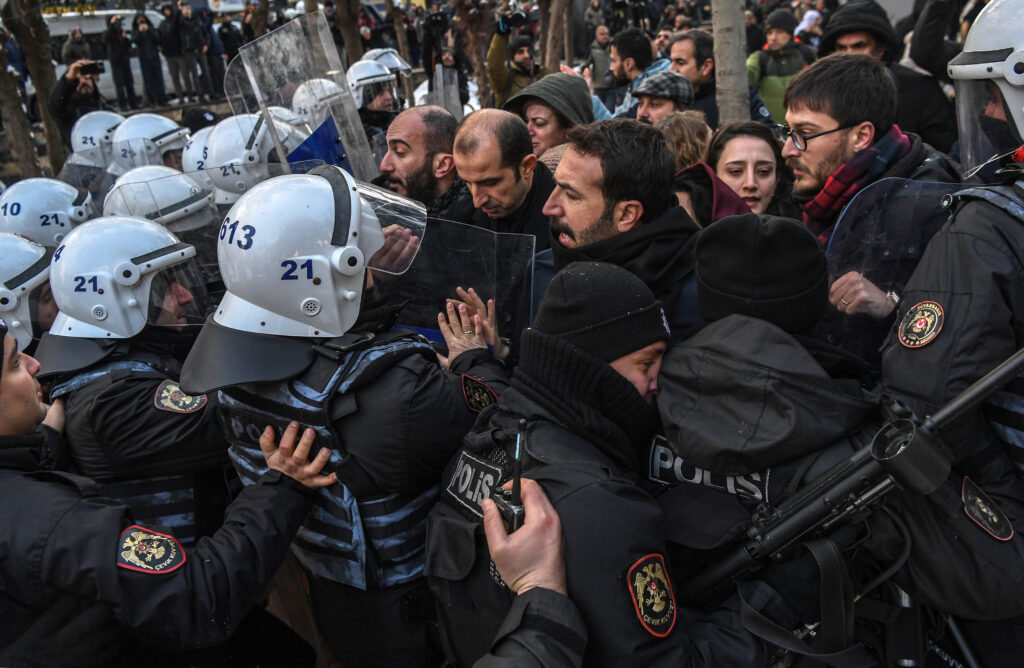
Protesters rallied for a second day in Turkey’s main cities on Thursday to demand an end to a deadly Syrian army offensive against Kurdish fighters in Aleppo, an AFP correspondent said. Several hundred people gathered in Diyarbakir, southeastern Turkey’s main Kurdish-majority city, while hundreds more joined a protest in Istanbul that was roughly broken up by riot police who arrested around 25 people, the pro-Kurdish DEM party said. In the capital, Ankara, DEM lawmakers protested in front of the Turkish parliament, denouncing the targeting of Kurds in Aleppo as a crime against humanity.The protesters demanded an end to the operation by Syrian government forces against the Kurdish-led SDF force in Aleppo, where at least 21 people have been killed in three days of violent clashes. It was the worst violence in the northwestern city since Syria’s Islamist authorities took power a year ago. The fighting erupted as both sides struggled to implement a March agreement to integrate autonomous Kurdish institutions into the new Syrian state.In Istanbul, hundreds of protesters waving flags braved heavy rain near Galata Tower to denounce the Aleppo operation under the watchful eye of hundreds of riot police, an AFP correspondent said.But some of the slogans drew a sharp warning from the police, who moved to roughly break up the gathering and arrested some 25 people, DEM’s Istanbul branch said. “We condemn in the strongest terms the police attack on the Rojava solidarity action in Sishane. This brutal intervention, oppression, and violence against our young comrades is unacceptable!” the party wrote on X, demanding the immediate release of those arrested. At the Diyarbakir protest during the afternoon, protesters carried a huge portrait of the jailed PKK militant leader Abdullah Ocalan, an AFP video journalist reported.”We urge states to act as they did for the Palestinian people, for our Kurdish brothers who are suffering oppression and hardship,” Zeki Alacabey, 64, told AFP in Diyarbakir. Although Turkey has embarked on a peace process with the PKK, it remains hostile to the SDF, which controls swathes of northeastern Syria, seeing it as an extension of the banned militant group and a major threat along its southern border. It has repeatedly demanded that the SDF merge into the main Syrian military. A defence ministry official said on Thursday that Ankara was ready to “support” Syria’s operation against the Kurdish fighters if needed. Demonstrators had already taken to the streets in several major Turkish cities with Kurdish majorities on Wednesday, including Diyarbakir and Van, according to images broadcast by the DEM.
Aleppo clashes between Syria govt, Kurdish forces rage into third night
Clashes between Syrian government and Kurdish forces in Aleppo raged into the night Thursday on the third day of fighting, as Syrian Kurdish leader Mazloum Abdi warned the violence undermined talks with Damascus.Both sides have traded blame over who started the clashes on Tuesday, which comes as implementation stalls on a deal to merge the Kurds’ administration and military in the northeast into the government.The worst violence in Aleppo since Syria’s Islamist authorities took power has also highlighted regional tensions between Damascus ally Turkey and Israel, which condemned what it described as attacks against the Kurds.An AFP correspondent reported fierce fighting across the Kurdish-majority Ashrafiyeh and Sheikh Maqsud districts into the night, while authorities announced a curfew in the two districts and several others nearby “until further notice”.”We’ve gone through very difficult times… my children were terrified,” said Rana Issa, 43, whose family fled Ashrafiyeh earlier Thursday.”Many people want to leave”, but are afraid of the snipers, she told AFP.Abdi — who leads the US-backed, Kurdish-led Syrian Democratic Forces (SDF) — said attacks on Kurdish areas “undermine the chances of reaching understandings”, days after he visited Damascus for talks on the March integration deal.State television, citing a civil defence official, said some 16,000 people fled the two Kurdish districts on Thursday, with at least 21 people dead over three days, according to government and Kurdish force figures.A government source told AFP on condition of anonymity that the army started entering the outskirts of Sheikh Maqsud after an agreement with residents from non-Kurdish clans.- Turkey, Israel -Earlier Thursday, state news agency SANA, citing a military source, said the army launched “intense and concentrated bombardment towards SDF positions” in the two Kurdish districts.A flight suspension at Aleppo airport was extended until late Friday, while AFP correspondents said shops, universities and schools remained closed and civilians fled the Kurdish neighbourhoods via safe corridors before an afternoon deadline for them to leave.US special envoy to Syria Tom Barrack said on X that Washington was following developments “with grave concern” and issued an urgent appeal to all sides to “pause hostilities, reduce tensions immediately, and commit to de-escalation”.The European Union, whose top officials are due to visit Syria on Friday, urged restraint.A Turkish defence ministry official said that “should Syria request assistance, Turkey will provide the necessary support”.Israel and Turkey have been vying for influence in Syria since the December 2024 toppling of longtime ruler Bashar al-Assad. Foreign Minister Hakan Fidan said Turkey had been in “intensive consultations” with Syria and the United States to resolve the deadlock. Turkey, which shares a 900-kilometre (550-mile) border with Syria, has launched successive offensives to push Kurdish forces from the frontier.Israeli Foreign Minister Gideon Saar meanwhile said “attacks by the Syrian regime’s forces against the Kurdish minority… are grave and dangerous”.Israel and Syria are in talks to reach a security agreement and this week agreed to establish an intelligence-sharing mechanism.Israel bombed Syrian forces in July when they clashed with the Druze community, saying it was acting to defend the minority, who are also present in Israel.- ‘No to war’ -The SDF controls swathes of Syria’s oil-rich north and northeast, and was key to the territorial defeat of the Islamic State group in Syria in 2019.The March integration agreement was to be implemented last year, but differences including Kurdish demands for decentralised rule have stymied progress.Sheikh Maqsud and Ashrafiyeh have remained under the control of Kurdish units linked to the SDF, despite Kurdish fighters agreeing to withdraw from the areas in April.Aron Lund, a fellow at the Century International research centre, told AFP that “Aleppo is the SDF’s most vulnerable area”.”Both sides are still trying to put pressure on each other and rally international support,” he said.He warned that if the hostilities spiral, “a full Damascus-SDF conflict across northern Syria, potentially with Turkish and Israeli involvement, could be devastating for Syria’s stability”.In Qamishli in the Kurdish-held northeast, hundreds of people protested against the Aleppo violence, AFP correspondents said. “We call on the international community to intervene,” said protester Salaheddine Cheikhmous, 61, while others held banners reading “no to war” and “no to ethnic cleansing”.In Turkey, several hundred protested in Kurdish-majority Diyarbakir, AFP correspondents there said.