
AFP Asia Business
What is Trump’s ‘Board of Peace’?
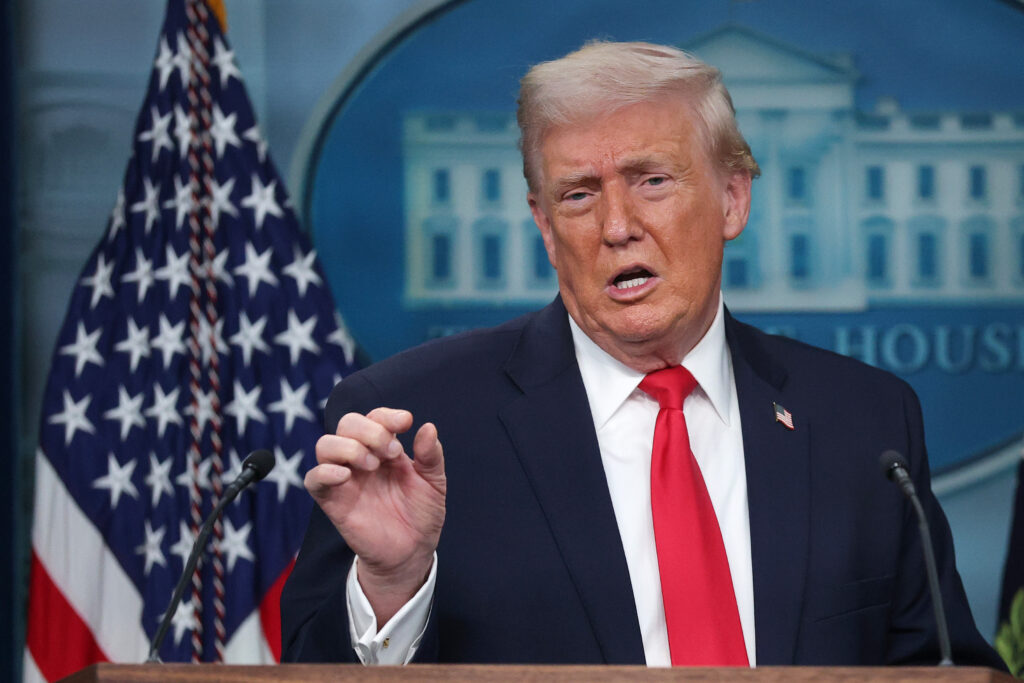
US President Donald Trump is set to formally announce the first charter of his so-called “Board of Peace”, a body for resolving international conflicts with a $1-billion price tag for permanent membership.The board, which Trump will launch with what has been billed as a signing ceremony in Davos, Switzerland on Thursday, was originally conceived to oversee the rebuilding of Gaza. But a draft of the charter seen by AFP does not appear to limit its role to the Palestinian territory.- What will it do? -The Board of Peace will be chaired by Trump, according to its founding charter sent to countries invited to participate.It is “an international organization that seeks to promote stability, restore dependable and lawful governance, and secure enduring peace in areas affected or threatened by conflict”, reads its preamble.It will “undertake such peace-building functions in accordance with international law”, it adds.- Who will run it? -Trump will be chairman but also “separately serve” as representative of the United States.”The chairman shall have exclusive authority to create, modify or dissolve subsidiary entities as necessary or appropriate to fulfil the Board of Peace’s mission,” the document states.He will pick members of an executive board to be “leaders of global stature” to “serve two-year terms, subject to removal by the chairman”.The charter says the chairman can be replaced only in case of “voluntary resignation or as a result of incapacity”.A US official confirmed that Trump could keep the chairmanship, even after leaving the White House, “until he resigns it”, although a future US president can appoint a different US representative.- Who can be a member? -Member states must be invited by the US president and will be represented by their head of state or government.Each member “shall serve a term of no more than three years”, the charter says.But “the three-year membership term shall not apply to member states that contribute more than USD $1,000,000,000 in cash funds to the Board of Peace within the first year of the charter’s entry into force”, it adds.The US official said that membership itself “does not carry any mandatory funding obligation beyond whatever a state or partner chooses to contribute voluntarily”.The board will convene annual meetings with decisions by a majority vote, with the chairman breaking any tie.- Who’s on the executive board? -The executive board will be chaired by Trump and include seven members:- US Secretary of State Marco Rubio- Steve Witkoff, Trump’s special negotiator- Jared Kushner, Trump’s son-in-law- Tony Blair, former UK prime minister- Marc Rowan, billionaire US financier- Ajay Banga, World Bank president- Robert Gabriel, loyal Trump aide on the National Security Council- Which countries are invited? -Some 35 world leaders out of 50 or so invited have agreed to join the board so far, a senior White House official told reporters Wednesday. Dozens of countries and leaders have said they have received an invitation, including close US allies but also adversaries.China has been invited but a foreign ministry spokesman said Wednesday Beijing would defend the international system with the United Nations “at its core”.Both Russian President Vladimir Putin and Ukrainian President Volodymyr Zelensky have been invited, despite Russia’s ongoing invasion of Ukraine.A number of governments immediately said they would join.Several Trump allies are in, including Hungary’s nationalist Prime Minister Viktor Orban — who said he was headed to Davos to attend the ceremony, according to a pro-government media outlet Wednesday — Argentine President Javier Milei and Israeli Prime Minister Benjamin Netanyahu.Azerbaijan’s autocratic President Ilham Aliyev will also have a spot. And Kazakhstan’s President Kassym-Jomart Tokayev said he, too, would attend Thursday’s ceremony.The United Arab Emirates, a close US partner, also said it would join, as did Egypt. Canada said it would take part but explicitly ruled out paying the $1-billion fee for permanent membership.- Who won’t be involved? -Longtime US ally France has indicated it will not join. The response sparked an immediate threat from Trump to slap sky-high tariffs on French wine.Zelensky said it would be “very hard” to be a member of a council alongside Russia, and diplomats were “working on it”.Britain echoed the sentiment, saying it was “concerned” that Putin had been invited.”Putin is the aggressor in an illegal war against Ukraine, and he has shown time and time again he is not serious about peace,” said a Downing Street spokesperson.Norway, which has become the target of Trump’s ire after he was snubbed for the Nobel Peace Prize, has also said it will not join and that the proposal “raises a number of questions”.The charter says the board enters into force “upon expression of consent to be bound by three States”.burs/jj/st/phz
Fate of IS detainees uncertain as Damascus reins in Kurds
The Syrian government’s attempt to wrest back control of Kurdish-held areas has thrown into doubt the fate of thousands of suspected Islamic State group jihadists detained there, with Western observers worried many could take advantage of the chaos to escape.The Kurdish-led Syrian Democratic Forces spearheaded the battle against IS in Syria, backed by a US-led coalition, after it declared a “caliphate” in swathes of Syria and neighbouring Iraq in 2014.Almost seven years after they captured the last patch of that proto-state, the Kurds until this week held thousands of men in jails, and tens of thousands of women and children from their families in camps in northeast Syria. These prisons and camps “are hotbeds of radicalism”, said Laurence Bindner, a specialist of radicalisation online.US general Michael Kurilla three years ago warned of an IS “army in detention” in Syria and Iraq that, if freed, could “pose a great threat”.The largest of the Syrian IS detention camps, Al-Hol, is home to more than 24,000 people — around 15,000 Syrians, 3,500 Iraqis and 6,200 other foreigners, the camp’s director told AFP in December. Foreign women and children are held in a high-security section.The army of Syria’s Islamist-led government on Wednesday moved into the vast detention camp, after Kurdish forces withdrew a day earlier to defend their cities before a ceasefire was then announced.The latest truce opens the way for further talks on a deal to integrate the Kurdish de facto autonomous administration and its forces into the Syrian state.- ‘Opportunity to exploit’ -In Syria, the Kurds have repeatedly called on countries to repatriate their citizens from their detention facilities.Baghdad has accelerated repatriations.But Western governments have generally allowed home only a trickle, fearing security threats after a string of deadly IS attacks in Western cities, including shootings and suicide bombings in Paris that killed 130 people in 2015.A Western security official said the situation in Syria was “evolving very quickly” and they were “assessing the impact on the camps”. “We can’t rule out escapes,” the source said, before the army took over Al-Hol.On Monday, the Syrian army said the SDF released IS detainees from a prison in the northeastern town of Shadadi, while the Kurds said they lost control of the facility after an attack by Damascus.Any mass escape — with detainees either “exploiting security gaps” or being “deliberately allowed to leave” — would be a worst-case scenario, said Thomas Renard, research director at the International Centre for Counter-Terrorism (ICCT) based in The Hague.”This solution — of provisional detention facilities, without trial, without prospects — was never going to be sustainable in a highly volatile region,” he said.If detainees escaped, “we can imagine that some would try to keep a low profile”, Renard said.But others “would no doubt return to IS or another jihadist group, and that would be bad for Syria, for the region, and for global security”, he added.A Western security source said in November that the jihadist group’s agenda still included getting back IS fighters in jail. Bindner said pro-IS social media channels were abuzz with questions about the fate of the IS detainees.”For IS, it’s clearly an opportunity to seek to exploit,” she said.”Even if just a few dozen or hundreds of prisoners get out and join the roughly 3,000 IS fighters in Syria, that gives them a boost in strength and morale,” she added.”It could bolster their insurgency,” she said, even if no proto-state would likely be re-established.- Detainees ‘sick, weak’ -Around 2,000 of the alleged IS combatants in custody — and an estimated 8,000 detained women and children — in northeast Syria are foreigners, that is not Syrian or Iraqi, according to US figures from June.Among them for example is Shamima Begum, who joined IS as a teenager and whom the United Kingdom stripped of her British nationality.Lilla Schumicky-Logan, joint director of GCERF, a global fund that works to prevent violent extremism, said there had been no “overall assessment on how radicalised people are” in Syria’s IS jails and camps.Among the foreign women held in the camps, many have repented and asked to go home, she said.As for the suspected IS fighters in prisons, “a lot of them have been there for six to seven years. They are now sick, weak, suffering from tuberculosis”, she said.”How capable are they to pick up a gun and go and fight? I think we really need to ask this question.”
Syria army enters Al-Hol camp holding relatives of jihadists: AFP
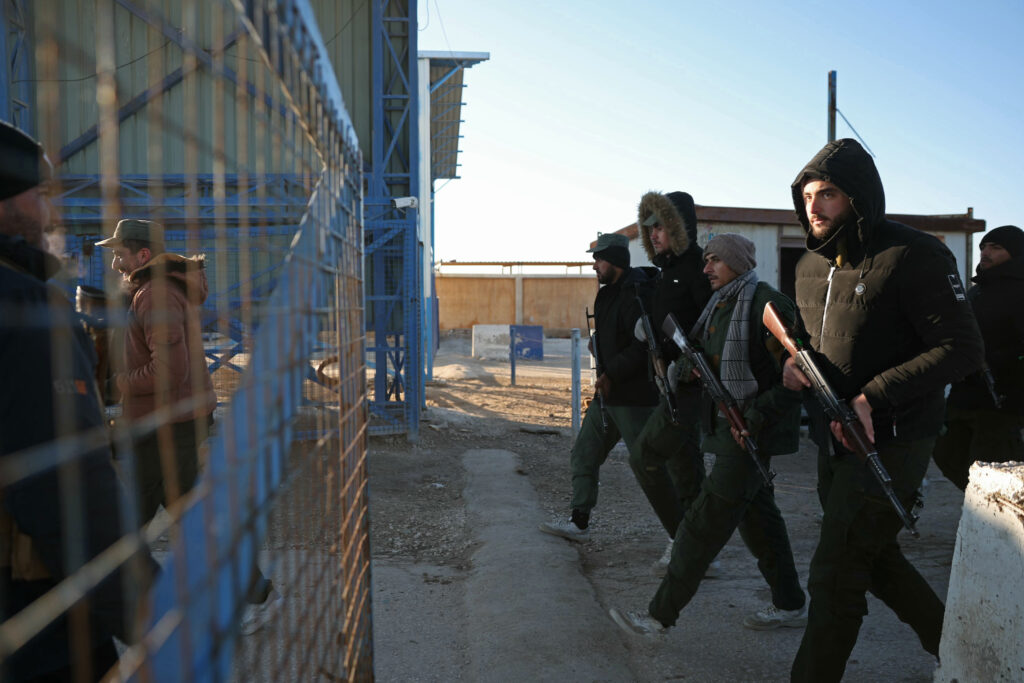
Syria’s army on Wednesday entered the vast Al-Hol camp that houses relatives of suspected Islamic State jihadists after Kurdish forces withdrew from the site, said an AFP journalist at the scene.The government announced a new ceasefire with the Kurds on Tuesday after taking swathes of north and east Syria that had long been under the control of Kurdish-led Syrian Democratic Forces (SDF). The United States, which has long headed an international coalition and backed the Kurds against IS, said the purpose of its alliance with the SDF had largely ended years after they defeated the jihadists.Now, the United States was backing Syria’s new Islamist authorities who are seeking to extend their control across the country after years of civil war.Thousands of former jihadists, including many Westerners, have been held in seven Kurdish-run prisons in north and east Syria, while tens of thousands of their suspected family members live in the Al-Hol and Al-Roj camps.At Al-Hol, the AFP correspondent saw soldiers open the camp’s metal gate and enter, while others stood guard. The camp in a desert region of Hasakeh province holds around 24,000 people, including some 6,200 women and children from around 40 nationalities.The defence ministry said Tuesday it was ready to take responsibility for Al-Hol camp “and all IS prisoners” after Kurdish forces said they had been “compelled to withdraw” from the site to defend cities in Syria’s north, before the truce was announced.- Prisoners’ families -On Sunday, Syrian President Ahmed al-Sharaa and SDF chief Mazloum Abdi had agreed that the Syrian state was to take over responsibility for IS prisoners.Abdi on Tuesday urged the US-led coalition to “bear its responsibilities in protecting facilities” holding IS members. Al-Hol is the largest camp for suspected jihadists established by Kurdish forces after they took control of swathes of Syria with coalition backing.That battle culimated with the jihadists’ territorial defeat in Syria in 2019. Al-Roj is still under Kurdish control in eastern Hasakeh province. In Raqa province, state media said Tuesday that security forces had deployed around the Al-Aqtan prison.A security official on the ground told AFP that Kurdish forces were still inside the facility on Wednesday.An AFP correspondent saw hundreds of people who had come to check on family members held in the jail.Hilal al-Sheikh, from a village in the province, was seeking information about his 20-year-old son, jailed for 10 months.”The SDF terrorist gangs arrested my son” in the middle of the night, Sheikh said.”They said he’d attended a celebration for President Ahmed al-Sharaa and they accused him of terrorism… before sentencing him to five years in prison,” he said.”I’ve been here near the prison for four days and we want to know what’s happened to the prisoners.”On Tuesday, the interior ministry said 120 IS members escaped from the Shadadi prison in Hasakeh province, later saying it had arrested “81 of the fugitives”.- ‘Move forward’ -The army had accused the SDF of releasing IS detainees from the facility, while the Kurds said they lost control of the facility after an attack by Damascus.US President Donald Trump told the New York Post Tuesday he had helped stop a prison break of European jihadists in Syria, referring to the Shadadi incident.Syria’s presidency on Tuesday announced an “understanding” with the Kurds over the fate of Kurdish-majority areas of Hasakeh province, and gave them “four days for consultations to develop a detailed plan” for the area’s integration.If finalised, government forces “will not enter the city centres of Hasakeh and Qamishli… and Kurdish villages”, it added.The SDF said it was committed to the fresh truce, which ends on Saturday evening and was ready to “move forward with implementing” Sunday’s agreement between Abdi and Sharaa.Under Tuesday’s agreement, Abdi would nominate candidates for the posts of Hasakeh governor and deputy defence minister, as well as lawmakers for the transitional parliament.The announcement came as US envoy to Syria Tom Barrack said “the original purpose” of Kurdish forces as the primary anti-IS force had “largely expired”.Trump told a press conference on Tuesday that “I like the Kurds, but… the Kurds were paid tremendous amounts of money, were given oil and other things, so they were doing it for themselves more so than they were doing it for us”.”We got along with the Kurds and we are trying to protect the Kurds,” he added.strs-lk/lg
Widow of Iran’s last shah says ‘no turning back’ after protests
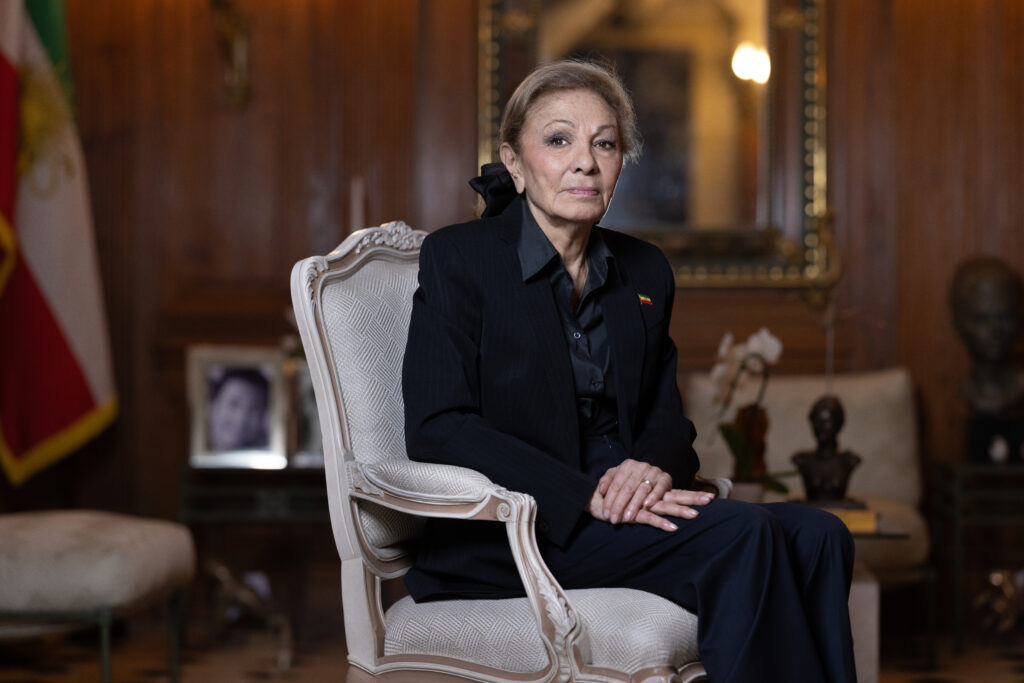
The widow of Iran’s last shah has told AFP there is “no turning back” after a wave of protests against the country’s clerical authorities, saying she is convinced the Iranian people will emerge victorious. Driven into exile with her husband in January 1979 during a popular revolution that brought the Islamic republic to power, Farah Pahlavi said her “desire” and “need today are to return to Iran”, in an exclusive interview with AFP. Posing in front of Iran’s former flag, emblazoned with a lion and a sun, the 87-year-old former empress, welcomed AFP to her Paris apartment for a photo session after agreeing to answer questions in writing in French about the situation in her homeland.Triggered on December 28 by smaller protests over economic hardship, nationwide rallies surged in Iran on January 8, challenging the Islamic republic in power for over four decades. The protests were met with a crackdown that rights groups say has left thousands dead.Question: What message would you like to send to the Iranian people after the recent nationwide protests? Answer: I want to say to young Iranians: today you are writing, with immense courage, a new chapter of history… for Iran and for the world.Maintain hope and determination, you will be the victors of this unequal confrontation with the Islamic republic. To my children, daughters and sons of Iran, to my sisters and brothers — mothers and fathers of Iran’s noble youth — I extend my admiration.Q: Do you still have hope despite the suppression of the protests?A: To date, thousands of these dignified and courageous young people have sacrificed their lives for the freedom of their country. And God alone knows how many more will still fall at the hands of this criminal regime before our Iran once again becomes a free land.One thing is now certain: there is no turning back. This path is one‑way — it leads to freedom — and every day, tragically, it is drenched in the blood of the daughters and sons of this land. Such a sacrifice demands victory.This victory will not only be that of my country, it will also be that of peace, security and stability in the world.Q: What is now the role of the opposition, of which you are a part? A: Opponents of the regime outside Iran today have two essential duties: to ensure a strong link between Iranians inside the country and the peoples and governments of the free world, and to organise ever larger demonstrations to express solidarity with their compatriots, while reminding international opinion of what is really unfolding in a country that is a cradle of civilisation.Q: Do you want external military intervention in Iran, particularly by the United States? A: I appeal to the conscience of the entire world, in solidarity with this people, to continue supporting them. Thousands of Iranians must not lose their lives amid general indifference. Strengthening their chances in this profoundly unequal struggle means understanding that with their victory and the advent of a democratic Iran, the region will move towards a more peaceful Middle East. Q: If the clerical leadership were to fall, what role do you see for your son Reza Pahlavi? A: His role will be exactly the one with which the Iranian people decide to entrust to him. My son, whose name is chanted at every demonstration, has always stated throughout his public life that it is the Iranian people who will freely decide the future of their country. He himself sees his role solely as the mouthpiece of young Iranians until the day of freedom.Q: In that case, would you return to Iran? A: For 47 years I have wished for, and waited for, Iran’s freedom. The Iranian people, with deep affection, call me the mother of Iran. In times of trial, every mother and every child need to be together. My desire and my need today are to return to Iran and to hold these exceptional children in my arms.Like any mother separated from her children, I feel, deep within me, that this journey and this reunion will take place soon.