
AFP Asia Business
Iran says 3,117 killed in protests, activists fear ‘far higher’ toll
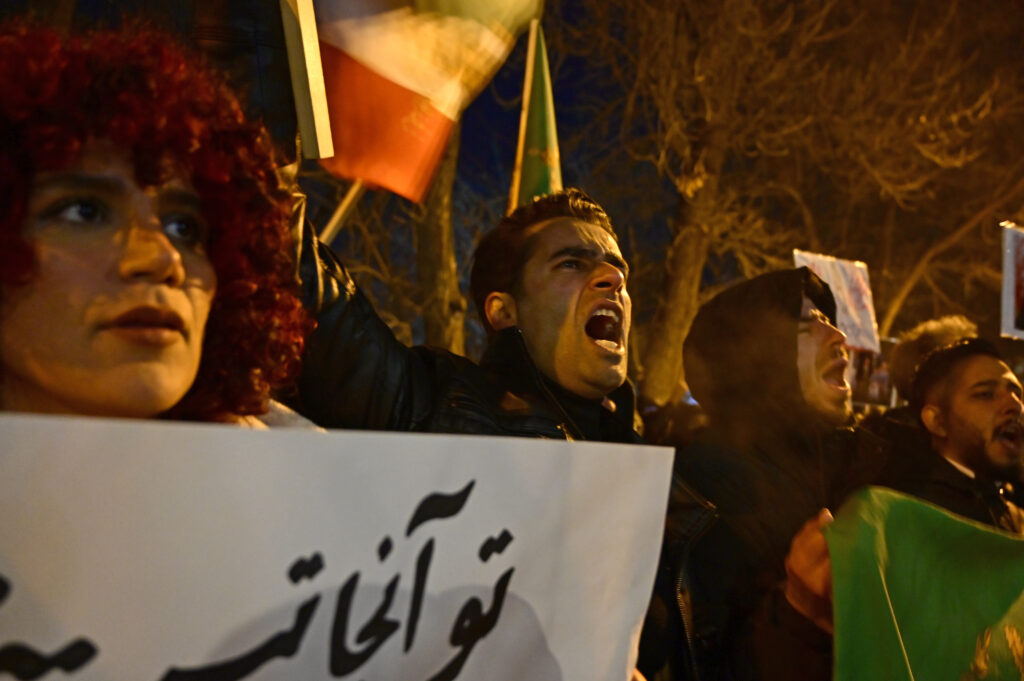
Iranian authorities on Wednesday said 3,117 people were killed during protests that first erupted in late December, but activists said the actual toll risked being many times higher due to a crackdown that suppressed the demonstrations.Demonstrations and strikes initially sparked by economic grievances turned into a mass movement against the clerical leadership that has ruled Iran since the 1979 revolution, with people pouring into the streets in mass protests for several days from January 8.However the protests appear for now to have petered out in the face of what activists describe as a crackdown under the cover of a blanket internet shutdown.The clerical authorities have condemned the protest wave as a “terrorist” incident characterised by violent “riots” fuelled by the United States. Rights groups however say thousands of protesters demanding change were killed by direct fire from the security forces.In the first official toll from the authorities, a statement by Iran’s foundation for veterans and martyrs, cited by state television, said a total of 3,117 people were killed during protests.Of these, 2,427 people in that toll including members of the security forces were considered under Islam to be “martyrs”, with the statement calling them “innocent” victims.”The 690 people who are not among the martyrs are terrorists, rioters, and those who attacked military sites,” Ali Akbar Pourjamshidian, secretary of Iran’s National Security Council, told state TV.He said the high number of “martyrs” showed the “restraint and tolerance of the security forces” during protests.But Mahmood Amiry-Moghaddam, director of Norway-based Iran Human Rights (IHR) NGO, said “all available evidence emerging from Iran indicates that the real number of people killed during the protests is far higher.” “The Islamic republic has a well-documented pattern of systematic underreporting of lethal state violence,” he told AFP, warning that if the same pattern of Iran’s underreporting of executions is applied here “the actual number of people killed could be in the range of 25,000”.He said while the authorities attempt to “deflect responsibility… the evidence we have consistently points to state responsibility — protesters were shot by security forces and their proxies, using live ammunition, including heavy machine guns”.- ‘World is watching’ -All organisations monitoring the toll have said that efforts to give a precise figure are being severely impeded by the ongoing Internet blackout imposed by authorities in the Islamic republic, which according to monitor Netblocks has now lasted over 300 hours.The statement by the foundation for veterans and martyrs, quoted by state television, said “many of the martyrs were bystanders” shot dead during the protests.It also claimed that “some were protesters who were shot by organised terrorist elements in the crowd”, without providing evidence or details.Rights groups, including Amnesty International, have accused security forces of deliberately targeting protesters from rooftops and also seeking to shoot protesters in the eyes.Rights group Hengaw, also based in Norway, said it had verified the killing of eight more women by security forces in the protests and said it could now confirm a total of 42 women had been killed.The veterans and martyrs foundation condemned the “treacherous hand of Iran’s enemies”, accusing the “criminal leaders” of the United States of “supporting, equipping and arming” those who carried out the violence.- ‘No turning back’ -In a bid to show the damage caused by the protests, Tehran municipality on Wednesday showed journalists on an escorted official tour roughly a dozen charred buses lined up in the parking lot of a bus depot in the capital. A key protagonist in the protest movement was Reza Pahlavi, the son of the ousted shah. The US-based Pahlavi called for nightly protests and said he was ready to return to Iran.In a rare interview, his mother, the former empress Farah Pahlavi told AFP from her home in Paris in written answers to questions there was “no turning back” after the wave of protests.US President Donald Trump has never ruled out military action over the crackdown, although expectations of a swift American response have now receded.Iranian General Abolfazl Shekarchi, the spokesman of the Iranian armed forces, warned Trump that Tehran would attack him if supreme leader Ayatollah Ali Khamenei was targeted. In a News Nation interview that aired Tuesday, Trump responded: “I have very firm instructions. Anything happens, they’re going to wipe them off the face of this earth.”
Iran says 3,117 killed during protests, activists fear ‘far higher’ toll
Iranian authorities on Wednesday said 3,117 people were killed during protests that first erupted in late December, but activists said the actual toll risked being many times higher due to a crackdown that suppressed the demonstrations.Demonstrations and strikes initially sparked by economic grievances turned into a mass movement against the clerical leadership that has ruled Iran since the 1979 revolution, with people pouring into the streets in mass protests for several days from January 8.However the protests appear for now to have petered out in the face of what activists describe as a crackdown under the cover of a blanket internet shutdown.The clerical authorities have condemned the protest wave as a “terrorist” incident characterised by violent “riots” fuelled by the United States. Rights groups however say thousands of protesters demanding change were killed by direct fire from the security forces.In the first official toll from the authorities, a statement by Iran’s foundation for veterans and martyrs, cited by state television, said a total of 3,117 people were killed during protests.Of these, 2,427 people in that toll including members of the security forces were considered under Islam to be “martyrs”, with the statement calling them “innocent” victims.But Mahmood Amiry-Moghaddam, director of Norway-based Iran Human Rights (IHR) NGO, said “all available evidence emerging from Iran indicates that the real number of people killed during the protests is far higher.” “The Islamic republic has a well-documented pattern of systematic underreporting of lethal state violence,” he told AFP, warning that if the same pattern of Iran’s underreporting of executions is applied here “the actual number of people killed could be in the range of 25,000”.He said while the authorities attempt to “deflect responsibility… the evidence we have consistently points to state responsibility — protesters were shot by security forces and their proxies, using live ammunition, including heavy machine guns”.- ‘World is watching’ -All organisations monitoring the toll have said that efforts to give a precise figure are being severely impeded by the ongoing Internet blackout imposed by authorities in the Islamic republic, which according to monitor Netblocks has now lasted over 300 hours.”Attempts to obscure the truth will be documented in real time. The world is watching,” said Netblocks on the continued internet shutdown, which it says is aimed at masking the extent of the crackdown.The statement by the foundation for veterans and martyrs, quoted by state television, said “many of the martyrs were bystanders” shot dead during the protests.It also claimed that “some were protesters who were shot by organised terrorist elements in the crowd”, without providing evidence or details.Rights groups, including Amnesty International, have accused security forces of deliberately targeting protesters from rooftops and also seeking to shoot protesters in the eyes.Rights group Hengaw, also based in Norway, said it had verified the killing of eight more women by security forces in the protests and said it could now confirm a total of 42 women had been killed.The veterans and martyrs foundation condemned the “treacherous hand of Iran’s enemies”, accusing the “criminal leaders” of the United States of “supporting, equipping and arming” those who carried out the violence.In a separate statement commenting on the toll, Iran’s National Security Council said a “full-scale heinous crime has been recorded against the Iranian nation” but added “another defeat has been inflicted on those who are against Iran”.- ‘No turning back’ -In a bid to show the damage caused by the protests, Tehran municipality on Wednesday showed journalists on an escorted official tour roughly a dozen charred buses lined up in the parking lot of a bus depot in the capital. A key protagonist in the protest movement was Reza Pahlavi, the son of the ousted shah. The US-based Pahlavi called for nightly protests and said he was ready to return to Iran.In a rare interview, his mother, the former empress Farah Pahlavi told AFP from her home in Paris in written answers to questions there was “no turning back” after the wave of protests.US President Donald Trump has never ruled out military action over the crackdown, although expectations of a swift American response have now receded.Iranian General Abolfazl Shekarchi, the spokesman of the Iranian armed forces, warned Trump that Tehran would attack him if supreme leader Ayatollah Ali Khamenei was targeted. “Trump knows that if a hand of aggression is extended toward our leader, we will not only sever that hand,” Shekarchi was quoted as telling Iranian state media.In a News Nation interview that aired Tuesday, Trump responded: “I have very firm instructions. Anything happens, they’re going to wipe them off the face of this earth.”
Israel says struck Syria-Lebanon border crossings used by Hezbollah
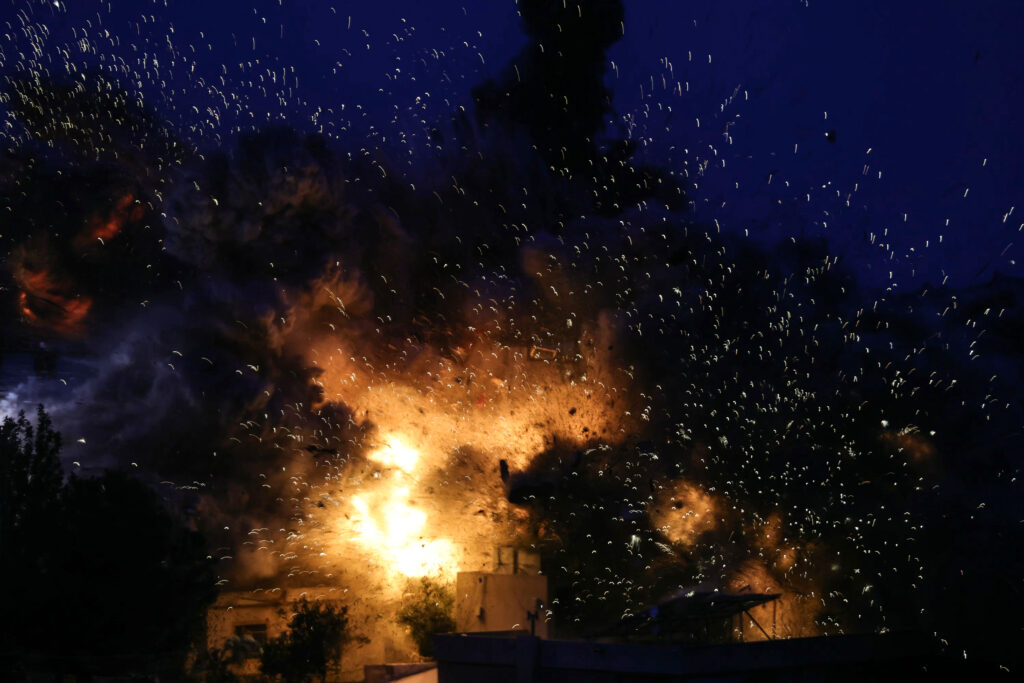
The Israeli military said it struck four crossings along the Syria-Lebanon border on Wednesday that were used by Hezbollah to smuggle weapons, after earlier launching fresh strikes on the militant group in Lebanon.”A short while ago, the (Israeli military) struck four border crossings on the Syria-Lebanon border used by Hezbollah to smuggle weapons in the area of Hermel,” the military said in a statement, without providing further details.It came after Israel launched new strikes on what it said were Hezbollah targets in south Lebanon after raids earlier Wednesday killed two people, the latest violence despite a year-old ceasefire with the group.The state-run National News Agency said Israeli warplanes launched raids on buildings in several south Lebanon towns including Qanarit and Kfour, after the Israeli army issued evacuation warnings to residents identifying sites it intended to strike there.An AFP photographer was slightly wounded along with two other journalists who were working near the site of a heavy strike in Qanarit.According to Lebanon’s health ministry, 19 people were wounded in the strike in Qanarit, five of whom were taken to hospital.The Israeli army said it was striking Hezbollah targets in response to the group’s “repeated violations of the ceasefire understandings”.Under heavy US pressure and fears of expanded Israeli strikes, Lebanon has committed to disarming Hezbollah.But Israel has criticised the Lebanese army’s progress as insufficient and has kept up regular strikes, usually saying it is targeting members of the Iran-backed group or its infrastructure.Earlier Wednesday, the health ministry said an Israeli strike on a vehicle in the town of Zahrani, in the Sidon district, killed one person.An AFP correspondent saw a charred car on a main road with debris strewn across the area and emergency workers in attendance.Later, the ministry said another strike targeting a vehicle in the town of Bazuriyeh in the Tyre district killed one person.Israel said it struck Hezbollah operatives in both areas.A Lebanese army statement decried the Israeli targeting of “civilian buildings and homes” in a “blatant violation of Lebanon’s sovereignty” and the ceasefire deal.It also said such attacks “hinder the army’s efforts” to complete the disarmament plan.This month, the army said it had completed the first phase of its plan to disarm Hezbollah, covering the area south of the Litani river, around 30 kilometres (20 miles) from the Israeli border.Most of Wednesday’s strikes were north of the river.More than 350 people have been killed by Israeli fire in Lebanon since the ceasefire, according to an AFP tally of health ministry reports.The November 2024 truce sought to end more than a year of hostilities, but Israel accuses Hezbollah of rearming, while the militant group has rejected calls to surrender its weapons.burs-str/lg-acc/jd/jfx
US begins IS prisoner transfer as Syria govt, Kurds trade attack blame
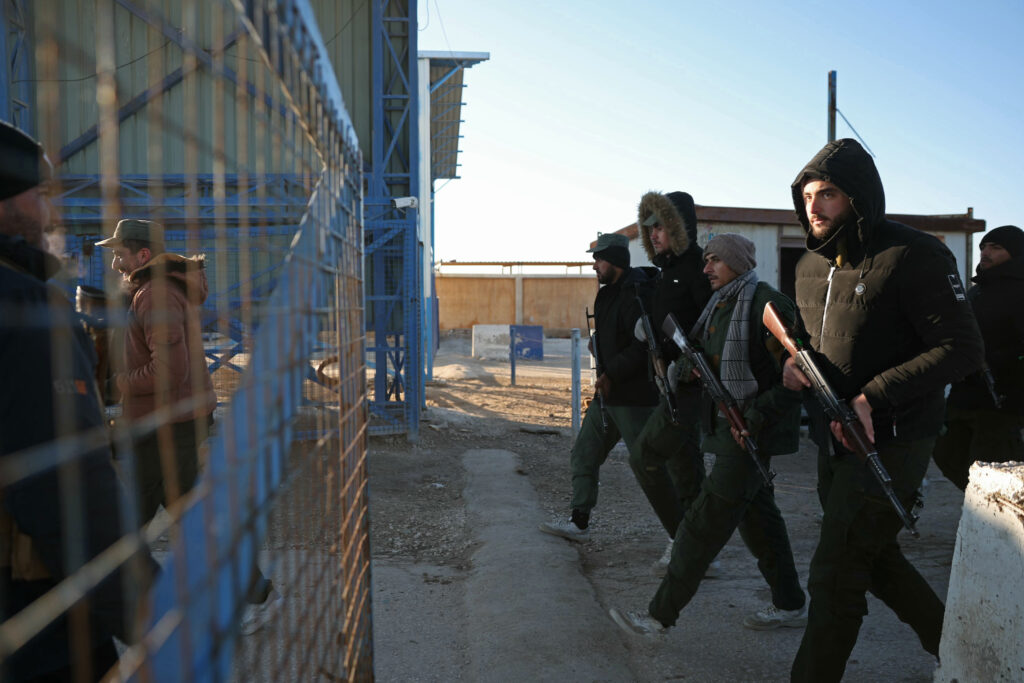
The United States said it launched an operation Wednesday that could move thousands of Islamic State group jihadists from Syria to Iraq, as Syrian and Kurdish-led forces traded accusations of breaching a fragile ceasefire.The move came a day after Washington said the purpose of its alliance with the Syrian Kurds had largely ended, with the US now backing Syria’s Islamist authorities who are seeking to extend their grip on the country after years of civil war.Syria’s army entered the vast Al-Hol camp that houses suspected IS relatives on Wednesday after the Kurdish-led Syrian Democratic Forces (SDF) withdrew, an AFP journalist at the scene said.The SDF, backed by a US-led coalition, battled the jihadists to their territorial defeat in Syria in 2019.During the fighting, the Kurds seized swathes of territory, jailed some 12,000 members of the group — including up to 3,000 foreigners from more than 50 countries — and detained tens of thousands of their relatives in camps in the northeast.The US military said Wednesday it had launched an operation to move 7,000 IS prisoners from Syria to Iraq.The aim of the operation — which began with the movement of 150 IS fighters — is to “help ensure the terrorists remain in secure detention facilities,” US Central Command said in a statement.Aaron Zelin, a senior fellow at the Washington Institute for Near East Policy, said on X that the move suggested the US military didn’t think “the situation is stable enough to keep them there”.Damascus’ forces have taken control of swathes of formerly Kurdish-held territory in the north and east.That has included a deal struck over the weekend between the two sides that will see the Kurds’ administration integrated into the state, while the government will take responsibility for IS prisoners.- ‘Living a tragedy’ -Damascus and the Kurds traded accusations of attacks despite a truce announced Tuesday.The defence ministry said an SDF drone strike targeted an arms factory that its forces found in Hasakeh province, causing a blast that killed seven soldiers.It said a total of 11 people had been killed since the ceasefire.The army condemned the incident as “a dangerous escalation and clear violation of the ceasefire”.The SDF denied attacking the factory, saying “an accident during the transfer of ammunition by Damascus factions” caused the blast.It said it was committed to the truce, which ends Saturday evening, and accused the government of carrying out “a series of attacks”, one of which killed a woman near Kobane, also known as Ain al-Arab, on the border with Turkey.Kurdish forces drove IS from Kobane in 2015 and the city became a symbol of their victory against the jihadists. Soldiers opened the metal gate at the Al-Hol camp on Wednesday and entered while others stood guard, as women and children milled among the tents.”We’ve been living a tragedy,” said Umm Sadek, 33, wearing the Islamic full-face niqab veil.”I hope the new government will show mercy and compassion,” she told AFP, denying any links to IS.Ibrahim Ibrahim, 18, said he was 10 when he arrived at the camp, where he lives with his family.”I hope to get out of here, work, support my family and get married… I hope the government will release us,” he said.- Waiting for news -Thousands of former jihadists, including many Westerners, are held in Kurdish-run prisons in northeast Syria, while thousands more of their suspected family members live in the Al-Hol and Roj camps.In a desert region of Hasakeh province, the sprawling Al-Hol holds around 24,000 people, including some 6,200 women and children from around 40 nationalities.In Raqa province, an AFP correspondent saw people waiting for news of family members held in Al-Aqtan prison, where government forces deployed a day earlier but where a security official told AFP that Kurdish forces were still inside.Hilal al-Sheikh, from a village in the province, said he had been waiting for days for news of his 20-year-old son, jailed for 10 months.”The SDF terrorist gangs arrested” him in the middle of the night, Sheikh said.”They accused him of terrorism… before sentencing him to five years in prison,” he added.On Tuesday, the interior ministry said 120 IS members escaped from the Shadadi prison in Hasakeh province, later saying it had arrested “81 of the fugitives”.Syria’s presidency on Tuesday announced an “understanding” with the Kurds over the fate of Kurdish-majority areas of its Hasakeh province stronghold, and gave them “four days for consultations to develop a detailed plan” for the area’s integration.If finalised, government forces “will not enter the city centres of Hasakeh and Qamishli… and Kurdish villages”, it added.strs-lk/lg/jfx
Iran protest crackdown latest developments
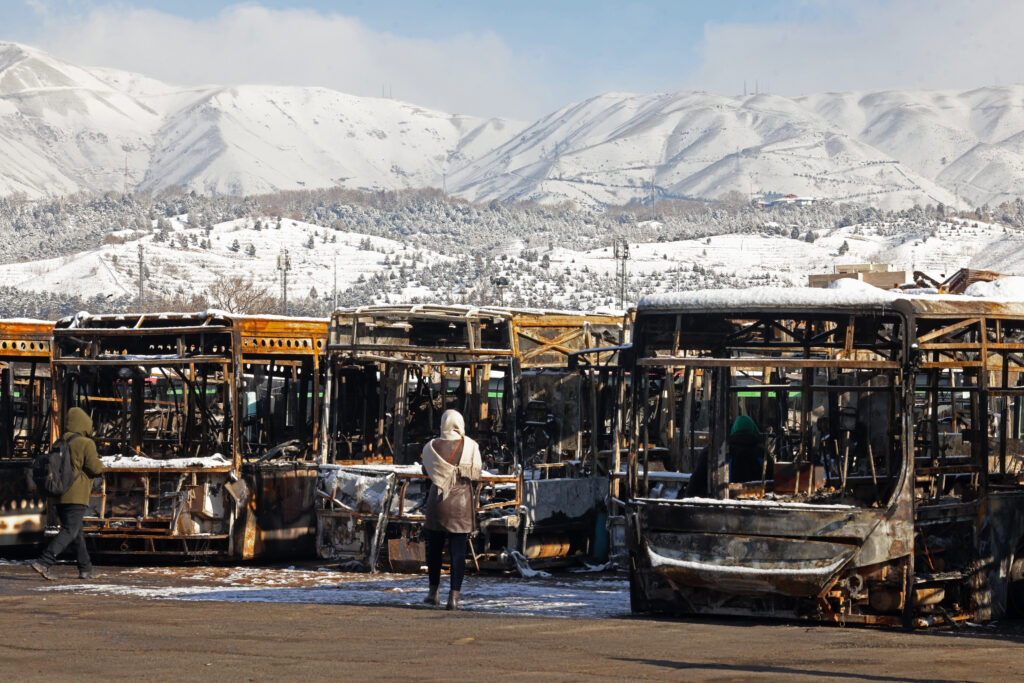
President Donald Trump has warned that Iran would be wiped “off the face of this earth” if Tehran ever succeeded in assassinating the US leader.Arch foes Iran and the United States in recent days have threatened broadscale wars if the leaders of either country are killed. It came as both nations traded barbs over a protest wave Tehran blames on Washington, after Trump threatened military action if more protesters were killed in a deadly crackdown by Iranian authorities. Here are the latest developments: – ‘Set their world on fire’ -Trump reiterated his warning that Iran would be destroyed in an interview aired Tuesday in response to a question on the Islamic republic’s threats on the 79-year-old’s life. Earlier Tuesday, Iranian General Abolfazl Shekarchi was quoted as saying Trump already knew Tehran would not hold back if the tables were turned. “Trump knows that if a hand of aggression is extended toward our leader, we will not only sever that hand,” Shekarchi was quoted as telling Iranian state media.”But we will set their world on fire and leave them no safe haven in the region.” Foreign Minister Abbas Araghchi in an opinion piece published on Tuesday in the Wall Street Journal said Iran would not hold back if attacked, but called for diplomacy and “respect” for his country. “Unlike the restraint Iran showed in June 2025” — during a 12-day war with Israel backed and joined by Trump — “our powerful armed forces have no qualms about firing back with everything we have if we come under renewed attack,” he said. – ‘Decisive’ action -Triggered on December 28 by smaller protests over economic hardship, nationwide rallies surged in Iran on January 8, challenging the Islamic republic in power for over four decades.Rights groups have said several thousand people were killed in the ensuing crackdown, but authorities — who deem the demonstrations “riots” instigated by “terrorists”, have not issued an overall official toll. The judiciary chief Gholamhossein Mohseni Ejei on Wednesday said the figures circulating were “far from reality”. The national police chief said “decisive” action against those authorities hold responsible for the violence continued, as accessing information from inside Iran remains challenging due to an ongoing internet clampdown. The Norway-based Iran Human Rights NGO says it has verified the deaths of 3,428 protesters killed by security forces, confirming cases through sources within the Islamic Republic’s health and medical system, witnesses and independent sources.- Kurd opposition party attacked -An Iranian Kurdish opposition party headquartered in Iraq accused Iran on Wednesday of conducting a rocket and drone attack on its premises, killing one of its members and wounding two others. “We believe the reason we were targeted is because of our activities, particularly our calls for people in Iran to protest against the regime, and especially because we also have an organised and trained military force,” a party official told AFP.The Kurdistan Freedom Party, founded in 1991 in Iran, includes fighters who took part in battles in Iraq against the Islamic State group.Since the 1980s, when Iraq was under the rule of Saddam Hussein, several Iranian Kurdish opposition parties have built up a presence in Iraq.Iran classifies the groups as “terrorists” and separatist groups, and regularly accuses them of carrying out attacks against Iranian forces.In 2022, during another wave of protests sparked by the death in custody of an Iranian Kurdish woman named Mahsa Amini, Iran also struck the headquarters of Iranian opposition groups in Iraqi Kurdistan. – ‘Completely charred’ -Tasnim news agency reported on Wednesday that “rioters” attacked and burned hundreds of private and public buildings, including attacking 314 governmental buildings and burning 155 more, as well as damaging hundreds of banks, shops and mosques. The Tehran municipality on Wednesday showed journalists roughly a dozen charred buses lined up in the parking lot of a bus depot in the capital. Iraj Lotfizadeh, head of the bus operations in district 3 of Tehran, said “22 buses were completely charred across all of Tehran” on January 8, when demonstrations exploded in size and intensity, with more vehicles damaged the following day. Nearby, soot covered parts of the blue tiled ceramic entrance of a mosque where walls were also blackened and doors damaged. Banners that once hung printed with prayers and quranic verses were torn down and strewn about the floor alongside several burnt motorcycles.burs-sw/jfx
Syria accuses Kurdish force of truce breach as army enters IS-linked camp
Syria on Wednesday accused Kurdish-led forces of breaching a ceasefire after seven soldiers were killed in a strike, while authorities entered a camp holding suspected relatives of Islamic State jihadists.The government announced a new truce with the Kurds on Tuesday after taking swathes of north and east Syria that had long been under the control of Kurdish-led Syrian Democratic Forces (SDF). The United States, which heads an international coalition that has backed the Kurds against IS, said the purpose of its alliance with the SDF had largely ended years after they defeated the jihadists.Washington now backs Syria’s new Islamist authorities who are seeking to extend their control across the country after years of civil war.The defence ministry said an SDF drone strike targeted an arms factory that its forces found in Hasakeh province, causing a blast that killed seven soldiers.The army condemned the incident as “a dangerous escalation and clear violation of the ceasefire”.The SDF denied it attacked the factory and instead accused the government of carrying out “a series of attacks” since the ceasefire, adding it was committed to the truce.In a deal reached Sunday that included a ceasefire and the integration of the Kurds’ administration into the state, Syrian President Ahmed al-Sharaa and SDF chief Mazloum Abdi agreed that the government would take over responsibility for IS prisoners.Syria’s army entered the vast Al-Hol camp that houses relatives of suspected Islamic State jihadists on Wednesday after Kurdish forces withdrew, an AFP journalist at the scene said.- Waiting for news -Thousands of former jihadists, including many Westerners, are held in seven Kurdish-run prisons in northeast Syria, while tens of thousands of their suspected family members live in the Al-Hol and Roj camps.At Al-Hol, the AFP correspondent saw soldiers open the camp’s metal gate and enter while others stood guard, as women and children milled among the site’s tents.The camp in a desert region of Hasakeh province is the largest such facility established by Kurdish forces after they took control of swathes of Syria while ousting IS with coalition backing.It holds around 24,000 people, including some 6,200 women and children from around 40 nationalities.The jihadists were territorially defeated in Syria in 2019. Roj is still under Kurdish control in eastern Hasakeh province. In Raqa province, state media said Tuesday that security forces had deployed around the Al-Aqtan prison.A security official on the ground told AFP that Kurdish forces were still inside the facility on Wednesday.An AFP correspondent saw hundreds of people waiting for new of family members held in the jail.Hilal al-Sheikh, from a village in the province, said he had been waiting for days for news of his 20-year-old son, jailed for 10 months.”The SDF terrorist gangs arrested my son” in the middle of the night, Sheikh said.”They accused him of terrorism… before sentencing him to five years in prison,” he said.- Kobane -Authorities on Wednesday accused the SDF of targeting an army vehicle near the town of Kobane, also known as Ain al-Arab, which Kurdish forces said the army had tried to storm.The Syrian Observatory for Human Rights monitor said people displaced from military operations nearby had converged on the town on the border with Turkey, the only part of Aleppo province still under Kurdish control.On Tuesday, the interior ministry said 120 IS members escaped from the Shadadi prison in Hasakeh province, later saying it had arrested “81 of the fugitives”.The army had accused the SDF of releasing IS detainees from the facility, while the Kurds said they lost control of the facility after an attack by Damascus.US President Donald Trump told the New York Post Tuesday he had helped stop a prison break of European jihadists in Syria, referring to the Shadadi incident.He also told a press conference that “I like the Kurds, but… the Kurds were paid tremendous amounts of money, were given oil and other things, so they were doing it for themselves more so than they were doing it for us”.”We got along with the Kurds and we are trying to protect the Kurds,” he added.Syria’s presidency on Tuesday announced an “understanding” with the Kurds over the fate of Kurdish-majority areas of Hasakeh province, and gave them “four days for consultations to develop a detailed plan” for the area’s integration.If finalised, government forces “will not enter the city centres of Hasakeh and Qamishli… and Kurdish villages”, it added.Under the agreement, Abdi would nominate candidates for the posts of Hasakeh governor and deputy defence minister, as well as lawmakers for the transitional parliament.strs-lk/lg/ser