AFP Asia Business

Israel says Hamas ‘weaponising suffering in Gaza’ as aid workers killed

Israel charged on Thursday that Hamas was “weaponising suffering in Gaza” after a US and Israeli-backed charity accused the Palestinian militant group of killing eight of its aid workers in the territory.The distribution of food and basic supplies in the blockaded and war-ravaged Gaza has become increasingly fraught and perilous, exacerbating the territory’s deep hunger crisis.The Gaza Humanitarian Foundation said a bus carrying its staff to a distribution site near the southern city of Khan Yunis was “brutally attacked by Hamas” around 10:00 pm (1900 GMT) on Wednesday.The GHF said: “As of now, we can confirm at least eight fatalities, multiple injuries, and we fear that some of our team members have been taken hostage.”Israel’s foreign ministry said “Hamas is weaponising suffering in Gaza — denying food, targeting lifesavers and forsaking its own people”.Asked to respond to the GHF accusation, the Hamas government media office in Gaza said GHF was a “filthy tool” of Israeli forces and was being used to “lure civilians into death traps”.It did not comment on the GHF’s accusation.Dozens of Palestinians have been killed while trying to reach GHF distribution points since they began operating in late May, according to Gaza’s civil defence agency.The agency said another 21 people were killed while waiting for aid on Thursday, adding that they were among 29 people across the territory who were killed by Israeli fire.Contacted by AFP about reports of a deadly incident near an aid distribution point close to the Netzarim corridor in central Gaza, the Israeli military said it had “conducted warning shots hundreds of metres from the aid distribution site, prior to its opening hours.”Israeli restrictions on media in Gaza and the difficulties of access on the ground mean AFP is unable to independently verify the casualty tolls provided by the civil defence agency or the deaths reported by the GHF.- ‘Died while waiting’ -An officially private effort with opaque funding, the GHF began operating on May 26 after Israel cut off supplies into Gaza for more than two months, sparking international condemnation and warnings of imminent famine.During its first week of operations, the GHF said it distributed more than seven million meals’ worth of food, but its operations were widely criticised even before the deadly shootings near its sites.The United Nations and major aid groups have refused to work with the GHF, citing concerns over its practices and neutrality.Gaza medics have said hospitals are being inundated with people wounded while trying to obtain food.At Gaza City’s Al-Shifa Hospital on Wednesday, the emergency department said it had received dozens of people who had been killed or wounded while waiting for aid in recent days, including 200 in a single day.”Many Gazans went to the Nabulsi and Netzarim areas to receive aid and were shot at and shelled with tanks,” said Mutaz Harara, head of Al-Shifa’s emergency department.But with few medical supplies and no operating theatres, “many patients died while waiting for their turn”, he said.The war has caused major damage to infrastructure across Gaza, including water mains, telecommunication cables, power lines and roads.The Palestinian Authority said internet and fixed-line communication services were down in Gaza on Thursday following an attack on the territory’s last fibre optic cable which it blamed on Israel.- Aid workers deported -Meanwhile, Israel’s foreign ministry said six people detained aboard a boat attempting to breach Israel’s Gaza blockade were put on a plane for deportation on Thursday afternoon.They included European parliamentarian Rima Hassan, it said.”Bye-bye — and don’t forget to take a selfie before you leave,” the ministry wrote on X.The UN General Assembly on Thursday adopted 149-12 with 19 abstentions a non-binding resolution calling for an immediate ceasefire in Gaza and urging “all necessary measures” to pressure Israel into ending the conflict. The US vetoed a similar push at the Security Council last week.Egyptian authorities meanwhile detained more than 200 pro-Palestinian activists in Cairo ahead of a planned march to the Gaza border, the organisers said.Egypt said while it backs efforts to put “pressure on Israel” to lift its Gaza blockade, any foreign delegations seeking to visit the border area must obtain prior approval.The Gaza war was sparked by Hamas’s October 7, 2023, attack on Israel.Israel said late on Wednesday that its forces had retrieved the bodies of two hostages from southern Gaza.Prior to the latest announcement, out of 251 taken hostage during the Hamas attack, 54 were still held in Gaza, including 32 the Israeli military has said are dead.Hamas’s assault resulted in the deaths of 1,219 people on the Israeli side, mostly civilians, according to an AFP tally of official figures.The health ministry in Hamas-run Gaza says Israel’s retaliatory offensive has killed at least 55,207 people, the majority of them civilians. The United Nations considers the figures reliable.bur-acc-jd-lba/dv/gv

Dollar dives on Trump’s new trade threat

The dollar plunged on Thursday after US President Donald Trump threatened higher unilateral tariffs on trade partners, and oil see-sawed as traders evaluated the probability behind reports that Israel could be gearing up to strike Iran.Stocks traded mixed as investors navigated the double whammy of returning trade uncertainty and geopolitical volatility, while Boeing’s share price …

Dollar dives on Trump’s new trade threat Read More »

Trump calls on Israel not to strike as Iran defiant before talks

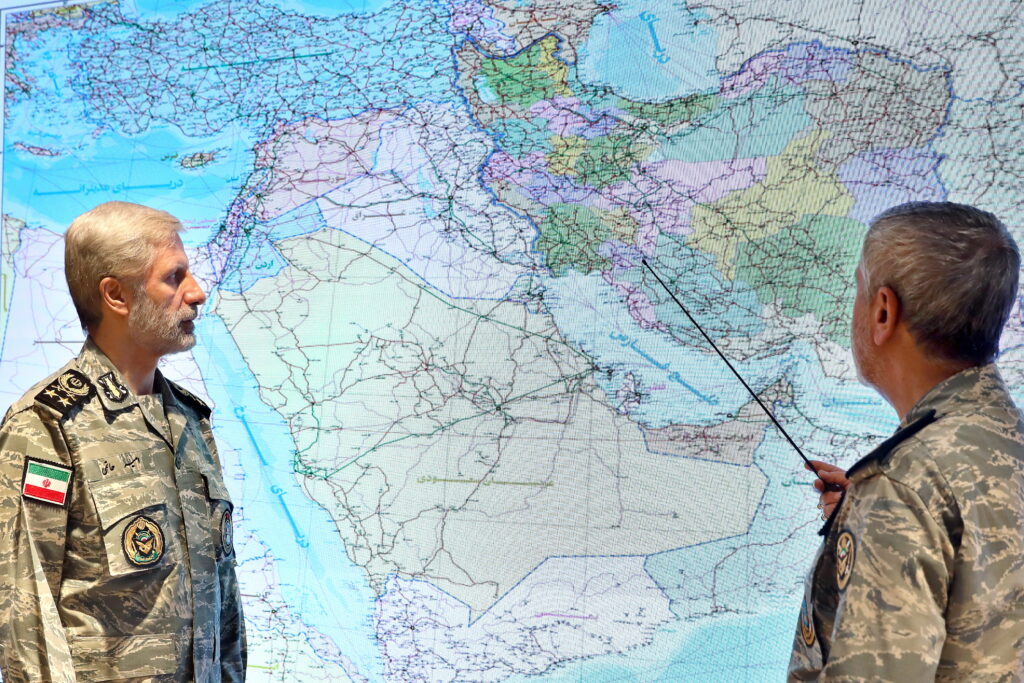
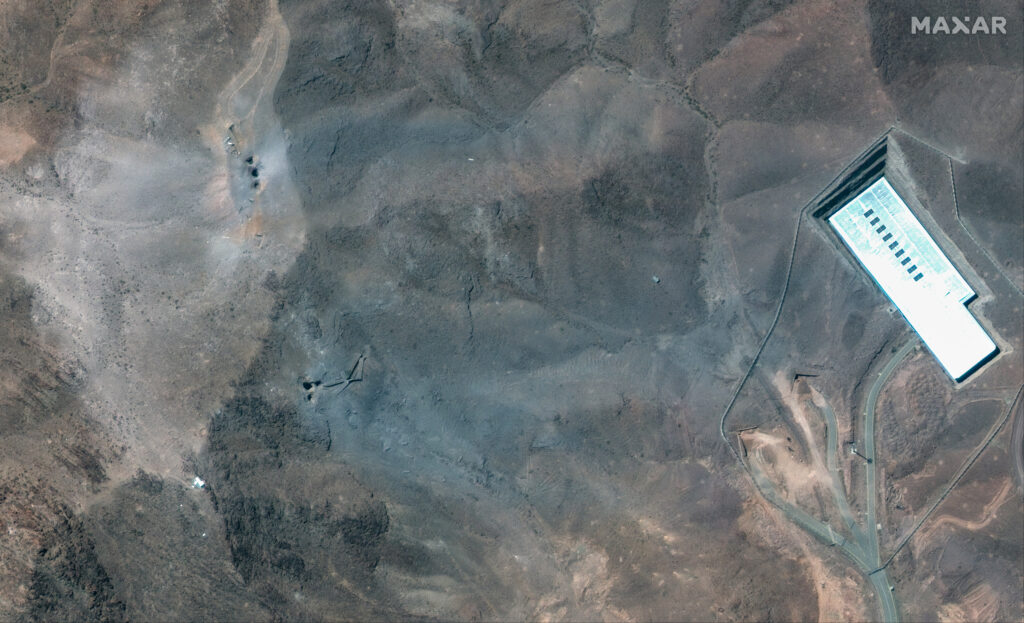
US President Donald Trump called Thursday on Israel not to attack Iran, saying a deal on its nuclear program remained close, but Tehran defiantly vowed to increase its output of enriched uranium ahead of new talks.Trump acknowledged that an Israeli strike on Iran “may very well happen,” although he stopped short of calling a strike imminent, and said the risk of “massive conflict” led the United States to draw down staff in the region.”We are fairly close to a pretty good agreement,” Trump told reporters.Asked about his discussions with Israeli Prime Minister Benjamin Netanyahu, Trump said: “I don’t want them going in, because I think it would blow it.”Trump quickly added: “Might help it actually, but it also could blow it.”Trump’s Middle East pointman Steve Witkoff is set to hold a sixth round of talks with Iran on Sunday in Oman, which has mediated.Trump again described himself as a man of peace.”I’d love to avoid the conflict. Iran’s going to have to negotiate a little bit tougher — meaning they’re going to have to give us some things that they’re not willing to give us right now,” he said.- US troops in crosshairs -Iran has ramped up rhetorical pressure before the talks, including with a threat to strike American bases in the region if the negotiations break down and conflict erupts.”If the talks fail, the risk of military escalation becomes much more immediate,” said Hamidreza Azizi, a visiting fellow at the German Institute for International and Security Affairs.The United States on Wednesday said it was reducing embassy staff in Iraq — long a zone of proxy conflict with Iran.Israel, which counts on US military and diplomatic support, sees the cleric-run state in Tehran as an existential threat and hit Iranian air defenses last year.Netanyahu has vowed less restraint since the unprecedented October 7, 2023 attack on Israel by Tehran-backed Hamas, which triggered the massive Israeli offensive in Gaza.Israel again called for global action after the UN’s International Atomic Energy Agency (IAEA) accused Iran of non-compliance with its obligations. The United States and other Western countries, along with Israel, have repeatedly accused Iran of seeking a nuclear weapon, which it has repeatedly denied.The IAEA’s board of governors adopted a resolution condemning Iran’s “non-compliance” with its nuclear obligations under the Non-Proliferation Treaty (NPT), carried by 19 votes in favour, out of 35 in total, diplomats said.The resolution could lay the groundwork for European countries to invoke a “snapback” mechanism, which expires in October, that would reinstate UN sanctions eased under a 2015 nuclear deal negotiated by then US president Barack Obama.- Iran says move ‘extremist’ -Iran’s nuclear chief, Mohammad Eslami, slammed the resolution as “extremist” and blamed Israeli influence.Iran, he said, had upheld its commitments under the NPT but rolled back adherence to the 2015 deal after Trump withdrew the United States during his first term as president and imposed sweeping sanctions.”They can’t expect us to fulfill them without them (Western countries) honoring any of their commitments,” Eslami said.In response to the resolution, Iran said it would launch a new enrichment center in a secure location.Iran would also replace “all of these first-generation machines with sixth-generation advanced machines” at the Fordo uranium enrichment plant, said Behrouz Kamalvandi, spokesman of the Atomic Energy Organization of Iran.This means “our production of enriched material will increase significantly,” he added.Eslami said enrichment would begin at the new “invulnerable” site when machines were installed.Iran currently enriches uranium to 60 percent, far above the 3.67-percent limit set in the 2015 deal and close, though still short, of the 90 percent needed for a nuclear warhead.Following Iran’s vow on uranium, the European Union called on it “to show restraint.”Iran’s UN representative Amir Saeid Iravani has said Tehran will consider “proportionate responses” if the snapback mechanism is triggered — including “starting the process of withdrawal” from the NPT.

Trump says Israel should not strike Iran, as nuclear deal ‘close’

US President Donald Trump called Thursday on ally Israel not to strike Iran’s nuclear sites, saying a deal remained close if Tehran compromises.Trump acknowledged that Israeli Prime Minister Benjamin Netanyahu was considering a strike, which he said could spark a “massive conflict” — leading to a US decision to draw down embassy staff in the region.”We are fairly close to a pretty good agreement,” Trump told reporters.Asked about his discussions with Netanyahu, Trump said: “I don’t want them going in, because I think it would blow it.”Trump quickly added: “Might help it actually, but it also could blow it.”Trump’s Middle East pointman Steve Witkoff is set to hold a sixth round of talks on Sunday in Oman with Iran, which defiantly said it would raise output of enriched uranium — the key sticking point in talks.Trump again described himself as a man of peace and said he would prefer a negotiated settlement with Iran.”I’d love to avoid the conflict. Iran’s going to have to negotiate a little bit tougher — meaning they’re going to have to give us some things that they’re not willing to give us right now,” he said.On whether Israel could attack Iran, Trump said: “I don’t want to say imminent, but it looks like it’s something that could very well happen.”

King Tut gold mask to leave Cairo museum after nearly 100 years

After nearly a century in the Egyptian Museum in Cairo, King Tutankhamun’s iconic gold mask and remaining treasures are set to move to the new Grand Egyptian Museum near the Giza Pyramids.Visitors have just days left to see the boy king’s world-famous gold funerary mask before it joins more than 5,000 artefacts from his tomb at the GEM, a $1-billion megaproject opening on July 3.”Only 26 objects from the Tutankhamun collection, including the golden mask and two coffins, remain here in Tahrir,” said museum director Ali Abdel Halim.”All are set to be moved soon,” he told AFP, without confirming a specific date for the transfer.The government has yet to officially announce when or how the last artefacts will be relocated.Still on display are the innermost gold coffin, a gilded coffin, a gold dagger, cosmetic box, miniature coffins, royal diadem and pectorals.Tutankhamun’s treasures, registered at the Egyptian Museum on Cairo’s Tahrir square in 1934, have long been its crown jewels.But the neoclassical building — with faded cases, no climate control and ageing infrastructure — now contrasts with the high-tech GEM.Once open, the GEM is believed to be the largest in the world devoted to a single civilisation, housing more than 100,000 artefacts — with over half on public display.In a dedicated wing, most of King Tut’s treasures will be exhibited together for the first time in history since British archeologist Howard Carter discovered the young pharaoh’s intact tomb in 1922.His mummy will remain in its original resting place in Luxor’s Valley of the Kings as it is “a vital part of the archeological site”, Egyptian officials have said.A virtual replica, however, will be displayed at the GEM using virtual reality technology.The Egyptian Museum in Tahrir, long the historic heart of Egyptology, has lost in 2021 other star exhibits: 22 royal mummies including Ramses II and Queen Hatshepsut that were relocated in a widely watched state procession to the National Museum of Egyptian Civilization in Old Cairo.Still, it is home to around 170,000 artefacts, according to the museum director, including treasures from Yuya and Thuya – Tutankhamun’s ancestors — and items from ancient Tanis, such as the golden funerary mask of King Amenemope.A total of 32,000 artefacts have already been relocated from storage and display halls at the Tahrir museum to the GEM.The museum’s director said the space left behind by Tutankhamun’s collection will eventually be filled by a new exhibition “on par with the significance of Tut’s treasures”.