AFP Asia Business

Gaza rescuers say Israeli fire kills 20 waiting for aid

Gaza’s civil defence agency said Israeli troops killed 20 people waiting to collect food on Monday, in the latest deadly incident near a US-backed aid centre in the Palestinian territory’s south.Civil defence spokesman Mahmud Bassal told AFP that “the (Israeli) occupation forces opened fire” near the Al-Alam roundabout in the southern city of Rafah, where many were waiting to reach an aid distribution site.Bassal said that “20 martyrs and more than 200 wounded by occupation gunfire” were taken to nearby hospitals.Ahmed al-Farra, head of the paediatric department at Nasser Hospital in the nearby city of Khan Yunis, told AFP that people “are hungry, they didn’t get any food since nearly four months ago”.In early March, Israel imposed a total aid blockade on the Gaza Strip amid an impasse in truce negotiations, only partially easing restrictions in late May.”All the borders are closed and this is the only way to get aid,” Farra said of US- and Israel-backed Gaza Humanitarian Foundation (GHF) sites.”And when they get there they are killed by snipers, as you can see.”Contacted by AFP, the Israeli military said it was looking into the reports.The International Committee of the Red Cross (ICRC) said it had received 200 people at its field hospital in the Al-Mawasi area near Rafah, without elaborating on the circumstances.In a statement on X, it said it was “the highest number received by the Red Cross Field Hospital in one mass casualty incident”.Red Cross teams also treated 170 patients at the hospital on Sunday, “many of whom were wounded by gunshots, and who reported that they were trying to access a food distribution site”, the statement said.Israel has faced mounting international pressure over humanitarian conditions in Gaza, which the United Nations described in May as “the hungriest place on Earth”.The GHF began distributing aid in late May, but its operations have been marred by chaotic scenes and dozens of deaths.The UN and major aid groups have refused to cooperate with the organisation citing neutrality issues they say violate humanitarian principles.- ‘Intense hostilities’ -Following previous incidents around GHF sites, the Israeli military has said its troops fired warning shots and were reacting to people approaching them in a way they considered threatening.Israeli restrictions on media in the Gaza Strip and other difficulties in accessing some areas mean AFP is unable to independently verify the tolls and details provided by the civil defence agency.The ICRC said in its statement that “civilians continue to be killed and injured as intense hostilities continue. Due to the ongoing restrictions of humanitarian assistance, people are also struggling to access basic goods, including fuel”.The health ministry in Hamas-run Gaza said at least 55,432 people have been killed in the territory since the start of the war, which is now in its 21st month.Of those, 5,139 have been killed since Israel resumed its offensive on March 18 following a truce.The war was triggered by an unprecedented Hamas attack on Israel on October 7, 2023, which resulted in the deaths of 1,219 people, according to official Israeli figures.bur-az-acc-adp/ds

UN refugee agency says will shed 3,500 jobs due to funding cuts

The UN refugee agency said Monday it will cut 3,500 staff jobs — slashing nearly a third of its workforce costs — due to a funding shortfall, and reduce the scale of its help worldwide.UNHCR carried out a review of its activities, expenditure, staffing and structures following a plunge in humanitarian funding.The Office of the United Nations High Commissioner for Refugees has been among a host of UN and private aid agencies badly hit by funding cuts by the United States.The United States — which was by far UNHCR’s biggest donor — has slashed its foreign aid under a radical spending review ordered by US President Donald Trump. Other countries have also cut humanitarian spending.Washington previously made up more than 40 percent of UNHCR contributions received — $2 billion per year, the agency’s chief Filippo Grandi told the UN Security Council in April.”In light of difficult financial realities, UNHCR is compelled to reduce the overall scale of its operations,” Grandi said in Monday’s statement.He added that UNHCR would focus “on activities that have the greatest impact for refugees” while streamlining its Geneva headquarters and regional offices.The agency said it had had to close or downsize offices worldwide and implement a nearly 50-percent cut in senior positions in Geneva and at the regional HQs.”In total, approximately 3,500 staff positions will be discontinued,” the statement said.Additionally, hundreds of temporary workers have had to leave the organisation due to the funding shortfall.”Overall, UNHCR estimates a global reduction in staffing costs of around 30 percent,” the agency said.It said that programmes ranging from financial aid to vulnerable families, health, education, and water and sanitation had already been affected by cuts.UNHCR said it was working with other organisations and refugee-hosting countries to try to mitigate the impact on refugees.- ‘Resources are scarcer’ -UNHCR estimates that it will end 2025 with available funding at about the same level as a decade ago — despite the number of people forced to flee their homes having nearly doubled over the same period to more than 122 million.”Even as we face painful cuts and lose so many dedicated colleagues, our commitment to refugees remains unshakeable,” said Grandi.”Although resources are scarcer and our capacity to deliver is reduced, we will continue to work hard to respond to emergencies, protect the rights of refugees, and pursue solutions — including returning home, as nearly two million Syrians have done since December.”Syria’s civil war erupted in 2011, and ruler Bashar al-Assad was overthrown in December 2024.Sudan is now the world’s largest forced displacement situation, with its 14.3 million refugees and internally displaced people overtaking Syria (13.5 million), followed by Afghanistan (10.3 million) and Ukraine (8.8 million).At the end of 2024, one in 67 people worldwide were forcibly displaced, UNHCR said Thursday.

German court jails Syrian ‘torture’ doctor for life

A German court on Monday handed a life sentence to a Syrian doctor who tortured opponents of former ruler Bashar al-Assad during the country’s brutal civil war. The higher regional court in Frankfurt found Alaa Mousa, 40, guilty of crimes against humanity, committed while working as a doctor at military hospitals in Homs and Damascus between 2011 and 2012. Mousa’s actions were “part of a brutal reaction by Assad’s dictatorial, unjust regime”, presiding judge Christoph Koller said as he read out the verdict.Germany has tried several Assad supporters under the legal principle of “universal jurisdiction”, which allows for serious crimes to be prosecuted even if they were committed in a different country.Syria’s civil war erupted in 2011 after Assad’s repression of anti-government protests, sparking a spiralling conflict that drew in regional actors and cost hundreds of thousands of lives.Mousa had “wanted to punish actual or suspected opponents of the regime, while at the same time taking pleasure in torturing them”, the court said in a statement.Among the accusations made against him were that he had mutilated patients’ genitals, beaten them with medical equipment and delivered a lethal injection to one.Mousa covered his head with a hood as he entered the court on Monday and looked at the table in front of him as the sentence was read out.He denied the accusations made against him in the trial. Mousa’s lawyer Ulrich Enders said he intended to appeal the decision.- ‘Slaughterhouse’ -According to federal prosecutors, Mousa worked at military hospitals in Homs and Damascus, where political opponents detained by the government were brought for treatment.Instead of receiving medical assistance, the patients were tortured and “not infrequently killed”.On two occasions, Mousa was accused of pouring a flammable liquid on a prisoner’s genitals before setting them on fire. In one case, the victim was a teenager “aged 14 or 15 years old”.He was also said to have performed surgery on a detainee without anaesthesia and “intentionally killed a resisting prisoner by means of a lethal injection”, according to the court.Another patient with epilepsy was administered a lethal pill by the defendant and died.During the trial, the court heard testimony from some 50 witnesses, including former colleagues of Mousa and detainees at the military hospitals, the court said. One former inmate said he had been forced to carry the bodies of patients who died after being injected by Mousa, German weekly Der Spiegel reported.Another witness said the military hospital where he was held in Damascus had been known as a “slaughterhouse”, Der Spiegel said.At the opening of the trial in 2022, Mousa told the court he had witnessed beatings but had been scared to speak out.”I felt sorry for them, but I couldn’t say anything, or it would have been me instead of the patient,” he said.- ‘Witnesses threatened’ -Mousa arrived in Germany in 2015 on a visa for highly skilled workers at the same time as hundreds of thousands of Syrians were fleeing the civil war at home.He continued to practise medicine in Germany, working as an orthopaedic doctor until he was arrested in June 2020.The verdict in the trial came just a few months after Assad was ousted in December 2024 at the culmination of a lightning offensive by a rebel coalition led by Islamists.Up to that point, the Assad government had “attempted to influence” the proceedings in Frankfurt, judge Koller said.Confidential information was passed to Syria “so that relatives of witnesses were threatened” and “probably even abducted”, he said.The first global trial over state-sponsored torture in Syria under the Assad government opened in 2020 at a court in the western German city of Koblenz.The accused in the trial, a former army colonel, was found guilty of crimes against humanity and sentenced to life in jail in 2022.

US warship reported heading toward Mideast as Iran, Israel fight

The aircraft carrier USS Nimitz was leaving Southeast Asia on Monday after cancelling plans to dock in Vietnam, amid reports it is headed to the Middle East to boost the US presence as Israel and Iran do battle.At 13:45 GMT, the carrier was traveling through the Malacca Strait toward the Indian Ocean, according to Marine Traffic, a ship-tracking site.A Vietnamese government official confirmed to AFP that a planned reception aboard the USS Nimitz on June 20, as part of the ship’s expected June 19-23 visit to Danang, had been cancelled.  The official shared a letter from the US embassy announcing that the Defense Department was cancelling the event due to “an emergent operational requirement.” The US Embassy in Hanoi declined to comment to AFP, as did a spokesman for the Nimitz.The movement of one of the world’s largest warships came on day four of the escalating air war between Israel and Iran, with no end in sight despite international calls for de-escalation.Israel’s strikes have so far killed at least 224 people, including top military commanders, nuclear scientists and civilians, according to Iranian authorities.In retaliation, Iran said it had struck Israel with a salvo of missiles and warned of “effective, targeted and more devastating operations” to come.US ambassador to Israel Mike Huckabee on Monday said that Iran’s missile barrage had lightly damaged a building used by the American embassy in Tel Aviv.

France shuts Israeli weapons booths at Paris Air Show

Geopolitical tensions roiled the opening of the Paris Air Show on Monday as French authorities sealed off Israeli weapons industry booths amid the conflicts in Iran and Gaza, a move that Israel condemned as “outrageous”.The decision added drama to the major aerospace industry event, which was already under the shadow of last week’s deadly crash of Air India’s Boeing 787 Dreamliner.Black walls were installed around the stands of five Israeli defence firms at the trade fair in Le Bourget, an airfield on the outskirts of Paris.The booths displayed “offensive weapons” that could be used in Gaza — in violation of agreements with Israeli authorities, a French government source told AFP.The companies — Israel Aerospace Industries (IAI), Rafael, Uvision, Elbit and Aeronautics — make drones and guided bombs and missiles.An Israeli exhibitor wrote a message in yellow chalk on one of the walls, saying the hidden defence systems “are protecting the state of Israel these days. The French government, in the name of discrimination is trying to hide them from you!”French Prime Minister Francois Bayrou defended the decision during a Monday press conference at the air show. “The French government’s position was very simple: no offensive weapons at the arms exposition,” he said.”Defensive weapons were perfectly acceptable,” he added.- Conflicts loom large -Bayrou cited the ongoing conflict in Gaza as the rationale behind the ban.”Given the situation in Gaza… which is extremely serious from a humanitarian and security point of view, France was keen to make it clear that offensive weapons should not be present at this exposition,” Bayrou said.Israeli President Isaac Herzog said he was shocked by the “outrageous” closure of the pavilions and said the situation should be “immediately corrected”.”Israeli companies have signed contracts with the organisers… it’s like creating an Israeli ghetto,” he said on French television channel LCI.The Israeli defence ministry said in a statement that the “outrageous and unprecedented decision reeks of policy-driven and commercial considerations”.”The French are hiding behind supposedly political considerations to exclude Israeli offensive weapons from an international exhibition — weapons that compete with French industries,” it said.”This is particularly striking given Israeli technologies’ impressive and precise performance in Iran.”Israel launched surprise strikes on Iranian military and nuclear sites on Friday, killing top commanders and scientists, prompting Tehran to hit back with a barrage of missiles.The presence of Israeli firms at Le Bourget, though smaller than in the past, was already a source of tension before the start of the Paris Air Show, because of the conflict in Gaza.A French court last week rejected a bid by NGOs to ban Israeli companies from Le Bourget over concerns about “international crimes”.Local lawmakers from the Seine-Saint-Denis department hosting the event were absent during Bayrou’s visit to the opening of the air show in protest over the Israeli presence.”Never has the world been so disrupted and destabilised,” Bayrou said earlier at a roundtable event, urging nations to tackle challenges “together, not against each other”.- Boeing ‘focus on supporting customers’ -The row over Israel cast a shadow over a trade fair that is usually dominated by displays of the aerospace industry’s latest flying wonders, and big orders for plane makers Airbus and Boeing.Airbus announced an order of 30 single-aisle A320neo jets and 10 A350F freighters by Saudi aircraft leasing firm AviLease.The European manufacturer also said Riyadh Air was buying 25 long-range, wide-body A350-1000 jets.But Boeing chief executive Kelly Ortberg last week cancelled plans to attend the biennial event, to focus on the investigation of the Air India crash.”Our focus is on supporting our customers, rather than announcing orders at this air show,” a Boeing spokeswoman told AFP on Monday.The London-bound Dreamliner crashed shortly after take-off in the western Indian city of Ahmedabad, killing 241 passengers and crew and another 38 on the ground. One passenger survived.

Fighter jets, refuelling aircraft, frigate: UK assets in Mideast

Britain is deploying extra fighter jets and other assets to the Middle East amid the escalating conflict between Israel and Iran, UK Prime Minister Keir Starmer has said.Below, AFP takes a look at the UK’s military presence in the region.- ‘Contingency support’ -Starmer told reporters travelling with him on his plane to Canada for G7 talks on Saturday that Britain was “moving assets to the region, including jets… for contingency support”.The jets are Eurofighter Typhoon planes, according to Britain’s defence ministry.Additional refuelling aircraft have also been deployed from UK bases, according to Downing Street.Royal Air Force fighter planes are already in the region as part of Operation Shader, the codename given to Britain’s contribution to the international campaign against the Islamic State group.RAF Typhoon jets aided Israel in April 2024 when they shot down an unspecified number of drones fired by Iran, as confirmed by the UK’s then-prime minister, Rishi Sunak. Starmer, Sunak’s successor, refused to speculate whether the UK would become directly involved this time in the conflict between the arch foes, which entered their fourth day on Monday.Iran threatened to target American, British and French bases if Western countries intervened to stop Iranian strikes on Israel.Tehran also urged London, Paris and Berlin to pressure Israel to stop its deadly attacks on Iran. – Air bases – The UK Ministry of Defence did not confirm where the fighter jets were heading to but the BBC reported they would be operating from RAF Akrotiri in Cyprus, Britain’s largest air force base in the region.The permanent joint operating base is where RAF jets fly from for Operation Shader.Transport, air-to-air refuelling and reconnaissance aircraft operate from there and Britain’s other base on Cyprus at Dhekelia.The RAF’s operational headquarters in the Middle East is housed at Al Udeid air base in Qatar, a site that is also used by the US Air Force.Britain’s air force also operates from Al Minhad air base in the United Arab Emirates and Al Musannah air base in Oman, according to information provided by the UK parliament.- Navy and army -The British Royal Navy’s main operations site in the Middle East is the UK Naval Support Facility in Bahrain in the Gulf.A type-23 frigate is permanently based there, as are four mine-counter vessels and a Royal Fleet Auxiliary vessel, according to research complied by the House of Commons library.The navy has also operated a logistics base at Duqm port in Oman, by the Arabian Sea, since 2018.The British Army permanently deploys two infantry battalions to the bases on Cyprus.Some 2,220 British soldiers were stationed there as of April last year, according to Ministry of Defence (MoD) statistics.UK troops are also involved in training Iraqi and Kurdish security forces in combatting IS. Two hundred personnel were deployed on operations in Iraq as of January 2024, according to the MoD.

Iranian Nobel laureates, Cannes winner urge halt to Iran-Israel conflict

Leading Iranian activists and filmmakers on Monday called for an end to hostilities between Iran and Israel, urging Tehran to stop the conflict by halting its enrichment of uranium.”We demand the immediate halt of uranium enrichment by the Islamic Republic, the cessation of military hostilities, an end to attacks on vital infrastructure in both Iran and Israel, and the stopping of massacres of civilians in both countries,” said the activists in an op-ed in French newspaper Le Monde.The signatories included Nobel peace prize winners Shirin Ebadi and Narges Mohammadi, as well as the winner of the top prize at the 2025 Cannes Film Festival, Jafar Panahi, and his fellow director Mohammad Rassoulof.Iran’s enrichment of uranium has for decades been a cause of tension with the West and Israel, which fear the drive is aimed at making an atomic bomb, a charge denied by Tehran.”We believe that continuing uranium enrichment and the devastating war between the Islamic Republic and the Israeli regime neither serves the Iranian people nor humanity at large,” said the signatories who also included the rights activists Sedigheh Vasmaghi, Shahnaz Akmali and Abdolfattah Soltani.”Uranium enrichment is in no way in the interest of the Iranian people. They must not be sacrificed for the nuclear or geopolitical ambitions of an authoritarian regime,” they said.Calling on the Iranian leadership under Ayatollah Ali Khamenei to step down, they said: “The current leaders of the Islamic Republic lack the capacity to resolve Iran’s domestic crises or its external tensions.” “The only credible path to preserve this country and its people is for current authorities to step down.”Panahi returned to Iran last month after winning the Palme d’Or for his latest movie, “It Was Just an Accident”, but has been presenting his work this month at a film festival in Australia. Rassoulof, whose latest film was shown at the 2024 festival, now lives in exile after escaping clandestinely that year.Ebadi, who won the 2023 Nobel peace prize, also now lives abroad. Mohammadi, the 2023 laureate, remains in Iran and his currently on leave for health reasons from a prison term.

Khamenei, Iran’s political survivor, faces ultimate test

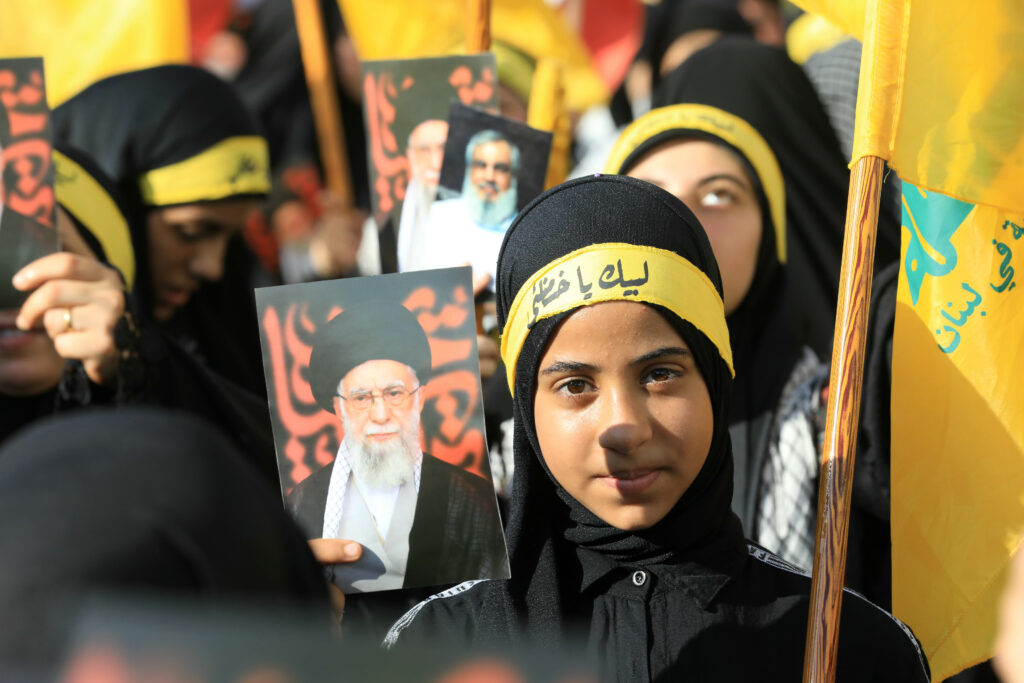
Iran’s supreme leader, Ayatollah Ali Khamenei, has weathered a series of challenges but Israel’s unprecedented strikes mark his most serious crisis yet, threatening both the clerical system he leads and his own physical survival.Khamenei, Iran’s top leader since the death of Ayatollah Ruhollah Khomeini in 1989, has ruled in the face of sanctions, near constant international tensions as well as protests that were ruthlessly repressed, most recently the 2022-2023 women-led uprising.With Khamenei aged 86, the issue of succession was already looming large in Iran. But his moves now will have a decisive impact on the future on the system of which he has been a pillar since the 1979 Islamic Revolution that ousted the shah.Meanwhile, his own physical survival could be at stake, with a senior American official saying Donald Trump rejected an Israeli plan to kill Khamenei but Israel is still not ruling out such a move.”Khamenei is at the twilight of his rule, at the age 86, and already much of the daily command of the regime is not up to him but to various factions who are vying for the future,” said Arash Azizi, senior fellow at Boston University.”This process was already underway and the current war only accelerates it,” he told AFP.- ‘Self-inflicted dilemma’ -Israel’s success in killing key Iranian figures, including the army chief and head of the Revolutionary Guards, has illustrated how Israeli intelligence can track Iranian leaders and raised the question of whether Prime Minister Benjamin Netanyahu could give an order to seek to kill Khamenei himself.The movements of the supreme leader, who has not left Iran since taking up the position and made his last foreign visit to North Korea in 1989 while still president, are subject to the tightest security and secrecy.”It is possible that they might have a regime change plan of their own, either by supporting or semi-supporting a coup inside the regime or by continuing to kill at the highest level hoping that this leads to a fundamental shift in posture toward Israel or something of a regime change,” said Azizi.Karim Sadjadpour, senior fellow at the Carnegie Endowment for International Peace, said Khamenei faced a “self-inflicted dilemma” and already lacked the “physical and cognitive acumen to lead Iran into a high-tech war”.”A weak response to Israel further diminishes his authority, a strong response could further jeopardise his survival, and that of his regime,” he said.- ‘Prided himself’ -While keeping up the rhetoric of confrontation with the US and Israel and backing proxies like Hezbollah in Lebanon, Khamenei long kept Iran out of direct conflict with its foes. But the current strikes appear to represent a sudden end to this strategy.”He has prided himself on deterring conflict away from Iran’s borders since he assumed the supreme leadership in 1989,” said Jason Brodsky, policy director of US-based United Against Nuclear Iran. “So Khamenei has badly miscalculated.”Brodsky said the nearest comparison to the current situation were the attacks against leaders blamed on the opposition in the early 1980s which saw the then president killed and Khamenei himself wounded in a 1981 assassination attempt.”It will be an experience that Khamenei will undoubtedly draw upon in the current context,” Brodsky told AFP.”But what we are witnessing today is on a completely different level of magnitude. And it’s occurring at a pace that threatens to overwhelm the capacity of Tehran.”The scale of Israel’s first attacks overnight Thursday to Friday, ahead of what were supposed to be a new round of talks in Oman on the Iranian nuclear programme, took the leadership by surprise at a time when it has been on the lookout for any further protests amid economic hardship.”Indeed, the strikes have intensified already simmering tensions, and many Iranians want to see the Islamic republic gone. Crucially, however, most of them do not want this outcome to come at the cost of bloodshed and war,” said Holly Dagres, senior fellow at The Washington Institute.- ‘Stay strong’ -In an interview with Fox News, Netanyahu suggested that “regime change” could be the outcome of the Israeli strikes, while insisting that it would be for the Iranian people to bring this about.”It could certainly be the result as the Iran regime is very weak,” he said, claiming that “80 percent of the people would throw these theological thugs out”.Asked if there was an Israeli plan to kill Khamenei that had been vetoed by Washington, Netanyahu replied: “We do what we need to do, we will do what we need to do and I think the United States knows what is good for the United States”.The Iranian opposition, both in exile and inside the country, remains riven by division. One of its most prominent representatives Reza Pahlavi, the son of the last shah Mohammad Reza Pahlavi and who has warm relations with Israel, has told Iranians: “Stay strong and we will win.”So far, however, there have been no reports of mass protests, although some Persian-language television channels based abroad have broadcast images of groups shouting anti-Khamenei slogans.Azizi cautioned: “The idea that this ends in a popular uprising that changes the regime or gives to power to someone in the Iranian opposition abroad has no basis in reality.”

Iran and Israel exchange deadly strikes in spiralling air war

Iran launched missiles at Israeli cities Monday after Israeli strikes deep inside the Islamic republic, raising Israel’s death toll by 11 on day four of an escalating air war.After decades of enmity and a prolonged shadow war, Israel on Friday launched a surprise aerial campaign targeting sites across Iran, saying the attacks aimed to prevent its arch-foe from acquiring atomic weapons — a charge Tehran denies.Israel’s strikes have so far killed at least 224 people, including top military commanders, nuclear scientists and civilians, according to Iranian authorities.In retaliation, Iran’s Revolutionary Guards said it had “successfully” struck Israel with a salvo of missiles and warned of “effective, targeted and more devastating operations” to come.The Iranian attacks hit Tel Aviv, Bnei Brak, Petah Tikva and Haifa — with shattered homes, smouldering wreckage and stunned residents picking through debris.”The entire shelter shook,” said Shlomi Biton, who had taken cover with his five children in Haifa. “There were many, many explosions.”Ido, a student whose house was hit, recalled scenes of panic. “There were 12 to 13 children there in the shelter screaming.”The death toll in Israel rose by 11 on Monday, the prime minister’s office said, bringing the total since Friday to 24.US ambassador to Israel Mike Huckabee said the missile barrage also lightly damaged a building used by the American embassy in Tel Aviv.In Iran, foreign ministry spokesman Esmaeil Baqaei condemned as a “war crime” an Israeli strike that damaged a hospital in the western city of Kermanshah. A previous report said a nearby workshop had been the target.- ‘I will not leave’ -Iran’s missile attack followed waves of intense Israeli air raids that struck targets across the country — from the western border with Iraq to Tehran and as far east as Mashhad, where the airport was hit.While some people fled Tehran, others vowed to stay.”It is natural that war has its own stress, but I will not leave my city,” said Shokouh Razzazi, 31, in the capital, where the Grand Bazaar was closed amid the ongoing Israeli strikes.The escalation has sparked growing international concern.China urged both sides to “immediately take measures to cool down the tensions” and avoid plunging the region into deeper turmoil.European Commission president Ursula von der Leyen also called for calm, telling Israeli Prime Minister Benjamin Netanyahu that “a negotiated solution is, in the long term, the best solution”.Though critical of Israel’s campaign in Gaza, she blamed Iran for the latest crisis, citing the UN nuclear watchdog’s findings that it was not in compliance with its obligations.”In this context, Israel has the right to defend itself. Iran is the principal source of regional instability,” she said.Iran, in turn, urged the International Atomic Energy Agency to condemn Israeli strikes on its nuclear facilities.”We expect the (IAEA) Board of Governors and the director general to take a firm position in condemning this act and holding the regime (Israel) accountable,” said spokesman Baqaei.Turkish President Recep Tayyip Erdogan meanwhile told his Iranian counterpart in a phone call that Ankara is ready to play a “facilitating role” to end the conflict.- ‘Make a deal’ -The Israeli military said Monday it had destroyed 120 missile launchers — one third of Iran’s total.In a televised address, Iranian armed forces spokesman Colonel Reza Sayyad vowed a “devastating response” to Israeli attacks.”Leave the occupied territories (Israel) because they will certainly no longer be habitable in the future,” he said, adding shelters would “not guarantee security”.Addressing Iran’s parliament, President Masoud Pezeshkian urged citizens to “stand strong against this genocidal criminal aggression with unity and coherence”.US President Donald Trump insisted Washington had “nothing to do” with Israel’s military campaign but warned any Iranian attack on American interests would trigger “the full strength and might” of the US military.On Sunday, Trump urged both sides to “make a deal” while expressing doubts about near-term peace prospects.”Sometimes they have to fight it out, but we’re going to see what happens,” he said.A senior US official told AFP Trump had intervened to prevent Israel from carrying out an assassination of Iran’s supreme leader, Ayatollah Ali Khamenei.”We found out that the Israelis had plans to hit Iran’s supreme leader. President Trump was against it and we told the Israelis not to,” said the official, speaking on condition of anonymity.Asked by Fox News whether regime change in Iran was one of Israel’s objectives, Netanyahu said: “It certainly could be the result, because the Iran regime is very weak.”As hostilities intensified, Iran said it was scrapping planned nuclear talks with the United States, calling dialogue “meaningless” under bombardment.burs-dv/jsa