
AFP Asia Business
Iran MPs’ vote to suspend IAEA cooperation is ‘wrong signal’: Berlin
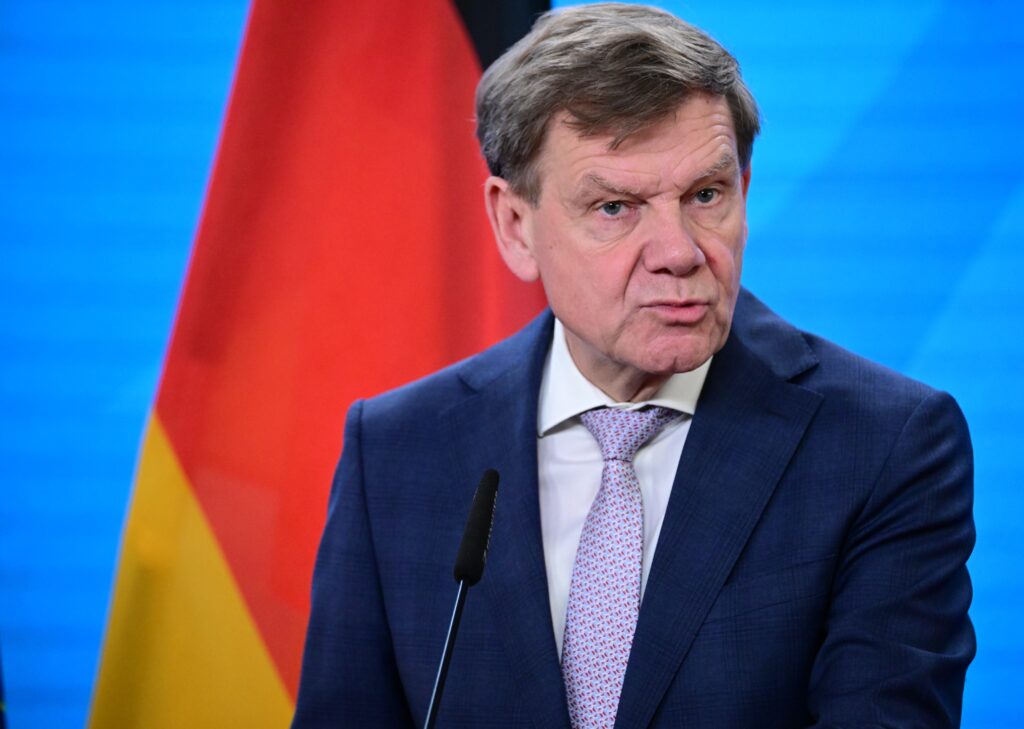
Germany on Thursday urged Iran to keep working with the UN’s nuclear watchdog, labelling a vote by Iranian lawmakers to halt cooperation with the IAEA “a totally wrong signal”.Foreign Minister Johann Wadephul told journalists that Germany “urges the Iranian government not to go down this path”.Wadephul’s comments came a day after the vote in Iran’s parliament, and following a 12-day war that saw Israeli and US strikes on nuclear facilities.According to Iranian state TV, parliament speaker Mohammad Bagher Ghalibaf said the International Atomic Energy Agency “refused to even marginally condemn the attack on Iran’s nuclear facilities” and had “put its international credibility up for auction”.The decision of the Iranian parliament still requires the approval of Iran’s Guardian Council, a body empowered to vet legislation.Wadephul also said there were “hopeful signs” of US-Iran talks after President Donald Trump said they would take place next week.”We are directing all our diplomatic efforts towards finding a binding agreement as soon as possible,” Wadephul said, during a joint news conference with his Canadian counterpart Anita Anand.He added that the so-called E3 grouping of Britain, France and Germany would “play a central role” in any talks and that “Iran expressly wants a European component”.
China hosts Iran, Russia defence ministers against backdrop of ‘turmoil’
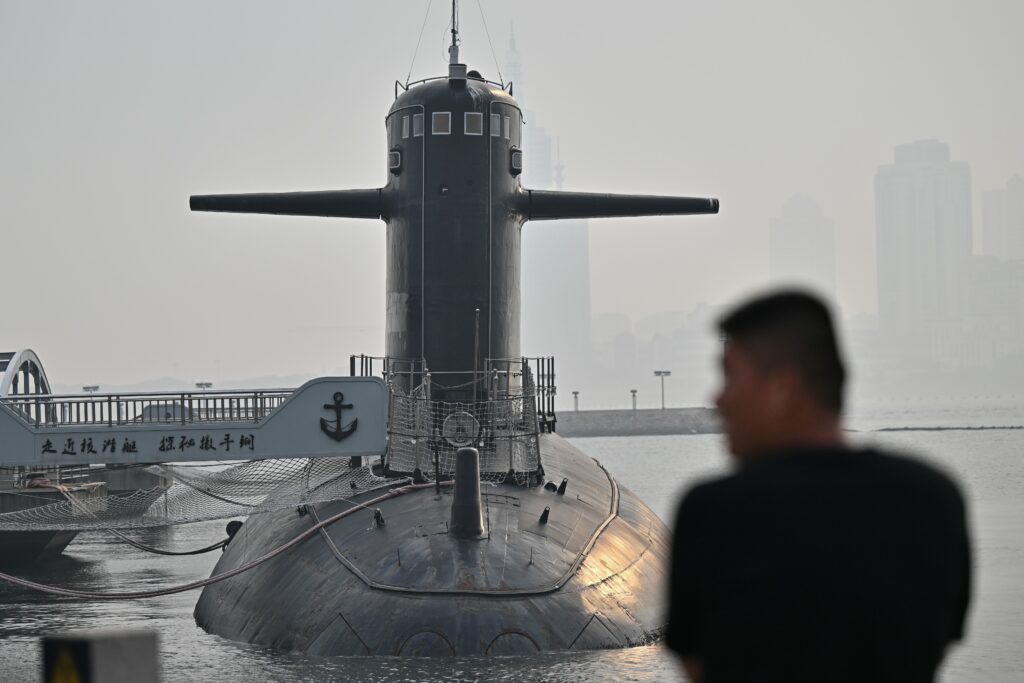
China hosted defence ministers from Iran and Russia for a meeting in its eastern seaside city of Qingdao on Thursday against the backdrop of war in the Middle East and a summit of NATO countries in Europe that agreed to boost military spending.Beijing has long sought to present the 10-member Shanghai Cooperation Organisation (SCO) as a counterweight to Western-led power blocs and has pushed to strengthen collaboration between its member countries in politics, security, trade and science.The Qingdao meeting of the organisation’s top defence officials comes as a fledgling ceasefire between Israel and Iran holds after 12 days of fighting between the arch-foes.It is also being held the day after a summit of North Atlantic Treaty Organization (NATO) leaders in The Hague, where members agreed to ramp up their defence spending to satisfy US President Donald Trump.Beijing’s ties with Moscow are also in the spotlight.China has portrayed itself as a neutral party in Russia’s war with Ukraine, although Western governments say its close ties have given Moscow crucial economic and diplomatic support.Russian Defence Minister Andrei Belousov painted a bleak picture of a world seeing “worsening geopolitical tensions” when he addressed his counterparts at the meeting.”The current military and political situation in the world remains difficult and shows signs of further deterioration,” he said, according to a Russian defence ministry statement.His Chinese counterpart Dong Jun also framed Thursday’s meeting in Qingdao, home to a major Chinese naval base, as a counterweight to a world “marked by intertwined turmoil and changes”.”It is all the more important for the Shanghai Cooperation Organization to play its role as an anchor of stability,” he said, according to state news agency Xinhua.- Backing for Iran? -Recent fighting between Israel, Iran and the United States was also likely discussed in Qingdao.Beijing refrained from offering anything more than diplomatic support to its close partner Tehran throughout that conflict, reflecting its limited leverage in the region and reluctance to worsen relations with the United States. “Public backing for Iran will come in the form of words, rather than deeds,” James Char, an expert on the Chinese army at Nanyang Technological University in Singapore, told AFP.”Other than condemning the US strikes on Iran, Beijing can be expected to continue treading cautiously in the Middle East’s security issues and would not want to be dragged into the region’s security challenges,” he said.Iran’s defence minister will likely “discuss with China the supply of weapons but I doubt China would agree”, said Andrea Ghiselli, an expert in China foreign policy and a lecturer at Exeter University.”It would be seen as provocative by both Israel… and, even more important for China, the US, with which Beijing is trying to stabilise relations,” Ghiselli said.India’s Defence Minister Rajnath Singh, also in attendance in Qingdao, said SCO members should “collectively aspire to fulfil the aspirations and expectations of our people as well as tackle today’s challenges”.”The world we live in is undergoing a drastic transformation. Globalisation, which once brought us closer together, has been losing momentum,” he said in comments his office posted on social media.
US to offer new defense of strikes on Iran nuclear sites
US Defense Secretary Pete Hegseth is set to hold a news conference on Thursday to offer a fresh assessment of strikes on Iran’s nuclear facilities, following a stinging row over how much American bombardment set back Tehran’s nuclear program.After waves of Israeli attacks on nuclear and military sites and retaliatory missile fire from Iran since June 13, the United States bombed three key Iranian atomic facilities at the weekend.The extent of the damage in Iran, where Israel said it had acted to stop an imminent nuclear threat, has become the subject of profound disagreement in the United States.An initial classified assessment, first reported by CNN, was said to have concluded that the strike did not destroy key components and that Iran’s nuclear program was set back only months at most.Another key question raised by experts is whether Iran, preparing for the strike, moved out some 400 kilogram (880 pounds) of enriched uranium — which could now be hidden elsewhere in the vast country.The US administration has hit back furiously, with Trump repeatedly saying the attack “obliterated” Iran’s nuclear facilities, including the key site of Fordo buried inside a mountain.”I can tell you, the United States had no indication that that enriched uranium was moved prior to the strikes, as I also saw falsely reported,” White House Press Secretary Karoline Leavitt told Fox News.”As for what’s on the ground right now, it’s buried under miles and miles of rubble because of the success of these strikes on Saturday evening,” she said.Trump said that Hegseth, whom he dubbed “war” secretary, would hold a news conference at 8 am (1200 GMT) on Thursday to “fight for the dignity of our great American pilots”.CIA chief John Ratcliffe said in a statement on Wednesday that “several key Iranian nuclear facilities were destroyed and would have to be rebuilt over the course of years”.The Israeli military said it had delivered a “significant” blow to Iran’s nuclear sites but that it was “still early” to fully assess the damage.Israeli Prime Minister Benjamin Netanyahu announced that “we have thwarted Iran’s nuclear project”.”And if anyone in Iran tries to rebuild it, we will act with the same determination, with the same intensity, to foil any attempt,” he said.- Nuclear talks? -Iranian foreign ministry spokesman Esmaeil Baqaei told Al Jazeera that “nuclear installations have been badly damaged, that’s for sure”.After the war derailed nuclear talks between Iran and the United States, Trump said Washington would hold discussions with Tehran next week, with his special envoy Steve Witkoff expressing hope “for a comprehensive peace agreement”.Trump told reporters that Israel and Iran were “both tired, exhausted”, before going on to say that talks were planned with Iran next week.”We may sign an agreement. I don’t know,” he added.Iran has systematically denied seeking a nuclear weapon while defending its “legitimate rights” to the peaceful use of atomic energy.It has also said it was willing to return to nuclear negotiations with Washington.In both Iran and Israel, authorities have gradually lifted wartime restrictions.Iran on Wednesday reopened the airspace over the country’s east, without allowing yet flights to and from the capital Tehran.In the Israeli coastal hub of Tel Aviv, 45-year-old engineer Yossi Bin welcomed the ceasefire: “Finally, we can sleep peacefully. We feel better, less worried… and I hope it stays that way.”- State funeral -While Iran and Israel have been locked in a shadow war for decades, their 12-day conflict was by far the most destructive confrontation between them.The Israeli strikes on Iran killed at least 627 civilians, Tehran’s health ministry said.Iran’s attacks on Israel killed 28 people, according to official figures.According to Mehr news agency, the funeral of Revolutionary Guard commander Hossein Salami, who was killed in an Israeli strike, will no longer be held in his hometown on Thursday.Instead, a state funeral will be held on Saturday in Tehran for top commanders including Salami and nuclear scientists killed in the war.burs-ami/ser
China hosts Iranian, Russian defence ministers against backdrop of ‘momentous change’
China hosted defence ministers from Iran and Russia for a meeting in its eastern seaside city of Qingdao on Thursday against the backdrop of war in the Middle East and a summit of NATO countries in Europe that agreed to boost military spending.Beijing has long sought to present the 10-member Shanghai Cooperation Organisation (SCO) as a counterweight to Western-led power blocs and has pushed to strengthen collaboration between its member countries in politics, security, trade and science.The Qingdao meeting of the organisation’s top defence officials comes as a fledgling ceasefire between Israel and Iran holds after 12 days of fighting between the arch-foes.It is also being held the day after a summit of North Atlantic Treaty Organization (NATO) leaders in The Hague, where members agreed to ramp up their defence spending to satisfy US President Donald Trump.Beijing’s ties with Moscow are also in the spotlight.China has portrayed itself as a neutral party in Russia’s war with Ukraine, although Western governments say its close ties have given Moscow crucial economic and diplomatic support.Russian Defence Minister Andrei Belousov painted a bleak picture of a world seeing “worsening geopolitical tensions” when he addressed his counterparts at the meeting.”The current military and political situation in the world remains difficult and shows signs of further deterioration,” he said, according to a statement by the Russian defence ministry.His Chinese counterpart Dong Jun also framed Thursday’s meeting in Qingdao, home to a major Chinese naval base, as a counterweight to a world in “chaos and instability”.”As momentous changes of the century accelerate, unilateralism and protectionism are on the rise,” Dong said as he welcomed defence chiefs from Russia, Iran, Pakistan, Belarus and elsewhere on Wednesday, according to state news agency Xinhua.”Hegemonic, domineering and bullying acts severely undermine the international order,” he warned.He urged his counterparts to “take more robust actions to jointly safeguard the environment for peaceful development”.- Backing for Iran? -Recent fighting between Israel, Iran and the United States will likely also be discussed in Qingdao.Beijing refrained from offering anything more than diplomatic support to its close partner Tehran throughout that conflict, reflecting its limited leverage in the region and reluctance to worsen relations with the United States. “Public backing for Iran will come in the form of words, rather than deeds,” James Char, an expert on the Chinese army at Nanyang Technological University in Singapore, told AFP.”Other than condemning the US strikes on Iran, Beijing can be expected to continue treading cautiously in the Middle East’s security issues and would not want to be dragged into the region’s security challenges,” he said.Iran’s defence minister will likely “discuss with China the supply of weapons but I doubt China would agree”, said Andrea Ghiselli, an expert in China foreign policy and a lecturer at Exeter University.”It would be seen as provocative by both Israel… and, even more important for China, the US, with which Beijing is trying to stabilise relations,” Ghiselli said.India’s Defence Minister Rajnath Singh, also in attendance in Qingdao, said SCO members should “collectively aspire to fulfil the aspirations and expectations of our people as well as tackle today’s challenges”.”The world we live in is undergoing a drastic transformation. Globalisation, which once brought us closer together, has been losing momentum,” he said in comments his office posted on social media platform X.
The reluctant fame of Gazan photojournalist Motaz Azaiza
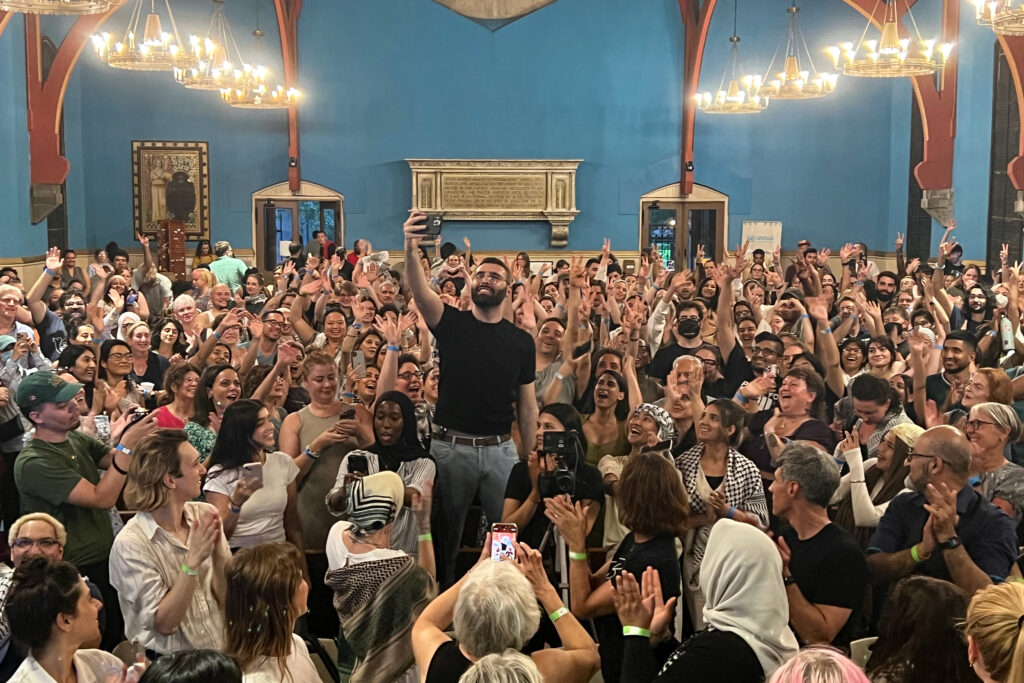
At a church in Philadelphia, Pennsylvania, hundreds of people gathered recently for a weeknight charity fundraiser hosted by a celebrity guest.The venue was not announced in advance due to security concerns, and attendance cost at least $60 a pop — with some spending $1,000 to get a photo with the host.Yet, the event was not a gala hosted by a movie star or famed politician, but by a photojournalist: Gaza native Motaz Azaiza, whose images of the Israeli assault following the October 7, 2023 attack by Hamas launched him to international recognition.Wearing a black T-shirt, jeans, sneakers and gold-framed glasses, the 26-year-old boasts nearly 17 million followers on Instagram for his images from the war in Gaza.”I wish you would have known me without the genocide,” Azaiza told the crowd, his voice faltering.Before the war, Azaiza was a relative unknown, posting photos from his daily life in Deir al-Balah in the central Gaza Strip to his roughly 25,000 Instagram followers at the time.But as soon as the first strikes from Israel hit Gaza, he became a war photographer by virtue of circumstance, and his wartime posts soon went viral.”As a photojournalist, I can’t watch this like anyone else, I’m from there, this is my home,” Azaiza said.- ‘I want to go back’ -After surviving 108 days of Israeli bombardment, Azaiza managed to escape Gaza via Egypt, and he has since become an ambassador of sorts for the Palestinian territory, sharing the story of his people as the conflict rages on.”Every time you feel like you regret leaving, but then you lose a friend, you lose a family, you say, OK, I saved my life,” Azaiza said.Before the war, Azaiza had been hired to manage the online content for the United Nations Relief and Works Agency for Palestine Refugees in the Near East (UNRWA), the humanitarian agency accused by Israel of providing cover for Hamas militants.This month, he is touring the United States to raise money for UNRWA USA, a nonprofit which collects funding for the agency.”I can’t handle this much of fame…it’s a real big responsibility,” Azaiza told AFP from the fundraiser in Philadelphia.”This is not me… I’m waiting to the genocide to stop. I want to go back to Gaza, continue my work capturing pictures,” he added.At one point he embedded himself in the crowd, posing for a selfie before shaking hands with donors.At the fundraiser, a UNRWA USA official solicited donations.”Is there someone who wants to give $20,000? I would like to have $20,000. Nobody? Is there someone who want to give $10,000? I would like to have $10,000,” the official calls out.Once the call lowered to $5,000, five hands raised, and even more went up when asked for donations of $2,000 and $1,000.One of the donors, Nabeel Sarwar, told AFP Azaiza’s photographs “humanize” the people in Gaza.”When you see a picture, when you see a child, you relate to that child, you relate to the body language, you relate to the dust on their face, the hunger, the sadness on their face,” Sarwar said.”I think it’s those pictures that really brought home towards the real tragedy of what’s going on in Gaza.”- ‘A million words’ – Veronica Murgulescu, a 25-year-old medical student from Philadelphia, concurred.”I think that people like Motaz and other Gazan journalists have really stuck a chord with us, because you can sense the authenticity,” she said.”The mainstream media that we have here in the US, at least, and in the West, it lacks authenticity,” she added.Sahar Khamis, a communications professor at the University of Maryland who specializes in Arab and Muslim media in the Middle East, said Gazan journalists like Azaiza who have become social media influencers “reshape public opinion, especially among youth, not just in the Arab world, not just in the Middle East, but globally and internationally, including in the United States.””The visuals are very, very important and very powerful and very compelling…as we know in journalism, that one picture equals a thousand words.”And in the case of war and conflict, it can equal a million words, because you can tell through these short videos and short images and photos a lot of things that you cannot say in a whole essay.”