
AFP Asia Business
Iran warns ‘finger on trigger’ as Trump says Tehran wants talks
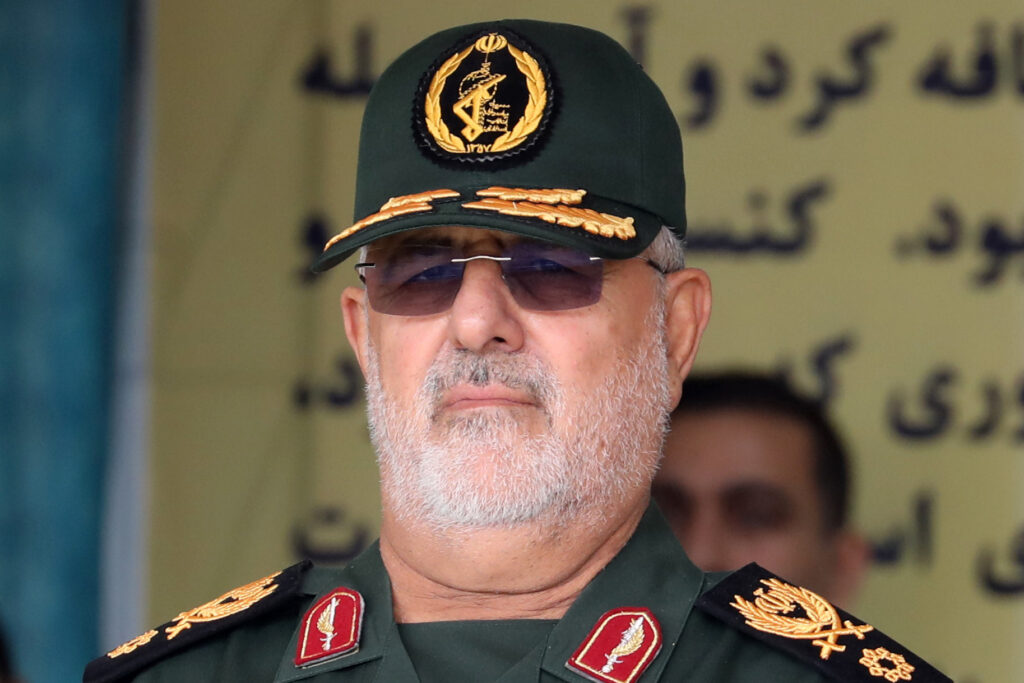
The commander of Iran’s Revolutionary Guards warned Washington Thursday that the force had its “finger on the trigger” in the wake of mass protests, as US President Donald Trump said Tehran still appeared interested in talks.Trump has repeatedly left open the option of new military action against Iran after Washington backed and joined Israel’s 12-day war in June aimed at degrading Iranian nuclear and ballistic missile programmes.Trump said Thursday a US naval “armada” was heading toward the Gulf, adding: “We’re watching Iran.”A fortnight of protests starting in late December shook Iran’s clerical leadership under supreme leader Ayatollah Ali Khamenei, but the movement has petered out in the face of a crackdown that activists say killed thousands, accompanied by an unprecedented internet blackout.The prospect of immediate American action against Tehran appears to have receded, with both sides insisting on giving diplomacy a chance.On his way back from the World Economic Forum in Davos, Trump told reporters on Air Force One the United States was sending a “massive fleet” toward Iran “just in case.””I’d rather not see anything happen but we’re watching them very closely,” he added. In a standoff marked by seesawing rhetoric, Trump had on Tuesday warned Iran’s leaders the United States would “wipe them off the face of this Earth” if there was any attack on his life in response to a strike targeting Khamenei.Iranian President Masoud Pezeshkian in a speech Thursday accused the United States and Israel of stoking the protests as a “cowardly revenge… for the defeat in the 12-Day War”.- ‘Legitimate targets’ -Guards commander General Mohammad Pakpour warned Israel and the United States “to avoid any miscalculations, by learning from historical experiences and what they learned in the 12-day imposed war, so that they do not face a more painful and regrettable fate”.”The Islamic Revolutionary Guard Corps and dear Iran have their finger on the trigger, more prepared than ever, ready to carry out the orders and measures of the supreme commander-in-chief,” he said.Pakpour’s comments came in a written statement quoted by state television marking the national day in Iran to celebrate the Guards, whose mission is to protect the 1979 Islamic revolution from internal and external threats.Activists accuse the Guards of playing a frontline role in the deadly crackdown on protests. The group is sanctioned as a terrorist entity by countries including Australia, Canada and the United States, and campaigners have long urged similar moves from the EU and UK.Another senior military figure, General Ali Abdollahi Aliabadi who leads the Iranian joint command headquarters, meanwhile warned that if America attacked, “all US interests, bases and centres of influence” would be “legitimate targets” for Iran’s armed forces.- Real toll? -Giving their first official toll from the protests, Iranian authorities on Wednesday said 3,117 people were killed.The statement from Iran’s foundation for martyrs and veterans sought to draw a distinction between “martyrs”, members of security forces or innocent bystanders, and what it called US-backed “rioters”.Of its toll of 3,117, it said 2,427 people were “martyrs”.Pezeshkian said Thursday that protest “is the natural right of citizens”, but a distinction had to be drawn between protesters “whose hands are stained with the blood of innocent people”.However, rights groups say the heavy toll was caused by security forces firing directly on protesters and that the actual number of dead could be far higher, even more than 20,000.Efforts to confirm the scale of the toll have been hampered by the national internet shutdown, with monitor Netblocks saying Thursday the blackout had surpassed “two full weeks”.”All the evidence gradually emerging from inside Iran shows that the real number of people killed in the protests is far higher than the official figure,” said the director of the Iran Human Rights NGO Mahmood Amiry-Moghaddam, saying the authorities’ toll has “no credibility whatsoever”.Warning that their own current tolls do not reflect the true number of fatalities, IHR says it has verified at least 3,428 killings. Another NGO, US-based Human Rights Activists News Agency (HRANA), has documented 4,902 deaths.According to HRANA, at least 26,541 people have been arrested. On Thursday alone, state TV announced over 200 more arrests in provinces including Kermanshah in the west and Isfahan in central Iran.
Trump unveils ‘Board of Peace’, ‘New Gaza’ plans at Davos
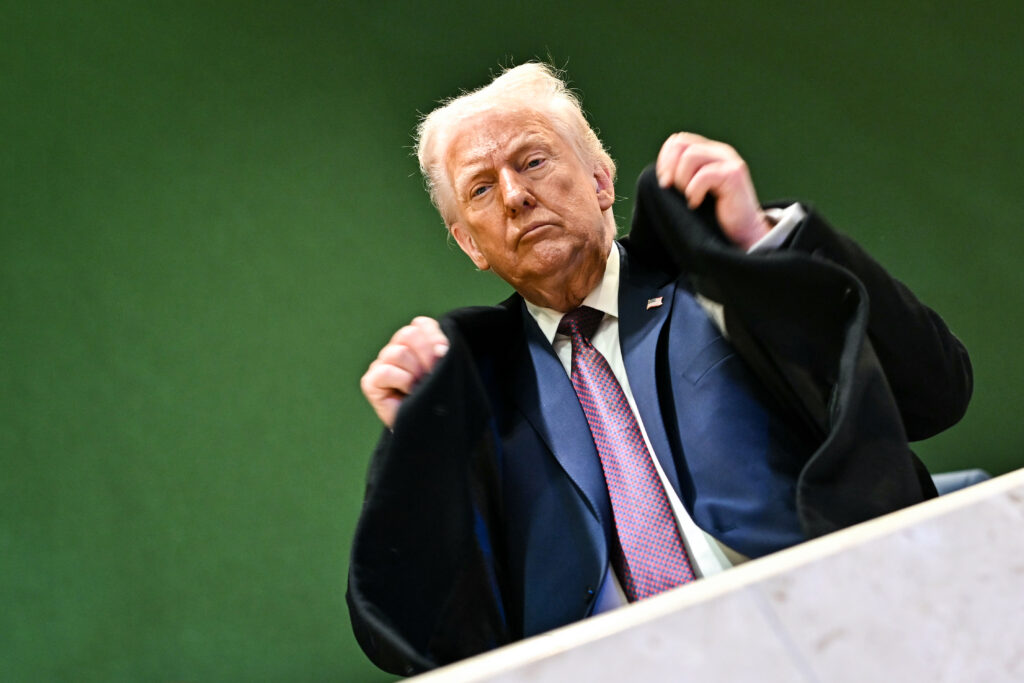
US President Donald Trump headed home from Davos on Thursday after unveiling his new “Board of Peace” and once again casting himself as a global peacemaker, despite widespread scepticism over a plan that aims to rewrite the world order.Trump officials also unveiled ambitious plans for a “New Gaza” during the ceremony at the World Economic Forum, the US leader describing the devastated Palestinian territory as “great real estate”.Trump later met with Ukrainian President Volodymyr Zelensky, with both describing their talks as good and the US leader saying Russia’s nearly four-year-old war with Kyiv “has to end”.Zelensky announced “trilateral” talks between Washington, Moscow and Kyiv in the coming days, and said he had reached agreement with Trump on post-war US security guarantees for Ukraine — though he conceded that dialogue with the US president was “not simple”.And the Ukrainian leader hit out at European allies for being too slow to counter Russian President Vladimir Putin, asking: “What’s missing: time or political will?”- ‘Board of Peace’ -Trump’s “Board of Peace” was created after he expressed frustration at failing to win the Nobel Peace Prize and ramped up accusations the United Nations had failed to resolve a host of international conflicts.”Well this is exciting,” Trump said as he was joined on stage by leaders and officials from 19 countries to sign the board’s founding charter in the Swiss ski resort.”This board has the chance to be one of the most consequential bodies ever created,” he said.The body, of which Trump is the chairman, was initially designed to oversee the Gaza truce and the reconstruction of the strip after the war between Hamas and Israel.But its purpose has since morphed into resolving all sorts of international conflicts, sparking concerns that Trump wants to create a rival to the UN.Key US allies including France and Britain have expressed doubts.Countries have been asked to pay $1 billion for permanent membership of the board, and the invitation for Putin, whose country invaded Ukraine in 2022, has drawn criticism.Trump said the organisation would work “in conjunction” with the United Nations.- Gaza ‘master plan’ -A large part of the ceremony was devoted to talking about its plans for shattered Gaza.Gaza’s newly appointed administrator said in a video message that the Rafah border crossing between Egypt and the Gaza Strip would reopen in both directions next week.Then Trump’s son-in-law Jared Kushner, like the president a former property developer, showed slides of what he billed as a “master plan” for Gaza’s reconstruction.They included maps of new settlements and artist renderings of gleaming seafront hotels and apartments under the caption “New Gaza”.”It could be a hope. It could be a destination,” Kushner said.Trump told Hamas to disarm under the next phase of the Gaza ceasefire accord or it would be the “end of them”. He added that he was ready to “talk” with regional foe Iran.- ‘Not so popular’ -The representatives of the 19 countries on stage with Trump included two close populist allies, Hungarian Prime Minister Viktor Orban and Argentine President Javier Milei, and officials from a host of Middle Eastern monarchies keen to curry favour.Trump said he expected around 50 countries to join — including Putin, though the latter said he was still studying the invitation.Zelensky, also invited, has said he could not envisage working alongside the Russian leader.Trump said he was hopeful of a deal soon to end the Ukraine war, and Zelensky told the forum that documents being drafted with Washington to end the war were “nearly, nearly ready”.Zelensky has voiced concern that Trump’s push to seize Greenland — which dominated Davos on Wednesday — could divert focus away from Russia’s invasion.Tensions over Greenland eased, however, after Trump announced a “framework of a future deal” over the Danish territory and dropped his threat to hit European allies with new tariffs.Greenland’s Prime Minister Jens-Frederik Nielsen said the Arctic island wanted a “peaceful dialogue” with Washington and it wanted to remain part of Denmark for now.”We have some red lines,” he told a press conference. “We have to respect our territorial integrity. We have to respect international law, sovereignty.”Global stock markets rallied with relief at Trump’s Greenland climbdown, riding what some called the “TACO” trade — for “Trump Always Chickens Out”.But as European leaders gathered in Brussels for a summit, worries lingered over lasting damage to transatlantic ties.burs-dk-lt/jhb/jj