AFP Asia Business

US envoy says Hezbollah involvement in Iran-Israel war would be ‘very bad decision’

The US special envoy for Syria Tom Barrack warned Lebanese militant group Hezbollah on Thursday against getting involved in the war between its main backer Iran and Israel.Barrack, who is also the US ambassador to Turkey, is on his first visit to Beirut, where he met top Lebanese officials including parliament speaker Nabih Berri, an ally of Hezbollah.”I can say on behalf of President (Donald) Trump… that would be a very, very, very bad decision,” Barrack said after his meeting with Berri, responding to a question on what the US position would be on any involvement by Hezbollah in the war.In a statement, Hezbollah leader Naim Qassem said the group will “act as we see fit”.”Tyrannical America and criminal Israel will not be able to subjugate the Iranian people and the Islamic Revolutionary Guard Corps,” Qassem said.Hezbollah, he added, still had “the responsibility to stand by Iran and provide it with all forms of support that contribute to putting an end to this tyranny and oppression”.Hezbollah suffered devastating losses in its war against Israel last year, which ended with a ceasefire agreement in November.When Israel struck Iran last week, the Lebanese foreign ministry said that it was “continuing its contacts” to spare the country from being dragged into any conflict.In a statement shared by the Lebanese presidency after his meeting with Barrack, President Joseph Aoun said that “communications are ongoing to achieve the goal of weapons monopoly at both the Lebanese and Palestinian levels, and will intensify after stability returns… to the region”.According to the November ceasefire agreement, Hezbollah must pull its fighters back north of the Litani river, some 30 kilometres (20 miles) from the Israeli border, leaving the Lebanese army and United Nations peacekeepers as the only armed parties in the area.Israel is required to fully withdraw its troops but has kept them in five locations in Lebanon it deems “strategic”.Lebanon has also recently ramped up efforts to disarm Palestinian militant groups, which for decades had been in charge of Palestinian refugee camps in the country.After his meeting with Barrack, Prime Minister Nawaf Salam expressed Lebanon’s “commitment to the choice of security and stability and rejection of being dragged into the ongoing war in the region”.He also asked the US envoy “to assist Lebanon in pressuring Israel for its complete withdrawal from the occupied Lebanese territories”.Despite the ongoing ceasefire, Israel has carried out repeated strikes in Lebanon, which it has said will continue until Hezbollah has been disarmed.An Israeli strike killed one person in the southern village of Hula on Thursday, the Lebanese health ministry said.

Israel welcomes ‘all help’ in striking Iran, Trump to decide ‘within two weeks’

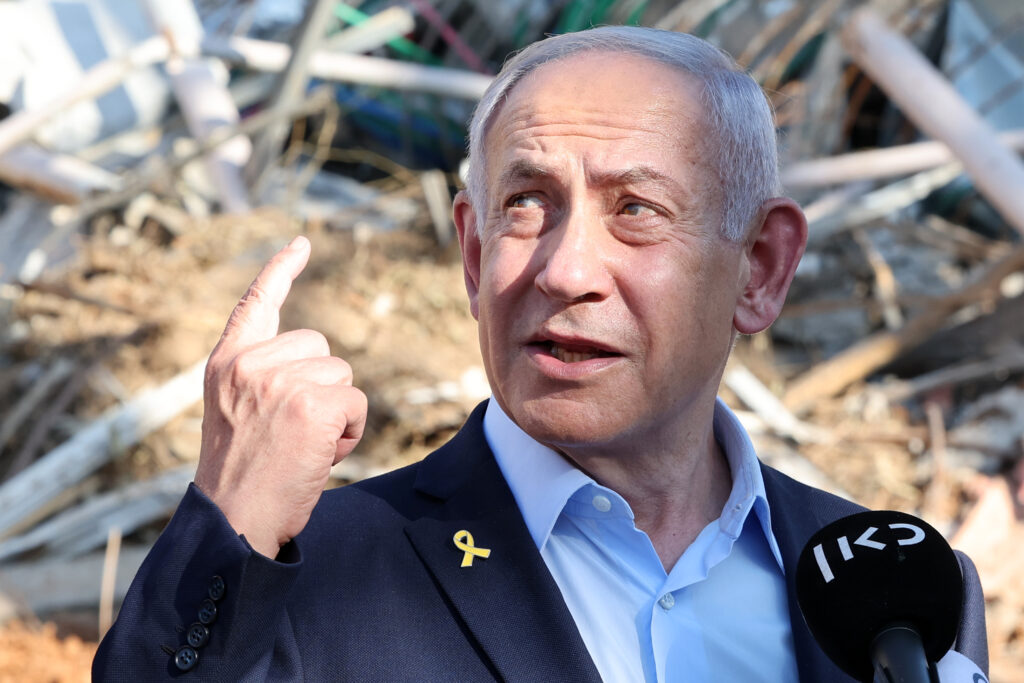
Israel on Thursday welcomed “all help” in striking Iran’s nuclear sites as President Donald Trump dangled the prospect of US involvement in the war, saying he will decide “within the next two weeks”.Israel, claiming Iran was on the verge of developing a nuclear weapon, launched air strikes against its arch-enemy last week, triggering deadly exchanges.After an Iranian missile hit an Israeli hospital on Thursday, in an attack that Tehran said targeted a military and intelligence base, Defence Minister Israel Katz issued a threat against Iran’s supreme leader, spiking tensions in the week-old war.Prime Minister Benjamin Netanyahu said Iran would “pay a heavy price” for the strike on Soroka Hospital in the southern city of Beersheba that left 40 people injured and the facility in flames.In an televised interview later on Thursday, Netanyahu said Israel is “capable of striking all of Iran’s nuclear facilities” but “all help is welcome”.”Trump will do what is good for for the United States, and I will do what is good for the State of Israel,” Netanyahu told public broadcaster Kan.Citing “the fact that there’s a substantial chance” to resume nuclear negotiations with Iran — which had been derailed by the Israeli attacks — Trump said in a statement he will decide “whether or not to go within the next two weeks”.Trump said on Wednesday that Iran had asked to send officials to the White House to negotiate a deal on its nuclear programme and end the conflict with Israel.Iran denied it would do so, but its Foreign Minister Abbas Araghchi is due to attend nuclear talks in Geneva on Friday with top diplomats from France, Britain, Germany and the European Union, officials and diplomats said.Meanwhile Russia, an Iranian ally, told the United States that joining the conflict would be an “extremely dangerous step”.Katz, in a stark warning for supreme leader Ayatollah Ali Khamenei, told reporters: “He considers the destruction of the State of Israel to be a goal. Such a man can no longer be allowed to exist.”Asked whether Israel plans to kill Khamenei, Netanyahu said: “No one is immune.”The latest escalation came on the seventh day of deadly exchanges between the two countries that have plunged the region into a new crisis, more than 20 months into the ongoing war in the Gaza Strip.- Panic -At Soroka, hospital director Shlomi Codish said 40 people were injured.”Several wards were completely demolished and there is extensive damage across the entire hospital,” he said.”It’s only medical professionals here, and patients… and look what happened to us,” ophthalmologist Wasim Hin told AFP. World Health Organization director-general Tedros Adhanom Ghebreyesus called attacks on health facilities “appalling”, while UN rights chief Volker Turk said civilians were being treated as “collateral damage”.In Iran, people fleeing Israel’s attacks described frightening scenes and difficult living conditions, including food shortages and limited internet access.”Those days and nights were very horrifying… hearing sirens, the wailing, the danger of being hit by missiles,” University of Tehran student Mohammad Hassan told AFP, after returning to his native Pakistan.”People are really panicking,” a 50-year-old Iranian pharmacist who did not want to be named told AFP at the Kapikoy crossing on the Turkish border.Any US involvement would be expected to involve the bombing of a crucial underground Iranian nuclear facility in Fordo, using specially developed bunker-busting bombs.The Wall Street Journal reported that Trump told aides he had approved attack plans but was holding off to see if Iran would give up its nuclear programme.The US president had favoured a diplomatic route to stop Iran from acquiring nuclear weapons — an ambition Tehran has consistently denied — seeking a deal to replace the 2015 agreement he tore up in his first term.- Nuclear sites -White House Press Secretary Karoline Leavitt claimed Iran was “a couple of weeks” away from producing an atomic bomb.”All they need is a decision from the supreme leader to do that,” she told reporters.Iran had been enriching uranium to 60 percent — far above the 3.67-percent limit set by the 2015 deal, but still short of the 90 percent needed for a nuclear warhead.Israel has maintained ambiguity on its own arsenal, but the Stockholm International Peace Research Institute says it has 90 nuclear warheads.A key Iranian government body, the Guardian Council, threatened a “harsh response” if “the criminal American government and its stupid president… take action against Islamic Iran”.On Thursday, Israel said it struck “dozens” of Iranian targets overnight, including the partially built Arak nuclear reactor and a uranium enrichment facility in Natanz.Iranian atomic energy agency chief Mohammad Eslami confirmed in a letter to the UN nuclear watchdog that the Arak reactor was hit, demanding action to stop Israel’s “violation of international regulations”.Iranian media reported blasts in Tehran late Thursday, while the Revolutionary Guards said more than 100 “combat and suicide” drones were launched at Israel.In the central Israeli city of Bat Yam, the body of a Ukrainian woman was found in a site hit on Sunday, taking the death toll in Israel from Iranian missiles since Friday to 25 people according to authorities.Iran said Sunday that Israeli strikes had killed at least 224 people, including military commanders, nuclear scientists and civilians.burs-sah-adp/th/ami/ysm

‘So sad’: Israelis shocked by Iran strike on hospital

The damage was hard to comprehend for many at Israel’s Soroka Hospital as staff took stock of the wreckage after a strike by an Iranian ballistic missile on Thursday left part of the facility in ruins.The strike in the southern city of Beersheba caused extensive damage to the hospital’s entrance hall and several departments, including the ophthalmology unit on the third floor of the surgical building.The explosion shattered windows, hurling glass across the hospital, brought ceilings crashing down, destroyed medical equipment and left corridors in disarray.”It’s so sad, I never thought something like this could happen. Never. It’s only medical professionals here, and patients… and look what happened to us,” Wasim Hin, an ophthalmologist at Soroka Medical Centre, told AFP. “Here we have new equipment, everything was destroyed.”Yael Tiv, an officer in the Home Front command, said the damage was the result of a “direct hit” by a missile.”You can see the damage inside. Shattered windows, the ceilings that fell. It’s a really awful scenario inside,” she added. The hospital’s director and other workers said that lives had been saved because the structure hit in the attack had been evacuated in recent days. – Building evacuated -“It’s a miracle. The building had just been evacuated,” maintenance worker Kevin Azoulay told AFP.Even still, 40 people sustained injuries during the attack.”Several wards were completely demolished and there is extensive damage across the entire hospital with damage to buildings, structures, windows, ceilings across the medical centre,” director Shlomi Codish told journalists.Israel’s multi-layered air defence systems have managed to intercept most of the missiles and drones targeting the country during the last week of fighting between Israel and Iran. But some have managed to slip through, wreaking widespread damage at the point of impact.The Soroka complex is the largest hospital in southern Israel and a primary medical centre for Bedouin communities in the Negev Desert, as well as for wounded Israeli soldiers returning from the war in Gaza.The UN’s World Health Organisation leader on Thursday denounced attacks on health facilities in the Iran-Israel war as “appalling”.At the WHO annual assembly last month, Tedros Adhanom Ghebreyesus had also urged Israel to show “mercy” in its bombardment and siege of Gaza, saying it was “wrong to weaponise” food and medical supplies.- ‘Pay a heavy price’ -Arriving at the scene of Soroka Hospital to survey the damage Thursday, Israel’s Prime Minister Benjamin Netanyahu vowed swift revenge for the attack.”We will make the tyrants in Tehran pay a heavy price,” Netanyahu said in a post on X.Iranian authorities later said the barrage had targeted a nearby Israeli command post and intelligence base, according to a report published by the state news agency IRNA.  Iran’s powerful Islamic Revolutionary Guard Corps also weighed in.”In this operation, the regime’s command and intelligence centre near a hospital was targeted with highly accurate and guided missiles,” the force said in a statement. Elsewhere in Israel on Thursday, buildings were also damaged in the central towns of Ramat Gan and Holon, close to coastal hub Tel Aviv, which has been repeatedly targeted by Iranian missiles since war broke out between the countries last Friday. “The truth is, God is with us and the government must keep doing what it’s doing,” said Renana, a resident of a building hit in Ramat Gan.Back at Soroka Hospital, Boris Knaizer, who heads the ophthalmology department, was at a loss. He said the department treated around 50,000 patients a year. “And now, how are we going to receive them?” he asked. “We have no idea, we have no space, we have no rooms, everything has been destroyed.” 

Israel minister says Iran leader ‘can no longer exist’ after hospital hit

Israel’s defence minister warned that Iran’s supreme leader “can no longer be allowed to exist” after a hospital was hit in an Iranian missile strike on Thursday, spiking tensions in the week-old war.As President Donald Trump dangled the prospect of US involvement, Soroka Hospital in the southern city of Beersheba was left in flames by a bombardment that Iran said targeted a military and intelligence base.Meanwhile Russia, an Iranian ally, told the United States that joining the conflict would be an “extremely dangerous step”.Israel, fearing Iran is on the verge of developing a nuclear weapon, launched air strikes against its arch-enemy last week, triggering deadly exchanges.Prime Minister Benjamin Netanyahu said Iran would “pay a heavy price” for the hospital strike, while Defence Minister Israel Katz issued a stark warning for supreme leader Ayatollah Ali Khamenei.”Khamenei openly declares that he wants Israel destroyed — he personally gives the order to fire on hospitals,” Katz told reporters.”He considers the destruction of the state of Israel to be a goal. Such a man can no longer be allowed to exist.”The latest escalation came on the seventh day of deadly exchanges between the two countries that have plunged the region into a new crisis, 20 months into the Gaza war.Hospital director Shlomi Codish said 40 people were injured at the Soroka, where an evacuated surgical building was hit leaving smoke billowing.”Several wards were completely demolished and there is extensive damage across the entire hospital,” he told journalists at the site.World Health Organization director-general Tedros Adhanom Ghebreyesus called attacks on health facilities “appalling”, while UN rights chief Volker Turk said civilians were being treated as “collateral damage”.- ‘People are really panicking’ -People fleeing the attacks on Iran described frightening scenes and difficult living conditions, including food shortages and limited internet access.”Those days and nights were very horrifying… hearing sirens, the wailing, the danger of being hit by missiles,” University of Tehran student Mohammad Hassan told AFP, after returning to his native Pakistan.”People are really panicking,” a 50-year-old Iranian pharmacist who did not want to be named told AFP at the Kapikoy crossing on the Turkish border.”Yesterday the internet stopped and two major banks were hacked so people couldn’t access their money. And there’s not even enough food.”Khamenei has rejected Trump’s demand for an “unconditional surrender”, despite the president’s claim that Iran wants to negotiate.Trump has been deliberately vague about joining the conflict, saying Wednesday: “I may do it, I may not do it. I mean, nobody knows what I’m going to do.”The next week is going to be very big,” he added, without further details.Any US involvement would be expected to involve the bombing of a crucial underground Iranian nuclear facility in Fordo, using specially developed bunker-busting bombs.The White House said Trump would receive an intelligence briefing on Thursday, a US holiday. Top US diplomat Marco Rubio is set meet his British counterpart for talks expected to focus on the conflict.The Wall Street Journal reported that Trump had told aides on Tuesday he had approved attack plans but was holding off to see if Iran would give up its nuclear programme.The US president had favoured a diplomatic route to end Iran’s nuclear programme, seeking a deal to replace the 2015 agreement he tore up in his first term.But since Israel unleashed the campaign against Iran last week, Trump has stood behind the key US ally.In Moscow, Russian foreign ministry spokeswoman Maria Zakharova told reporters that any US military intervention would have “truly unpredictable negative consequences”.- Nuclear sites -On Thursday, Israel said it had carried out dozens of fresh raids on Iranian targets overnight, including the partially built Arak nuclear reactor and a uranium enrichment facility in Natanz. The Israeli military said the Arak site in central Iran had been hit “to prevent the reactor from being restored and used for nuclear weapons development”.There was a “near-total national internet blackout” in Iran on Wednesday, a London-based watchdog said, with Iran’s Fars news agency confirming tighter internet restrictions after initial curbs imposed last week.An Israeli military official, who asked not to be named, said Wednesday that Iran had fired around 400 ballistic missiles and 1,000 drones since the conflict began on Friday.Iranian strikes have killed at least 24 people and injured hundreds since they began, Netanyahu’s office said on Monday.Iran said Sunday that Israeli strikes had killed at least 224 people, including military commanders, nuclear scientists and civilians.Iran had been enriching uranium to 60 percent — far above the 3.67-percent limit set by the 2015 deal, but still short of the 90 percent needed for a nuclear warhead.Israel has maintained ambiguity on its own arsenal, but the Stockholm International Peace Research Institute says it has 90 nuclear warheads.burs-sah-adp/th/ysm

Stocks drop, oil gains as Mideast unrest fuels inflation fears

Stock markets mostly fell Thursday while oil prices rose as the Israel-Iran conflict added to fears over a renewed spike in inflation that could dent economic growth in major countries.Investors had already taken a cautious stance after the US Federal Reserve kept its interest rates unchanged and warned Wednesday that President Donald Trump’s trade war …

Stocks drop, oil gains as Mideast unrest fuels inflation fears Read More »