
AFP Asia Business
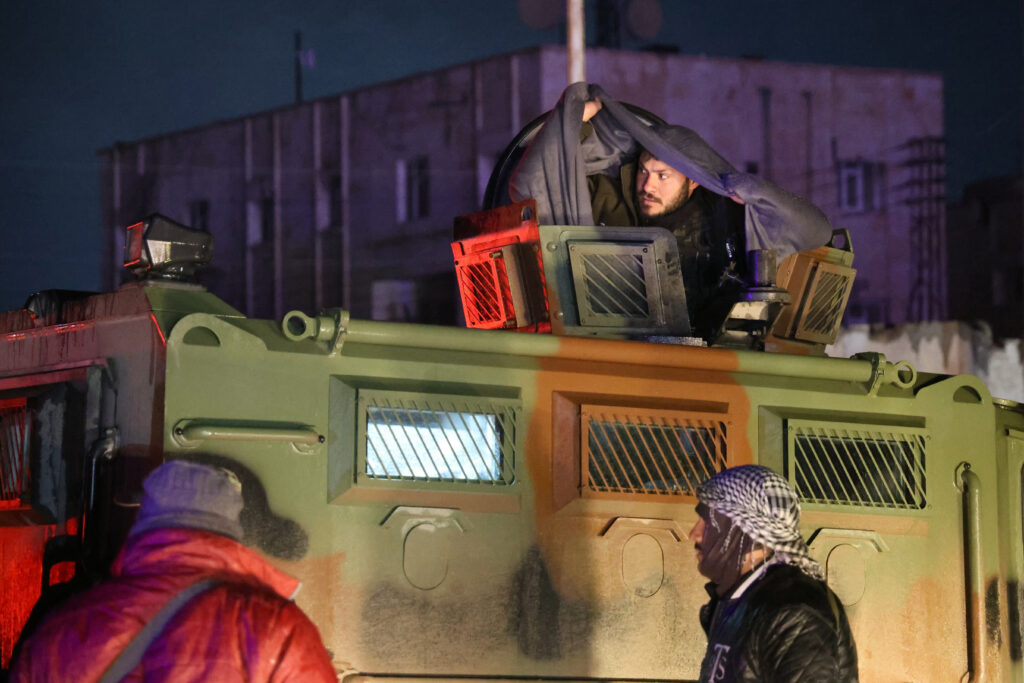
Europeans among 150 IS detainees transferred from Syria to Iraq
Europeans were among 150 senior Islamic State group detainees transferred this week by the US military from Kurdish custody in Syria to neighbouring Iraq, whose premier urged EU countries to repatriate their nationals.They were among an estimated 7,000 jihadists due to be moved to Iraq as the Kurdish-led force that has held them for years relinquishes swathes of territory to the advancing Syrian army.In 2014, IS swept across Syria and Iraq, committing massacres and forcing women and girls into sexual slavery, but backed by a US-led coalition, the Kurdish-led Syrian Democratic Forces (SDF) ultimately defeated the jihadists in Syria five years later.This month, the United States said the purpose of its alliance with the Kurds had largely expired, as Syria’s new authorities pressed an offensive to take back territory long held by the SDF, which agreed to withdraw from areas in the north and east.An Iraqi security official said the 150 detainees, who the US military transferred to Iraq on Wednesday, were “all leaders of the Islamic State group, and some of the most notorious criminals”, and included “Europeans, Asians, Arabs and Iraqis”.Another Iraqi security source said the group included “85 Iraqis and 65 others of various nationalities, including Europeans, Sudanese, Somalis and people from the Caucasus region”.They “all participated in IS operations in Iraq”, including the major 2014 offensive that saw the jihadists seize large pieces of territory, he said, adding “are all at the level of emirs” within the group’s hierarchy.They are now held at a prison in Baghdad.- ‘Take responsibility’ -Amnesty International said in a statement Friday that the group of 7,000 slated for transfer “likely includes Syrians, Iraqis & other foreign nationals, and approximately 1,000 boys and young men”.The rights group urged the US to “urgently put in place safeguards before making any further transfers”, and called on Iraq to hold “fair trials, without recourse to the death penalty”.Iraq, where courts have handed down hundreds of sentences of death and life imprisonment to people convicted of terrorism, said it would launch legal proceedings against the transferred detainees. In a telephone call Friday with French President Emmanuel Macron, Iraqi Prime Minister Mohammed Shia al-Sudani stressed the importance of European countries “assuming their responsibilities” by taking back and prosecuting their nationals.The SDF jailed thousands of suspected jihadists and detained tens of thousands of their relatives in camps as it pushed out IS.In a previous report, Amnesty estimated that around 10,000 IS suspects were held in Kurdish-run prisons as of August 2023.Despite repeated Kurdish and US appeals, foreign governments have generally avoided repatriating their nationals, fearing security threats and political backlash.IS’s onslaught came during the peak of Syria’s civil war, which was sparked by longtime ruler Bashar al-Assad’s crackdown on pro-democracy protests.After toppling Assad just over a year ago, President Ahmed al-Sharaa is now seeking to consolidate government control over all of Syria, with tensions between his authorities and the de facto autonomous Kurdish administration recently boiling over into clashes.The army has accused the SDF of releasing IS detainees from the Shadadi prison, while the Kurds said they lost control of the facility after an attack by Damascus.Syrian authorities later said they had arrested “81 of the fugitives”.The EU said Friday that alleged jailbreaks were of “paramount concern”, adding it was monitoring the transfer of prisoners to Iraq, “including foreign terrorist fighters”.In north Syria’s Raqa province, an AFP correspondent saw Kurdish forces who formerly controlled the Al-Aqtan prison for IS detainees being bussed out Friday under a deal with the government.- Al-Hol camp -UN refugee agency (UNHCR) spokesperson Celine Schmitt said Friday that the agency, accompanied by Syrian government officials, had entered Al-Hol camp — the biggest facility housing relatives of suspected IS members — after “a three-day interruption caused by the volatile security situation”.Kurdish forces withdrew from Al-Hol on Tuesday and the following day Syria’s army entered the camp, where thousands of men, women and children have lived in squalid conditions for years.”The delivery of essential supplies has resumed,” Schmitt said, adding that “trucks carrying bread entered the camp today”.The camp houses some 23,000 people — mostly Syrians but also around 2,200 Iraqis and 6,200 other foreign women and children, according to its former administration.Two former employees of organisations working at the site said an unspecified number of residents fled during an hours-long security vacuum between the SDF withdrawal and the army takeover.After recent clashes, Sharaa announced a deal Sunday with SDF chief Mazloum Abdi on the integration of the Kurds’ administration into the state, which will take responsibility for IS prisoners.A four-day ceasefire agreed on Tuesday after tensions reignited is set to expire on Saturday evening.burs-lg-rh/smw
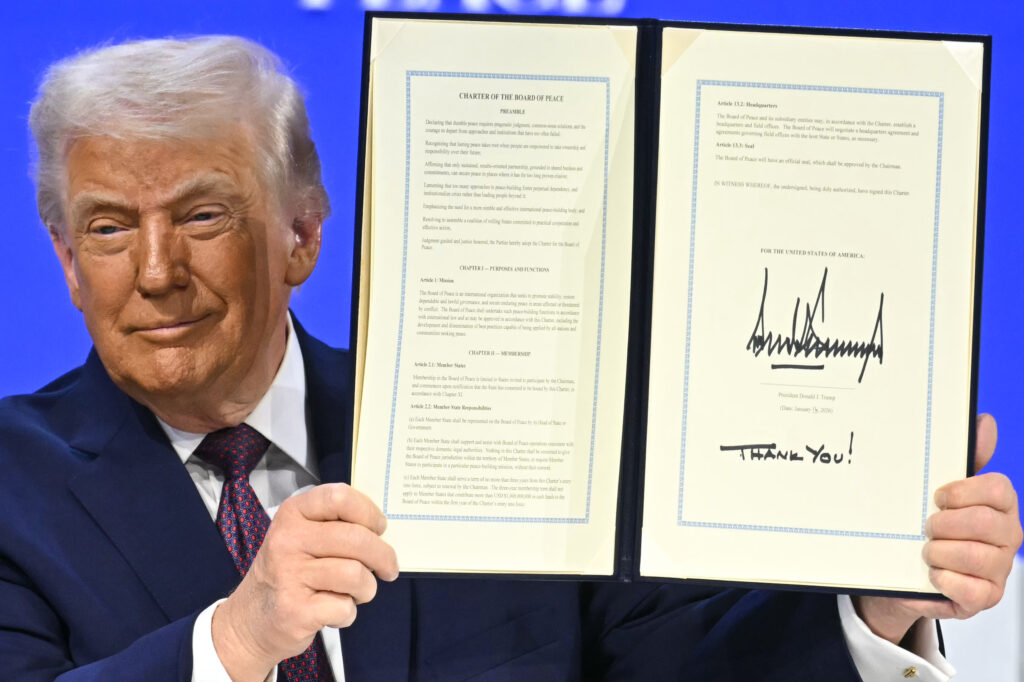
Across the globe, views vary about Trump’s world vision
Donald Trump is shaping a new world order of empires and coercion, from Venezuela to Greenland and through his newly created “Board of Peace, shattering the post-war global consensus.As the old order crumbles, AFP sought the views of ministers, advisers, lawmakers and military from across the globe.Celso Amorim, chief adviser to Brazil’s President Lula Inacio Lula da Silva, described the situation as “a very difficult moment of transition to a new order”.”But these periods of transition sometimes lead to terrible consequences,” he added.One Filipino diplomat, speaking on condition of anonymity, said no one felt able to speak out that “the emperor has no clothes”.Weng Hsiao-ling, a Taiwanese lawmaker from the main opposition Kuomintang party, said there had been a belief in “international rules”.”But Trump’s approach has broken those norms,” she said.- Geography -How the future could play out looks different from the Americas, Europe, Eurasia and South Asia.Brazil, for example, is an emerging power and member of the BRICS group of developing nations, but also located within Trump’s purported sphere of influence.Amorim said Brazil needed “to maintain and build on what’s being done”, pointing to the recent trade agreement between the European Union and the Mercosur bloc of Argentina, Brazil, Paraguay and Uruguay.It also needed to stay onside with the United States, as well as China, India and other BRICS countries, he added.”We are very much interested in maintaining good relations with the United States, let that be clear,” said Amorim. But he added: “Those relations must be based on mutual respect; they must be conducted through dialogue.”Many countries on the continent may find it difficult to find a balance and distance from American hegemony. Trump, for example, regularly threatens neighbouring Mexico.But Ricardo Monreal, parliamentary leader for the ruling Morena party, rejected the idea that Washington could make Mexico a “subordinate”.”The United States believes that Mexico’s alignment with the American empire is automatic. I don’t think it’s that simple,” he said.”The margin we have is very limited because our dependence is strong. Our proximity is unavoidable.”But I maintain that Mexico, with 110 or 120 million inhabitants, is a country that can shape the economic bloc — and that the way the United States treats Mexico is not as a partner, but as a subordinate. And I don’t think they’re going to pull that off.”- Protection -China and Russia may feel emboldened by US action under Trump but the countries threatened by their territorial ambitions still want to believe they are protected.In Taiwan, whose survival in its current political form depends largely on US support, lawmaker Wang Ting-yu, of the ruling DPP party, hopes the show of force to capture Venezuela’s Nicolas Maduro will force authoritarian regimes to think twice about acts of aggression.That will be “a good thing” for Taiwan. But he added: “We need to be careful because China will learn from this kind of operation.”The Filipino diplomat said the Indo-Pacific, including the Philippines and the ASEAN bloc, was vital for the United States’ economic security, whatever happened in Greenland.”I’m not saying (Trump’s actions) don’t keep people awake at night. But there’s a level of comfort there, and we hope we’re proven right,” they added.On the South China Sea, where Beijing has designs, Filipino Rear Admiral Roy Vincent Trinidad also said he was reassured by “the surge and upscale of not only US but even allied forces in this part of the globe”.- ‘Darwinian’ -Europe enjoyed US protection from the Soviets for decades and according to some remains indispensable to Washington because of its geographical location as the gateway to Eurasia.Yet one high-ranking officer said the continent was “completely paralysed” and bogged down in debate rather than action.”The world has become very Darwinian again,” he warned. “It’s not intelligence that matters most, it’s the speed of adaptation” to the new reality.The chairman of the German parliament’s foreign affairs committee, Armin Laschet, said the US-Europe alliance needed to be maintained “for as long as possible” — even if that means calling Trump “daddy”, like NATO chief Mark Rutte.The current state of affairs has raised questions about the effectiveness of the traditional tools of multilateralism.Colombia’s deputy foreign minister, Mauricio Jaramillo, said he was “surprised” at the lack of weighty UN reaction after Maduro’s capture.But despite criticism about its limitations, Laschet said there was “no alternative” to the world body, which emerged from the failings of the post-World War I League of Nations, and the ashes of World War II in 1945.”But today the big difference is that countries have atomic weapons that can destroy everything. So, we need to act beforehand.”
UN rights council decries ‘unprecedented’ crackdown in Iran, deepens scrutiny
The UN Human Rights Council decided Friday to deepen its scrutiny of Iran over its crackdown on protests that left thousands dead, including children, amid demands it end its “brutal repression”.The 47-member body voiced alarm about “the unprecedented scale of the violent crackdown on peaceful protests by security forces” in Iran.With 25 votes in favour, seven opposed and the rest abstaining, it decided to extend and broaden the mandate of independent investigators gathering evidence towards ensuring accountability for rights violations in the country.”A climate of fear and systematic impunity cannot be tolerated,” Iceland’s ambassador Einar Gunnarsson said as he presented the text to the council before the vote. “Victims and survivors deserve truth, justice and accountability.”Stressing the need for “accountability”, the adopted text extends the mandate of a special rapporteur on Iran for another year.It also extended for two years the work of a separate fact-finding mission set up in November 2022, following Iran’s crackdown on a wave of protests sparked by the death in custody of an Iranian Kurdish woman named Mahsa Amini.The resolution empowers the investigative body to probe “allegations of recent and ongoing serious human rights violations and abuses, and crimes perpetrated in relation to the protests”.The vote came at the end of an urgent session of the rights council, requested by Britain, Germany, Iceland, Moldova and North Macedonia, but harshly criticised by Iran.- ‘Accountability’ -In his opening remarks to the council, UN rights chief Volker Turk described how security forces used “live ammunition” against protesters, decrying that “thousands” had been killed, including children.”I call on the Iranian authorities to reconsider, to pull back, and to end their brutal repression, including summary trials and disproportionate sentences,” he said.”I call for the immediate release of all those arbitrarily detained by the Iranian authorities, and I call for a complete moratorium on the death penalty.”His comments were broadly echoed during the rights council special session.”There must be accountability for the dire events of the past weeks, and justice must be done for all those who were killed, injured or detained only for exercising their human rights and for voicing legitimate demands,” the European Union representative Michele Cervone d’Urso told the gathering.Iranian ambassador Ali Bahreini however slammed Friday’s meeting as “posturing” and “a pressure tool against Iran”. His colleague Somayeh Karimdoost described the resolution as “a thoroughly unbalanced biased and politically motivated text”.A number of countries also came to Iran’s defence, accusing the council of being “politicised” and showing “double standards”.Cuban ambassador Rodolfo Benitez slammed the session as an “act of supreme cynicism”, while China’s ambassador Jia Guide said Beijing “opposed interference in other countries’ internal affairs on the pretext of human rights”.- ‘Chilling’ -Turk’s office and NGOs tracking the toll from the crackdown on the biggest protests in Iran in years have said their task has been impeded by a now two-week internet shutdown.Giving their first official toll from the protests, Iranian authorities on Wednesday said 3,117 people had been killed since the massive demonstrations erupted late December. But the US-based Human Rights Activists News Agency on Friday put the number of deaths at more than 5,000, warning the confirmed figures were likely to be far lower than the actual toll.Another NGO, Norway-based Iran Human Rights, has warned the final toll risks reaching the scale of 25,000.The protests have now largely halted, but while “the killing in the streets of Iran may have subsided… the brutality continues”, Turk warned.He decried the “chilling development” in which Iran’s judiciary chief this week said there would be no leniency for the thousands detained.”I am deeply concerned by contradictory statements from the Iranian authorities about whether those detained in connection with the protests may be executed,” Turk said.He pointed out that Iran “remains among the top executioner states in the world”, with at least 1,500 people reportedly executed there last year.
UN urges Iran to end ‘brutal repression’
The United Nations called Friday on Iranian authorities to immediately end their “brutal repression”, after a crackdown on nationwide protests left thousands dead, including children.Speaking at an urgent UN Human Rights Council meeting on the situation in Iran, UN rights chief Volker Turk voiced alarm at the authorities’ crushing of recent demonstrations, describing how security forces used “live ammunition” against protesters.Lamenting that “thousands” had been killed, he described how “peaceful protesters were reportedly killed in the streets and in residential areas, including universities and medical facilities”, while bodies in morgues showed “fatal injuries to the head and chest”. “I call on the Iranian authorities to reconsider, to pull back, and to end their brutal repression, including summary trials and disproportionate sentences,” he said.”I call for the immediate release of all those arbitrarily detained by the Iranian authorities, and I call for a complete moratorium on the death penalty.”His comments were broadly echoed during the rights council special session, which was requested by Britain, Germany, Iceland, Moldova and North Macedonia with broad international backing.- ‘Cannot look away’ -“When a government itself becomes the perpetrator of violations, it is our collective responsibility to act,” Icelandic Foreign Minister Thorgerdur Katrin Gunnarsdottir told the meeting.”This council and the world cannot look away. Violence against peaceful protesters and mass killings must stop.”At the meeting, which was slammed by Iran, the 47-member body was discussing a proposed resolution voicing “deep concern about the unprecedented scale of the violent crackdown on peaceful protests by security forces” in Iran.Turk’s office and NGOs tracking the toll from the crackdown on the biggest protests in Iran in years have said their task has been impeded by a now two-week internet shutdown.Giving their first official toll from the protests, Iranian authorities on Wednesday said 3,117 people had been killed since the massive demonstrations erupted late December. But the US-based Human Rights Activists News Agency on Friday put the number of deaths at more than 5,000, warning the confirmed figures are likely to be far lower than the actual toll.Another NGO, Norway-based Iran Human Rights, has warned the final toll risks reaching the scale of 25,000.- ‘Chilling’ -The protests have now largely halted, but while “the killing in the streets of Iran may have subsided… the brutality continues”, Turk warned.He decried the “chilling development” in which Iran’s judiciary chief this week said there would be no leniency for the thousands detained.”I am deeply concerned by contradictory statements from the Iranian authorities about whether those detained in connection with the protests may be executed,” Turk said.He pointed out that Iran “remains among the top executioner states in the world”, with at least 1,500 people reportedly executed there last year.Britain’s human rights ambassador Eleanor Sanders also decried “Iran’s abhorrent use of the death penalty”, maintaining that “on average, around six people are executed each day in Iran”. She and many others demanded that Iranian authorities be “held accountable” for the deadly crackdown on the protests.The draft text being discussed Friday would extend for two years the mandate of an independent fact-finding mission on the situation in Iran set up in November 2022, following a crackdown on a wave of protests sparked by the death in custody of an Iranian Kurdish woman named Mahsa Amini.It also would empower the investigative body to probe “allegations of recent and ongoing serious human rights violations and abuses, and crimes perpetrated in relation to the protests”.Iranian ambassador Ali Bahreini slammed Friday’s meeting as “posturing” and “a pressure tool against Iran”.”The Islamic Republic of Iran does not recognise the legitimacy or validity of this special session, and its subsequent resolution,” he insisted.Iran received backing from a number of countries, charging that the decision to hold the special session was “politicised” and exposed “double standards”.China’s ambassador Jia Guide said his country “opposed interference in other countries’ internal affairs on the pretext of human rights”.