AFP Asia Business
With missiles overhead, Tel Aviv residents huddle underground
As night falls in Israel’s coastal city of Tel Aviv, hundreds make the familiar descent into the depths of the metro to escape the latest salvo of Iranian missiles.For those with no safe shelters near their homes, the city’s underground stations and car parks have become vital refuges since the war began on June 13. Despite nightly missile barrages, Israel’s casualty toll has remained relatively low, with authorities repeatedly stressing the importance of taking cover in life-saving protected spaces. “The day after the Israeli intervention in Iran began, there was an explosion, a bomb not far from my home, and the entire shelter I was in shock,” Muriel Azria, 58, who works in tourism, told AFP in a Tel Aviv metro station.She arrives prepared every evening with her suitcase and her dog, ready for a night on her council-provided mattress set up on the platform.”From the moment I enter the subway, which is magnificent, I calm down,” she said. “It’s not very comfortable, but at least I’m not afraid, we hear much less booming.””There are people, everyone is generally very nice,” she told AFP.Israeli residents receive blaring phone alerts via SMS to warn them of incoming Iranian missiles, often in the early hours of the morning. These are often followed by the wail of overhead air raid sirens.Among the haphazardly placed mattresses on the platforms of the metro stations, some people clutch phones while others play cards, do crosswords or chat to pass the time underground. For 86-year-old retiree Yudit Kamara, who does not have a shelter at home, the daily journey to the underground station has become an ordeal. “It’s too much, I don’t have the strength anymore to go through this. It’s really difficult,” she told AFP.”All these children here, all this mess, and it’s really cold and not so comfortable. But what other choice do we have? Where will we go?” she asked, stifling a sob.More than 60 percent of Israelis do not have a safe shelter at home, according to the NGO Latet, which distributes emergency kits, food parcels and children’s games to the most vulnerable families.- ‘Need to be strong’ -“I’m very nervous but I need to be strong for my child,” said 48-year-old Erlenn Solomon, who has slept every night in an underground station since the start of the conflict.”As a mom, you need to be strong.”Israel’s economic hub Tel Aviv has been particularly targeted by Iran’s missiles since the start of the conflict on June 13.The full extent of the damage from Iran’s attacks on Israel is not known due to military censorship rules, but at least 50 impacts have been acknowledged nationwide and 24 people have died, according to official figures.Once a rare sight in a country with highly sophisticated air defences, Israelis have now become somewhat used to waking up to images of blown-out buildings and rubble-strewn streets.As well as the metro, some have sought shelter from the bombing in the depths of underground car parks.”It’s terrible. I’ve had some moments where I’ve told my parents I don’t want to do this anymore, I want to go home, back to the apartment where we live close,” said Maya Papirany, 27, speaking four storeys below ground.”Then they remind me of the dangers of not being down here,” she added.Some sit in plastic chairs while others lie in sleeping bags with their eyes glued to their phones to follow the situation above ground. Papirany now sleeps alongside her mother and children on a mattress on the floor of a car park lined with tents. Beside her, a young girl sleeps soundly. “They’re not scared of the bombs. I think they’re too young to really understand what’s going on, and they don’t really understand the seriousness of it, so they think it’s, like, a fun game,” she said.
Virgin Australia surges in market comeback
Virgin Australia climbed sharply as it re-entered the local share market Tuesday, a dramatic comeback from near bankruptcy more than four years ago.A 30-percent chunk of Virgin Australia, one of the few domestic rivals to Qantas, was sold in an initial public offering this month at Aus$2.90 a share to raise Aus$685 million (US$444 million).The …
Trump announces ceasefire between Iran and Israel
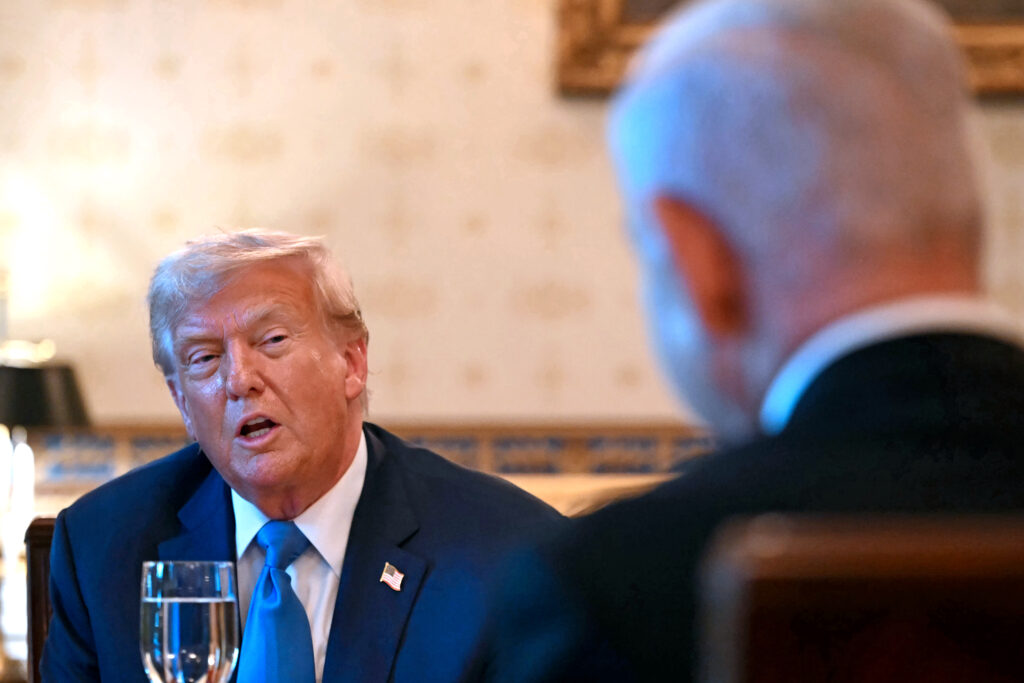
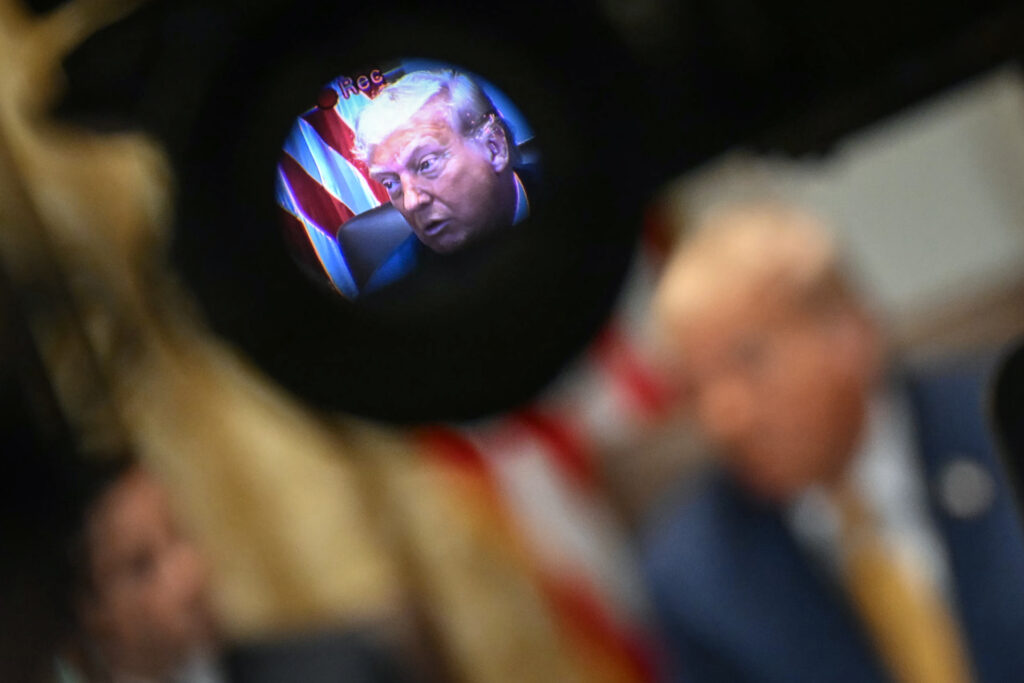
US President Donald Trump announced Monday that Iran and Israel had agreed to a staggered ceasefire that would bring about an “official end” to their conflict, as strikes continued to hammer Tehran overnight.”It has been fully agreed by and between Israel and Iran that there will be a Complete and Total CEASEFIRE,” Trump wrote on his Truth Social platform.There was however no immediate confirmation from either of the Middle Eastern adversaries, whose unprecedented exchange of attacks has seen hundreds killed in Iran and two dozen in Israel.Trump said the ceasefire would be a phased 24-hour process beginning at around 0400 GMT Tuesday, with Iran unilaterally halting all operations. Israel would follow suit 12 hours later, the president said.”Upon the 24th hour, an official end to the 12-day war will be saluted by the world,” he said, adding that both sides had agreed to remain “peaceful and respectful” during each phase of the process.Explosions nonetheless continued to rock Tehran overnight, with explosions in the north and center of the Iranian capital described by AFP journalists as some of the strongest since the conflict broke out.Any cessation in hostilities would come as a huge relief to world leaders frantic about an escalation in violence igniting into a wider conflagration.The adversaries had been swapping missile fire since Israel carried out surprise “preemptive” strikes against Iran on June 13, targeting nuclear and military sites, and prompting Trump to warn of a possible “massive” regional conflict.- Strikes on US base -The US leader’s ceasefire announcement came hours after Iran launched missiles at the largest US military facility in the Middle East — Al Udeid Air Base in Qatar — in a move Trump shrugged off as “very weak.”Calling for a de-escalation, Trump said Tehran had given advance notice of the barrage. No one had been hurt in the attack, Trump said.Iran’s National Security Council confirmed having targeted the base “in response to the US aggressive and insolent action against Iran’s nuclear sites and facilities.” But it added that the number of missiles launched “was the same as the number of bombs that the US had used” — a signal that it had calibrated its response to be directly proportional rather than escalatory.”This was calibrated and telegraphed in a way that would not result in any American casualties, so that there is an off ramp for both sides,” Ali Vaez, a senior advisor at the International Crisis Group, told AFP.The offensive came after the United States joined its ally Israel’s military campaign against Iran, attacking an underground uranium enrichment center with massive bunker-busting bombs and hitting two other nuclear facilities overnight Saturday into Sunday.As international concern mounted that Israel’s campaign and the US strikes could ignite into a wider conflict, French President Emmanuel Macron insisted that “the spiral of chaos must end” while China warned of the potential economic fallout.- ‘Blatant aggression’ -Iran said its assault in Qatar wasn’t targeting the Middle Eastern neighbor, but the government in Doha accused Tehran of “blatant aggression” and claimed its right to a “proportional” response.Iran’s state media quoted the Revolutionary Guard Corps announcing that six missiles had hit Al Udeid, which had been evacuated beforehand, according to the Qataris. The broadside was made up of “short-range and medium-range ballistic missiles,” a US defense official said.AFP reporters heard blasts in central Doha and in Lusail, north of the capital, on Monday evening, and saw projectiles moving across the night sky.Iranians gathered in central Tehran to celebrate, images on state TV showed, with some waving the flag of the Islamic republic and chanting “Death to America.”Qatar earlier announced the temporary closure of its airspace in light of “developments in the region,” while the US embassy and other foreign missions warned their citizens to shelter in place.Israeli strikes on Iran have killed more than 400 people, Iran’s health ministry has said. Twenty-four people have died in Iran’s attacks on Israel, according to official figures.After a day of tit-for-tat missile launches between Israel and Iran, the Israeli army called around midnight for residents in part of central Tehran to evacuate, saying it was “targeting the Iranian regime’s military infrastructure.”burs-ft/des/
Pro-Palestinian protest leader details 104 days spent in US custody
Mahmoud Khalil, one of the most prominent leaders of pro-Palestinian protests on US campuses, recounted his experience surviving 104 days in Immigration and Customs Enforcement detention after being targeted for deportation by the Trump administration.”I shared a dorm with over 70 men, absolutely no privacy, lights on all the time,” the 30-year-old said Sunday on the steps of Columbia University, where he was a graduate student.Khalil, a legal permanent resident in the United States who is married to an American citizen and has a US-born son, had been in custody since March facing potential removal proceedings.He was freed from a federal immigration detention center in Jena, Louisiana on Friday, hours after a judge ordered his release on bail. The activist was a figurehead of student protests at Columbia University against US ally Israel’s war in Gaza, and the administration of Donald Trump labeled him a national security threat.”It’s so normal in detention to see men cry,” Khalil recalled, deeming the situation “horrendous” and “a stain on the US Constitution.””I spent my days listening to one tragic story after another: listening to a father of four whose wife is battling cancer, and he’s in detention,” Khalil detailed in his first protest appearance since regaining his freedom.”I listened to a story of an individual who has been in the United States for over 20 years, all his children are American, yet he’s deported.”The circumstances of the detention were tough, Khalil described, and he took solace where he could find it to gain the strength to carry on.- ‘We will win’ -“It is often hard to find patience in ICE detention,” Khalil said. “The center is crowded with hundreds of people who are told that their existence is illegal, and not one of us knows when we can go free.”At those moments, it was remembering a specific chant that gave me strength : ‘I believe that we will win,'” he continued, to cheers from the audience.Khalil said he even scratched the phrase into his detention center bunk bed as a reminder, being the last thing he saw when he went to sleep and the first thing he read waking up in the morning.He repeats it even now, “knowing that I have won in a small way by being free today.”Khalil took specific aim at the site of his speech, Columbia University, chastising the institution for saying “that they want to protect their international students, while over 100 (days) later, I haven’t received a single call from this university.”Khalil’s wife Noor Abdalla, who gave birth to their son while her husband was held by ICE, said his “voice is stronger now than it has ever been.””One day our son will know that his father did not bow to fear. He will know that his father stood up when it was hardest, and that the world stood with him,” Abdalla said.
Syria announces arrests over Damascus church attack
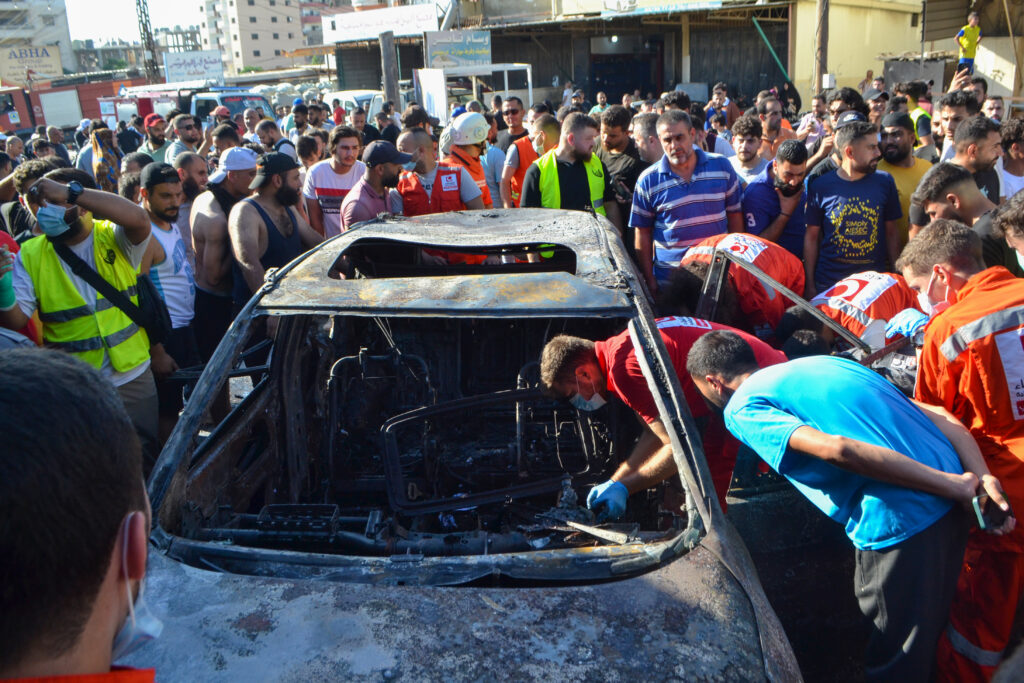
Syrian authorities on Monday announced arrests over a suicide blast targeting a church blamed on the Islamic State group, as President Ahmed al-Sharaa vowed those involved in the “heinous” attack would face justice.The shooting and suicide bombing Sunday at the Saint Elias church in the working-class Dwelaa district of the Syrian capital killed 25 people and wounded 63, the health ministry said.The Islamist authorities who took power after ousting longtime ruler Bashar al-Assad in December said the attacker was affiliated with the Islamic State group, which has not yet claimed the attack.The interior ministry reported the arrest of “a number of criminals involved in the attack” and the seizure of explosive devices and a booby-trapped motorcycle during a security operation near Damascus “against cells affiliated with the Daesh (IS) terrorist group”.The announcement came hours after Sharaa vowed authorities would “work night and day, mobilising all our specialised security agencies, to capture all those who participated in and planned this heinous crime and bring them to justice”.The attack follows incidents of sectarian violence in recent months, with security one of the greatest challenges for the new authorities.The attack “reminds us of the importance of solidarity, and unity of the government and the people in facing all that threatens our nation’s security and stability”, Sharaa said.- ‘Painful’ -The attack was the first suicide bombing in a church in Syria since the country’s civil war erupted in 2011, according to the Syrian Observatory for Human Rights monitor.It was also the first attack of its kind in the Syrian capital since Assad’s ouster.During a visit to the stricken church, Greek Orthodox Patriarch of Antioch John X said a funeral service for some of the victims would be held on Tuesday.He told clergy and other faithful that “what happened is painful, but do not be afraid”.AFP correspondents saw shops closed in Dwelaa on Monday while people posted death notices onto walls.Since the new authorities took power, the international community has repeatedly urged them to protect minorities and ensure their participation in Syria’s transition, particularly after the recent violence.The top cleric of Syria’s Sunni Muslim majority, Grand Mufti Osama al-Rifai, condemned acts of violence and terrorism in a statement Monday.”We express our complete rejection of targeting places of worship and terrorising believers,” he said.- Condemnation -Foreign condemnation of the attack has continued to pour in.President Recep Tayyip Erdogan said Turkey would not allow extremists to drag Syria back into chaos and instability, vowing that Ankara would “continue to support the Syrian government’s fight against terrorism”.Turkey, which is close to the new authorities, has repeatedly offered its operational and military support to fight IS and other militant threats. French President Emmanuel Macron also denounced the “horrible” attack, while the European Union said it “stands in solidarity” with Syria in combating ethnic and religious violence.”It is a grave reminder of the need to intensify efforts against the terrorist threat and to ensure the enduring defeat of Daesh and other terrorist organisations,” EU foreign policy spokesperson Anouar El Anouni said, using another name for IS.Greek Prime Minister Kyriakos Mitsotakis expressed anger after the attack on the Greek Orthodox Church, calling on the new authorities “to take concrete measures to protect all ethnic and religious minorities”.UN resident and humanitarian coordinator for Syria Adam Abdelmoula urged authorities to take “all necessary steps to ensure the protection of civilians”, saying there was “no room for violence and extremism”.Syria’s Christian community has shrunk from around one million before the war to fewer than 300,000 due to waves of displacement and emigration.IS seized large swathes of Syrian and Iraqi territory in the early years of the civil war, declaring a cross-border “caliphate” in 2014.The jihadists were territorially defeated in Syria 2019 but have maintained a presence, particularly in the country’s vast desert.
Gender not main factor in attacks on Egyptian woman pharaoh: study
She was one of ancient Egypt’s most successful rulers, a rare female pharaoh who preceded Cleopatra by 1,500 years, but Queen Hatshepsut’s legacy was systematically erased by her stepson successor after her death.The question of why her impressive reign was so methodically scrubbed has attracted significant debate, but in new research published Monday, University of Toronto scholar Jun Wong argues far too much emphasis has been placed on her gender. “It’s quite a romantic question: why was this pharaoh attacked after her death?” Wong told AFP, explaining his interest in a monarch who steered ancient Egypt through a period of extraordinary prosperity.Earlier scholars believed Queen Hatshepsut’s stepson Thutmose III unleashed a posthumous campaign of defilement against her out of revenge and hatred, including because he wanted to purge any notion that a woman could successfully rule. “The way in which (Hatshepsut’s) reign has been understood has always been colored by her gender,” Wong said, referencing beliefs that Thutmose III may have viewed her as “a kind of an evil stepmother.”His research, which builds on other recent scholarship and is being published in the journal Antiquity, argues Thutmose III’s motivations were far more nuanced, casting further doubt on the theory of backlash against a woman in charge. Hatshepsut ruled Egypt roughly 3,500 years ago, taking over following the death of her husband Thutmose II. She first served as regent to her stepson, the king-in-waiting, but successfully consolidated power in her own right, establishing herself as a female pharaoh. Experts say she expanded trade routes and commissioned extraordinary structures, including an unparallelled mortuary in the Valley of the Kings on the Nile’s west bank. Wong reassessed a range of material from damaged statues uncovered during excavations from 1922 to 1928.He said there is no doubt Thutmose III worked to eliminate evidence of Hatshepsut’s achievements, but his efforts were “perhaps driven by ritual necessity rather than outright antipathy,” Wong said. Thutmose III may have been trying to neutralize the power of his predecessor in a practical and common way, not out of malice.He also found that some of the statues depicting Hatshepsut were likely damaged because later generations wanted to reuse them as building materials.”For a long time, it has been assumed that Hatshepsut’s statuary sustained a vindictive attack,” Wong said, arguing that a fresh look at the archives suggests “this is not the case.”
Oil prices tumble as markets shrug off Iranian rebuttal to US
Crude oil prices slid more than seven percent Monday while Wall Street stocks advanced after markets shrugged off Iran’s rebuttal to the US weekend attack on Iranian nuclear facilities.Iran announced it had launched missiles at a major US base in Qatar, with explosions ringing out in Doha and projectiles seen streaking overhead.But Qatar described the …
Oil prices tumble as markets shrug off Iranian rebuttal to US Read More »
Iran-Israel war: latest developments
Iran fired at a US military base in Qatar on Monday, as the war between longtime foes Israel and Iran raged after the United States sent bombers to attack the Islamic republic’s nuclear sites.Here are the latest developments:- US base in Qatar -Iran launched a retaliatory strike aimed at the United States’ Al Udeid military base in Qatar, the largest US military facility in the Middle East. Qatar said it had successfully intercepted the attack, which it called a “flagrant violation” of sovereignty and said it reserved the right to respond.No casualties were reported at the base, a US official said.US President Donald Trump dismissed the attack as “very weak.”He said Iran gave “early notice” of the strike, thanking the Islamic republic for the move that “made it possible for no lives to be lost, nobody to be injured.””Perhaps Iran can now proceed to Peace and Harmony in the Region, and I will enthusiastically encourage Israel to do the same,” he wrote on his Truth Social platform.- IAEA cooperation -The speaker of Iran’s parliament said that Tehran is considering suspending its cooperation with the International Atomic Energy Agency (IAEA), accusing the UN’s nuclear watchdog agency of lacking objectivity and professionalism.- Iran Guards, Tehran prison -Israel carried out “strikes of unprecedented force against regime targets and agencies of government oppression in the heart of Tehran”, Defence Minister Israel Katz said as an AFP journalist heard loud blasts in the north of the Iranian capital.Katz said the targets included the notorious Evin prison in the city’s north, known to hold political prisoners and dissidents as well as foreign detainees.Iran’s judiciary confirmed Evin was struck, reporting “damage” and stressing the situation was “under control”. Israel also carried out a strike on Fordo, according to the military and Iranian media, a day after US “bunker buster” bombs hit the underground nuclear site south of Tehran.In Israel, air raid sirens sent people to bomb shelters on Monday, with the military reporting at least three missile barrages in less than two hours. – Iran warns United States -Iran’s armed forces chief of staff Abdolrahim Mousavi vowed on Monday that the country would take “firm action” in response to US strikes on key nuclear sites. “This crime and desecration will not go unanswered,” said Mousavi in a video statement published on state TV, adding that “we will take firm action against the American mistake”.Ali Akbar Velayati, an adviser to Iran’s supreme leader Ayatollah Ali Khamenei, said bases used by US forces “in the region or elsewhere” could be attacked.The US embassy in Bahrain — home to a major US naval base — reduced on-site staffing citing “heightened regional tensions”.In Qatar, home to large a US airbase, the American embassy told its citizens to “shelter in place until further notice”.Meanwhile, major international oil companies in Iraq, where the US has troops deployed and Iran backs various armed groups, had evacuated foreign staff, the state-owned Basra Oil Company said.- ‘Spillover’ -China on Monday warned against “the spillover of war”, urging the international community to do more to prevent the fighting from impacting the world’s economy, noting the global importance of the Gulf maritime trade routes off the Iranian coast.Oil prices briefly fell on Monday after surging earlier, as traders weighed the possible extent of retaliation by Iran.US Secretary of State Marco Rubio called on China to help deter Iran from closing the Strait of Hormuz, a chokepoint for one-fifth of the world’s oil supply.The European Union’s foreign policy chief, Kaja Kallas, said closing the strait would be “extremely dangerous”.Russian President Vladimir Putin slammed attacks on Iran as “unprovoked” and “unjustified” in a Moscow meeting with Tehran’s Foreign Minister Abbas Araghchi.German Chancellor Friedrich Merz said of the strikes, “There is no reason to criticise what America did at the weekend. Yes, it is not without risk. But leaving things as they were was not an option either.”NATO chief Mark Rutte, meanwhile, said alliance members had “long agreed that Iran must not develop a nuclear weapon” and called an Iranian atomic bomb his “greatest fear”.French President Emmanuel Macron called for a return to negotiations. “The spiral of chaos must end. I call on all parties to exercise the utmost restraint, de-escalate and return to the negotiating table,” he wrote on x.- Nuclear stockpiles -The UN’s International Atomic Energy Agency demanded Monday the return of inspectors to Iran’s nuclear sites in a bid to “account for” its highly enriched uranium stockpiles.”Allow IAEA inspectors to go back to Iran’s nuclear sites and account for the stockpiles of uranium” including the “400 kilograms enriched to 60 percent”, said agency chief Rafael Grossi.At an emergency meeting of the organisation’s headquarters in Vienna, he said Tehran had sent him a letter on June 13 announcing the implementation of “special measures to protect nuclear equipment and materials”.burs-dcp/yad/gv