
AFP Asia Business
Domestic pressure mounts on Israel PM to end Gaza war
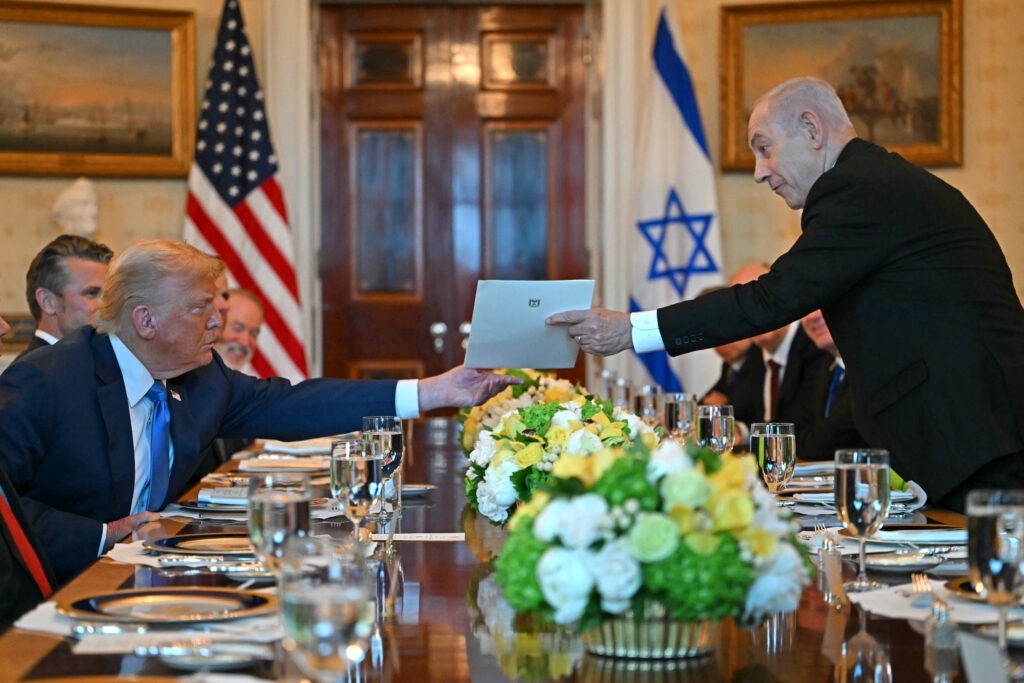
Benjamin Netanyahu might have expected better headlines on Wednesday from his high-profile talks with Donald Trump in Washington, as the US president pushes for an end to the Gaza war.But instead of plaudits, the Israeli prime minister faced mounting pressure to quickly wrap up the conflict back home, after five soldiers were killed in an ambush this week in the embattled Palestinian territory.Monday night’s losses came as Netanyahu was on an official visit to the United States to discuss a ceasefire and hostage release deal with Trump. But even as he said a deal could be reached, frustration is growing among large swathes of the public at the perceived stagnation of the war, the rising military losses and the lack of progress in releasing the remaining hostages.”It’s time to make history. Bring ALL the hostages home. End the war,” the Hostages and Missing Families Forum wrote in a post on Truth Social directly addressed to Trump. “After 642 days, one more day, or week, or month, or two months, won’t really make a difference,” added columnist Raanan Shaked. “There is still time. Go to Washington… Look busy, as you try to ‘bridge the gaps between the two sides’,” he wrote sarcastically in the Yediot Aharonot newspaper on Wednesday. Monday’s attack with improvised bombs came after seven soldiers were killed in their armoured vehicle on June 25, one of the deadliest attacks on Israeli forces in 21 months of war. Since Israel launched a ground operation in Gaza in October 2023, 450 Israeli soldiers have been killed in the territory, according to an AFP tally based on army figures.- ‘Fear of Netanyahu’ -Public appeals to end the conflict have been issued on an almost daily basis by Netanyahu’s opponents.In the latest rally on Monday, scores of protesters gathered outside the US embassy brach office in Tel Aviv, urging Trump to force an end to the war and bring all the Israeli hostages home.”For the soldiers, for their families, for the hostages, for the State of Israel: This war must be ended,” tweeted opposition leader Yair Lapid on Tuesday, following the announcement of the latest military losses.The ruling coalition, however, has mostly endorsed Netanyahu’s policy of pursuing military operations in Gaza until “Hamas’s military and governing capabilities are eliminated”, which he restated to reporters at the White House on Tuesday evening.The unanimous backing of his coalition partners, however, may not reflect the will of their voters. The majority of the Israeli public supports ending the war in Gaza, according to Gideon Rahat, a political science professor at the Hebrew University of Jerusalem.The continuation of the war is the will of a “minority leading the country”, he told AFP. That minority is composed of hardliners, led by far-right ministers Itamar Ben Gvir and Bezalel Smotrich, who can be “more extreme than their own voters”, Rahat maintained.The bulk of Likud legislators, the mainstream right-wing party led by Netanyahu which holds over one quarter of the seats in the Israeli parliament, “don’t dare to talk because they are afraid of Netanyahu”, he added. Lately, however, at least one voice opposing the war has emerged from inside the coalition. The deaths of the seven soldiers sparked rare criticism of the war effort by a prominent lawmaker from the ultra-Orthodox United Torah Judaism party, a partner in Netanyahu’s coalition.”I still don’t understand why we are fighting there… Soldiers are getting killed all the time,” Moshe Gafni said on Tuesday.The war broke out after Hamas’s October 7, 2023 attack on Israel resulted in the deaths of 1,219 people, mostly civilians, according to an AFP tally based on Israeli official figures.Israel’s retaliatory campaign has killed at least 57,680 people in Gaza, also mostly civilians, according to the Hamas-run territory’s health ministry. The United Nations considers its figures reliable.
Israel PM eyes Hamas truce deal despite hurdles in talks
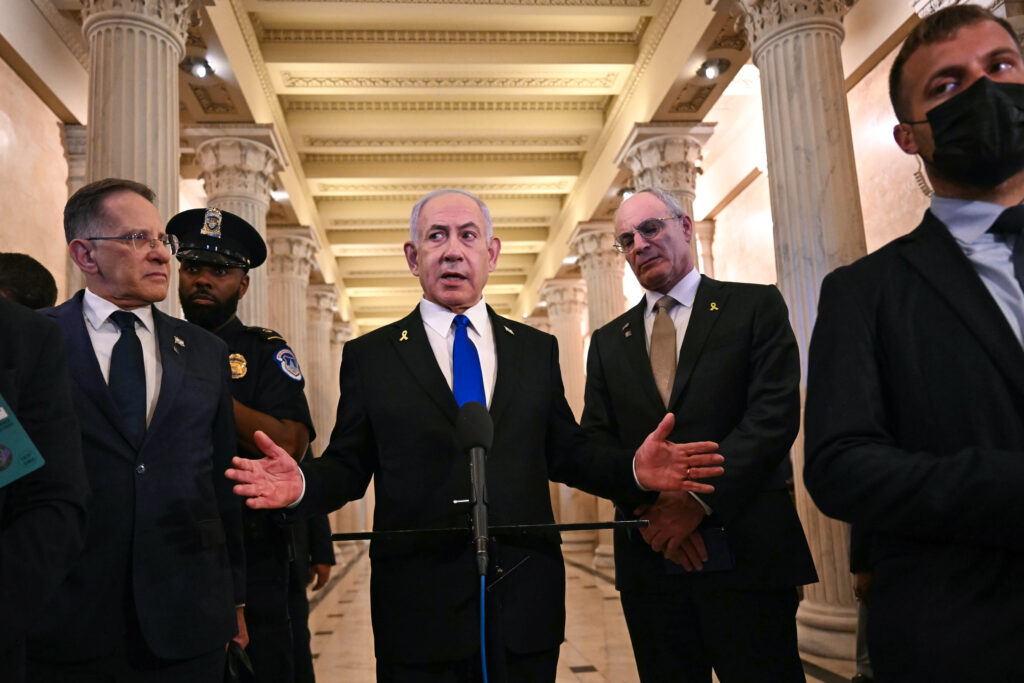
Israeli Prime Minister Benjamin Netanyahu sounded upbeat Wednesday about the prospects for a ceasefire and hostage-release deal in Gaza, even as talks with Palestinian militant group Hamas failed to produce a breakthrough.With the Israeli prime minister in Washington, indirect talks stretched into a fourth day in Qatar, with reported complaints of Israeli intransigence on aid distribution to civilians in the war-torn territory.But in an interview with US television, Netanyahu, who after talks with Donald Trump on Tuesday night was uncompromising in his determination to crush Hamas, appeared more aligned with the US president’s optimism.”I think we’re getting closer to a deal,” he told FOX Business Network’s Mornings with Maria programme. “There’s a good chance that we’ll have it.”Foreign Minister Gideon Saar also said he thought a deal to end 21 months of bitter fighting was “achievable” and could even herald a more lasting peace.”If a temporary ceasefire is achieved, we will negotiate on a permanent ceasefire,” he added in a speech in the Slovakian capital Bratislava.Netanyahu is insistent he wants to permanently neutralise the threat to Israel from Hamas, whose October 7, 2023 attack sparked the war.But Hamas vowed: “Gaza will not surrender… and the resistance will impose the conditions, just as it imposed the equations.”- ‘Mostly listening’ -A Palestinian official close to the talks blamed Israel for a lack of progress when discussions broke up late Tuesday because of its “refusal to accept the free entry of aid” into Gaza.Another Palestinian source familiar with the negotiations said the Israeli delegation was “mostly listening rather than negotiating, which reflects Netanyahu’s ongoing policy of obstruction and sabotaging any potential agreement”.Trump’s special envoy Steve Witkoff, however, said the US administration was “hopeful” of agreement for a 60-day ceasefire by the end of this week.The deal would include the return of 10 living hostages held by Palestinian militants since October 2023, and nine dead hostages, he added.Of 251 hostages seized during the attack, 49 are still held in Gaza, including 27 the Israeli military says are dead.Hamas has rebuffed pressure to release all the hostages, demanding an end to the war and a full Israeli withdrawal from Gaza, while Israel wants to ensure militants in Gaza never again pose a threat to its security.Qatari mediators had warned on Tuesday that it would take time to seal a deal, though Trump kept up his push for an agreement.”It’s a tragedy, and he wants to get it solved, and I want to get it solved, and I think the other side wants to,” Trump told reporters, in reference to Netanyahu and Hamas.Asked earlier as he met US House speaker Mike Johnson if a ceasefire announcement was imminent, Netanyahu replied: “We’re certainly working on it.”- ‘Like an earthquake’ -On the ground, Gaza’s civil defence agency said Wednesday that 22 people were killed in Israeli strikes, at least six of them children. The military said it was looking into two of the strikes which killed 20.”The explosion was massive, like an earthquake,” said Zuhair Judeh, 40, who witnessed one of the strikes, which prompted frantic scenes as people scrabbled in the rubble for survivors.”It destroyed the house and several nearby homes. The bodies and remains of the martyrs were scattered,” he added, calling it “a horrific massacre”.Due to restrictions imposed on media in the Gaza Strip and difficulties accessing the area, AFP is unable to independently verify the death tolls and details shared by the parties involved.Hamas’s October 2023 attack resulted in the deaths of 1,219 people, mostly civilians, according to an AFP tally based on Israeli official figures.Israel’s retaliatory campaign has killed at least 57,680 people in Gaza, also mostly civilians, according to the Hamas-run territory’s health ministry. The United Nations considers the figures reliable.The military meanwhile said its troops crossed the border into southern Lebanon as part of targeted operations to dismantle infrastructure belonging to Hamas’s Lebanese ally Hezbollah.A video shared by the army claimed to show infantry troops on the ground just over the border, although AFP was unable to verify the footage.Israel signed a truce with Hezbollah last November but has kept up its strikes, hitting what it says are Hezbollah or Hamas targets.
Gaza civil defence says 22 killed in Israeli strikes
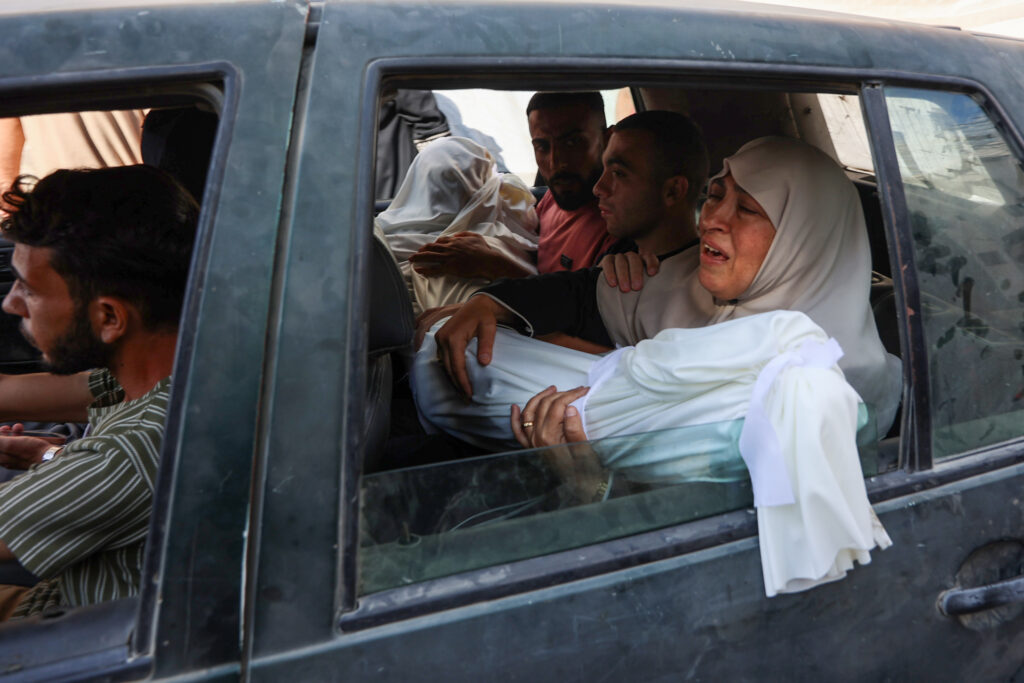
Gaza’s civil defence agency said 22 people, including at least six children, were killed in Israeli strikes in the Palestinian territory on Wednesday.Agency spokesman Mahmud Bassal said one strike killed 10 members of the same family sheltering in the Al-Mawasi area west of Khan Yunis, while another on the Al-Shati camp near Gaza City left 10 dead and more than 30 wounded.The victims in Al-Shati were from two families, he added.Asked for comment, the Israeli military said it was looking into the reports.”The explosion was massive, like an earthquake,” said Zuhair Judeh, 40, who saw the Al-Shati air strike.”The bodies and remains of the martyrs were scattered.”The bombings came as Israeli Prime Minister Benjamin Netanyahu met US President Donald Trump in Washington to discuss the ongoing campaign to defeat Hamas in Gaza.”You can’t predict when or why they’ll bomb you,” 36-year-old Abeer al-Sharbasi said after the Al-Shati strike.”We have nothing left but to surrender ourselves to God.”- ‘Extremely tired’ -Sobbing crowds of mourners gathered at Gaza City’s Al-Shifa Hospital.The director of the medical complex, Mohammad Abu Salmiya, told journalists on Wednesday morning that it would “be completely out of service due to the fuel shortage” within hours.Israel’s offensive and restrictions on supplies entering Gaza have taken a heavy toll on its medical system.AFP footage from Al-Mawasi showed makeshift tents torn to shreds by the strike there, with a child’s stuffed toy lying among the wreckage.”We are extremely tired. Every day they say there is a ceasefire, but there are massacres,” said displaced Palestinian Umm Ahmed.In Khan Yunis, mourners gave a final embrace to loved ones whose bodies were laid out on the floor.Bassal later reported two other people killed in separate strikes in central Gaza and in Gaza City. Due to restrictions imposed on media in the Gaza Strip and difficulties accessing the area, AFP is unable to independently verify the death tolls and details shared by the parties involved.Hamas’s October 7, 2023 attack on Israel resulted in the deaths of 1,219 people, mostly civilians, according to an AFP tally based on Israeli official figures.Of 251 hostages seized during the attack, 49 are still held in Gaza, including 27 the Israeli military says are dead.Israel’s retaliatory campaign has killed at least 57,680 people in Gaza, also mostly civilians, according to the Hamas-run territory’s health ministry. The UN considers the figures reliable.The medical charity Doctors Without Borders (MSF) said on Wednesday that a recent mortality survey conducted among its staff and their families in Gaza corroborated figures provided by the territory’s health ministry.It said the mortality rate had increased tenfold for children under five compared to estimates before October 7, 2023.
Syrian designer Rami Al Ali to make history at Paris Couture Week
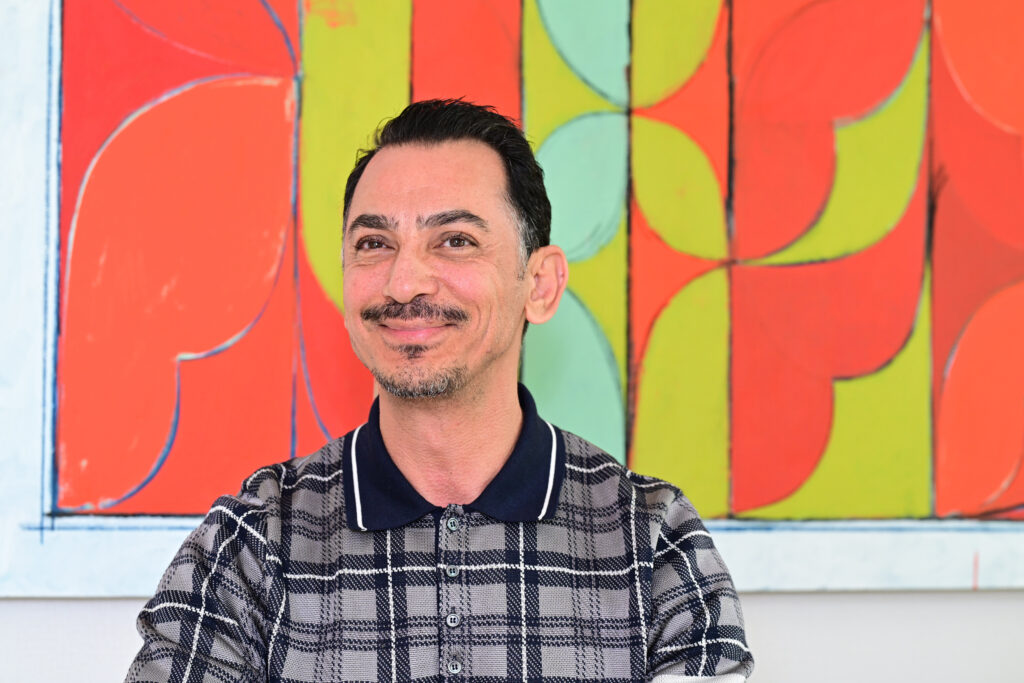
As well as being optimistic about the future of his war-ravaged country, Rami Al Ali has other reasons to be upbeat: he is about to become the first Syrian fashion designer to show his work at Paris Haute Couture Week. The invitation to appear on the world’s most prestigious fashion stage is a huge endorsement for the 53-year-old from the eastern city of Deir ez-Zor who turned to design after a childhood admiring his architect father’s drawings.Now, following years of dressing A-listers from Oscar winner Helen Mirren to Beyonce as well as Middle Eastern royals, Ali is rubbing shoulders with the biggest names in the industry.”Nervous, excited, tired, happy,” he told AFP when asked how he felt as he prepared models for his debut Paris Couture show on Thursday. “It’s a mix of very overwhelming feelings.”After studying in Damascus, Al Ali left for Dubai as a young man in search of opportunities in the fashion industry, working initially for two regional brands. He branched out on his own in 2001, building a regional fanbase for his eponymous brand from the United Arab Emirates before creating a following in Europe, including via shows in Paris outside the official Fashion Week calendar from 2012. The invitation this year from France’s prestigious Federation de la Haute Couture et de la Mode places him in a new elite category that is increasingly diverse.- Syrian traditions -“It’s a definitely big credit… to be acknowledged, to be authenticated, to be endorsed,” he explained. Other non-Western designers such as Imane Ayissi, the sole sub-Saharan African at Couture Week, have hailed the French federation’s openness.”It shows that things are changing, that things are moving forward,” former model Ayissi told AFP this week.Al Ali’s new collection of couture dresses — he also produces two lines of ready-to-wear per year — has been inspired like most of his work by his Syrian heritage and includes input from the country’s Craft Council.”I built from my heritage, from my background, from where I was based, also in the Middle East, in Dubai, all of those combined together created the form and the DNA of the brand,” he explained. Given an appreciation of tradition from his historian mother, Al Ali draws on the design aesthetics of Damascus, Aleppo and Palmyra in particular.”You don’t see them anywhere else, and those are the ones that I’m trying as much as I can every time to bring back to life,” he added.One of his dresses in Thursday’s collection features elaborate sculptural patterns made from rolled off-white crepe fabric that has been stitched by hand in a process that took an estimated 300 hours of work.- Creative freedom -Beyond the catwalks and glitz of the fashion world, Al Ali also attempted to support Syrian artists through the country’s nearly 14-year civil war via a charity initiative called Ard Dyar.The fall of former president Bashar al-Assad in December, which led to the rise of rebel-turned-transitional leader Ahmed al-Sharaa, has given Ali cause for optimism about his homeland’s future.Several Western governments have lifted sanctions on Syria as Sharaa, a formerly Al-Qaeda-linked Islamist, attempts to fully pacify the country and rebuild. “We called the collection the ‘Guardian of Light’, and it came also at a time that is very hopeful, very promising,” Al Ali told AFP. “I think many great things will come to light very soon.”After decades of Syria being a byword for violence and political oppression, Ali hopes that artists will now help highlight the country’s rich history and design culture. “I think now we have much more freedom in expressing ourselves in all different aspects, political, humanitarian, creative. We have a lot to say, and definitely we are bolder, braver in the way we express it,” he said.

Iraq’s Kurdistan enjoys all-day state electricity
More than 30 percent of Iraq’s autonomous Kurdistan region now has 24-hour state electricity, authorities said Thursday, with plans to extend full coverage by the end of 2026.The northern region of Kurdistan has long promoted itself as a haven of relative stability in an otherwise volatile country.Despite Iraq’s vast oil wealth, the national grid struggles to meet demand, leaving most areas reliant on imported energy and subject to frequent power cuts.”Today, two million people across the Kurdistan region enjoy 24-hour electricity… that’s 30 percent of the population,” including the cities of Arbil, Duhok and Sulaimaniyah, said regional prime minister Masrour Barzani.In 2024, the Kurdistan Regional Government launched “Project Runaki” to deliver round-the-clock power in a region where, like much of Iraq, residents often turn to costly and polluting private generators.The region’s electricity minister, Kamal Mohammed, said residents were now enjoying “uninterrupted, cleaner, and more affordable electricity”.”Rollout to other areas is expected to be completed by the end of 2026,” he told AFP.As part of the transition, roughly 30 percent of the 7,000 private generators operating across Kurdistan have already been decommissioned, he said, a move that has contributed to an estimated annual reduction of nearly 400,000 tonnes of CO2 emissions.The project also aims to lower household electricity bills, offering a cheaper alternative to the combined cost of grid power and private generator fees.However, bills will still depend on consumption and are likely to increase during peak summer and winter months.Mohammed said the project’s success hinges on the introduction of “smart” meters to curb electricity theft, as well as a new tariff system to promote responsible usage.”More power has been added to the grid to support 24/7 access,” he said.Kurdistan has doubled its gas production in the past five years, and most of the power supply comes from local gas production, Mohammed said.Despite Iraq’s abundant oil and gas reserves, years of conflict have devastated its infrastructure.The country remains heavily reliant on imports, particularly from neighbouring Iran, which frequently interrupts supply. It also imports electricity from Jordan and Turkey, while seeking to boost its own gas output.”We stand ready to offer our technical support and assistance” to the federal government, Mohammed said.In Arbil, resident Bishdar Attar, 38, said the biggest change was the absence of noisy and polluting generators.”The air is now clear,” he said. “We can now use home appliances freely… as needed.”
Israel, Hamas defiant as US presses for ceasefire
Israel’s bid to crush Hamas’s capabilities and bring the hostages home dominated talks between Benjamin Netanyahu and Donald Trump, the Israeli prime minister said, even as the Palestinian militants vowed no surrender in Gaza.Netanyahu’s visit to Washington — his third since Trump returned as US president in January — came as Doha hosted discussions between the two sides on a possible halt to 21 months of fighting and a hostage release deal.The indirect talks began on Sunday and have not yet seen any agreement but Trump’s special envoy Steve Witkoff said he was still hopeful of a ceasefire deal.”The release of all of our hostages — the living and the deceased, and the elimination of Hamas’s military and governing capabilities, thereby ensuring that Gaza will never again constitute a threat to Israel,” Netanyahu said after meeting Trump for a second time in 24 hours.”We focused on the efforts to release our hostages,” he said.”We are not relenting, even for a moment, and this is made possible due to the military pressure by our heroic soldiers.”Hamas, whose October 7, 2023 attack on Israel sparked the war in Gaza, said in a statement it would never give up.”Gaza will not surrender… and the resistance will impose the conditions, just as it imposed the equations,” it added.- ‘Mostly listening’ -A Palestinian official close to the talks blamed Israel for a lack of progress after the latest round of discussions broke up late Tuesday with no breakthrough.”The current round of negotiations in Doha between Hamas and Israel is still stalling due to the Israeli delegation’s refusal to accept the free entry of aid into the Gaza Strip,” he said.Another Palestinian source familiar with the negotiations said the Israeli delegation was “mostly listening rather than negotiating, which reflects Netanyahu’s ongoing policy of obstruction and sabotaging any potential agreement”.Witkoff, however, was more upbeat, in line with the US leader who has pushed for a ceasefire deal.”We are hopeful that by end of this week we will have an agreement that will bring us into a 60-day ceasefire,” Witkoff said.The deal would include the return of 10 live hostages held by Palestinian militant groups since Hamas’s October 2023 attack on Israel, and nine dead hostages, Witkoff added.Of 251 hostages seized during attack, 49 are still held in Gaza, including 27 the Israeli military says are dead.Hamas has refused pushes to release all the hostages, demanding an end to the war and a full Israeli withdrawal from Gaza, while Israel wants to ensure militants in Gaza never again pose a threat to its security.Qatari mediators had warned on Monday that it would take time to seal a deal, though Trump kept up his push to reach an agreement.”It’s a tragedy, and he wants to get it solved, and I want to get it solved, and I think the other side wants to,” Trump told reporters, in reference to Netanyahu and Hamas.Asked earlier as he met US House speaker Mike Johnson if a ceasefire announcement was imminent, Netanyahu replied: “We’re certainly working on it.”- ‘Like an earthquake’ -On the ground, Gaza’s civil defence agency on Wednesday said 20 people, including at least six children, were killed in two Israeli air strikes overnight.The Israeli military said it was looking into the report when contacted by AFP.”The explosion was massive, like an earthquake,” said Zuhair Judeh, 40, who witnessed one of the strikes.”It destroyed the house and several nearby homes. The bodies and remains of the martyrs were scattered,” he added, calling it “a horrific massacre”.Due to restrictions imposed on media in the Gaza Strip and difficulties accessing the area, AFP is unable to independently verify the death tolls and details shared by the parties involved.Hamas’s October 7, 2023 attack on Israel resulted in the deaths of 1,219 people, mostly civilians, according to an AFP tally based on Israeli official figures.Israel’s retaliatory campaign has killed at least 57,575 people in Gaza, also mostly civilians, according to the Hamas-run territory’s health ministry. The UN considers the figures reliable.An Israeli group of legal experts on Tuesday accused Hamas of using sexual violence as “part of a genocidal scheme” during its 2023 attack.Hamas, it said, “used sexual violence as a tactical weapon, as part of a genocidal scheme and with the goal of terrorising and dehumanising Israeli society”.The militant group has categorically denied allegations of using sexual violence, without providing evidence to support its claims.