
AFP Asia Business
Pakistani court jails rights activist and husband for 10 years
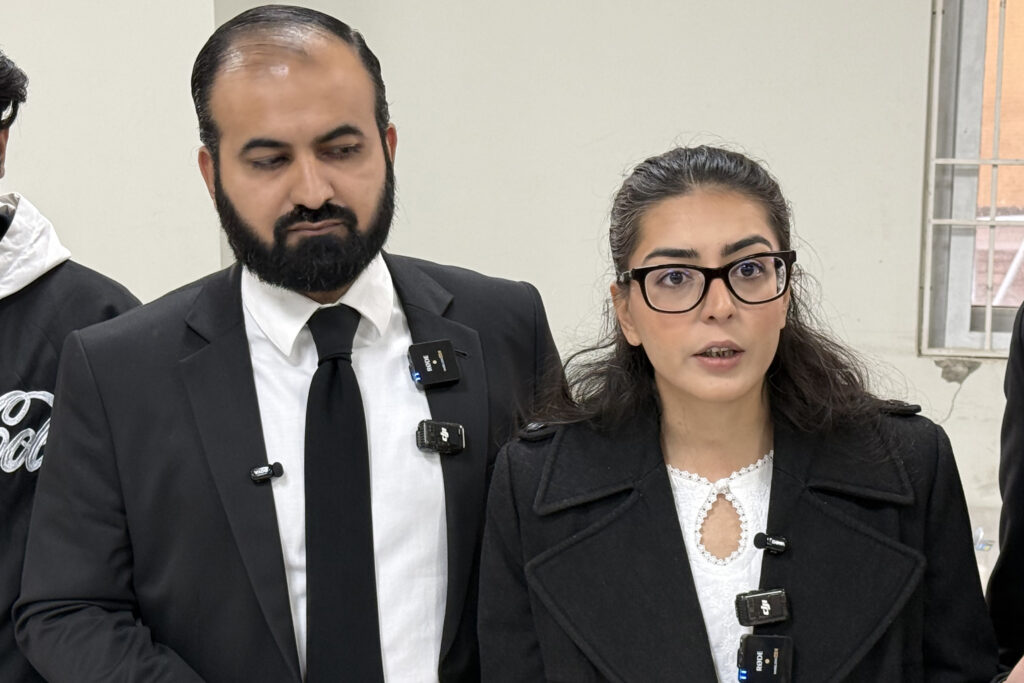
A Pakistani court on Saturday jailed a prominent rights activist and her husband for 10 years over “anti-state” social media posts.Imaan Mazari, a 32-year-old lawyer and vocal critic of Pakistan’s military, “disseminated highly offensive” content on her X account, according to an Islamabad court. A court statement said Mazari and her husband, fellow lawyer Hadi Ali Chattha, “will have to remain in jail for 10 years”.They were handed prison terms on three charges — including “cyber terrorism” and “intentional dissemination of false and fake information” — to run concurrently, the document said. Their sentencing came a day after Pakistani police arrested the couple again as they headed to a court hearing in the capital to face the charges.Videos circulating on social media showed police vans escorting a bar association vehicle carrying Mazari to court before it was stopped at an underpass, where masked security officials prevented journalists from filming the arrest.- ‘Severe repression’ -Mazari is the daughter of Pakistan’s former minister for human rights, Shireen Mazari, while her late father was the South Asian country’s top paediatrician. She is a pro bono lawyer on some of the most sensitive cases, including the enforced disappearances of ethnic Balochs, as well as defending the community’s top activist, Mahrang Baloch. She also represented those accused of blasphemy — an incendiary charge in Pakistan — as well as Afghans who face crackdowns by the authorities. Senate opposition leader Allama Raja Nasir Abbas said the two lawyers were convicted “solely for social media posts criticizing what they saw as state abuses and advocating for marginalized communities”. “This ruling sends a chilling message that peaceful advocacy and criticism of power will be met with severe repression,” he wrote in a post on X. On Friday, Syed Wajid Ali Shah Gillani, president of the Islamabad High Court Bar Association, alleged in a video statement that police manhandled the couple before arresting them.Imaan Mazari told AFP on Tuesday that she and her husband feared arrest over undisclosed police cases, a move she said would be a “grave injustice”.The couple had been confined to the Islamabad High Court’s premises since Tuesday, spending nights at a lawyers’ association building, after being granted bail in a cybercrime case.Changes to the constitution and hasty legislation passed by parliament have pushed Pakistan towards tighter state control, with diminishing political and civil rights.
Saudi Arabia’s UAE ‘mudslinging’ threatens new Gulf crisis
A Saudi Arabian media campaign targeting the UAE has deepened the Gulf’s worst row in years, stoking fears of a damaging fall-out in the financial heart of the Middle East.Fiery accusations of rights abuses and betrayal have circulated for weeks in state-run and social media after a brief conflict in Yemen, where Saudi air strikes quelled an offensive by UAE-backed separatists.The United Arab Emirates is “investing in chaos and supporting secessionists” from Libya to Yemen and the Horn of Africa, Saudi Arabia’s Al-Ekhbariya TV charged in a report this week.Such invective has been unheard of in the Gulf since Saudi Arabia and the UAE led a more than three-year diplomatic and trade blockade of Qatar over political differences beginning in 2017.Under normal circumstances, the Gulf monarchies are at pains to project an image of peace and stability, but now longstanding points of friction “are out in the open in an unprecedented way”, Gulf security analyst Anna Jacobs told AFP.”The mudslinging on social media reminds many of us of the last Gulf rift… Now Riyadh is casting a very bright light on its problems with Abu Dhabi’s regional policies, and is showing no signs of easing up.”So far, however, Abu Dhabi has largely remained silent, with Emirati professor of political science Abdulkhaleq Abdulla saying the UAE is “not in the habit of provoking our big brother”.- Sphere of influence -The two neighbours are traditional allies with deeply intertwined economies, and the UAE’s president, Sheikh Mohamed bin Zayed Al Nahyan, was considered a mentor to Crown Prince Mohammed bin Salman, the de facto Saudi ruler.Now, commentators in Saudi Arabia accuse the smaller UAE of growing too bold, backing forces at odds with Saudi interests in conflicts including Yemen and Sudan, while also aligning with Israel.”There is a deep Saudi feeling that the United Arab Emirates has betrayed the strategic partnership with Saudi Arabia and is now stirring up crises within the Saudi strategic sphere of influence,” Saudi political analyst Soliman Al-Okaily told AFP.Speaking on Ekhbariya, writer and political researcher Muneef Amash Al-Harbi called the UAE’s conduct “an Israeli project wearing a kandura”, referring to the robe worn by Gulf men. The UAE established ties with Israel in 2020.This week, Saudi-backed Yemeni officials showed international media, including AFP, what they said were “secret prisons” run by the defeated UAE-supported separatists. The UAE denied the claim, saying they were military facilities, but Abu Dhabi has mostly opted not to engage with the broader Saudi attacks.”We have become, by our own success, a role model… a regional power. Is this our fault?” said Abdulla, the Emirati professor.”We do not want to provoke Saudi Arabia.”- ‘Painful’ economic measures -Even so, relations remain precarious.”With Abu Dhabi inciting against Saudi Arabia, the kingdom will not hesitate to take the necessary steps and measures against it,” an Ekhbariya bulletin said this week.Okaily said a rupture in ties was unlikely, but he warned that “Riyadh could take painful economic measures”.Meanwhile, diplomatic manoeuvres are accelerating. This week, the UAE’s president met Indian Prime Minister Narendra Modi in New Delhi, agreeing to work towards a strategic defence partnership.That came after Riyadh signed a defence agreement with India’s nuclear-armed rival, Pakistan.In Sudan, another bone of contention between the Gulf states, Saudi Arabia and the United States handed a new ceasefire proposal to Sudan’s army, a government source told AFP this week. The initiative excludes the UAE, which has been part of the multinational push for a truce.Abu Dhabi has long been accused of supporting the paramilitary force at war with the army, a claim it denies.This month, Somalia cancelled all agreements with the UAE, which backs the breakaway region of Somaliland — recognised as a country by Israel last month. Saudi Arabia has reportedly moved to court Somalia.The Saudis are also building close relations with Qatar — which remains distrustful of the UAE since the blockade — recently signing off on a high-speed rail link.Adam Baron, a fellow at the New America think tank, said despite the “ferocious” public attacks, “there’s still a bit of a ways to go” before a full-blown rupture.”I think that this simultaneously signals a messaging of potential restraint and capacity for escalation,” he told AFP.
Turkey pro-Kurd party urges end to Kobane siege
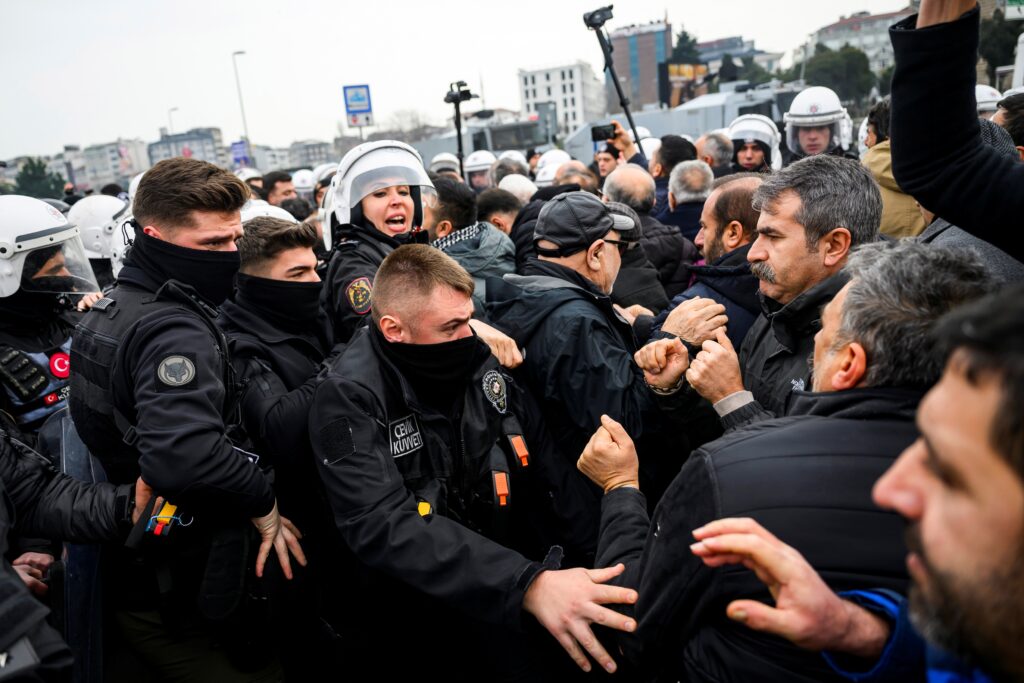
Turkey’s pro-Kurdish DEM party on Saturday called for the blockade on the Kurdish-majority city of Kobane in northern Syria to be lifted immediately, warning of a “humanitarian tragedy”.The situation in Kobane had escalated from a crisis into a “deadly catastrophe”, DEM said after sending a delegation to visit northeastern Syria which over the past week has been targeted by a major Syrian military offensive. The Kurdish-held city, which is also known as Ain al-Arab, is surrounded by the Turkish border to its north and government forces on all sides.It lies around 200 kilometres (125 miles) from the Kurds’ stronghold in Syria’s far northeast.”Both the military and humanitarian siege on Kobane must be lifted as soon as possible,” said DEM co-chair Tulay Hatimogullari. Kurdish forces have withdrawn from areas near Kobane over the past week following pressure from the Syrian military as President Ahmed al-Sharaa seeks to extend his control across the country. As the military offensive advanced, residents of surrounding villages flooded into Kobane, where they were now stranded, Hatimogullari said.”When we went, the snow was knee-deep… Electricity has been cut off, the internet is cut off, water is cut off. This is a great humanitarian tragedy,” she told a news conference.With Kobane’s access to fuel and heating cut off, DEM said four children had frozen to death on Saturday as a result of extreme cold and a lack of shelter. Pharmacies were empty and there was a severe shortage of flour, food and medicine, with hunger widespread, it said. “Guarantor countries… must urgently carry out their responsibilities to lift the siege on northern and eastern Syria,” she said.She was referring to the US and western allies who for years have thrown their support behind the Kurdish-dominated SDF forces that have been forced out of the area.- Another protest banned -Damascus is now demanding the SDF disband, and Washington has indicated its historical alliance with the force has served its purpose.Kobane is highly significant for the Kurds as it was overrun by Islamic State (IS) jihadists in 2014 but the city was liberated in January 2015 by US-backed SDF forces. Although SDF went on to spearhead the fight that forced IS out of Syria in 2019, Turkey has long viewed the force as linked to the Kurdish militant PKK and a major threat along its southern border. It has thrown its weight behind Damascus’s current military offensive, prompting fury from DEM and Turkey’s Kurdish community who have staged a number of protests against the offensive. In Istanbul, scuffles broke out during the afternoon as riot police sought to prevent around 300 people from protesting, firing riot balls and pepper spray to disperse them, an AFP correspondent said.A DEM lawmaker was injured and taken to hospital, local media said, and police could be seen making arrests but it was not clear how many. Earlier on Saturday Turkish President Recep Tayyip Erdogan hailed the ongoing Syrian offensive against the SDF.”Terrorist organisations are being pushed out of those regions by the Syrian army.. All these sources of trouble for our country are being resolved,” he said. “When this separatist terrorist organisation is tackled once and for all in northern Syria, the whole region will benefit from it.”