AFP Asia Business

Gaza civil defence says Israeli forces kill 18

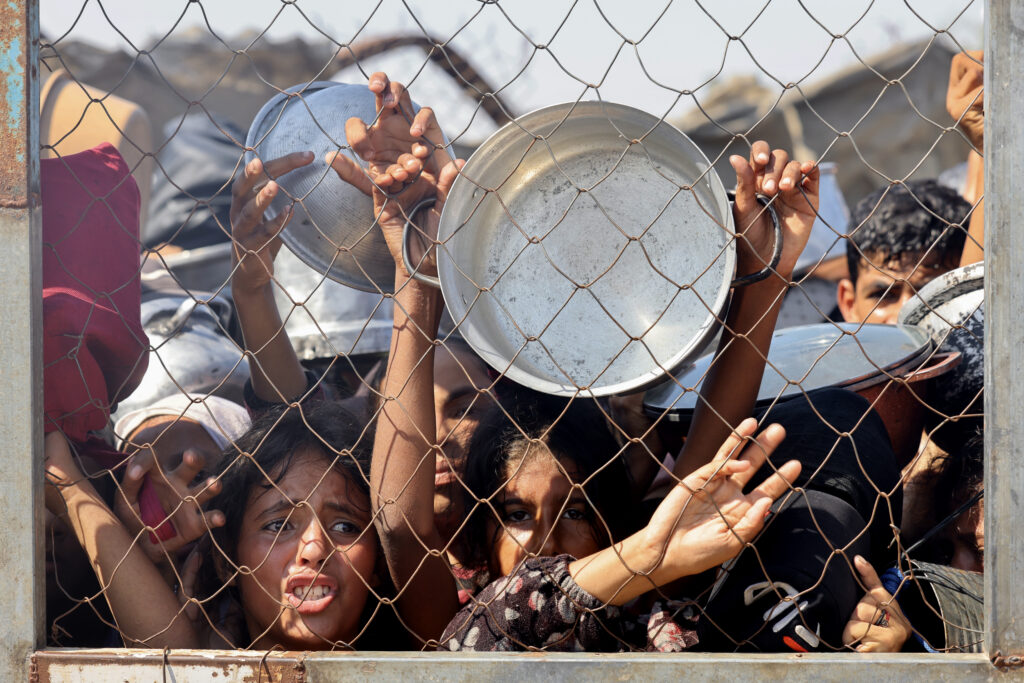
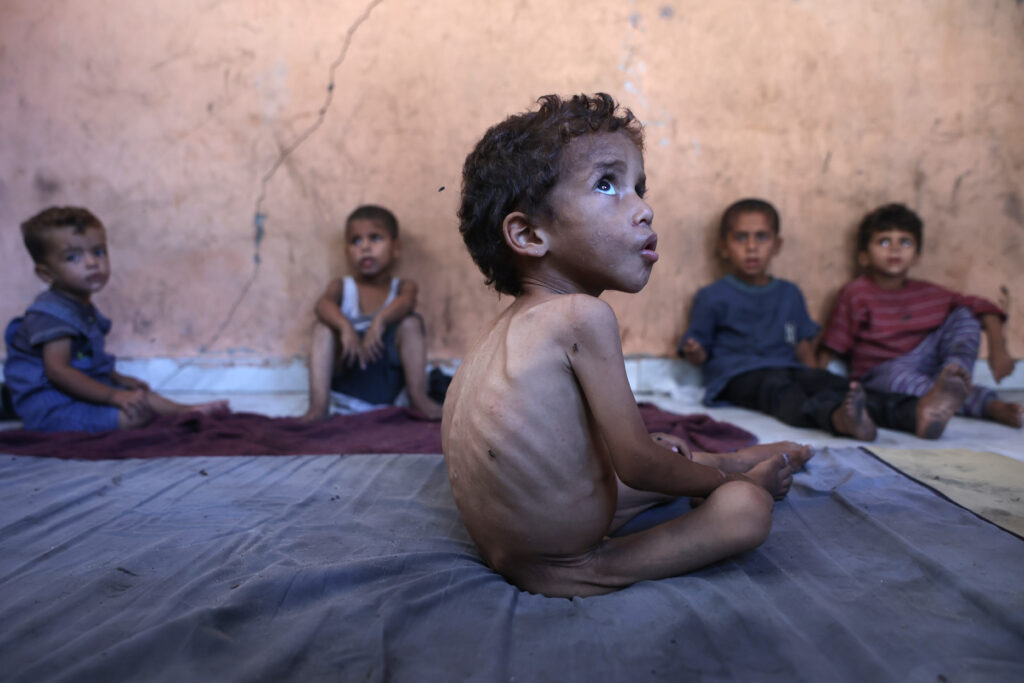
Gaza’s civil defence agency said Israeli forces killed 18 people on Friday, including 10 who were waiting for aid in the south of the war-ravaged territory. The fresh deaths came as the United Nations said nearly 800 people had been killed trying to access food in Gaza since late May, when Israel began easing a more than two-month total blockade on supplies.UN rights office spokeswoman Ravina Shamdasani said most of the deaths occurred near facilities operated by the US- and Israel-backed Gaza Humanitarian Foundation.”We’ve recorded now 798 killings, including 615 in the vicinity of the GHF sites,” from the time the group’s operations began in late May until July 7, Shamdasani said Friday. An officially private effort, GHF operations have been marred by chaotic scenes and frequent reports of Israeli forces firing on people waiting to collect rations.The UN and major aid groups have refused to cooperate with the foundation over concerns it was designed to cater to Israeli military objectives and violates basic humanitarian principles.Responding to the UN’s figures, Israel’s military said it had worked to minimise “possible friction between the population and the IDF forces as much as possible”.”Following incidents in which harm to civilians who arrived at distribution facilities was reported, thorough examinations were conducted… and instructions were issued to forces in the field following lessons learned,” it added.Gaza civil defence official Mohammed al-Mughayyir said that 10 people were shot by Israeli forces on Friday while waiting for supplies in the Al-Shakoush area northwest of Rafah, where there are regular reports of deadly fire on aid seekers. – ‘Extremely difficult’ -The civil defence reported six more people killed in four separate Israeli air strikes in the area of Khan Yunis, in the south of the territory. Two drone strikes around Gaza City in the north killed two more people, civil defence spokesman Mahmud Bassal told AFP. There was no immediate comment on the latest strikes from the Israeli military, which has recently expanded its operations across Gaza.Media restrictions in Gaza and difficulties in accessing many areas mean AFP is unable to independently verify the tolls and details provided by the civil defence agency and other parties.A Palestinian speaking to AFP from southern Gaza on condition of anonymity reported ongoing attacks and widespread devastation, with Israeli tanks seen near Khan Yunis.”The situation remains extremely difficult in the area — intense gunfire, intermittent air strikes, artillery shelling, and ongoing bulldozing and destruction of displacement camps and agricultural land to the south, west and north of Al-Maslakh,” an area to Khan Yunis’s south, said the witness.Israel’s military said in a statement that its soldiers were operating in the area, dismantling “terrorist infrastructure sites, both above and below ground”, and seizing “weapons and military equipment”.The civil defence also reported on Friday five people killed in an Israeli strike the previous night on a school sheltering displaced Palestinians in Jabalia al-Nazla, in northern Gaza. Nearly all of Gaza’s population has been displaced at least once during the more than 21-month war, which has created dire humanitarian conditions for the more than two million people living there.Many have sought shelter in school buildings, but these have repeatedly come under Israeli attack, with the military often saying they were targeting Hamas militants hiding among civilians.bur-mib-phz-acc/smw

What’s at stake as Yemen’s Huthis renew Red Sea shipping attacks?

Yemen’s Huthi rebels have resumed their attacks on Red Sea shipping, saying they aim to force Israel to cease fire in Gaza  — a move that threatens a truce with Washington and rattles maritime trade.The Iran-backed rebels allege that the two vessels they attacked earlier this week — the Magic Seas and the Eternity C — were linked to trade with Israel.But their renewed campaign comes at a pivotal moment when Washington and Tehran are weighing talks following a devastating 12-day Iran-Israel war, while Hamas and Israel are holding truce negotiations in Qatar.What’s at stake for the rebels and why have they decided to resume attacks after a gap of more than six months?- Why now? -The rebels, who have also mounted direct attacks on Israel, have launched more than 100 attacks on vessels in the Red Sea and Gulf of Aden since November 2023, according to the Joint Maritime Information Centre run by Western navies.They paused their attacks during a short-lived Gaza truce earlier this year before renewing them last weekend.The rebels say their aim is to support Palestinians in Gaza. Their political leader, Mahdi al-Mashat, told Hamas negotiators in Doha to “negotiate with your heads held high, for we are with you and all the resources of our people will support you” until the war ends.But analysts say their resumption of attacks goes beyond support for Gaza.It comes shortly after Iran fought a devastating war with Israel without support from its allies in the so-called “axis of resistance”, which also includes Hamas and Lebanon’s Hezbollah.”This is a reminder from the Revolutionary Guard, through its most important ally (the Huthis), that what was withheld in the previous round (of fighting), if repeated, can be activated,” said the chairperson of the Sanaa Center for Strategic Studies, Maged al-Madhaji.Noam Raydan, who tracks maritime attacks for the Washington Institute for Near East Policy, said the Huthis had continued to monitor ship movements throughout the pause in attacks.”They’ve ensured that their presence is always felt”, she said.- What are they hoping to achieve? -Although Iran is their main backer, the Huthis are not just a Tehran proxy: they have ambitions of their own and dreams of a broader regional role.Farea Al-Muslimi, a research fellow at British think tank Chatham House, described the attacks as a “power move” that enabled the Huthis to “project more power regionally and internationally”.Israel’s wars in Gaza and Lebanon have severely weakened both Hamas and Hezbollah, leaving the Huthis as the only member of the “axis of resistance” to emerge relatively unscathed.The rebels have endured repeated air strikes by Israel in response to their drone and missile attacks. Washington too carried out an intensive bombing campaign earlier this year before agreeing to cease fire in May in return for an end to Huthi attacks on international shipping.”While the US campaign badly hit the Huthis’ communication and some military capabilities, they still have huge stock and rebuilt their communications quickly,” said Muslimi, adding that their maritime power “has been booming”.He said that in comparison with their attacks on Israel, which had had only limited success, the Huthis’ attacks on shipping had proved “a very efficient way to make the entire West, and most of the east, bleed.”- What are the risks? -The Huthis’ campaign has caused major disruption to the vital shipping lane through the Bab al-Mandeb strait and the Red Sea that normally carries about 12 percent of global trade.With insurance premiums skyrocketing, many shipping firms have opted to make the time-consuming detour around the southern tip of Africa instead.”Transit via the Bab al-Mandeb strait remains low compared to 2023 – a drop by over 50 percent,” Raydan told AFP.She said the rebels had taken advantage of a decreased naval presence in the area to mount their attacks.”The Huthis appear to have more freedom now to assault freedom of navigation,” she said.The future of a fragile ceasefire with the United States meant to ensure freedom of navigation in the Red Sea is now uncertain.Israeli Foreign Minister Gideon Saar called for action to stop further Huthi attacks.”If the Huthis are not confronted, this problem will only grow,” he warned.

800 killed in Gaza since May 27 trying to get aid: UN

Nearly 800 people have died trying to access aid in Gaza since late May, with most killed near the US- and Israel-backed Gaza Humanitarian Foundation’s sites, the UN said Friday.An officially private effort, the Gaza Humanitarian Foundation (GHF) began operations on May 26 after Israel halted supplies into the Gaza Strip for more than two months, sparking warnings of imminent famine.Since those operations began and through July 7, United Nations rights office spokeswoman Ravina Shamdasani said the agency had recorded “615 killings in the vicinity of the GHF sites”.Another 183 people had been killed “presumably on the routes of aid convoys” carried out by UN and other aid organisations, she told reporters in Geneva.”This is nearly 800 people who have been killed while trying to access aid,” she said, adding that “most of the injuries are gunshot injuries”.GHF operations, which effectively sidelined a vast UN aid delivery network in Gaza, have been marred by chaotic scenes and near-daily reports of Israeli forces firing on people waiting to collect rations.The GHF, which said Thursday it had distributed more than 69 million meals to date, has denied that fatal shootings have occurred in the immediate vicinity of its aid points.The Israeli army has accused Hamas of being responsible for firing at civilians in the vicinity of aid centres.The army said Friday it had issued instructions to Israel’s forces in the field “following lessons learned” after reports of deadly incidents at distribution facilities.It explained that it “allows the American civilian organisation (GHF) to distribute aid to Gaza residents independently, and operates in proximity to the new distribution zones to enable the distribution alongside the continuation of IDF operational activities in the Gaza Strip”.”As part of this effort, IDF forces have recently worked to reorganise the area through the installation of fences, signage placement, the opening of additional routes, and other measures,” it said.The army stressed that “following incidents in which harm to civilians who arrived at distribution facilities was reported, thorough examinations were conducted,” adding those incidents were “under review by the competent authorities in the IDF”.Shamdasani highlighted that the UN rights office had repeatedly raised “serious concerns about respect for international humanitarian law principles” in the war in Gaza, which erupted following Hamas’s deadly October 7, 2023 attack inside Israel.”Where people are lining up for essential supplies such as food and medicine, and where they are being attacked, where… they have a choice between being shot or being fed, this is unacceptable,” she said.

Kurdish PKK fighters destroy weapons at key ceremony

Thirty PKK fighters destroyed their weapons at a symbolic ceremony in Iraqi Kurdistan Friday, two months after the Kurdish rebels ended their decades-long armed struggle against the Turkish state.The ceremony marks a turning point in the transition of the Kurdistan Workers’ Party (PKK) from armed insurgency to democratic politics, as part of a broader effort to draw a line under one of the region’s longest-running conflicts.Analysts say with the PKK weakened and the Kurdish public exhausted by decades of violence, Turkey’s peace offer handed its jailed founder Abdullah Ocalan a chance to make the long-desired switch away from armed struggle.  The PKK’s disarmament also frames President Recep Tayyip Erdogan as the Turkish leader who managed to draw a line under a bloody conflict that cost more than 40,000 lives and wrought havoc in Turkey and beyond. Outside the ancient cave of Casene, a group of 30 PKK fighters, both men and women, gathered on a stage in khaki fatigues, their faces uncovered, in front of an audience of around 300 people, an AFP correspondent at the scene said. One by one, they walked down to lay their weapons in a pit which was then set on fire. Most were rifles but there was one machinegun and one rocket-propelled grenade. As they looked on, people in the crowd started cheering while others could be heard weeping. “We voluntarily destroy our weapons as a step of goodwill,” said a statement read by the PKK’s top woman commander Bese Hozat.”Given the rising fascist pressure… and current bloodbath in the Middle East, our people are more than ever in need of a peaceful, free, equal and democratic life. “In such a context, we fully comprehend the… urgency of the step we have taken,” she said.After the ceremony, the fighters were to return to the mountains, a PKK commander said.- ‘Irreversible turning point’ -Ankara hailed the ceremony as an “irreversible turning point” on the road to peace. “The laying down of arms by PKK militants in Sulaimaniyah — a milestone of the third stage of the ongoing disarmament and decommissioning process — marks a concrete and welcome step,” a senior Turkish official said.”We view this development as an irreversible turning point.”The ceremony followed months of indirect negotiations between Ocalan and Ankara that began in October with Erdogan’s blessing, and were facilitated by Turkey’s pro-Kurdish DEM party.The PKK took up arms in 1984, beginning a string of bloody attacks on Turkish soil that sparked a conflict that cost more than 40,000 lives.But more than four decades on, the PKK in May announced its dissolution, saying it would pursue a democratic struggle to defend the rights of the Kurdish minority in line with a historic call by Ocalan, who has been serving a life sentence in Turkey since 1999.Tensions rose ahead of the ceremony as two drones were shot down overnight near Iraqi Kurdish peshmerga bases, one in Sulaimaniyah, and the other in Kirkuk, according to officials, who said no-one was hurt. – ‘Power of politics’ -Throughout the morning, scores of cars could be seen pulling up to Casene cave, a symbolic location that once housed a Kurdish printing press, Firat news agency said. Representatives of top officials in Iraqi Kurdistan were at the ceremony alongside Turkish intelligence officials, DEM lawmakers and journalists. Earlier this week Ocalan said the disarmament process would be “implemented swiftly”.”I believe in the power of politics and social peace, not weapons. And I urge you to put this principle into practice,” he said. And Erdogan said peace efforts would gain momentum after the disarmament began. “The process will gain a little more speed when the terrorist organisation starts to implement its decision to lay down arms,” he said at the weekend.In recent months, the PKK has taken several historic steps, starting with a ceasefire and culminating in its formal dissolution announced on May 12.The shift followed a historic appeal at the end of February by Ocalan, who has spent the past 26 years in solitary confinement on Imrali prison island near Istanbul. 

Gaza civil defence says Israeli strikes kill seven

Gaza’s civil defence agency said Israeli strikes on Friday killed at least seven people, including five at a school-turned-shelter in the Palestinian territory’s north.”Five martyrs and others injured in an Israeli strike on Halima al-Saadia School, which was sheltering displaced persons in Jabalia al-Nazla, northern Gaza,” the agency said in a brief statement.Nearly all of Gaza’s population has been displaced at least once during the more than 21-month war, which has created dire humanitarian conditions for the more than two million people living there.Many have sought shelter in school buildings, but these have repeatedly come under Israeli attacks that the military often says target Hamas militants hiding among civilians.The civil defence agency also reported two people killed in separate strikes in Gaza City and the southern city of Khan Yunis.There was no immediate comment from the Israeli military, which has recently expanded its military operations across Gaza.Media restrictions in Gaza and difficulties in accessing many areas mean AFP is unable to independently verify the tolls and details provided by the civil defence agency and other parties.A Palestinian speaking to AFP from southern Gaza on condition of anonymity said there were ongoing attacks and widespread devastation, with Israeli tanks seen near Khan Yunis.”The situation remains extremely difficult in the area — intense gunfire, intermittent air strikes, artillery shelling and ongoing bulldozing and destruction of displacement camps and agricultural land to the south, west and north of Al-Maslakh,” an area to Khan Yunis’s south, said the witness.Israel’s military said in a statement that its soldiers were operating in the area, dismantling “terrorist infrastructure sites, both above and below ground” and seizing “weapons and military equipment”.It also said that troops had killed earlier this week two members of Islamic Jihad, a Palestinian armed group which has fought alongside Hamas in Gaza.The military statement said the two dead include an Islamic Jihad commander in Gaza City whom it accused of being part Hamas’s October 7, 2023 attack on Israel that sparked the war.bur-mib-phz-acc/ami

Nobel laureate Mohammadi says Iran issuing death threats

Iranian activist Narges Mohammadi, who won the 2023 Nobel Peace Prize for her fight for women’s and human rights in Iran, has received death threats from Tehran, the Nobel Committee said Friday.Mohammadi, who has spent much of the past decade behind bars, was released from Tehran’s Evin prison in December for a limited period on medical leave, with her legal team repeatedly warning that she could be re-arrested at any time.Norwegian Nobel Committee chair Jorgen Watne Frydnes said in a statement he had received an “urgent phone call” from Mohammadi, 53, who said her life was now in danger.”The clear message, in her own words, is that ‘I have been directly and indirectly threatened with ‘physical elimination’ by agents of the regime’,” he said.”The threats conveyed to Ms. Mohammadi make it clear that her security is at stake, unless she commits to end all public engagement within Iran, as well as any international advocacy or media appearances in support of democracy, human rights, and freedom of expression,” the statement added.The Committee said it was “deeply concerned” about the threats against Mohammadi and “all Iranian citizens with a critical voice, and call upon the authorities to safeguard not only their lives, but also their freedom of expression.”Mohammadi has been repeatedly tried and jailed for her vocal campaigning against Iran’s widespread use of capital punishment and its mandatory dress code for women.She won the Nobel primarily for her fight against the oppression of women in Iran. Her children collected the award on her behalf as she was in prison at the time.