
AFP Asia Business
Lebanese militant to be released after 40 years in French jail
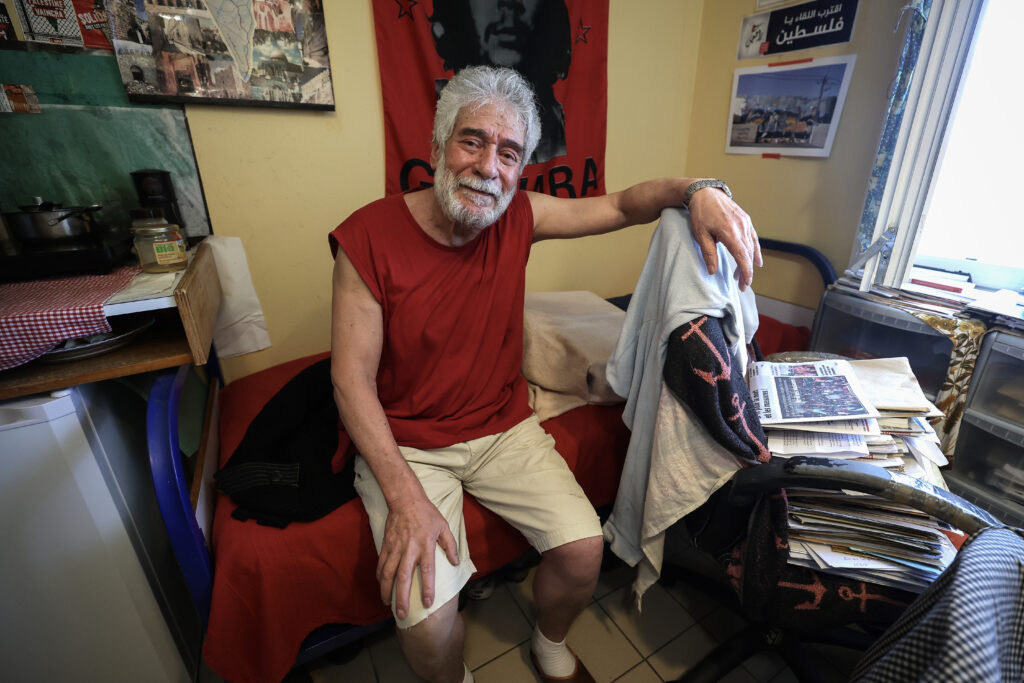
One of France’s longest-held inmates, the pro-Palestinian Lebanese militant Georges Ibrahim Abdallah, will be released and deported on Friday, after more than 40 years behind bars for the killings of two diplomats.At around 3:40 am (01:30 GMT), a convoy of six vehicles left the Lannemezan penitentiary with lights flashing, AFP journalists saw, though they were unable to catch a glimpse of the 74-year-old grey-bearded prisoner.Abdallah was detained in 1984 and sentenced to life in prison in 1987 for his involvement in the murders of US military attache Charles Robert Ray and Israeli diplomat Yacov Barsimantov in Paris.The Paris Court of Appeal had ordered his release “effective July 25” on the condition that he leave French territory and never return.He had been eligible for release since 1999, but his previous requests were denied as the United States — a civil party to the case — consistently opposed him leaving prison.Inmates serving life sentences in France are typically freed after fewer than 30 years.Once out of prison, Abdallah is set to be transported to the Tarbes airport where a police plane will take him to Roissy for a flight to Beirut, according to a source close to the case.Abdallah’s lawyer, Jean-Louis Chalanset, visited for a final time on Thursday. “He seemed very happy about his upcoming release, even though he knows he is returning to the Middle East in an extremely tough context for Lebanese and Palestinian populations,” Chalanset told AFP.AFP visited Abdallah last week after the court’s release decision, accompanying a lawmaker to the detention centre.The founder of the Lebanese Revolutionary Armed Factions (FARL) — a long-disbanded Marxist anti-Israel group — said for more than four decades he had continued to be a “militant with a struggle”.After his arrest in 1984, French police discovered submachine guns and transceiver stations in one of his Paris apartments.The appeals court in February noted that the FARL “had not committed a violent action since 1984” and that Abdallah “today represented a past symbol of the Palestinian struggle”.The appeals judges also found the length of his detention “disproportionate” to the crimes and given his age.Abdallah’s family said they plan to meet him at Beirut airport’s “honour lounge” before heading to their hometown of Kobayat in northern Lebanon where a reception is planned.
Once a leading force, battered Tunisian party awaits elusive comeback
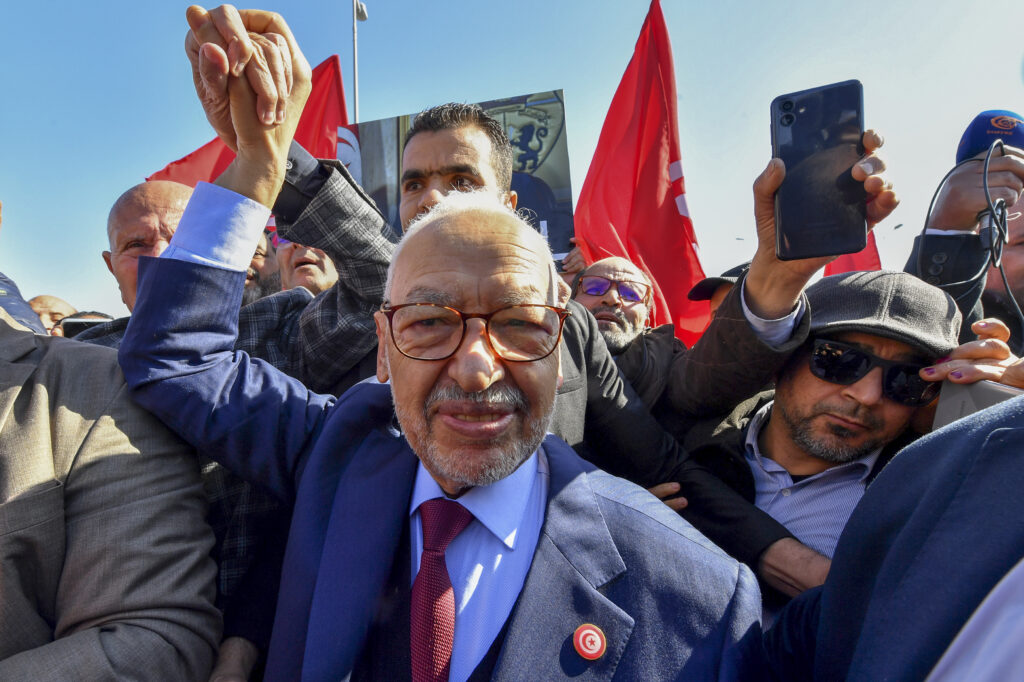
The party that once dominated Tunisian politics has faded away since President Kais Saied staged a dramatic power grab, with its offices shuttered and leaders behind bars or in exile.But observers say that Ennahdha, the Islamist-inspired movement still considered by some Tunisians as the country’s main opposition party, could still bounce back after a devastating government crackdown.On July 25, 2021, Saied stunned the country when he suspended parliament and dissolved the government, a move critics denounced as a “coup” a decade after the Arab Spring revolt ushered in a democratic transition in the North African country.Many of Saied’s critics have been prosecuted and jailed, including Ennahdha leader Rached Ghannouchi, 84, a former parliament speaker who was sentenced earlier this month to 14 years in prison for plotting against the state.Ghannouchi, who was arrested in 2023, has racked up several prison terms, including a 22-year sentence handed in February on the same charge.The crackdown over the past four years has seen around 150 Ennahdha figures imprisoned, prosecuted or living in exile, according to a party official.”Some believe the movement is dead, but that is not the case,” said political scientist Slaheddine Jourchi.Ennahdha has been “weakened to the point of clinical death” but remained the most prominent party in Tunisia’s “fragmented and fragile” opposition, Jourchi added.- ‘Once we’re free again’ -Riadh Chaibi, a party official and adviser to Ghannouchi, said that even after “shrinking” its political platform, Ennahdah was still a relevant opposition outlet.”Despite repression, prosecutions and imprisonment” since 2021, “Ennahdha remains the country’s largest political movement,” Chaibi said.He said the current government has been “weaponising state institutions to eliminate political opponents”, but “once we’re free again, like we were in 2011, Ennahdha will regain its strength”.Since 2011, when Ghannouchi returned from exile to lead the party, Ennahdha for years had a key role in Tunisian politics, holding the premiership and other senior roles.But by 2019, the year Saied was elected president, the party’s popularity had already begun waning, winning only a third of the 1.5 million votes it had in 2011.Experts ascribed this trend to the party’s failure to improve living standards and address pressing socio-economic issues.Ennahdha has also been accused of jihadist links, which it has repeatedly denied.Saied, who religiously avoids mentioning either Ennahdha or Ghannouchi by name, has often referred to the party’s years in power as “the black decade” and accused it of committing “crimes against the country”.Crowds of Tunisians, increasingly disillusioned as a political deadlock trumped Ennahdha’s promise of change, poured into the streets in celebration when Saied forced the party out of the halls of power in 2021.Analyst Jourchi said Ennahdha’s rise to power was a “poorly prepared adventure”, and the party had “made many mistakes along the way”.Left-wing politician Mongi Rahoui said it was “only natural that Ennahdha leaders and their governing partners be prosecuted for crimes they used their political position to commit”.Today, the party’s activities have been reduced mostly to issuing statements online, often reacting to prison sentences handed down to critics of Saied.- ‘Silence everything’ -But Ennahdha has weathered repression before, harshly suppressed under Tunisia’s autocratic presidents Habib Bourguiba and Zine El Abidine Ben Ali.Party leaders were jailed or forced into exile, and Ghannouchi was sentenced to life in prison under Bourguiba but then freed — and later exiled — under Ben Ali.Tunisian historian Abdellatif Hannachi said that the party “seems to be bending with the wind, waiting for changes that would allow it to return”.It has been in “clear decline”, he added, but “that does not mean it’s disappearing.”Ennahdha’s downfall was not an isolated case. Other opposition forces have also been crushed, and dozens of political, media and business figures are currently behind bars.”This regime no longer distinguishes between Islamist and secular, progressive and conservative,” rights advocate Kamel Jendoubi, a former minister, recently said in a Facebook post.Saied’s government “wants to silence everything that thinks, that criticises, or resists”, Jendoubi argued.The opposition, however, remains fractured, failing for example to come together in rallies planned for the anniversary this month of Saied’s power grab.
Macron says France will recognise State of Palestine, angering Israel
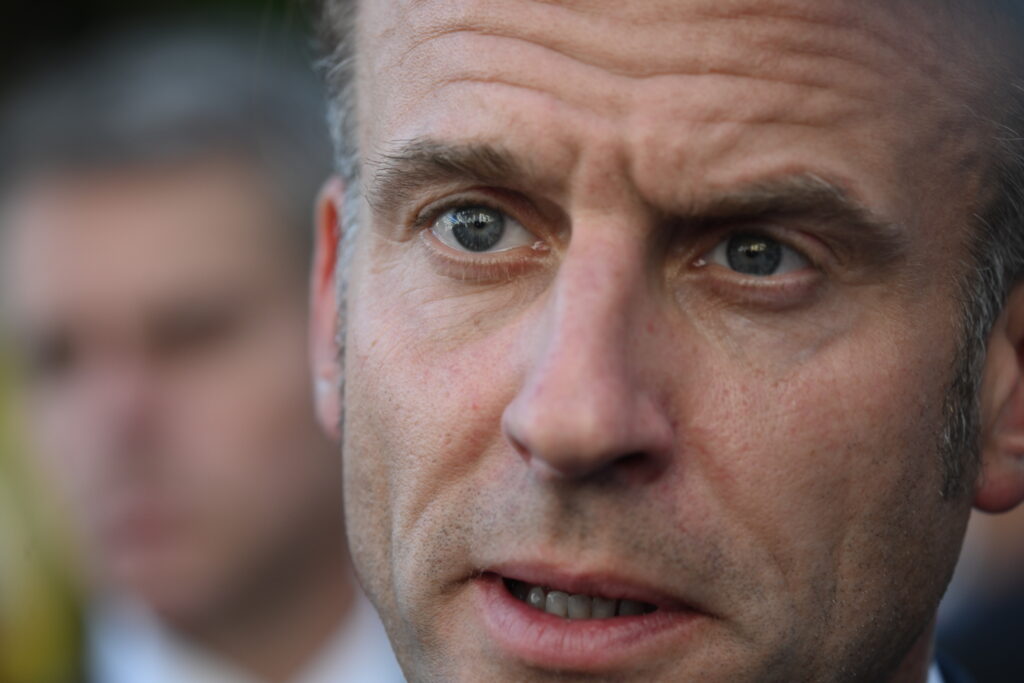
French President Emmanuel Macron said Thursday his country would formally recognise a Palestinian state during a UN meeting in September, the most powerful European nation to announce such a move.At least 142 countries now recognise or plan to recognise Palestinian statehood, according to an AFP tally — though Israel and the United States strongly oppose the move.US Secretary of State Marco Rubio called it a “reckless decision (that) only serves Hamas propaganda”.”It is a slap in the face to the victims of October 7th,” he wrote on X, alluding to the Islamist militant group’s attack on Israel in 2023 that triggered the war in Gaza.Several countries have announced plans to recognise statehood for the Palestinians since Israel launched a bombardment of Gaza nearly two years ago in response to the Hamas attacks.Macron’s announcement drew immediate anger from Israel, with Prime Minister Benjamin Netanyahu saying it “rewards terror” and poses an existential threat to Israel.Netanyahu said in a statement that the decision “risks creating another Iranian proxy, just as Gaza became”, which would be “a launch pad to annihilate Israel — not to live in peace beside it”.Senior Palestinian Authority official Hussein al-Sheikh welcomed the move, saying it “reflects France’s commitment to international law and its support for the Palestinian people’s rights to self-determination and the establishment of our independent state”.Hamas hailed Macron’s pledge as a “positive step in the right direction toward doing justice to our oppressed Palestinian people and supporting their legitimate right to self-determination”.”We call on all countries of the world –especially European nations and those that have not yet recognised the State of Palestine — to follow France’s lead,” it added.- ‘Urgent priority’ -International concern is growing about the plight of the more than two million Palestinians in the Gaza Strip, where the fighting has triggered a dire humanitarian crisis and warnings of mass starvation.Israel has rejected accusations it is responsible for Gaza’s deepening hunger crisis, which the World Health Organization has called “man-made” and France blamed on an Israeli “blockade”.Macron said the “urgent priority today is to end the war in Gaza and rescue the civilian population”.”We must finally build the State of Palestine, ensure its viability and enable it, by accepting its demilitarisation and fully recognising Israel, to contribute to the security of all in the Middle East,” he wrote on social media.On the streets of the occupied West Bank, Palestinians told AFP that they hoped other countries would now follow suit.Mahmoud al-Ifranji called France’s pledge “a moral commitment” and a “political victory for the Palestinian people”.Another man, Nahed Abu Taima, said he hopes France’s decision will help lead to peace.”This recognition will lead to the recognition of Palestine by a number of countries in Europe and the world,” he added. – ‘Path’ to statehood -Macron said he intended to make the announcement at the UN General Assembly in September.While France would be the most significant European power to recognise a Palestinian state, others have hinted they could do the same.Britain’s Prime Minister Keir Starmer announced he would hold a call on Friday with counterparts in Germany and France on efforts to stop the fighting, adding that a ceasefire would “put us on a path to the recognition of a Palestinian state”.Norway, Spain, Ireland and Slovenia all announced recognition following the outbreak of the Gaza conflict, along with several other non-European countries.Spanish Prime Minister Pedro Sanchez, whose country already recognises Palestinian statehood, welcomed Macron’s announcement.”Together, we must protect what Netanyahu is trying to destroy. The two-state solution is the only solution,” the Socialist leader, an outspoken critic of Israel’s offensive in Gaza, wrote on X.Saudi Arabia’s foreign ministry hailed Macron’s announcement as “historic” and urged other countries to follow suit.Ireland’s Foreign Minister Simon Harris in a post on X called France’s move “the only lasting basis for peace and security for Israelis and Palestinians alike”.Israel’s military campaign in Gaza has killed 59,587 Palestinians, mostly civilians, according to the health ministry in the Hamas-run territory.Hamas’s October 2023 attack on Israel resulted in the deaths of 1,219 people, most of them civilians, according to an AFP tally based on official figures.
Macron says France will recognise State of Palestine
French President Emmanuel Macron said Thursday his country would formally recognise a Palestinian state during a UN meeting in September, the most powerful European nation to announce such a move.At least 142 countries now recognise or plan to recognise Palestinian statehood, according to an AFP tally — though Israel and the United States strongly oppose the moves.Several countries have announced plans to recognise statehood for the Palestinians since Israel launched a bombardment of Gaza in 2023 in response to the October 7 attacks.Macron’s announcement drew immediate anger from Israel, with Prime Minister Benjamin Netanyahu saying it “rewards terror” and poses an existential threat to Israel.Netanyahu said in a statement that the move “risks creating another Iranian proxy, just as Gaza became”, which would be “a launch pad to annihilate Israel — not to live in peace beside it”.Senior Palestinian Authority official Hussein al-Sheikh welcomed the move, saying it “reflects France’s commitment to international law and its support for the Palestinian people’s rights to self-determination and the establishment of our independent state”.- ‘Urgent priority’ -International concern is growing about the plight of the more than two million Palestinians in the Gaza Strip, where the fighting has triggered a dire humanitarian crisis and warnings of mass starvation.Israel has rejected accusations it is responsible for Gaza’s deepening hunger crisis, which the World Health Organization has called “man-made” and France blamed on an Israeli “blockade”.Macron said the “urgent priority today is to end the war in Gaza and rescue the civilian population”.”We must finally build the State of Palestine, ensure its viability and enable it, by accepting its demilitarisation and fully recognising Israel, to contribute to the security of all in the Middle East,” he wrote on social media.On the streets of the occupied West Bank, Palestinians told AFP that they hoped other countries would now follow suit.Mahmoud al-Ifranji called France’s pledge “a moral commitment” and a “political victory for the Palestinian people”.”We are very grateful for this French position,” added another man, Nahed Abu Taima, hoping it would lead to peace in Israel’s war against Hamas militants in Gaza.”This recognition will lead to the recognition of Palestine by a number of countries in Europe and the world.” – ‘Path’ to statehood -Macron said he intended to make the announcement at the UN General Assembly in September.While France would be the most significant European power to recognise a Palestinian state, others have hinted they could do the same.Britain’s Prime Minister Keir Starmer announced he would hold a call with counterparts in Germany and France on efforts to stop the fighting on Friday, adding that a ceasefire would “put us on a path to the recognition of a Palestinian state”.Norway, Spain, Ireland and Slovenia all announced recognition following the outbreak of the Gaza conflict, along with several other non-European countries.Spanish Prime Minister Pedro Sanchez, whose country already recognises Palestinian statehood, welcomed Macron’s announcement.”Together, we must protect what Netanyahu is trying to destroy. The two-state solution is the only solution,” the Socialist leader, an outspoken critic of Israel’s offensive in Gaza, wrote on X.Israel’s military campaign in Gaza has killed 59,587 Palestinians, mostly civilians, according to the health ministry in the Hamas-run territory.Hamas’s October 2023 attack on Israel resulted in the deaths of 1,219 people, most of them civilians, according to an AFP tally based on official figures.
Global stocks mostly rise on trade deal hopes while Tesla plummets
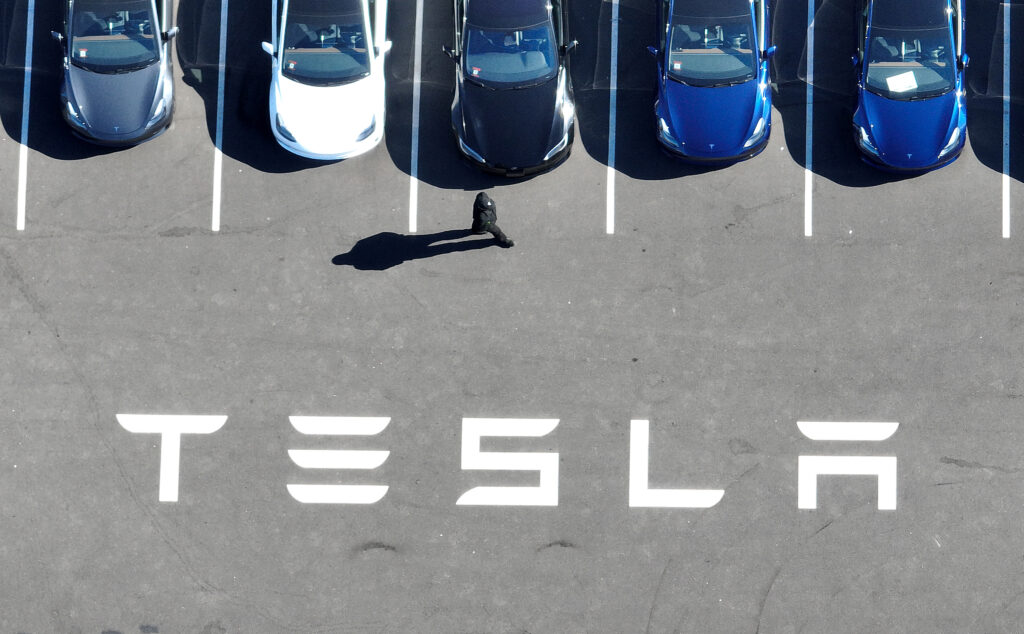
Stock markets mostly bumped upwards Thursday as hopes grew that the European Union could strike a trade deal with the United States, while Tesla shares nosedived on poor earnings results.Investors have profited in recent weeks from wagers that governments will eventually hammer out pacts with Donald Trump ahead of the US president’s looming August 1 …
Global stocks mostly rise on trade deal hopes while Tesla plummets Read More »