AFP Asia Business

Trump says Iran killings stopped as US scales back Qatar base

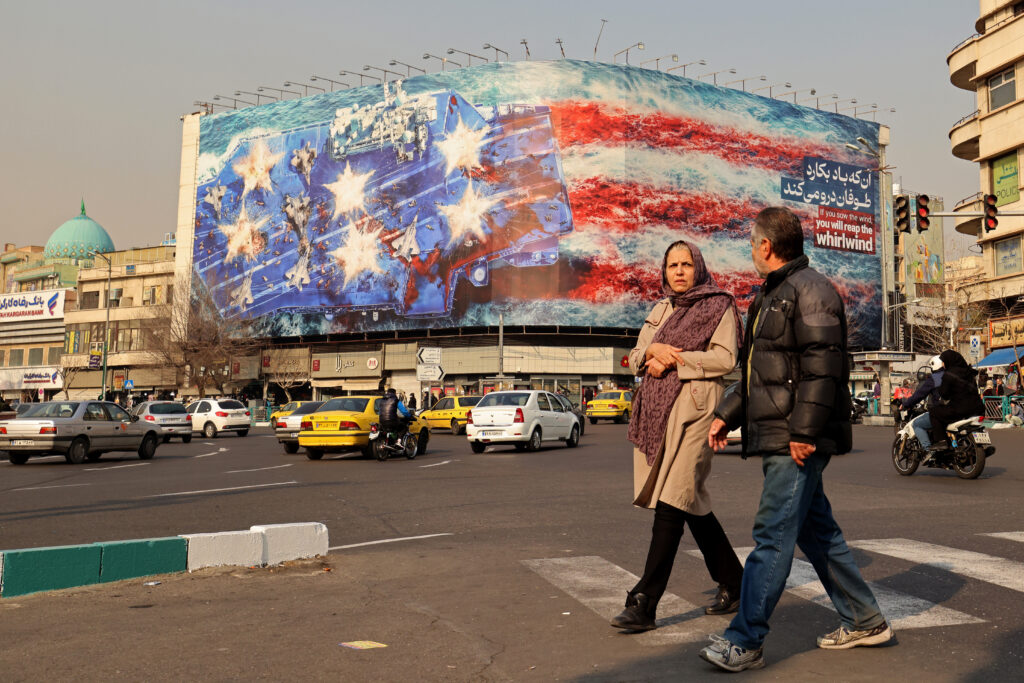
US President Donald Trump said Wednesday he had been told the killings of protesters in Iran had been halted, even as Washington moved to reduce its footprint at a major US military base in Qatar amid mounting pressure in its standoff with Tehran.Speaking at the White House, Trump said he had received assurances from “very important sources on the other side” that the killings had stopped and that planned executions would not go ahead. He offered no details and noted that the United States had yet to verify the claims.”They’ve said the killing has stopped and the executions won’t take place — there were supposed to be a lot of executions today and that the executions won’t take place — and we’re going to find out,” Trump said.”We’ve been told on good authority, and I hope it’s true.”Iran struck a defiant tone, however, warning it could respond to any attack, as Washington appeared to draw down staff at a base Tehran targeted in a strike last year.The standoff between the two foes, who have had no diplomatic ties since the 1979 Islamic revolution, follows Trump’s warning that Tehran could face action over a crackdown on protests that rights groups say has left at least 3,428 people dead.Rights monitors say that under cover of a five-day internet blackout, Iranian authorities are carrying out their harshest repression in years against demonstrations openly challenging the theocratic system.Foreign Minister Abbas Araghchi told US network Fox News the government was “in full control” and reported an atmosphere of “calm” after what he called three days of “terrorist operation.”- Fast-track trials -Iran’s judiciary chief vowed fast-track trials for those arrested, stoking fears authorities will use capital punishment as a tool of repression.In Tehran, authorities held a funeral for more than 100 security personnel and other “martyrs” killed in the unrest, which officials have branded “acts of terror.”Two diplomatic sources told AFP some personnel have been asked to leave the Al Udeid US military base in Qatar, with the Gulf state citing “regional tensions” as the reason.Iran targeted the base in June in retaliation for US strikes on its nuclear facilities. Ali Shamkhani, a senior advisor to supreme leader Ayatollah Ali Khamenei, warned Trump the strike showed “Iran’s will and capability to respond to any attack.”The British government said meanwhile that its embassy in Tehran had been “temporarily closed,” while the US embassy in Saudi Arabia urged staff to exercise caution and avoid military installations.Trump told CBS News on Tuesday the United States would “take very strong action” if Iran began hanging protesters.G7 nations said Wednesday they were “deeply alarmed at the high level of reported deaths and injuries” and warned of further sanctions if the crackdown continued.Judiciary chief Gholamhossein Mohseni Ejei, visiting a prison holding protest detainees, said on state TV that “if a person burned someone, beheaded someone and set them on fire then we must do our work quickly.”He called for public trials, according to Iranian news agencies, and said he had spent five hours reviewing cases in Tehran.- ‘Unprecedented level of brutality’ -Monitor NetBlocks said Iran’s internet blackout had lasted 144 hours. Despite the shutdown, new videos, with locations verified by AFP, showed bodies lined up in the Kahrizak morgue south of Tehran, wrapped in black bags as distraught relatives searched for loved ones.Amnesty International accused authorities of committing mass unlawful killings “on an unprecedented scale,” citing verified videos and eyewitness accounts.The US-based Institute for the Study of War said authorities were using “an unprecedented level of brutality to suppress protests,” noting reports of protest activity had sharply declined.A senior Iranian official told journalists there had been no new “riots” since Monday, distinguishing them from earlier cost-of-living protests. “Every society can expect protests, but we will not tolerate violence,” he said.Prosecutors have said some detainees will face capital charges of “waging war against God.” State media reported hundreds of arrests and the detention of a foreign national for espionage, without giving details.The US State Department said on its Persian-language X account that 26-year-old protester Erfan Soltani had been sentenced to execution Wednesday. The Norway-based Hengaw rights group said it had no new information on his fate due to the communications blackout.Iran Human Rights, also based in Norway, said security forces had killed at least 3,428 protesters and arrested more than 10,000.At Wednesday’s funeral in Tehran, thousands waved Islamic republic flags and prayed for the dead outside Tehran University, state TV images showed. “Death to America!” read banners, while others carried photos of Khamenei.

US says Gaza truce plan entering phase two as governance body formed

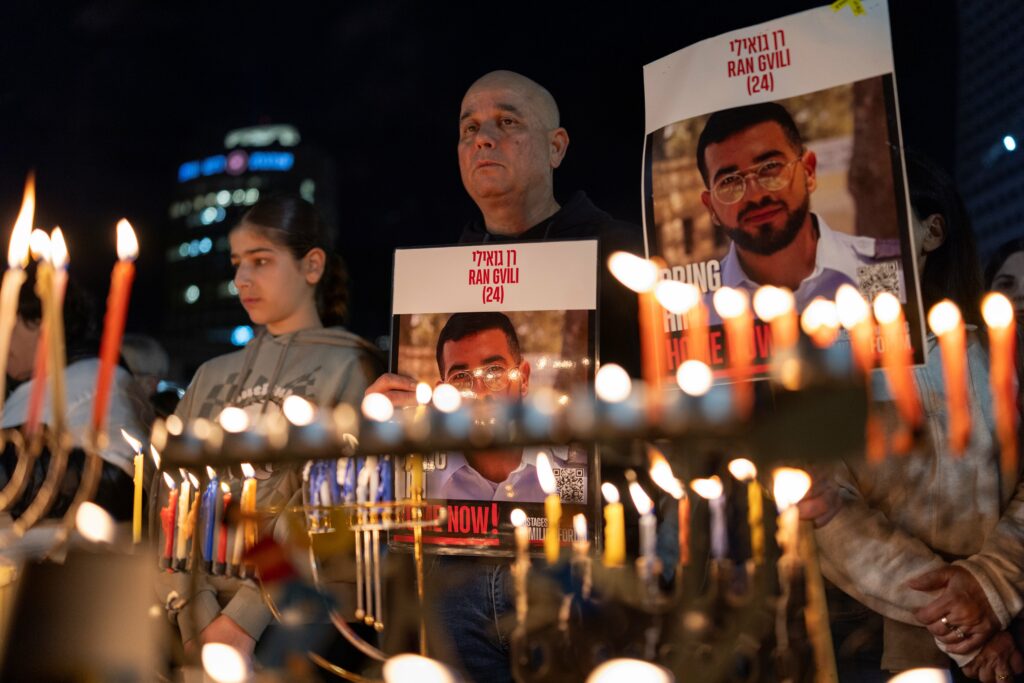
A US-backed plan to end the war in Gaza was moving into its second phase, Washington’s top negotiator said Wednesday, as Palestinian factions agreed on the make-up of a post-war governing committee.President Donald Trump’s envoy Steve Witkoff wrote on X that phase two of the US leader’s 20-point plan would shift the Palestinian territory “from ceasefire to demilitarization, technocratic governance and reconstruction”.Phase one, launched in October, involved a ceasefire, a hostage-prisoner exchange, partial Israeli withdrawal and a surge of humanitarian aid.Under the second phase, Gaza would be run by a 15-member Palestinian technocratic committee supervised by a so-called “Board of Peace”, to be chaired by Trump himself.Egypt said all the members of the committee had been agreed upon by all Palestinian factions, which swiftly offered their support.Ali Shaath, former Palestinian deputy minister in the Palestinian Authority, was named to lead the body, according to a joint statement by mediators Egypt, Turkey and Qatar. The PA — which is dominated by Fatah, Hamas’s rival — governs parts of the occupied West Bank not under Israeli control.The mediators did not disclose the remaining names.Speaking at a press conference in Cairo, Egyptian Foreign Minister Badr Abdelatty said he hoped the committee would soon be deployed to Gaza to “manage daily life and essential services”.Palestinian factions, including Hamas and its ally Islamic Jihad, said they would support the committee and would help create “the appropriate environment” for it to begin its work.The Ramallah-based Palestinian presidency also announced its support, with a source from the office telling AFP the statement “reflects the position of the Fatah movement because President (Mahmud) Abbas is also the head of Fatah”.- Disarming -Hamas has repeatedly said it does not seek a role in any future governing authority in the Palestinian territory, and would limit its role to monitoring governance to ensure stability and facilitate reconstruction.A senior Hamas official, Taher al-Nunu, meanwhile, told AFP the group welcomed Witkoff’s announcement, adding “the factions will make every effort to ensure the success of the committee’s work”. Witkoff said that phase two aims for “the full demilitarization and reconstruction of Gaza, primarily the disarmament of all unauthorized personnel”.It remains unclear how Hamas, which has long resisted disarmament, would comply.Witkoff said the United States expects the Palestinian group to fulfill its obligations, including the return of the last deceased hostage, Ran Gvili, held in Gaza.”Failure to do so will bring serious consequences,” he added.Israel had earlier said it would not begin talks on the second phase of the ceasefire until Gvili is returned.In a statement, the Hostages and Missing Families Forum, together with Gvili’s family, called on Prime Minister Benjamin Netanyahu “to honour his commitment” not to proceed to phase two until Gvili is brought home.Netanyahu said he had spoken with Gvili’s parents and assured them the “move to establish a technocratic committee will not affect the efforts to return Ran”, though he offered no assessment of the committee itself or the progression to phase two.- Next steps -Discussions in Cairo have also focused on the withdrawal of Israeli forces from Gaza, the reopening of the Rafah crossing, the entry of aid currently stockpiled on the Egyptian side of the border and preparations for launching the second phase of the ceasefire plan, a senior Hamas official told AFP.The US-proposed Board of Peace is expected to be led on the ground by Bulgarian diplomat and politician Nickolay Mladenov, who has recently held talks with Israeli and Palestinian officials.Mladenov previously served as the United Nations envoy for the Middle East peace process from early 2015 until the end of 2020.Media reports say Trump is expected to announce the members of the Board of Peace in the coming days, with the body set to include around 15 world leaders.bur-my-bha-jd-maf/phz

Israelis rally in support of Iranian protesters

Around 100 people rallied in a central Israeli city on Wednesday in support of Iranian protesters, as the Islamic republic is shaken by more than two weeks of anti-government demonstrations.Demonstrators in Holon, a city near Tel Aviv home to a large Persian Jewish community, waved Israeli flags next to Iranian flags from before the Islamic revolution in 1979.”Be the voice of the Iranian people,” a sign read in Hebrew and Persian.Demonstrations in Iran erupted last month, moving from protesting economic grievances to demanding a wholesale change from the country’s clerical system.Shuli Israel, a 68-year-old born in Iran who moved to Israel as a child 60 years ago, attended the rally to show solidarity with her compatriots.”My heart is with the Iranians. Their pain is our pain… I can’t stop crying,” she said.She said her Jewish acquaintances in Iran were living in fear.”They are unable to open the door and go out, because they don’t want to be identified as Jews,” she told AFP.The crowd repeatedly shouted chants of “long live the shah”, a slogan used in recent weeks by protesters inside and outside Iran. Some waved pictures of Reza Pahlavi, the US-based son of Iran’s ousted shah.Among them was Miriam Kayam, who moved to Israel from Iran in 1980.”People in Iran have no bread, no life, no freedom,” she said. “I came here to support them.”Arch-foes Iran and Israel fought a 12-day war last year, with Israel launching a wave of strikes on Iranian nuclear facilities, while Iran responded with drone and missile attacks on Israel.

Syrian leader urges Kurdish integration as army sends troops east of Aleppo

President Ahmed al-Sharaa repeated calls on Wednesday for Syria’s Kurds to integrate into the state, as the army deployed reinforcements near a Kurdish-held area east of Aleppo following deadly clashes in the city.Syria’s Islamist-led government is seeking to extend its authority across the country following the ouster of longtime leader Bashar al-Assad a year ago.But progress has stalled on folding the Kurds’ de facto autonomous administration and forces into the central government despite a deal reached in March, and differences between the two sides have occasionally boiled over into fighting.In excerpts broadcast by state television from an unaired interview with the Iraqi Kurdish channel Al Shams, Sharaa said “protecting the Kurdish population requires integration into the new reality, as the Syrian state represents a significant asset for them”.The Syrian army had earlier urged civilians to stay from all Kurdish military positions east of Aleppo, adding that “a humanitarian corridor will be opened towards the city” on Thursday morning until the afternoon.The United States, which for years has supported the Kurdish fighters but also backs Syria’s new authorities, urged all parties to “avoid actions that could further escalate tensions” in a statement by the US military’s Central Command chief Admiral Brad Cooper.Sharaa said Washington “is clearly and explicitly pushing for the unity of Syrian territory and giving Syria a chance to rebuild”, accusing the Kurdish-led Syrian Democratic Forces (SDF) of “going against all these currents”.- ‘Closed military zone’ -Syrian state television on Tuesday published an army statement with a map declaring a large area east of Aleppo city a “closed military zone” and saying “all armed groups in this area must withdraw to the east of the Euphrates” River.State news agency SANA published images on Wednesday showing military reinforcements en route to the area from the coastal province of Latakia, while a military source on the ground, requesting anonymity, said reinforcements were arriving from both Latakia and the Damascus region.Both sides reported limited skirmishes overnight. Kurdish forces in a statement accused government troops of bombing a post office, a bakery and other civilian facilities in Deir Hafer, warning of “a wider confrontation and its serious repercussions on civilians, infrastructure, and vital facilities”.An AFP correspondent on the outskirts of Deir Hafer, on the edge of the closed zone, reported hearing intermittent shelling on Wednesday, which the military source said was the government targeting SDF positions.The SDF controls swathes of the country’s oil-rich north and northeast, much of which it captured during Syria’s civil war and the fight against the Islamic State group.- ‘Connection to Qandil’ -On Monday, Syria accused the SDF of sending reinforcements to Deir Hafer and said it would send its own personnel there in response.Kurdish forces on Tuesday denied any build-up of their personnel and accused the government of attacking the town, while state television said SDF sniper fire there killed one person.Elham Ahmad, a senior official in the Kurdish administration, accused government forces of “preparing themselves for another attack” and breaking the March agreement on Kurdish integration.Syria’s government took full control of Aleppo city over the weekend after capturing its Kurdish-majority Sheikh Maqsud and Ashrafiyeh neighbourhoods and evacuating fighters there to Kurdish-controlled areas in the northeast.Both sides traded blame over who started last week’s violence, which left scores dead according to a monitor.In his interview, Sharaa accused the SDF of having “a clear and public connection to Qandil”, referring to the mountain range in northern Iraq where the Kurdistan Workers’ Party (PKK) is headquartered.Turkey, a key backer of Damascus, has long been hostile to the SDF, seeing it as an extension of the PKK and a major threat along its southern border. Last year, the PKK announced an end to its long-running armed struggle against the Turkish state and began destroying its weapons, but Ankara has insisted that the move includes armed Kurdish groups in Syria.bur-strs/lar/lg/nad/smw