
AFP Asia Business

Global stocks mixed as market focus shifts to earnings deluge
Stock markets were mixed on Tuesday as investors started turning their attention from trade deals to a slew of company results coming this week.New York struggled, while in Europe, London, Paris and Frankfurt all closed higher.In Asia, Shanghai ended higher but Hong Kong and Tokyo lost ground.The muddled picture came as investors continue to digest …
Global stocks mixed as market focus shifts to earnings deluge Read More »
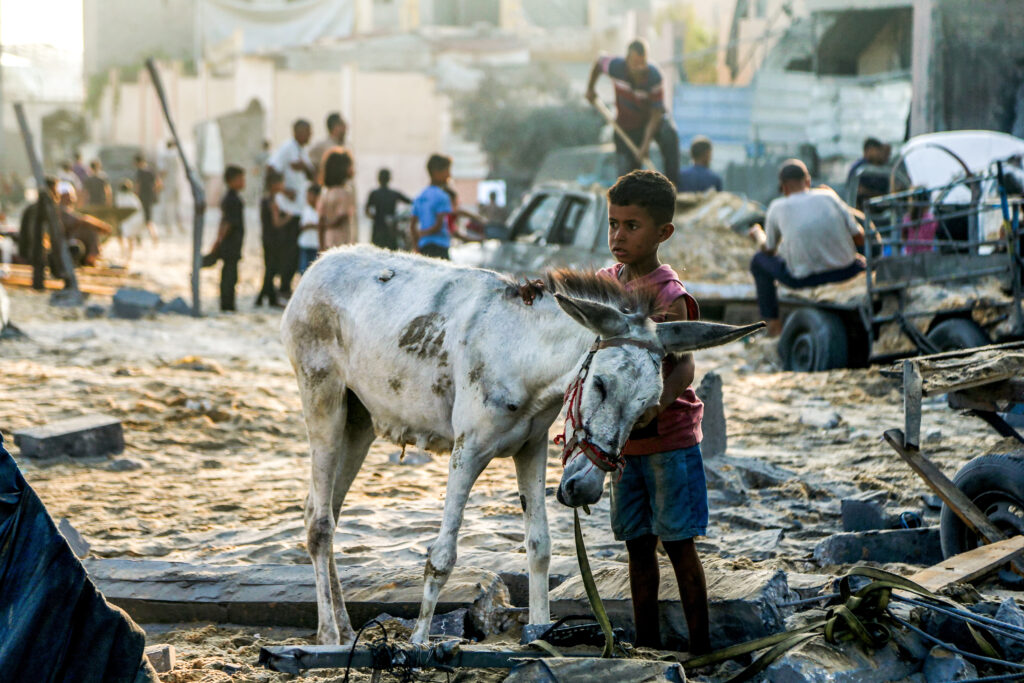
Gaza famine warning as Israel resists ceasefire calls
Gaza is slipping into famine, UN agencies warned on Tuesday, as the health ministry in the Hamas-run territory said the Palestinian death toll in the nearly 22-month war had topped 60,000.The World Food Programme, UNICEF and the Food and Agriculture Organisation warned that time was running out and that Gaza was “on the brink of a full-scale famine”.”We need to flood Gaza with large-scale food aid, immediately and without obstruction, and keep it flowing each and every day to prevent mass starvation,” WFP executive director Cindy McCain said in a joint statement from the agencies. This week, Israel launched daily pauses in its military operations in some parts of Gaza and opened secure routes to enable UN agencies and other aid groups to distribute food in the densely populated territory of more than two million. However, Israeli strikes continued overnight, killing 30 people in the Nuseirat refugee camp, according to Gaza’s civil defence agency — and experts warned a humanitarian catastrophe of historic proportions is imminent.”The worst-case scenario of famine is now unfolding in the Gaza Strip,” said the Integrated Food Security Phase Classification Initiative (IPC), a group of monitors who advise the United Nations on impending crises. The IPC stopped short of declaring a state of famine, but made clear the situation is critical.- Urgent action now -Britain, France and Germany could send their foreign ministers to Israel next week, German Chancellor Friedrich Merz said, adding: “We assume that the Israeli government is willing to acknowledge that something must be done now.” In a statement released ahead of the IPC report, Israeli Prime Minister Benjamin Netanyahu’s office accused Hamas of distorting casualty figures and of looting food intended for civilians.”While the situation in Gaza is difficult and Israel has been working to ensure aid delivery, Hamas benefits from attempting to fuel the perception of a humanitarian crisis,” his office said.”We already allow significant amounts of humanitarian aid into Gaza every single day, including food, water and medicine. Unfortunately, Hamas… has been stealing aid from the Gaza population, many times by shooting Palestinians.”Israel’s international isolation increased Tuesday, when Britain joined France in proposing to recognise a Palestinian state as early as September. “I have always said that we will recognise a Palestinian state as a contribution to a proper peace process at the moment of maximum impact for the two-state solution,” Prime Minister Keir Starmer said.”With that solution now under threat, this is the moment to act.”Israel’s reaction was much like its response to a similar announcement last week by French President Emmanuel Macron. It “constitutes a reward for Hamas and harms efforts to achieve a ceasefire in Gaza”, the foreign ministry said.Israel imposed a total blockade on Gaza on March 2 after ceasefire talks broke down. In late May, it began allowing a small trickle of aid to resume, amid warnings of a wave of starvation.Then on Sunday, faced with mounting international criticism, Israel began a series of “tactical pauses” while allowing aid trucks to pass through two border crossings into Gaza, and Jordanian and Emirati planes to conduct airdrops.Deliveries have been ramped up, but the IPC said this effort would not prove enough unless aid agencies were granted “immediate, unimpeded” humanitarian access.”Failure to act now will result in widespread death in much of the Strip,” it said, adding that 16 children under the age of five had died of hunger since July 17.According to Netanyahu’s office, the pause in military operations covers “key populated areas” between 10:00 am (0700 GMT) and 8:00 pm every day. Designated aid convoy routes will be secure from 6:00 am to 11:00 pm.COGAT, an Israeli defence ministry body in charge of civil affairs in the Palestinian territories, said more than 200 truckloads of aid were distributed on Monday.- Air strikes -Another 260 trucks were permitted to cross into Gaza to deposit aid at collection points, four UN tankers brought in fuel and 20 pallets of aid were airdropped from Jordanian and Emirati planes, COGAT said.Gaza’s civil defence agency said that Israeli air strikes killed at least 30 Palestinians, including women and children, in the central Nuseirat district.The Israeli military said it had “struck several terror targets in the central Gaza Strip”, but that the number of reported casualties “does not align with the information held by the (military)”.The Hamas-run territory’s health ministry said Israel’s campaign had now killed 60,034 people, most of them civilians.The war was sparked by Hamas’s October 2023 attack on Israel, which resulted in the deaths of 1,219 people, the majority civilians, based on an AFP tally of official figures.

US says Trump has ‘final call’ on China trade truce
China and the United States agreed Tuesday to hold further talks on extending their tariff truce, but a top US trade official stressed that President Donald Trump would make any “final call.”The world’s top two economies met for a second day of negotiations in Stockholm, with both sides seeking to avert tariffs from returning to …
US says Trump has ‘final call’ on China trade truce Read More »
China, US to seek extension of tariffs truce after talks
The United States and China were aiming Tuesday to extend a tariffs truce that has seen them lower tit-for-tat levies from punishing levels, after the latest two-day round of talks to reach a trade deal ahead of an August 12 deadline.China’s international trade representative Li Chenggang said the talks in Stockholm were “candid, in-depth, constructive”, …
China, US to seek extension of tariffs truce after talks Read More »

Netherlands bars two hardline Israeli ministers
The Netherlands has declared Israel’s finance and national security ministers persona non grata for inciting violence and urging ethnic cleansing in Gaza.In June, the Netherlands backed a failed Swedish proposal to impose EU sanctions on Finance Minister Bezalel Smotrich and National Security Minister Itamar Ben-Gvir.”They repeatedly incited settler violence against Palestinians, promoted illegal settlement expansion, and called for ethnic cleansing in Gaza,” Dutch Foreign Minister Caspar Veldkamp told parliament in a letter released late Monday.Smotrich responded on X, saying European leaders had succumbed to “the lies of radical Islam that is taking over” and “rising antisemitism”. Ben-Gvir said he would continue to act for Israel, even if he was banned from entering “all of Europe”.”In a place where terrorism is tolerated and terrorists are welcomed, a Jewish minister from Israel is unwanted, terrorists are free, and Jews are boycotted,” he wrote on X. Veldkamp said the Netherlands wanted to “relieve the suffering of the population in Gaza” and was exploring further ways to contribute to humanitarian aid.”Airdrops of food are relatively expensive and risky,” he said. “This is why the Netherlands is also taking steps to further support land-based aid delivery.”Aid drops resumed in Gaza on Sunday as Israel announced temporary humanitarian pauses in parts of the besieged territory.Around 2.4 million Palestinians in Gaza are facing what UN aid agencies have warned is a deadly wave of starvation and malnutrition. The UN-backed Integrated Food Security Phase Classification Initiative (IPC) said on Tuesday that famine is unfolding across much of Gaza, with thresholds breached and over 20,000 children treated for acute malnutrition since April.Veldkamp said the Netherlands would push to suspend the trade element of the EU-Israel Association Agreement if Israel fails to meet its humanitarian obligations.”The summons will also be used to remind Israel to comply with its obligations under international humanitarian law,” he said.After speaking by phone with Israeli President Isaac Herzog, Dutch Prime Minister Dick Schoof said the government’s position was “crystal clear”. “The people of Gaza must be given immediate, unfettered, safe access to humanitarian aid,” he said.Israel’s Foreign Minister Gideon Sa’ar said he had held a formal reprimand with the Dutch ambassador Marriet Schuurman in Jerusalem on Tuesday afternoon.He said he told her that the Dutch government’s policy towards Israel “fuels antisemitism in the Netherlands”.”I said that Israel will not surrender to jihadist forces and, on this occasion, wished the Netherlands success in its future confrontation with radical Islamist elements that have established themselves in its territory,” he said on X.”The Netherlands’ intention to bring about a change in Israeli policy by applying pressure on it — is rejected outright and doomed to fail.”The war in Gaza was sparked by Hamas’s October 7, 2023 attack on Israel, which resulted in the deaths of 1,219 people, most of them civilians, according to an AFP tally based on official figures.Israel’s retaliatory campaign has killed 59,921 Palestinians, also mostly civilians, according to the health ministry in the Hamas-run territory.