
AFP Asia Business
President says Lebanon determined to disarm Hezbollah
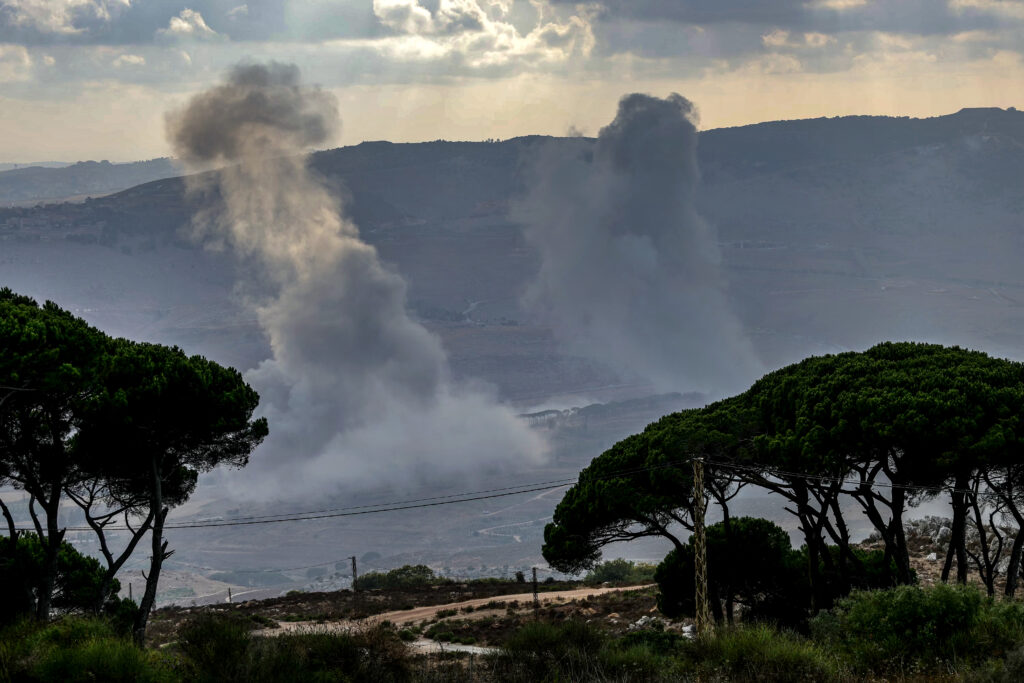
Lebanese President Joseph Aoun said Thursday that he was determined to disarm Hezbollah, a step it has come under heavy US pressure to take, despite the group’s protests that doing so would serve Israeli goals.Hezbollah and Israel fought a two-month war last year that left the militant group badly weakened, though it retains part of its arsenal.Israel has kept up its air strikes on Hezbollah targets despite a November ceasefire, and has threatened to continue them until the group has been disarmed.In a speech on Thursday, Aoun said Beirut was demanding “the extension of the Lebanese state’s authority over all its territory, the removal of weapons from all armed groups including Hezbollah and their handover to the Lebanese army”.He added it was every politician’s duty “to seize this historic opportunity and push without hesitation towards affirming the army and security forces’ monopoly on weapons over all Lebanese territory… in order to regain the world’s confidence”.Under the November ceasefire, Hezbollah was to withdraw its fighters north of the Litani river, about 30 kilometres (20 miles) from the Israeli border.Israel was meant to withdraw all its troops from Lebanon, but has kept them in five areas it deems strategic.The truce was based on a two-decade-old UN Security Council resolution that said only the Lebanese military and UN peacekeepers should possess weapons in the country’s south, and that all non-state groups should be disarmed.However, that resolution went unfulfilled for years, with Hezbollah’s arsenal before the latest war seen as far superior to the army’s, and the group wielding extensive political influence.Aoun took over the presidency in January ending a two-year vacancy — his election by lawmakers made possible in part by the shifting balance of power in the wake of the conflict.On Wednesday, Hezbollah chief Naim Qassem said that “anyone calling today for the surrender of weapons, whether internally or externally, on the Arab or the international stage, is serving the Israeli project”.He accused US envoy Tom Barrack, who has visited Lebanon several times in recent months, of using “intimidation and threats” in his talks with senior officials with the aim of “aiding Israel”.- Collapse or stability -Israel has carried out near daily strikes in Lebanon in recent months, targeting what it says are Hezbollah militants and infrastructure, but the group has refrained from striking back.Israel launched several strikes on Hezbollah strongholds in the south and east on Thursday, targeting what it said were sites used by Hezbollah to manufacture and store missiles.Defence Minister Israel Katz said the targets included “Hezbollah’s biggest precision missile manufacturing site”, and the military said it had hit “infrastructure that was used for producing and storing strategic weapons” in south Lebanon and the Bekaa Valley.In his speech, Aoun said Lebanon was at “a crucial stage that does not tolerate any sort of provocation from any side”.”For the thousandth time, I assure you that my concern in having a (state) weapons monopoly comes from my concern to defend Lebanon’s sovereignty and borders, to liberate the occupied Lebanese territories and build a state that welcomes all its citizens,” he said, addressing Hezbollah’s supporters as an “essential pillar” of society. Lebanon has proposed modifications to “ideas” submitted by the United States on Hezbollah’s disarmament, Aoun added, and a plan would be discussed at a cabinet meeting next week to “establish a timetable for implementation”.Aoun also demanded the withdrawal of Israeli troops, the release of Lebanese prisoners and “an immediate cessation of Israeli hostilities”.”Today, we must choose between collapse and stability,” he said.Hezbollah is the only group that held on to its weapons after Lebanon’s 1975-1990 civil war, doing so in the name of “resistance” against Israel, which occupied south Lebanon until 2000.Lebanon has also committed to disarming Palestinian militant groups that control the country’s refugee camps.
Trump’s envoy in Israel as Gaza criticism mounts
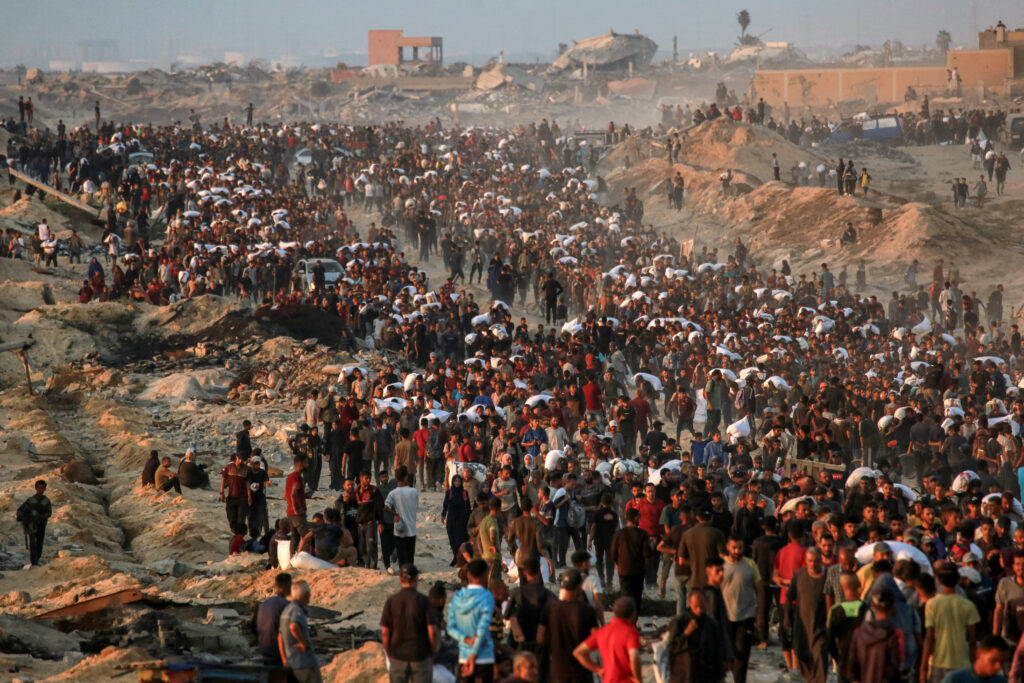
US President Donald Trump’s envoy Steve Witkoff held talks in Israel on Thursday on ways to end the crisis in Gaza, where nearly 22 months of grinding war and dire shortages of food have drawn mounting international criticism.Witkoff, who has been involved in months of stalled negotiations for a ceasefire and hostage release deal, met Prime Minister Benjamin Netanyahu shortly after his arrival, the Israeli leader’s office said.The envoy may also visit a US-backed group distributing food in Gaza, according to Israeli reports.Gaza’s civil defence agency reported at least 58 Palestinians killed late Wednesday when Israeli forces opened fire on a crowd attempting to block an aid convoy — the latest in a spate of near-daily incidents of desperate aid seekers being shot.The Israeli military said troops had fired “warning shots” as Gazans gathered around the aid trucks.An AFP correspondent saw bullet-riddled corpses in Gaza City’s Al-Shifa hospital.Jameel Ashour, who lost a relative in the shooting, told AFP at the overflowing morgue that Israeli troops opened fire after “people saw thieves stealing and dropping food (and) the hungry crowd rushed in hopes of getting some”.Witkoff has been the top US representative in indirect negotiations between Israel and Hamas but the discussions broke down last week when Israel and the United States recalled their delegations from Doha.Israel is under mounting international pressure to agree a ceasefire and allow the world to flood a hungry Gaza with food, with Canada the latest Western government to announce plans to recognise a Palestinian state.Prime Minister Mark Carney said the worsening suffering of civilians in Gaza left “no room for delay in coordinated international action to support peace”.- International pressure -Trump criticised Canada’s decision and, in a post on his Truth Social network, placed the blame for the crisis squarely on Palestinian militant group Hamas, whose October 7, 2023 attack on Israel triggered the war.”The fastest way to end the Humanitarian Crises in Gaza is for Hamas to SURRENDER AND RELEASE THE HOSTAGES!!!” declared Trump, one of Israel’s staunchest international supporters.Earlier this week, however, the US president contradicted Netanyahu’s insistence that reports of hunger in Gaza were exaggerated, warning that the territory faces “real starvation”.UN-backed experts have reported “famine is now unfolding” in Gaza, with images of sick and emaciated children drawing outrage and prompting first France, then Britain and now Canada to line up in support of Palestinian statehood.Portugal on Thursday said it was “considering recognition of the Palestinian state”.Israel is also under pressure to resolve the crisis from other traditional supporters.Germany’s top diplomat Johann Wadephul, who met Israeli Foreign Minister Gideon Saar in Jerusalem on Thursday, warned before setting off that “Israel is finding itself increasingly in the minority”.Wadephul noted that Germany’s European allies increasingly favour recognising Palestinian statehood, which Israeli leaders generally oppose.Reacting to Canada’s announcement, Israel decried a “distorted campaign of international pressure”.The US State Department said it would deny visas to officials from the Palestinian Authority, which exercises limited self-rule in parts of the Israeli-occupied West Bank — the core of any future Palestinian state.- ‘This is what death looks like’ -The Hamas attack that triggered that war resulted in the deaths of 1,219 people, mostly civilians, according to a tally based on official figures.Of the 251 people seized in the attack, 49 are still held in Gaza, including 27 declared dead by the Israeli military.The Israeli offensive, nearing its 23rd month, has killed at least 60,249 Palestinians, most of them civilians, according to Hamas-run Gaza’s health ministry.This week UN aid agencies said deaths from starvation had begun.The civil defence agency said Israeli attacks across Gaza on Thursday killed at least 32 people.”Enough!” cried Najah Aish Umm Fadi, who lost relatives in a strike on a camp for the displaced in central Gaza.”We put up with being hungry, but now the death of children who had just been born?”Further north, Amir Zaqot told AFP after getting his hands on some of the aid parachuted from planes, that “this is what death looks like. People are fighting each other with knives”.”If the crossings were opened… food could reach us. But this is nonsense,” Zaqot said of the airdrops.Media restrictions in Gaza and difficulties accessing many areas mean AFP cannot independently verify tolls and details provided by the civil defence and other parties.burs-dc/ami/kir
Palestinians say settlers’ arson attack kills man in West Bank
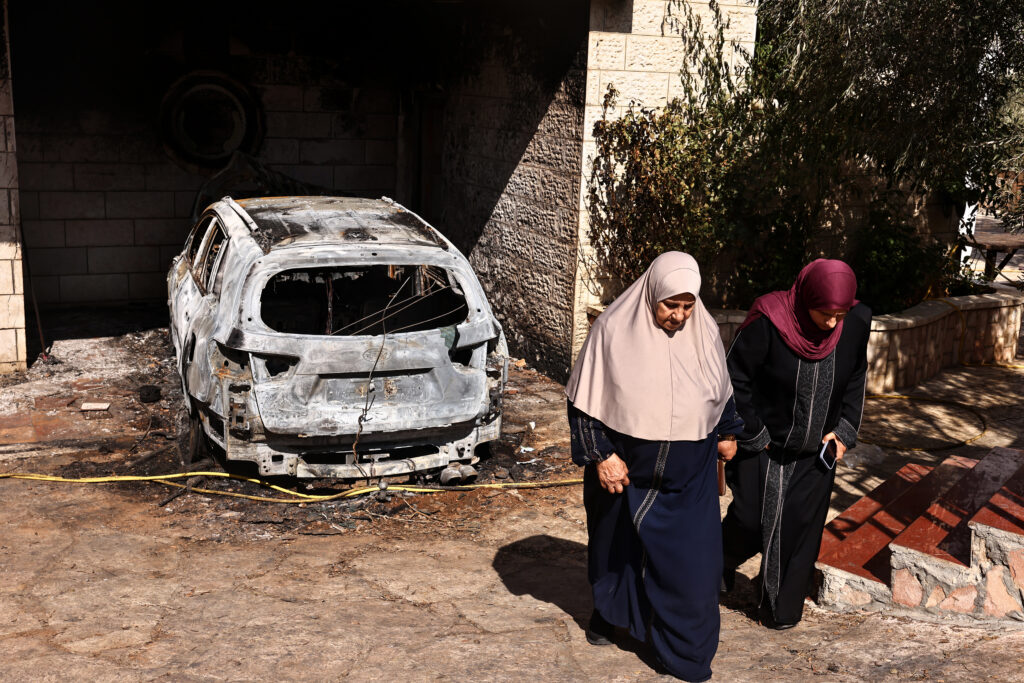
The Palestinian Authority said Israeli settlers set fire to homes and cars in a West Bank village on Thursday, killing one man, in the latest attack in the occupied territory.”Forty-year-old Khamis Abdel-Latif Ayad was martyred due to smoke inhalation caused by fires set by settlers in citizens’ homes and vehicles in the village of Silwad at dawn,” the Palestinian health ministry said in a statement. Witnesses provided corresponding accounts of the attack on Silwad, a village in the central West Bank near several Israeli settlements.Raafat Hussein Hamed, a resident of Silwad whose house was torched in Thursday’s attack, said that “a car dropped them (the settlers) off somewhere, they burned whatever they could and then ran away.”Hamed said the assailants “come from an outpost”, referring to wildcat settlements that are illegal under Israeli law, as opposed to formally recognised settlements.All settlements in the West Bank, which Israel has occupied since 1967, are illegal under international law.The Palestinian Authority (PA) said some villages around Silwad also came under attack by settlers, with vehicles, homes and farmlands set ablaze.According to the PA’s government media office, “Israeli soldiers accompanying the settlers fired live bullets and tear gas at unarmed Palestinian civilians who tried to defend the communities.”Contacted by AFP, the Israeli military said “several suspects… set fire to property and vehicles in the Silwad area”, but forces dispatched to the scene were unable to identify them.It added that Israeli police had launched an investigation.The West Bank is home to some three million Palestinians, who live alongside about 500,000 Israeli settlers.Violence in the territory has surged throughout the Gaza war triggered by Hamas’s October 2023 attack on Israel.Earlier this month, the Palestinian Authority and witnesses in the village of Taybeh — just southeast of Silwad — reported two arson attacks by Israeli settlers.In 2015, a Palestinian couple and their baby burned to death after settlers attacked their village of Duma, also in the central West Bank.According to an AFP tally based on PA figures, Israeli security forces and settlers have killed at least 966 Palestinians, including militants and civilians, in the West Bank since the start of the Gaza war.At least 36 Israelis, including civilians and troops, have been killed in Palestinian attacks or during Israeli military operations over the same period, according to official figures.
Trump’s envoy arrives in Israel as Gaza criticism mounts
US President Donald Trump’s Middle East envoy Steve Witkoff arrived in Israel on Thursday to discuss ways to end the crisis in Gaza, where nearly 22 months of grinding war and dire shortages of food have drawn mounting international criticism.Gaza’s civil defence agency reported dozens of Palestinians killed late Wednesday when Israeli forces opened fire on a crowd attempting to block an aid convoy — the latest in a spate of near-daily incidents of desperate aid seekers being shot.The Israeli military confirmed having fired “warning shots” as Gazans gathered around aid trucks, but said it had no knowledge of casualties in the incident. An AFP correspondent saw the bullet-riddled corpses of Palestinians in Gaza’s Al-Shifa hospital.Jameel Ashour, who lost a relative in the shooting, told AFP at the overflowing morgue that Israeli troops opened fire after a crowd surged towards the convoy. “When people saw thieves stealing and dropping food, the hungry crowd rushed in hopes of getting some,” he said.With talks for a ceasefire and hostage release deal at an impasse, Witkoff met Prime Minister Benjamin Netanyahu to discuss humanitarian aid and the “next steps” on Gaza.He may also visit a US-backed humanitarian group distributing food in Gaza, according to Israeli reports. Footage released by Netanyahu’s office showed the Israeli leader smiling warmly and greeting a cheery Witkoff in his office.Witkoff has been the top US representative in the indirect Israel-Hamas talks, but discussions broke down last week when Israel and the United States recalled their delegations from Doha.Israel is under mounting international pressure to agree a ceasefire and allow the world to flood a hungry Gaza with food, with Canada the latest Western country to announce plans to recognise a Palestinian state.Trump criticised Canada’s decision and, in a post on his Truth Social network, placed the blame for the ongoing conflict squarely on Hamas. “The fastest way to end the Humanitarian Crises in Gaza is for Hamas to SURRENDER AND RELEASE THE HOSTAGES!!!” he declared.- Growing pressure -Trump has been Israel’s staunchest international defender, but the two leaders have occasionally found themselves at odds of late.Earlier this week Trump promised to get more humanitarian aid into Gaza, warning that the territory faces “real starvation” — directly contradicting Netanyahu’s insistence that reports of hunger were exaggerated.UN-backed experts, meanwhile, have reported “famine is now unfolding” in Gaza, with images of sick and emaciated children drawing outrage and powers like France, Britain and now Canada lining up to support Palestinian statehood.Israel is also under pressure to resolve the crisis from other traditional supporters. Germany’s top diplomat Johann Wadephul was expected in Jerusalem on Thursday for talks with Netanyahu and Israeli Foreign Minister Gideon Saar. “Israel is finding itself increasingly in the minority,” Wadephul warned before setting off, noting that Germany’s European allies increasingly favour recognising Palestinian statehood.In Canada, Prime Minister Mark Carney warned that the worsening suffering of civilians in Gaza left “no room for delay in coordinated international action to support peace”.Israel blasted Canada’s announcement as part of a “distorted campaign of international pressure”, while Trump warned that trade negotiations with Ottawa could be hurt by what Washington regards as a premature bid to back Palestine.- ‘Warning shots’ -The fighting in Gaza has lasted for almost 22 months, triggered by Hamas’ October 7, 2023 attack on Israel, which left 1,219 people dead, according to a tally based on official figures.Of the 251 Israelis kidnapped that day, 49 are still held in Gaza, 27 of them declared dead by the Israeli military.The Israeli campaign has since killed 60,249 Palestinians, according to a tally from the Hamas government’s health ministry, and this week UN aid agencies warned that deaths from starvation had begun.On Wednesday night, Gaza’s civil defence agency said gunfire killed at least 58 people in a crowd gathered around a humanitarian aid convoy in the north of the territory.According to an AFP correspondent and witnesses, the trucks had entered Gaza through the Israeli military checkpoint at Zikim, on their way to World Central Kitchen and the World Food Programme warehouses in Gaza City. Thousands of people rushed to stop the trucks before they continued to the warehouses, and shooting erupted.Separately, the Hamas-led Gaza government’s health ministry issued a statement Thursday begging Palestinians not to loot a new aid convoy, warning that it contained no food but instead medical supplies for the territory’s hard-pressed hospitals.Another 32 people were reported killed by the civil defence agency on Thursday in Israeli attacks across Gaza.Media restrictions in Gaza and difficulties accessing many areas mean AFP cannot independently verify tolls and details provided by the civil defence and other parties.burs-dc/jsa
Thousands of Afghans scramble for chance to work in Qatar
When Mohammad Hanif heard Qatar was opening jobs to Afghans, he joined thousands of others to put his name down for a shot to make a living in the gas-rich emirate, his own country wracked by unemployment.The Taliban authorities announced a deal with Gulf state this month to recruit 3,100 workers from Afghanistan, who started …
Thousands of Afghans scramble for chance to work in Qatar Read More »
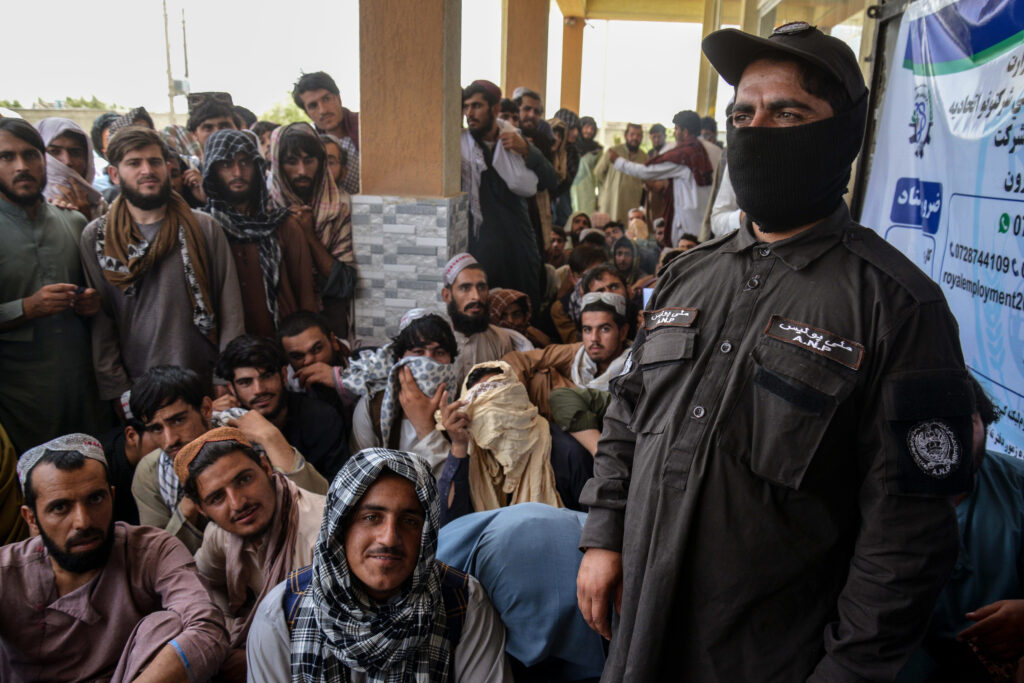
Thousands of Afghans scramble for chance to work in Qatar
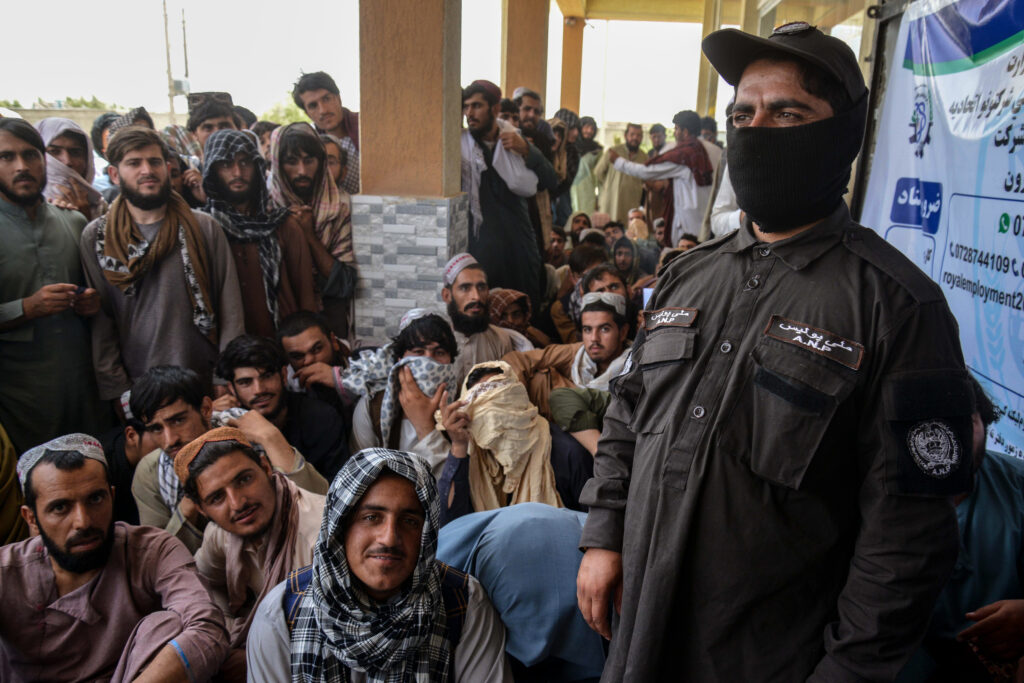
When Mohammad Hanif heard Qatar was opening jobs to Afghans, he joined thousands of others to put his name down for a shot to make a living in the gas-rich emirate, his own country wracked by unemployment.The Taliban authorities announced a deal with Gulf state this month to recruit 3,100 workers from Afghanistan, who started applying on Tuesday at centres across the country.By Wednesday, more than 8,500 people had put their names down from the capital Kabul and surrounding provinces, labour ministry spokesman Samiullah Ibrahimi told AFP, and more than 15,500 people are expected to register nationwide.The Taliban government says the jobs will help fight steep unemployment and poverty in the country of around 48 million people, facing what the United Nations says is one of the world’s worst humanitarian crises. “Our country has many problems, most people are poor and work odd jobs,” said Hanif, who travelled to western Herat from neighbouring Badghis to register. “I have skills in car mechanics and cooking, and I have certificates to prove it,” said the 35-year-old, adding he was grateful to Qatar for employing Afghans. Competition is steep, however, with centres swarmed by hopeful applicants ready to present the required passports, identification cards and professional certificates to nab roles ranging from bus driver to cleaner, cook, mechanic and electrician. More than 1,000 people have applied in southern Kandahar for around 375 positions allocated to the region, and in Herat, around 2,000 people lined up on Wednesday to try for one of a few hundred jobs, AFP journalists said. – Doha instead of Tehran -Qatar, where the Taliban opened an office during the two-decade war with US-led forces, is one of the handful of countries to have strong diplomatic ties with Afghanistan’s rulers after they swept to power in 2021. Only Russia has so far officially recognised the Taliban government.Discussions are also underway with Saudi Arabia, the United Arab Emirates, Oman, Turkey and Russia to set up similar deals, labour minister Abdul Manan Omari said in a statement on Tuesday. The process “will undoubtedly have a positive impact on the country’s economic situation and reduce unemployment”, said Abdul Ghani Baradar, the deputy prime minister for economic affairs.Nearly half of Afghanistan’s population lives in poverty, and the unemployment rate (over 13 percent) affects nearly a quarter of young people aged 15 to 29, according to the World Bank. Those who do have work often support large, extended families on stretched salaries.High unemployment has been driven by infrastructure hamstrung by 40 years of conflict, drought impacting the crucial agriculture sector and the recent mass removals of Afghans from neighbouring countries, said Noorullah Fadwi, head of an association of job search companies. This year, nearly two million Afghans have returned to their country after being driven out or deported from Iran and Pakistan, where many had lived for decades. “We are grateful to Qatar and ask other (Arab) countries to hire Afghan workers too, because the situation in Iran and Pakistan is very bad,” said 39-year-old Noor Mohammad, who registered in Herat, hoping for a hotel job.- ‘There is nothing’ -The Taliban authorities have not yet detailed how the Afghan recruits will be housed or their potential working conditions, while pledging to safeguard their rights.Qatar, where foreigners make up nearly 90 percent of the three million-strong population, has faced heavy criticism over the treatment of migrant labourers, particularly during construction leading up to hosting the 2022 FIFA World Cup. Qatar has since introduced major reforms to improve workers’ safety and punish employers who violate the rules.It has dismantled its “kafala” labour system, which gave employers powerful rights over whether workers could leave their jobs or even the country.Mohammad Qasim, 37, said he would not go to Qatar if he could find a job in Afghanistan, but he earned a university degree in education four years ago and has been unemployed ever since.”I tried very hard to find work but there is nothing,” he told AFP, saying he applied to be a cleaner at a centre in Kandahar.At least in Qatar, he said, “I will earn something.”

Hong Kong sees 3.1% growth in second quarter
Hong Kong’s economy grew by 3.1 percent in the second quarter, according to government estimates released Thursday, beating expectations, with strong exports buoyed by businesses racing to take advantage of US tariff easing.Hong Kong is a special administrative region in China with its own trade policies, but is still vulnerable to tariff threats from US …