
AFP Asia Business
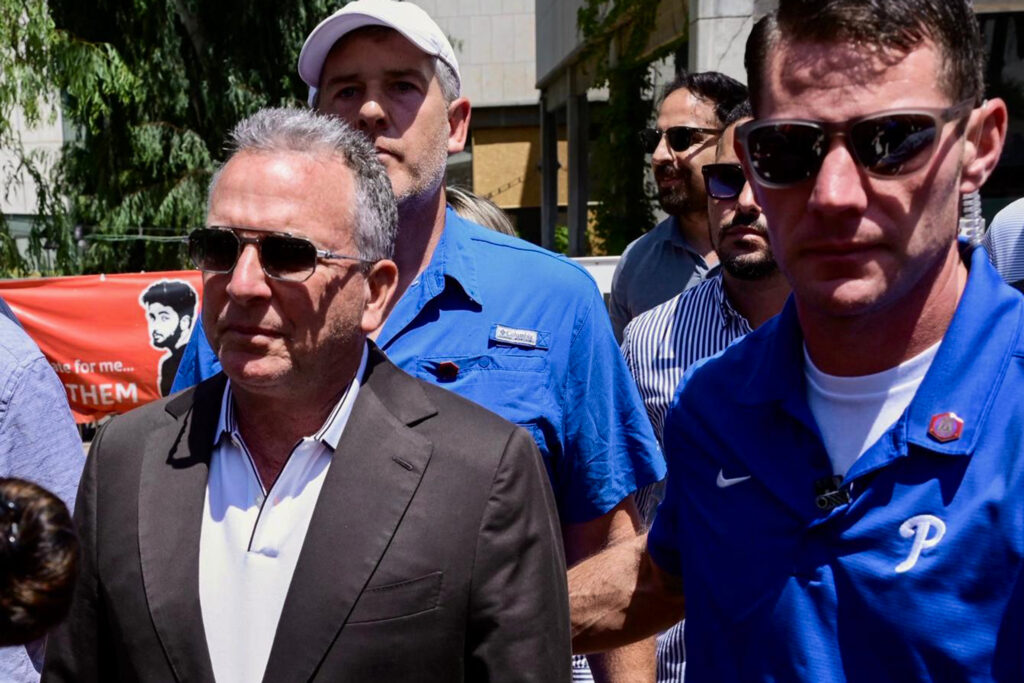
US envoy meets Israeli hostage families in Tel Aviv
US envoy Steve Witkoff met anguished relatives of Israeli hostages still held in Gaza on Saturday, as fears for the captives’ survival mounted almost 22 months into the war sparked by Hamas’s October 2023 attack.Witkoff was greeted with some applause and pleas for assistance from hundreds of protesters gathered in Tel Aviv, before going into a closed meeting with the families.Videos shared online showed him arriving to meet the Hostages and Missing Families Forum, as families chanted “Bring them home!” and “We need your help.”The meeting came one day after Witkoff visited a US-backed aid station in Gaza to inspect efforts to get food into the devastated Palestinian territory.”The war needs to end,” Yotam Cohen, brother of 21-year-old hostage Nimrod Cohen, told AFP.”The Israeli government will not end it willingly. It has refused to do so,” he added.”The Israeli government must be stopped. For our sakes, for our soldiers’ sakes, for our hostages’ sakes, for our sons and for the future generations of everybody in the Middle East.”Of the 251 hostages taken during the Hamas attack, 49 are still being held in Gaza, including 27 the Israeli military says are dead.After the meeting, the Forum released a statement saying Witkoff had given them a personal commitment that he and US President Donald Trump would work to return the remaining hostages.- ‘Horrifying acts’ -Hamas attempted to maintain pressure on the families, on Friday releasing a video of one of the hostages — 24-year-old Evyatar David — for the second time in two days, showing him looking emaciated in a tunnel.The video called for a ceasefire and warned that time was running out for the hostages. David’s family said their son was the victim of a “vile” propaganda campaign and accused Hamas of deliberately starving their son.”The deliberate starvation of our son as part of a propaganda campaign is one of the most horrifying acts the world has seen. He is being starved purely to serve Hamas’s propaganda,” the family said. French Foreign Minister Jean-Noel Barrot on Saturday also denounced the video, and one released a day earlier by another Palestinian Islamist group, as “despicable”.”They must be freed, without conditions,” he posted on X. “Hamas must be disarmed and excluded from ruling Gaza.”The United States, along with Egypt and Qatar, had been mediating ceasefire talks between Hamas and Israel that would allow the hostages to be released and humanitarian aid to flow more freely.But talks broke down last month and Israeli Prime Minister Benjamin Netanyahu’s government is under domestic pressure to come up with another way to secure the missing hostages, alive and dead.He is also facing international calls to open Gaza’s borders to more food aid, after UN and humanitarian agencies warned that more than two million Palestinian civilians are facing starvation.- ‘Without rest’ – Israel’s top general warned that there would be no respite in fighting if the hostages were not released.”I estimate that in the coming days we will know whether we can reach an agreement for the release of our hostages,” armed forces chief of staff Lieutenant General Eyal Zamir said in a statement.”If not, the combat will continue without rest.”Zamir denied that there was widespread starvation in Gaza. “The current campaign of false accusations of intentional starvation is a deliberate, timed, and deceitful attempt to accuse the IDF (Israeli military), a moral army, of war crimes,” he said.Alongside reports from UN-mandated experts warning a “famine is unfolding” in Gaza, more and more evidence is emerging of serious malnutrition and deaths among the most vulnerable Palestinian civilians.Modallala Dawwas, 33, living in a displacement camp in Gaza City told AFP her daughter Mariam had no known illnesses before the war but had now dropped from 25 kilograms (four stone) to 10 (around one and half stone) and was seriously malnourished. Hamas’s 2023 attack resulted in the deaths of 1,219 people, mostly civilians, according to a tally based on official figures.Israel’s campaign in Gaza has killed at least 60,332 people, mostly civilians, according to figures from the Hamas-run territory’s health ministry, deemed reliable by the UN.The Palestine Red Crescent Society said in a post on X early Sunday that one of its staff members was killed and three others wounded in an Israeli attack on its Khan Yunis headquarters in Gaza.Gaza’s civil defence agency said Israeli fire killed 34 people in the territory on Saturday.Five people were killed in an Israeli strike on an area of central Gaza where Palestinians were awaiting food distribution by the US-backed Gaza Humanitarian Foundation (GHF), civil defence spokesman Mahmud Bassal said.The GHF has largely sidelined the longstanding UN-led aid distribution system in Gaza, just as Israel in late May began easing a more than two-month aid blockade that exacerbated existing shortages.The UN human rights office in the Palestinian territories said at least 1,373 Palestinians seeking aid in Gaza were killed since May 27, adding that most of them were killed near GHF sites, and by the Israeli military.burs-gv/jj/tc/sco
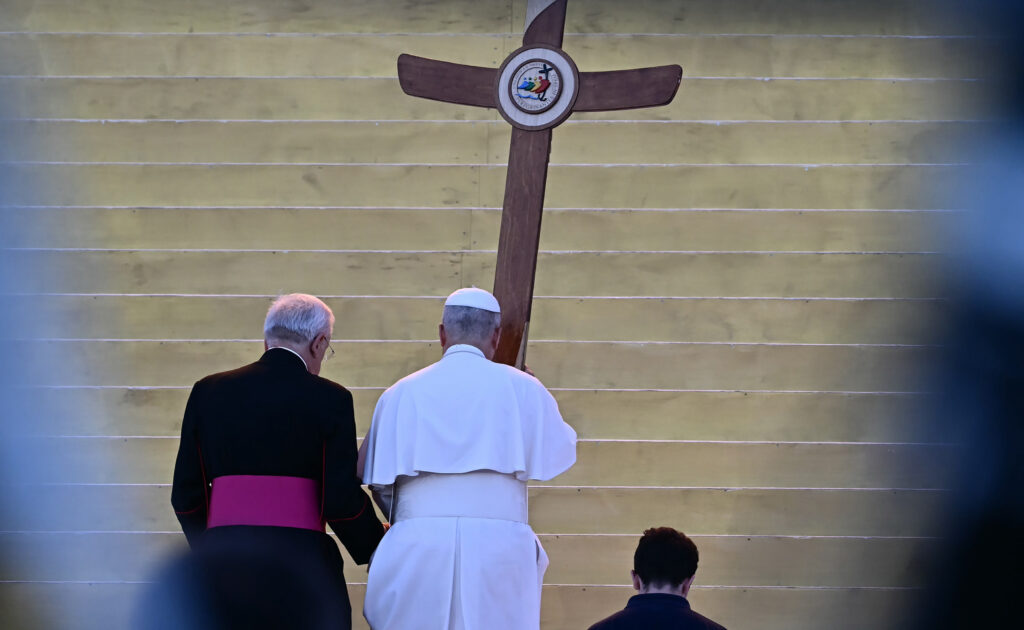
Young Catholics give rock star welcome to Pope Leo at vigil
Hundreds of thousands of young faithful feted Pope Leo XIV like a rock star Saturday at an open-air prayer vigil outside Rome, after the head of the Catholic Church made a dramatic entrance by helicopter.Pilgrims began crying and cheering when the white military helicopter descended over the sprawling, open-air site in Rome’s eastern outskirts;Organisers said as more than 800,000 young pilgrims from 146 countries around the world had assembled there as part of a “Jubilee of Youth” — and perhaps as many as a million.Smiling broadly from his popemobile, the first American pope waved to throngs of young, screaming pilgrims lining his route, many of them running for a better vantage point.They had already spent the day in the hot sun listening to music, praying and talking with fellow Catholics.”The pope is here!” announced an excited voice over the public address, to thunderous applause and cheers from the crowd.But the tenor of the event soon became more solemn and contemplative as the pope took to the stage, carrying a large wood cross. “Dear young people, after walking, praying and sharing these days of grace of the Jubilee dedicated to you, we now gather together in the light of the advancing evening to keep vigil together,” Leo, 69, told them.- A Catholic ‘Woodstock’-In the crowd was French pilgrim Julie Mortier, 18, whose voice was hoarse from singing and screaming for hours.”We’re too happy to be here! Seeing the pope, that’s a once-in-a-lifetime opportunity!” she croaked happily to AFP. Event organisers said people had continued to arrive during the vigil and that it was possible that attendance numbers had reached one million. Most pilgrims said they would camp overnight for a Sunday morning mass at the site led by Leo. That will mark the culmination of the week-long youth pilgrimage, a key event in the Catholic Church’s Jubilee holy year.Some in the crowd were so far away, they could not see the massive stage with a golden arch and towering cross that dominated the vast open area — which at over 500,000 square metres was the size of around 70 football fields.”I’m so happy to be here, even if I’m a bit far from the pope. I knew what to expect!” British student Andy Hewellyn told AFP.”The main thing is that we’re all together,” he said ahead of the pope’s appearance, as other young people nearby played guitars, sang, or snoozed in the sun.Italian broadcaster Rai dubbed the event a Catholic “Woodstock”, as throughout the day nearly two dozen musical and dance groups, many of them religious, entertained the crowds, who lounged among blankets, cushions and umbrellas.In a video message, Italian Prime Minister Giorgia Meloni welcomed pilgrims to the capital, who were “praying, singing, joking amongst themselves, celebrating in an extraordinary party”.- Water and suncream -The “Jubilee of Youth”, which began Monday, comes nearly three months after the start of Leo’s papacy, and 25 years after the last such massive youth gathering in Rome under Poland’s Pope John Paul II.Early Saturday, countless groups of young people set off from central Rome for the venue in Tor Vergata after filling water bottles, applying suncream and adjusting backpacks.They were ready to spend the next 24 hours surrounded by a crowd of people and then sleep under the stars.Victoria Perez, who carried a Spanish flag, could not contain her excitement at seeing “the pope up close”.”It’s the first time I’m going to see him, and I can’t wait,” the 21-year-old told AFP, looking forward to a “night of prayers under the stars”. French pilgrim Quentin Remaury, 26, said he had been inspired by the late pope Francis’s rousing message to youth during a 2016 visit to Krakow, Poland. “Pope Francis told us to ‘get off your couches,’ and that really gave me a boost,” he said. – Open-air confessional – Throughout the week, attendees have participated in Church-planned events, such as confession at Circus Maximus, one of Rome’s top tourist spots.On Friday, approximately 1,000 priests were on hand, with 200 white gazebos serving as makeshift confessionals lining the hippodrome where chariot races were once held in Ancient Rome.The pilgrimage unfolds as under-30s navigate economic uncertainty, climate change, and ongoing international conflict, with some pilgrims travelling from war-torn areas like Syria and Ukraine. Samarei Semos, 29, who said she had travelled three days from her native Belize to get to Rome, said she hoped Leo would have a strong say about “third world countries”. The Vatican said that before the vigil the pope had met and prayed with travellers accompanying an 18-year-old Egyptian pilgrim who died Friday night. Rai News reported that the young woman had died of a heart attack on a bus while returning to her lodging from an event in Rome.Amid tight security, more than 4,300 volunteers and over 1,000 police are watching over the vigil, organisers said.
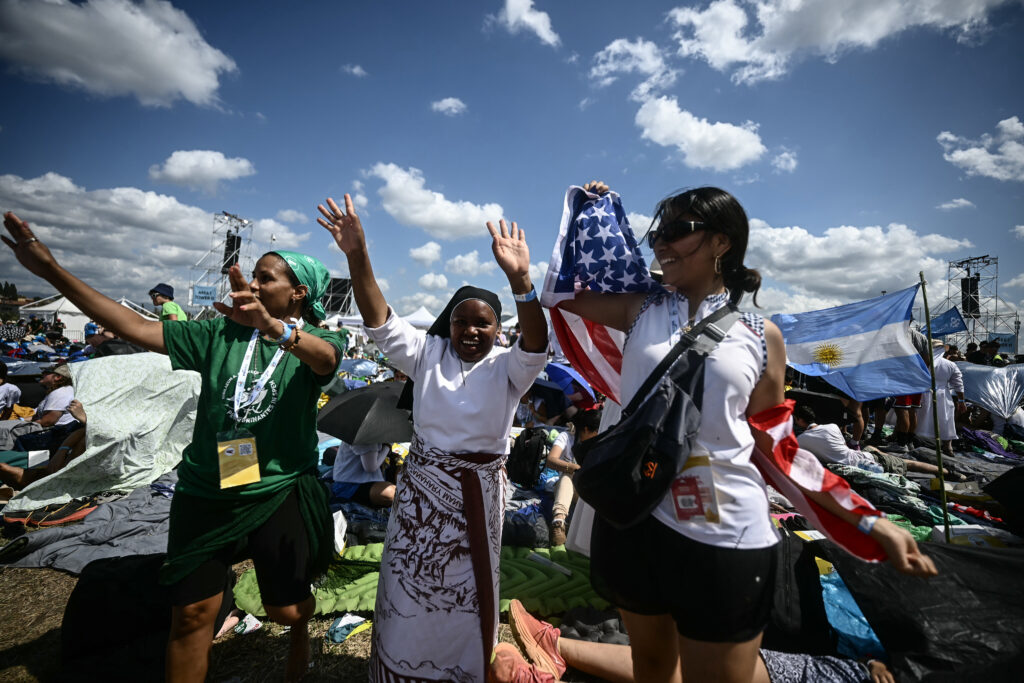
Elation as pope arrives by helicopter to open-air youth vigil in Rome
Hundreds of thousands of young faithful cheered Pope Leo XIV Saturday as he arrived by helicopter for an open-air prayer vigil outside Rome, in a rock star welcome for the new head of the Catholic Church.Pilgrims began crying and cheering when the white military helicopter descended over the sprawling, dusty, open-air site in Rome’s eastern outskirts, where young pilgrims from 146 countries around the world had assembled as part of a “Jubilee of Youth”.After entering his popemobile, the first American pope smiled broadly and waved to throngs of young, screaming pilgrims lining his route — many of them running for a better vantage point — who had spent the day in the hot sun listening to music, praying and talking with fellow believers.”The pope is here!” announced an excited voice over speakerphones to thunderous applause and deafening cheers from the crowd. Among them was French pilgrim Julie Mortier, 18, whose voice was hoarse from singing and screaming for hours.”We’re too happy to be here! Seeing the pope, that’s a once-in-a-lifetime opportunity!” she croaked happily to AFP. The attendance numbers were not immediately available. Ahead of the event, the Vatican said that up to one million pilgrims were expected. Most attendees said they would camp overnight for a Sunday morning mass at the site led by the 69-year-old Leo marking the culmination of the week-long youth pilgrimage, a key event in the Catholic Church’s Jubilee holy year.Leo was to lead the vigil from a massive stage with a golden arch and towering cross dominating the vast open area — which at over 500,000 square metres was the size of around 70 football fields.”I’m so happy to be here, even if I’m a bit far from the pope. I knew what to expect!” British student Andy Hewellyn told AFP.”The main thing is that we’re all together,” he said ahead of the pope’s appearance, as other young people nearby played guitars, sang, or took a snooze in the sun.Italian broadcaster Rai dubbed the event a Catholic “Woodstock”, as nearly two dozen musical and dance groups, many of them religious, entertained the crowds earlier Saturday, who lounged among blankets, cushions and umbrellas. In a video message, Italian Prime Minister Giorgia Meloni welcomed pilgrims to the capital, which she said was “literally invaded by hundreds of thousands of young men and women” who were “praying, singing, joking amongst themselves, celebrating in an extraordinary party”.- Water and suncream -The “Jubilee of Youth”, which began Monday, comes nearly three months after the start of Leo’s papacy, and 25 years after the last such massive youth gathering in Rome under Poland’s Pope John Paul II. Early Saturday, countless groups of young people set off for the venue in Tor Vergata after filling water bottles, applying suncream and adjusting backpacks — ready to spend the next 24 hours surrounded by a crowd of people and then sleep under the stars.Victoria Perez, who carried a Spanish flag, could not contain her excitement at seeing “the pope up close”.”It’s the first time I’m going to see him, and I can’t wait,” the 21-year-old told AFP, looking forward to a “night of prayers under the stars”. French pilgrim Quentin Remaury, 26, said he had been inspired by the late pope Francis’s rousing message to youth during a 2016 visit to Krakow, Poland. “Pope Francis told us to ‘get off your couches,’ and that really gave me a boost,” he said. – Open-air confessional – Throughout the week, attendees have participated in various Church-planned events, such as confession at Circus Maximus, one of Rome’s top tourist spots.On Friday, approximately 1,000 priests were on hand, with 200 white gazebos serving as makeshift confessionals lining the hippodrome where chariot races were once held in Ancient Rome.The pilgrimage unfolds as under-30s contemplate economic uncertainty and anxiety over climate change. Samarei Semos, 29, who said she had travelled three days from her native Belize to get to Rome, said she hoped Leo would have a strong say about “third world countries”. The Vatican said the pope on Saturday met and prayed with travellers accompanying an 18-year-old Egyptian pilgrim who died Friday night. Rai News reported that the young woman died of a heart attack on a bus while returning to her lodging from an event in Rome.Amid tight security, more than 4,300 volunteers worked the event to welcome the young pilgrims, along with over 1,000 police, organisers said.
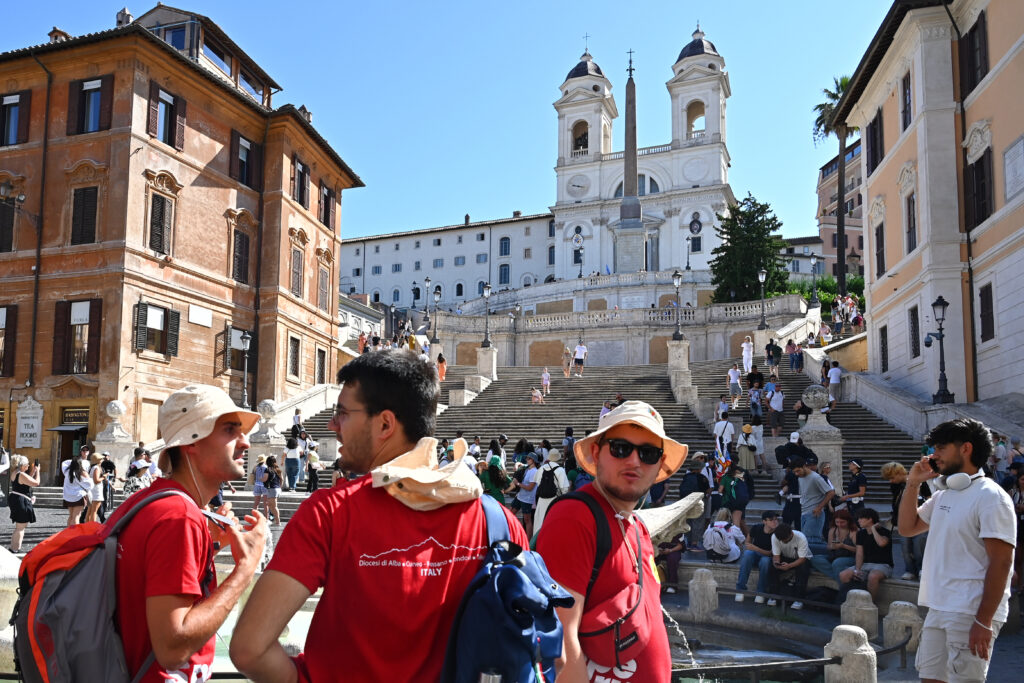
At open-air Church party, many thousands of young Catholics eagerly await pope
Swarms of enthusiastic young Catholics gathered under the hot sun in Rome on Saturday in a festive, open-air celebration to be capped by an evening prayer vigil led by Pope Leo XIV.The Vatican said it was expecting up to one million young people for the vigil, which, together with a Sunday mass, marks the culmination of the week-long youth pilgrimage — a key event in the Catholic Church’s Jubilee holy year. By Saturday afternoon, the vast open area on the outskirts of Rome — which at over 500,000 square metres was the size of around 70 football fields — was packed by young people. Crowds continued to arrive, music blared over loudspeakers, and a festive atmosphere prevailed. “I’m so happy to be here, even if I’m a bit far from the pope. I knew what to expect!” British student Andy Hewellyn told AFP.The massive stage with its golden arch and towering cross was not visible from his seat, but a video screen was nearby. “The main thing is that we’re all together,” he said, as other young people nearby played guitars, sang, or took a snooze in the sun.Italian broadcaster Rai dubbed the event a Catholic “Woodstock”, as nearly two dozen musical and dance groups, many of them religious, entertained the crowds ahead of the pope’s arrival. “The world needs you!” screamed a performer from the stage to the pilgrims who sprawled with blankets, cushions, umbrellas and flags across the dusty area. Most pilgrims said they planned to spend the night, to attend a final mass Sunday morning led by the pope. In a video message, Italian Prime Minister Giorgia Meloni welcomed pilgrims to the capital, which she said was “literally invaded by hundreds of thousands of young men and women” who were “praying, singing, joking amongst themselves, celebrating…in an extraordinary party”.- Water and suncream -The “Jubilee of Youth”, which began Monday, has seen young pilgrims from more than 146 countries flood the city.It comes nearly three months after Leo, 69, the first American pontiff, began his papacy, and 25 years after the last such massive youth gathering in Rome under Poland’s Pope John Paul II. Early Saturday, countless groups of young people set off for the venue in Tor Vergata east of Rome after filling water bottles, applying suncream and adjusting backpacks — ready to spend the next 24 hours surrounded by a crowd of people and then sleep under the stars.Victoria Perez, who carried a Spanish flag, could not contain her excitement at seeing “the pope up close”.”It’s the first time I’m going to see him, and I can’t wait,” the 21-year-old told AFP, looking forward to a “night of prayers under the stars”. French pilgrim Quentin Remaury, 26, said he had been inspired by the late pope Francis’s rousing message to youth during a 2016 visit to Krakow, Poland. “Pope Francis told us to ‘get off your couches,’ and that really gave me a boost,” he said. – Open-air confessional – Throughout the week, attendees have participated in various Church-planned events, such as confession at Circus Maximus, one of Rome’s top tourist spots.On Friday, approximately 1,000 priests were on hand, with 200 white gazebos serving as makeshift confessionals lining the hippodrome where chariot races were once held in Ancient Rome.The pilgrimage unfolds as under-30s contemplate economic uncertainty and anxiety over climate change. Samarei Semos, 29, who said she had travelled three days from her native Belize to get to Rome, said she hoped Leo would have a strong say about “third world countries”. As Parisian student Alice Berry explained: “What does he have to say to us? What is his message for young people?”The Vatican said the pope on Saturday met and prayed with travellers accompanying an 18-year-old Egyptian pilgrim who died Friday night. Rai News reported that the young woman died of a heart attack on a bus while returning to her lodging from an event in Rome.

Turkey starts supplying Azerbaijani gas to boost Syria’s power output
Turkey on Saturday turned on a supply of natural gas from Azerbaijan to Syria, whose infrastructure was ravaged by civil war, with annual deliveries expected to reach up to two billion cubic metres. Syria’s Islamist authorities, who toppled Bashar al-Assad in December, are seeking to rebuild the battered country where power cuts can last for more than 20 hours a day.Speaking at a ceremony attended by Syria’s energy minister, Azerbaijan’s economy minister and the head of Qatar’s development fund, Turkish Energy Minister Alparslan Bayraktar said the initiative would help normalise Syria. “In the initial phase, up to two billion cubic metres of natural gas per year could be exported to Syria,” Bayraktar said at the ceremony in the southern province of Kilis near the Syrian border. Damascus has said the gas would be used to generate electricity.”The gas will help activate a power plant with a capacity of around 1,200 megawatts, meeting the electricity needs of approximately five million households,” Bayraktar said. “We will transport natural gas to Aleppo and from Aleppo to Homs. This will enable the power plants there to be put into operation in the near future,” he added. A first phase of the Qatari scheme to fund gas supplies for power generation in Syria rolled out in March via Jordan and provided 400 megawatts of electricity per day.