
AFP Asia Business
Trump targets tariff evasion, with eye on China
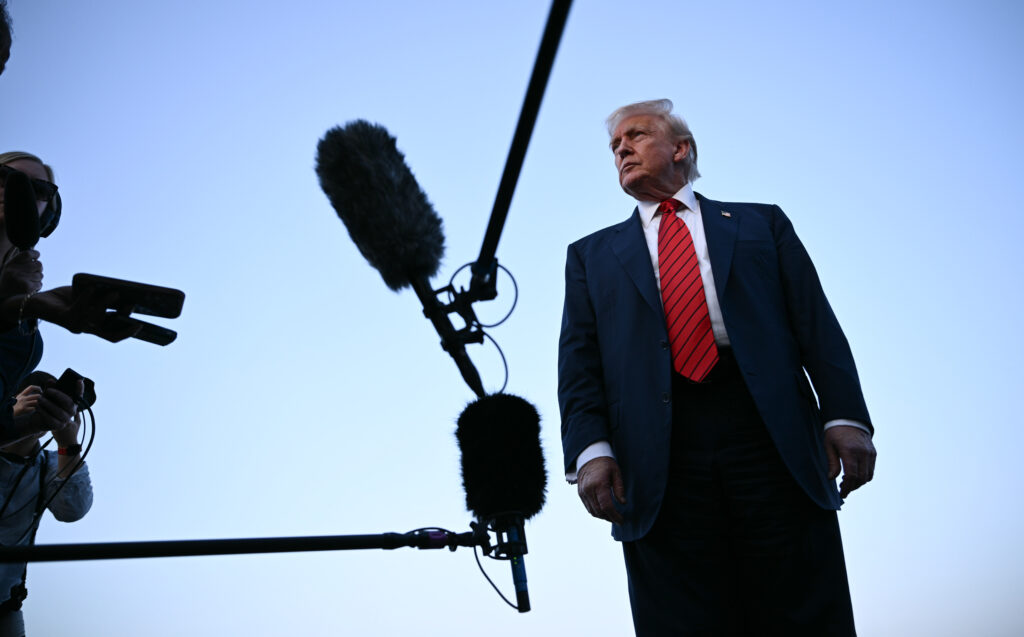
As the United States ramps up tariffs on major trading partners globally, President Donald Trump is also disrupting strategies that could be used — by Chinese companies or others — to circumvent them.Goods deemed to be “transshipped,” or sent through a third country with lower export levies, will face an additional 40-percent duty under an …
Netanyahu says Israel must complete defeat of Hamas to free hostages
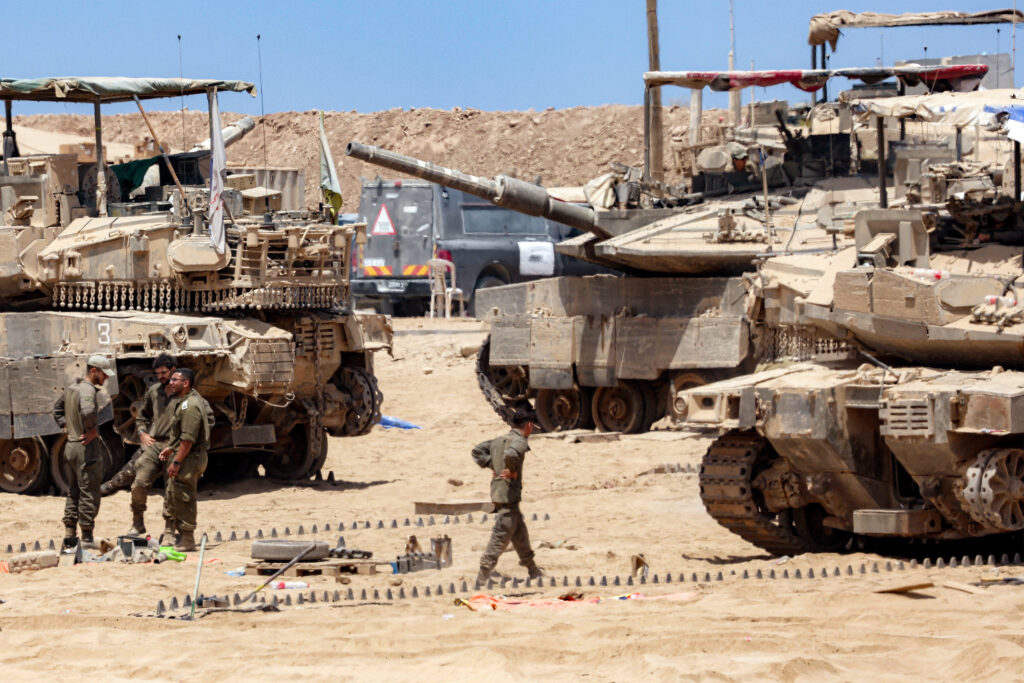
Prime Minister Benjamin Netanyahu said Tuesday that Israel must “complete” the defeat of Hamas in Gaza to secure the release of the remaining hostages, days ahead of a cabinet meeting to discuss an updated war plan.Recent footage of weak and emaciated captives has sparked outrage in Israel, while UN experts also warn of an unfolding famine for Palestinians in Gaza.Israeli media have said the premier is considering ordering the total occupation of Gaza, even as international pressure mounts for him to end the war, with a senior UN official warning Tuesday that expanding the fighting risked “catastrophic consequences”.”It is necessary to complete the defeat of the enemy in Gaza, to free all our hostages and to ensure that Gaza will no longer pose a threat to Israel,” Netanyahu said during a visit to an army training facility.His office later said he had held a three-hour “security discussion” with army chief Eyal Zamir, but did not disclose any new war plans.The premier’s office has said the security cabinet will convene later in the week to approve new instructions.Citing cabinet members, public broadcaster Kan said Netanyahu had “decided to extend the fight to areas where hostages might be held”.But some major media outlets such as Channel 12 have suggested that the rumoured expansion of operations might only be a negotiating tactic.While the reported plan has not been approved, it has already drawn angry reactions from the Palestinian Authority and Gaza’s Hamas-run government.Hamas insisted such a move would not shift its position in ceasefire talks, demanding the withdrawal of all forces from Gaza.”The ball is in the hands of… (Israel) and the Americans,” senior Hamas official Hossam Badran told AFP, adding that the militant group wanted to “end the war and the famine”.UN assistant secretary-general Miroslav Jenca told the Security Council on Tuesday that a widening of the war “would risk catastrophic consequences for millions of Palestinians and could further endanger the lives of the remaining hostages”.Israeli Foreign Minister Gideon Saar was also in New York attending a Security Council meeting on the plight of the hostages.US President Donald Trump on Tuesday expressed disgust over the videos released by Hamas, one of which showed an emaciated Israeli hostage purportedly digging his own grave.”I hope a lot of people do get to see it, as bad as it is, because I think it’s a horrible thing,” Trump told reporters.- ‘Agreement must be reached’ -Over the war’s 22 months, Israeli forces have devastated large parts of the Gaza Strip, where a humanitarian crisis has taken hold.The war was sparked by Hamas’s October 7, 2023 attack, which resulted in the deaths of 1,219 people, mostly civilians, according to a tally based on official figures.Palestinian militants also seized 251 hostages, 49 of whom remain held in Gaza including 27 the Israeli military says are dead.The Israeli offensive has killed at least 61,020 Palestinians, according to the Gaza health ministry.Netanyahu has faced growing pressure on several fronts. Domestically, families of hostages are demanding a ceasefire to bring their loved ones home.And around the world, there are increasing calls for a truce to allow food into a starving Gaza.The International Committee of the Red Cross on Tuesday said it was “ready to bring in medicine, food and family news for the hostages in Gaza”, and to “scale up the delivery of life-saving aid safely to civilians”.But “to do this, an agreement must be reached between Israel and Hamas.”Meanwhile, Netanyahu’s far-right coalition partners demand to keep fighting and reoccupy Gaza for the long haul, after Israel withdrew settlers and troops stationed there two decades ago.- Aid ‘exploited’ -Israel imposed a total blockade on Gaza in early March, which it only began easing more than two months later to allow a US-backed private agency, the Gaza Humanitarian Foundation (GHF), to open food distribution centres.United Nations special rapporteurs called on Tuesday for the GHF to be immediately dismantled, saying aid was being “exploited for covert military and geopolitical agendas”.COGAT, the Israeli defence ministry body overseeing civil affairs in the Palestinian territories, said it would partially reopen private sector trade with Gaza to reduce its reliance on aid deliveries.On the ground in Gaza, the civil defence agency said Israeli forces killed at least 56 Palestinians who were waiting near aid distribution sites on Tuesday.The Israeli military told AFP troops had “fired warning shots” in the direction “a gathering of Gazans advancing” towards them near one of those sites, in the territory’s south, but that it was “not aware of any casualties”.In northern Gaza, where the civil defence said 20 people were killed not far from an aid crossing, an AFP journalist saw bodies brought to Hamad Hospital.The army told AFP it was looking into the report.dc-hba-gla-lba/ami/smw/gv/bgs
Wall Street stocks end lower as rally peters out
Wall Street stocks fell Tuesday as a rally ran out of steam following lackluster economic data, while investors monitor ongoing trade talks ahead of new tariff hikes set to take effect later this week.US President Donald Trump told CNBC he plans fresh tariffs on imported pharmaceuticals and semiconductors. Trump also said he expects to raise …
Wall Street stocks end lower as rally peters out Read More »
Lebanon plans to disarm Hezbollah by year end
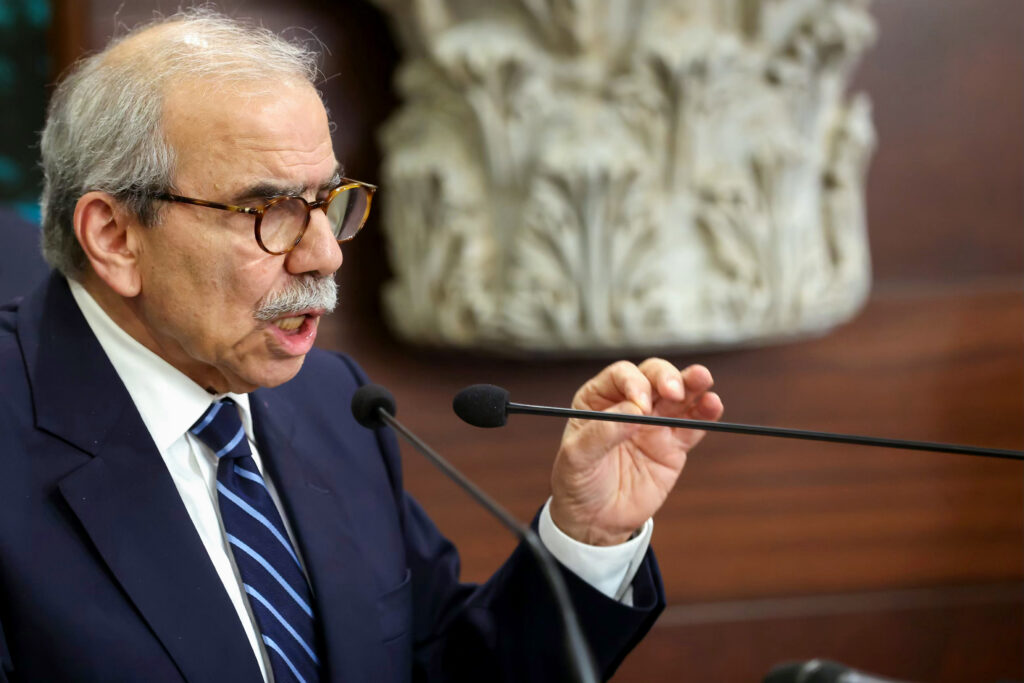
Lebanon’s cabinet on Tuesday tasked the army with developing a plan to disarm Hezbollah by year end, an unprecedented step since civil war factions gave up their weapons decades ago.The thorny decision follows heavy US pressure and comes as part of implementing a November ceasefire that sought to end more than a year of hostilities between Israel and militant group Hezbollah including two months of all-out war.The cabinet held a nearly six-hour cabinet session on Tuesday headed by President Joseph Aoun on disarming the group, which emerged badly weakened from the latest war, with its arsenal pummelled and its senior leadership decimated.The Iran-backed group is the only faction that kept its weapons after Lebanon’s 1975-1990 civil war, doing so in the name of “resistance” against Israel, which occupied the country’s south until 2000.Prime Minister Nawaf Salam said the government “tasked the Lebanese army with setting an implementation plan to restrict weapons” to the army and other state forces “before the end of this year”.The plan is to be presented to the cabinet by the end of August for discussion and approval, Salam told a press conference after the marathon session.Under the ceasefire, government authorities including the army and internal security forces should be the exclusive bearers of weapons in Lebanon.The cabinet is to continue discussions this week on a proposal from US envoy Tom Barrack that includes a timetable for Hezbollah’s disarmament.- Timetable -Information Minister Paul Morcos said Hezbollah-affiliated Health Minister Rakan Nassereldine and Environment Minister Tamara Elzein, who is affiliated with its ally the Amal movement, “withdrew from the session because they did not agree with the cabinet decision”.Long the strongest political force in Lebanon — with detractors accusing it of using the threat of its weaponry to impose its will on domestic decisions — Hezbollah has also seen that influence diminish since the conflict.The group’s chief Naim Qassem, in a televised address while the cabinet meeting was underway, said it would not disarm while Israeli attacks continue.”Any timetable presented for implementation under… Israeli aggression cannot be agreed to,” he said.Israel has kept up raids on Lebanon despite the November truce, mostly saying it is striking Hezbollah targets, and has threatened to keep doing so until the group has been disarmed.On Tuesday, Lebanon’s health ministry said an Israeli strike in Brital in the country’s east killed one person.”Are we being asked to engage in dialogue, or to surrender our weapons without dialogue?” Qassem said.Hezbollah supporters on mopeds and motorbikes roamed Beirut’s southern suburbs where the group enjoys strong support, brandishing the party’s yellow flag and pictures of its leaders, an AFP photographer said.- ‘Dictates’ -Qassem criticised the US envoy’s plan on disarming the group.”Whoever looks at the deal Barrack brought doesn’t find an agreement but dictates,” he said, arguing that “it removes the strength and capabilities of Hezbollah and Lebanon entirely.”Last month, Barrack urged Lebanon to “act now” to impose a state weapons monopoly.A Lebanese official with knowledge of the talks told AFP on condition of anonymity that Hezbollah will not surrender its weapons “without something in return — the Americans know this well”.Aoun last week said Lebanon was committed to removing “weapons from all armed groups including Hezbollah” and seeing them surrendered to Lebanon’s army.Lebanon is at “a crucial stage” and must choose “between collapse and stability”, Aoun had said.The international community has linked its support for the crisis-hit country to disarming the group, while Washington has failed to provide guarantees it will prevent Israel from attacking Lebanon.Qassem warned Israel against launching any new “large-scale aggression” because “if it does, Hezbollah will go on the defensive, “and this defence will lead to rockets falling inside the Israeli entity”.Before discussing the fate of its weapons, which it considers a matter of domestic defence strategy, Hezbollah has demanded that reconstruction of areas destroyed during the war begin.It has also demanded that Israel stop its attacks, withdraw from five border areas it has occupied since the war and release Lebanese prisoners.Ahead of the cabinet meeting, David Wood from the International Crisis Group said the militant group could apply pressure by objecting officially or encourage its supporters to demonstrate but a domestic confrontation was “not in Hezbollah’s interest”.
Death toll in Yemen migrant shipwreck tops 90
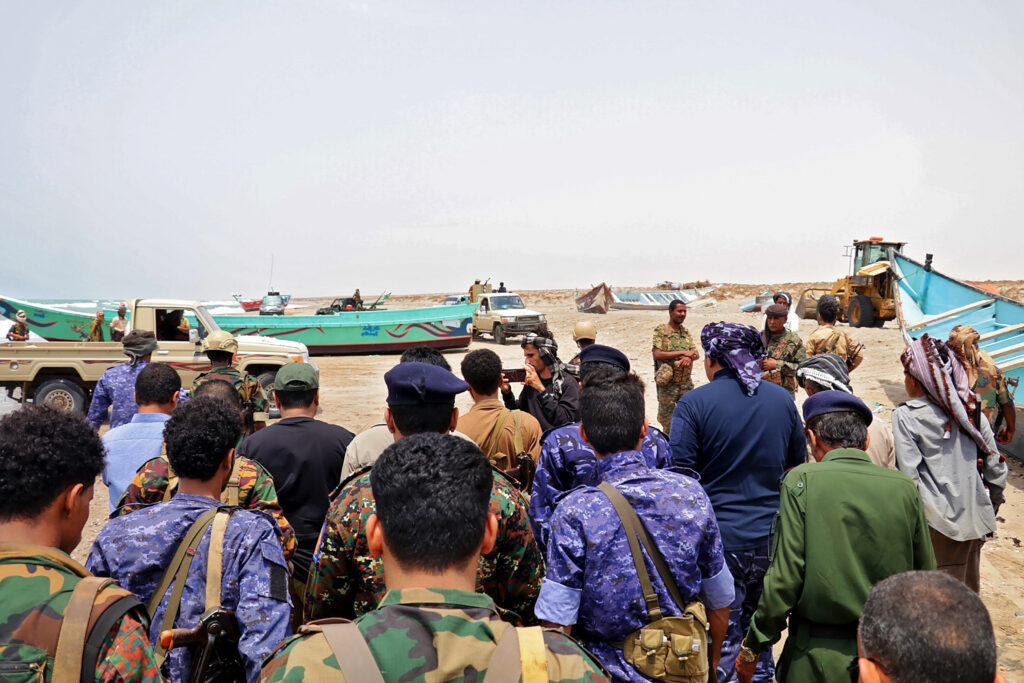
More than 90 people were killed when a migrant boat sank off Yemen’s coast, Yemeni officials and a source at the International Organization for Migration told AFP Tuesday, updating earlier tolls.The boat carrying mostly Ethiopian migrants sank on Sunday as it headed towards Abyan governorate in southern Yemen, a frequent destination for boats smuggling African migrants hoping to reach the wealthy Gulf states.Late Tuesday, a Yemeni source at UN agency the International Organization for Migration (IOM) said that two bodies, which were initially buried by local fishermen after they washed up on the beach and began rotting, had been recovered.This has taken the toll of confirmed deaths from the shipwreck to 96.Earlier a Yemeni security source and a local official in Abyan said 94 bodies had been recovered and most of them had been buried, with the local official saying corpses were still washing up on the shore.A journalist collaborating with AFP saw at least two corpses washed up on the shore, near the area where the ship sank.He also saw worn-out tents and African people being trucked out of the remote area from which smugglers operate.Authorities said security forces and government allies in Abyan carried out a sweep against camp sites for migrants on the coast, operated by smugglers.Abyan’s province top security official, Brigadier General Ali Nasser Buzaid, said the dead included men and women.Local authorities and the IOM said the boat was carrying around 200 people.On Monday, two Yemeni security officials told AFP that 32 people were rescued and dozens were still missing.Despite the civil war that has ravaged Yemen since 2014, the impoverished country has remained a key transit point for irregular migration, in particular from Ethiopia which itself has been roiled by ethnic conflict.strs/aya/ami

S.Africa urges more countries to stand up to Israel’s ‘genocidal activities’
More countries must recognise a Palestinian state and stand up to Israel to stop its “genocidal activities”, South Africa’s Foreign Minister Ronald Lamola told AFP in an interview Tuesday.Pretoria has been a leading critic of Israel’s actions in Gaza, bringing a case before the UN’s top court in December 2023 arguing that its war in the Palestinian territory amounted to genocide.As some of Israel’s allies “are now also saying, no, this can’t continue, it means that it is bringing us closer and closer to the Israel regime (stopping) the genocidal activities”, Lamola said.South Africa’s case before the International Court of Justice argues that the war in Gaza, which began with the militant group Hamas’s October 7, 2023 attack on Israel, breached the 1948 United Nations Genocide Convention. Israel has strongly denied that accusation.Several nations have added their weight to the proceedings, including Spain, Bolivia, Colombia, Mexico, Turkey, Chile and Libya.The leaders of France, the United Kingdom and Canada have meanwhile said they plan to recognise a Palestinian state in September, and urged other nations to do so.”We call for more countries to continue to recognise Palestine,” Lamola told AFP.”This will put the pressure so that we can end up with a ceasefire.”After 22 months of combat sparked by the October 7, 2023 attacks by Hamas that killed 1,219 people and saw hundreds kidnapped, the Israeli army has devastated large parts of the Palestinian territory.More than 60,933 Palestinians have been killed, according to figures from Hamas-run Gaza’s health ministry, and humanitarian agencies have warned that the territory’s 2.4 million people are slipping into a catastrophic famine.Lamola said that had the world acted when South Africa made its case at the ICJ, “we would not be where we are”.”It’s clear starvation is emerging, famine, and all these are things we warned about in our ICJ case — that this will lead to famine, will lead to complete cleansing of the population,” he said.”It’s rather late, yes, but it’s better than never. So let them act, let them support, let them put the pressure.”- Relations at ‘a low’ -South Africa-US relations have “reached a low” with Washington attempting to interfere in domestic issues, the minister said.The two nations have been at odds over a range of domestic and international policies, including Pretoria’s ICJ case and debunked claims by US President Donald Trump that white South Africans face discrimination.Tariffs of 30 percent — the highest on any sub-Saharan African country — are set to hit certain South African exports Friday in the absence of a trade deal.”In the past we have not had this situation where another government would want to interfere on a domestic issue like it is now,” Lamola said.”Since the last 30 years, there have been disagreements with the US administration on a number of issues, but the diplomatic lines of engagement have always been open,” he said.South Africa’s failure to reach a new trade deal has been criticised at home, including by parties in the coalition government which have accused President Cyril Ramaphosa and his team of diplomatic missteps.But Lamola told AFP that Pretoria had done “everything possible under the sun” to reach a deal.Political disagreements had not come up in trade talks with the United States, he said.- Trump ‘welcome’ at G20 -“The situation with the US for any country, not just for South Africa, is unpredictable,” he said.Equally uncertain is US participation in the G20 summit hosted in November in Johannesburg, which Trump last week said he “probably won’t” attend.”He’s welcome to come to South Africa and participate,” Lamola said, “but it’s his decision.”The minister reiterated Pretoria’s intent to promote its theme of “Solidarity, Equality, Sustainability” at the high-level summit.”The period of unilateralism has passed. We will no longer ever go back there,” he said.”The world must accept it is now the period where we are all interconnected, we all have to act together to find solutions for climate change, inequality, artificial intelligence. We all have to work as one global community.”
‘He must be saved!’: Brother of emaciated Israeli hostage pleads for his release
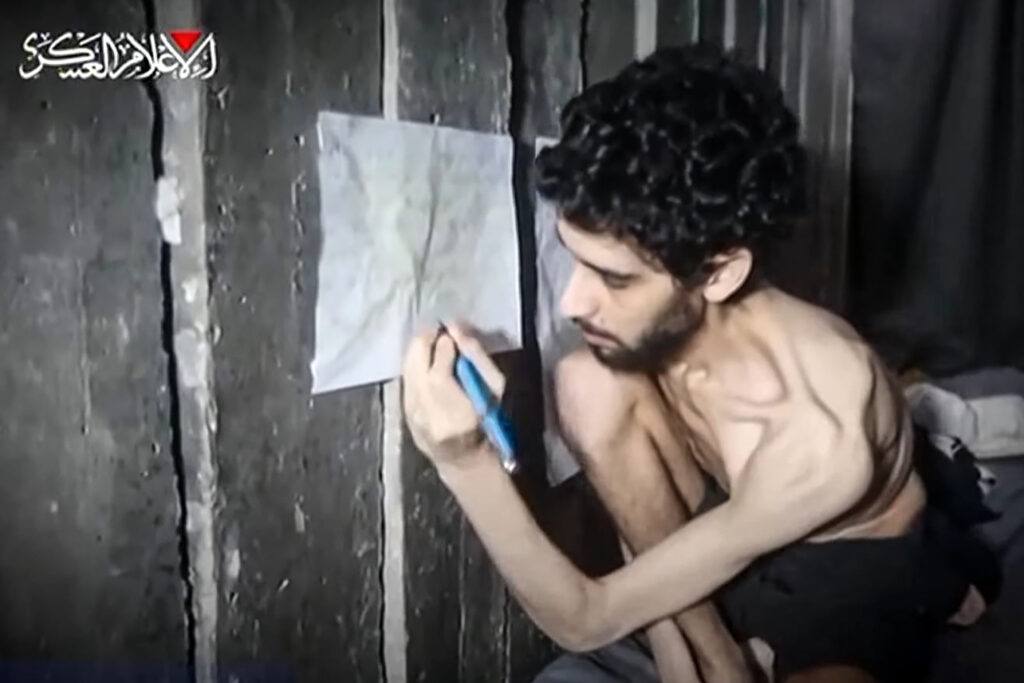
The brother of Israeli hostage Evyatar David called on the world to “come together” to secure his freedom following the publication of a video in which the emaciated captive was shown purportedly digging his own grave.David, 24, is one of 251 people taken captive by Hamas and its allies during their October 7, 2023 attack on southern Israel, which triggered the war in Gaza.Last week, Hamas released propaganda videos showing him severely undernourished and visibly weakened, including one in which he digs with a shovel in the sandy floor of a tunnel, saying he is preparing his grave.”The world must come together now… and demand his release. He must be saved!” his brother Ilay David said in an interview Tuesday with AFP in Kfar Saba, near Tel Aviv, at the family home where they both were raised.The recent videos of Evyatar David and fellow hostage Rom Braslavski have sparked outrage and fear for their safety among Israelis, as well as condemnations of Hamas from abroad. In captivity for nearly 22 months, David has since become a symbol of the ongoing ordeal of the 20 hostages believed to still be alive among the 49 held by Hamas. Red and black posters demanding his release hang on the walls of the family’s living room, the same posters that plaster walls across Israel in solidarity with the hostages.On February 23, Hamas had released a video showing David sitting in a vehicle alongside another hostage as they were forced to watch a staged ceremony marking the release of three other captives during a brief ceasefire that later collapsed.”That was the last sign of life we had from him,” Ilay David told AFP. “We thought then that was the worst possible cruelty,” he added. “We didn’t think (Hamas) could go any lower.””These new images show just how urgent it is to get him out of that tunnel.”- Unable to watch -Ilay admitted he had only seen still images from the latest five-minute Hamas video showing his brother. “I wasn’t able to watch it or listen to it. Seeing it with my mother would completely wreck us,” he told AFP.Evyatar “is my little brother. We grew up together, played music together. I was raised to protect my younger siblings,” he continued. “He hasn’t given up — and neither will we, until he comes home.”In a statement, the David family warned that their son “has only a few days left to live in his current condition”, expressing outrage at the “deliberate starvation, torture, and abuse” he is enduring.Evyatar David was abducted along with his childhood friend Guy Gilboa-Dalal from the Nova music festival near the Gaza border, where more than 370 people were killed and 44 taken hostage.The two friends spent more than eight months in Hamas tunnels with Tal Shoham, a man abducted from a kibbutz and released in February after more than 500 days in captivity.- Only in a cemetery -In an interview with AFP on Tuesday, Shoham, now 40 years old, described the torment the three hostages endured together. “We suffered from severe starvation. I lost 30 kilograms (66 pounds) during my captivity, Guy and Evyatar each lost at least 25. And now, I believe they’ve lost another 15 to 20 kilos.”He recalled the cruelty of their captors, who ate meat in front of them while giving them as little as a single portion of pita bread a day.The three captives were held inside an apartment until June 2024, when they were moved into a tunnel.”I thought I had already experienced the worst, but I was wrong,” Shoham said of his time underground.He said he recognised the tunnel shown in the latest video as the one where he spent months on a mattress, haunted by “the hunger, the humidity and the inability to breathe”.In the most recent footage, Shoham said he could see in David’s eyes that “he has lost all hope”.”I used to imagine their return — the tears, the reunion, the hugs,” he said, referring to David and Gilboa-Dallal.”But today… I don’t know anymore,” he admitted. “Maybe I’ll only see them again in a cemetery.”