AFP Asia Business
‘Famine’, ‘starvation’: the challenges in defining Gaza’s plight
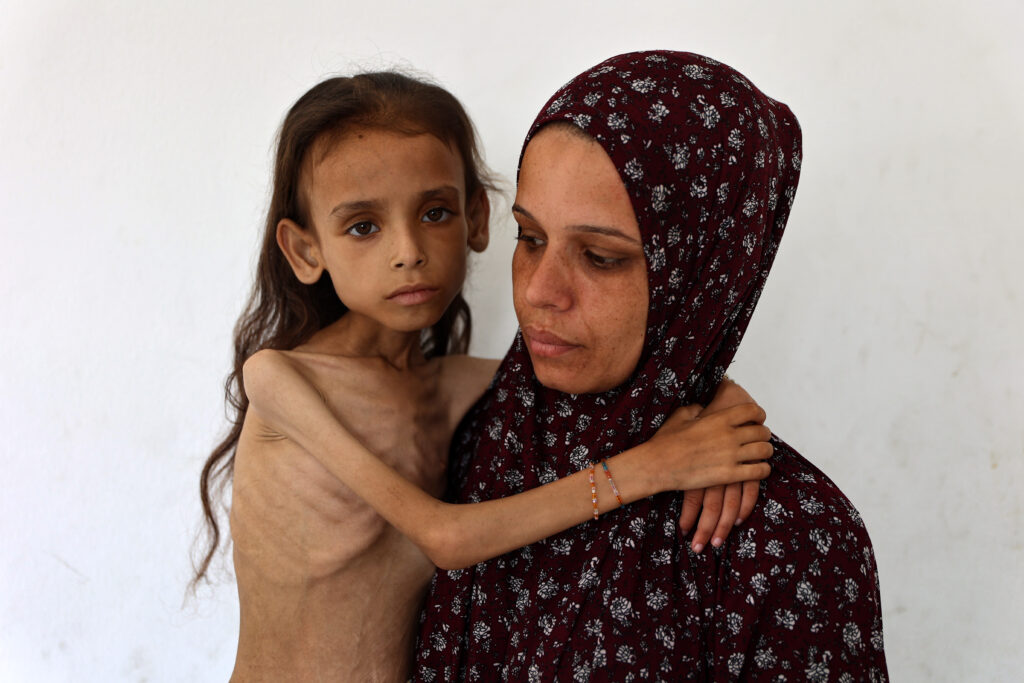
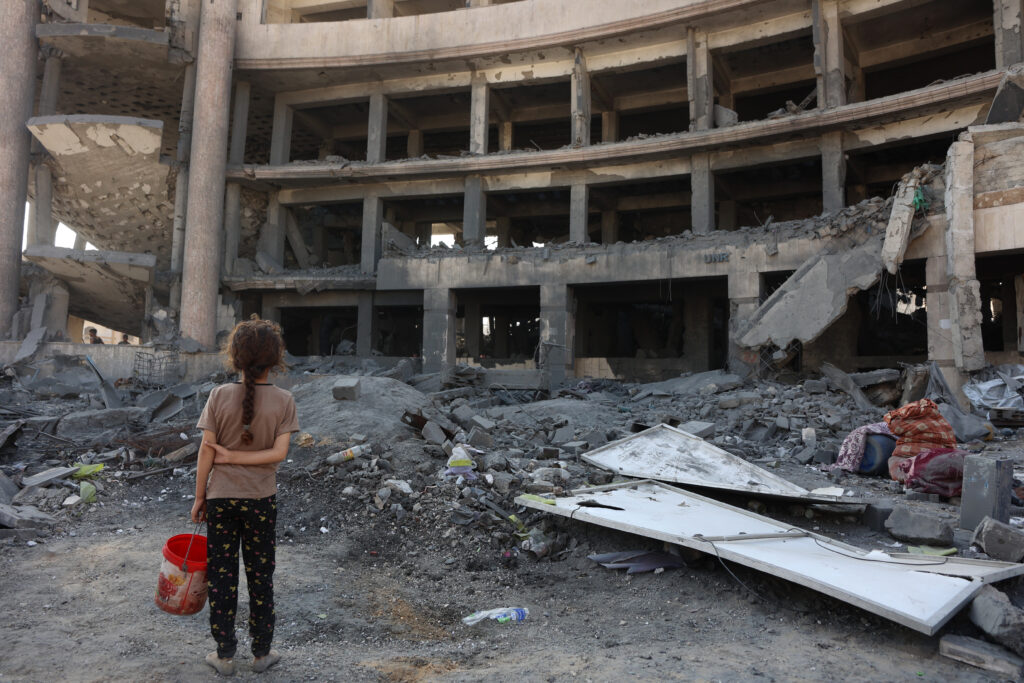
The United Nations and NGOs are warning of an imminent famine in the Gaza Strip — a designation based on strict criteria and scientific evidence.But the difficulty of getting to the most affected areas in the Palestinian territory, besieged by Israel, means there are huge challenges in gathering the required data.- What is a famine? -The internationally-agreed definition for famine is outlined by the Integrated Food Security Phase Classification (IPC), an initiative of 21 organisations and institutions including UN agencies and aid groups.The IPC definition has three elements.Firstly, at least 20 percent of households must have an extreme lack of food and face starvation or destitution.Second, acute malnutrition in children under five exceeds 30 percent.And third, there is an excess mortality threshold of two in 10,000 people dying per day.Once these criteria are met, governments and UN agencies can declare a famine.- What is the situation in Gaza? -Available indicators are alarming regarding the food situation in Gaza.”A large proportion of the population of Gaza is starving”, according to the World Health Organization’s chief, Tedros Adhanom Ghebreyesus.Food deliveries are “far below what is needed for the survival of the population”, he said, calling it “man-made… mass starvation”.Doctors Without Borders (MSF) said on Friday that a quarter of all young children and pregnant or breastfeeding women screened at its clinics in Gaza last week were malnourished, blaming Israel’s “deliberate use of starvation as a weapon”.Almost a third of people in Gaza are “not eating for days” and malnutrition is surging, the UN’s World Food Programme (WFP) said Friday.The head of Al-Shifa hospital in Gaza City on Tuesday said that 21 children had died across the Palestinian territory in the previous 72 hours “due to malnutrition and starvation”.The very few foodstuffs in the markets are inaccessible, with a kilogramme (two pounds) of flour reaching the exorbitant price of $100, while the Gaza Strip’s agricultural land has been ravaged by the war.According to NGOs, the 20 or so aid trucks that enter the territory each day — vastly insufficient for more than two million hungry people — are systematically looted.”It’s become a technical point to explain that we’re in acute food insecurity, IPC4, which affects almost the entire population. It doesn’t resonate with people,” said Amande Bazerolle, in charge of MSF’s emergency response in Gaza.”Yet we’re hurtling towards famine — that’s a certainty.”- What are the challenges in gathering data? -NGOs and the WHO concede that gathering the evidence required for a famine declaration is extremely difficult.”Currently we are unable to conduct the surveys that would allow us to formally classify famine,” said Bazerolle.She said it was “impossible” for them to screen children, take their measurements, or assess their weight-to-height ratio.Jean-Raphael Poitou, Middle East programme director for the NGO Action Against Hunger, said the “continuous displacements” of Gazans ordered by the Israeli military, along with restrictions on movement in the most affected regions; “complicate things enormously”.Nabil Tabbal, incident manager at the WHO’s emergency programme, said there were “challenges regarding data, regarding access to information”. – Can famine still be avoided? -For France’s foreign ministry, malnutrition and the “risk of famine” is the “result of the blockade imposed by Israel”.The Israeli military denies it is blocking humanitarian aid entering Gaza. On Tuesday it claimed that 950 truckloads of aid were inside the Strip waiting for collection and distribution by international organisations.Israeli government spokesman David Mencer insisted there was “no famine caused by Israel. There is a man-made shortage engineered by Hamas.”Hamas has consistently denied that. The New York Times on Saturday reported that, according to two senior Israeli military officials and two other Israelis involved, “the Israeli military never found proof” supporting the official Israeli allegation.NGOs have accused Israel of imposing drastic restrictions.More than 100 NGOs — including MSF, Caritas, Save the Children, Amnesty International, Medecins du Monde, Christian Aid and Oxfam — have urged Israel to open all land crossings and “restore the full flow of food” into Gaza.- What does a famine declaration tell us? -A fresh Gaza IPC assessment is due very soon.For some, the technical debates over a famine declaration seem futile given the urgency of the situation.”Any famine declaration… comes too late,” explained Jean-Martin Bauer, the WFP’s director of food security and nutrition analysis.”By the time famine is officially declared, many lives have already been lost.”In Somalia in 2011, when famine was formally declared, half of the total number of victims of the disaster had already died of starvation.Israel launched its military campaign in Gaza after a deadly attack by Palestinian militant group Hamas on October 7, 2023.The Israeli campaign has killed nearly 60,000 Palestinians, mostly civilians, according to the health ministry in the Hamas-run territory.Hamas’s October 2023 attack resulted in the deaths of 1,219 people, most of them civilians, according to an AFP tally based on official figures.cl-burs/sva/ib/rjm/rmb
Gaza civil defence says Israeli fire kills 25
Gaza’s civil defence agency said Israeli fire killed 25 people on Saturday in the Palestinian territory devastated by more than 21 months of war.Agency spokesman Mahmud Bassal told AFP the dead included nine people killed in three separate air strikes in Gaza City.Eleven people were killed in four separate strikes near the southern city of Khan Yunis, while two were killed in a drone strike in Nuseirat refugee camp, he added.Bassal said three people were killed by Israeli gunfire while waiting for aid in three separate incidents in northern, central and southern Gaza.One of the three was killed “after Israeli forces opened fire on people waiting for humanitarian aid” northwest of Gaza City, the agency said.Witnesses told AFP that several thousand people had gathered in the area.One of them, Abu Samir Hamoudeh, 42, said the Israeli military opened fire “while the people were waiting to approach the distribution point”, located near an Israeli military post in the Zikim area, northwest of Sudaniyah.The Israeli military told AFP that its troops fired “warning shots to distance the crowd” after identifying an “immediate threat”. The civil defence agency said another man was killed by a drone strike near Khan Yunis, while one was killed by artillery fire in the Al-Bureij camp in central Gaza.The Israeli military said it was continuing its operations in Gaza, adding that it killed members of a “terrorist cell” which it accused of planting an explosive device.It said the air force had “struck over 100 terror targets” across Gaza over the previous 24 hours.Bassal said civil defence teams also recovered the bodies of 12 people following Israeli bombardment north of Rafah the previous night.The recovery operation was conducted in coordination with the UN humanitarian office (OCHA), he said, adding that the bodies were taken to Nasser Hospital in Khan Yunis.Media restrictions in Gaza and difficulties in accessing many areas mean AFP is unable to independently verify tolls and details provided by the civil defence agency and other parties.Israel launched its military campaign in Gaza after a deadly attack by Palestinian militant group Hamas on October 7, 2023.The Israeli campaign has killed 59,676 Palestinians, mostly civilians, according to the health ministry in the Hamas-run territory.Hamas’s October 2023 attack resulted in the deaths of 1,219 people, most of them civilians, according to an AFP tally based on official figures.
Ziad Rahbani, enfant terrible of Lebanese stage and song, dies at 69
Renowned Lebanese musician and composer Ziad Rahbani, son of music icon Fairuz and pioneer of Oriental jazz, died on Saturday aged 69 after revolutionising Lebanese theatre and music.”On Saturday at 9:00 am (0600 GMT), the heart of the great artist and creator Ziad Rahbani stopped beating,” said a statement from the Beirut hospital where he was being treated.He had long suffered from health problems.Tributes poured in for the enfant terrible of Lebanese music — a musician, composer and theatre producer who made a huge mark on generations of Lebanese with his theatre pieces and songs, which many know by heart.Rebellious and visionary, his work evoked Lebanon’s civil war even before it erupted in 1975, later reflecting the eventual conflict itself and the harsh realities of economic crisis.One of his most famous theatre pieces, the 1980 production “Film Ameriki Tawil” (The American Motion Picture), was a satirical depiction of Lebanon during the civil war, set in an asylum with characters who represented facets of society.Ziad Rahbani was the son of Arab musical icon Fairuz, who turned 90 last year, and the late Lebanese composer Assi Rahbani who along with his brother Mansour modernised Arab music by blending Western, Russian and Latin American sounds with Eastern rhythms.Already adored by older generations, Fairuz became a youth idol when her son began composing jazz-influenced songs for her, calling it “Oriental jazz”.While Fairuz transcended Lebanon’s deep sectarian divides, her son was fiercely left-wing and secular, and spent his life decrying the divisions that ruined his country.”I feel like everything has gone. I feel like Lebanon has become empty,” Lebanese actress Carmen Lebbos, his former partner, wrote on X.Lebanese President Joseph Aoun said in a statement that Rahbani was “a voice that rebelled against injustice, an honest mirror for the oppressed and marginalised”.Prime Minister Nawaf Salam said that “Lebanon has lost an exceptional artist and creative, a free voice who stayed faithful to the values of justice and dignity” and who said “what many don’t dare to say”.Culture Minister Ghassan Salame wrote on X that “we dreaded this day as we knew his health was worsening and that his desire for treatment was dwindling”.