
AFP Asia Business
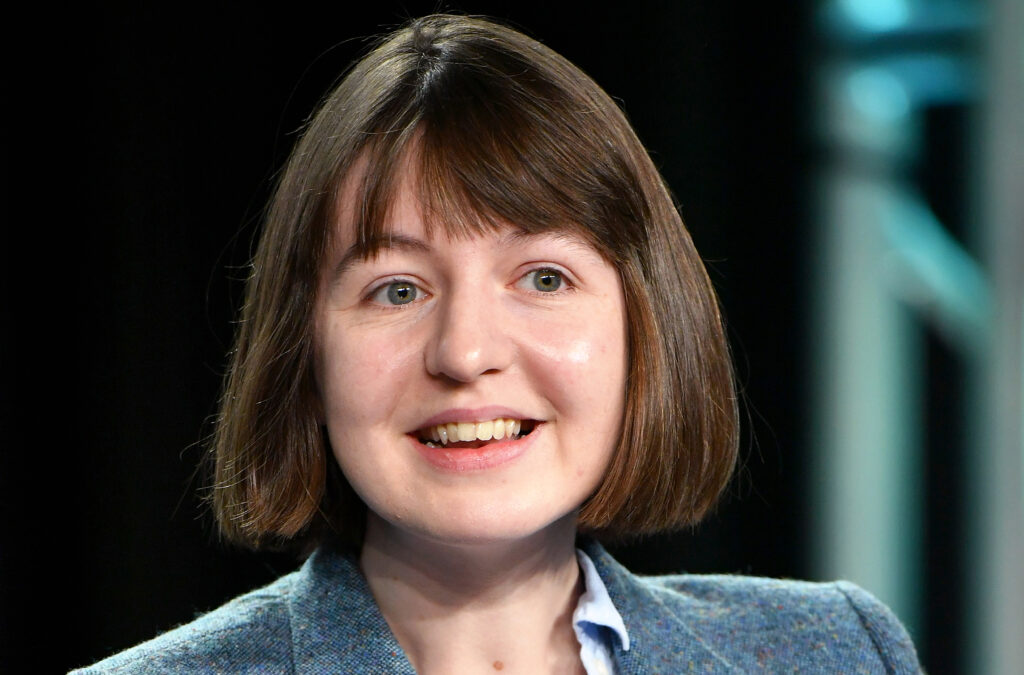
Irish literary star Sally Rooney pledges UK TV fees to banned pro-Palestine group
Irish author Sally Rooney has vowed to give fees generated by two BBC adaptations of her books to the Palestine Action group — banned recently in the UK as a terrorist organisation — as a government spokesperson on Monday warned anyone flouting the law risked prosecution.The writer, whose second novel “Normal People” (2018) and its 2020 BBC television adaptation won her international acclaim, announced her plans in the Irish Times.Rooney said she had chosen the Dublin-based newspaper to publicise her intention rather than a UK one as doing so “would now be illegal” after the government banned Palestine Action as a terrorist group in early July.”The UK’s state broadcaster… regularly pays me residual fees. I want to be clear that I intend to use these proceeds of my work, as well as my public platform generally, to go on supporting Palestine Action and direct action against genocide in whatever way I can,” she wrote.More than 700 people have been arrested, mostly at demonstrations, since the group was outlawed under the Terrorism Act 2000.”I feel obliged to state once more that like the hundreds of protesters arrested last weekend, I too support Palestine Action. If this makes me a ‘supporter of terror’ under UK law, so be it’,” Rooney said.The government ban on Palestine Action came into force on July 5, days after it took responsibility for a break-in at an air force base in southern England that caused an estimated £7.0 million ($9.3 million) of damage to two aircraft.The group said its activists were responding to Britain’s indirect military support for Israel during the war in Gaza.Being a member of Palestine Action or supporting the group is now a criminal offence in Britain, punishable by up to 14 years in prison.- Record arrests -More than 500 people were arrested at a protest in London’s Parliament Square on August 9 for displaying placards backing the group.The number is thought to be the highest-ever recorded number of detentions at a single protest in the capital.At least 60 of them are due to face prosecution, police said.Britain’s interior minister Yvette Cooper has defended the Labour government’s proscription of the group, stating that “UK national security and public safety must always be our top priority”.”The assessments are very clear — this is not a non-violent organisation,” she said.Prime Minister Keir Starmer’s official spokesperson declined to be drawn specifically on Rooney’s comments.But the spokesperson added: “Support for a proscribed organisation is an offence under the Terrorism Act and obviously the police will… implement the law.”Jilan Wahba Abdalmajid, the ambassador of the state of Palestine in Ireland, praised Rooney for “using her voice to call out international law and human rights violations in Palestine”.”I hope these calls result in practical actions that will stop the horrors we’re witnessing carried out by Israel in Palestine; to stop the genocide and forced displacement and end the Israeli occupation,” she said.Ireland confirmed the appointment of a full Palestinian ambassador last November after Dublin formally recognised a Palestinian state earlier in 2024.
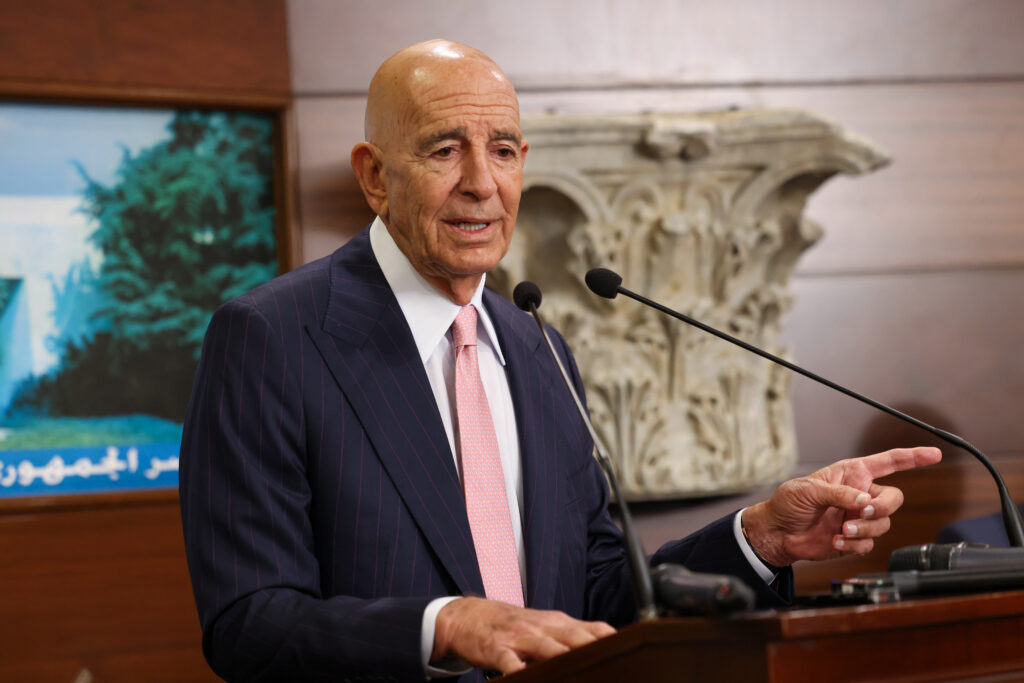
US envoy says Israel’s turn to ‘comply’ as Lebanon moves to disarm Hezbollah
US envoy Tom Barrack on Monday called on Israel to honour commitments under a ceasefire that ended its war with Hezbollah, after the Lebanese government launched a process to disarm the militant group.Under the November truce, which ended more than a year of hostilities including two months of all-out war between Israel and Hezbollah, the Iran-backed group was to withdraw its fighters from near the Israeli border and weapons were to come under the control of the Lebanese state.Israel was to withdraw its troops from the country but has kept them at five border points it deems strategic and has continued to strike Lebanon, threatening to do so until Hezbollah has been disarmed.”There’s always a step-by-step approach but I think the Lebanese government has done their part. They’ve taken the first step. Now what we need is Israel to comply,” Barrack said following a meeting in Beirut with Lebanese President Joseph Aoun.”We’re all moving in the right direction,” he said after meeting parliament speaker Nabih Berri.Berri, a Hezbollah ally, said Israel’s commitment to the ceasefire and its troop withdrawal was “the gateway to stability in Lebanon”, a statement said.- ‘Progress’ -Asked by reporters whether he expected to see Israel fully withdraw from Lebanese territory and stop its violations, Barrack said that “that’s exactly the next step” needed.”We need participation on the part of Israel, and we need an economic plan for prosperity, restoration and renovation,” the US diplomat added, with Lebanon weighed down by an economic crisis.Barrack said Washington was “in the process of now discussing with Israel what their position is”, adding that “in the next few weeks you’re going to see progress on all sides.””It means a better life for the people… and at least the beginning of a roadway to a different kind of dialogue” in the region, he said.The visit comes after Lebanon’s cabinet tasked the army with developing a plan to disarm Hezbollah by year end — an unprecedented step since civil war factions gave up their weapons decades ago.The cabinet has also tackled a US proposal that includes a timetable for Hezbollah’s disarmament, with Washington pressing Lebanon to take action.The cabinet endorsed the introduction of the US text, which lists 11 objectives including to “ensure the sustainability” of the ceasefire, and to phase out “the armed presence of all non-state actors, including Hezbollah” across all Lebanese territory.It also provides for demarcating Lebanon’s land borders with Israel and neighbouring Syria, and a process involving the international community to support reconstruction.- ‘Lebanese process’ -Aoun told Barrack that what was needed was for “other parties to adhere to the contents” of the joint declaration, “more support for the Lebanese army”, and expedited steps towards reconstruction, the presidency said.Prime Minister Nawaf Salam said Washington needed to “fulfil its responsibility in pressuring Israel halt hostilities”, withdraw troops and release Lebanese prisoners it holds.Hezbollah, the only faction that kept its weapons after Lebanon’s 1975-1990 civil war, emerged badly weakened from last year’s war with Israel.On Friday, Hezbollah leader Naim Qassem vowed to fight plans to disarm, saying that “the resistance will not surrender its weapons while… occupation persists”.On Sunday, Aoun told the Saudi-owned Al Arabiya channel authorities would do “everything possible… to spare Lebanon any internal or external shock”. If Lebanon rejected the US plan, “then Israel will intensify its attacks, Lebanon will be economically isolated, and none of us will be able to respond to the aggression”, he said.Barrack on Monday stressed that “dealing with Hezbollah, as we’ve always said, is a Lebanese process”.