
AFP Asia Business
Australia lashes Netanyahu over ‘weak’ leader outburst
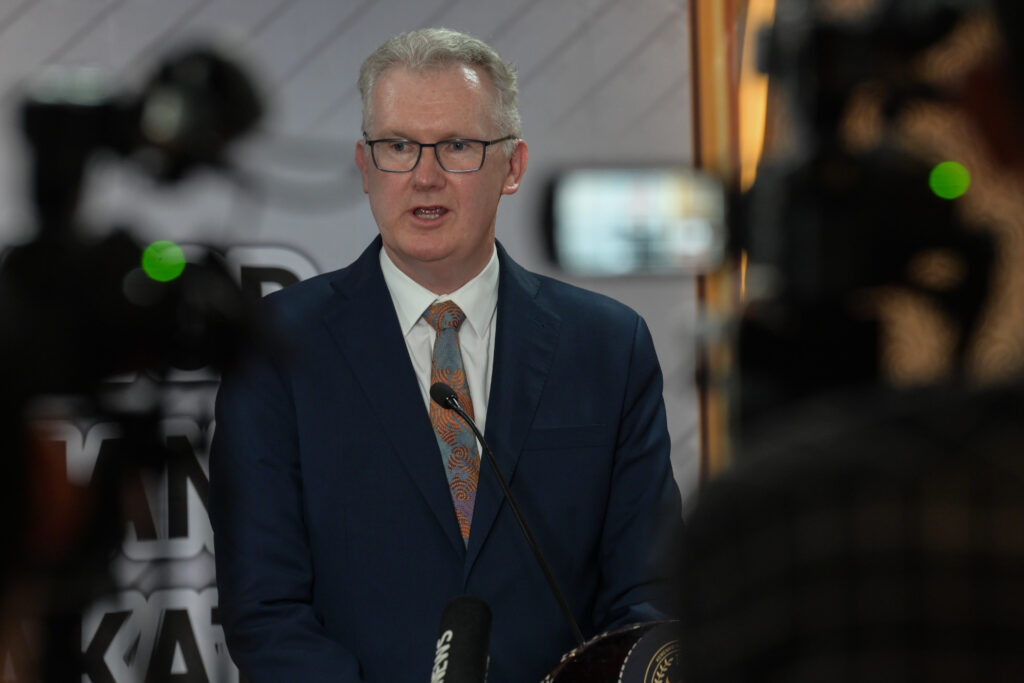
Australia lashed Israeli leader Benjamin Netanyahu on Wednesday after he said the country’s prime minister was weak, with a top minister saying strength was more than “how many people you can blow up”. For decades, Australia has considered itself a close friend of Israel, but the relationship has swiftly unravelled since Canberra announced last week it would recognise a Palestinian state. Netanyahu drastically escalated a war of words on Tuesday night, calling his Australian counterpart Anthony Albanese a “weak politician who betrayed Israel”.Australian Home Affairs Minister Tony Burke said Wednesday it was the sign of a frustrated leader “lashing out”. “Strength is not measured by how many people you can blow up or how many children you can leave hungry,” Burke told national broadcaster ABC.”What we’ve seen with some of the actions they are taking is a continued isolation of Israel from the world, and that is not in their interests either.”Through the 1950s, Australia was a refuge for Jews fleeing the horrors of the Holocaust. The city of Melbourne at one point housed, per capita, the largest population of Holocaust survivors anywhere outside of Israel. Netanyahu was infuriated when Australia declared it would recognise Palestinian statehood next month, following similar pledges from France, Canada and the United Kingdom. In the space of nine days since that decision, relations between Australia and Israel have plummeted. – ‘Abandoned Australia’s Jews’ -Australia on Monday cancelled the visa of far-right Israeli politician Simcha Rothman — a member of Netanyahu’s governing coalition — saying his planned speaking tour would “spread division”. The tit-for-tat continued on Tuesday, when Israel retaliated by revoking visas held by Canberra’s diplomatic representatives to the Palestinian Authority. Then came Netanyahu’s social media outburst. “History will remember Albanese for what he is: A weak politician who betrayed Israel and abandoned Australia’s Jews,” he said on X.Israel finds itself increasingly isolated as it continues to wage war in Gaza, a conflict triggered by the October 2023 attack by Palestinian militant group Hamas. UN-backed experts have warned of widespread famine unfolding in the territory, where Israel has severely restricted the entry of humanitarian aid. New Zealand Prime Minister Christopher Luxon said last week that Netanyahu had “lost the plot”.Relations between Australia and Israel started fraying late last year following a spate of anti-Semitic attacks in Sydney and Melbourne. Netanyahu accused the Australian government of harbouring “anti-Israel sentiment” after a synagogue was firebombed in December.
Syrian, Israeli diplomats met in Paris to discuss ‘de-escalation’: report
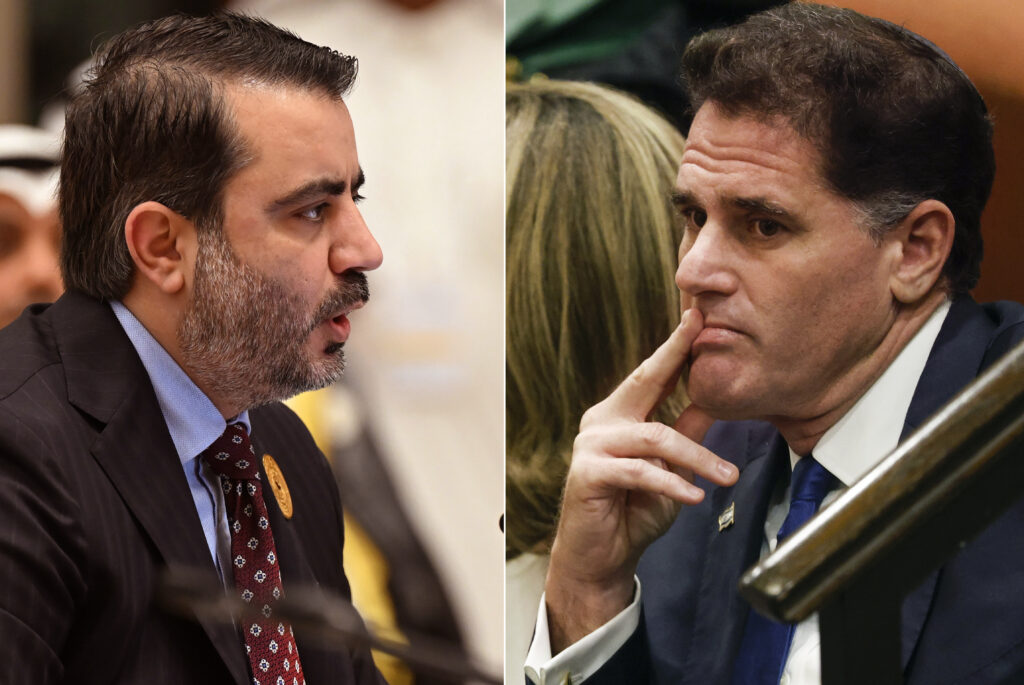
Syria’s foreign minister met with an Israeli diplomatic delegation in Paris on Tuesday to discuss “de-escalation and non-interference in Syria’s internal affairs”, state news agency SANA reported.The latest in a series of US-mediated talks resulted in “understandings that support stability in the region”, the agency said. Washington has been at work in recent weeks to try to resolve security issues in Syria and Lebanon, which its ally Israel says have prompted it to take military action.Despite a truce reached last November, Israel has continued to hit targets of the Iranian-backed Hezbollah group in Lebanon, and it has occupied territory and hit targets across Syria since last year’s fall of dictator Bashar al-Assad.Tuesday’s meeting in Paris follows one between Syrian Foreign Minister Assad al-Shaibani and Israeli Minister of Strategic Affairs Ron Dermer in Baku in late July, and another meeting in Paris before that.Israel and Syria have technically been at war since 1948, and the talks also discussed reviving a disengagement accord from 1974 that created a buffer zone between the two countries.”These talks are taking place under US mediation, as part of diplomatic efforts aimed at enhancing security and stability in Syria and preserving the unity and integrity of its territory,” the agency said.The recent meetings between the two countries come after deadly sectarian clashes in July in southern Syria’s Druze-majority Sweida province which left over 1,400 people dead. The clashes initially pitted local Druze fighters against Sunni Bedouin tribes but soon saw the involvement of Syrian government forces and Israel, with the latter saying it wanted to protect the Druze.Last month, Israel struck the Syrian presidential palace and the army headquarters in Damascus.The United States, an ally of Israel but who has expressed support for Syria’s new leaders, announced a ceasefire between the two sides overnight on July 18.
Stock markets cautious with eyes on Ukraine talks, US rates
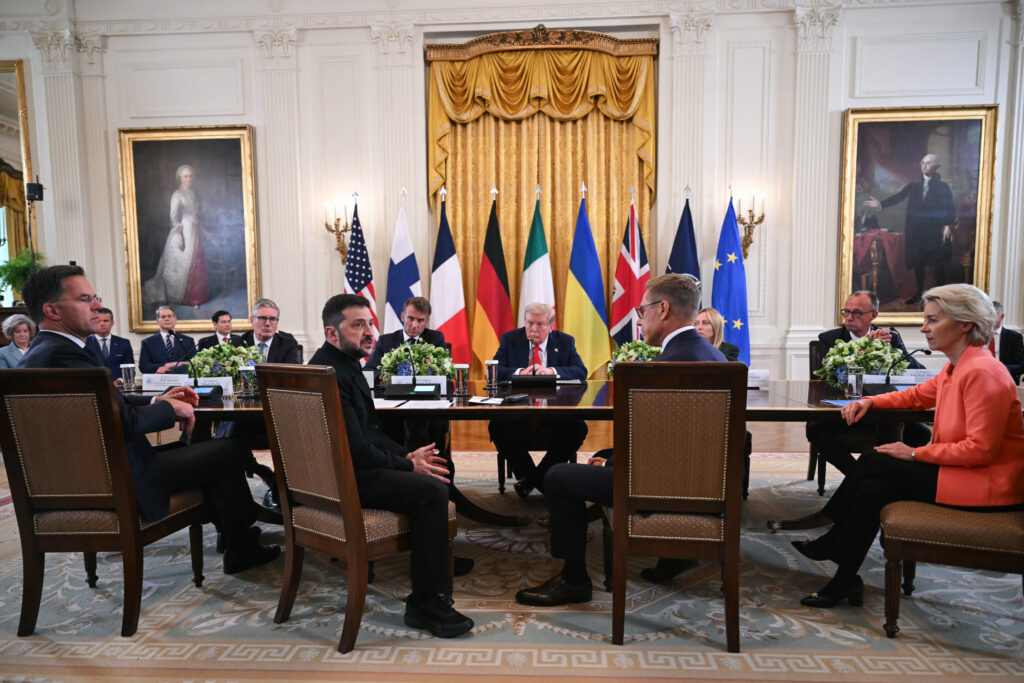
European stock markets rose while Wall Street mostly retreated Tuesday as investors warily eyed signs of progress in talks to end Russia’s war in Ukraine.Markets were also waiting for a key speech by the US Federal Reserve chief this week for clues on interest rate cuts that could bolster the world’s biggest economy.Hopes for a …
Stock markets cautious with eyes on Ukraine talks, US rates Read More »
Netanyahu slams Macron for fuelling ‘antisemitic fire’
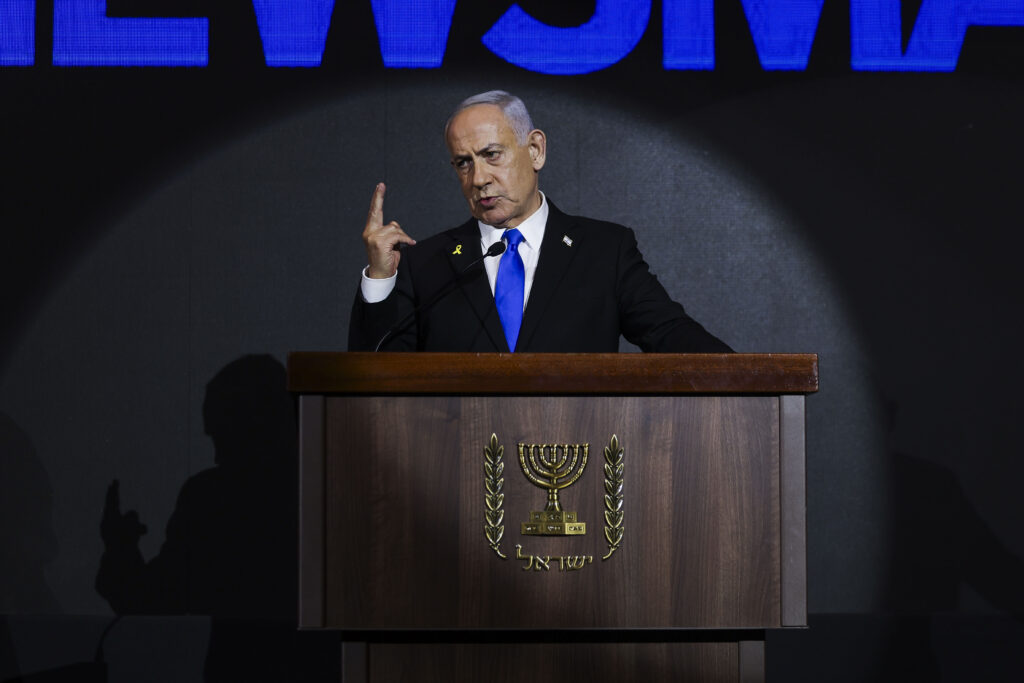
Israeli Prime Minister Benjamin Netanyahu upbraided President Emmanuel Macron in a letter seen by AFP on Tuesday, blaming the French leader’s move to recognise a Palestinian state for fuelling antisemitism.A French minister responded by saying that the fight against antisemitism must not be “exploited”.Late last month, Macron said France would formally recognise a Palestinian state during a UN meeting in September, drawing a swift rebuke from Israel.By announcing the move, France was set to join a growing list of nations to have recognised statehood for the Palestinians since the start of the Gaza war nearly two years ago.In the letter sent to Macron, Netanyahu said antisemitism had “surged” in France following the announcement.”Your call for a Palestinian state pours fuel on this antisemitic fire. It is not diplomacy, it is appeasement. It rewards Hamas terror, hardens Hamas’s refusal to free the hostages, emboldens those who menace French Jews and encourages the Jew-hatred now stalking your streets,” Netanyahu wrote in the letter. The Israeli premier went on to call on Macron to confront antisemitism in France, saying he must “replace weakness with action, appeasement with resolve, and to do so by a clear date: the Jewish New Year, September 23”. Benjamin Haddad, France’s minister for Europe, said the country has “no lessons to learn in the fight against antisemitism”.The issue “which is poisoning our European societies” must not be “exploited”, Haddad added.France is among at least 145 of the 193 UN members that now recognise or plan to recognise a Palestinian state, according to an AFP tally.Australia joined the list earlier this month, announcing its intention to recognise a Palestinian state in September.Netanyahu slammed his Australian counterpart Anthony Albanese earlier on Tuesday, labelling him a “weak politician who betrayed Israel and abandoned Australia’s Jews,” in an angry post on his office’s official X account.The personal attack came amid a diplomatic spat between the two countries after the Australian government on Monday cancelled the visa of far-right Israeli politician Simcha Rothman.Rothman, whose ultranationalist party is in Netanyahu’s governing coalition, had been scheduled to speak at events organised by the Australian Jewish Association.Hours after his visa was cancelled, Israel’s Foreign Minister Gideon Saar said he had revoked the visas of Australia’s representatives to the Palestinian Authority.In a statement, Australian Foreign Minister Penny Wong said revoking their visas was an “unjustified reaction” by Israel and that Netanayahu’s government was “isolating Israel and undermining international efforts towards peace and a two-state solution”.
Record number of aid workers killed in 2024, UN says
A record 383 aid workers were killed last year, the United Nations said Tuesday, branding the figures and lack of accountability a “shameful indictment” of international apathy, and warning that this year’s toll was equally grim.The 2024 figure was up 31 percent on the year before, the UN said on World Humanitarian Day, “driven by the relentless conflicts in Gaza, where 181 humanitarian workers were killed, and in Sudan, where 60 lost their lives”.It said state actors were the most common perpetrators of the killings last year, and most of the victims were local staff attacked in the line of duty or in their homes.Besides those killed, 308 aid workers were wounded, 125 kidnapped and 45 detained.”Humanitarians must be respected and protected. They can never be targeted,” UN Secretary-General Antonio Guterres said in a statement.”This rule is non-negotiable and is binding on all parties to conflict, always and everywhere. Yet red lines are crossed with impunity,” he said, calling for perpetrators to be brought to justice.- ‘Life-saving work’ -Provisional figures from the Aid Worker Security Database show that 265 aid workers have been killed this year to August 14.”Attacks on this scale, with zero accountability, are a shameful indictment of international inaction and apathy,” said UN aid chief Tom Fletcher, head of its humanitarian agency OCHA.”Violence against aid workers is not inevitable. It must end.”OCHA spokesman Jens Laerke said “very, very few” people had “ever been brought to justice for any of these attacks”.The International Red Cross and Red Crescent Movement said 18 of its staff and volunteers had been killed so far this year “while carrying out their life-saving work”.”Each killing sends a dangerous message that their lives were expendable. They were not,” the group said.Meanwhile the UN’s World Health Organization said 1,121 health workers and patients had been killed and hundreds injured in attacks across 16 territories — with most deaths in Sudan.”Each attack inflicts lasting harm, deprives entire communities of life-saving care when they need it the most, endangers health care providers, and weakens already strained health systems,” the WHO said.- Frustration with impunity -World Humanitarian Day marks the day in 2003 when UN rights chief Sergio Vieira de Mello and 21 other humanitarians were killed in the bombing of the UN headquarters in Baghdad.Current UN deputy human rights chief Nada al-Nashif — who survived that blast — urged countries to use the principle of universal jurisdiction to go after the perpetrators of such attacks.”It’s supreme frustration with impunity,” she told AFP.”Where the pursuit in national jurisdictions is not coming through — then we have to resort to universal jurisdiction.”Speaking of the Baghdad attack, she said: “I lost a finger, I was badly hurt, I had about six surgeries over four years, but it is nothing, it pales in comparison to what we lost that day.”I am really saddened that we are in the same place now, where the United Nations is being undermined.”We are being manipulated again, attacked, directly, and find ourselves prey to misinformation and disinformation at a time when more than ever we need a robust, vivid and dynamic UN.”
Mediators await Israeli response to new truce offer
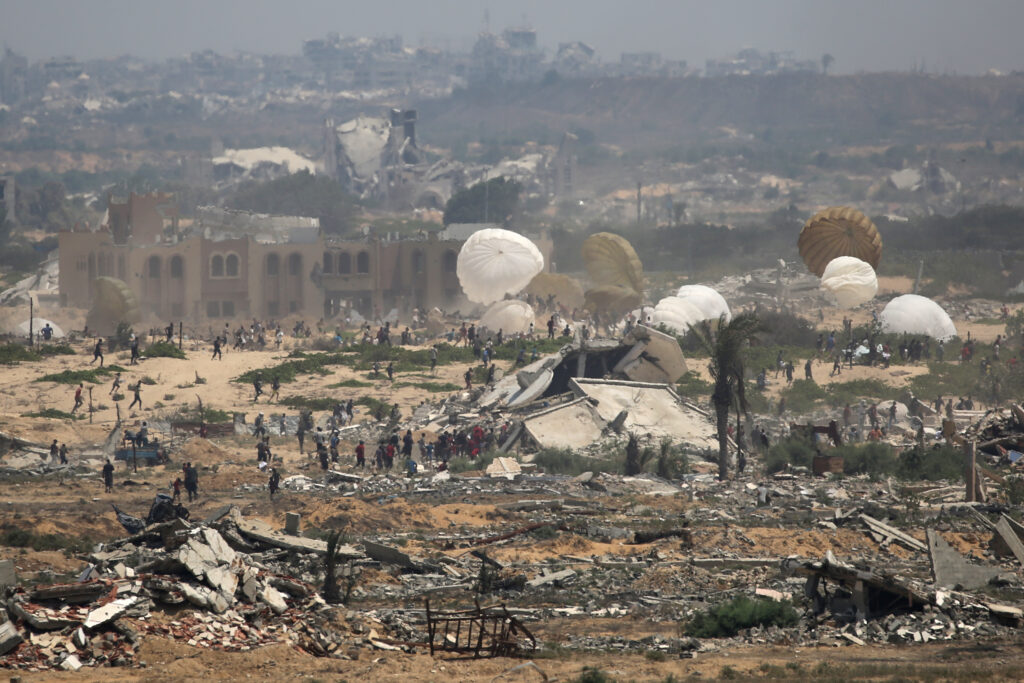
Mediators were awaiting an Israeli response Tuesday to a fresh Gaza ceasefire plan, a day after Hamas accepted the proposal and signalled its readiness for a new round of talks aimed at ending nearly two years of war.Mediator Qatar expressed guarded optimism for the new proposal, noting it was “almost identical” to an earlier version agreed to by Israel.The two foes have held on-and-off indirect negotiations throughout the war, resulting in two short truces and the releases of Israeli hostages in exchange for Palestinian prisoners, but they have ultimately failed to broker a lasting ceasefire. Qatar and Egypt, backed by the United States, have mediated the frequent rounds of shuttle diplomacy.Egypt said Monday that it and Qatar had sent the new proposal to Israel, adding “the ball is now in its court”. Qatari foreign ministry spokesman Majed al-Ansari said on Tuesday that Hamas had given a “very positive response, and it truly was almost identical to what the Israeli side had previously agreed to”.”We cannot make any claims that a breakthrough has been made. But we do believe it is a positive point,” he added.According to a report in Egyptian state-linked outlet Al-Qahera News, the latest deal proposes an initial 60-day truce, a partial hostage release, the freeing of some Palestinian prisoners and provisions allowing for the entry of aid.Israeli Prime Minister Benjamin Netanyahu has yet to publicly comment on the plan, but said last week that his country would accept “an agreement in which all the hostages are released at once and according to our conditions for ending the war”.Senior Hamas official Mahmoud Mardawi said on social media that his group had “opened the door wide to the possibility of reaching an agreement, but the question remains whether Netanyahu will once again close it, as he has done in the past”. Hamas’s acceptance of the proposal comes as Netanyahu faces increasing pressure at home and abroad to end the war.On Sunday, tens of thousands took to the streets in the Israeli city of Tel Aviv to call for the end of the war and a deal to free the remaining hostages still being held captive.Of the 251 hostages taken during Hamas’s October 2023 attack that triggered the war, 49 are still in Gaza, including 27 the Israeli military says are dead.The new proposal also comes after Israel’s security cabinet approved plans to conquer Gaza City and nearby refugee camps, fanning fears the new offensive will worsen the already catastrophic humanitarian crisis in the devastated territory.Israel’s far-right National Security Minister Itamar Ben Gvir — who has staunchly opposed ending the war — slammed the plan, warning of a “tragedy” if Netanyahu “gives in to Hamas”.- ‘Unbearable’ -Gaza’s civil defence agency reported that 31 people were killed Tuesday by Israeli strikes and fire across the territory.Agency spokesman Mahmud Bassal told AFP the situation was “very dangerous and unbearable” in the Zeitoun and Sabra neighbourhoods of Gaza City, where he said “artillery shelling continues intermittently”.The Israeli military declined to comment on specific troop movements, saying only that it was “operating to dismantle Hamas military capabilities” and took “feasible precautions to mitigate civilian harm”.Media restrictions in Gaza and difficulties accessing swathes of the Palestinian territory mean AFP is unable to independently verify the tolls and details provided by the civil defence agency or the Israeli military.Sabra resident Hussein al-Dairi, 44, said “tanks are firing shells and mortars, and drones are firing bullets and missiles” in the neighbourhood.”We heard on the news that Hamas had agreed to a truce, but the occupation is escalating the war against us, the civilians,” he added. Hamas’s October 2023 attack on Israel resulted in the deaths of 1,219 people, mostly civilians, according to an AFP tally based on official figures.Israel’s offensive has killed at least 62,064 Palestinians, most of them civilians, according to figures from the health ministry in Hamas-run Gaza which the United Nations considers reliable.