
AFP Asia Business
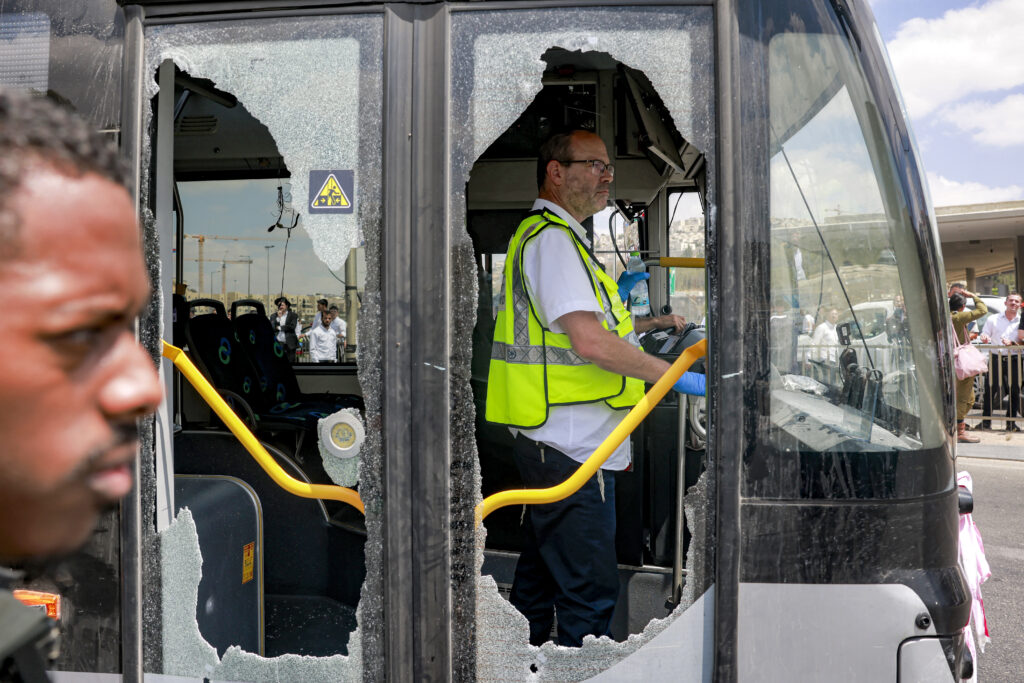
Palestinian gunmen shoot dead six people in east Jerusalem attack: foreign minister
Palestinian gunmen opened fire at a bus stop in east Jerusalem on Monday, killing six people and wounding others, according to Israel’s foreign minister, in one of the deadliest attacks on Israel since the start of the Gaza war.”Palestinian terrorists murdered six Israelis,” Foreign Minister Gideon Saar said, adding that one of the dead was a recent immigrant from Spain.Israeli emergency service Magen David Adom (MDA) had earlier reported 15 people wounded in the late morning attack at the Ramot Junction in Israeli-annexed east Jerusalem, with seven in serious condition. Police said the two gunmen were also killed.Four of the dead were ultra-Orthodox Israeli men, according to local media.Spain’s foreign ministry condemned the attack, affirming its “commitment to peace in the Middle East”.At the scene of the attack, Prime Minister Benjamin Netanyahu said: “Let it be clear: these murders strengthen our determination to fight terrorism.””We are now engaged in pursuit and are cordoning off the villages from which the murderers came. We will apprehend whoever aided and dispatched them, and we will take even stronger steps.”Israeli army chief Eyal Zamir later said in a statement that he “ordered a full closure of the area from which the terrorists came”.”We will continue with a determined and ongoing operational and intelligence effort, we will pursue terror cells everywhere, and we will thwart terrorist infrastructure and its organizers,” he added.The Israeli military had earlier said troops were “encircling several areas on the outskirts of Ramallah” in the Israeli-occupied West Bank in response to the attack.French President Emmanuel Macron “strongly condemned the terrorist attack”, as did the United Arab Emirates, while German Foreign Minister Johann Wadephul described it as “cowardly”.- ‘Horrific’ -Palestinian militant group Hamas, which has been at war with Israel in the Gaza Strip for nearly two years, praised the attack, saying it was carried out by two Palestinian militants.”We affirm that this operation is a natural response to the crimes of the occupation and the genocide it is waging against our people,” Hamas said in a statement.Israel’s far-right Finance Minister Bezalel Smotrich blamed the attack on the Palestinian Authority, which he claimed “raises and educates its children to murder Jews”.”The Palestinian Authority must disappear from the map, and the villages from which the attackers came should be reduced to the status of Rafah and Beit Hanoun,” he wrote on X, referring to cities in Gaza that have been devastated by Israeli air strikes.The Palestinian presidency in Ramallah said it “firmly rejected and condemned any targeting of Palestinian and Israeli civilians,” the official Palestinian news agency Wafa reported.The PA is a civilian ruling authority in areas of the West Bank, where about three million Palestinians live — as well as around half a million Israelis occupying settlements considered illegal under international law.Israeli paramedic Fadi Dekaidek, who was at the scene, called the attack “severe”.”The wounded were lying on the road and sidewalk near a bus stop, some of them unconscious,” he said in a statement issued by MDA.Police said the attackers opened fire towards the bus stop after arriving in a vehicle.”A security officer and a civilian at the scene responded immediately, returned fire, and neutralised the attackers,” they said in a statement.The shooting was one of the deadliest since the war in Gaza began after Hamas’s October 2023 attack on Israel.
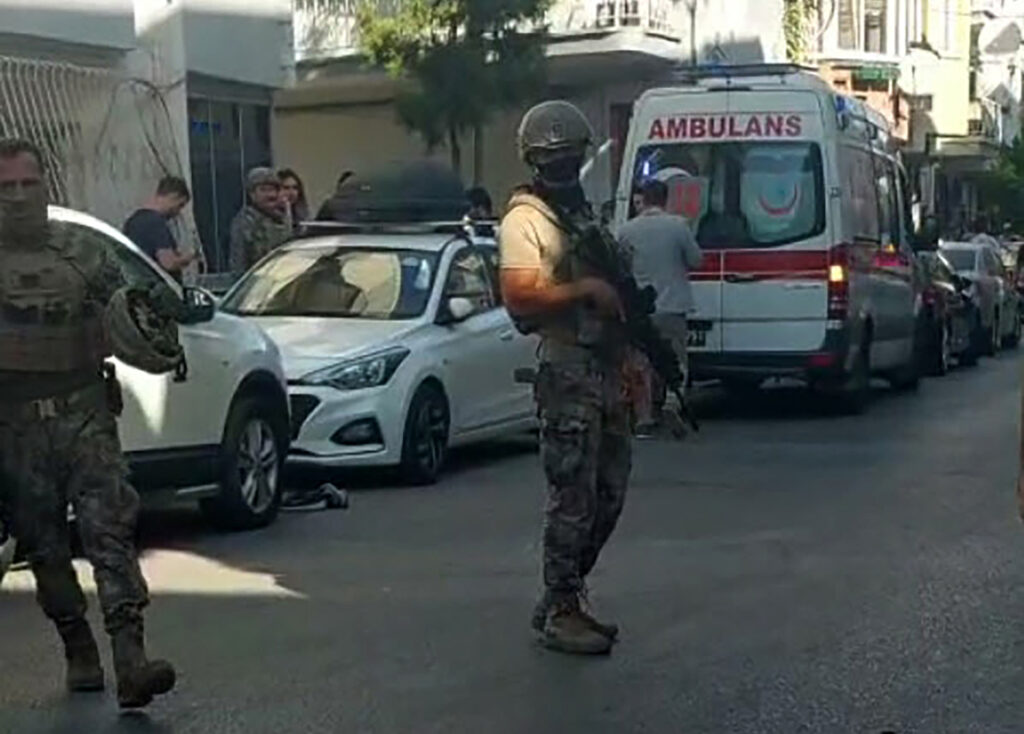
Teen arrested after two Turkish police officers shot dead
Two officers were killed and two others wounded in a shooting attack on a police station near the Turkish city of Izmir on Monday, with a 16-year-old suspect arrested, officials said. Interior Minister Ali Yerlikaya said the “heinous” attack on the police station in Balcova, just west of the resort city, left two officers dead and a third “seriously injured”. “The suspect in the incident, 16-year-old E.B., has been arrested and an investigation has been opened,” he wrote on X. Izmir’s Governor Suleyman Elban said the suspect lived on the same road as the police station and was injured during his arrest. “The murder suspect is a 16-year-old who lives on this street. He has no criminal record or previous arrests for any crime,” Elban told the private NTV television and other media at the scene. “We saw plenty of empty shotgun shells… and there were many cartridges” of unused ammunition, he added, saying the suspect had used “a shotgun his father bought 10 years ago”.The DHA news agency said the assailant had used “a long-barrelled gun” while NTV described the weapon as a “pump-action shotgun”. It was not immediately clear why the station was targeted, and the authorities later imposed a ban on the dissemination of images related to the attack. Before the ban, footage posted by the Gercek Gundem news website showed mobile phone video of a person in a balaclava, a black top and pale trousers jogging along the pavement carrying a rifle and then entering a building. – Covered with blood -Another widely published clip showed the alleged attacker lying on the pavement being treated by paramedics. He appeared to be conscious but the back of his trousers was covered with blood and multiple bullet cases were lying on the ground.A third clip showed a group of civilians helping to manhandle the suspect into a police van. Police immediately fanned out across the area, imposing tight security measures, media reports said.Justice Minister Yilmaz Tunc said Izmir’s chief public prosecutor had opened an investigation involving an eight-strong team of prosecutors in a post on X, where many ministers denounced the attack and sent condolences to the families of the victims.
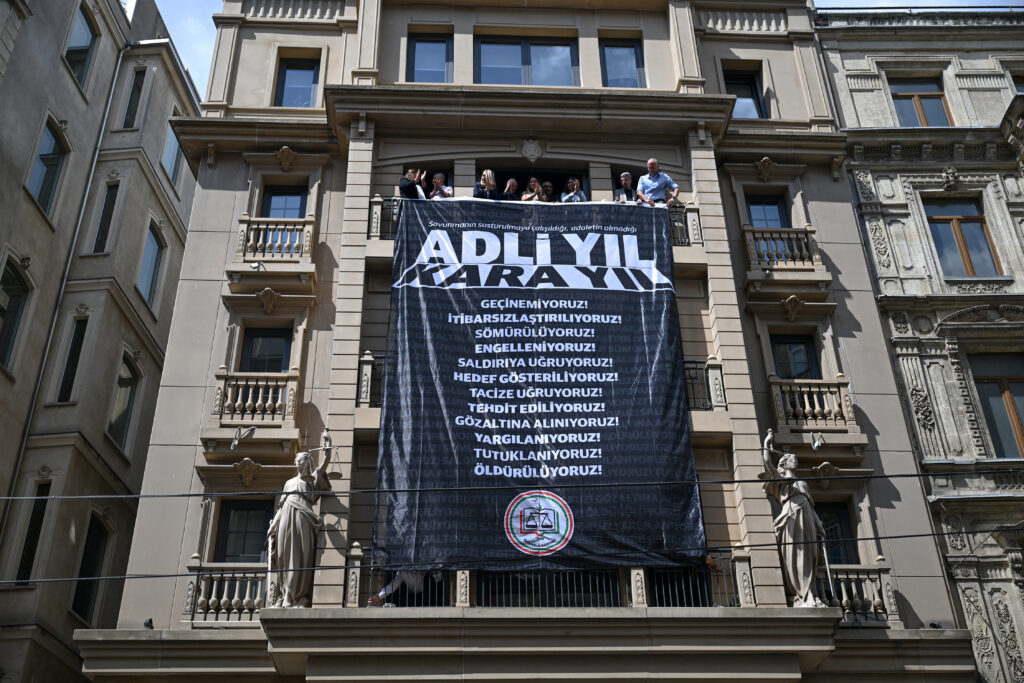
Lawyers caught in Turkey’s crackdown on opposition
Turkish lawyers defending human rights or representing clients who challenge state policies have found themselves increasingly caught in the crossfire of the crackdown on its main opposition party. At least 10 defence and human rights lawyers have been jailed or arrested in Istanbul alone since the start of this “black year”, said Ibrahim Kaboglu, head of the city’s bar association. Mehmet Pehlivan, who was representing Istanbul’s mayor Ekrem Imamoglu, also found himself locked up after his client was jailed in March as part of a graft investigation critics have denounced as politically motivated. Just days later, Pehlivan’s own lawyer was also arrested, denouncing the move as “intimidation”. The arrest of Imamoglu, seen as the only opposition leader with a realistic chance of beating President Recep Tayyip Erdogan at the ballot box, triggered Turkey’s worst street protests in years.Six months on, there are still no formal charges against him.Kaboglu himself and his executive board are also facing legal action after being dismissed in March by prosecutors who accused them of spreading “terrorist propaganda” and “false information”. “Turkish lawyers are facing unprecedented pressure,” he said. “When lawyers are targeted, it is those seeking justice — the people, civil society and anyone in opposition (to the government) who are in the firing line,” he told AFP.Their case resumes in court on Tuesday, with all 11 in the dock for demanding an investigation into the deaths of two Turkish journalists of Kurdish origin who were killed in northern Syria.An NGO said they were targeted by a Turkish drone. The Turkish military denies targeting civilians. – ‘Direct assault’ -Twelve legal and human rights organisations denounced the case against the bar association Monday as a “direct assault” on the independence of the legal profession.”The criminal and civil proceedings against the Istanbul Bar Association’s executive board amount to retaliation for engaging in lawful, rights-based advocacy,” said Ayse Bingol Demir, director of the Turkey Human Rights Litigation Support Project. “They are part of a broader effort to intimidate the legal profession and silence institutions that challenge state power,” she added.Lawyers outside Istanbul are also being held.Seven who were defending people arrested in Izmir, Turkey’s third city, during nationwide protests over Imamoglu’s removal were also detained in March. “The increase in lawyers being detained and arrested can only be explained by the pressure and growing attacks on Turkish (civil) society as a whole,” said Goksel Akbaba, one of the arrested lawyers.He said he was never told why he was arrested. “Such methods are used to intimidate lawyers in the same way as they are used to intimidate society,” Akbaba added.In April, an international coalition of lawyers, bar associations and rights groups raised the alarm over Ankara’s “escalating attacks” on the legal profession. Describing it as “an affront to the independence of the legal profession and the rule of law” it urged the international community to “condemn the Turkish authorities’ misuse of the justice system to suppress independent legal professionals and institutions and undermine public confidence in the rule of law.”- Accused of same crimes as clients -In recent years, several hundred lawyers have been imprisoned, according to figures provided by several associations. Many have been accused of the same alleged charges as their clients, using broadbrush anti-terror legislation widely criticised by human rights groups as disproportionately restrictive. In August 2020, Ebru Timtik — who was jailed for “belonging to a terror organisation” — died in an Istanbul prison after a months-long hunger strike to demand a fair trial, her death drawing a sharp rebuke from the European Union, which denounced “serious shortcomings” in Turkey’s justice system. Although several lawyers have been released from jail in recent months in the predominantly Kurdish southeast of the country, “there has been a distressing increase in trials involving Turkish lawyers in the past two years,” said French-based DSF-AS (Defence Without Borders-Solidarity with Lawyers). “There is a desire within the Turkish government to bring the legal profession to heel,” a spokesman told AFP, pointing to the case against the Istanbul Bar Association as an example.
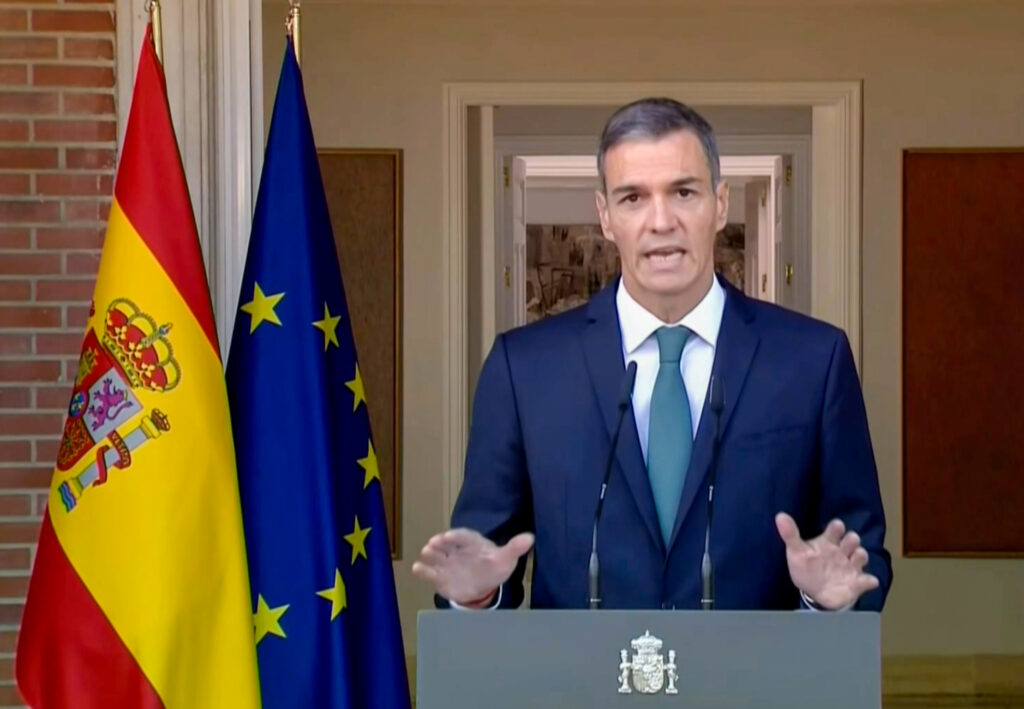
Spain, Israel spar after Madrid moves ‘to stop Gaza genocide’
Spain on Monday recalled its ambassador from Tel Aviv after Israel’s top diplomat accused premier Pedro Sanchez of antisemitism and barred two government ministers from entry.The spat came after Sanchez unveiled measures he said aimed to “stop the genocide in Gaza”, marking a new low in relations over the devastating Israeli offensive, launched after an unprecedented Hamas attack in Israel in 2023.The Socialist prime minister said his government would approve a decree to “consolidate in law” a ban on military equipment sales or purchases with Israel, a measure it had applied since the start of the conflict.Boats carrying fuel destined for the Israeli military will be barred from Spanish ports and Spain will act to reduce the transport of military equipment to Israel by air, Sanchez said in a televised address.”All those people participating directly in the genocide, the violation of human rights and war crimes in the Gaza Strip” will be banned from entering Spanish territory, he added.Spain will also ban the importation of products from “illegal settlements” in the occupied Palestinian territories with the aim of stopping “the forced displacement of the Palestinian population” and keeping alive the two-state solution, Sanchez continued.Consular services for Spanish citizens residing in those settlements will be limited “to the legally obligatory minimum assistance”, he said.Sanchez also announced new collaboration projects in agriculture, food security and medical aid to support the Palestinian Authority and additional humanitarian funds for Palestinians.- ‘Divert attention’ -Israeli Foreign Minister Gideon Saar lashed out at Spain after the announcement, accusing Sanchez on X of trying “to divert attention from serious corruption scandals through a continuous anti-Israel and antisemitic campaign”.Saar announced that Deputy Prime Minister Yolanda Diaz and Youth Minister Sira Rego, both members of the Socialists’ far-left junior coalition partner Sumar, would be banned from entering Israel.”Today we put a red line here, demonstrating we will not take it from them anymore,” Saar added during a press conference in Budapest with his Hungarian counterpart Peter Szijjarto.”Spain will not be intimidated in its defence of peace, international law and human rights,” the Spanish foreign ministry replied in a statement rejecting Saar’s comments.Spain then recalled its ambassador in Tel Aviv “in the face of the slanderous accusations against Spain and the unacceptable measures against two members of our country’s government”, foreign ministry sources said.Diaz said on social network Bluesky that it was a cause for “pride that a state that perpetrates a genocide denies us entry”.Sanchez, one of the most virulent critics of Israel’s military campaign, is the most senior European leader to refer to the conflict as a “genocide”. His government broke with European allies last year by recognising a Palestinian state, infuriating Israel.The Hamas attack on Israel on October 7, 2023, resulted in the deaths of 1,219 people, mostly civilians, according to an AFP tally of official figures.Palestinian militants also seized 251 hostages on that day, with the Israeli military saying 47 remain in Gaza, including 25 believed to be dead.Israel’s retaliatory offensive has killed at least 64,522 Palestinians, most of them civilians, according to figures from Gaza’s Hamas-run health ministry that the United Nations considers reliable.
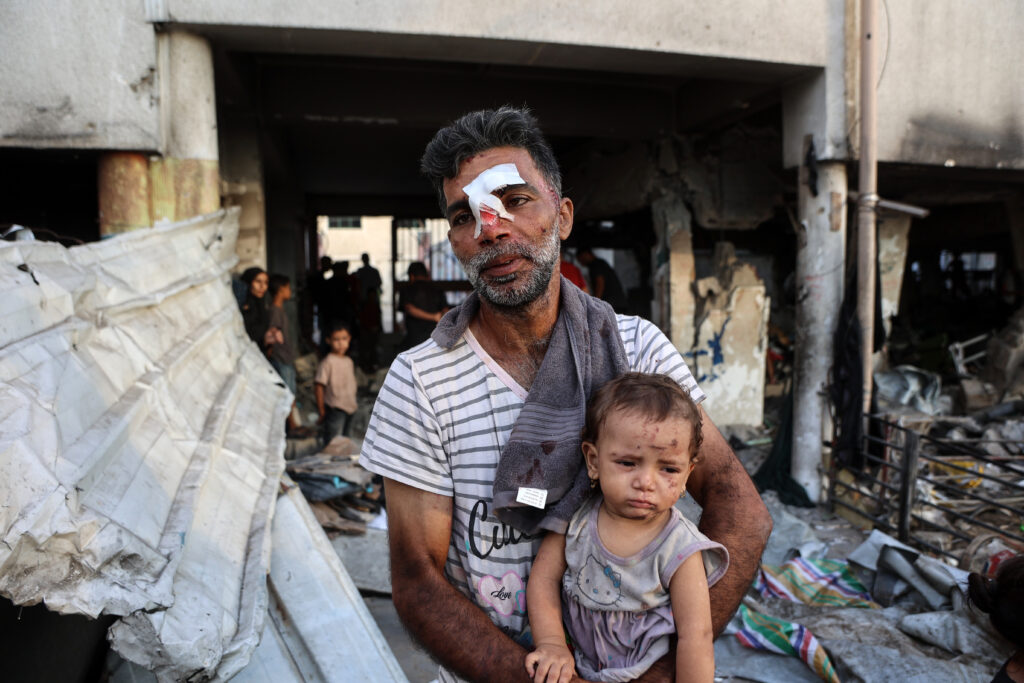
Israel warns Hamas to surrender or face ‘annihilation’
Israel’s defence minister told Hamas on Monday to lay down its arms or face annihilation, after US President Donald Trump said the militant group must accept a deal to release hostages in Gaza.In Israel-annexed East Jerusalem, gunmen opened fire at a bus stop and killed five people, according to Israel’s emergency service, in one of the deadliest incidents of its kind since the war in Gaza began.In Gaza City, the civil defence agency said Israeli attacks killed 10 people overnight, after at least 48 others were killed across the territory on Sunday. AFP has contacted the Israeli military for comment.Hamas, whose unprecedented October 2023 attack on Israel sparked the war, said shortly after Trump’s comments that it was ready for immediate talks.”This is a final warning to the Hamas murderers and rapists in Gaza and in luxury hotels abroad: Release the hostages and put down your weapons — or Gaza will be destroyed and you will be annihilated,” Israeli Defence Minister Israel Katz said on X. Israel has stepped up operations, levelling high-rise buildings in Gaza City which it has vowed to capture, despite mounting international pressure to stop the war.In Gaza City on Monday, bereaved father Issa Suleiman carried the body of his one-year old son, wrapped in a white shroud.”We were sleeping in the tent with my three children and my wife,” he told AFP, adding that five of his neighbours were killed and several seriously injured, including his wife and mother.- ‘Massive hurricane’ -Defence Minister Katz wrote on X that “today, a massive hurricane will hit the skies of Gaza City”, where he said the military was “preparing to expand” operations.Media restrictions in Gaza and difficulties in accessing many areas mean AFP is unable to independently verify the tolls and details provided by the civil defence agency or the Israeli military.Spain’s Prime Minister Pedro Sanchez announced a series of measures aimed at stopping what he called “the genocide in Gaza”, sparking a furious reaction from Israeli Foreign Minister Gideon Saar, who said it was part of an “antisemitic campaign”.Spain hit back, calling the accusations of antisemitism “false and slanderous”.In Geneva, United Nations rights chief Volker Turk said he was “horrified by the open use of genocidal rhetoric… by senior Israeli officials”.Following the attack in East Jerusalem, Israeli Prime Minister Benjamin Netanyahu said: “Let it be clear: these murders strengthen our determination to fight terrorism.”Israeli emergency service Magen David Adom (MDA) said that in addition to the five dead, seven of the injured were in serious condition. Police said the two gunmen were also killed.- Ready to negotiate -Trump said Sunday he was issuing a “last warning” to Hamas, insisting it accept a deal to release the hostages seized during their October 2023 attack that sparked the war. The Israeli military says 47 hostages remain in Gaza, including 25 believed to be dead.”The Israelis have accepted my terms. It is time for Hamas to accept as well. I have warned Hamas about the consequences of not accepting. This is my last warning,” Trump said on social media, without elaborating further. Hamas said shortly after his comments that it was ready to “immediately sit at the negotiating table” following what it described as “some ideas from the American side aimed at reaching a ceasefire agreement”.In exchange for a truce, Hamas said it wanted “a clear declaration of the end of the war, a full withdrawal from the Gaza Strip, and the formation of a committee of independent Palestinians to manage the Gaza Strip, which would begin its duties immediately”.US news outlet Axios reported that White House envoy Steve Witkoff sent a new proposal for a Gaza hostage and ceasefire deal to Hamas last week.The White House has not released any details about the proposal, but Trump said “you’ll be hearing about it pretty soon”.Hamas agreed last month to a ceasefire proposal that involved a 60-day truce and staggered hostage releases. Israel, however, has demanded the militant group release all the hostages at once, disarm and relinquish control of Gaza, among other conditions.Hamas’s October 7, 2023 attack on Israel resulted in the deaths of 1,219 people, mostly civilians, according to an AFP tally based on Israeli figures.Israel’s retaliatory offensive has killed at least 64,522 Palestinians, most of them civilians, according to figures from the health ministry in Hamas-run Gaza that the United Nations considers reliable.