
AFP Asia Business
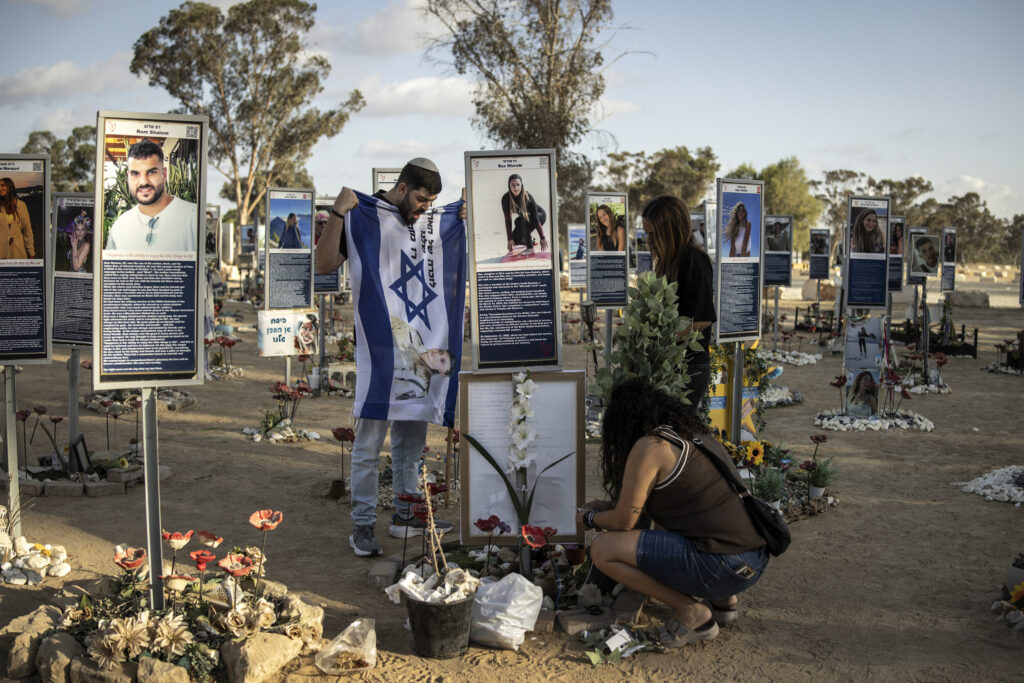
Trump says ‘real chance’ to end Gaza war as Israel marks attacks anniversary
US President Donald Trump voiced optimism that there was a “real chance” to end the war in Gaza, as Israel remembered victims of the October 7 attacks two years ago on Tuesday.In his message marking the anniversary, Israeli Prime Minister Benjamin Netanyahu vowed to achieve all the goals of the war, including crushing the Palestinian militant group Hamas which waged the attacks.”We are in fateful, decisive days. We will continue to act to achieve all the war’s objectives: the return of all abductees, the elimination of Hamas’s rule, and ensuring that Gaza will never again pose a threat to Israel,” Netanyahu said in a statement.Indirect negotiations between Israeli and Hamas negotiators are being held in the Egyptian resort town of Sharm El-Sheikh, based on a 20-point plan proposed by Trump to end the war.”There’s a real chance that we could do something,” Trump told reporters in the Oval Office, adding that US negotiators were also involved in the talks.”I think there’s a possibility that we could have peace in the Middle East.” Trump said the United States would do “everything possible to make sure everyone adheres to the deal” if Hamas and Israel do agree on a ceasefire.Hamas’ top negotiator Khalil al-Hayya said that his group “wants guarantees from (US) President Trump and the sponsor countries that the war will end once and for all”.- Hamas says working for deal -Two years ago to the day, at the close of the Jewish festival of Sukkot, Hamas-led militants launched the deadliest attack on Israel in the country’s history, sparking a huge retaliatory offensive in Gaza.It resulted in the deaths of 1,219 people, mostly civilians, according to an AFP tally based on official Israeli figures.Militants also took 251 people hostage into Gaza, of whom 47 remain captive, including 25 the Israeli military says are dead.Senior Hamas official Fawzi Barhoum called the October 7 attack a “historic response” to Israel’s bid to “eradicate the Palestinian cause”.He also said Hamas was working to “surmount all obstacles” to sealing a deal in Egypt.Global pressure to end the war has escalated, with much of Gaza flattened, a UN-declared famine unfolding and Israeli hostage families still longing for their loved ones’ return.A UN probe last month accused Israel of genocide in Gaza while rights groups have accused Hamas of committing war crimes and crimes against humanity during the October 7 attack. Each side rejects the allegations against it.- ‘Initial maps’ -Trump’s plan calls for a ceasefire, the release of all the hostages, Hamas’s disarmament and a gradual Israeli withdrawal from Gaza.The plan received positive responses from both Israel and Hamas and prompted the indirect talks that started in Egypt on Monday.According to a Palestinian source close to the Hamas negotiating team, Tuesday’s session saw Hamas discussing “the initial maps presented by the Israeli side regarding the withdrawal of troops as well as the mechanism and timetable for the hostage-prisoner exchange”.”Hamas insists on linking the timeline for the release of captives to the timeline of Israeli withdrawals”.On Wednesday, Trump’s special Middle East envoy Steve Witkoff will join the talks, according to Egyptian Foreign Minister Badr Abdelatty.”The primary guarantee of success at this stage is US President Trump himself… even if it comes to a point to require him imposing a vision,” he said.Qatar said its prime minister, Sheikh Mohammed bin Abdulrahman Al Thani, would also join the talks, while Turkish state media reported the country’s intelligence chief Ibrahim Kalin would lead a delegation to Egypt.- Music festival killings remembered -In Israel, relatives and friends of those killed at the Nova music festival lit candles and held a minute’s silence at the site of the attack, where militants killed more than 370 people and seized dozens of hostages.Orit Baron, whose daughter Yuval was killed there with her fiance Moshe Shuva, told AFP that October 7 was a “black” day for her family.”Now it’s two years. And I’m here to be with her, because this is the last time that she was alive,” the 57-year-old mother said at the site of the attack, adding she felt “that right now she’s with me here”.Late on Tuesday, thousands of Israelis held a memorial in Tel Aviv, with all speakers focussing on the hostages still held in Gaza.- ‘Now, not tomorrow’ -Israel’s military campaign in Gaza has killed at least 67,160 people, according to the health ministry in the Hamas-run territory, figures the United Nations considers credible.The data does not distinguish between civilians and combatants but indicates that over half of the dead are women and children.”My dream is for the war to end now, not tomorrow,” said Abeer Abu Said, a 21-year-old in Gaza who lost seven family members in the war.”I don’t trust anyone — from the Israeli negotiators or even Hamas — they all lie to us. Negotiations for the sake of negotiations, while we die every minute.”Egypt’s Abdelatty said that negotiations were aimed at implementing a “first phase” of the agreement, “to create conditions for the release of the hostages, the access for aid and the release of Palestinian prisoners”.”This, therefore, requires the redeployment of Israeli forces so that we can work to implement this phase,” he added.Israeli strikes continued on Tuesday, killing at least six people, according to Gaza’s civil defence agency — a rescue force operating under Hamas’s authority.burs-jd/dcp/rlp

Stocks falter, gold shines as traders weigh political turmoil
Wall Street stocks turned lower Tuesday and gold closed in on $4,000 per ounce as investors weighed the US government shutdown and political turmoil in France.Wall Street equities opened higher, but stumbled into negative territory soon thereafter, with some seeing signs of a fatigued market after a heady run.”The momentum is beginning to dry up,” …
Stocks falter, gold shines as traders weigh political turmoil Read More »
Trump says ‘real chance’ to end Gaza war as Israel marks Oct 7 anniversary
US President Donald Trump voiced optimism that there was a “real chance” to end the war in Gaza, as Israel marked the second anniversary of the October 7 attack on Tuesday.In his message marking the anniversary, Israeli Prime Minister Benjamin Netanyahu vowed to achieve all the goals of the war.”We are in fateful, decisive days. We will continue to act to achieve all the war’s objectives: the return of all abductees, the elimination of Hamas’s rule, and ensuring that Gaza will never again pose a threat to Israel,” Netanyahu said in a statement.Indirect negotiations between Israeli and Hamas negotiators are being held in the Egyptian resort town of Sharm El-Sheikh, based on a 20-point plan proposed by Trump to end the war.”There’s a real chance that we could do something,” Trump told reporters in the Oval Office, adding that US negotiators were also involved in the talks.”I think there’s a possibility that we could have peace in the Middle East.” Trump said the United States would do “everything possible to make sure everyone adheres to the deal” if Hamas and Israel do agree on a ceasefire.Hamas’ top negotiator Khalil al-Hayya said that his group “wants guarantees from (US) President Trump and the sponsor countries that the war will end once and for all”.The talks came as Israel commemorated the second anniversary of Hamas’s October 7 attack that triggered the war.Two years ago to the day, at the close of the Jewish festival of Sukkot, Hamas-led militants launched the deadliest attack on Israel in the country’s history, sparking a huge retaliatory offensive in Gaza.It resulted in the deaths of 1,219 people, mostly civilians, according to an AFP tally based on official Israeli figures.Militants also took 251 people hostage into Gaza, of whom 47 remain captive, including 25 the Israeli military says are dead.Senior Hamas official Fawzi Barhoum called the October 7 attack a “historic response” to Israel’s bid to “eradicate the Palestinian cause”.He also said Hamas was working to “surmount all obstacles” to sealing a deal in Egypt.Global pressure to end the war has escalated, with much of Gaza flattened, a UN-declared famine unfolding and Israeli hostage families still longing for their loved ones’ return.A UN probe last month accused Israel of genocide in Gaza while rights groups have accused Hamas of committing war crimes and crimes against humanity during the October 7 attack. Both sides reject the allegations.- ‘Initial maps’ -Trump’s plan calls for a ceasefire, the release of all the hostages, Hamas’s disarmament and a gradual Israeli withdrawal from Gaza.The plan received positive responses from both Israel and Hamas and prompted indirect talks in Egypt since Monday.According to a Palestinian source close to the Hamas negotiating team, Tuesday’s session saw Hamas discussing “the initial maps presented by the Israeli side regarding the withdrawal of troops as well as the mechanism and timetable for the hostage-prisoner exchange”.”Hamas insists on linking the timeline for the release of captives to the timeline of Israeli withdrawals”.On Wednesday, Trump’s special Middle East envoy Steve Witkoff will join the talks, according to Egyptian Foreign Minister Badr Abdelatty.”The primary guarantee of success at this stage is US President Trump himself… even if it comes to a point to require him imposing a vision,” he said.Qatar said its prime minister, Sheikh Mohammed bin Abdulrahman Al Thani, would also join the talks while Turkish state media reported the country’s intelligence chief Ibrahim Kalin would lead a delegation to Egypt.- ‘She’s with me’ -In Israel, relatives and friends of those killed at the Nova music festival lit candles and held a minute’s silence at the site of the attack, where militants killed more than 370 people and seized dozens of hostages.Orit Baron, whose daughter Yuval was killed there with her fiance Moshe Shuva, told AFP that October 7 was a “black” day for her family.”Now it’s two years. And I’m here to be with her, because this is the last time that she was alive,” the 57-year-old mother said at the site of the attack, adding she felt “that right now she’s with me here”.Another ceremony was due in Tel Aviv’s Hostages Square, where weekly rallies have kept up calls for the captives’ release.- ‘Now, not tomorrow’ -Israel’s military campaign in Gaza has killed at least 67,160 people, according to the health ministry in the Hamas-run territory, figures the United Nations considers credible.Their data does not distinguish between civilians and combatants but indicates that over half of the dead are women and children.”My dream is for the war to end now, not tomorrow,” said Abeer Abu Said, a 21-year-old in Gaza who lost seven family members in the war.”I don’t trust anyone — from the Israeli negotiators or even Hamas — they all lie to us. Negotiations for the sake of negotiations, while we die every minute.”In Sharm El-Sheikh, mediators were shuttling between Israeli and Hamas delegations under tight security.Egypt’s Abdelatty said that negotiations were aimed at implementing a “first phase” of the agreement, “to create conditions for the release of the hostages, the access for aid and the release of Palestinian prisoners”.”This, therefore, requires the redeployment of Israeli forces so that we can work to implement this phase,” he added. Israeli strikes continued on Tuesday, killing at least six people according to Gaza’s civil defence agency — a rescue force operating under Hamas’s authority.burs-jd/dcp
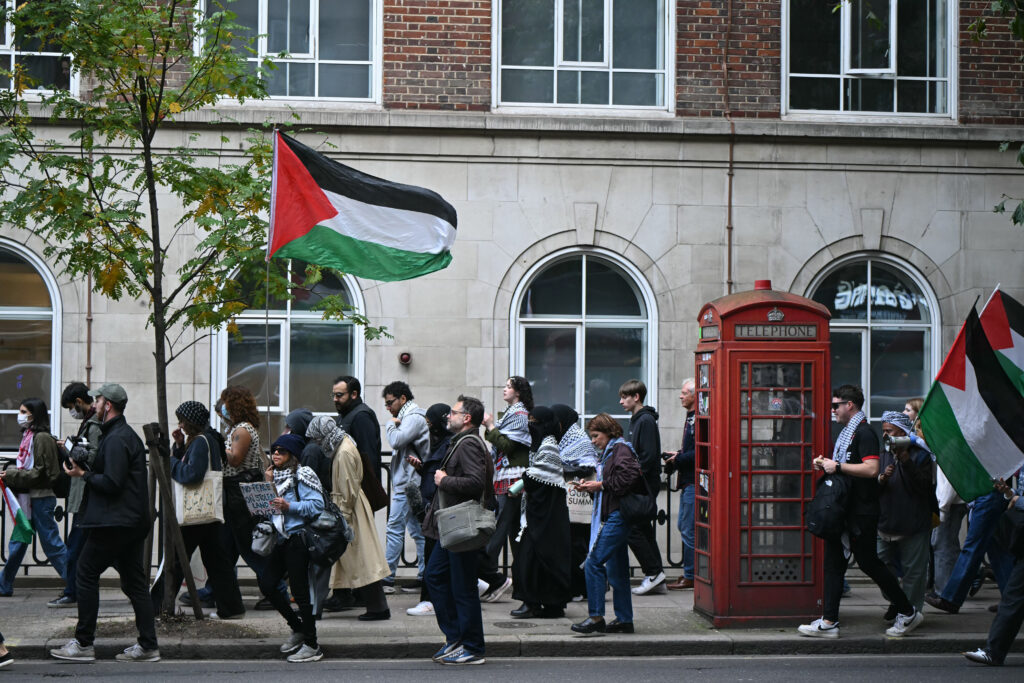
Pro-Gaza protests flare in UK on anniversary of Hamas attack
Thousands of students protested in London and other UK cities on Tuesday, defying a plea from British Prime Minister Keir Starmer to skip demonstrations on the second anniversary of Hamas’s October 7 attack on Israel.Chanting “Free Palestine”, students from several London universities walked out of classes at 2:00 pm (1300 GMT) to march through the centre of the British capital.Rallies or events including vigils were also held in other UK cities, including Edinburgh, Glasgow, Sheffield and Manchester.Writing in The Times newspaper, Starmer alleged that regular pro-Palestinian protests had been used “to attack British Jews for something over which they have absolutely no responsibility”.He called that “despicable” and “a total loss of empathy and humanity”.”It’s un-British to have so little respect for others. And that’s before some of them decide to start chanting hatred towards Jewish people all over again.”But protester Daniel, 19, from Kings College, London, said: “It’s important to show support as a Jewish student who opposes Zionism.” He added he wanted to show “that it’s not anti-Semitic to oppose what’s happening right now in the Middle East, you know, the subjugation of Palestinian people.”And Briton Sim Junaid said: “I feel to be British is to stand for British values, and one of those British values should be empathy… it’s about being human.”An attack outside a synagogue in Manchester on October 2 left two people dead — one killed in the attack and the other from a fatal gunshot, likely from armed police officers.- Antisemitism warning -Israeli Emily Schrader, 34, visiting her family in the British capital, condemned the march as “very, very irresponsible. I think it sends a totally wrong message.”In a separate statement, Starmer warned the past two years had seen “rising antisemitism” in the UK, including the car ramming and stabbing attack in Manchester, which struck on Yom Kippur, the holiest day in the Jewish calendar.”This is a stain on who we are, and this country will always stand tall and united against those who wish harm and hatred upon Jewish communities,” said the British leader.Hamas’s October 2023 attack resulted in the deaths of 1,219 people, mostly civilians, according to an AFP tally of Israeli official figures.Militants also seized 251 hostages, 47 of whom are still in Gaza. Of those, the Israeli military says 25 are dead.Israel’s retaliatory offensive has killed at least 67,160 Palestinians over the last two years, according to health ministry figures in the Hamas-run territory that the United Nations considers reliable.”Since that awful day, so many have endured a living nightmare,” Starmer said, vowing to continue efforts to bring home British hostages held by Hamas in Gaza.Pro-Palestinian demonstrations went ahead over the weekend in Britain, despite pleas by the government for protesters to refrain from gathering following the Manchester attack.Activist group Defend Our Juries said calls to scrap pro-Palestinian protests following the Manchester attack was “wrongly conflating the actions of the Israeli state with all Jews”.”Jewish people around the world are not responsible for Israel’s crimes and there are many Jewish people who do not support the actions of the Israeli state,” DOJ’s Zoe Cohen said on Saturday.
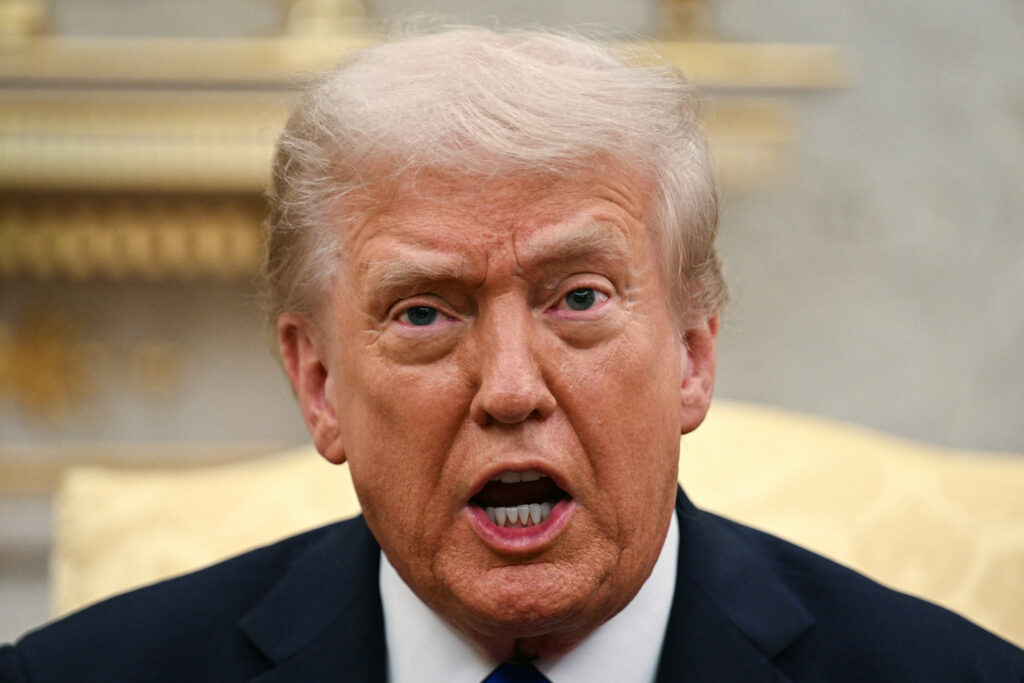
Trump says ‘real chance’ of Gaza peace deal
US President Donald Trump said Tuesday there was a “real chance” of a Gaza peace deal, as Hamas and Israeli negotiators held indirect talks on the second anniversary of the October 7 attack. “We are very close to making a deal on the Middle East that will bring peace to the Middle East,” Trump told reporters in the Oval Office alongside Canadian Prime Minister Mark Carney.Trump said that US negotiators were involved in the talks now taking place in Egypt. The White House said on Monday that Trump’s special envoy Steve Witkoff and son-in-law Jared Kushner would play a role.”There’s a real chance that we could do something,” Trump said. “I think there’s a possibility that we could have peace in the Middle East. It’s something even beyond the Gaza situation. We want a release of the hostages immediately.” “Our team is over there now, another team just left, and other countries, literally every country in the world, has supported the plan.”Trump added that the United States would to “everything possible to make sure everyone adheres to the deal” if Hamas and Israel do agree on a ceasefire to end the war.
WTO hikes 2025 trade growth outlook but tariffs to bite in 2026
AI-related goods and a surge in exports to the United States to beat President Donald Trump’s tariff hikes boosted global merchandise trade growth this year, the World Trade Organization said Tuesday.However, the picture is bleaker for 2026, the WTO warned, as the impact of those tariffs kicks in.The WTO raised its forecast for trade volume …
WTO hikes 2025 trade growth outlook but tariffs to bite in 2026 Read More »
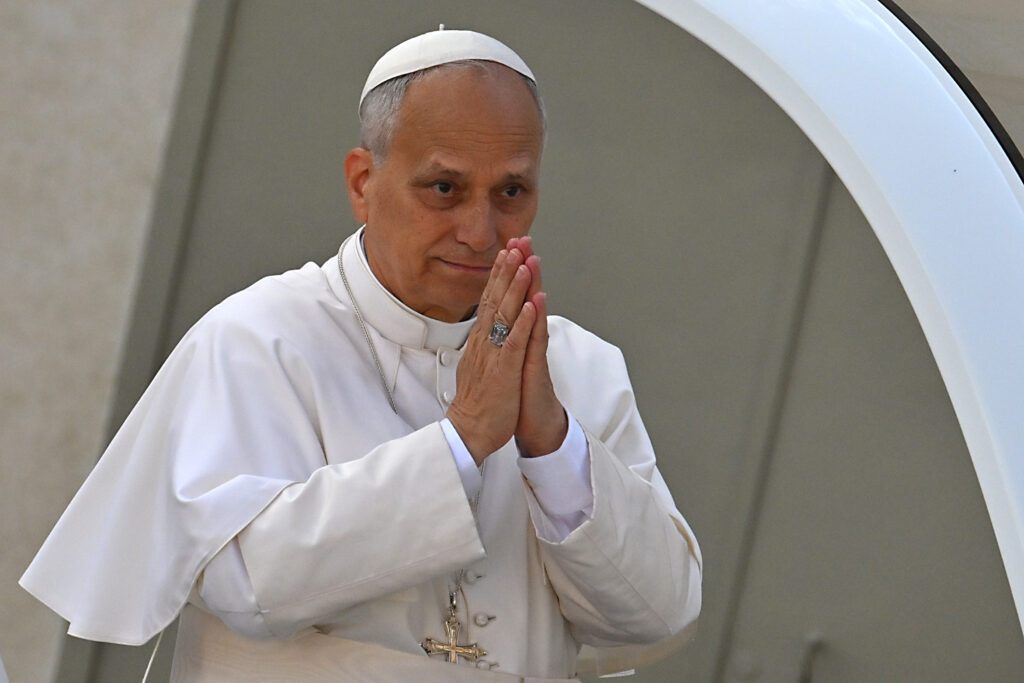
Pope Leo to make first papal trip to Turkey and Lebanon
Pope Leo XIV will travel to Turkey and Lebanon in a six-day trip beginning late November, his first since becoming head of the Catholic Church, the Vatican said Tuesday.The 70-year-old American is expected in Turkey from November 27-30, a visit that “will include a pilgrimage to Iznik on the occasion of the 1,700th anniversary of the First Council of Nicaea,” Vatican spokesman Matteo Bruni said in a brief statement. A subsequent trip to Lebanon will take place from November 30 to December 2, he said, adding that an itinerary would come later.Lebanese President Joseph Aoun — a Maronite Christian who invited Leo to visit his country while at the Vatican in June — called the trip a “historic moment”.”The papal visit is a call for peace, for the rooting of the Christian presence in the East, and for the preservation of the Lebanese model, which the world and the region need,” said Aoun in a statement.In July, the pope said he hoped to visit Iznik for the 1,700th anniversary of the Council of Nicaea this year, a milestone in Church history.That trip was supposed to have been made in May by his predecessor, Pope Francis, who died on April 21 at the age of 88. Nicaea, which is now the city of Iznik and is located 100 kilometres (62 miles) southeast of Istanbul, hosted the first ecumenical council in Christian history in 325 AD. Convened by Emperor Constantine, the council was the first to bring together Christian bishops from across the Roman Empire. It laid the foundations for the Nicene Creed, a statement of faith that intended to exclude certain so-called heresies.The creed confirmed there was one God who exists in three parts — the Father, the Son Jesus and the Holy Spirit — which remains the cornerstone doctrine for most Christian denominations.Leo’s highly anticipated visit to Lebanon is expected to focus on peace in the multi-faith country, which has committed to disarming non-state groups, particularly the Iran-backed Shiite movement Hezbollah. A source close to organisers of the trip in Lebanon told AFP that the pope would visit the Sanctuary of Saint Charbel, north of Beirut, as part of the visit. Despite a ceasefire that came into effect in November 2024, Israel maintains troops in border positions considered strategic in southern Lebanon.Israeli forces regularly carry out strikes, claiming to target Hezbollah fighters and infrastructure, particularly in the south.The last pope to visit Lebanon was Benedict XVI in 2012, while the last papal visit to Turkey was in 2014, when Pope Francis travelled to Ankara and Istanbul and met with President Recep Tayyip Erdogan.