
AFP Asia Business
Iran says deal ‘within reach’ ahead of US talks
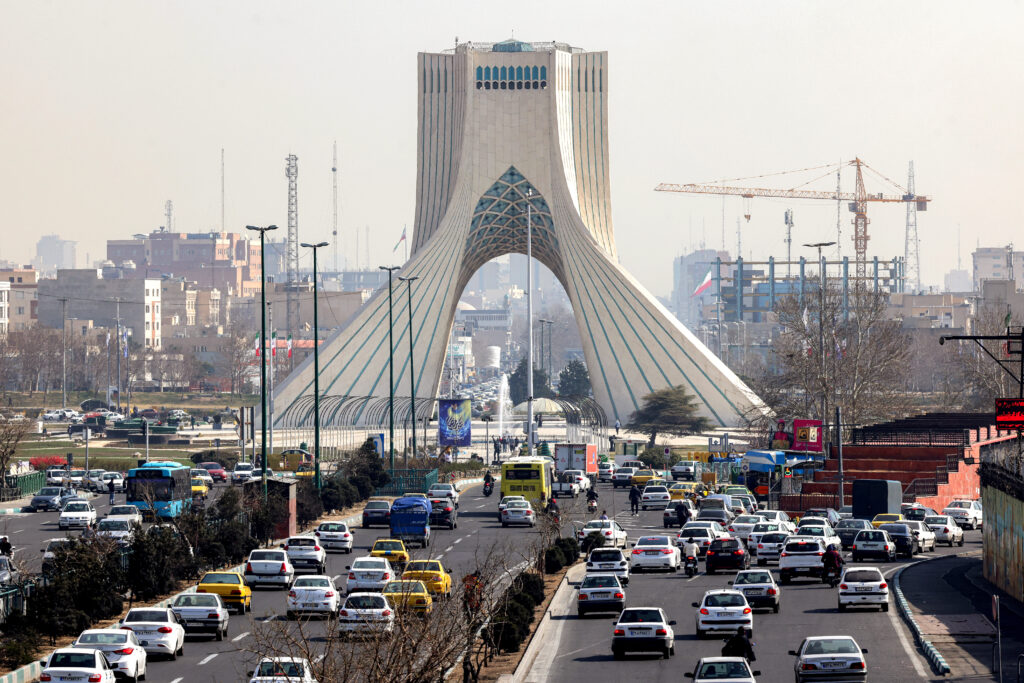
Iran’s foreign minister declared Tuesday that a deal to avoid a military clash with the United States was within reach, two days before talks between the foes were due to resume in Geneva.Abbas Araghchi’s appeal came as Iran issued a muted warning to student protesters maintaining pressure on the government, against the backdrop of mounting US threats of action to halt Tehran’s nuclear programme.”We have a historic opportunity to strike an unprecedented agreement that addresses mutual concerns and achieves mutual interests,” Araghchi said in a social media post. The minister added that a deal was “within reach, but only if diplomacy is given priority.”Tehran and Washington are due to hold a third round of negotiations on Thursday in Geneva, the latest since talks resumed earlier this month.The talks will be held following a heavy US military deployment in the region in recent weeks and threats by President Donald Trump of a strike on Iran if no deal is reached. Iran has repeatedly said it would respond firmly to any attack and on Monday the foreign ministry warned that any strike, even limited, “would be regarded as an act of aggression”. In his post on Tuesday, Araghchi vowed Iran will “under no circumstances ever develop a nuclear weapon,” but insisted on the country’s right to “harness dividends of peaceful nuclear technology”. “We have proven that we will stop at nothing to guard our sovereignty with courage,” he added. Iran and the US held five rounds of nuclear talks last year but those negotiations were brought to an end with Israel’s unprecedented attack on Iran which triggered a 12-day war. – ‘Red lines’ protest warning -Meanwhile, university students in Tehran kicked off a new semester with gatherings in which they revived slogans from nationwide protests against the country’s clerical leadership.On Tuesday, the fourth consecutive day of the campus protests, videos verified by AFP showed two groups facing off in a large hall at a Tehran university before scuffles break out.The day before, students had burned the flag that was adopted by Iran’s Islamic republic after the 1979 revolution that toppled the monarchy, according to verified videos.Iranian government spokeswoman Fatemeh Mohajerani, giving the first official reaction to the rallies, said that while students had a right to protest, they must “understand the red lines”.The flag, she added, was one “of these red lines that we must protect and not cross or deviate from, even at the height of anger”.- US military build-up -The initial wave of protests began in December, sparked by economic woes in the sanctions-hit country, but soon grew into nationwide demonstrations that crested on January 8 and 9, posing one of the largest challenges to Iran’s leaders in years.The unrest prompted a violent government crackdown that killed thousands of people.The US-based Human Rights Activists News Agency (HRANA) has recorded more than 7,000 deaths, while warning the full toll is likely far higher. Iranian officials acknowledge more than 3,000 deaths, but say the violence was caused by “terrorist acts” fuelled by the United States and Israel.The crackdown in January prompted Trump to threaten to intervene militarily on the protesters’ behalf, though the focus of his threats soon shifted to Iran’s nuclear programme, which the West believes is aimed at building an atomic bomb but Tehran insists is peaceful.Since then, the US has carried out a massive military build-up in the Middle East aimed at pressuring Tehran into cutting a deal, even as the two sides pursue indirect negotiations.Washington deployed the aircraft carrier USS Abraham Lincoln to the Arabian Sea, and another, the USS Gerald R. Ford, has arrived at a US base in Crete en route to the region.
Lebanon fears Israeli strikes if Iran situation escalates
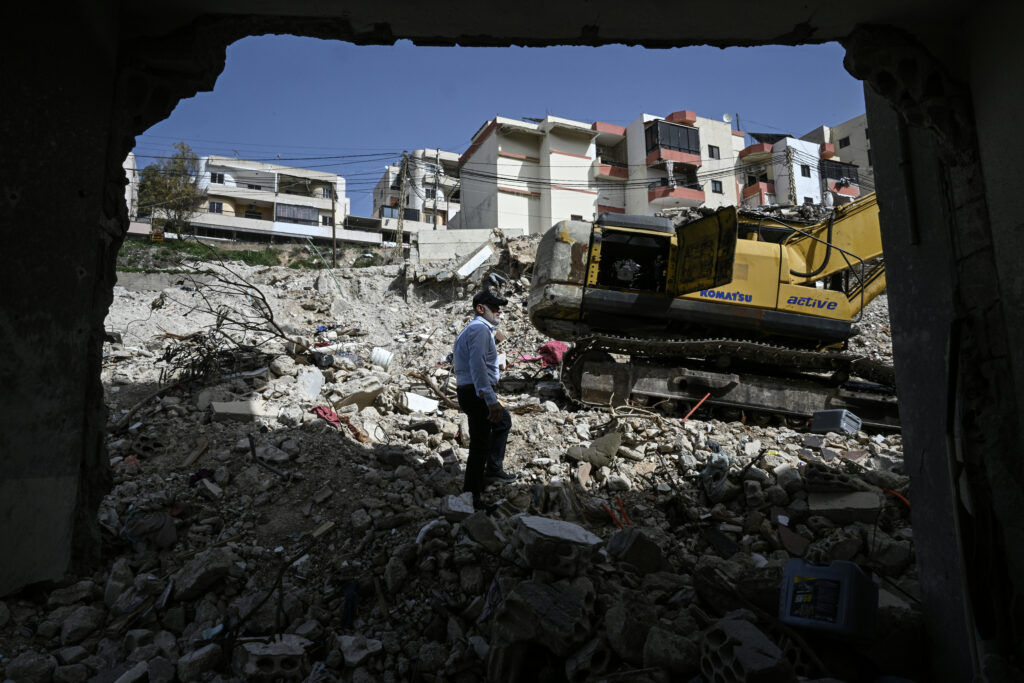
Lebanon’s foreign minister said Tuesday his country fears its infrastructure could be hit by Israeli strikes if the situation with Iran escalates, after Israel intensified its attacks on Tehran-backed Hezbollah.With tensions high, Lebanon’s army accused the Israeli military of firing near a position it was setting up in the country’s south, saying it had instructed troops to return fire.”There are signs that the Israelis could strike very hard in the event of an escalation, potentially including strategic infrastructure such as the airport,” foreign minister Youssef Raggi told reporters in Geneva.His comments came against the backdrop of a massive US military buildup in the Middle East that suggests Washington is prepared to wage a sustained campaign against Iran.On Monday, Iran vowed to retaliate “ferociously” against any attack from the United States, and repeated its warning of a regional conflagration in response to President Donald Trump’s latest threat of strikes.”We are currently conducting diplomatic efforts to request that, even in the event of retaliation, Lebanese civilian infrastructure not be targeted,” Raggi said.The Lebanese minister stressed that his country’s leadership had been very clear: “This war does not concern us.”A Lebanese official who requested anonymity said “what the Lebanese fear is a chain reaction: an American strike against Iran, a Hezbollah retaliatory strike against Israel, followed by a massive Israeli response.”In a post on X, Raggi said he hoped “Hezbollah refrains from entering any new adventure and spares Lebanon further destruction”.”We have received warnings indicating that any intervention on its part could prompt Israel to strike infrastructure, and we are working through all means to prevent that,” he added.- Israeli strikes -Israel has kept up regular strikes on Lebanon despite a November 2024 ceasefire that sought to halt more than a year of hostilities with Iran-backed Hezbollah, usually saying it was targeting the group.Last Friday, Israel carried out deadly strikes on what it called Hezbollah positions in eastern Lebanon and targets linked to the Palestinian group Hamas in the south.Hezbollah said Saturday that eight of its fighters had been killed, and vowed “resistance”.Its leader Naim Qassem stated last month that any attack on Tehran would also be an attack on Hezbollah.On Monday, Washington ordered non-emergency personnel to leave its embassy in Lebanon’s capital Beirut, as anticipation rose of a possible conflict with Iran.On Tuesday, Lebanon’s army said it was “establishing a new observation post on the southern border” when “the area surrounding the post was subjected to gunfire from the Israeli side”.”The army command issued orders to reinforce the post, remain there, and return fire.”Israel’s military said it had spotted Lebanese soldiers establishing the post adjacent to Israeli troops “without prior coordination,” and requested they stop.”After the request went unanswered, the troops conducted warning fire in order to halt the work,” the military said in a statement.- Cairo meeting -Also on Tuesday, a preparatory meeting was held in Cairo ahead of a conference in Paris next month to back Lebanon’s army, which is facing heavy pressure from Washington and Israel to disarm Hezbollah.At the meeting, Egyptian Foreign Minister Badr Abdelatty called for the international community to better support Lebanon’s armed forces.The meeting aimed “to enable the Lebanese state to ensure that all weapons are held exclusively by the state,” Abdelatty added.Last year, Lebanon’s government committed to disarming Hezbollah, which was badly weakened in a recent war with Israel, and tasked the army with drawing up a plan to do so.The army, which has limited capabilities, declared in January the completion of the first phase of its plan near the border with Israel.It said last week it would need at least four months to complete the second phase.Israel, which accuses Hezbollah of trying to rearm, has criticised the army’s progress as insufficient.
Aid groups petition Israel’s top court to halt ban on Gaza, West Bank ops
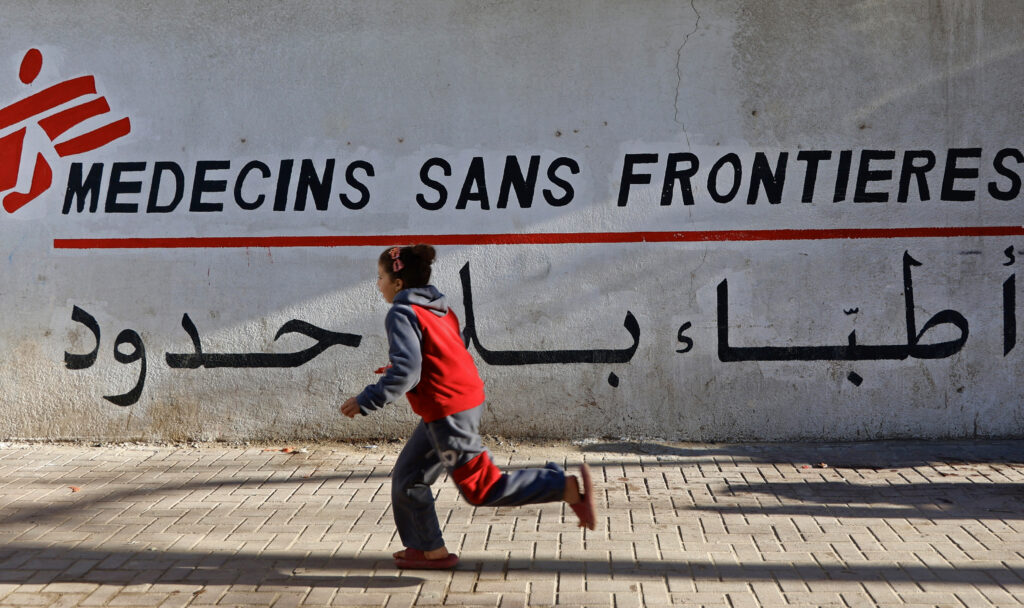
More than a dozen international humanitarian organisations have petitioned Israel’s Supreme Court to block an imminent order that would force 37 NGOs to cease operations in Gaza, the West Bank and east Jerusalem, warning of catastrophic consequences for Palestinians.Organisations including Doctors Without Borders (MSF), Oxfam, the Norwegian Refugee Council and CARE were notified on December 30, 2025 that their Israeli registrations had expired and that they had 60 days to renew them by providing lists of their Palestinian staff.If they fail to do so, they will have to cease operations in Gaza and the occupied West Bank, including east Jerusalem, from March 1.The petition, described as unprecedented in its scale, seeks an urgent interim injunction from Israel’s top court to suspend the closures pending full judicial review. The 17 petitioners, which include some of the NGOs hit by the ban, argue the Israeli measures are incompatible with an occupying power’s obligations under international humanitarian law.The NGOs say compliance would expose local employees to potential retaliation, undermine the principle of humanitarian neutrality and violate European data protection law.”Turning humanitarian organisations into an information-gathering arm for a party to the conflict stands in total contradiction to the principle of neutrality,” the petition states.According to the United Nations, 133 NGO workers have been killed in the Gaza Strip since the war started on October 7, 2023, including 15 MSF employees.The petitioners say they have proposed practical alternatives to handing over staff lists to Israel, including “independent sanctions screening” and “donor-audited vetting systems.”- ‘New Era’ -The organisations say that they collectively support or implement more than half of all food assistance in Gaza, 60 per cent of field hospital operations and all inpatient treatment for children suffering severe acute malnutrition.Athena Rayburn, executive director of AIDA, an umbrella organisation of international NGOs working in Palestinian territories, told reporters Tuesday that NGO presence in Gaza, where foreign media is not allowed, also allows outsiders to witness the war.The petitioners say enforcement has already begun in practice, with supplies blocked and visas denied to foreign staff.”We haven’t been able to get international staff inside Gaza since the beginning of January. Israeli authorities denied any entry to Gaza, but also to the West Bank,” MSF head of mission in the Palestinian territories Filipe Ribeiro told AFP last week.”For the time being, we are still working in Gaza, and we plan to keep running our operations as long as we can,” he added.The ban comes as Israel hardens its stance towards humanitarian actors in general, having banned the UN agency for Palestinian refugees, UNRWA, from Israel in early 2025.UNRWA, whom Israel accused of employing people who took part in Hamas’s October 7 attack which triggered the war, also can no longer coordinate with Israeli authorities in the occupied West Bank, as will be the case for the banned, or deregistered, NGOs.For international NGOs, the current ban goes back to a change in rules for foreign organisations working with Palestinians in March 2025. The law updated the framework for how aid groups must register to maintain their status within Israel, along with provisions that outline how their applications can be denied or registration revoked.- Complicates relief work -The absence of coordination with Israel complicates operations by denying entry to Israel, the West Bank or Gaza to foreign aid workers or by denying direct contact to plan around Israeli military operations in the Palestinian territory.”We are arguing that Israel acted here without any authority, because according to the Oslo Accords, the whole registration of organisations issue was handled by the Palestinian Authority,” Yotam Ben-Hillel, an Israeli attorney who filed the appeal for the international organisations, told reporters.The NGOs argued in their petition that Israel, as an occupying power in the West Bank and parts of Gaza, “must facilitate relief for civilians under its control” under the Geneva Convention.”This is a new era in how Israel deals with international nonprofits”, Ben-Hillel said.He reminded that under the 2025 rules, foreign NGOs can also lose their registration if Israel deems it has “delegitimised Israel” by reporting on the West Bank or Gaza, a rule he called “vague and subjective”.He said the Israeli state had until Wednesday 1200 GMT to provide the court with an answer.
Iran says students must respect ‘red lines’ after protests
Iran offered a muted warning on Tuesday for students who staged anti-government rallies, with the country’s leaders under pressure after a recent mass protest movement and threats of US military action over its nuclear programme.University students kicked off a new semester over the weekend with gatherings in which they revived slogans from nationwide protests against the country’s clerical leadership that peaked in January and were met by a deadly crackdown.On Tuesday, the fourth consecutive day of the campus protests, videos verified by AFP showed two groups facing off in a large hall at a Tehran university — one waving Iranian flags and the other chanting anti-government slogans — before scuffles break out.The day before students had burned the flag that was adopted by Iran’s Islamic republic after the 1979 revolution that toppled the monarchy, according to verified videos.Iranian government spokeswoman Fatemeh Mohajerani, giving the first official reaction to the rallies, said on Tuesday that while students had a right to protest, they must “understand the red lines”.The flag, she added, was one “of these red lines that we must protect and not cross or deviate from, even at the height of anger”.She said Iran’s students “have wounds in their hearts and have seen scenes that may upset and anger them; this anger is understandable”. – ‘Arrests continue’ -The initial wave of protests began in December, sparked by economic woes in the sanctions-hit country, but soon grew into nationwide demonstrations that crested on January 8 and 9, posing one of the largest challenges to Iran’s leaders in years.The unrest prompted a violent government crackdown that killed thousands of people.The US-based Human Rights Activists News Agency (HRANA) has recorded more than 7,000 deaths, while warning the full toll is likely far higher. Iranian officials acknowledge more than 3,000 deaths, but say the violence was caused by “terrorist acts” fuelled by the United States and Israel. During the protests, the government had sought to walk a line between acknowledging protesters’ legitimate economic grievances while condemning so-called “rioters”.Mohajerani said a fact-finding mission is investigating “the causes and factors” of the protests, but rights groups warn the crackdown is ongoing, with tens of thousands of people already arrested. Videos of students outside multiple universities in the capital on Tuesday showed crowds chanting against the clerical authorities, with many images blurred or only showing hands to hide identities. “Authorities continue to terrorise the population,” as the country reels from last month’s crackdown, said Human Rights Watch researcher Bahar Saba in a report released Tuesday. “Arrests continue and detainees face torture, coerced ‘confessions’, and secret, summary, and arbitrary executions,” she said. A resident in Tehran told an AFP journalist outside the country he didn’t think the campus protests would extend beyond big universities because “most people are still terrified of the brutality of the regime”. He joined the mass protests “due to moral responsibility”, he said, but added that he thought “most people won’t (join now) because of… the fear of brutal oppression and hope in Trump”, referring to a possible US strike.- US pressure -The crackdown in January prompted US President Donald Trump to threaten to intervene militarily on the protesters’ behalf, though the focus of his threats soon shifted to Iran’s nuclear programme, which the West believes is aimed at building an atomic bomb but Tehran insists is peaceful.Since then, the US has carried out a massive military build-up in the Middle East aimed at pressuring Tehran into cutting a deal, even as the two sides pursue indirect negotiations, set to resume on Thursday in Geneva.Washington deployed one aircraft carrier group attached to the USS Abraham Lincoln to the Arabian Sea, and a second, that of the USS Gerald R. Ford, has arrived at a US base in Crete en route to the region. Iran has vowed to retaliate “ferociously” against any attack from the United States, even a limited one, which Trump has publicly acknowledged he is considering.Iran’s Revolutionary Guards, the ideological arm of the military, carried out drills on the shores of the Gulf in their own show of force, state media said Tuesday.”Very good measures have been designed in various sectors, including missiles, artillery, drones, special forces, armoured vehicles and armoured personnel carriers,” Mohammad Karami, commander of IRGC ground forces, told state television.He said the drills were being conducted “based on the threats that exist”, without elaborating.
Gazans salvage ancient books in mosque library damaged by war
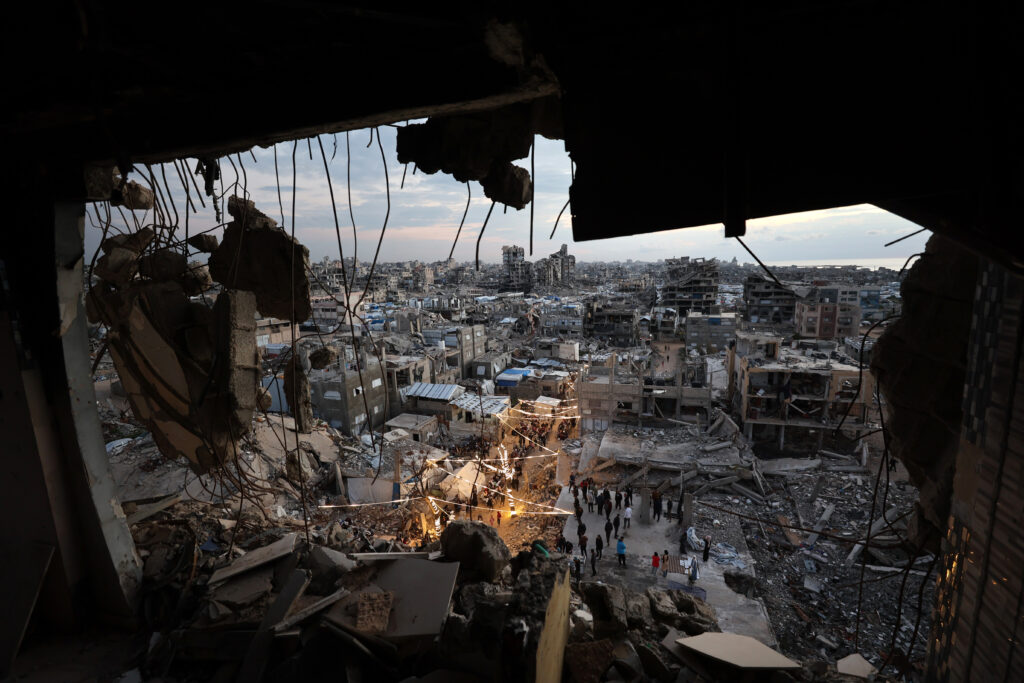
Inside the dusty shell of one of the oldest libraries in the Palestinian territories, a group of Gazan volunteers work diligently to salvage what remains of their ancient cultural heritage.The Great Omari Mosque library sustained terrible damaged during the war in Gaza, which erupted in October 2023 and devastated swathes of the Palestinian territory, including cultural and religious sites.The mosque — in the old town of Gaza City — now stands largely ruined, with its library littered with rubble and dust.”I was shocked and stunned when I saw the extent of the destruction in the library,” Haneen Al-Amsi told AFP, saying the scenes of devastation had spurred her to help launch the restoration initiative.Amsi, who heads the Eyes on Heritage Volunteer Foundation, said the western part of the library was burned when the mosque was hit, causing irreversible damage.”The library was estimated to contain about 20,000 books, but currently we are left with fewer than 3,000 or 4,000,” she explained.Among the debris, volunteers hoping to restore the collection pored over charred fragments of manuscript and shards of yellowed paper. “The library of the Great Omari Mosque is considered the third largest library in Palestine after the Al-Aqsa Mosque library and the Ahmed Pasha al-Jazzar library,” Amsi said. “It is an important historical library that contains original manuscripts and a diverse collection of books on jurisprudence, medicine, Islamic law, literature and various other subjects.”Gaza’s history stretches back thousands of years, making the tiny territory a treasure trove of archaeological artefacts from past civilisations including Canaanites, Egyptians, Persians and Greeks.But more than two years of war between Israel and Hamas took a heavy toll on Gaza’s heritage sites.As of January 2026, the UN’s cultural agency UNESCO, had verified damage to 150 sites since the start of the war on October 7, 2023 sparked by Hamas’s attack on Israel.These include 14 religious sites and 115 buildings of historical or artistic interest.- ‘Represent history’ -Inside one of the library’s old stone rooms, one woman used a paintbrush to dust off an old tome, while other volunteers wearing facemasks and gloves crouched on the floor to leaf through piles of books.”The condition of the rare and historical books is deplorable due to their being left for more than 700 to 800 days,” Amsi said, talking of “immense damage and gunpowder residue” on the volumes.An independent United Nations commission said in June 2025 that Israeli attacks on schools, religious and cultural sites in Gaza amounted to war crimes.”Israel has obliterated Gaza’s education system and destroyed more than half of all religious and cultural sites in the Gaza Strip,” the UN Independent International Commission of Inquiry on the Occupied Palestinian Territory said in a report.Israel rejected the commission as “an inherently biased and politicised mechanism of the Human Rights Council” and said the report was “another attempt to promote its fictitious narrative of the Gaza war”.For Amsi, the importance of restoring the books lay in preserving crucial historic records.”These books represent the history of the city and bear witness to historical events,” she said.