AFP Asia Business

Iran dismisses missile, nuclear claims after Trump alleges ‘sinister ambitions’

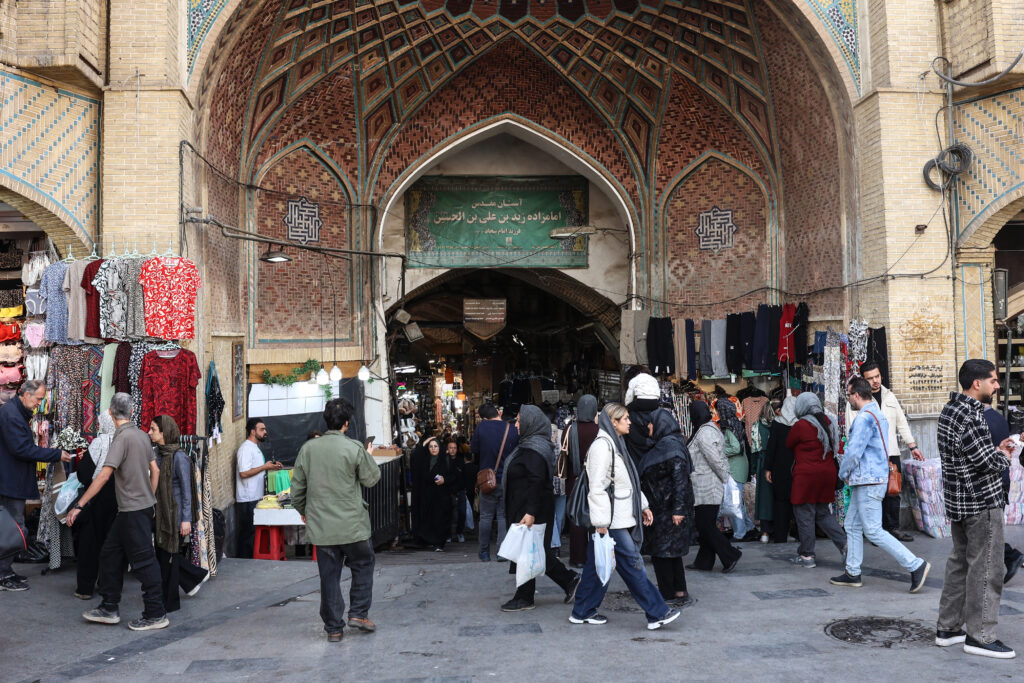
Iran on Wednesday dismissed US claims about its missile programme as “big lies”, after President Donald Trump said Tehran was developing missiles that could strike the United States.In his State of the Union address on Tuesday, Trump accused Tehran of “sinister nuclear ambitions” as Washington ups the pressure with a massive military deployment around the Gulf. The two foes are scheduled to meet for a third round of talks on Thursday in the Swiss city of Geneva in an effort to reach a diplomatic solution. Trump claimed Tehran had “already developed missiles that can threaten Europe and our bases overseas, and they’re working to build missiles that will soon reach the United States of America”.He said Iran wants “to start all over again” with its nuclear programme and is “at this moment again pursuing their sinister nuclear ambitions”.But Iranian foreign ministry spokesman Esmaeil Baqaei on Wednesday refuted those claims, without mentioning Trump directly.”Whatever they’re alleging in regards to Iran’s nuclear programme, Iran’s ballistic missiles, and the number of casualties during January’s unrest, is simply the repetition of ‘big lies’,” he said on X.The US president had also claimed that Iranian authorities killed 32,000 people during a wave of protests that started in December and peaked on January 8 and 9.The West believes Iran is seeking an atomic bomb, but Tehran insists its nuclear programme is peaceful. Trump has threatened to launch strikes on Iran if no deal is reached. Tehran has repeatedly said it would respond firmly to any attack, warning that even a limited strike “would be regarded as an act of aggression”.”My preference is to solve this problem through diplomacy but one thing is certain: I will never allow the world’s number one sponsor of terror, which they are by far, to have a nuclear weapon,” Trump said.Hours before his speech, Iran’s foreign minister Abbas Araghchi declared that a deal to avoid a military clash was within reach.”We have a historic opportunity to strike an unprecedented agreement that addresses mutual concerns and achieves mutual interests,” Araghchi said in a social media post, adding that a deal was “within reach, but only if diplomacy is given priority”.Araghchi vowed Iran will “under no circumstances ever develop a nuclear weapon”, but insisted on the country’s right to “harness dividends of peaceful nuclear technology”.Iran and the US held five rounds of nuclear talks last year but those negotiations ended after Israel’s unprecedented attack on Iran triggered a 12-day war.- ‘Red lines’ -Inside Iran, university students kicked off a new semester at the weekend with gatherings reviving slogans from nationwide protests against the clerical leadership, keeping up domestic pressure on the leadership.On Tuesday, the fourth consecutive day of the campus protests, videos verified by AFP showed two groups facing off in a large hall at a Tehran university before scuffles broke out.The day before, students had burned the flag adopted by Iran’s Islamic republic after the 1979 revolution, according to verified videos.Iranian government spokeswoman Fatemeh Mohajerani, giving the first official reaction to the rallies, said that while students had a right to protest, they must “understand the red lines”.The flag, she added, was one “of these red lines that we must protect and not cross or deviate from, even at the height of anger”.The initial wave of protests began in December, sparked by economic woes in sanctions-hit Iran, but soon grew into nationwide demonstrations that posed one of the largest challenges to Iran’s leaders in years.The unrest prompted a violent crackdown that killed thousands.The US-based Human Rights Activists News Agency (HRANA) has recorded more than 7,000 deaths, while warning the full toll is likely far higher. Iranian officials acknowledge more than 3,000 deaths, but say the violence was caused by “terrorist acts” fuelled by the United States and Israel.
Trump claims Iran working on missiles that could hit US

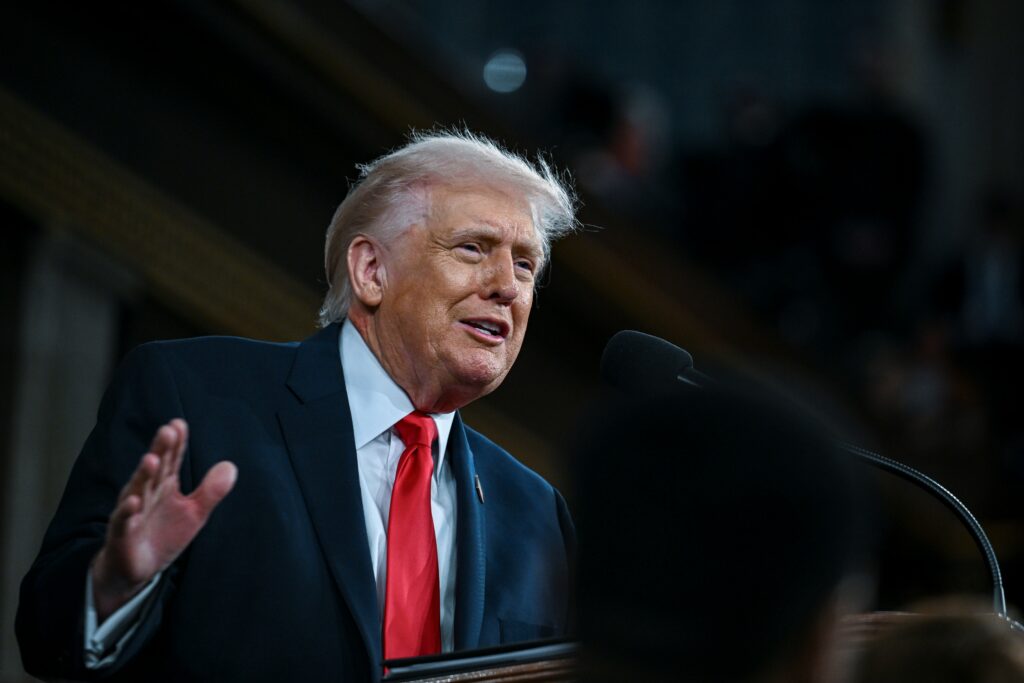
US President Donald Trump on Tuesday claimed Iran is seeking to develop missiles that can strike the United States and accused Tehran of working to rebuild a nuclear program that was targeted by American strikes last year.The United States and Iran are engaged in high-stakes negotiations over Iran’s atomic program and other issues including missiles, with Trump saying he prefers diplomacy but is willing to use force if talks fail.”They’ve already developed missiles that can threaten Europe and our bases overseas, and they’re working to build missiles that will soon reach the United States of America,” Trump said during his State of the Union address.In 2025, the US Defense Intelligence Agency said Iran could potentially develop a militarily viable intercontinental ballistic missile by 2035 “should Tehran decide to pursue the capability,” but did not say if it had made such a decision.Tehran currently possesses short- and medium-range ballistic missiles with ranges that top out at about 1,850 miles (3,000 kilometers), according to the US Congressional Research Service.The continental United States is more than 6,000 miles from Iran’s western tip.Washington and Tehran have concluded two rounds of talks aimed at reaching a deal on Iran’s nuclear program to replace the agreement that Trump tore up during his first term in office.- ‘Preference’ is diplomacy -The United States has repeatedly called for zero uranium enrichment by Iran but has also sought to address its ballistic missile program and support for armed groups in the region — demands Iran has rejected.Iran has also repeatedly rejected that it is pursuing nuclear weapons.Trump ordered strikes on three Iranian nuclear sites last year, claiming afterward that Tehran’s atomic program was obliterated.On Tuesday, he said Iran wants “to start all over again,” and that it is “at this moment again pursuing their sinister nuclear ambitions.”Trump has sent a massive US military force to the Middle East, deploying two aircraft carriers as well as more than a dozen other ships, a large number of warplanes and other assets to the region.He has repeatedly threatened to strike Iran if negotiations fail to reach a new agreement. Talks with Tehran are currently set to continue on Thursday.”My preference is to solve this problem through diplomacy but one thing is certain: I will never allow the world’s number one sponsor of terror, which they are by far, to have a nuclear weapon,” Trump said.The US president’s speech primarily focused on domestic issues, making no mention at all of China — Washington’s primary military and economic rival — and only briefly referring to Russia.Trump said he was working to end the bloody conflict between Russia and Ukraine, and repeated his inaccurate claim that he had brought eight other wars to an end since returning to office in January 2025.He also hailed NATO’s decision to spend five percent of gross domestic product on defense — a move made under heavy pressure from Trump and his administration.

Alexandria bids farewell to historic tram in latest urban upheaval

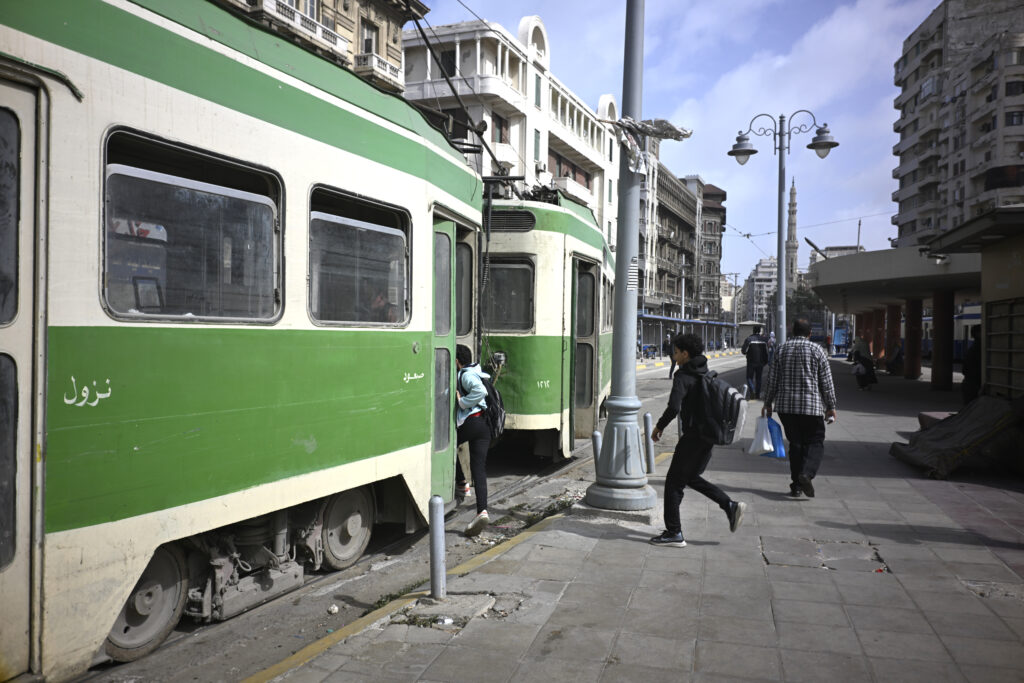
Along Egypt’s Mediterranean coast, the oldest tram in Africa and the Middle East rumbles for a final few weeks before its removal — the latest urban upheaval Alexandrians say is hollowing out their city’s identity.Government plans to replace the colourful streetcars on one of the city’s routes with a partially elevated light rail line have angered Alexandrians, for whom the 163-year-old track is “heritage, not just a means of transport”, local urban researcher Nahla Saleh told AFP.Inaugurated in 1863, the tram is one of the world’s oldest, and among only a few to operate double-decker cars.In the 19th and 20th centuries, it helped the city become a bustling metropolis, home to sizable European diasporas and a distinct cosmopolitan culture.Now, Egyptians young and old have flocked for farewell rides, before the streetcars come to a halt in April.As one locomotive screeches into the old El-Raml Station, commuters and visitors crane their necks out of giant windows at the historic neo-Venetian buildings overhead.”We’re not against progress,” psychologist and writer on culture Mona Lamloum told AFP.She and other Alexandrians agree the tramway needs work: inside the hand-calligraphied blue exterior, grime covers every surface. Underfoot, the rubber flooring is torn and strewn with trash.”We just have bad experiences of everything they call ‘progress’ becoming synonymous with destruction,” Lamloum said.In recent years, development projects in Egypt’s second city have razed historic parks and — most egregiously to locals — privatised and obstructed much of its Mediterranean coastline.- Heart of Alexandria -For over 160 years, the tram has cut through Alexandria’s heart, in an 11-kilometre stretch that includes many of the city’s schools and main universities.The new project, led by Egyptian and international companies including Systra, Hyundai and Hitachi, promises to double speed and triple capacity.Over half of it will be elevated — a major concern for Alexandrians who fear the tree-lined track will be replaced by eyesore concrete stilts.Ahead of the first phase of suspension, the transport ministry said the new project was the “only solution to the city’s traffic problems”.Locals like Saleh and Lamloum disagree, saying government plans are making the city more car-dependent and worsening traffic.Already, because so many students rely on the tram, the city has staggered school and university hours to pick up the slack of the partial shutdown.”Traffic’s getting worse, people can’t get anywhere, when we’ve already lost the inner-city train,” said Saleh, referring to another project under construction for the past two years, the new Alexandria Metro Line.”Besides, it being slow was always an advantage,” she added, making it safe for “the most vulnerable in society: children and the elderly”.Retired science teacher Hisham Abdelwahab, 64, has been riding the tram since he was a child.”I don’t want it to go fast, I like watching the world go by,” he told AFP on a station bench.”Our parents never thought twice about sending us out on the tram alone. Now I have a car, I just like leaving it parked to come ride the tram.”When the next streetcar rolls in, the upper deck fills with a gaggle of schoolgirls, squabbling over who gets the window seat closest to the sea breeze.- The old tram and the sea -“This tram is our heritage,” Abdelwahab said, his sentiment shared by those several decades younger.Engineering student Mahmoud Bassam, 24, has visited Alexandria just to ride the streetcar “since our tram in Cairo was removed”, he told AFP.With a controversial slew of bridges and widened streets completed in 2020, Cairo’s historic Heliopolis neighbourhood lost its last tram tracks, along with many of its trees.”Now the same is happening here,” Bassam lamented.Many Alexandrians are feeling the loss, intermingled with their other most treasured heritage.”It’s like the sea. We used to go for long scenic drives on the corniche, but now we’re losing both the sea and the tram,” Abdelwahab said.Parallel to the tramway, much of Alexandria’s iconic corniche is now hidden behind overpasses, private businesses and beachside food courts.By 2024, over half of the city’s Mediterranean coastline had disappeared from view, according to a study by the Human and the City for Social Research centre.Four-lane highways now dominate long stretches of the seaside, where the landmark sight of fishermen perched over the waves grows ever-rarer.For many, the waterfront that Lebanese singer Fairouz immortalised in 1961 — crooning about “the coast of Alexandria, coast of love” — is no more.”Now all you see is concrete,” said Lamloum.Saleh calls it “short-sighted” that the city could lose its charm to sprawling concrete.”Tourists used to love coming to see the tram and sit by the sea, why take away both?”

The veteran ‘insider’ shaping Iran’s nuclear policy

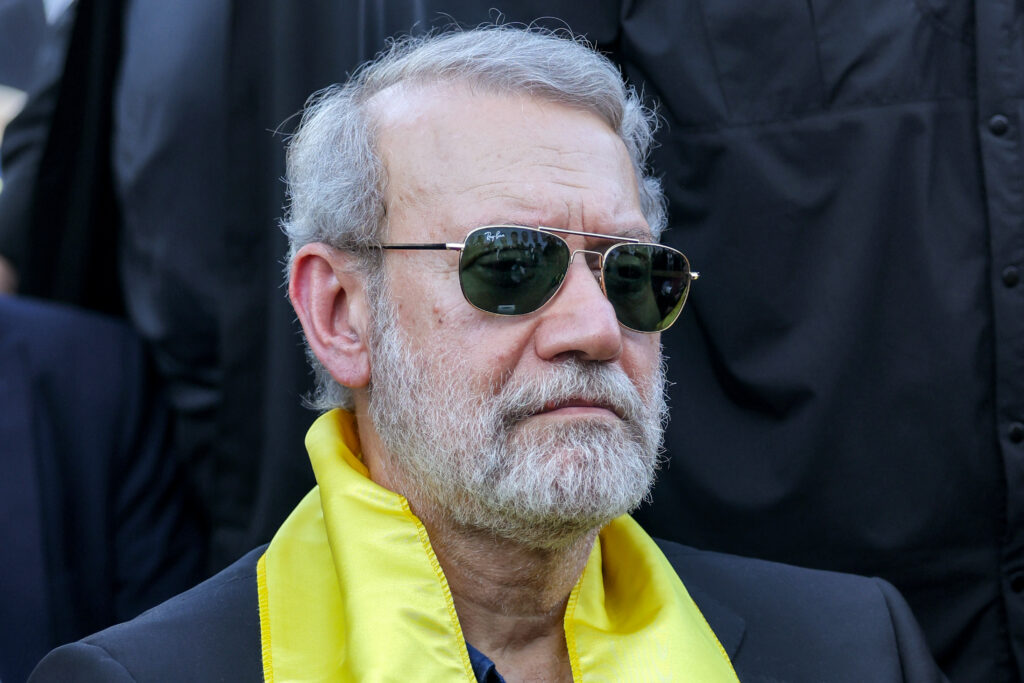
When US and Iranian negotiators meet on Thursday in Geneva, Iran’s top security chief Ali Larijani will be Tehran’s key player behind the scenes.Adept at balancing ideological loyalty with pragmatic statecraft, Larijani will not attend the talks, but is central to Tehran’s nuclear policy and strategic diplomacy.At the end of January, Larijani was Tehran’s choice to meet Russian President Vladimir Putin in Moscow, and this month he has met with Gulf officials trying to mediate in the stand-off with the United States.Bespectacled and known for his measured tone, the 68-year-old is believed to enjoy the confidence of Iran’s supreme leader Ayatollah Ali Khamenei, after a long career in the Islamic republic’s military, media and legislature.Weeks after the Iran-Israel war in 2025, he was appointed as head of Iran’s top security body, the Supreme National Security Council — a position he had held nearly two decades earlier — coordinating defence strategies and overseeing nuclear policy.He has since become increasingly visible in the diplomatic arena, travelling to Gulf states such as Oman and Qatar as Tehran cautiously restarted nuclear negotiations with Washington against the backdrop of massive US military deployments in the region.- ‘Canny operator’ -“He is now playing a more prominent role than most of his predecessors,” said Ali Vaez, the International Crisis Group’s project director for Iran.”Larijani is a true insider, a canny operator, familiar with how the system operates and familiar with the supreme leader’s inclinations.”Born in Najaf, Iraq in 1957 to a prominent Shiite cleric who was close to the Islamic Republic’s founder Ayatollah Ruhollah Khomeini, Larijani’s family has been influential within Iran’s political system for decades.Some of his relatives have been the targets of corruption allegations over the years, which they denied. He holds a PhD in Western Philosophy from the University of Tehran.A veteran of the Islamic Revolutionary Guard Corps during the Iran-Iraq war, Larijani later headed state broadcasting IRIB for a decade from 1994 before serving as parliamentary speaker from 2008 to 2020.In 1996, he was appointed as Khamenei’s representative to the Supreme National Security Council (SNSC). He later became secretary of the SNSC and chief nuclear negotiator, leading talks with Britain, France, Germany and Russia between 2005 and 2007. He ran in the 2005 presidential elections, losing to populist candidate Mahmoud Ahmadinejad, with whom he later had disagreements over nuclear diplomacy.Larijani was then disqualified from running for president in both 2021 and 2024.Observers have viewed his return as the head of the SNSC as signalling a pragmatic turn in security management, reflecting his reputation as a conservative capable of combining ideological commitment with pragmatism.A proponent of nuclear negotiations, Larijani supported the landmark 2015 nuclear deal with world powers which unravelled three years later after Trump withdrew the US from the accord.In March 2025, ahead of five rounds of Iran-US nuclear talks which ended with the 12-day war with Israel, he warned that sustained external pressure could alter Iran’s nuclear posture.”We are not moving towards (nuclear) weapons, but if you do something wrong in the Iranian nuclear issue, you will force Iran to move towards that because it has to defend itself,” he told state television.After the conflict with Israel, he described Western concerns over Iran’s nuclear programme as a “pretext” for broader confrontation, arguing that subsequent calls to address Iran’s missile programme and regional role reflected shifting political demands.He has repeatedly insisted negotiations with Washington should remain confined to the nuclear file and defended uranium enrichment as Iran’s sovereign right.”We want a speedy resolution to this issue,” he said in a recent interview with Al Jazeera, referring to the talks with the US.- ‘Violent repression’ -He said a war between Iran and the United States was unlikely, as Washington would realise it had little to gain and much to lose from a conflict.Larijani was among officials sanctioned by the US in January over what Washington described as “violently repressing the Iranian people”, following nationwide protests which erupted weeks earlier due to the rising cost of living.He recently acknowledged that economic pressures had “led to the protests”, but blamed the violence which ensued on foreign involvement by the United States and Israel.Vaez believes that Larijani’s political calculus is shaped by long-term ambitions.”He is an ambitious man who has eyes for higher office. Larijani certainly wants to become president,” Vaez said. “That creates two incentives, one is to preserve the system and second is to also not burn his cards.”