
AFP Asia Business

‘Smooth and easy’: India and China resume direct flights as ties improve
The resumption of direct flights between India and China after a five-year suspension was hailed by arriving passengers Monday, a move important both for trade and a symbolic step as Asia’s giants cautiously rebuild relations.IndiGo flight 6E1703 from Kolkata touched down in the southern Chinese city of Guangzhou shortly before 4:00 am (2000 GMT), officially resuming …
‘Smooth and easy’: India and China resume direct flights as ties improve Read More »
Israel insists it calls shots in Gaza despite truce
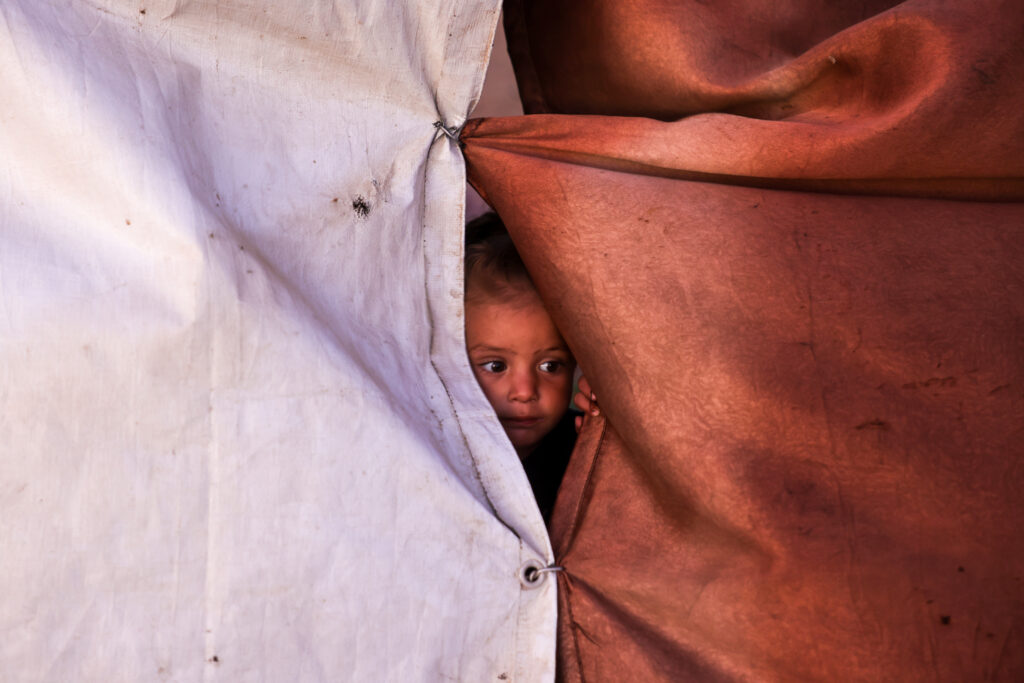
Israel insisted on Sunday that it will maintain control of security inside Gaza despite signing up to a US-brokered ceasefire that foresees the deployment of an international security force.Prime Minister Benjamin Netanyahu told ministers Israel would decide for itself where and when to strike its foes and which countries would be allowed to send troops to police the truce.”Israel is an independent state. We will defend ourselves by our own means and we will continue to determine our fate,” Netanyahu said. “We do not seek anyone’s approval for this. We control our security.”AFP footage showed an Egyptian convoy in Gaza bringing rescuers and heavy machinery to speed up the search for the remains of deceased Israeli hostages Hamas says are lost in the rubble of the devastated Palestinian territory.Low-loader lorries flying the Egyptian flag transported bulldozers and mechanical diggers into Gaza, accompanied by tipper trucks sounding their horns and flashing their lights, en route to an Egyptian aid committee based in Al-Zawayda.Israel government spokeswoman Shosh Bedrosian said Netanyahu had personally approved the arrival of the Egyptian team.”Now, this is a technical team only, and none of these personnel are in the military,” she said.”The team are allowed entry beyond the IDF’s (Israel Defense Forces’) Yellow Line position into Gaza territory to conduct the search for our hostages.”Under the terms of a US-brokered ceasefire, as Israeli forces withdraw after the end of two years of brutal fighting against Hamas, an international force, expected to be drawn from mainly Arab or Muslim countries, is supposed to secure Gaza.But Israel opposes any role for its regional rival Turkey and Netanyahu, under fire from hardliners in his own coalition for even agreeing the ceasefire, took a stern line on Sunday as government ministers met in Jerusalem.”We made clear with respect to international forces that Israel will determine which forces are unacceptable to us,” he said, one day after US Secretary of State Marco Rubio wound up the latest in a parade of high-level visits by Washington officials.Later, Bedrosian put it more starkly: “The prime minister has said it’s going to be done the easy way or the hard way, and Israel will have overall security control of the Gaza Strip.””Gaza will be demilitarised and Hamas will have no part in governing the Palestinian people.”- ‘Child’s dream is gone’ -Aid agencies complain that humanitarian convoys still do not have enough access to Gaza to alleviate the famine conditions in parts of the territory, and families there are still going hungry. AFP journalists followed the family of 62-year-old grandmother Hiam Muqdad for a day in their Gaza City neighbourhood, where they live in a tent next to their ruined home and her barefoot grandchildren gather domestic waste and twigs to burn to heat water.”When they said there was a truce, oh my God, a tear of joy and a tear of sadness fell from my eye,” Muqdad told AFP. “The child’s dream is gone. In the past they used to go to the park but today children play on the rubble.”Israel has withdrawn its forces within Gaza to the so-called “Yellow Line” but remains in control of more than half the territory, approves every UN aid convoy going through its borders and has carried out at least two strikes since the ceasefire.To underline Israel’s independence of action, Netanyahu said it had pummelled Gaza with 150 tonnes of munitions on October 19 after two of its soldiers were killed, and had conducted a strike on Saturday targeting an Islamic Jihad militant.The United States and allies have set up a truce monitoring centre in southern Israel — the Civil-Military Coordination Centre (CMCC) — and dispatched a string of top officials from President Donald Trump’s administration to promote the ceasefire.The latest Israeli strike came just as Rubio was leaving Jerusalem, but Washington’s top diplomat said he remained optimistic the ceasefire would broadly hold if Hamas agrees to disarm and hand over the rule of Gaza.Rubio told reporters that Washington did not expect the Yellow Line to become Gaza’s new border and that Israel would eventually pull back.”I think, ultimately, the point of the stabilisation force is to move that line until it covers hopefully all of Gaza, meaning all of Gaza will be demilitarised,” Rubio told reporters on his plane as he flew to Qatar.The main Palestinian factions, including Hamas, have agreed to form a committee of technocrats to administer Gaza alongside the ceasefire and reconstruction effort.But Hamas has resisted calls for its immediate disarmament and has launched a crackdown on rival Palestinian gangs and armed groups in Gaza.- Hostage recovery -In a statement on Sunday, Hamas’s lead negotiator Khalil Al-Hayya said the militant group’s weapons are “linked to the presence of the occupation and aggression”. He added: “If the occupation ends, these weapons will be transferred to the state.” Hamas has insisted it is serious about returning the remaining 13 hostage bodies.They include 10 Israelis kidnapped during the group’s attack on October 7, 2023 that triggered the conflict, one Israeli missing since 2014, a Thai and a Tanzanian worker.Hamas has already returned the remaining 20 living hostages and 15 bodies of hostages.But Hamas warns it will struggle to find the bodies of the others in the ruins of Gaza, where more than 68,500 Palestinians have been killed by Israeli fire, according to figures from the health ministry of the Hamas-run territory deemed reliable by the UN. Bedrosian dismissed this, telling reporters: “Hamas knows where our hostages are,” and adding the group needed to make more of an effort to retrieve the bodies. burs-dc/jd/csp/jw
US Fed will likely cut again despite economic murkiness from shutdown
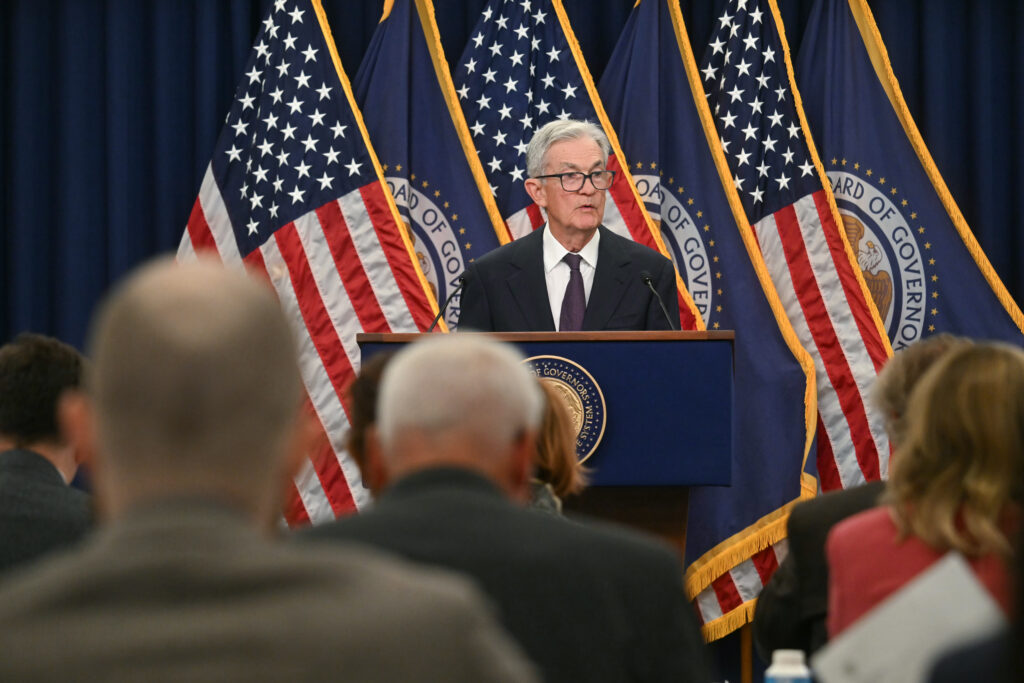
The Federal Reserve is expected to announce its second rate cut of the year on Wednesday, despite a lack of clarity over the health of the US economy due to the ongoing government shutdown.The US central bank’s second-to-last rate meeting of the year is taking place against the backdrop of a weeks-long standoff between Republicans …
US Fed will likely cut again despite economic murkiness from shutdown Read More »

Radiohead’s Thom Yorke says would not now play in Israel
Radiohead frontman Thom Yorke has said in a British newspaper interview he would not now perform in Israel, eight years after the band defied pro-Palestinian activists to play a Tel Aviv gig.”Absolutely not. I wouldn’t want to be 5,000 miles anywhere near the Netanyahu regime,” he told The Sunday Times Magazine, referring to Prime Minister Benjamin Netanyahu’s government.The interview with members of the British band — whose UK number one albums include “OK Computer” and “Kid A” — took place before this month’s ceasefire agreement between Israel and Hamas.The band kick off their first tour in seven years next month, playing 20 shows in five European cities.Radiohead’s 2016-2018 “A Moon Shaped Pool” world tour ignited a backlash when the group performed in Tel Aviv despite boycott calls. Yorke hinted at some regret over the decision in the new interview, saying he was “horrified” when a “clearly connected high up” Israeli came to their hotel to thank them for playing.The Israel-Palestinians conflict has dogged the band and its members at other points.Yorke briefly walked off stage during a solo gig in Australia last year after a pro-Palestinian heckler shouted “how many dead children will it take for you to condemn the genocide in Gaza”.The frontman released a statement in May saying the incident left him “in shock that my supposed silence was somehow being taken as complicity”.Radiohead bandmate Jonny Greenwood is married to an Israeli artist and has faced sustained criticism from boycott advocates for his long-time collaboration with Israel-born rock musician Dudu Tassa.The Radiohead guitarist told the magazine he spent a lot of time in Israel with family and was “not ashamed of working with Arab and Jewish musicians”.
Jailed PKK chief’s freedom ‘crucial’ for peace to work: senior militant to AFP
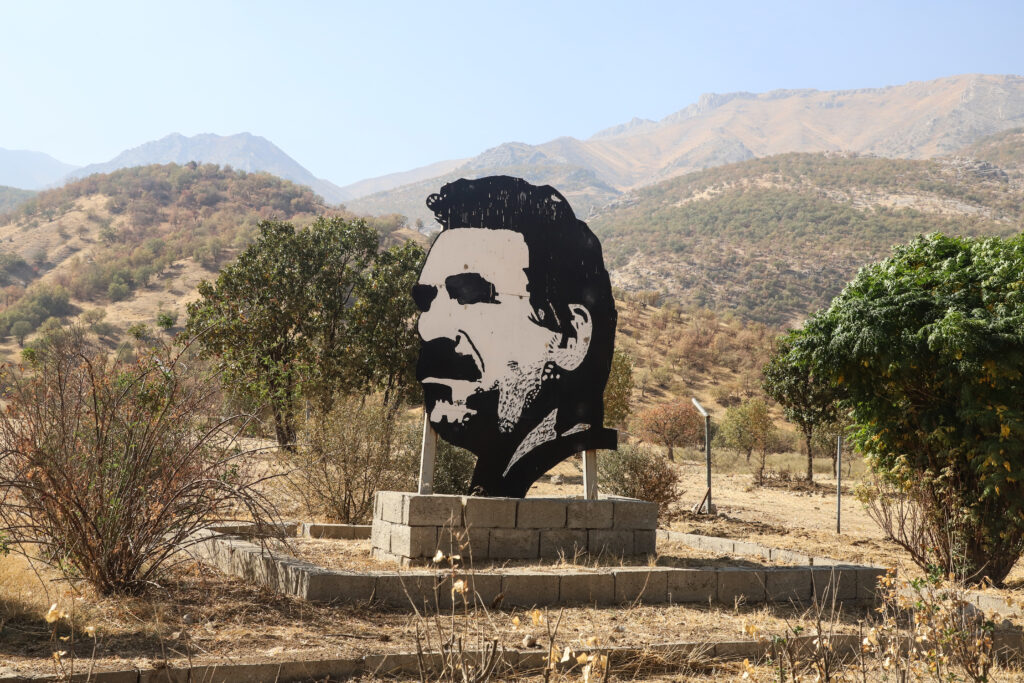
Securing the release of the jailed founder of the Kurdish militant group PKK is needed for the success of the emerging peace process with Turkey, one of the group’s senior leaders told AFP. Abdullah Ocalan’s “freedom is crucial for this process to advance with greater effectiveness,” Devrim Palu told AFP in an interview in northern Iraq on Sunday as the PKK began withdrawing all of its fighters from Turkey.Ocalan, who founded the PKK in 1978, is the embodiment of the Kurdish rebellion against Turkey which lasted more four decades and cost some 50,000 lives. Now 76, he has spearheaded efforts to switch from armed conflict to a democratic political struggle for the rights of Turkey’s Kurdish minority, leading the process from his prison cell on Imrali island near Istanbul where he has been held in solitary since 1999. The PKK has repeatedly demanded his release. “He is the person who initiated this process. He should be able to meet people easily and engage in dialogue,” Palu told AFP, saying his conditions should be “urgently” improved. “It’s very difficult to carry out such an important process in isolation or in prison conditions. His freedom is crucial for this process to advance with greater effectiveness.”Sunday’s withdrawal was a move to protect the peace process from “provocations”, Palu said, also warning against the use of “polarising language”. “Within the political environment there are those who are against this process and those who support it. We’re not saying everyone should have the same approach, we just need to pay attention to the language that is used.” – Won’t ‘happen overnight’ -The PKK understood the peace process would take time, he said.”We are not approaching this matter as hopeless, saying ‘Turkey hasn’t taken any action’.. Such processes don’t happen overnight or in the space of a few months,” he said. “Undoubtedly, there will be phases where they drag on or sometimes stall, then the path opens again. But for them to be more on track.. certain steps need to be taken,” he said. Earlier, the PKK urged Ankara to expedite legal measures to regulate the status of militants who have given up the armed struggle and want to return to Turkey to engage in the democratic process, saying “significant steps” needed to be taken. But the PKK had acted in good faith with its move to destroy a first batch of weapons in July, and now withdraw all of its militants from Turkey, he said. “With these steps, we have demonstrated not only to the Turkish public but also to the world how sincere and serious we are about resolving this issue,” he said.
US treasury secretary signals deal to ease trade war with China
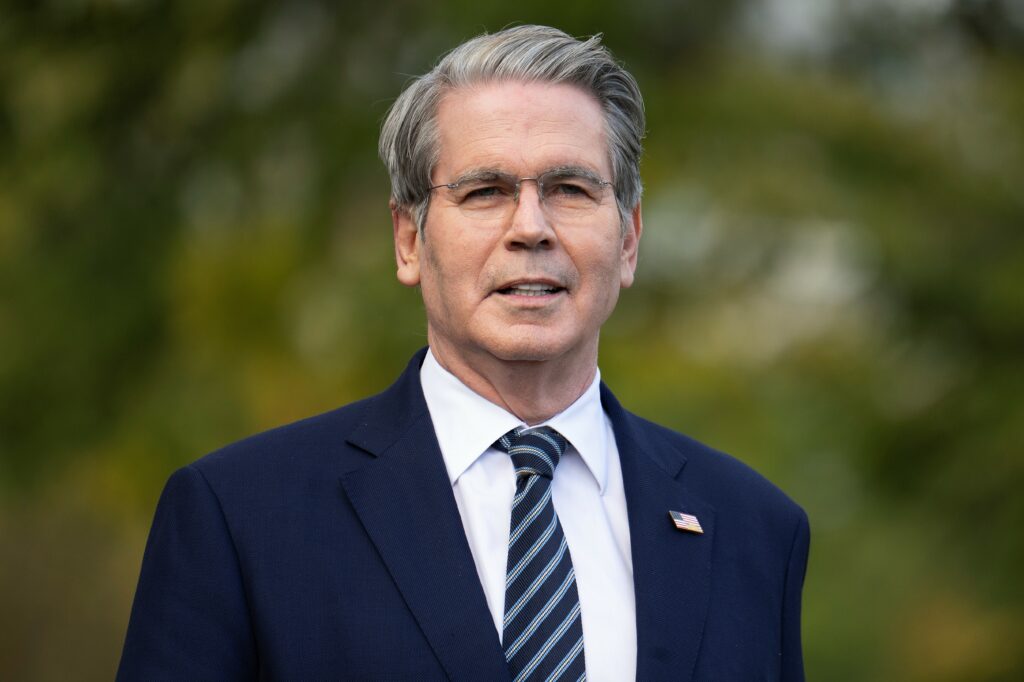
US Treasury Secretary Scott Bessent on Sunday signalled a tentative deal with China to de-escalate their damaging, tariff-fueled trade war — just days before a summit between Presidents Donald Trump and Xi Jinping.In an interview with ABC’s “This Week,” Bessent said the US threat of a 100 percent tariff hike on Chinese goods had effectively …
US treasury secretary signals deal to ease trade war with China Read More »
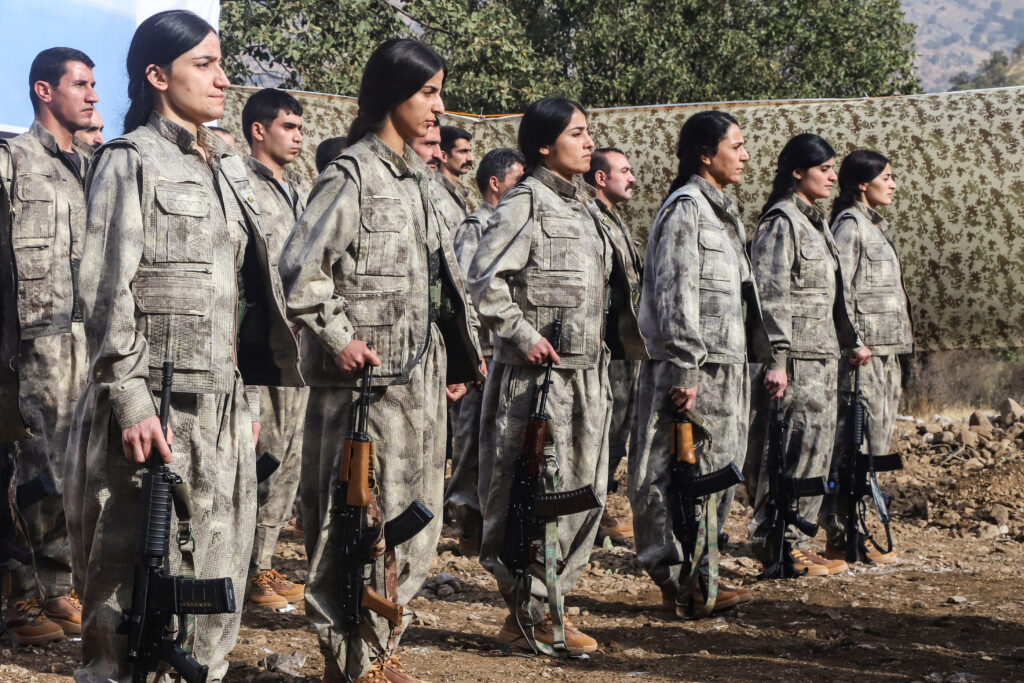
Kurdish PKK says withdrawing all forces from Turkey to north Iraq
The Kurdish militant PKK began withdrawing all of its forces from Turkish soil to northern Iraq on Sunday, while urging Ankara to release its jailed leader to ensure the success of the peace process. The Kurdistan Workers’ Party (PKK) formally renounced its armed struggle against Turkey in May, drawing a line under four decades of violence that had claimed some 50,000 lives.”We are implementing the withdrawal of all our forces within Turkey,” the PKK said in a statement read out in Kurdish and Turkish in a remote village in the Qandil Mountains of northern Iraq, according to an AFP journalist present.Standing in front of large banners of jailed PKK founder Abdullah Ocalan were 25 fighters carrying assault rifles — among them three commanders — whom the PKK said had just left Turkey. Eight were women. It was not immediately clear how many fighters would be involved in the withdrawal but observers estimated it would likely be between 200 to 300. Turkey hailed the move as “concrete results of progress” in efforts to end one of the region’s longest-running conflicts. But the PKK urged the Turkish government to waste no time in taking the necessary legal steps to advance the process, which began a year ago when Ankara offered an unexpected olive branch to its jailed leader Abdullah Ocalan.The PKK said Ocalan’s release was “crucial” and called for members of a parliamentary commission managing the peace process to meet with him as soon as possible. “Significant steps need to be taken, legal arrangements for a process compatible with freedom,” senior PKK militant Sabri Ok told journalists at the ceremony, referring to laws governing the fate of those who renounce the armed struggle. “We want laws that are specific to the process, not just an amnesty.”The PKK wants to pursue a democratic struggle to defend the rights of the Kurdish minority in line with a historic call in February by Ocalan. Now 76, Ocalan has led the process from his prison cell on Imrali island near Istanbul where he has been held in solitary since 1999.”It’s very difficult to carry out such an important process in isolation or in prison conditions. His freedom is crucial for this process to advance with greater effectiveness,” senior PKK leader Devrim Palu told AFP in an interview after the ceremony. – Prison visits -Indirect talks with the PKK began late last year with the backing of President Recep Tayyip Erdogan, who hailed the group’s move to start destroying weapons in July as a victory for the nation.Turkey has also set up a cross-party parliamentary commission to lay the groundwork for the peace process and prepare a legal framework for the political integration of the PKK and its fighters. But it was essential that the commission meet Ocalan, Ok said. “The parliamentary commission must immediately go to Leader Apo and listen, that’s the key. He’s the one who initiated and pushed through the process, so he must be listened to as soon as possible,” he said, using a nickname for Ocalan.The 48-member parliamentary commission is also tasked with deciding Ocalan’s fate. Over the past year, Ocalan has been visited several times by family members and negotiators from the pro-Kurdish DEM party, and last month he got access to his lawyers for the first time since 2019. DEM, Turkey’s third-biggest party which has played a key role in facilitating the emerging peace deal, said it would send a delegation to meet with Erdogan on Thursday. Analysts say with the PKK weakened and the Kurdish public exhausted by decades of violence, Turkey’s peace offer handed Ocalan a chance to make the long-desired switch away from armed struggle. In July the PKK held a symbolic ceremony in northern Iraq at which they destroyed a first batch of weapons, which was hailed by Turkey as “an irreversible turning point”.