
AFP Asia Business
Iran, US make ‘significant progress’ in talks, says Oman FM
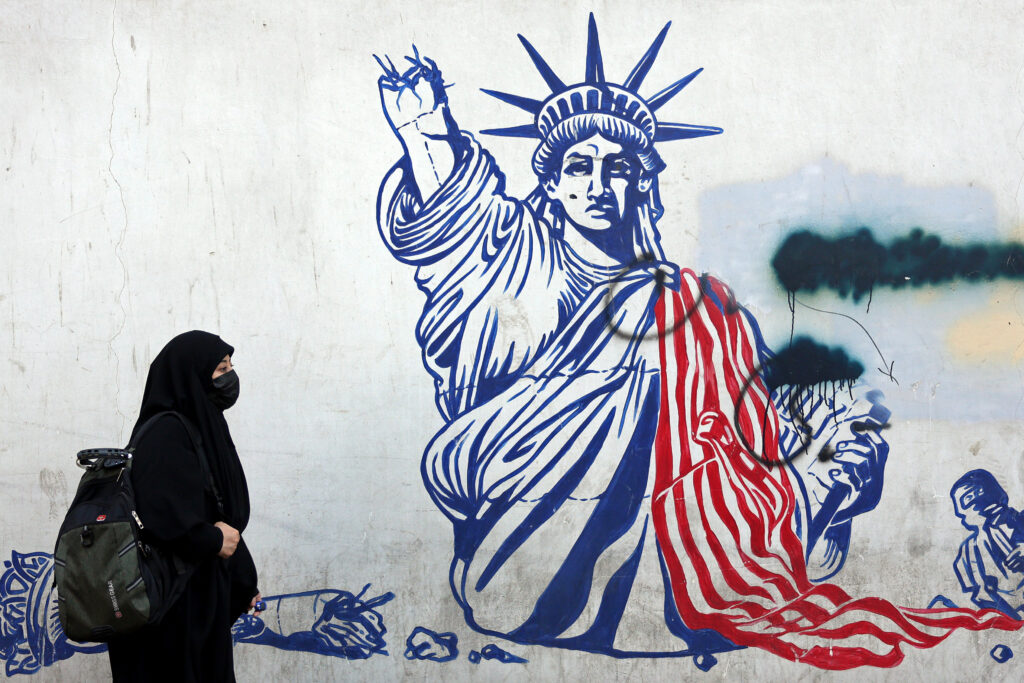
Iran and the United States made “significant progress” in talks in Switzerland on Thursday, Oman’s foreign minister said, at the end of the latest round of negotiations to avert a war between the longtime foes. The Oman-mediated discussions follow repeated threats from Donald Trump to strike Iran, with the US president last Thursday giving Tehran 15 days to reach a deal.While Iran has insisted the discussions focus solely on its nuclear programme, the US wants Tehran’s missile programme and its support for militant groups in the region curtailed.”We have finished the day after significant progress in the negotiation between the United States and Iran,” Badr Albusaidi said in a post on X, adding that “discussions on a technical level will take place next week in Vienna”.The talks took place as the US continued its largest military buildup in the Middle East in decades.The US and Iranian delegations held a morning session at the Omani ambassador’s residence amid tight security, before pausing to hold consultations with their respective capitals. AFP journalists saw convoys of cars belonging to US and Iranian diplomatic missions arriving back at the residence of Oman’s ambassador before 1700 GMT, following the break of several hours.Albusaidi said after the morning session that the two sides expressed “unprecedented openness to new and creative ideas and solutions”.UN nuclear chief Rafael Grossi joined the negotiations, a source close to the talks told AFP, with an Iranian state TV journalist also reporting he was attending.The Wall Street Journal reported on Thursday that Trump’s negotiating team would demand that Iran dismantle its three main nuclear sites and hand over all its remaining enriched uranium to the United States.Iran’s President Masoud Pezeshkian insisted ahead of the talks that the Islamic republic was not “at all” seeking a nuclear weapon.As part of the dramatic US build-up, the USS Gerald R. Ford, the world’s largest aircraft carrier, sent to the Mediterranean this week, left a naval base in Crete on Thursday, an AFP photographer said.Washington currently has more than a dozen warships in the Middle East: one aircraft carrier — the USS Abraham Lincoln — nine destroyers and three other combat ships.It is rare for there to be two US aircraft carriers, which carry dozens of warplanes and are crewed by thousands of sailors, in the region.The developments follow massive protests in Iran during which, rights groups say, thousands of demonstrators were killed.- ‘Sinister nuclear ambitions’ -In his State of the Union address on Tuesday, Trump accused Iran of “pursuing sinister nuclear ambitions”, though Tehran has always insisted its programme is for civilian purposes.Trump also claimed Tehran had “already developed missiles that can threaten Europe and our bases overseas, and they’re working to build missiles that will soon reach the United States of America”.The Iranian foreign ministry called these claims “big lies”.The maximum range of Iran’s missiles is 2,000 kilometres (1,200 miles), according to what Tehran has publicly disclosed. However, the US Congressional Research Service estimates they top out at about 3,000 kilometres — less than a third of the distance to the continental United States.Trump’s State of the Union accusations in Congress were delivered in the same forum in which then-president George W. Bush laid out the case for the invasion of Iraq in 2003.Ahead of Thursday’s talks, Secretary of State Marco Rubio warned that Iran must also negotiate on its missile programme, calling Tehran’s refusal to discuss ballistic weapons “a big, big problem”.He followed up by saying “the president wants diplomatic solutions”.- ‘People would suffer’ -Foreign Minister Abbas Araghchi, who led the Iranian delegation at the talks, had called them “a historic opportunity”, adding that a deal was “within reach”.The US was represented by envoy Steve Witkoff and Jared Kushner, who is married to Trump’s daughter Ivanka.The two countries held talks earlier this month in Oman, then gathered for a second round in Geneva last week.A previous attempt at negotiations collapsed when Israel launched surprise strikes on Iran last June, beginning a 12-day war that Washington briefly joined to bomb Iranian nuclear sites.In January, Tehran launched a mass crackdown on nationwide protests that posed one of the greatest challenges to the Islamic republic since its inception.Protests have since resumed around Iranian universities.Tehran residents who spoke to AFP were divided on what renewed conflict would mean for them.”There would be famine and people would suffer a lot. People are suffering now, but at least with war, our fate might be clear,” 60-year-old homemaker Tayebeh said.burs/amj/dcp
Iranian in possible France prisoner swap jailed for a year
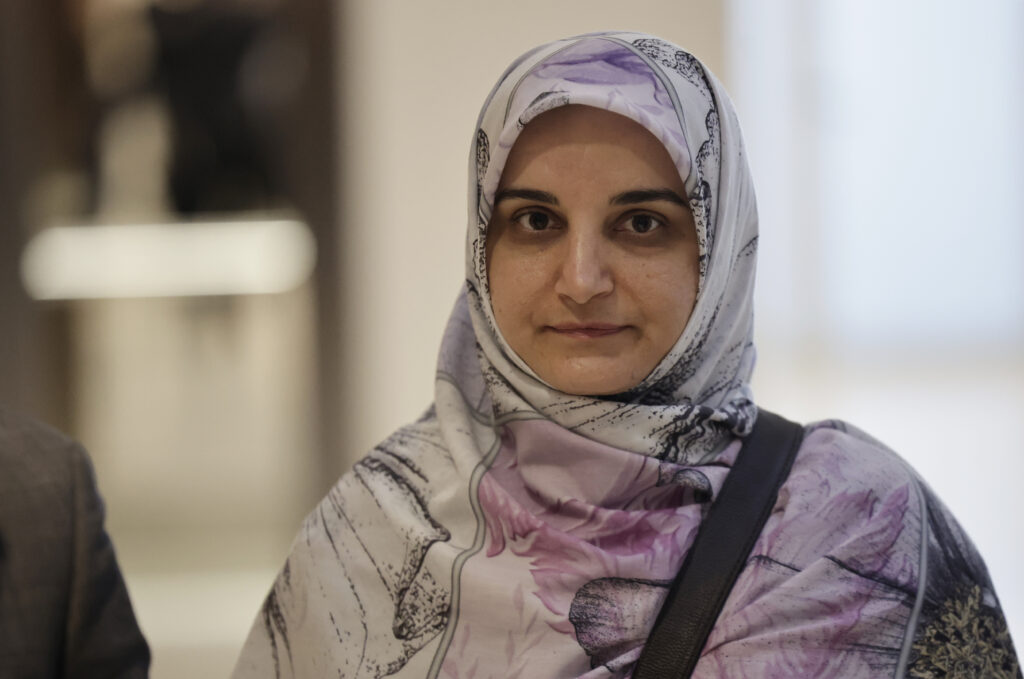
A French court on Thursday sentenced Iranian national Mahdieh Esfandiari to one year in prison for justifying terrorism in a case linked to a possible prisoner swap with two French citizens held in Iran.The court also handed Esfandiari, 39, was also handed a permanent ban from French territory.Her lawyer said she would be appealing her conviction. In the meantime she walked free from court.Iran has suggested Esfandiari could be exchanged for French nationals Cecile Kohler and Jacques Paris, who are still waiting to leave Iran.She was arrested in France last year over comments she made on social media, including on Palestinian militant group Hamas’s attack on Israel on October 7, 2023.Esfandiari was sentenced to four years, of which three are suspended, the judge said, citing “the nature of the acts and their seriousness”.”The court also issues a permanent ban from the national territory,” the judge added. The court ordered Esfandiari be placed on the list of individuals convicted of terrorism. Four men were also convicted in the case.”There has been talk from the outset of this so-called ‘exchange’ which must take place between our compatriots and Mme Esfandiari,” said her lawyer Nabil Boudi.”If the court has handed down such a severe sentence on the basis of diplomatic considerations, the court has committed an error,” he added. “We will appeal.” – ‘We take note’ – The outcome of the legal process is eagerly awaited by relatives of Kohler and Paris as tensions rage over Iran’s nuclear programme, with the United States threatening military action.”We take note of this court decision and the appeal, but I have no comment to make on the consequences of the judgment,” French foreign ministry spokesman Pascal Confavreux told reporters.Arrested in Iran in May 2022, Kohler and Paris were freed in November after more than three years in prison on espionage charges their families vehemently deny.They were taken by French diplomats to France’s mission in Tehran, where they live now.”They are well. They are safe,” Confavreux told AFP on Wednesday.When asked whether Esfandiari intended to remain in France for the duration of the appeal proceedings, which could have consequences for the exchange, her lawyer said: “We’ll see, I don’t have an answer.”Esfandiari was released after some eight months in pre-trial detention in October, and her trial began in January. The prosecutor had requested a four-year jail term, including three years suspended, for Esfandiari, but said it would not be necessary for her to be reincarcerated.The Iranian authorities have expressed their wish to exchange Esfandiari for the two French citizens once the legal proceedings in France have finished.The French government has neither confirmed nor denied the existence of a potential exchange deal.France has described Kohler and Paris as “state hostages” taken by Tehran in a bid to extract concessions. They were convicted on espionage charges their families have always condemned as fabricated.Esfandiari has condoned Hamas’s unprecedented October 7 attack on Israel that sparked the war in Gaza.”It’s not an act of terrorism, it’s an act of resistance,” she has said.In November, Iranian Foreign Minister Abbas Araghchi said a potential exchange between Tehran and Paris “had been negotiated”.”Everything is ready,” he added.
Chaos as jihadist relatives left Syrian camp, witnesses say
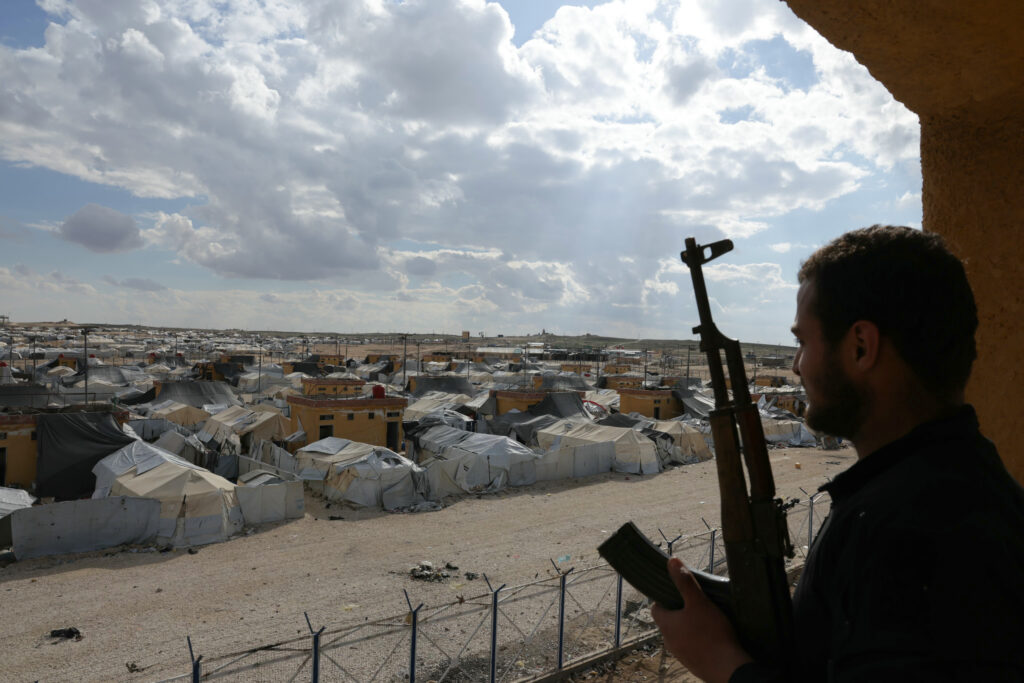
There were scenes of “utter chaos” when thousands of women and children related to suspected Islamic State jihadists escaped a camp in Syria last month following the sudden withdrawal of Kurdish forces, witnesses have told AFP.An AFP journalist who entered the huge Al-Hol camp on Wednesday found it virtually deserted after the Syrian government decided to evacuate the site.Until recently, it housed 23,500 people and was the largest camp for relatives of suspected IS jihadists in northeastern Syria.Since the territorial defeat of IS, it had been under the control of the Kurdish-led Syrian Democratic Forces.However the SDF swiftly left the camp on January 20, under pressure from Syrian troops which were seizing swathes of the country’s north months after their ouster of longtime ruler Bashar al-Assad.Syrian security forces say they took over control six hours later.Thousands of family members of suspected jihadists left for parts unknown.As soon as the Kurdish forces left, “it was utter chaos,” Salah Mahmud al-Hafez, who lives in the nearby Al-Hol village, told AFP. “The SDF withdrew, and the locals and tribesmen came,” he said.”Cars loaded people and drove off,” Hafez said, adding that the camp “remained without security control for three hours.”- Toys, food left behind -The camp held mostly women and children, the majority of them Syrian or Iraqi. However a high-security annex housed more than 6,000 foreigners of around 40 nationalities.Access to the camp remains prohibited and checkpoints have been set up on the road leading to it, according to the AFP journalist at the scene.The paths of the empty camp are now strewn with rubbish bags, and white tents stretch as far as the eye can see.Children’s toys and tricycles have been abandoned in the foreigners’ annex.Clothes, notebooks and even food were left behind, signs of a hasty departure.Last week, Syrian authorities evacuated the remaining families at the camp after determining that the conditions at Al-Hol — particularly security — were inadequate.Syria’s interior ministry confirmed on Wednesday there were mass escapes from the camp, accusing the Kurdish SDF of withdrawing “suddenly, without coordination and without informing” them.The SDF responded by saying their withdrawal was “a direct result of the military attack… targeting the camp and its surroundings by forces affiliated with Damascus”.The SDF also said the families escaped after Syrian troops took control of the camp.Local resident Hafez said that “when the state took over, it gave the people the choice to stay or leave.”Morhaf Al-Olayan, a 43-year-old farmer who lives next to the camp, said that after the Kurdish forces departed, “cars came, loaded the families, and left”.The father of five said he saw men “wearing camouflage military uniforms” among those transporting the families.Farhan Abbas, an 86-year-old who lives near the camp, said that “people fled… in all directions”.The detained family members had not been charged with any crime, but many had embraced the idea of living in the Islamic State’s self-declared caliphate.- Women and children at risk -The foreigners’ annex held a large number of people from around the world, including Russia, the Caucasus and Central Asia.While the whereabouts of those who left the camp remain unknown, teachers in the former rebel stronghold of Idlib in northwestern Syria told AFP that several children from Uzbekistan have enrolled in their schools since late January.In a report earlier this week, Human Rights Watch said that most of Al-Hol’s residents “left in a largely unplanned and chaotic manner”.”The way these departures have unfolded has exposed women and children to serious risks, including trafficking, exploitation, and recruitment by armed groups,” the report warned.Kurdish forces still control the smaller Roj camp in Syria’s northeast, where more relatives of suspected foreign jihadists including Westerners are detained.The Kurds had repeatedly urged countries to take back their citizens but few did, fearing security threats and a domestic political backlash.”For years, many governments claimed that difficulties negotiating with a non-state actor in charge of the camps was why they couldn’t repatriate their citizens, but now that excuse won’t hold,” Adam Coogle, deputy Middle East director at Human Rights Watch, said in the report.For the jihadists themselves, the United States military has transferred more than 5,700 IS suspects from Syrian prisons to Iraq.
Iran, US hold talks in push to avert war
Iran and the United States held talks in Switzerland on Thursday, in a last-ditch bid to avert war under the shadow of the biggest American military build-up in the Middle East in decades. The Oman-mediated discussions follow repeated threats from Donald Trump to strike Iran, with the US president last Thursday giving Tehran 15 days to reach a deal.While Iran has insisted the discussions focus solely on its nuclear programme, the US wants Tehran’s missile programme and its support for militant groups in the region curtailed.The US and Iranian delegations held a morning session at the Omani ambassador’s residence amid tight security, and then paused ahead of resuming at around 1630-1700 GMT according to the foreign ministry in Tehran.Oman’s Foreign Minister Badr Albusaidi said after discussions began that the two sides expressed “unprecedented openness to new and creative ideas and solutions”.UN nuclear chief Rafael Grossi joined the negotiations, a source close to the talks told AFP, with an Iranian state TV journalist also reporting he was attending.Iran’s President Masoud Pezeshkian insisted ahead of the talks that the Islamic republic was not “at all” seeking a nuclear weapon.As part of the dramatic US build-up, the USS Gerald R. Ford, the world’s largest aircraft carrier, sent to the Mediterranean this week, left a naval base in Crete on Thursday, an AFP photographer said.Washington currently has more than a dozen warships in the Middle East: one aircraft carrier — the USS Abraham Lincoln — nine destroyers and three other combat ships.It is rare for there to be two US aircraft carriers, which carry dozens of warplanes and are crewed by thousands of sailors, in the region.The developments follow massive protests in Iran that rights groups say saw thousands of demonstrators killed. – ‘Sinister nuclear ambitions’ -In his State of the Union address on Tuesday, Trump accused Iran of “pursuing sinister nuclear ambitions”, though Tehran has always insisted its programme is for civilian purposes.Trump also claimed Tehran had “already developed missiles that can threaten Europe and our bases overseas, and they’re working to build missiles that will soon reach the United States of America”.The Iranian foreign ministry called these claims “big lies”.The maximum range of Iran’s missiles is 2,000 kilometres (1,200 miles), according to what Tehran has publicly disclosed. However, the US Congressional Research Service estimates they top out at about 3,000 kilometres — less than a third of the distance to the continental United States.Trump’s State of the Union accusations in Congress were delivered in the same forum in which then-president George W. Bush laid out the case for the invasion of Iraq in 2003.Ahead of Thursday’s talks, Secretary of State Marco Rubio warned that Iran must also negotiate on its missile programme, calling Tehran’s refusal to discuss ballistic weapons “a big, big problem”.He followed up by saying “the president wants diplomatic solutions”.US Vice President JD Vance told Iran to take Trump’s threats “seriously”, saying the US leader had a “right” to use military action.”You can’t let the craziest and worst regime in the world have nuclear weapons,” Vance told “America’s Newsroom” on Fox News.- ‘People would suffer’ -Foreign Minister Abbas Araghchi, who is leading the Iranian delegation at the talks, has called them “a historic opportunity”, adding that a deal was “within reach”.The US was to be represented by envoy Steve Witkoff and Jared Kushner, who is married to Trump’s daughter Ivanka.The two countries held talks earlier this month in Oman, then gathered for a second round in Geneva last week.A previous attempt at negotiations collapsed when Israel launched surprise strikes on Iran last June, beginning a 12-day war that Washington briefly joined to bomb Iranian nuclear sites.In January, Tehran launched a mass crackdown on nationwide protests that posed one of the greatest challenges to the Islamic republic since its inception.Protests have since resumed around Iranian universities.Tehran residents who spoke to AFP were divided on whether there would be renewed conflict.”There would be famine and people would suffer a lot. People are suffering now, but at least with war, our fate might be clear,” 60-year-old homemaker Tayebeh said.burs/ser/dcp
Algeria welcomes pope visit as ‘dream come true’
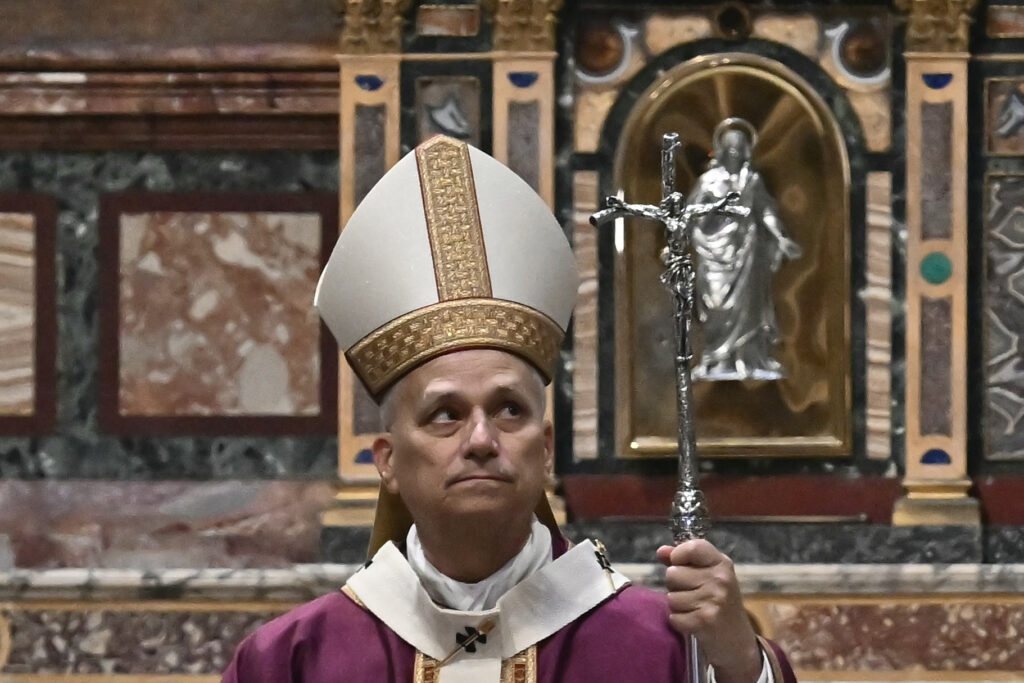
Pope Leo XIV’s newly announced visit to Algeria in April was welcomed as a dream come true by the archbishop of Algiers on Thursday.The trip will mark the first time a head of the Catholic Church has visited the North African Muslim-majority country.”This dream of a pope visiting Algeria… has come true!” Jean-Paul Vesco, the Franco-Algerian cardinal of the Catholic Church who serves as the Archbishop of Algiers, wrote in a statement.French-language newspaper El Watan said the “symbolic” visit was “of great historical significance in a country where ancient Christian memory coexists with the Muslim reality of today”.Arabic-language newspaper El Khabar agreed the visit, which was announced by the Vatican on Tuesday, “carries a great symbolic and spiritual dimension”.For Leo, the trip is in honour of fifth-century Saint Augustine, who was born in modern-day Algeria and whose order he follows.Leo, who was elected in May last year, will visit the capital Algiers and the city of Annaba — where the Basilica of Saint Augustine stands — from April 13 to 15.The 70-year-old pontiff said the trip would allow him to “continue the discourse of dialogue and bridge-building between the Christian and the Muslim worlds”.After Algeria, the pope will visit Cameroon, Angola and Equatorial Guinea.The Algerian presidency on Wednesday said the pope’s trip reflected Algeria and the Vatican’s “shared belief in the need to build a world based on peace, dialogue, and justice, against the various challenges currently facing humanity”.
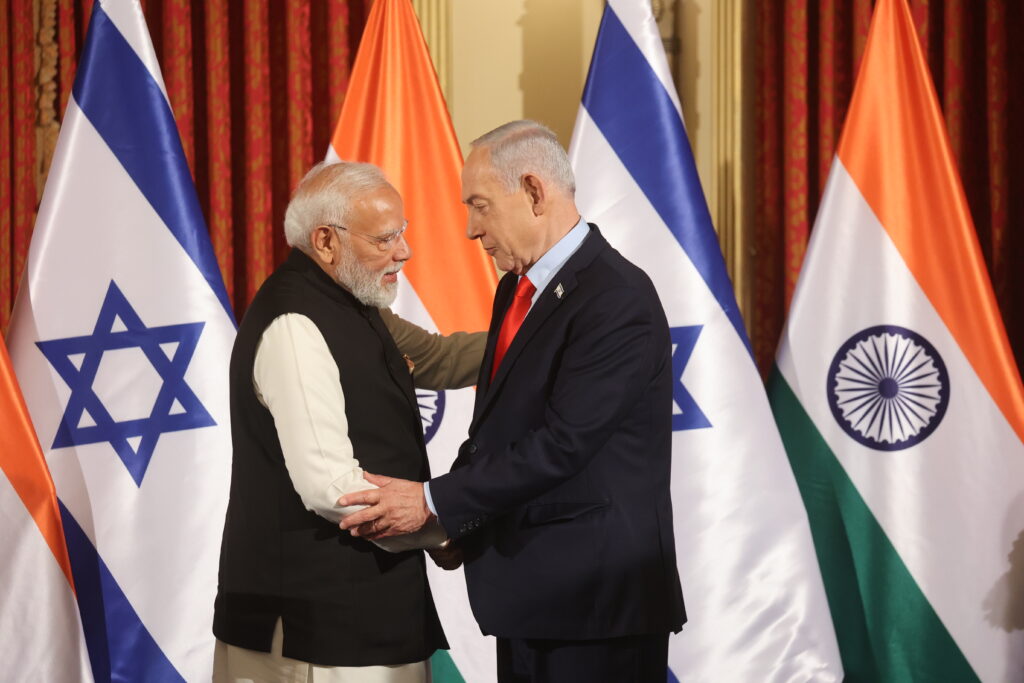
Modi says India, Israel agree ‘no place for terrorism in the world’
India’s Prime Minister Narendra Modi said on Thursday that India and Israel had pledged to fight terrorism “shoulder to shoulder”, as he concluded a two-day visit focused on deepening strategic ties.The trip, which has drawn criticism at home, marks Modi’s second visit to Israel as prime minister since he took office in 2014.”India and Israel are clear that there is no place for terrorism in the world, in any form… We will oppose it shoulder to shoulder. We will always oppose it in the future,” Modi said, standing alongside Israeli Prime Minister Benjamin Netanyahu in Jerusalem.”Humanity must never become a victim of conflict,” he added.Modi, who addressed Israel’s parliament a day earlier, spoke of future cooperation between Israel and India in a variety of fields including technology and energy.”Together, we will move forward towards joint development, joint production, and the transfer of technology,” Modi told journalists.”At the same time, we will also advance our cooperation in areas such as civil nuclear energy and space.”Both leaders used the visit to announce a series of initiatives aimed at deepening trade and technological cooperation.They highlighted progress towards a free trade agreement and expanding investment and innovation links — from semiconductors and artificial intelligence to digital payments integration, including bringing India’s UPI system into the Israeli market.Israeli officials had framed the visit as an expression of a robust and expanding partnership, with Netanyahu describing Modi as “more than a friend, a brother”.”The future belongs to those who innovate, and Israel and India are bent on innovation,” Netanyahu said on Thursday, standing next to Modi.”We’re proud ancient civilisations, very proud of our past. But absolutely determined to seize the future, and we can do it better together.”On Thursday, in the presence of the two leaders, more than a dozen agreements were signed between the two countries in fields such as education, geophysical exploration and artificial intelligence.- ‘We feel your pain’ -Modi’s visit came as tensions in the Middle East and around the Gaza conflict continue to shape diplomatic calculations in the region.Despite strengthening ties with Israel, India has sought to maintain a broader regional balance — historically supporting Palestinian statehood while deepening cooperation with Israel.Modi’s visits and statements often reflect this dual approach: affirming strategic partnership with Israel while reiterating support for peace and diplomatic solutions in the wider Middle East.He first visited Israel as prime minister in 2017, later travelling separately to Ramallah.Under Modi, India has taken a “conscious decision… to delink India’s relationship with Israel — from India’s relationship and solidarity with the Palestinian people,” said Ashok Malik from the New Delhi-based think-tank The Asia Group.”Both are important for India, but both are separate.”In a separate press briefing on Thursday, India’s Foreign Secretary Vikram Misri, when asked if India would be part of the International Stabilisation Force for Gaza, said that New Delhi was awaiting greater clarity “on the ground”.”But I can tell you with some conviction… we do have the capacity to contribute at the right time on the ground,” he said.On Wednesday, Modi told lawmakers at the Israeli parliament that his country stood “firmly” with Israel following Hamas’s attack on October 7, 2023.”I… carry with me the deepest condolences of the people of India for every life lost and for every family whose world was shattered in the barbaric terrorist attack by Hamas on October 7,” Modi said in the Knesset.”We feel your pain, we share your grief. India stands with Israel firmly with full conviction in this moment and beyond.”A senior figure of India’s Congress party, Priyanka Gandhi, had criticised Modi’s visit before he arrived in Israel.In a social media post, Gandhi said she hoped that Modi would mention the killing of “thousands of innocent men, women and children in Gaza” during his address to the Israeli parliament.In his speech to Israeli lawmakers, Modi did not say that explicitly, but said that India “supports all efforts that contribute to durable peace and regional stability”.