
AFP Asia Business
Kurdish Iranian groups in Iraq eye opportunity for change at home
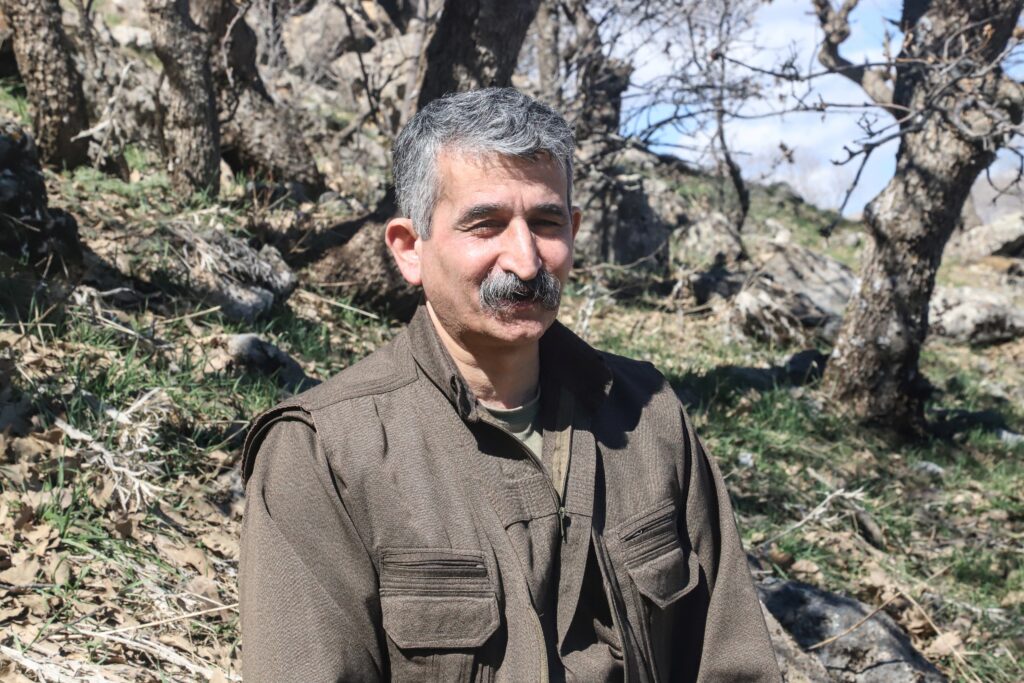
In the Iraqi mountains near Iran, an exiled Kurdish Iranian commander told AFP that whether or not the US launches strikes on Iran, he will still seek regime change in order to win self-determination for the Kurds.Iraq’s autonomous Kurdistan region has long been a haven for Kurdish Iranian armed factions, which have repeatedly faced cross-border strikes from Iran.”We cannot take the side of either the Americans or the Iranians. Our cause is different… our goal is democratic change in Iran — a democracy that will benefit the Kurdish people,” said Mazloum Haftan, a senior commander in the Party of Free Life of Kurdistan (PJAK).”We will neither attack Iran nor defend the current regime. We have chosen a third path: working towards democratic, peaceful change,” the 54-year-old added.An AFP team of journalists met Haftan and his fellow fighters in a bunker carved into a rugged mountainous area, now blanketed with snow, near the border with Iran.Iran has designated his group as a terrorist organisation, and many Iranian Kurdish groups like his have previously fought Iranian security forces in Kurdish-majority areas along the border.But in recent years, they have largely refrained from armed activity, although they continue to actively campaign from exile against the Islamic republic. They recently stepped up their lobbying after mass anti-government protests in Iran that sparked a deadly crackdown, and as the United States conducted a military build-up in the region not seen in decades. – ‘With blood’ -If war breaks out, Haftan said he believes Iran might target Kurdish opposition positions in northern Iraq. He also said Iranian authorities have already started boosting their security and military presence in Kurdish-majority areas of western Iran.The impact of any US strikes would very much depend on how far they go. Should they go as far as effecting regime change, Haftan said groups like his would aim for “a decentralised system after having tried the monarchy and the Supreme Leader rule”.Last week, the PJAK and another four exiled groups announced a political coalition to seek the overthrow of Iran’s Islamic republic and ultimately to secure Kurdish self-determination.Kurdish opposition groups have long supported anti-government protests in Iran. Last month, they called for a general strike in support of the demonstrations.In 2022, Iran launched deadly military strikes on exiled Kurdish Iranian militants, accusing them of instigating protests sparked by the death in custody of Kurdish Iranian woman Mahsa Amini.In Iran, “the Kurds have been at the forefront of the struggle for democracy and freedom. When one leads people, one must pay a price—we have paid in blood,” Haftan said. – ‘An opportunity’ -The Kurds, whose community spans areas of Turkey through Syria, Iraq and Iran, make up one of Iran’s most important non-Persian ethnic minority groups.The Democratic Party of Iranian Kurdistan (PDKI) is one of the oldest and biggest Kurdish Iranian opposition groups, and it has lost fighters and commanders, including three of its chiefs, to Iranian fire. Despite his enmity with the Iranian state, PDKI commander Mohammed Nazif Kader told AFP over the phone his group has not supported Israeli or American attacks on the Islamic republic. “Our coalition relies on the Iranian people, especially the Kurds,” he said.But “if a war breaks out, it will likely create an opportunity for the Iranian opposition to return” and “seek to establish a democratic system”.”We are on full alert and fully prepared… and for all forms of struggle,” he added.
French left-wing politician sparks antisemitism row over Epstein jibe
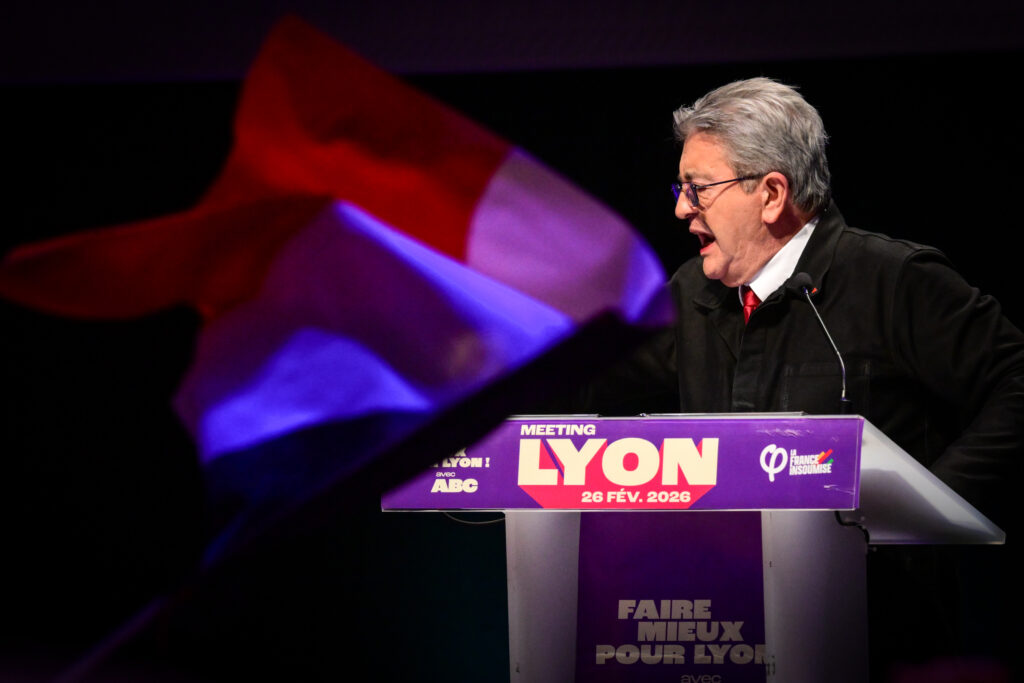
French far-left firebrand Jean-Luc Melenchon has sparked new accusations of antisemitism after mocking the pronunciation of the name “Epstein” during a political rally in southeastern France.Speaking at a gathering in Lyon on Thursday evening, Melenchon invoked the name of Jeffrey Epstein, after recent disclosures detailed the convicted sex offender’s extensive ties to the world’s rich, famous and powerful.”I wanted to say ‘Epstein’, sorry, it sounds more Russian, ‘Epsteen’,” said the France Unbowed (LFI) leader. “So now you’ll say Epsteen instead of Epstein, Franckensteen instead of Frankenstein,” he told a laughing audience.The comments, which came ahead of municipal elections next month, sparked outrage from across the political spectrum.Melenchon, 74, rejected accusations of antisemitism, calling his comments “ironic”.On Friday, President Emmanuel Macron shared a video of a recent speech he made condemning the “antisemitic hydra” that he said had crept into “every crack” of French society.”This was 15 days ago”, he said.Interior Minister Laurent Nunez described Melenchon’s remarks as “abject”, while Equality Minister Aurore Berge wrote on X that “antisemitism in France can be spelled out in three letters: L-F-I.”Socialist lawmaker Laurence Rossignol condemned the comments as “the most terrifying antisemitism”.”How many decades has it been since a politician made a room laugh by rattling off Jewish names, emphasising their pronunciation, with a sneer of hatred?” Rossignol said.The leader of the far right National Rally party, Jordan Bardella, denounced Thursday’s rally as a “brutal, chilling meeting with openly antisemitic overtones”.Yonathan Arfi, head of the French Jewish group Crif, said: “With all due respect to Jean-Luc Melenchon, a Year 8 pupil knows that in English, ‘Epstein’ is pronounced ‘Epstine’.””To see this pronunciation as manipulation is a conspiracy theory with real antisemitic overtones,” he said on X, adding journalists were using the American pronunciation of the late financier’s last name.Melenchon sought to push back.”The reaction of those who see this as antisemitism is appalling,” he said on X, noting that it was a way of “deliberately inciting violence against LFI”.The LFI and Melenchon have faced accusations of failing to properly condemn attacks on October 7, 2023 by Palestinian militant group Hamas on Israel.Melenchon and his party have been under fire over the killing of far-right activist Quentin Deranque in Lyon. The 23-year-old died following clashes between radical left and far-right supporters on the sidelines of a February 12 demonstration against a politician from Melenchon’s party.
Iran urges US to drop ‘excessive demands’ to reach deal
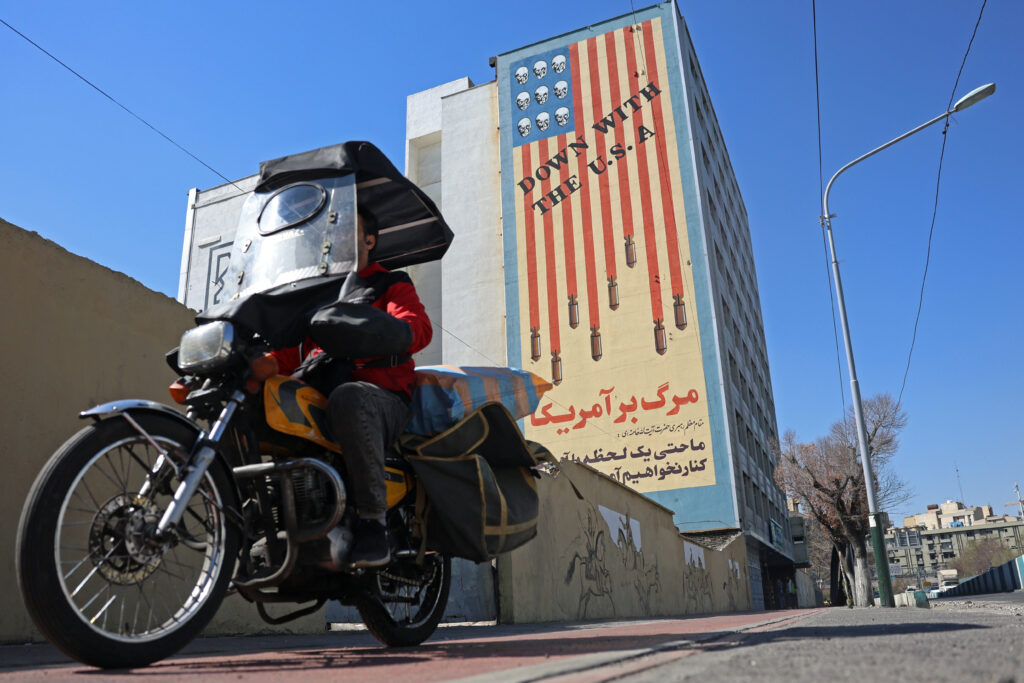
Iran said Friday that in order to reach a deal, the United States will have to drop its “excessive demands”, tempering the optimism expressed after talks seen as a last-ditch bid to avert war.The Oman-mediated talks follow repeated threats from President Donald Trump to strike Iran, and with the United States conducting its biggest military build-up in the region in decades.Trump on February 19 gave Iran 15 days to reach a deal, and while Iran has insisted the discussions focus solely on its nuclear programme, the US wants Tehran’s missile programme and its support for militant groups curtailed.The Wall Street Journal reported on Thursday that Trump’s negotiating team would demand that Iran dismantle its three main nuclear sites and hand over all its remaining enriched uranium to the United States.Without specifying what demands he was referring to, Iran’s Foreign Minister Abbas Araghchi on Friday told his Egyptian counterpart that “success in this path requires seriousness and realism from the other side and avoidance of any miscalculation and excessive demands”.Following the talks in Geneva on Thursday, Araghchi told state TV that the negotiations “made very good progress and entered into the elements of an agreement very seriously, both in the nuclear field and in the sanctions field”.He said the next round would take place in “perhaps less than a week”, with technical talks at the UN’s nuclear agency to begin in Vienna on MondayOmani Foreign Minister Badr Albusaidi also announced technical discussions were to be held next week in Vienna.”We have finished the day after significant progress in the negotiation between the United States and Iran,” he said in a post on X.Araghchi, in a post on X, called the latest round of talks “the most intense so far”.”It concluded with the mutual understanding that we will continue to engage in a more detailed manner on matters that are essential to any deal — including sanctions termination and nuclear-related steps,” he wrote.UN nuclear chief Rafael Grossi joined the negotiations, a source close to the talks told AFP.- ‘Big lies’ -US President Donald Trump said in his State of the Union address that Iran had “already developed missiles that can threaten Europe and our bases overseas, and they’re working to build missiles that will soon reach the United States of America”.He also accused Iran of “pursuing sinister nuclear ambitions”, though Tehran has always insisted its programme is for civilian purposes.The accusations were delivered in the same forum in which then-president George W. Bush laid out the case for the invasion of Iraq in 2003.The Iranian foreign ministry called these claims “big lies”.On Wednesday, US Secretary of State Marco Rubio said on Wednesday that Iran is “not enriching right now, but they’re trying to get to the point where they ultimately can”, adding that Tehran “refuses” to discuss its ballistic missile programme and “that’s a big problem”.Iran’s President Masoud Pezeshkian insisted ahead of the talks that the Islamic republic was not “at all” seeking a nuclear weapon.US Vice President JD Vance told the Washington Post on Thursday there was “no chance” that a long-threatened strike on Iran would result “in a Middle Eastern war for years with no end in sight”.Parallel to the talks is a dramatic US military buildup in the region, with the USS Gerald R. Ford, the world’s largest aircraft carrier, sent to the Mediterranean this week.Washington currently has more than a dozen warships in the Middle East: one aircraft carrier — the USS Abraham Lincoln — nine destroyers and three other combat ships.It is rare for there to be two US aircraft carriers in the region.The maximum range of Iran’s missiles is 2,000 kilometres (1,200 miles), according to what Tehran has publicly disclosed.However, the US Congressional Research Service estimates they top out at about 3,000 kilometres — less than a third of the distance to the continental United States.A previous attempt at negotiations collapsed when Israel launched strikes on Iran last June, beginning a 12-day war that the US briefly joined to bomb Iranian nuclear sites.In January, Tehran launched a mass crackdown on nationwide protests, killing thousands of people according to rights groups.Protests have since resumed around Iranian universities.