AFP Asia Business

Israelis shelter underground as Iran fires missiles

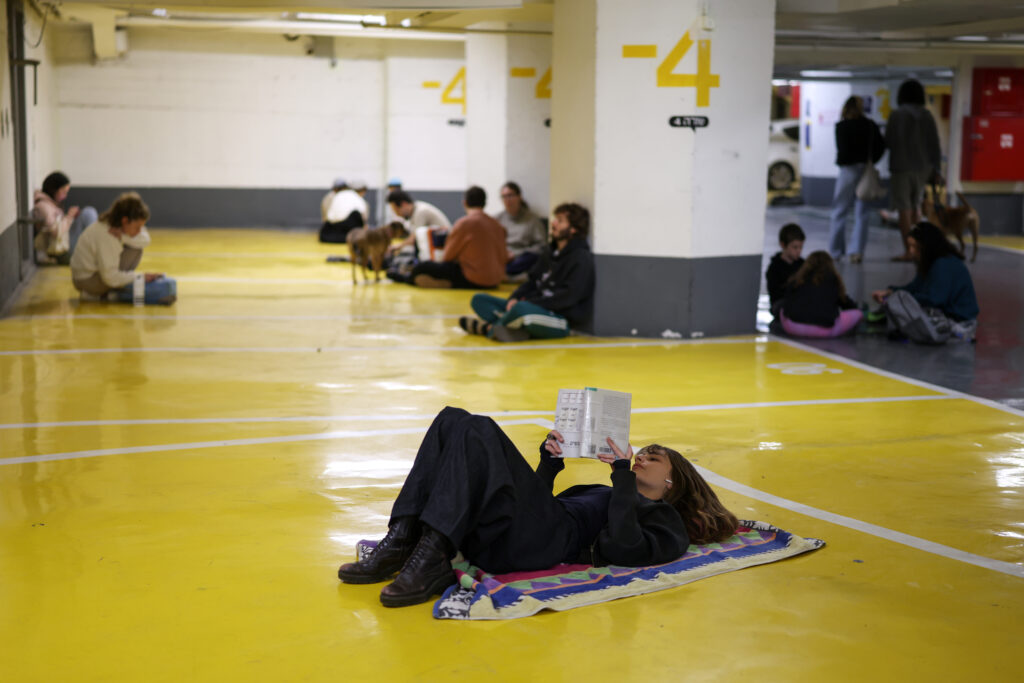
Across Israel, city streets stood deserted on Saturday as residents took cover in shelters, while the blasts from Iranian missiles being intercepted reverberated overhead.It was the second time in under a year that Israelis were undertaking this grim wartime routine, having first fled Iranian missiles during a 12-day war between the arch-foes last June.The United States and Israel launched a wave of strikes against military targets in Iran on Saturday, sparking a rapid Iranian retaliation towards Israel.In the commercial hub of Tel Aviv, Orit Baisa, 42, rushed to an underground car park as soon as he heard the air raid sirens warning of an incoming missile barrage.”We don’t have a shelter, no safe room. The stairwell isn’t a compliant secure room. This (car park) is the safest place there is,” he said.”If this (war) is going to last, then yes, sure, we’ll go back to it, bring the tents, the mattresses, bring all the equipment and live here, like last time”, he told AFP.Andrea Siposova, who fled to the same car park, told AFP she had prepared for the shelter in case war broke out.”We were already prepared with our emergency backpacks in case this happens. And yeah, so once we got the alert that there is a missile attack, we came to the shelter”, said Siposova, a 31-year-old originally from Slovakia who now lives in Tel Aviv.Roi Elba came to the shelter with his dog Gaia to wait out a missile salvo.”It’s the place to be when it’s unsafe outside. Most of the buildings, most of the apartments in Tel Aviv, in the centre of Tel Aviv, don’t have a safe room, shelter”.- Assault rifles and strollers -Inside, some people had brought prams, others, who were reservists, their assault rifles while some began praying in a small group. Several dogs were there, too, hunkering down with their owners.Outside of the car park, white trails scarred the blue sky as Israel’s air defence system launched into action to detonate Iranian missiles before they could land, an AFP journalist reported.Further north on Israel’s coast, a projectile lifted a large blast of water in Haifa Bay as it exploded in the Mediterranean Sea, water and smoke rising high above a nearby commercial ship, an AFP photojournalist reported.After a projectile struck a building in the nearby city of Tirat Carmel, residents were evacuated, according to the same journalist.Israel’s first responders agency, Magen David Adom instructed its ambulances to use sirens as little as possible, so as to avoid people confusing the sound for that of air raid sirens, it said in a statement.By mid-afternoon on Saturday, it had reported only one mild injury linked to missiles, a 50-year-old man injured by a blast in Israel’s north.All other national agencies also sprang into wartime mode, with the education ministry cancelling all classes and the aviation authority halting all flights in and out of the country.In Jerusalem, the streets were mostly empty, with residents staying home or close to shelters.There too, numerous blasts broke the stillness of the empty streets as barrages came one after the other, sometimes rattling windows as missiles detonated overhead.- ‘Trapped’ -In the nearby West Bank city of Ramallah, 15 kilometres north of Jerusalem, Palestinians mostly carried on with life as usual, with markets in full swing and conversations only occasionally interrupted by overhead blasts.”There have been wars since our great-great-grandparents’ time. Nothing concerns us. Our lives must continue as normal”, Ghazala Arar, a resident of the nearby Jalazone camp, told AFP.For most, the main inconvenience remained the Israeli military’s closure of many of the hundreds of checkpoints that restrict movement in the Palestinian territory, locking some people out of their homes.”I’m trying to go to Jenin, but all the checkpoints are closed. The attack happened in an instant — we are trapped here”, Rajwa Atatra, who had come to Ramallah from the northern city of Jenin to visit her brother, told AFP.
Iranians in Istanbul jittery but jubilant at US, Israeli strikes

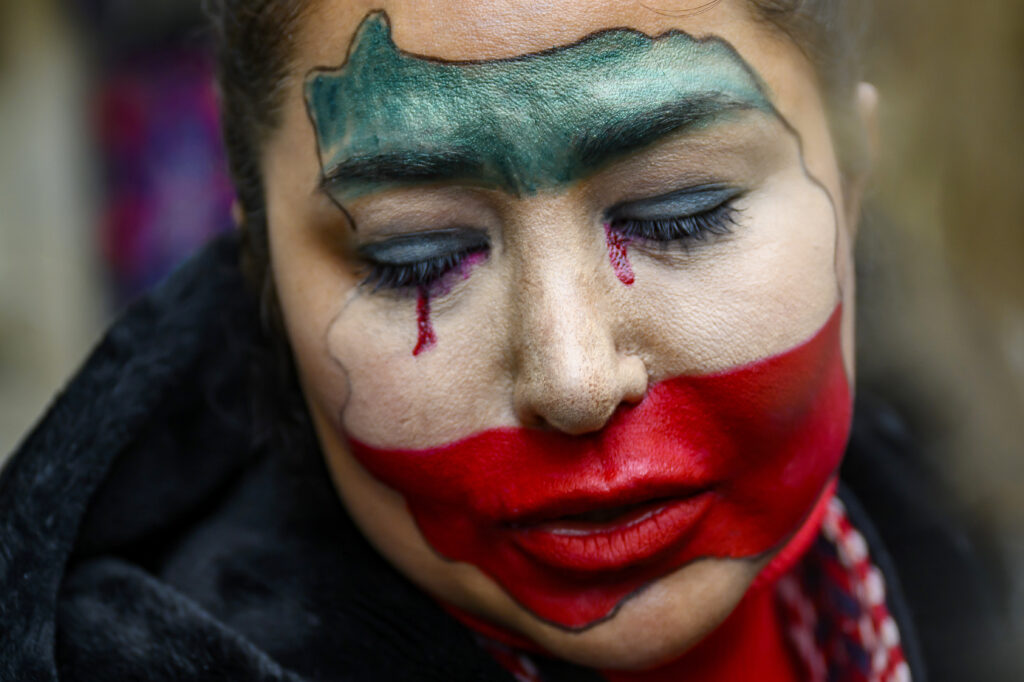
“War is no good but it’s better than the regime killing our children,” said a 39-year-old Iranian in Istanbul, confessing he was “happy” that US and Israeli warplanes were attacking Iran. Like many Iranians living in exile in neighbouring Turkey, Reza, who did not want to give his surname, has been glued to his phone since news broke that Israel and the United States had begun air strikes on Iran. Despite worrying about their families, most exiles in Turkey’s largest city told AFP they were happy with the strikes, which US President Donald Trump had threatened in January over Iran’s protest crackdown that left thousands dead.”America is attacking the military bases, the people who 40 days ago were killing our children, so they are helping us. This war is no good, people will die, but I’m happy,” Reza, a mature student, told AFP.Ali, a film director who like almost all the Iranians interviewed by AFP did not give his surname, agreed.”Now people in Iran are full of hope and they are very, very happy,” Ali said. “Iranians have been counting the minutes until America came to destroy the regime.”Over the past few weeks, Trump has sent warships and dozens of fighter planes to the Middle East, raising fears of a US strike — even as US and Iranians diplomats held indirect talks on Iran’s nuclear programme. But early on Saturday, the tensions came to a head as Israeli and US warplanes began hitting targets in Iran, with Trump urging Iranians to stand up to their government and telling them: “The hour of your freedom is at hand.”Turkey, which shares a 500-kilometre (300-mile) border with Iran, currently hosts more than 74,000 Iranians with residence permits and some 5,000 refugees.While the unrest has raised fears of an influx of people, there have been no reports of unusual activity at the Turkey-Iran border so far. – ‘Difficult days ahead’ -“I’m both worried and happy, hoping for Iran’s freedom,” said Sepideh, a former teacher, who told AFP she managed to speak to a few friends in the morning, despite Iran cutting off all internet access.Even with the internet shutdown, Mehdi, an engineer from the northern Iranian city of Tabriz, said he had managed to reach his family on Friday night. “Everyone was aware of the possibility of war, so they have been saving fuel and storing enough food. They are planning to move to rural areas,” he said.”We never wanted war in our country. It is the mullahs’ brutal theocracy that has put us in this situation,” he said. “We don’t support Trump or Israel either, we want freedom and democracy, but this will not come easily. There will be very difficult days ahead, but Iran will get through this period. We will survive.”Some are hoping the strikes will bring people back on the streets in another show of mass protest that could ultimately bring down Iran’s authoritarian government. “People are full of anger — many thousands of people died in the protests and they are waiting like a wolf for an opportunity for revenge. This is their best chance,” said Reza. Nina, a young woman in her 30s from Tabriz, is also hoping the strikes will bring people back onto the streets. “If we don’t manage to overthrow the regime now, there will once again be massacres,” she warned. Others are already looking to a future when the country will begin a transition to democracy — with some putting their hopes in Reza Pahlavi, the exiled eldest son of Iran’s last shah, who rose to prominence during the recent protests. “Every Iranian is ready: as soon as Prince Reza Pahlavi gives the order that we can return, we won’t stay away a minute longer,” said Amir Hossein, a singer from Tehran. “We will all come back to build a magnificent Iran.”

Lebanon refuses to be drawn into Iran conflict: PM

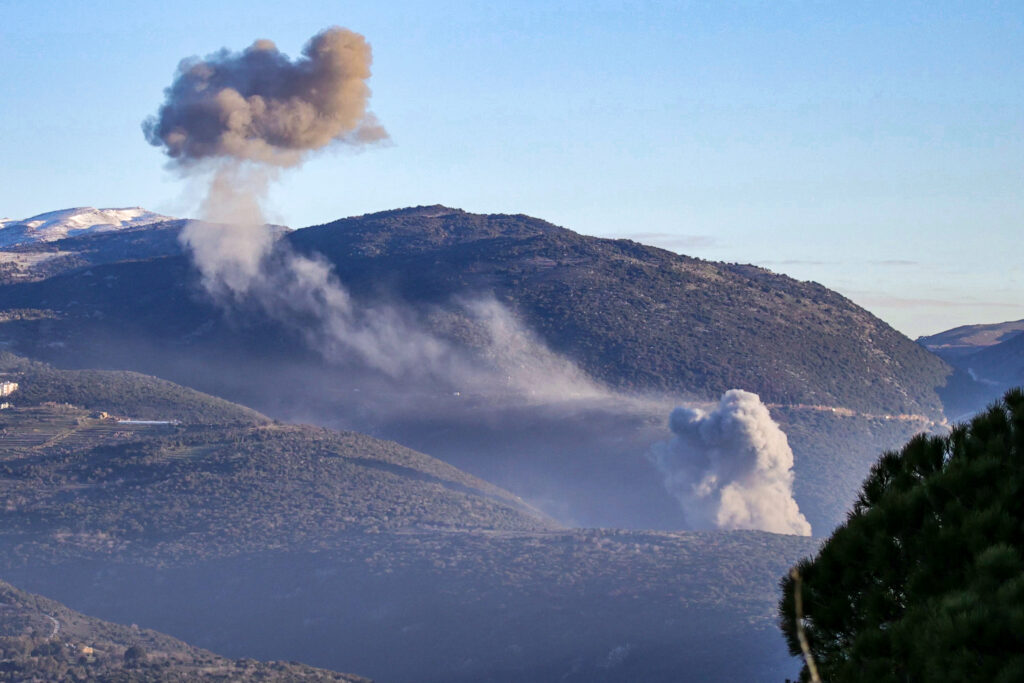
Lebanese Prime Minister Nawaf Salam said Saturday that his country refused to be dragged into war, after Israel and the United States launched strikes against Iran.Authorities fear the Iran-backed Lebanese militant group Hezbollah could become involved in the conflict, which saw the US and Israel bomb Iran on Saturday and Tehran respond with missile attacks.Just before the operation began, Israel announced it was carrying out strikes on Hezbollah infrastructure in south Lebanon. “I reiterate that we will not accept anyone dragging the country into adventures that threaten its security and unity,” Salam said on X. “In light of the serious developments unfolding in the region, I once again call on all Lebanese to act with wisdom and patriotism, placing Lebanon and the Lebanese people’s interests above any other consideration,” he added. Later on Saturday, Salam said his government was making diplomatic contacts to avoid any “repercussions” of the conflict.In response to the US and Israeli attacks, Iran fired missiles at Israel but also several Gulf countries that host US bases or forces.The Lebanese foreign ministry condemned the “Iranian attacks” on Gulf countries.Many airlines meanwhile announced the cancellation of their flights to airports in the Middle East, including Beirut.Salam however said Beirut’s “airport remains open” and that “the national carrier’s flights are continuing”.- ‘Sparing Lebanon’ -Lebanon’s state-run National News Agency earlier said the Israeli strikes on the country’s south had targeted mountainous areas where Hezbollah has a strong presence.President Joseph Aoun stressed on Saturday that “sparing Lebanon the disasters and horrors of external conflicts, and preserving its sovereignty, security and stability, are an absolute priority”.In a post on X, United Nations special coordinator for Lebanon Jeanine Hennis-Plasschaert urged “all parties in Lebanon” to “prioritise, in words and actions, the need to shield the country and its people from unfolding regional developments”.Hezbollah’s leader, Naim Qassem, was expected to deliver a speech on Saturday but it was postponed due to “recent developments”.A Hezbollah official told AFP on Wednesday that the Lebanese movement would not intervene militarily in the event of “limited” US strikes on its backer Iran, but would consider any attack against supreme leader Ayatollah Ali Khamenei a “red line”.Lebanon’s foreign minister said Tuesday that the government feared Israeli attacks on civilian infrastructure if Hezbollah — which still has an arsenal of ballistic missiles — became part of the conflict between the US and Iran.Qassem has previously said that his group is in a “defensive position”, but it would consider itself “targeted” by any US attack on Iran.Hezbollah did not intervene in the 12-day war between Israel and Iran last June, which the US briefly joined. The Lebanese group emerged weakened from over a year of war with Israel that a November 2024 ceasefire sought to halt.That conflict started when Hezbollah intervened in solidarity with Hamas in Gaza in October 2023.

US and Israel launch strikes on Iran, explosions reported across region

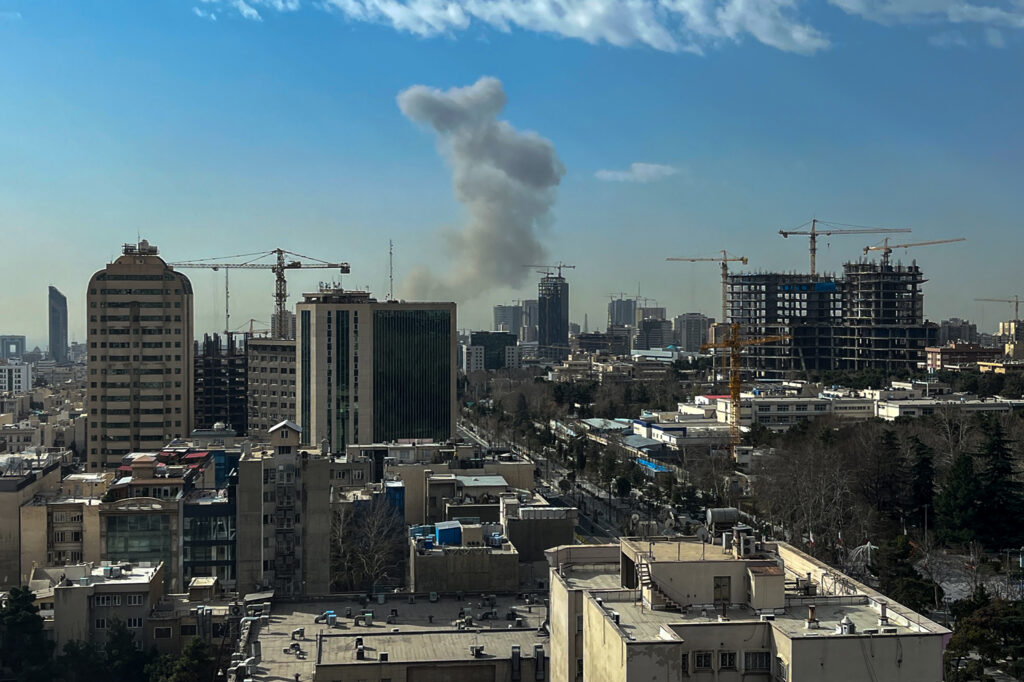
The United States and Israel launched strikes against Iran on Saturday, with Israel’s public broadcaster reporting that supreme leader Ayatollah Ali Khamenei had been targeted, as the Islamic republic retaliated with barrages of missiles at Gulf states and Israel.Explosions were heard in the capitals of Saudi Arabia, Bahrain, Qatar and the UAE — all countries that host US forces. Blasts were also reported in the skies over Jerusalem after the Israeli military said a “barrage of missiles was launched” towards the country.The US and Israeli attacks followed weeks of sabre-rattling and a major American military build-up in the Middle East, with Iran repeatedly threatening to react fiercely to any attack and warning of a conflict that would engulf the region.Smoke was rising over Tehran’s Pasteur district, site of the home of Khamenei, and there was a huge security deployment in the capital.”Iranian Supreme Leader Khamenei and President Masoud Pezeshkian were among the targets of the attack,” Israel’s Kan reported, citing an Israeli source.Iranian state television said Pezeshkian was “safe and sound”, while the Fars news agency said “missile impacts were reported in the Keshvardoost and Pasteur districts” of Tehran.Witnesses told AFP correspondents they had heard at least three blasts in the area.The attacks came after US President Donald Trump expressed frustration at Iran’s stance in negotiations over its nuclear and missile programmes.Trump said Washington’s goal was “eliminating imminent threats” from Iran, and Israel’s Prime Minister Benjamin Netanyahu said the operation was to remove an “existential threat”.”The United States’ military began major combat operations in Iran,” Trump said in a video message posted on his social media site while he spent the weekend at his Florida golf club.- Totally ‘obliterated’ -“We are going to destroy their missiles and raze their missile industry to the ground. It will be totally, again, obliterated. We’re going to annihilate their navy,” Trump said, warning of the possibility of US casualties.He offered Iranian forces including the Revolutionary Guards “immunity” should they surrender, or “certain death” if not, and told Iranians the “hour of your freedom is at hand”, urging them to rise up and “take over your government”.Israel’s Netanyahu echoed this call, telling Iranians that the time had come to “cast off the yoke of tyranny”.The Israeli army warned Iranians in or around military infrastructure across Iran to evacuate after announcing it was conducting a “broad strike” on multiple military targets.Iran again vowed to “respond decisively to the aggressors”, and the Guards announced they had targeted the US Fifth Fleet in Bahrain as well as targets in Israel.”The IRGC’s missiles and drones have struck the headquarters of the US Navy’s Fifth Fleet in Bahrain and other American bases in Qatar and the United Arab Emirates, as well as military and security centres in the heart of the occupied territories, with severe blows,” the Guards said in a statement.”I saw with my own eyes two Tomahawk missiles flying horizontally toward targets,” an office worker told AFP on condition of anonymity. “At first we heard a dull noise and thought it was a fighter jet.”In Tehran, AFP journalists heard blasts and saw smoke rising over the city centre. The health ministry said ambulances had been dispatched but there was no immediate confirmation of casualties.Iran, Iraq, Kuwait, Syria, the UAE and Israel all closed their airspaces to civilian traffic, at least in part, and a number of airlines cancelled flights to the Middle East. US embassies in the Gulf urged American citizens to take shelter.- Blasts and sirens -Blasts were heard over Jerusalem after air raid sirens sounded, with sirens also heard in Bahrain, home to a US fleet, and in the Jordanian capital Amman.Jordan’s air force said it was conducting an operation “to defend the kingdom’s skies”.Explosions were also heard over central Doha and near Al-Udeid military base, the largest US military facility in the region, and an AFP journalist saw an interceptor take out one missile in a puff of white smoke, as Qatar’s defence ministry said in a statement it had “repelled a number of attacks”.Kuwait and the UAE also reported intercepting incoming Iranian missiles, with Abu Dhabi saying it “reserves its full right to respond” and slamming the attacks as “a dangerous escalation”.A bombing that targeted an Iraqi military base housing a pro-Iran group killed at least two fighters, sources from the powerful group Kataeb Hezbollah told AFP.With the strikes underway, the exiled son of Iran’s last shah voiced confidence in victory against the Islamic republic. “We are very close to final victory. I want to be by your side as soon as possible so that together we can take back and rebuild Iran,” Reza Pahlavi, who lives in the Washington area, said in an online video address.burs-dc/smw/ser

Iran’s Khamenei: ruthless revolutionary at apex of Islamic republic

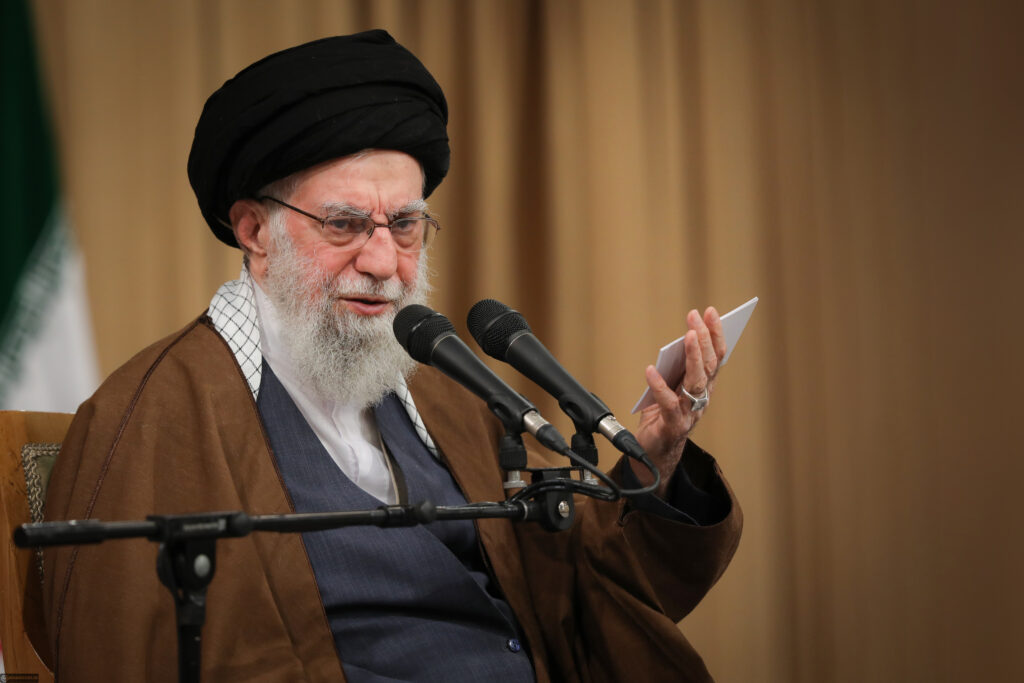
Iran’s supreme leader Ali Khamenei, a pillar of its theocratic system since the Islamic revolution, has seen off a succession of crises throughout his rule with a mixture of repression and strategic manoeuvring but now could be facing his biggest challenge.The United States and Israel launched strikes against targets in Iranian cities on Saturday, sparking a swift response from the Islamic republic whose Guards announced the launch of a wave of missile and drone attacks at Israel.While the scope of the attack on Iran remains to be seen, it could range from the limited to targeting the very apex of the leadership.Khamenei, now 86, has dominated Iran for the last three-and-a-half decades since taking on the post for life in 1989 as leader of the Islamic revolution following the death of revolutionary founder Ayatollah Ruhollah Khomeini.He has remained in power after overcoming 1999 student demonstrations, 2009 mass protests sparked by disputed presidential elections, and 2019 demonstrations that were brutally suppressed.He also survived the 2022-2023 “Woman, Life, Freedom” movement sparked by the death in custody of Iranian Kurdish woman Mahsa Amini, who had been arrested for allegedly violating the strict dress code for women.Khamenei was forced to go into hiding during the 12-day war against Israel in June, which exposed deep Israeli intelligence penetration of the Islamic republic that led to the killing of key security officials in air strikes.But he survived that war and, after nationwide protests again shook the Islamic republic earlier this year, he emerged defiant as ever.- Tight security -Khamenei lives under the tightest security, and his relatively infrequent public appearances are never announced in advance or broadcast live.As supreme leader he never sets foot outside the country, a precedent set by Khomeini following his triumphant return to Tehran from France in 1979.Khamenei’s last known foreign trip was an official visit to North Korea in 1989 as president, where he met Kim Il Sung.There has long been speculation about his health given his age, but there was nothing in his most recent appearance to fuel any new rumours.Khamenei’s right arm is always inert. It was partially paralysed following an assassination attempt in 1981 authorities have always blamed on the People’s Mujahedin of Iran (MEK) group, one-time allies of the revolution now outlawed in the country. – ‘I am opposed’ -Repeatedly arrested under the shah for his anti-imperial activism, Khamenei shortly after the Islamic revolution became Friday prayer leader of Tehran and also served on the frontline during the Iran-Iraq war.He was elected president in 1981 following the assassination of Mohammad Ali Rajai, another attack blamed on the MEK. During the 1980s, Khomeini’s most likely successor was seen as the senior cleric Ayatollah Hossein Montazeri but the revolutionary leader changed his mind shortly before his death after Montazeri objected to the mass executions of MEK members and other dissidents.When Khomeini died and the Islamic republic’s top clerical body the Assembly of Experts met, it was Khamenei who they chose as leader.Khamenei famously initially rejected the nomination, putting his head in his hands in a show of despair and declaring, “I am opposed”. But the clerics stood in unison to seal his nomination and his grip on power has not slackened since.Khamenei has now worked with six elected presidents, a far less powerful position than supreme leader, including more moderate figures like Mohammad Khatami who were allowed to make stabs at cautious reform and rapprochement with the West.But in the end, Khamenei has always come down on the side of hardliners.He is believed to have six children although only one, Mojtaba, has public prominence. He was placed under sanctions by the United States in 2019 and is one of the most powerful backstage figures in Iran.A family dispute has also caught attention: his sister Badri fell out with her family in the 1980s and fled to Iraq in the war to join her husband, a dissident cleric. Some of their children, including a nephew who is now in France, have become vehement critics.

Trump says US aims to destroy Iran’s military, topple government

US President Donald Trump announced a major attack against Iran on Saturday, vowing to “annihilate” the country’s navy and missile sites, and urging Iranians to overthrow their government.In a video address after the United States and Israel started bombing Iran, Trump made clear the goal was destruction of the Islamic republic’s military and toppling of the authorities in power since the 1979 revolution.”We are going to destroy their missiles and raze their missile industry to the ground. It will be totally — again — obliterated. We’re going to annihilate their navy,” Trump said in the address from his Florida home posted to his Truth Social platform.He urged opponents of the Iranian authorities to rise up, saying “the hour of your freedom is at hand.””When we are finished, take over your government. It will be yours to take,” Trump said. This “will be probably your only chance for generations.”But in a section of the short speech that was aimed at the US public, Trump acknowledged that “the lives of courageous American heroes may be lost” in what the Pentagon dubbed “Operation Epic Fury.””We may have casualties,” Trump warned.Any loss of life on the US side would be politically hazardous for Trump himself, especially after his refusal to seek approval for war against Iran from Congress — and his own lengthy record of opposing foreign interventions.A one-day raid to oust the former strongman leader of Venezuela in January was accomplished without US fatalities. Surgical air strikes on Iran’s main nuclear sites last June also went off without US losses. – Bombs ‘dropping everywhere’ -“Operation Epic Fury” is on an entirely different scale militarily and politically.An attack was widely expected after Trump ordered the biggest military deployment to the Middle East in years. But critical lawmakers have for days been asking why Trump has not addressed the US public or Congress to explain the need for war.Trump’s video appeared without warning on his Truth Social site at 2:30 am in Florida, where he was spending the weekend at his luxury golf club.Trump, wearing a white baseball cap marked “USA” and no tie with his white shirt and dark jacket, stood at a podium between two flags against a black background.He sought to justify the assault on Iran saying: “Our objective is to defend the American people by eliminating imminent threats from the Iranian regime.””They attempted to rebuild their nuclear program and to continue developing long range missiles that can now threaten our very good friends and allies in Europe, our troops stationed overseas and could soon reach the American homeland,” he said.He urged Iranian forces to surrender, including the elite Revolutionary Guards that is tasked with safeguarding the cleric-run government.”To the members of the Islamic Revolutionary Guard, the armed forces, and all of the police, I say tonight that you must lay down your weapons and have complete immunity or in the alternative, face certain death.”But Trump warned ordinary Iranians that the US bombing would be large-scale.”Stay sheltered. Don’t leave your home. It’s very dangerous outside. Bombs will be dropping everywhere.”Trump on Friday insisted that he had not decided whether to attack, and his envoys on Thursday held talks with Iran’s top diplomat toward a deal on concerns led by Tehran’s nuclear program.The top diplomat of Oman, which mediated talks Thursday in Geneva between the United States and Iran, had been optimistic for a compromise. He met Friday with US Vice President JD Vance and told CBS News that Iran had agreed to zero stockpiling of enriched uranium that could build an atomic bomb, a goal denied by Tehran.

Trump says frustrated with Iran, but mediator sees ‘breakthrough’

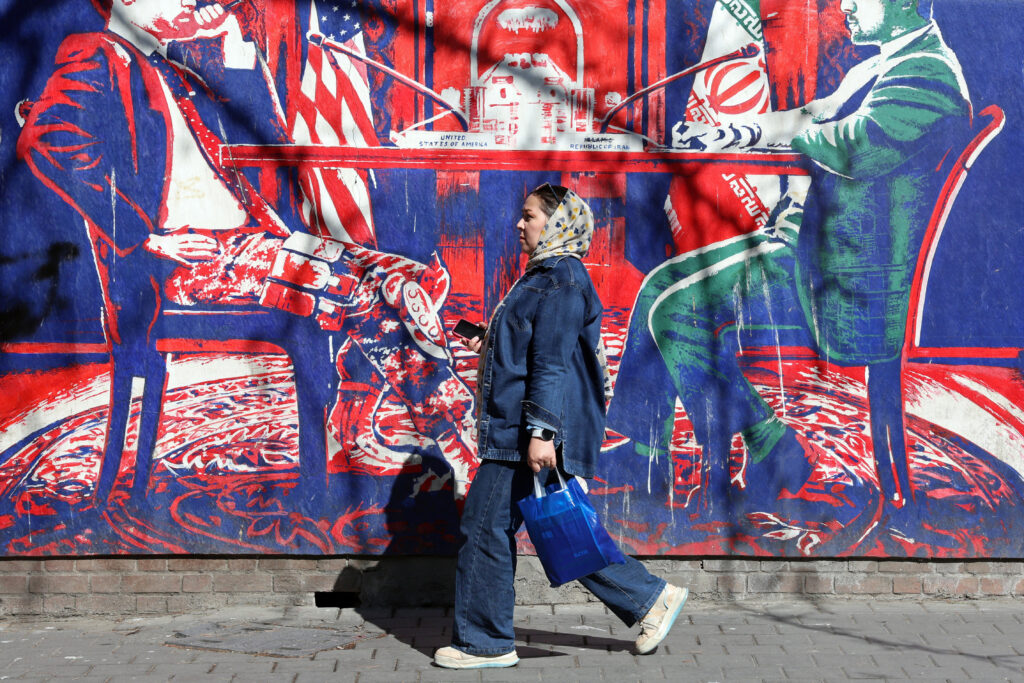
President Donald Trump on Friday voiced frustration with Iran’s stance in nuclear negotiations as US staff left Israel due to safety concerns — but mediator Oman promoted what it said was a “breakthrough” to avert war.Trump has ordered the biggest military build-up in decades in the Middle East, with the world’s largest aircraft carrier, the USS Gerald R. Ford, approaching the coast of Israel, as he demands Iran agree to sweeping concessions on concerns starting with its nuclear program.A day after the United States and Iran held talks in Geneva, Trump said that the cleric-run state was “not willing to give us what we have to have.” “We’re not exactly happy with the way they negotiated. They cannot have nuclear weapons, and we’re not thrilled with the way they’re negotiating,” Trump told reporters.He later said he wants Iran to have “no enrichment” at all of uranium that could go toward a nuclear bomb, which Iran denies it is pursuing.But Oman, which mediated the Geneva talks, offered a much rosier picture and said that Iran had agreed to zero stockpiling of any uranium, making moot the question of the level of enrichment.Iran also agreed to degrade current stockpiles into fuel, said Oman’s foreign minister, Badr Albusaidi, who was in Washington meeting US Vice President JD Vance.”If the ultimate objective is to ensure forever that Iran cannot have a nuclear bomb, I think we have cracked that problem through these negotiations by agreeing a very important breakthrough that has never been achieved any time before,” Albusaidi told CBS News program “Face the Nation.””If we can capture that and build on it, I think a deal is within our reach,” he said, estimating that three months would be needed to finalize an accord.The renewed US pressure comes weeks after Iranian authorities killed thousands of people as they crushed mass protests.As Washington mobilizes forces, Trump said “nobody knows” if a US attack would bring down the Iranian government.Iran agreed to restrictions to low-level enrichment in a 2015 deal that Trump ripped up during his first term in office.Trump in June had said that Iran’s key nuclear sites had been “obliterated” after the United States joined a major Israeli bombing campaign on the country.- Rubio heads to Israel -Meanwhile, US Secretary of State Marco Rubio will travel to Israel for talks on Iran on Monday, the State Department said. In a rare break from decades of precedent, the top US diplomat will travel without reporters on his plane.Rubio’s trip comes as the US embassy announced it was allowing non-emergency government personnel and family members to leave Israel “due to safety risks.”Germany in a new advisory said it “urgently” discouraged travel to Israel.Britain and Canada said they were moving some diplomatic staff out of Tel Aviv, Israel’s economic hub where most countries maintain embassies, as a precaution.China and Canada both called on their citizens to evacuate Iran, while Britain pulled its embassy staff in Tehran.- Issues beyond nuclear -Trump in his State of the Union address Tuesday alleged Iran was developing missiles that could strike the United States.Rubio later said it would be a “very big problem” for Iran if it does not discuss its missiles. Iran has insisted that the ongoing talks focus on the nuclear issue.Increasing pressure, Rubio on Friday designated Iran a state sponsor of wrongful detentions, a new blacklist, over jailings of US citizens.Iranian Foreign Minister Abbas Araghchi said Friday that “success in this path requires seriousness and realism from the other side and avoidance of any miscalculation and excessive demands.”The UN nuclear watchdog, the International Atomic Energy Agency, confirmed that it would hold technical discussions with Iran on Monday.The agency called on Iran to cooperate with it “constructively,” according to a confidential report seen by AFP. In their capital Tehran, ordinary Iranians expressed distrust of the United States and hoped negotiations would lead to economic relief for their sanctions-hit nation. “Whatever the outcome of the negotiations…it should lead to some improvement in people’s economic situation. Not just a little — it is our right,” Ali Bagheri, 34, told AFP. Hamid Beiranvand, 42, said Iran should “not give any concessions” as Washington “breaks promises” — but that “everyone prefers that a war doesn’t happen.” burs-sct/nro/sla