
AFP Asia Business
Trump vows revenge after troops in Syria killed in alleged IS ambush
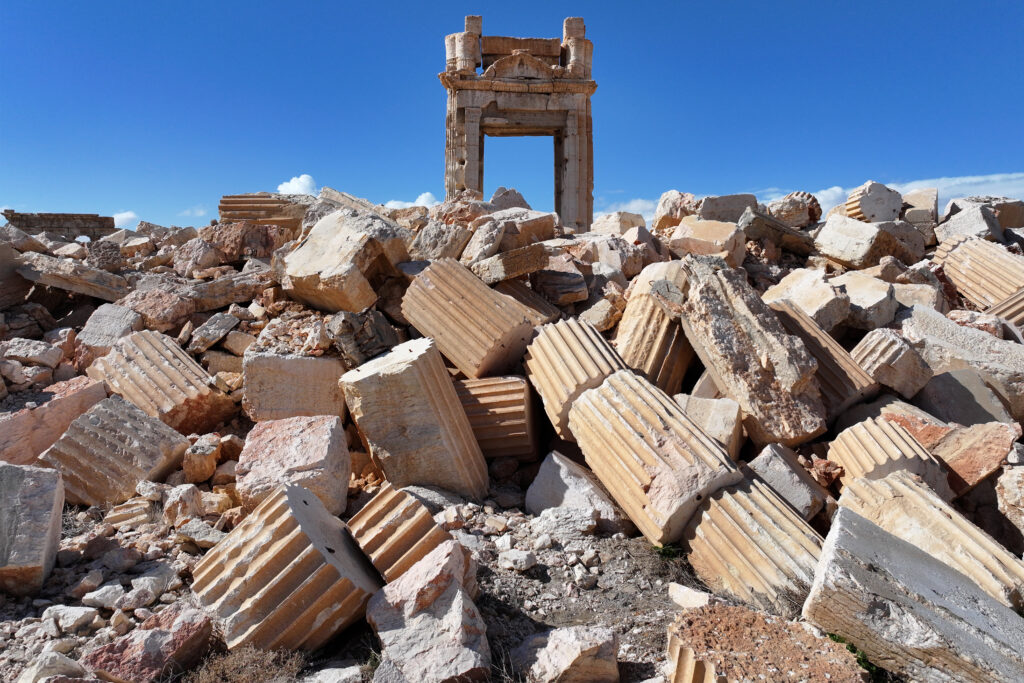
Two American troops and a civilian interpreter were killed in central Syria on Saturday after an alleged member of the Islamic State (IS) group opened fire on a joint US-Syrian patrol, officials said.”We mourn the loss of three Great American Patriots in Syria,” US President Donald Trump said on his Truth Social platform, vowing “very serious retaliation.”Pentagon spokesman Sean Parnell said the attack took place in Palmyra, home to UNESCO-listed ancient ruins and once controlled by the IS group — also known as ISIS — during the height of its territorial expansion in Syria.The deadly attack had been “an ambush by a lone ISIS gunman,” who was “engaged and killed,” US Central Command said on X.Trump called it “an ISIS attack against the US, and Syria, in a very dangerous part of Syria, that is not fully controlled by them.”Three other wounded US troops were “doing well,” Trump said.The soldiers “were conducting a key leader engagement” in support of counterterrorism operations when the attack occurred, Parnell said, while US envoy to Syria Tom Barrack said the ambush targeted “a joint US–Syrian government patrol”.The incident is the first of its kind reported since Islamist-led forces overthrew longtime Syrian ruler Bashar al-Assad in December last year, and rekindled the country’s ties with the United States.Trump said Syria’s new President Ahmed al-Sharaa, who visited the White House last month, was “extremely angry and disturbed by this attack.”Syria’s foreign minister Asaad al-Shaibani said in a post on X that Damascus “strongly condemns the terrorist attack that targeted a joint Syria-US counterterrorism patrol near Palmyra”.”We extend our condolences to the families of the victims, as well as to the American government and people, and wish the wounded a speedy recovery.”- ‘Infiltration’ -A Syrian military official who requested anonymity said the shots were fired “during a meeting between Syrian and American officers” at a Syrian base in Palmyra.A witness, who asked to remain anonymous, said he heard the shots coming from inside the base.However, a Pentagon official speaking on the condition of anonymity told AFP the attack “took place in an area where the Syrian President does not have control.”In an interview on state television, Syrian Interior Ministry spokesman Anwar al-Baba said there had been “prior warnings from the internal security command to allied forces in the desert region” of a potential IS “infiltration”.”The international coalition forces did not take the Syrian warnings of a possible IS infiltration into consideration,” he said.According to the Syrian Observatory for Human Rights monitor, which has a wide network of sources inside Syria, the meeting came as part of an “American strategy to strengthen its presence and foothold in the Syrian desert”.The official SANA news agency reported that helicopters evacuated the wounded to the Al-Tanf base in southern Syria, where American troops are deployed as part of the Washington-led global coalition against the IS group.Last month, during al-Sharaa’s historic visit to Washington, Damascus formally joined the coalition.IS seized swathes of Syrian and Iraqi territory in 2014 during Syria’s civil war, before being territorially defeated in the country five years later.Its fighters still maintain a presence, however, particularly in Syria’s vast desert.US forces are deployed in Syria’s Kurdish-controlled northeast as well as at Al-Tanf near the border with Jordan.
US troops in Syria killed in alleged IS ambush
Two American troops and a civilian interpreter were killed in central Syria on Saturday after an alleged member of the Islamic State (IS) group opened fire on a joint US-Syrian patrol, officials said.”We mourn the loss of three Great American Patriots in Syria,” US President Donald Trump said on his Truth Social platform, vowing “very serious retaliation.”Pentagon spokesman Sean Parnell said the attack took place in Palmyra, home to UNESCO-listed ancient ruins and once controlled by the IS group — also known as ISIS — during the height of its territorial expansion in Syria.The deadly attack had been “an ambush by a lone ISIS gunman,” who was “engaged and killed,” US Central Command said on X.Trump called it “an ISIS attack against the U.S., and Syria, in a very dangerous part of Syria, that is not fully controlled by them.”Three other injured US troops were “doing well,” Trump said.The soldiers “were conducting a key leader engagement” in support of counter-terrorism operations when the attack occurred, Parnell said, while US envoy to Syria Tom Barrack said the ambush targeted “a joint US–Syrian government patrol.”The deceased troops’ identities would be withheld until after their families were notified, CENTCOM said.The incident is the first of its kind reported since Islamist-led forces overthrew longtime Syrian ruler Bashar al-Assad in December last year, and rekindled the country’s ties with the United States.Trump said Syria’s new President Ahmed al-Sharaa, who visited the White House last month, was “extremely angry and disturbed by this attack.”- ‘Infiltration’ -A Syrian military official who requested anonymity said that the shots were fired “during a meeting between Syrian and American officers” at a Syrian base in Palmyra.A witness, who asked to remain anonymous, said he heard the shots coming from inside the base.However, a Pentagon official speaking on the condition of anonymity told AFP that the attack “took place in an area where the Syrian President does not have control.”In an interview on state television, Syrian Interior Ministry spokesman Anwar al-Baba said there had been “prior warnings from the internal security command to allied forces in the desert region” of a potential IS “infiltration”.”The international coalition forces did not take the Syrian warnings of a possible IS infiltration into consideration,” he said.According to the Syrian Observatory for Human Rights monitor, which has a wide network of sources inside Syria, the meeting came as part of an “American strategy to strengthen its presence and foothold in the Syrian desert”.SANA reported that helicopters had evacuated the wounded to the Al-Tanf base in southern Syria, where American troops are deployed as part of the Washington-led global coalition against the IS group.Last month, during al-Sharaa’s historic visit to Washington, Damascus formally joined the coalition.IS seized swathes of Syrian and Iraqi territory in 2014 during Syria’s civil war, before being territorially defeated in the country five years later.Its fighters however still maintain a presence, particularly in Syria’s vast desert.US forces are deployed in Syria’s Kurdish-controlled northeast as well as at Al-Tanf near the border with Jordan.
Israel says it killed Hamas weapons chief in Gaza
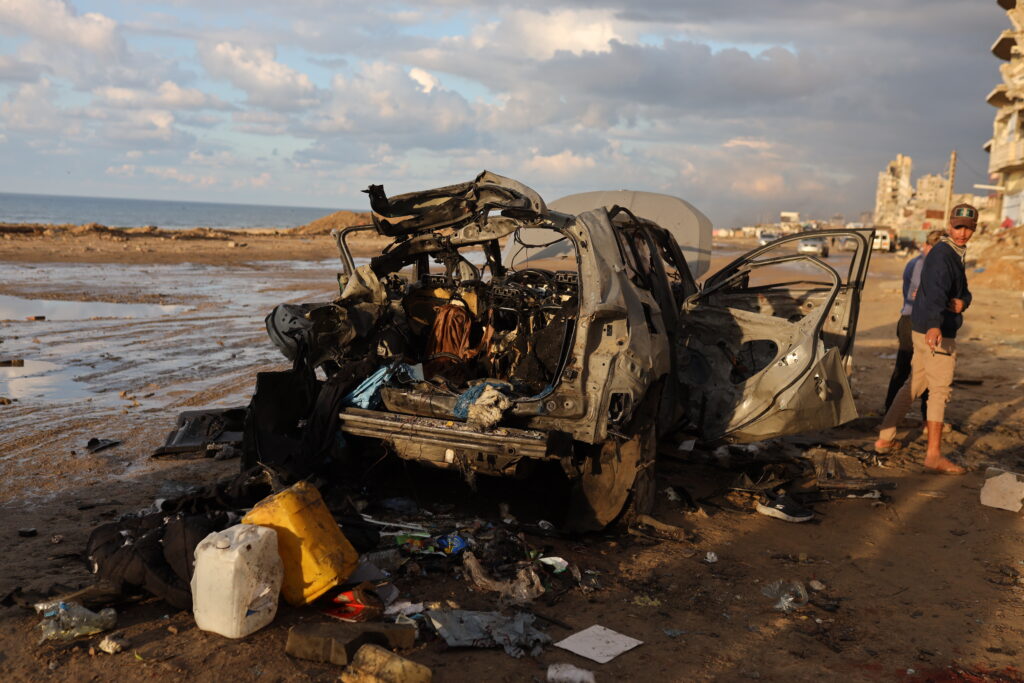
Israel said it killed the head of weapons production in Hamas’s military wing in a strike in the Gaza Strip on Saturday.The civil defence agency and medical sources in the Hamas-run Palestinian territory told AFP an Israeli strike killed five people in the Tel al-Hawa district, southwest of Gaza City.Contacted by AFP, the army said there was only one strike conducted in the area which killed the top Hamas figure, Raad Saad.Israeli Prime Minister Benjamin Netanyahu and Defence Minister Israel Katz said in a joint statement that “in response to the detonation of a Hamas explosive device that wounded our forces today in the Yellow Area of the Gaza Strip… (they) instructed the elimination of the terrorist Raad Saad”.Under the US-brokered ceasefire between Israel and Hamas in Gaza, Israeli troops have withdrawn to positions behind the so-called Yellow Line, though they are still in control of more than half the territory.Netanyahu and Katz described Saad as “one of the architects” of the October 7, 2023 attack on Israel that sparked the war in Gaza. The Israeli army said Saad was the head of the weapons production headquarters of Hamas’s military wing who led the group’s “force build-up”.Family sources confirmed his death to AFP, and said the funeral would be held on Sunday.Israel’s military earlier on Saturday said two reserve soldiers were lightly injured “as a result of an explosive device that detonated during an operation to clear the area of terrorist infrastructure in southern Gaza”.The ceasefire that came into effect on October 10 has halted the fighting between Israel and Hamas, but it remains fragile with each side accusing the other of violating its terms.- Burnt-out car -Mahmud Bassal, a spokesman for Gaza civil defence which operates as a rescue force under Hamas authority, said five people were killed after “a civilian jeep-type vehicle was targeted near the Nabulsi roundabout in Tel al-Hawa”.Bassal said the “charred” bodies were taken to Al-Shifa hospital after “Israeli warplanes targeted the civilian vehicle with three missiles, causing it to burn and its destruction”.The hospital’s emergency department confirmed to AFP the arrival of the five bodies and said that more than 25 people were injured in the strike.AFP footage showed a mangled car with vehicle parts scattered around next to other debris.”Warplanes fired several missiles at the vehicle, setting it ablaze,” a witness, who did not wish to give his name for security reasons, said in the Tal al-Hawa area.”Residents rushed to extinguish the fire, and charred body parts were scattered on the ground.”Another witness, a 34-year-old man living in a tent in the Tel al-Hawa area, said he “saw several Hamas members arrive at the site of the attack”, without providing further details.Civil defence agency spokesman Bassal also said a 17-year-old boy and an 18-year-old boy were killed by Israeli fire in two separate incidents in Gaza.
Guterres marks end of UN mission in Iraq
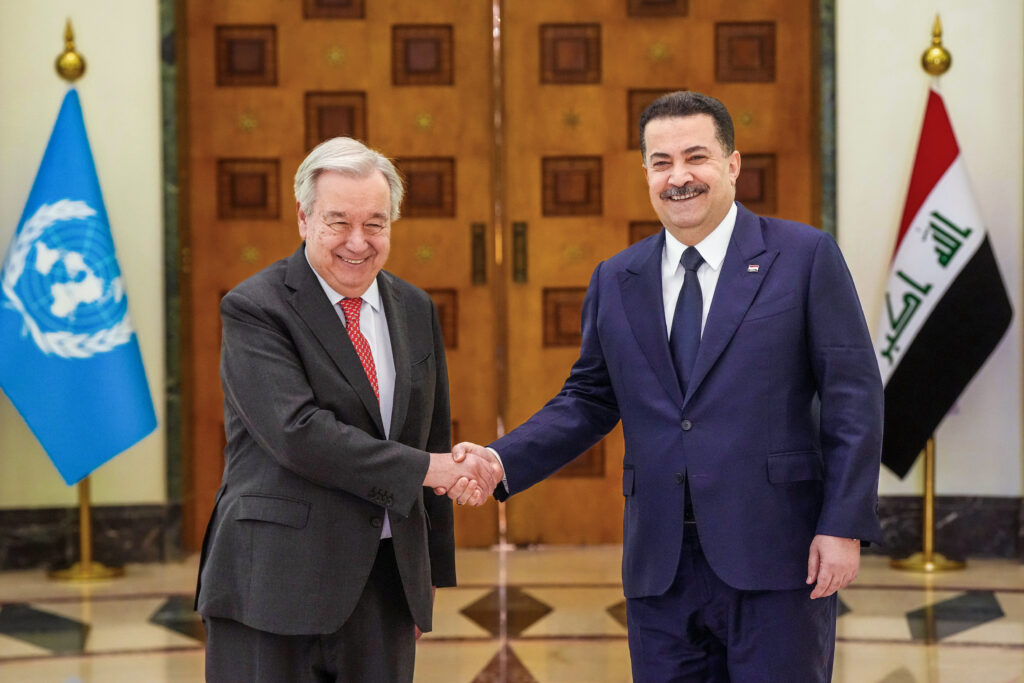
UN Secretary General Antonio Guterres on Saturday marked in Baghdad the end of the United Nations’ political mission in Iraq, which supported the country’s transition following the US-led invasion. At Baghdad’s request, the United Nations Assistance Mission for Iraq (UNAMI) will shut down its operations after 22 years of assisting the country in its transition following the 2003 invasion and occupation that toppled longtime ruler Saddam Hussein.”UNAMI was honoured and humbled to walk side-by-side with the Iraqi people,” Guterres said at the mission’s closing ceremony.But “while a mission may conclude, the United Nations will always walk alongside the people of Iraq on the path toward peace, sustainable development and human rights,” he added.UN agencies and programmes will continue to operate in Iraq.During a press conference earlier with Iraq’s Prime Minister Mohammed Shia al-Sudani, Guterres said “there is one thing the world must understand, Iraq is now a normal country.”Relations between the UN and Iraq will become normal relations with the end of UNAMI.”Sudani meanwhile said that the end of the UNAMI mandate “marks the beginning of a new chapter of cooperation”.”Our relationship with the United Nations through UNAMI was pivotal and effective in meeting Iraq’s needs and supporting it until it reached the stage of full self-reliance,” he added.UNAMI was established by a UN Security Council resolution at the request of the Iraqi government before being expanded four years later.Shortly after it was formed, a truck bomb struck the UN headquarters in Baghdad on August 19, 2003, killing the UN’s first special representative in Iraq, Sergio Vieira de Mello, along with 21 others.UNAMI’s tasks included advising the government on political dialogue and reconciliation, as well as helping with elections and security sector reform.But with Iraq regaining a sense of normalcy in recent years, authorities say there are no longer grounds for a UN political mission.