
AFP Asia Business
Sydney falls silent before fireworks bring in 2026
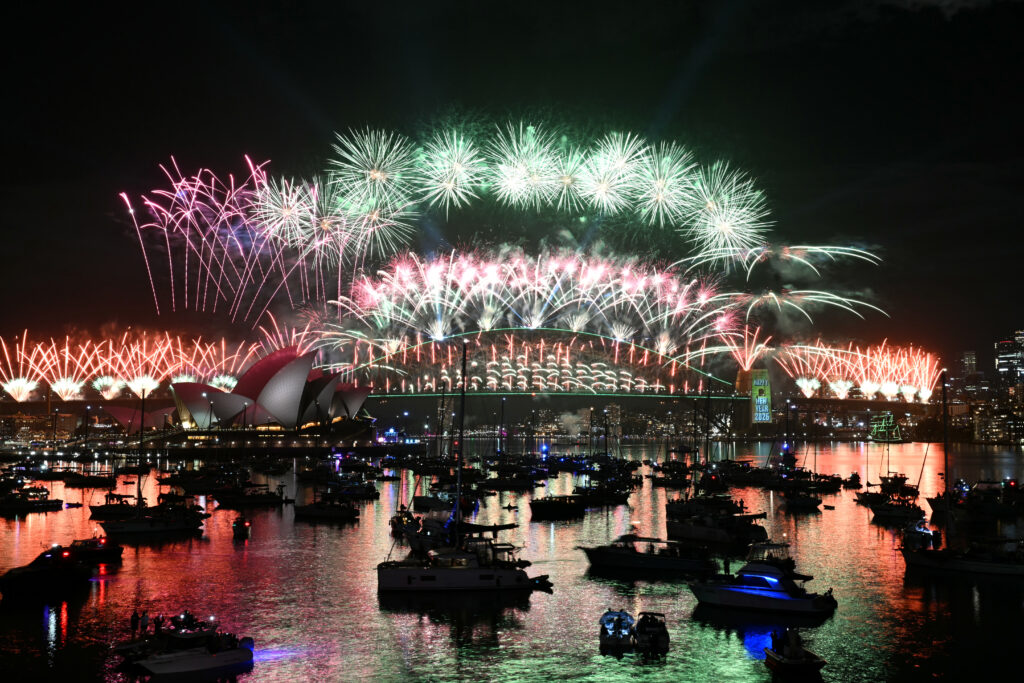
New Year celebrations took on a sombre tone in Sydney as revellers held a minute of silence for victims of the Bondi Beach shooting before fireworks lit up the harbour city at the stroke of midnight.People around the world toasted the end of 2025, bidding farewell to one of the hottest years on record, packed with Trump tariffs, a Gaza truce and vain hopes for peace in Ukraine.Heavily armed police patrolled among hundreds of thousands of people lining the Sydney shore barely two weeks after a father and son allegedly opened fire on a Jewish festival at Bondi Beach, killing 15 people in Australia’s deadliest mass shooting for almost 30 years.Parties paused for a minute of silence an hour before midnight Wednesday, with the famed Sydney Harbour Bridge bathed in white light to symbolise peace.”Right now, the joy that we usually feel at the start of a new year is tempered by the sadness of the old,” Australia’s Prime Minister Anthony Albanese said in a video message.At midnight, nine tonnes of fireworks were set off to welcome the New Year.”The fireworks have always been on my bucket list and I’m so happy to be here,” said Susana Suisuikli, an English tourist. Pacific nations including Kiribati and New Zealand were the first to see in 2026, with Seoul and Tokyo following Sydney in celebrations that will stretch to glitzy New York and the Hogmanay festival on the chilly streets of Scotland.More than two million people are expected to pack Rio de Janeiro’s Copacabana Beach for what authorities have called the world’s biggest New Year’s Eve party.In Hong Kong, a major New Year fireworks display planned for Victoria Harbour was cancelled to pay homage to 161 people killed in a fire in November that engulfed several apartment blocks.- Truce and tariffs -For many it has been a year of stress and excitement, even without the wars that have claimed tens of thousands of lives.Labubu dolls became a worldwide craze in 2025, thieves plundered the Louvre in a daring heist, and K-pop heartthrobs BTS made their long-awaited return.The world lost pioneering zoologist Jane Goodall, the Vatican chose a new pope and the assassination of right-wing activist Charlie Kirk laid bare America’s deep political divisions.Donald Trump returned as US president in January, launching a tariff blitz that sent global markets into meltdown.Trump used his Truth Social platform to lash out at his sliding approval ratings ahead of midterm elections to be held in November.”Isn’t it nice to have a STRONG BORDER, No Inflation, a powerful Military, and great Economy??? Happy New Year!” he wrote.Many expect tough times to continue in 2026.”The economic situation is also very dire, and I’m afraid I’ll be left without income,” said Ines Rodriguez, 50, a merchant in Mexico City.After two years of war that left much of the Gaza Strip in ruins, US pressure helped land a fragile ceasefire between Israel and Hamas in October.No-one is sure how long the break in hostilities will hold, with each side accusing the other of flagrant violations.”We bid farewell to 2025 with deep sorrow and grief,” said Gaza City resident Shireen Al-Kayali. “We lost a lot of people and our possessions. We lived a difficult and harsh life, displaced from one city to another, under bombardment and in terror.”World leaders including China’s Xi Jinping and Russia’s Vladimir Putin exchanged New Year greetings.Xi said he was “ready to maintain close exchanges with Putin to jointly push for continuous new progress in bilateral ties”, state news agency Xinhua said.The war in Ukraine — sparked by Russia’s invasion in February 2022 — is grinding towards its fourth anniversary with no ceasefire in sight despite a renewed burst of diplomacy.- Sports, space and AI -The coming 12 months promise to be full of sports, space and questions over artificial intelligence.NASA’s Artemis II mission, backed by tech titan Elon Musk, will launch a crewed spacecraft to circle the moon during a 10-day flight, more than 50 years since the last Apollo lunar mission.After years of unbridled enthusiasm, AI is facing scrutiny and nervous investors are questioning whether the boom might now resemble a market bubble.Athletes will gather in Italy in February for the Milano Cortina Winter Olympics.And for a few weeks in June and July, 48 nations will dispute the biggest football World Cup in history in the United States, Mexico and Canada. It could be a last chance to see the likes of Cristiano Ronaldo and Lionel Messi on the global stage.
World begins to welcome 2026 after a year of Trump, truces and turmoil
New Year’s Eve revellers toasted the end of 2025 on Wednesday, waving goodbye to 12 months packed with Trump tariffs, a Gaza truce and vain hopes for peace in Ukraine.It was one of the warmest years on record, the stifling heat stoking wildfires in Europe, droughts in Africa and deadly rains across Southeast Asia.There was a sombre tinge to celebrations in Australia’s harbour city Sydney, the self-proclaimed “New Year’s capital of the world”.Barely two weeks have passed since a father and son allegedly opened fire on a Jewish festival at Bondi Beach, killing 15 people in the nation’s deadliest mass shooting for almost 30 years.Parties paused for a minute of silence at 11:00 pm (1200 GMT) as the famed Sydney Harbour Bridge was bathed in white light to symbolise peace.”Right now, the joy that we usually feel at the start of a new year is tempered by the sadness of the old,” Australia’s Prime Minister Anthony Albanese said in a video message.Hundreds of thousands of spectators lined Sydney’s foreshore, with nine tonnes of fireworks set off from the stroke of midnight.Residents and tourists gathered by the city’s harbour and boats dotted the water to secure the best viewing spots near the Sydney Opera House. “The fireworks have always been on my bucket list and I’m so happy to be here,” said Susana Suisuikli, an English tourist. Security was tighter than usual, with squads of heavily armed police patrolling the crowds.Pacific nations including Kiribati and New Zealand were the first to see in the new year, kicking off a chain of celebrations stretching from glitzy New York to the Hogmanay festival on the chilly streets of Scotland.More than two million people are expected to pack Brazil’s lively Copacabana Beach for what authorities have called the world’s biggest New Year’s Eve party.In Hong Kong, a major New Year fireworks display planned for Victoria Harbour was cancelled to pay homage to 161 people killed in a housing estate fire in November.- Truce and tariffs -Labubu dolls became a worldwide craze in 2025, thieves plundered the Louvre in a daring heist, and K-pop heartthrobs BTS made their long-awaited return.The world lost pioneering zoologist Jane Goodall, the Vatican chose a new pope and the assassination of right-wing activist Charlie Kirk laid bare America’s deep political divisions.Donald Trump returned to the White House in January, launching a tariff blitz that sent global markets into meltdown.Trump used his Truth Social platform to lash out at his sliding approval ratings ahead of 2026 midterm elections.”Isn’t it nice to have a STRONG BORDER, No Inflation, a powerful Military, and great Economy??? Happy New Year!” he wrote.But many expect tough times to continue in 2026.”The economic situation is also very dire, and I’m afraid I’ll be left without income,” said Ines Rodriguez, 50, a merchant in Mexico City.After two years of war that left much of the Gaza Strip in ruins, US pressure helped land a fragile ceasefire between Israel and Hamas in October.No one is sure how long the break in hostilities will hold, with each side already accusing the other of flagrant violations.Hamas militants stormed into southern Israel on October 7, 2023, resulting in the deaths of more than 1,200 people, most of them civilians.Israel’s retaliatory assault on Gaza has killed more than 70,000, also mostly civilians, according to the health ministry in the Hamas-run territory, a figure the UN deems credible.”We bid farewell to 2025 with deep sorrow and grief,” said Gaza City resident Shireen Al-Kayali. “We lost a lot of people and our possessions. We lived a difficult and harsh life, displaced from one city to another, under bombardment and in terror.”World leaders including China’s Xi Jinping and Russia’s Vladimir Putin began exchanging New Year greetings.Xi said he was “ready to maintain close exchanges with Putin to jointly push for continuous new progress in bilateral ties”, state news agency Xinhua said on Wednesday.The war in Ukraine — sparked by Russia’s full-scale invasion in 2022 — grinds towards its four-year anniversary in February with no temporary ceasefire reached in the final days of 2025 despite a renewed burst of diplomacy.- Sports, space and AI -The coming 12 months promise to be full of sports, space and questions over artificial intelligence.NASA’s Artemis II mission, backed by Elon Musk, will launch a crewed spacecraft to circle the moon during a 10-day test flight, more than 50 years since the last Apollo lunar mission.After years of unbridled enthusiasm, AI is facing scrutiny and nervous investors are questioning whether the boom might now resemble a market bubble.Athletes will gather on Italy’s famed Dolomites to hit the slopes for the Winter Olympics.And for a few weeks in June and July, nations will come together for the biggest football World Cup in history in venues across the United States, Mexico and Canada.
Filmmaker Panahi says Iran protests ‘to move history forward’
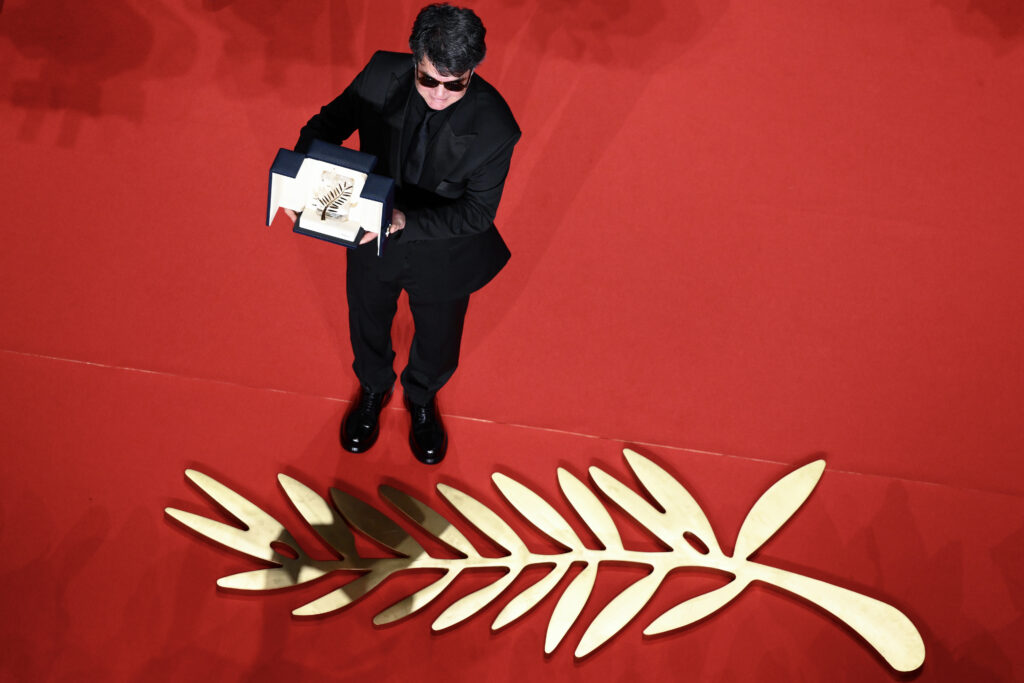
Award-winning Iranian filmmaker Jafar Panahi said Wednesday that protests which have gripped his country in recent days aimed “to move history forward”.”Shared pain has now become a cry in the street,” said the director who won the Cannes Film festival’s top prize this year and has been nominated for an Oscar for his film “It Was Just an Accident”.”When there is nothing left to lose, fear falls away. Voices unite, the silence is broken, and there is no way back,” he said on Instagram.”This uprising is willpower that has decided to stay, to move forward, and to move history forward.”Spontaneous protests, driven by dissatisfaction at Iran’s economic stagnation and galloping hyperinflation, began on Sunday in Tehran’s largest mobile phone market where shopkeepers shuttered their businesses.They have since built momentum, with students at 10 universities in the capital and in other cities, including Iran’s most prestigious institutions, joining in on Tuesday.The Mossad intelligence agency of Israel, Iran’s regional archfoe, the same day said on social media it was “with you on the ground” in a message to Iranian protesters.The latest demonstrations have not come close to the last major outbreak in 2022 triggered by the death in custody of Mahsa Amini, a young Iranian woman detained for allegedly flouting the country’s dress code for women.Panahi’s latest film, filmed in Iran without permission, chronicles the story of five ordinary Iranians confronting a man they believe is their former jailor.He has been sentenced to one year in prison over “propaganda activities” against the Islamic republic. In mid-December, he was touring to promote the film, but said he nonetheless planned to return to Iran.