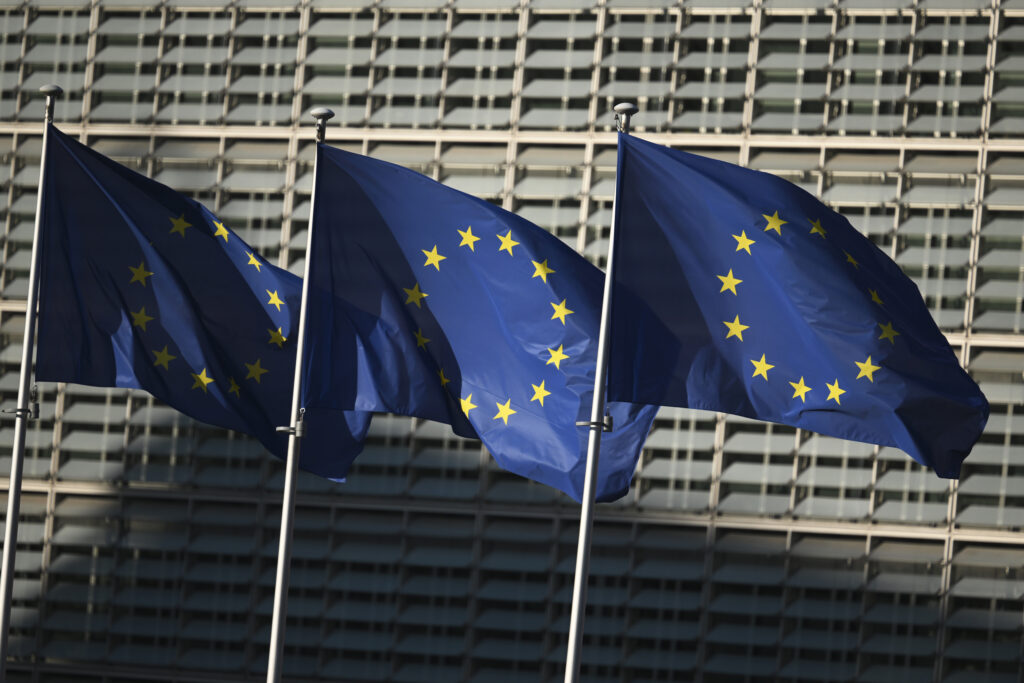
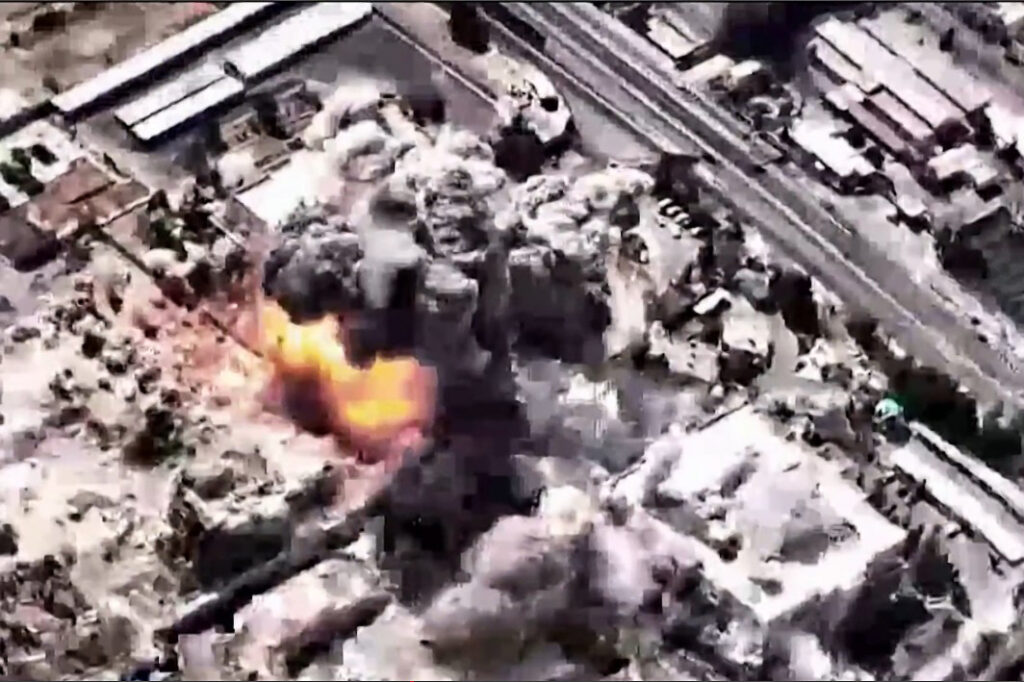
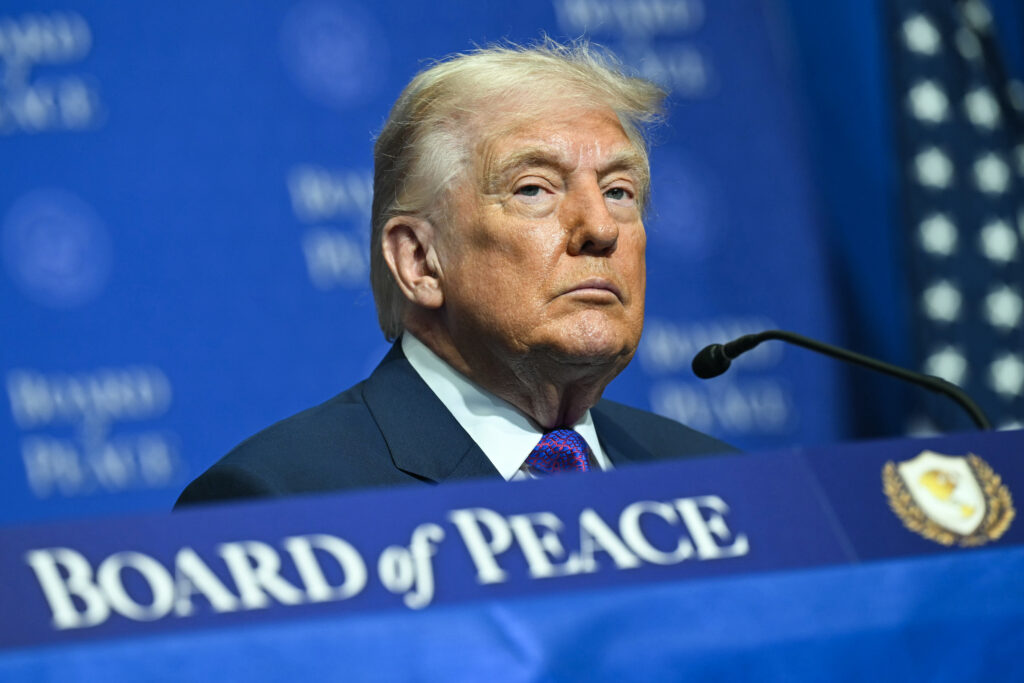
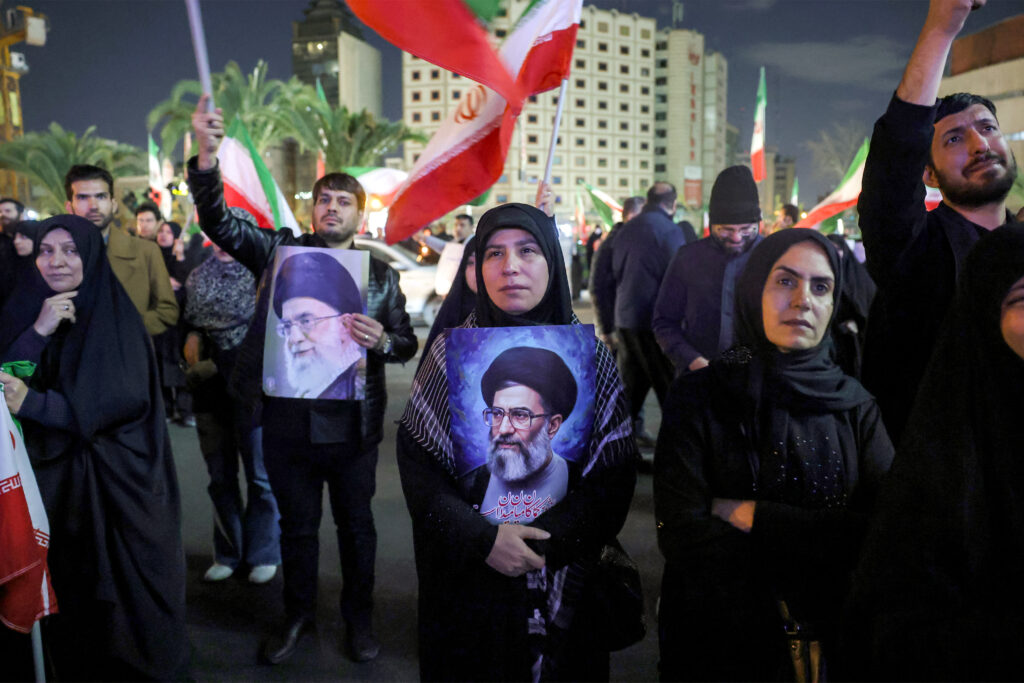
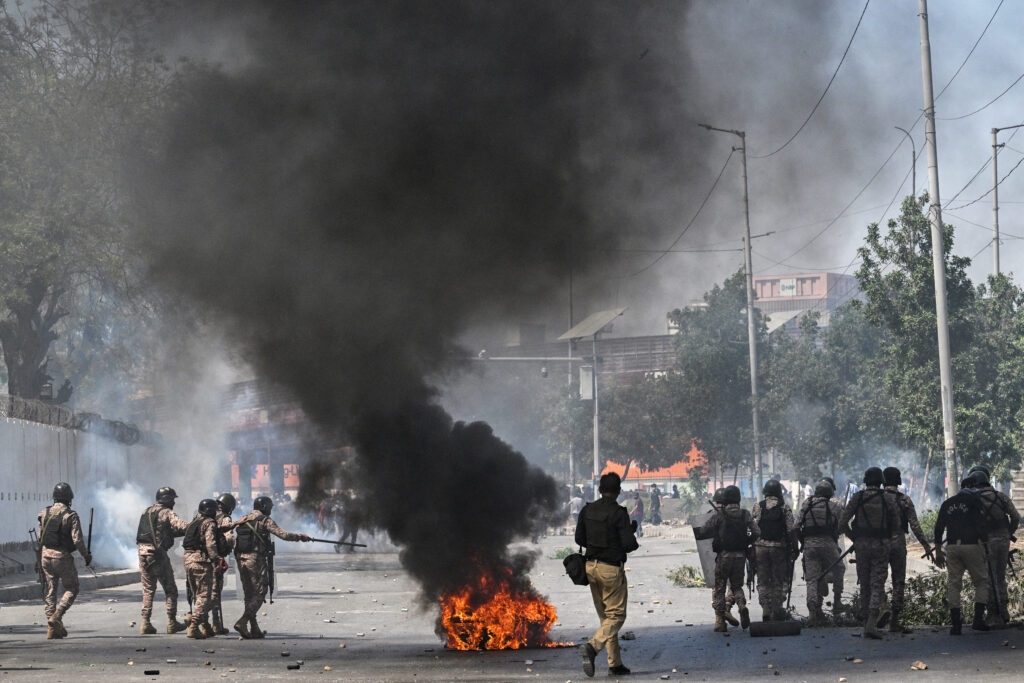
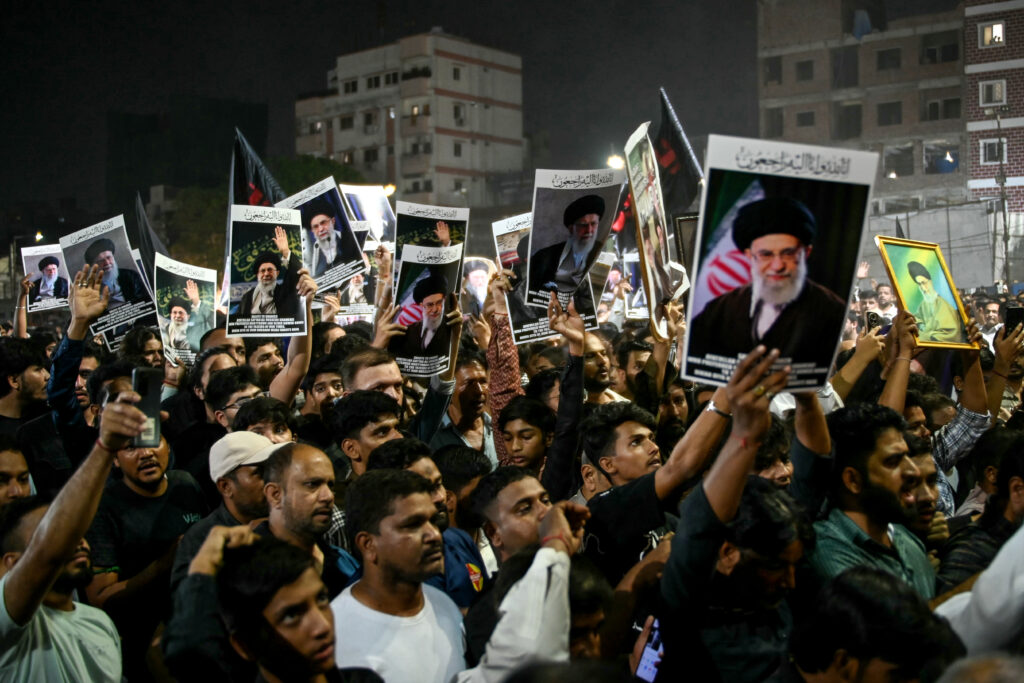
Cheers and mourning in Iran. Euphoric celebrations against the Iranian regime and angry protests against the war. Uncertainty about what comes next.The world greeted with jubilation, anger or trepidation the news Sunday that Iran’s supreme leader Ayatollah Ali Khamenei had been killed in the US-Israeli strikes on the Islamic republic one day earlier.- Music in Tehran -Iranians took to the streets cheering with joy, setting off fireworks and playing celebratory music after reports of Khamenei’s death, according to witnesses and video footage verified by AFP. The celebrations in Tehran began shortly after 11:00 pm (1930 GMT), according to multiple witnesses and audio recordings.People were not, however, coming out en masse to celebrate, according to social media.Many Iranians were fearful after the deadly crackdown on mass anti-government protests in January. – Mourning in Tehran -The thousands who did gather in the centre of Iran’s capital were instead mourning Khamenei’s death, according to AFP journalists.The mourners, dressed mostly in black and some crying, chanted “death to America” and “death to Israel” in Enghelab (Revolution) Square, with many waving Iran’s flags and holding photos of Khamenei.Iran’s President Masoud Pezeshkian on Sunday branded Khamenei’s killing a “declaration of war against Muslims” by Israel and the United States. Iran’s powerful Revolutionary Guards vowed earlier on Sunday to punish Khamenei’s “murderers”.- Deadly protests -At least 17 people were killed across Pakistan as hundreds of pro-Iranian protesters tried to storm US diplomatic buildings Sunday.Prime Minister Shehbaz Sharif, who has close ties to both the United States and Iran, called Khamenei’s killing a “violation” of international law.”It is an age old convention that the Heads of States/Government should not be targeted,” he wrote on X, sending his “most sincere condolence on the martyrdom” of Khamenei.Hundreds of Iraqis also attempted Sunday to storm Baghdad’s fortified Green Zone, where the US embassy is located, an AFP journalist reported.Protests also took place in Srinagar, in Indian-administered Kashmir.In Istanbul, protesters carried portraits of Khamenei as they marched against the war, with some burning posters of US President Donald Trump and Israeli Prime Minister Benjamin Netanyahu.Turkey’s President Recep Tayyip Erdogan said he was “saddened” by the ayatollah’s death, and extended his sympathies to the Iranian people.In Seoul, South Korea, protesters held “Hands off Iran” signs in front of the US embassy.Similar protests took place in Hyderabad in India and in Athens, Greece.- ‘Free Iran’ -Jubilant Iranians took to the streets in Europe and the United States to cheer Khamenei’s death.In Los Angeles, home to a massive Iranian diaspora, singing and ululating marchers carried flags of shah-era Iran and posters bearing Trump’s image, with some wearing “Free Iran” shirts.There were marches in Germany, Belgium, the Netherlands and in Paris, with participants waving pre-Islamic revolution Iranian flags and some holding placards with photos of the late shah’s son, Reza Pahlavi.In the French capital, one woman who was born in Iran and moved to France in 1980, called Khamenei’s death “the beginning of the end”.”I have high hopes for the Crown Prince (Pahlavi) because I think he is the most suited to lead the transition,” said Suiz Ziai.”Obviously, it is up to the Iranians to decide but for now, everything is starting off very well.”- ‘Serious violation ‘ -China said Sunday the killing was “a serious violation of Iran’s sovereignty and security, a trampling on the aims and principles of the UN Charter and the basic norms of international relations”.”China firmly opposes and strongly condemns this,” Beijing’s foreign ministry statement added in a statement, calling for “immediate halting of military operations”. – ‘Cynical violation’ -Russian President Vladimir Putin, a key ally of Tehran, on Sunday slammed Khamenei’s killing as a “a cynical violation of all norms of human morality and international law”.In a letter to Pezeshkian published by the Kremlin, Putin also expressed his “deepest condolences for the assassination”.- ‘Most evil’ -“Khamenei, one of the most evil people in History, is dead,” US President Donald Trump said, announcing the killing on his Truth Social network late Saturday.The killing “is the single greatest chance for the Iranian people to take back their country,” Trump said.- ‘Cruel tyrant’ -Israeli Prime Minister Benjamin Netanyahu also called for Iranians to “overthrow the regime” after Khamenei’s killing.”For more than three and a half decades, this cruel tyrant has spread terror across the world while oppressing his own people, while working tirelessly and without pause on a plan to destroy Israel,” he said in a televised statement.- ‘Irreparable chasm’ -Pope Leo XIV on Sunday called for an end to the “spiral of violence before it becomes an irreparable chasm,” speaking to a crowd in St Peter’s Square.- ‘Hope’ -A nephew of Khamenei, a France-based doctor opposed to the Islamic republic, welcomed his uncle’s death.”Like most Iranians, I am happy,” Mahmoud Moradkhani, the son of one of Khamenei’s sisters, said by telephone from his home in northern France.”I think it’s a step forward, a hope,” he said, predicting that the government was unlikely to survive.The exiled son of Iran’s last shah called for Iranians to stage nightly protests to help overthrow the government.Reza Pahlavi, 65, also urged the “remaining officials of this republic of terror” to hand over power without bloodshed, in a post on X.- ‘Defining moment’ -EU chief Ursula von der Leyen called for a “credible transition” while the bloc’s foreign policy chief Kaja Kallas said the killing was a “defining moment”.”What comes next is uncertain. But there is now an open path to a different Iran, one that its people may have greater freedom to shape,” Kallas wrote on X.Chancellor Friedrich Merz said Germany shared Iranians’ “relief” to see the “mullah regime come to an end” but cautioned that Khamenei’s death had set the country on a path to an “uncertain future”.- ‘Bloodthirsty dictator’ -UK Defence Secretary John Healey said Sunday that “few people will mourn” Khamenei, echoing Australian Prime Minister Anthony Albanese.French government spokeswoman Maud Bregeon likewise said that France “could only be satisfied with his demise”, calling him a “bloodthirsty dictator”.- ‘Head of the snake’ -Israelis celebrated the death of Khamenei, a sworn enemy of Israel who called the nation “a malign tumour that must be eradicated”.”When you cut off the head of the snake, the snake can no longer rise again,” Moti Arad, a lawyer in Tel Aviv, told AFP.The word “hussal,” meaning “eliminated” in Hebrew, featured on almost major media, the killing marking a rare point of consensus in Israel’s polarised political landscape.- ‘Heinous’ attack -Iran’s ally Hamas on Sunday mourned Khamenei. “The US and the fascist occupation government bear full responsibility for this blatant aggression and heinous crime,” the Palestinian Islamist group said. Fellow Iran proxy Hezbollah likewise vowed to “undertake our duty of confronting the aggression” of Israel and the US.burs-phz/jj