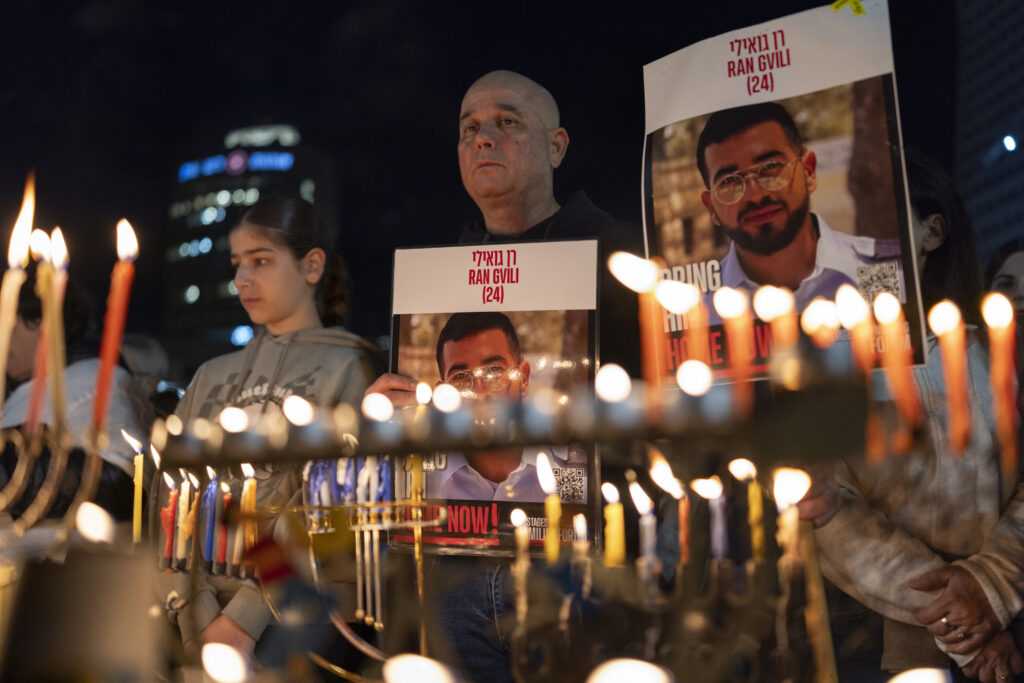
Ran Gvili, a young Israeli police officer, was on medical leave when Hamas launched its deadly attack on Israel on October 7, 2023.Instead of staying home, the 24-year-old grabbed his gun and raced toward the area of the attack in southern Israel, where he fought until his last bullet.Nicknamed the “Defender of Alumim” by his family and the kibbutz of that name, Gvili was killed in combat near the community and his body taken to Gaza by Hamas militants.Before his remains were returned on Monday, he was the last of the 251 people abducted during the assault on Israel still held in Gaza.Upon his arrival at a military base near Gaza, his father Ytzik Gvili said: “I’m proud of you my son.”Israeli Prime Minister Benjamin Netanyahu described him as “a hero of Israel”, saying he “fought not only with a broken arm, he was shot, twice, and he kept fighting, and he killed 14 terrorists alone, and then he died”.A motorcycle enthusiast and non-commissioned officer in the elite Yassam unit of the Israeli police in the Negev desert region, Gvili was on medical leave and living with his parents in the town of Meitar ahead of a shoulder surgery, according to his family.It was then that he heard of the attack.Gvili drove towards the onslaught and joined his unit to fight the attackers — his team was highly outnumbered as they faced about 40 Hamas fighters.”We were both wounded,” recalled Colonel Guy Madar, who was fighting alongside Gvili outside Alumim, the site of fierce combat.- ‘First to help’ -Madar was the last person to see Gvili alive before they got separated.It took several months before Israeli authorities informed his parents in January 2024 that the young officer had been killed on that day and that his body had been taken to Gaza.”He ran to help, to save people… even though he was already injured before October 7,” his father told AFP in December, referring to Gvili’s shoulder injury.”But that was Rani — always running forward, the first to help and the first to jump in.””He fought until the last bullet and then he was taken hostage,” added Talik Gvili, his mother.A man of many skills, Gvili had been using his medical leave to carry out renovation work at the family home.His father recalled seeing him working outside the house with a Palestinian labourer from Gaza just days before the Hamas attack.”In a way, it fits him, to be the one to stay behind,” Talik Gvili, a lawyer, has repeatedly said at events held across the country calling for her son’s return before the implementation of phase two of the US-backed truce plan for Gaza.His family had steadfastly opposed the reopening of the Rafah crossing between Egypt and Gaza until his remains were returned.Emmanuel Ohayon, a close friend of Gvili, described him as “a man of great physical presence, but also gentle and kind”.”When he entered a room, you felt his presence, not because of his size, but because he knew how to be there for everyone,” Ohayon said Saturday evening at a weekly gathering in Meitar.
Ran Gvili, a young Israeli police officer, was on medical leave when Hamas launched its deadly attack on Israel on October 7, 2023.Instead of staying home, the 24-year-old grabbed his gun and raced toward the area of the attack in southern Israel, where he fought until his last bullet.Nicknamed the “Defender of Alumim” by his family and the kibbutz of that name, Gvili was killed in combat near the community and his body taken to Gaza by Hamas militants.Before his remains were returned on Monday, he was the last of the 251 people abducted during the assault on Israel still held in Gaza.Upon his arrival at a military base near Gaza, his father Ytzik Gvili said: “I’m proud of you my son.”Israeli Prime Minister Benjamin Netanyahu described him as “a hero of Israel”, saying he “fought not only with a broken arm, he was shot, twice, and he kept fighting, and he killed 14 terrorists alone, and then he died”.A motorcycle enthusiast and non-commissioned officer in the elite Yassam unit of the Israeli police in the Negev desert region, Gvili was on medical leave and living with his parents in the town of Meitar ahead of a shoulder surgery, according to his family.It was then that he heard of the attack.Gvili drove towards the onslaught and joined his unit to fight the attackers — his team was highly outnumbered as they faced about 40 Hamas fighters.”We were both wounded,” recalled Colonel Guy Madar, who was fighting alongside Gvili outside Alumim, the site of fierce combat.- ‘First to help’ -Madar was the last person to see Gvili alive before they got separated.It took several months before Israeli authorities informed his parents in January 2024 that the young officer had been killed on that day and that his body had been taken to Gaza.”He ran to help, to save people… even though he was already injured before October 7,” his father told AFP in December, referring to Gvili’s shoulder injury.”But that was Rani — always running forward, the first to help and the first to jump in.””He fought until the last bullet and then he was taken hostage,” added Talik Gvili, his mother.A man of many skills, Gvili had been using his medical leave to carry out renovation work at the family home.His father recalled seeing him working outside the house with a Palestinian labourer from Gaza just days before the Hamas attack.”In a way, it fits him, to be the one to stay behind,” Talik Gvili, a lawyer, has repeatedly said at events held across the country calling for her son’s return before the implementation of phase two of the US-backed truce plan for Gaza.His family had steadfastly opposed the reopening of the Rafah crossing between Egypt and Gaza until his remains were returned.Emmanuel Ohayon, a close friend of Gvili, described him as “a man of great physical presence, but also gentle and kind”.”When he entered a room, you felt his presence, not because of his size, but because he knew how to be there for everyone,” Ohayon said Saturday evening at a weekly gathering in Meitar.