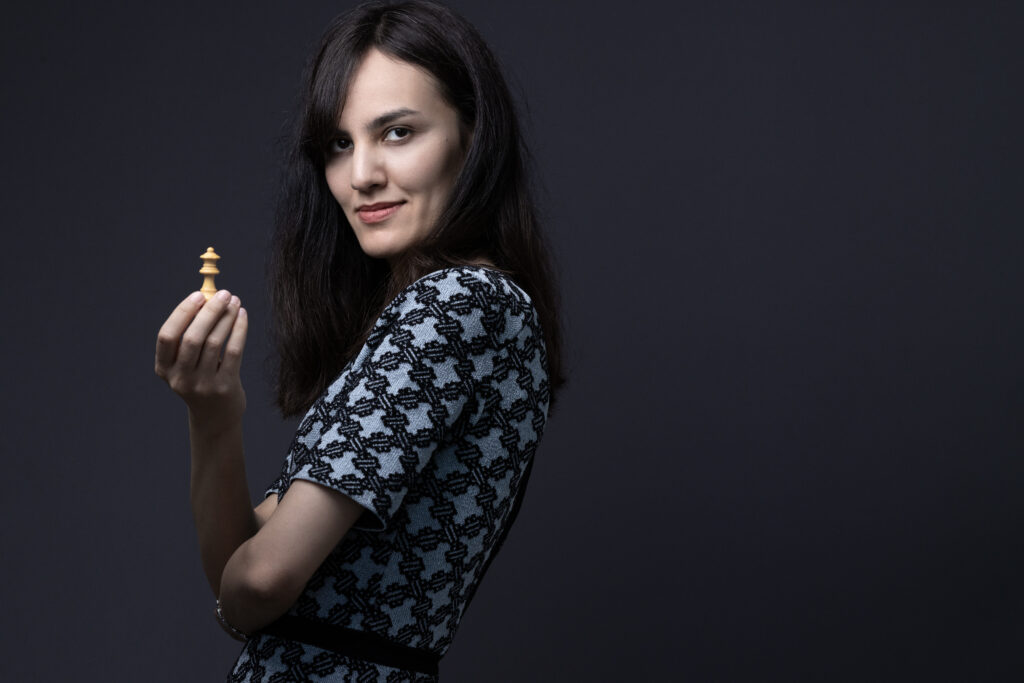
Like other exiled Iranians, chess champion Mitra Hejazipour has been scouring social media for news about anti-government protests in her homeland and battling to reach friends and family through an ongoing internet shutdown.The 32-year-old is one of the greatest chess players Iran has ever produced, but she fled to France five years ago after removing her mandatory headscarf during a competition in Moscow.Speaking to AFP in Paris to promote her autobiography, Hejazipour said recent events had been “highly distressing” amid a brutal crackdown on protests which monitoring groups estimate has cost the lives of thousands of people. “I haven’t been able to reach my family in Iran for ten days because the internet and phone service are cut off,” she explained. “But I managed to speak to a friend who works in a hospital. She told me there were many gunshot wounds, especially to the eyes. And many deaths. She was so depressed she found it hard to talk about it,” she added.She added that it was “very hard to sleep or eat. But we’re hanging in there,” driven by hope that “the sacrifice of Iranians” will not be in vain. The protests were sparked by economic strain in late December and have exploded into the biggest challenge to the Iranian leadership in years, with the full scale of the violent crackdown yet to emerge. Rights groups say they have verified at least several thousand protesters killed by Iranian security forces, with some estimates putting the figure as high as 20,000 dead. – ‘Wretched country’ -Since fleeing Iran, Hejazipour has gone on to gain French nationality, becoming national champion in 2023 and helping the French to third place at the world team championships in the same year.She believes that the days are numbered for the Iranian Islamic Republic because “the Iranian people are increasingly mobilised and angry.” “It could be tomorrow, or in a year, but I’m sure the regime will fall soon. It can’t go on like this,” she added. She sees Reza Pahlavi, the son of the former shah, who lives in exile in the United States, as the “unifying figure” who “can accompany the Iranian people in the transition and the establishment of a democratic system.” “Every day, when I wake up, I turn on my phone hoping that (Supreme Leader Ali) Khamenei is dead, that the regime has fallen, and that we can return to a free Iran,” she added. In her book “The Chess Player”, which releases in French this week, Hejazipour recounts her childhood in Mashhad, Iran’s second-largest city, and her life as a chess prodigy.She started playing aged six with her father. “I sensed very early on that chess would be a balm to soothe my sorrow, my shield against life’s uncertainties,” she writes. But one day in 2019, “I knew I had to leave Iran, that wretched country where I no longer felt at home.” “I imagined tearing off my veil, trampling it, ripping it, burning it,” she writes — which she did at the World Championship in Moscow in December 2019. “I was warmly welcomed in France and met wonderful people, but it’s not easy to rebuild your life in anonymity when I was known in Iran,” she told AFP. Now living in Paris, she has founded a charity to encourage more women to take up chess as “a tool of empowerment.”
Like other exiled Iranians, chess champion Mitra Hejazipour has been scouring social media for news about anti-government protests in her homeland and battling to reach friends and family through an ongoing internet shutdown.The 32-year-old is one of the greatest chess players Iran has ever produced, but she fled to France five years ago after removing her mandatory headscarf during a competition in Moscow.Speaking to AFP in Paris to promote her autobiography, Hejazipour said recent events had been “highly distressing” amid a brutal crackdown on protests which monitoring groups estimate has cost the lives of thousands of people. “I haven’t been able to reach my family in Iran for ten days because the internet and phone service are cut off,” she explained. “But I managed to speak to a friend who works in a hospital. She told me there were many gunshot wounds, especially to the eyes. And many deaths. She was so depressed she found it hard to talk about it,” she added.She added that it was “very hard to sleep or eat. But we’re hanging in there,” driven by hope that “the sacrifice of Iranians” will not be in vain. The protests were sparked by economic strain in late December and have exploded into the biggest challenge to the Iranian leadership in years, with the full scale of the violent crackdown yet to emerge. Rights groups say they have verified at least several thousand protesters killed by Iranian security forces, with some estimates putting the figure as high as 20,000 dead. – ‘Wretched country’ -Since fleeing Iran, Hejazipour has gone on to gain French nationality, becoming national champion in 2023 and helping the French to third place at the world team championships in the same year.She believes that the days are numbered for the Iranian Islamic Republic because “the Iranian people are increasingly mobilised and angry.” “It could be tomorrow, or in a year, but I’m sure the regime will fall soon. It can’t go on like this,” she added. She sees Reza Pahlavi, the son of the former shah, who lives in exile in the United States, as the “unifying figure” who “can accompany the Iranian people in the transition and the establishment of a democratic system.” “Every day, when I wake up, I turn on my phone hoping that (Supreme Leader Ali) Khamenei is dead, that the regime has fallen, and that we can return to a free Iran,” she added. In her book “The Chess Player”, which releases in French this week, Hejazipour recounts her childhood in Mashhad, Iran’s second-largest city, and her life as a chess prodigy.She started playing aged six with her father. “I sensed very early on that chess would be a balm to soothe my sorrow, my shield against life’s uncertainties,” she writes. But one day in 2019, “I knew I had to leave Iran, that wretched country where I no longer felt at home.” “I imagined tearing off my veil, trampling it, ripping it, burning it,” she writes — which she did at the World Championship in Moscow in December 2019. “I was warmly welcomed in France and met wonderful people, but it’s not easy to rebuild your life in anonymity when I was known in Iran,” she told AFP. Now living in Paris, she has founded a charity to encourage more women to take up chess as “a tool of empowerment.”