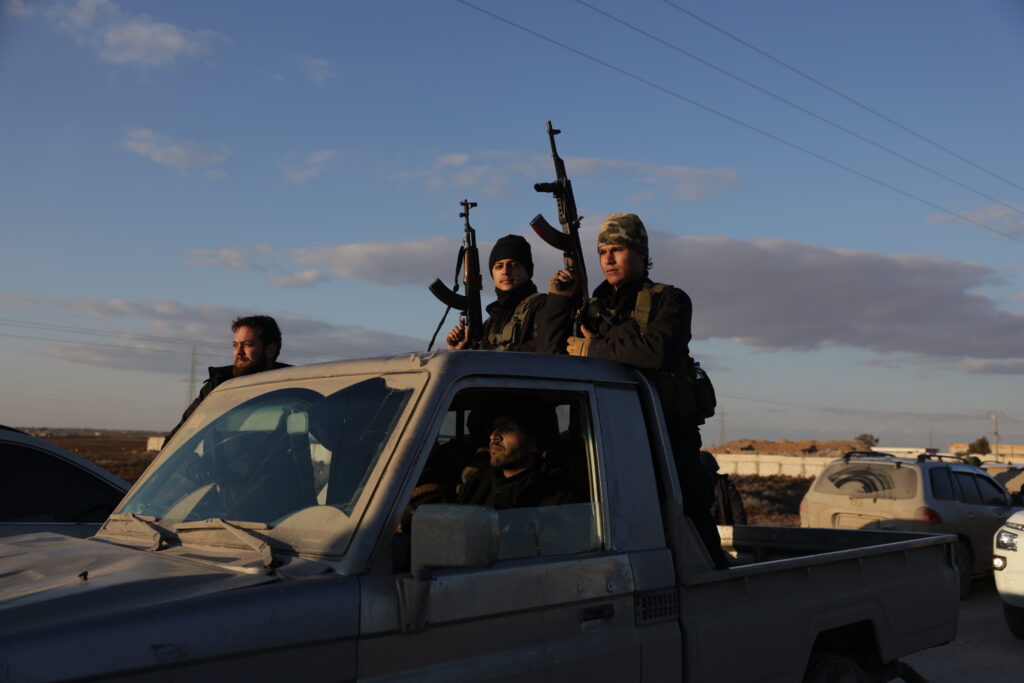
Syria’s army deployed in formerly Kurdish-led areas in the country’s east and north on Monday after a ceasefire announced a day earlier, as Syria’s president and the Kurds’ leader were to hold talks.The leader of the Syrian Kurdish forces said Sunday he agreed to the deal with Damascus to avoid broader war, integrating the Kurds’ administration and his fighters into the state after months of stalled negotiations.Despite the deal, the government and the US-backed, Kurdish-led Syrian Democratic Forces (SDF) traded blame Monday for fresh attacks the military said killed three soldiers, as well as accusations over the fate of Islamic State (IS) group prisoners in Kurdish-run jails.Syrian President Ahmed al-Sharaa announced the accord with SDF chief Mazloum Abdi following two days of rapid gains in Kurdish-controlled territory, after the army pushed the Kurdish fighters out of Aleppo city earlier this month.Analysts said the deal marked a blow for the minority’s long-held ambitions of preserving the de facto autonomy they had exercised in swathes of north and northeast Syria for over a decade.In Deir Ezzor province in the country’s east, an AFP correspondent saw dozens of military vehicles heading to the east of the Euphrates River, while trucks, cars and pedestrians lined up at a small bridge leading to the eastern bank.Driver Mohammed Khalil, 50, said he was overjoyed by the army’s arrival.”We hope things will be better than before. There was… no freedom” under the SDF, he told AFP.Teacher Safia Keddo, 49, said that “we’re not asking for a miracle, we just want stability and a normal life.”- ‘Protecting civilian lives’ -The agreement included the Kurdish administration’s immediate handover of Arab-majority Deir Ezzor and Raqa provinces to the government, which will also take responsibility for IS prisoners and their families held in Kurdish-run jails and camps.The SDF had seized swathes of the provinces as they expelled the jihadists during Syria’s civil war with the support of an international coalition led by the United States.A defence ministry map released by state media on Monday showed the government controlled all of Deir Ezzor and Raqa provinces, while the eastern parts of Hasakeh province were still under Kurdish control.An AFP correspondent in Raqa said security forces deployed in the main square while a military convoy passed through the city as sporadic gunfire rang out, and residents toppled a statue of a woman erected by Kurdish forces.Raqa resident Khaled al-Afnan, 34, said “we support Kurdish civil rights… but we don’t support them having a military role.””This deal is important for protecting civilian lives,” he told AFP.The army and the SDF traded accusations of carrying out several attacks, while authorities announced a curfew in Hasakeh province’s Shadadi after the army said the SDF released IS detainees from the town’s prison.The Kurds instead accused Damascus of attacking the facility and said it had “fallen outside the control of our forces”.AFP was unable to immediately verify the claims.An interior ministry statement expressed readiness to “take over the management and security” of IS prisons in Hasakeh and for “direct coordination with the US side” to prevent the return of “terrorism”.- ‘Serious doubts’ -Turkish President Recep Tayyip Erdogan, a close ally of Damascus who is hostile to the SDF, hailed the Syrian army for its “careful” offensive despite what he called “provocations”. The SDF on Sunday withdrew from areas under its control in the eastern Deir Ezzor countryside, including the Al-Omar oil field, the country’s largest, and the Tanak field.Local fighters from tribes in the Arab-majority province sided with Damascus and seized the areas before the arrival of government forces.Some Arab tribes were previously allied with the SDF, which included a significant Arab component. An energy ministry official told state television on Monday that technical teams were heading to recently taken oil facilities to assess their condition.The SDF’s Abdi said Sunday he agreed to the deal to avoid civil war and end a conflict “imposed” on the Kurds.Mutlu Civiroglu, a Washington-based analyst and expert on the Kurds, said the government’s advance had raised “serious doubts about the durability” of the ceasefire and a March agreement between the government and the Kurds.Sharaa had on Friday issued a decree granting the Kurds official recognition, but the Kurds said it fell short of their expectations.In Qamishli, the main Kurdish city in the country’s northeast, activist Hevi Ahmed, 40, said Sunday’s deal was “a disappointment after years of hope that the Syrian constitution might contain a better future for the Kurds.”
Syria’s army deployed in formerly Kurdish-led areas in the country’s east and north on Monday after a ceasefire announced a day earlier, as Syria’s president and the Kurds’ leader were to hold talks.The leader of the Syrian Kurdish forces said Sunday he agreed to the deal with Damascus to avoid broader war, integrating the Kurds’ administration and his fighters into the state after months of stalled negotiations.Despite the deal, the government and the US-backed, Kurdish-led Syrian Democratic Forces (SDF) traded blame Monday for fresh attacks the military said killed three soldiers, as well as accusations over the fate of Islamic State (IS) group prisoners in Kurdish-run jails.Syrian President Ahmed al-Sharaa announced the accord with SDF chief Mazloum Abdi following two days of rapid gains in Kurdish-controlled territory, after the army pushed the Kurdish fighters out of Aleppo city earlier this month.Analysts said the deal marked a blow for the minority’s long-held ambitions of preserving the de facto autonomy they had exercised in swathes of north and northeast Syria for over a decade.In Deir Ezzor province in the country’s east, an AFP correspondent saw dozens of military vehicles heading to the east of the Euphrates River, while trucks, cars and pedestrians lined up at a small bridge leading to the eastern bank.Driver Mohammed Khalil, 50, said he was overjoyed by the army’s arrival.”We hope things will be better than before. There was… no freedom” under the SDF, he told AFP.Teacher Safia Keddo, 49, said that “we’re not asking for a miracle, we just want stability and a normal life.”- ‘Protecting civilian lives’ -The agreement included the Kurdish administration’s immediate handover of Arab-majority Deir Ezzor and Raqa provinces to the government, which will also take responsibility for IS prisoners and their families held in Kurdish-run jails and camps.The SDF had seized swathes of the provinces as they expelled the jihadists during Syria’s civil war with the support of an international coalition led by the United States.A defence ministry map released by state media on Monday showed the government controlled all of Deir Ezzor and Raqa provinces, while the eastern parts of Hasakeh province were still under Kurdish control.An AFP correspondent in Raqa said security forces deployed in the main square while a military convoy passed through the city as sporadic gunfire rang out, and residents toppled a statue of a woman erected by Kurdish forces.Raqa resident Khaled al-Afnan, 34, said “we support Kurdish civil rights… but we don’t support them having a military role.””This deal is important for protecting civilian lives,” he told AFP.The army and the SDF traded accusations of carrying out several attacks, while authorities announced a curfew in Hasakeh province’s Shadadi after the army said the SDF released IS detainees from the town’s prison.The Kurds instead accused Damascus of attacking the facility and said it had “fallen outside the control of our forces”.AFP was unable to immediately verify the claims.An interior ministry statement expressed readiness to “take over the management and security” of IS prisons in Hasakeh and for “direct coordination with the US side” to prevent the return of “terrorism”.- ‘Serious doubts’ -Turkish President Recep Tayyip Erdogan, a close ally of Damascus who is hostile to the SDF, hailed the Syrian army for its “careful” offensive despite what he called “provocations”. The SDF on Sunday withdrew from areas under its control in the eastern Deir Ezzor countryside, including the Al-Omar oil field, the country’s largest, and the Tanak field.Local fighters from tribes in the Arab-majority province sided with Damascus and seized the areas before the arrival of government forces.Some Arab tribes were previously allied with the SDF, which included a significant Arab component. An energy ministry official told state television on Monday that technical teams were heading to recently taken oil facilities to assess their condition.The SDF’s Abdi said Sunday he agreed to the deal to avoid civil war and end a conflict “imposed” on the Kurds.Mutlu Civiroglu, a Washington-based analyst and expert on the Kurds, said the government’s advance had raised “serious doubts about the durability” of the ceasefire and a March agreement between the government and the Kurds.Sharaa had on Friday issued a decree granting the Kurds official recognition, but the Kurds said it fell short of their expectations.In Qamishli, the main Kurdish city in the country’s northeast, activist Hevi Ahmed, 40, said Sunday’s deal was “a disappointment after years of hope that the Syrian constitution might contain a better future for the Kurds.”