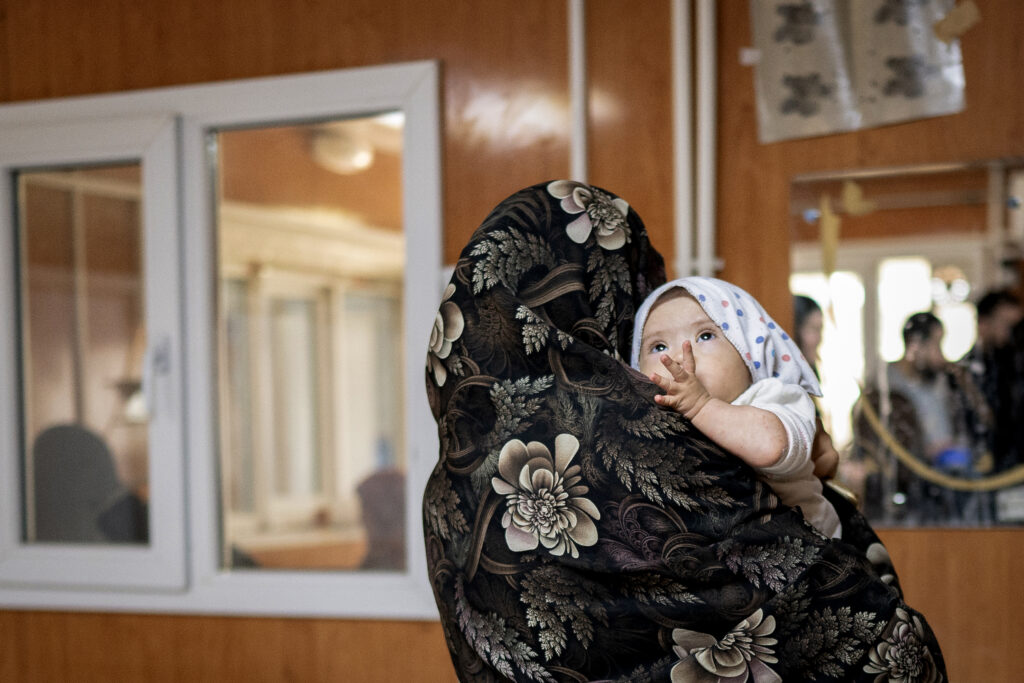
A worsening malnutrition crisis is having dire effects on women and girls in Afghanistan who are failed by the international community, the World Food Programme’s top official in the country told AFP.The UN agency supplies most of the food aid to Afghanistan, which has been run by Taliban officials since 2021.While aid donations have been slashed over the past couple of years, the Afghan government has faced criticism from abroad for banning women from most professions and blocking girls from attending school beyond the age of 12.John Aylieff, director for Afghanistan at the World Food Programme (WFP), spoke to AFP about the “heartbreaking” struggle to feed families.- What do you expect to happen this year? -“In the next 12 months, five million women and children in this country will experience acute malnutrition, the life-threatening type of malnutrition,” he said, out of a population of more than 40 million.”Nearly four million children in this country will need malnutrition treatment. These numbers are staggering.”- What’s the impact of funding cuts? -“I think we are, as an international community, abandoning and letting down the very people, women and children in particular, that we pledged to protect,” he said, following “immensely generous” funding in 2021 and 2022.”But since then, funding to Afghanistan has been cut and cut further and cut further,” said Aylieff, with $600 million in donations to WFP for 2024 halved last year.”If we can’t treat children with malnutrition, those children are going to die. Clinics treating children with malnutrition are closing down.””When those women carry their child, maybe four or five hours to the clinic, and they get there and they’re told WFP simply does not have the money to treat your child anymore — this is heartbreaking.”- What are the consequences for women? -“One of the phenomena which has surprised us the most this year (2025) is the dramatic surge in the number of pregnant and breastfeeding women who are malnourished,” said Aylieff.”They’re not getting the food assistance that would otherwise be helping them. Those women are also sacrificing their own health and their own nutrition to feed their children. Many of them just don’t know how to cope.””In areas where we’ve stopped assisting as WFP, we’re seeing girls being sold off into early marriage just so their families can put food on the table. We’re seeing children being pulled out of school and sent to work.””And we’re getting an increasing number of distress calls to WFP from very desperate women across the country, including some suicide calls.””This is very harrowing.”
A worsening malnutrition crisis is having dire effects on women and girls in Afghanistan who are failed by the international community, the World Food Programme’s top official in the country told AFP.The UN agency supplies most of the food aid to Afghanistan, which has been run by Taliban officials since 2021.While aid donations have been slashed over the past couple of years, the Afghan government has faced criticism from abroad for banning women from most professions and blocking girls from attending school beyond the age of 12.John Aylieff, director for Afghanistan at the World Food Programme (WFP), spoke to AFP about the “heartbreaking” struggle to feed families.- What do you expect to happen this year? -“In the next 12 months, five million women and children in this country will experience acute malnutrition, the life-threatening type of malnutrition,” he said, out of a population of more than 40 million.”Nearly four million children in this country will need malnutrition treatment. These numbers are staggering.”- What’s the impact of funding cuts? -“I think we are, as an international community, abandoning and letting down the very people, women and children in particular, that we pledged to protect,” he said, following “immensely generous” funding in 2021 and 2022.”But since then, funding to Afghanistan has been cut and cut further and cut further,” said Aylieff, with $600 million in donations to WFP for 2024 halved last year.”If we can’t treat children with malnutrition, those children are going to die. Clinics treating children with malnutrition are closing down.””When those women carry their child, maybe four or five hours to the clinic, and they get there and they’re told WFP simply does not have the money to treat your child anymore — this is heartbreaking.”- What are the consequences for women? -“One of the phenomena which has surprised us the most this year (2025) is the dramatic surge in the number of pregnant and breastfeeding women who are malnourished,” said Aylieff.”They’re not getting the food assistance that would otherwise be helping them. Those women are also sacrificing their own health and their own nutrition to feed their children. Many of them just don’t know how to cope.””In areas where we’ve stopped assisting as WFP, we’re seeing girls being sold off into early marriage just so their families can put food on the table. We’re seeing children being pulled out of school and sent to work.””And we’re getting an increasing number of distress calls to WFP from very desperate women across the country, including some suicide calls.””This is very harrowing.”