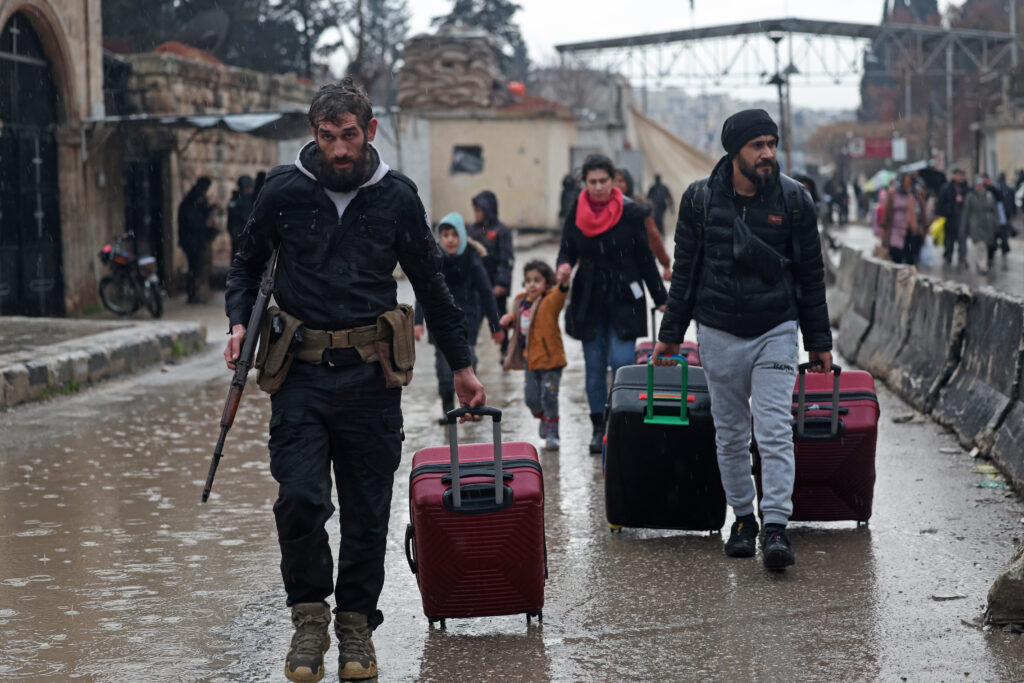
The Syrian army said on Saturday that it was halting military operations in an Aleppo neighbourhood following days of clashes, but Kurdish forces there maintained they were still under attack, with an AFP correspondent nearby reporting sporadic gunfire.The violence in Syria’s second city erupted after efforts to integrate the Kurds’ de facto autonomous administration and military into the country’s new government stalled.Since the fighting began on Tuesday, at least 21 civilians have been killed, according to figures from both sides, while Aleppo’s governor said 155,000 people have been displaced. In a statement to the official SANA news agency, the military announced “a halt to all military operations in the Sheikh Maqsud neighbourhood” from 3:00 pm (1200 GMT) Saturday, adding that Kurdish forces there would be “transferred” to the Kurdish-controlled city of Tabaqa in northeastern Syria.But the Kurdish forces said their fighters were still repelling a “fierce attack”, and called the army statement “a blatant attempt to mislead public opinion”.Government forces began striking the district overnight after a deadline elapsed for Kurdish fighters to withdraw during a ceasefire.Syria’s army said earlier on Saturday that it had completed a “security sweep” of Sheikh Maqsud, while urging residents to stay in their homes due to the continued presence of Kurdish fighters.The Kurdish forces, however, said claims that the government now controlled the vast majority of the neighbourhood were “false and misleading”.- Residents waiting to return -At the entrance to the district, 60-year-old resident Imad al-Ahmad waited for permission from the security forces to return home. “I left four days ago… I took refuge at my sister’s house,” he told AFP. “I don’t know if we’ll be able to return today.” Nahed Mohammad Qassab, a 40-year-old widow also waiting to return, said she left before the fighting to attend a funeral. “My three children are still inside, at my neighbour’s house. I want to get them out,” she said. The clashes, some of the most intense since Syria’s new Islamist authorities took power, present yet another challenge as the country struggles to forge a new path after the ousting of longtime ruler Bashar al-Assad in December 2024.Both sides have blamed the other for starting the violence in Aleppo.- ‘Fierce’ resistance -Kurdish forces earlier reported coming under artillery and drone attacks, and claimed on social media to be mounting a “fierce and ongoing resistance”.The army said three soldiers had been killed by Kurdish fighters, while state television accused them of launching drones at residential areas of Aleppo.A flight suspension at Aleppo airport was extended until late Saturday.The Kurdish-led Syrian Democratic Forces (SDF) control swathes of the country’s oil-rich north and northeast, and were key to the 2019 territorial defeat of the Islamic State group. But Turkey, a close ally of neighbouring Syria’s new leaders, views its main component as an extension of the Kurdistan Workers’ Party (PKK), which agreed last year to end its four-decade armed struggle against Ankara.Turkey has launched successive offensives to push Kurdish forces from the frontier.Elham Ahmad, a senior official in the Kurdish administration in Syria’s northeast, accused Syrian authorities of “choosing the path of war” by attacking Kurdish districts and of “seeking to put an end to the agreements that have been reached”.”We are committed to them and we are seeking to implement them,” she told AFP.The March integration agreement was meant to be implemented last year, but differences, including Kurdish demands for decentralised rule, have stymied progress.US envoy Tom Barrack said Saturday he had discussed the situation with Jordan’s foreign minister, with both parties expressing a desire for “consolidating the ceasefire, ensuring the peaceful withdrawal of the Syrian Democratic Forces (SDF) from Aleppo, and guaranteeing” civilians’ safety.They also called for the implementation of the integration agreement.Ahmad welcomed on X a proposal by international mediators to evacuate the Kurdish forces from Sheikh Maqsud, but on condition that the local Kurdish population is protected. Nanar Hawach, senior Syria analyst at the International Crisis Group, said the renewed clashes cast doubt on the government’s ability to sew the country back together after 14 years of civil war.Syria’s authorities have committed to protecting minorities, but sectarian bloodshed rocked the Alawite and Druze communities last year.
The Syrian army said on Saturday that it was halting military operations in an Aleppo neighbourhood following days of clashes, but Kurdish forces there maintained they were still under attack, with an AFP correspondent nearby reporting sporadic gunfire.The violence in Syria’s second city erupted after efforts to integrate the Kurds’ de facto autonomous administration and military into the country’s new government stalled.Since the fighting began on Tuesday, at least 21 civilians have been killed, according to figures from both sides, while Aleppo’s governor said 155,000 people have been displaced. In a statement to the official SANA news agency, the military announced “a halt to all military operations in the Sheikh Maqsud neighbourhood” from 3:00 pm (1200 GMT) Saturday, adding that Kurdish forces there would be “transferred” to the Kurdish-controlled city of Tabaqa in northeastern Syria.But the Kurdish forces said their fighters were still repelling a “fierce attack”, and called the army statement “a blatant attempt to mislead public opinion”.Government forces began striking the district overnight after a deadline elapsed for Kurdish fighters to withdraw during a ceasefire.Syria’s army said earlier on Saturday that it had completed a “security sweep” of Sheikh Maqsud, while urging residents to stay in their homes due to the continued presence of Kurdish fighters.The Kurdish forces, however, said claims that the government now controlled the vast majority of the neighbourhood were “false and misleading”.- Residents waiting to return -At the entrance to the district, 60-year-old resident Imad al-Ahmad waited for permission from the security forces to return home. “I left four days ago… I took refuge at my sister’s house,” he told AFP. “I don’t know if we’ll be able to return today.” Nahed Mohammad Qassab, a 40-year-old widow also waiting to return, said she left before the fighting to attend a funeral. “My three children are still inside, at my neighbour’s house. I want to get them out,” she said. The clashes, some of the most intense since Syria’s new Islamist authorities took power, present yet another challenge as the country struggles to forge a new path after the ousting of longtime ruler Bashar al-Assad in December 2024.Both sides have blamed the other for starting the violence in Aleppo.- ‘Fierce’ resistance -Kurdish forces earlier reported coming under artillery and drone attacks, and claimed on social media to be mounting a “fierce and ongoing resistance”.The army said three soldiers had been killed by Kurdish fighters, while state television accused them of launching drones at residential areas of Aleppo.A flight suspension at Aleppo airport was extended until late Saturday.The Kurdish-led Syrian Democratic Forces (SDF) control swathes of the country’s oil-rich north and northeast, and were key to the 2019 territorial defeat of the Islamic State group. But Turkey, a close ally of neighbouring Syria’s new leaders, views its main component as an extension of the Kurdistan Workers’ Party (PKK), which agreed last year to end its four-decade armed struggle against Ankara.Turkey has launched successive offensives to push Kurdish forces from the frontier.Elham Ahmad, a senior official in the Kurdish administration in Syria’s northeast, accused Syrian authorities of “choosing the path of war” by attacking Kurdish districts and of “seeking to put an end to the agreements that have been reached”.”We are committed to them and we are seeking to implement them,” she told AFP.The March integration agreement was meant to be implemented last year, but differences, including Kurdish demands for decentralised rule, have stymied progress.US envoy Tom Barrack said Saturday he had discussed the situation with Jordan’s foreign minister, with both parties expressing a desire for “consolidating the ceasefire, ensuring the peaceful withdrawal of the Syrian Democratic Forces (SDF) from Aleppo, and guaranteeing” civilians’ safety.They also called for the implementation of the integration agreement.Ahmad welcomed on X a proposal by international mediators to evacuate the Kurdish forces from Sheikh Maqsud, but on condition that the local Kurdish population is protected. Nanar Hawach, senior Syria analyst at the International Crisis Group, said the renewed clashes cast doubt on the government’s ability to sew the country back together after 14 years of civil war.Syria’s authorities have committed to protecting minorities, but sectarian bloodshed rocked the Alawite and Druze communities last year.