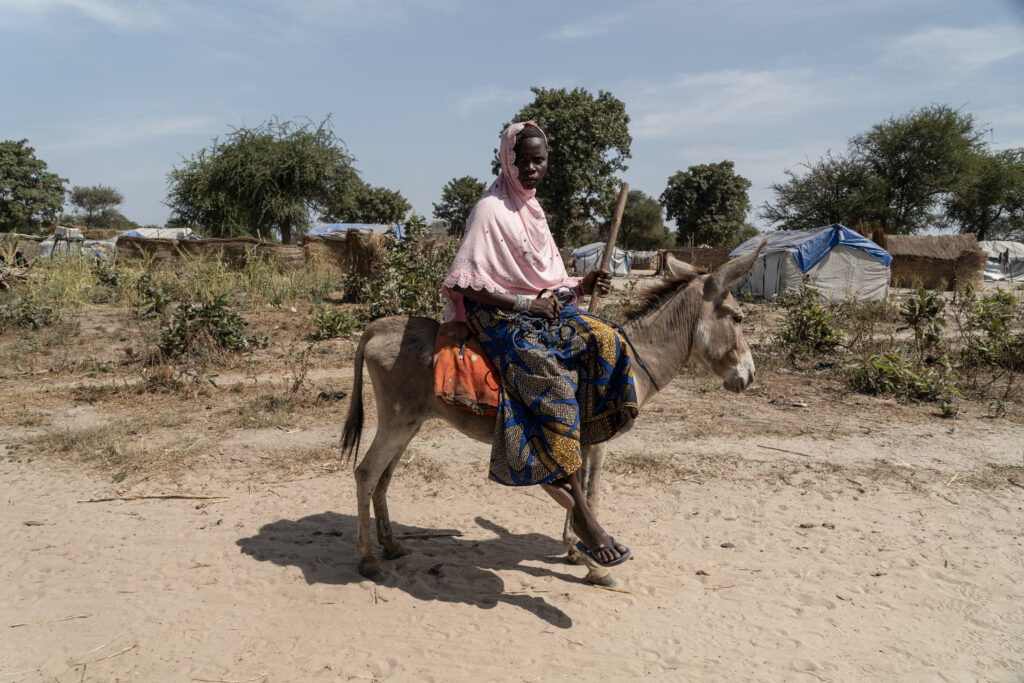
Amani Abdramane bustled around her donkey in the makeshift camp where she lives in the Central African Republic.In this northern part of the country, on the edge of the Sahel, the sun is scorching and sand is swallowing the last traces of vegetation.The 18-year-old adjusted a pink scarf covering her head and shoulders and pondered what she wanted from Sunday’s general election that will choose local and regional officials, members of parliament and a new president.”I hope the person I vote for brings peace,” she said of the seven candidates vying to become head of state.They include President Faustin-Archange Touadera, who is seeking a third consecutive term.Displaced by decades of conflict, young people like Abdramane who live in camps around the town of Birao in the far northeast, see the elections as a chance for a better future.Abdramane fled ethnic violence in Sissi, her home village seven kilometres (four miles) from Birao, in 2015 with her mother and eight siblings. Her father had been killed a few months earlier.”I just want my brothers, sisters and me to be able to go to school,” she said.- First-time voters -Abdramane had just completed her second year of school, aged eight, when her family had to flee.She has not returned to lessons since.Now the teenager and other young people are counting on the elections to bring them peace, education and opportunities beyond life as displaced persons.The last polls were in 2020 but lack of security meant even those old enough to vote at the time were unable to do so.There is a crowd outside the community radio station in the Korsi neighbourhood of Birao, which serves as a distribution centre for voter registration cards.Marina Hajram, also 18, will be voting for the first time.”I’m so happy,” she told AFP, clutching her voter card.Behind her in the queue, 25-year-old Issa Abdoul agreed the elections were essential “to continue the reconstruction of our country”.Korsi is home to thousands of internally displaced persons, as well as many refugees from neighbouring Sudan.Across CAR, there were 416,000 internally displaced persons as of November, the vast majority of whom are under 25 and will be voting for the first time this weekend.- A brighter future -For them, the mere act of obtaining a voter registration card is a challenge.First they must produce an identity document. But many lost everything when they fled, including ID papers for those who had them.Three quarters of people in the CAR are under 35, according to a 2018 report by the United Nations Population Fund.And peace is one of the things these young people most want.Although the situation has improved in much of the country, particularly in cities, violence persists in the northeast on the border between the two Sudans. This is mainly due to incursions by Sudanese armed forces, who are waging war in a region already plagued by abuses blamed on rebel groups.Issene Abdoulkasim, 23, only made it to the third year of primary school. Now he wants to become a tailor so he can afford to study again.”I dream of studying so I can become a member of parliament. Because as an MP I’ll be able to bring peace and development,” he said. “I want to put an end to conflicts, tensions and everything that is destroying our country.”