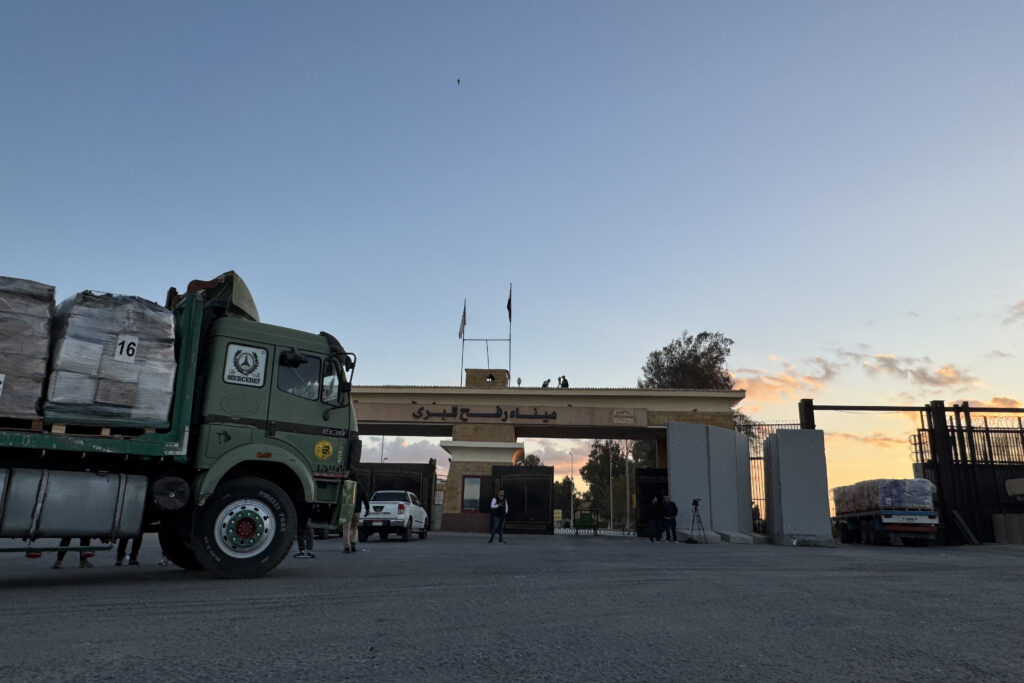
The reopening of the Rafah border crossing between the Gaza Strip and Egypt, part of US President Donald Trump’s truce plan for the Palestinian territory, has long been on hold despite calls from the UN and aid groups.Here are five things to know about this crucial crossing:- Vital access point -The Rafah crossing into Egypt is a crucial entry point for humanitarian workers and for lorries transporting aid, food and fuel, which is essential for daily life in a territory deprived of electricity.For a long time, the crossing was also the main exit point for Palestinians from Gaza who were authorised to leave the narrow strip of land, under Israeli blockade since 2007.From 2005 to 2007, it was the first Palestinian border terminal controlled by the Palestinian Authority, and later became a symbol of Hamas control over the Gaza Strip after the militant group seized power. – Under Israeli control – On May 7, 2024, the Israeli army took control of the Palestinian side, claiming that the crossing was being “used for terrorist purposes”, amid suspicions of arms trafficking. Many access points have since been mostly closed, including those used by the United Nations.Rafah briefly reopened during a short ceasefire between Israel and Hamas that took effect on January 19, initially allowing the passage of people authorised to leave Gaza, and later access for trucks.- Reopening soon? -After the new ceasefire spearheaded by Trump took effect on October 10, Israeli Foreign Minister Gideon Saar mentioned plans for a reopening, but the Israeli prime minister’s office ultimately announced that the crossing would remain closed “until further notice”.Israel said on Wednesday it would open the Rafah crossing from Gaza to Egypt to allow residents to exit the Palestinian territory “in the coming days,” but Egypt denied such a deal.Israel’s COGAT, which oversees civilian affairs in the Palestinian territories, said that the crossing would operate under the supervision of the EU’s Border Assistance Mission, “similar to the mechanism that operated in January 2025”.Trump’s plan, which underpins the ceasefire agreement between Israel and Hamas, stipulates that the territory would once again become accessible to international humanitarian aid and that the Rafah crossing would open. But since the ceasefire took effect, Israeli authorities have stalled on the matter, citing Hamas’s failure to return the bodies of all hostages and the need for coordination with Egypt. – Kerem Shalom – International aid generally arrives in Egypt via the ports of Port Said or El-Arish, the city closest to the Gaza Strip. According to drivers’ accounts, once through the Rafah checkpoint, the trucks are directed to the Israeli crossing of Kerem Shalom, a few kilometres away.There, the drivers disembark their vehicles for inspection.After strict checks, the goods authorised for entry are unloaded and then reloaded onto other vehicles authorised to enter Gaza.- Other crossings – The agreement brokered by Trump provides for the entry of 600 trucks per day. For now, Israel is allowing the delivery of humanitarian aid in smaller quantities, three quarters of it through Kerem Shalom, and the rest through the Kissufim crossing, according to the UN. The Erez, or Beit Hanoun, crossing between Gaza and southern Israel was destroyed by Hamas gunmen during their attack on Israel on October 7, 2023.Briefly reopened in early 2025, it is currently closed, with no reopening date set. Other access points have operated in the past, but Israeli authorities have not communicated on whether they will reopen.
The reopening of the Rafah border crossing between the Gaza Strip and Egypt, part of US President Donald Trump’s truce plan for the Palestinian territory, has long been on hold despite calls from the UN and aid groups.Here are five things to know about this crucial crossing:- Vital access point -The Rafah crossing into Egypt is a crucial entry point for humanitarian workers and for lorries transporting aid, food and fuel, which is essential for daily life in a territory deprived of electricity.For a long time, the crossing was also the main exit point for Palestinians from Gaza who were authorised to leave the narrow strip of land, under Israeli blockade since 2007.From 2005 to 2007, it was the first Palestinian border terminal controlled by the Palestinian Authority, and later became a symbol of Hamas control over the Gaza Strip after the militant group seized power. – Under Israeli control – On May 7, 2024, the Israeli army took control of the Palestinian side, claiming that the crossing was being “used for terrorist purposes”, amid suspicions of arms trafficking. Many access points have since been mostly closed, including those used by the United Nations.Rafah briefly reopened during a short ceasefire between Israel and Hamas that took effect on January 19, initially allowing the passage of people authorised to leave Gaza, and later access for trucks.- Reopening soon? -After the new ceasefire spearheaded by Trump took effect on October 10, Israeli Foreign Minister Gideon Saar mentioned plans for a reopening, but the Israeli prime minister’s office ultimately announced that the crossing would remain closed “until further notice”.Israel said on Wednesday it would open the Rafah crossing from Gaza to Egypt to allow residents to exit the Palestinian territory “in the coming days,” but Egypt denied such a deal.Israel’s COGAT, which oversees civilian affairs in the Palestinian territories, said that the crossing would operate under the supervision of the EU’s Border Assistance Mission, “similar to the mechanism that operated in January 2025”.Trump’s plan, which underpins the ceasefire agreement between Israel and Hamas, stipulates that the territory would once again become accessible to international humanitarian aid and that the Rafah crossing would open. But since the ceasefire took effect, Israeli authorities have stalled on the matter, citing Hamas’s failure to return the bodies of all hostages and the need for coordination with Egypt. – Kerem Shalom – International aid generally arrives in Egypt via the ports of Port Said or El-Arish, the city closest to the Gaza Strip. According to drivers’ accounts, once through the Rafah checkpoint, the trucks are directed to the Israeli crossing of Kerem Shalom, a few kilometres away.There, the drivers disembark their vehicles for inspection.After strict checks, the goods authorised for entry are unloaded and then reloaded onto other vehicles authorised to enter Gaza.- Other crossings – The agreement brokered by Trump provides for the entry of 600 trucks per day. For now, Israel is allowing the delivery of humanitarian aid in smaller quantities, three quarters of it through Kerem Shalom, and the rest through the Kissufim crossing, according to the UN. The Erez, or Beit Hanoun, crossing between Gaza and southern Israel was destroyed by Hamas gunmen during their attack on Israel on October 7, 2023.Briefly reopened in early 2025, it is currently closed, with no reopening date set. Other access points have operated in the past, but Israeli authorities have not communicated on whether they will reopen.